What are five simple exercises to do at home?
For my workouts, I generally rely mostly on my physical therapy sessions rather than on a separate gym routine or a self-designed program. Those sessions set the structure, and my physical activity is fairly simple and consistent: long walks, climbing stairs, and the strengthening exercises that have been built into my day. Taken together, those pieces account for nearly all of the movement I get when I am able to be up and out.
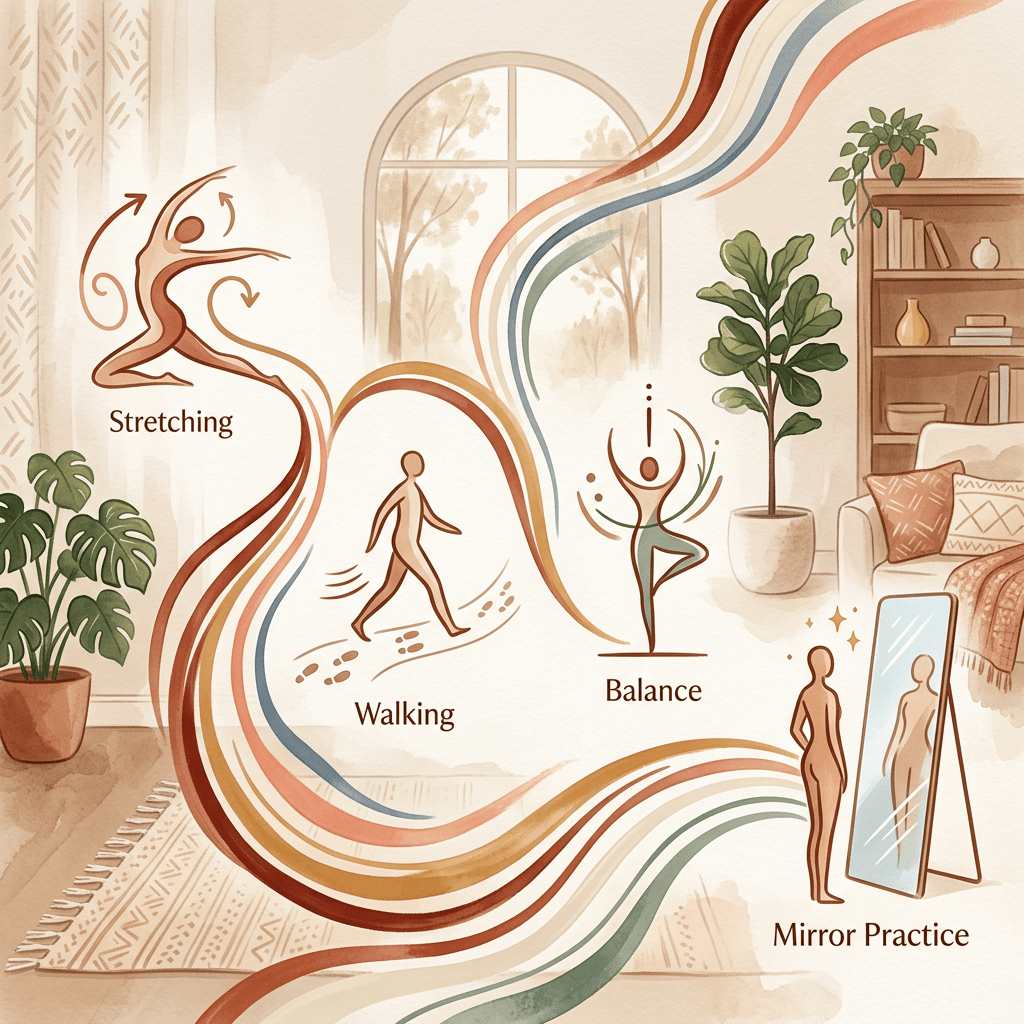
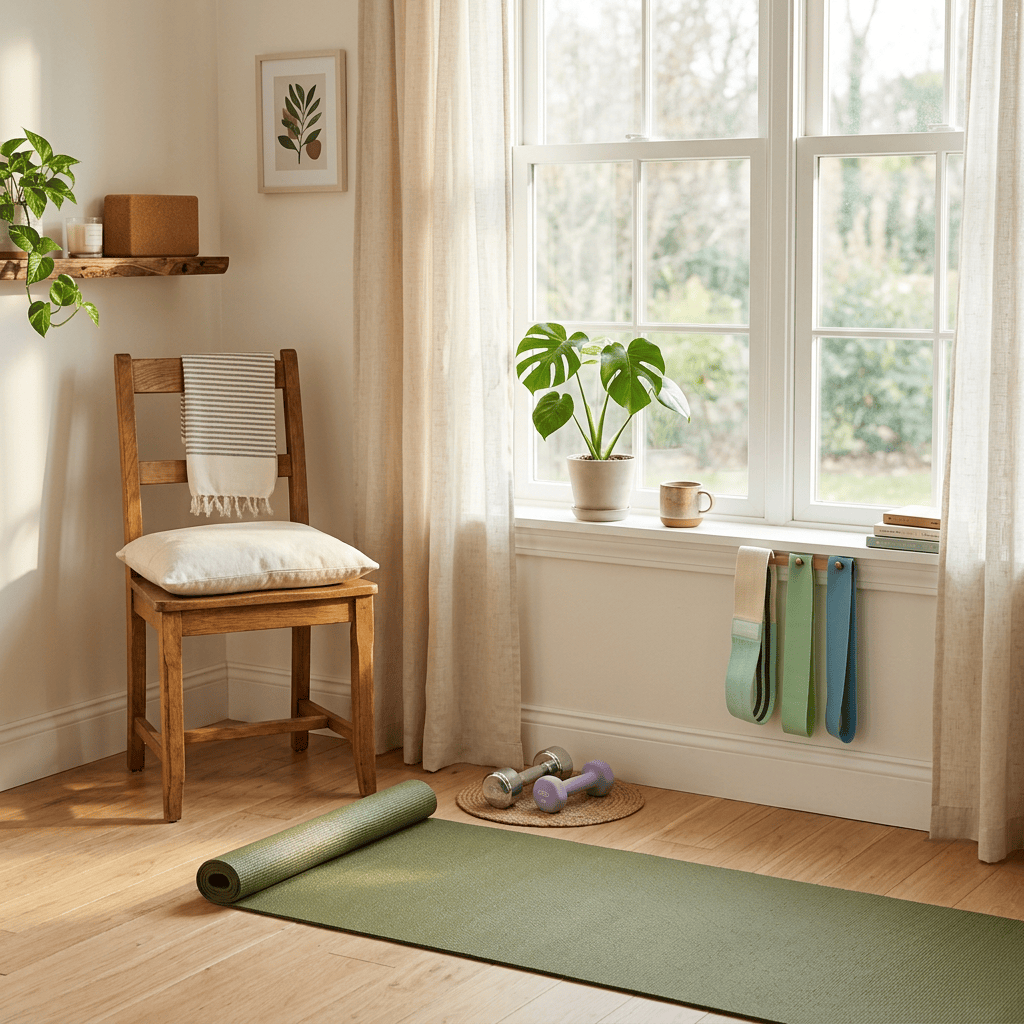
When I am homebound and cannot manage the walks or the stairs, I shift the work to the floor. I get down and move through a small set of exercises I can do without equipment: leg raises to work the hips and lower body, tall-kneel crawling to practice controlled weight-bearing and coordination without worrying about the strength of my ankles, one-legged bridges to strengthen the glutes and challenge balance on a single side, and planks to hold the trunk steady. I also spend plenty of time stretching, working through the ranges that feel restricted so the joints and muscles stay usable between sessions.
Alongside that, I use a mirror exercise whose purpose is less about building strength and more about retraining the brain. I watch myself and practice matching the left side to the right, reinforcing the idea that the left side of my body can function the way the right side does. The repetition is deliberate: see the movement, copy it, and give the nervous system another chance to treat the two sides as equally capable. In that sense the floor work is both physical practice and a form of motor relearning, filling the gaps on the days when therapy and outdoor activity are not available.
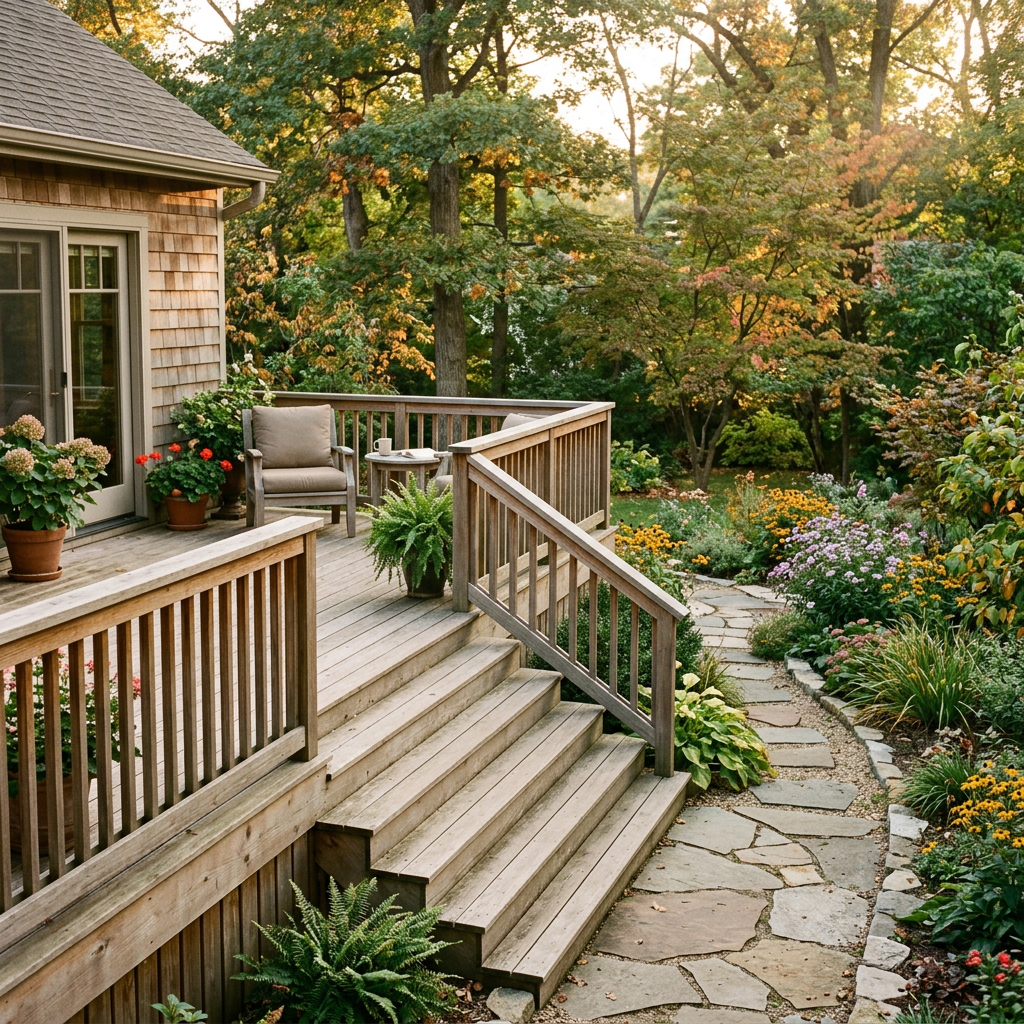
I also take a walk on the back deck every day after my afternoon rest. It is not a long walk, and it is not meant to replace the longer outings I do when I can leave the house. The point is repetition in a familiar place: a short circuit I can manage at the end of the day, when the rest of the work is already done.
Along that railing I gradually train myself to let go. At first the hand stays close, ready to catch the rail if balance shifts. Over time I practice taking steps without holding on, then more of them, so the walk becomes less about the support and more about the legs doing the work. I also stop at the end of the railing and simply stand there—not gripping, not leaning into it, not bracing with a hip or a shoulder. The task is narrower than it sounds: stay upright, feel both feet on the deck, and try to trust my own two legs and feet to hold me without the rail as a backup. Some days that stand lasts only a moment. Other days it holds a little longer. Either way, it is part of the same slow practice as the floor work and the therapy sessions—asking the body, and the balance system that governs it, to rely a little more on itself.


Leave a comment