Tag: exercise

  • Owie.

    Owie.

    I fell out of my chair on Friday as I was leaving the downstairs bedroom and went down the ramp past the raised foyer. Something like a slow, inevitable slide (I even did a quick little stand up when I was tipping forward!) that ended with my full weight landing hard on the left side. It was the kind of fall that feels stupid the second it happens. I stayed down for a second, squinting each eye to make sure my vision was not impaired, stared at the ceiling, and then got up because I do not like to make excuses. I had to get out back and do my walk. I would rather just grin through it. Not be a pussy.

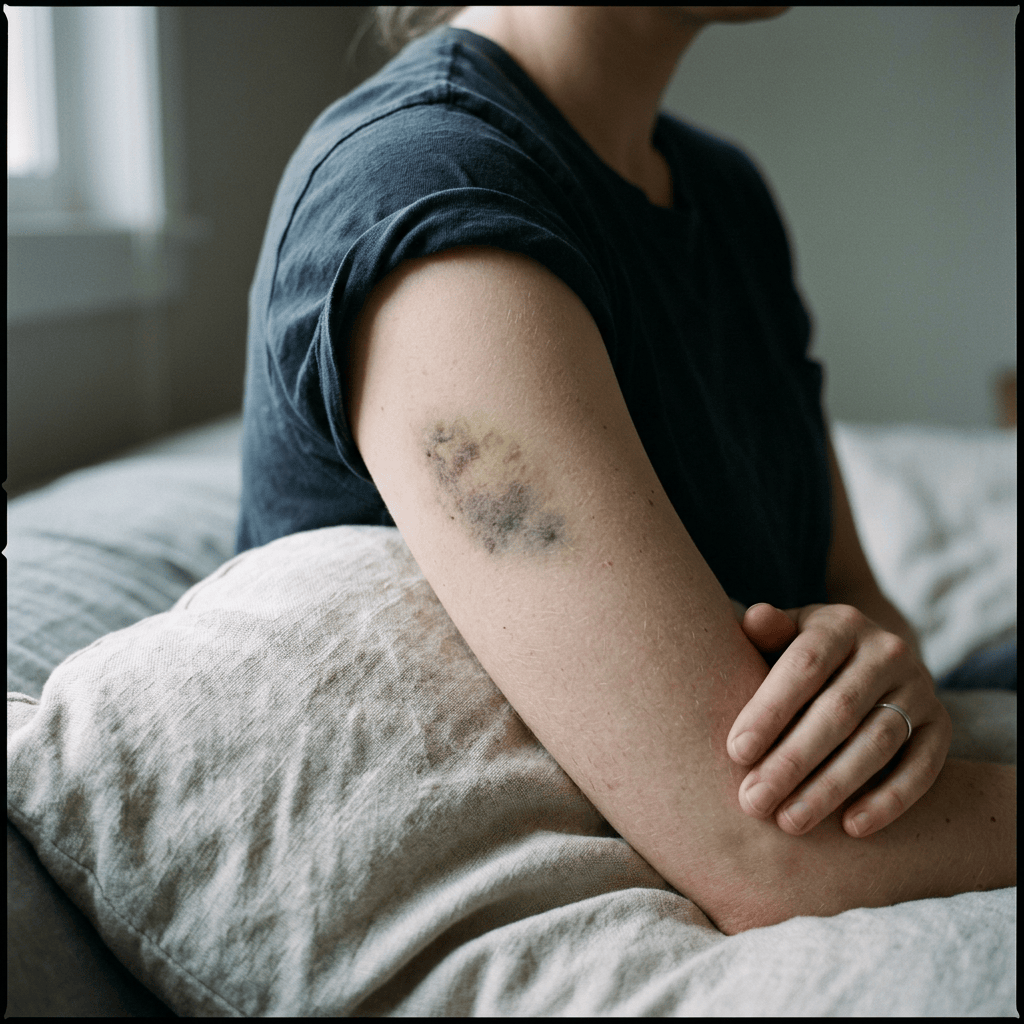
    Now my left arm is all black. A terrible contusion has bloomed from the shoulder down past the elbow, the kind of deep purple-black that looks worse every morning. I have always said I have no use of that arm. It has been dead weight for years—something I accommodate around, joke about, and mostly ignore. But after crashing my entire body weight atop it, I feel an incredible, specific pain in the bicep area. Not the dull ache of a bruise. Something sharper and more insistent, like the muscle is protesting every attempt to do even the smallest thing.
    My black bicep 💪

    Putting on a top in the morning has become a production. I have to lead with the right arm, then carefully feed the left through the sleeve without letting the fabric drag across the bruise. Any stretch or twist sends a bright jolt through the upper arm. I end up sitting there half-dressed, muttering at myself, which is better than admitting how much it hurts.

    The real discovery came later. Transferring my weight over the left side is suddenly difficult. More difficult than I ever admitted. Extending my left arm and even the shoulder while lifting my right leg is apparently something I have been doing subconsciously this whole time. I never thought about it. I just did it—shifted, braced, adjusted. Now every one of those automatic corrections lights up the bicep and makes the whole maneuver feel clumsy and precarious. The arm I claimed was useless was deviously doing more work than I gave it credit for, and now that it cannot the rest of my body is noticing the gap.

    I am still grinning through it. Still not interested in excuses. But the black arm and the bicep pain are forcing a small, annoying recalibration. The body keeps its own accounting, whether you want to look at the ledger or not. Friday’s fall just made the numbers harder to ignore.
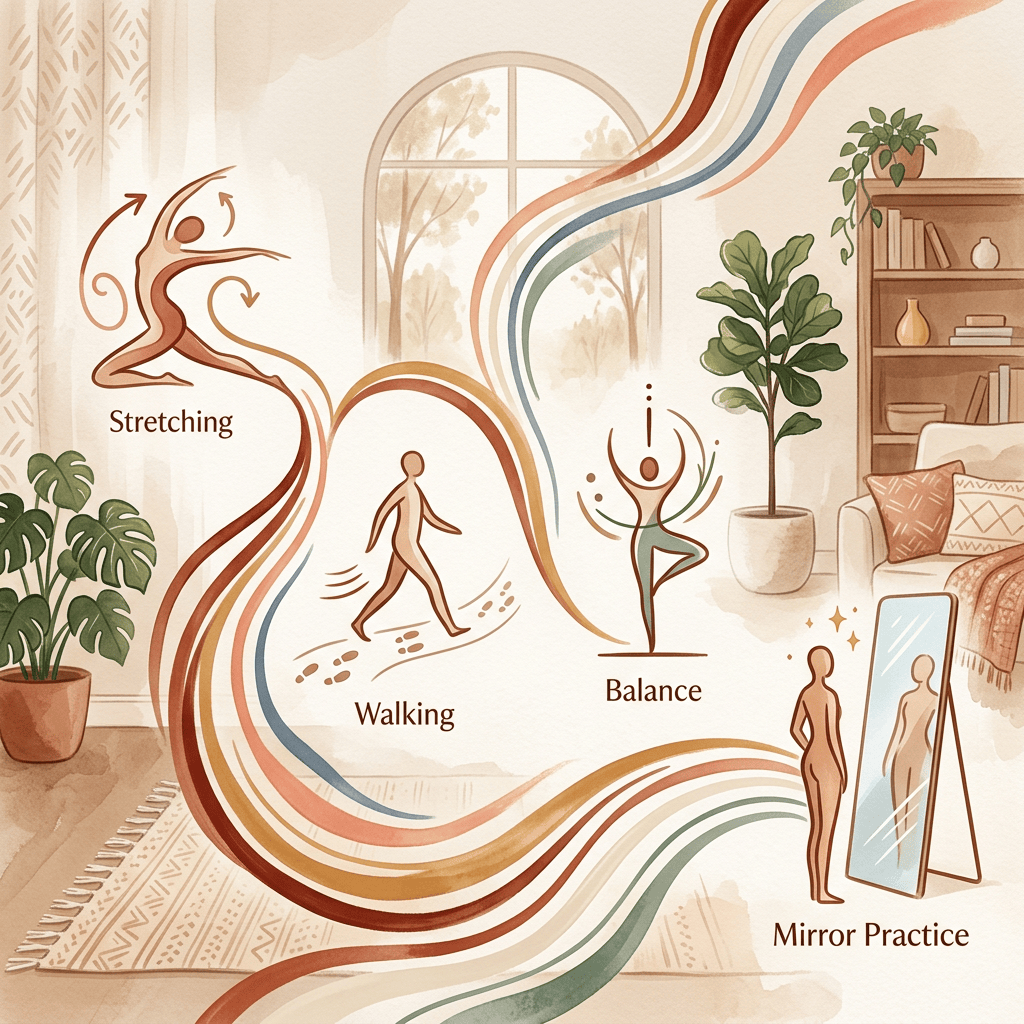
  • 5 No‑Equipment Home Exercises for Strength, Balance and Control

    5 No‑Equipment Home Exercises for Strength, Balance and Control

    What are five simple exercises to do at home?

    For my workouts, I generally rely mostly on my physical therapy sessions rather than on a separate gym routine or a self-designed program. Those sessions set the structure, and my physical activity is fairly simple and consistent: long walks, climbing stairs, and the strengthening exercises that have been built into my day. Taken together, those pieces account for nearly all of the movement I get when I am able to be up and out.

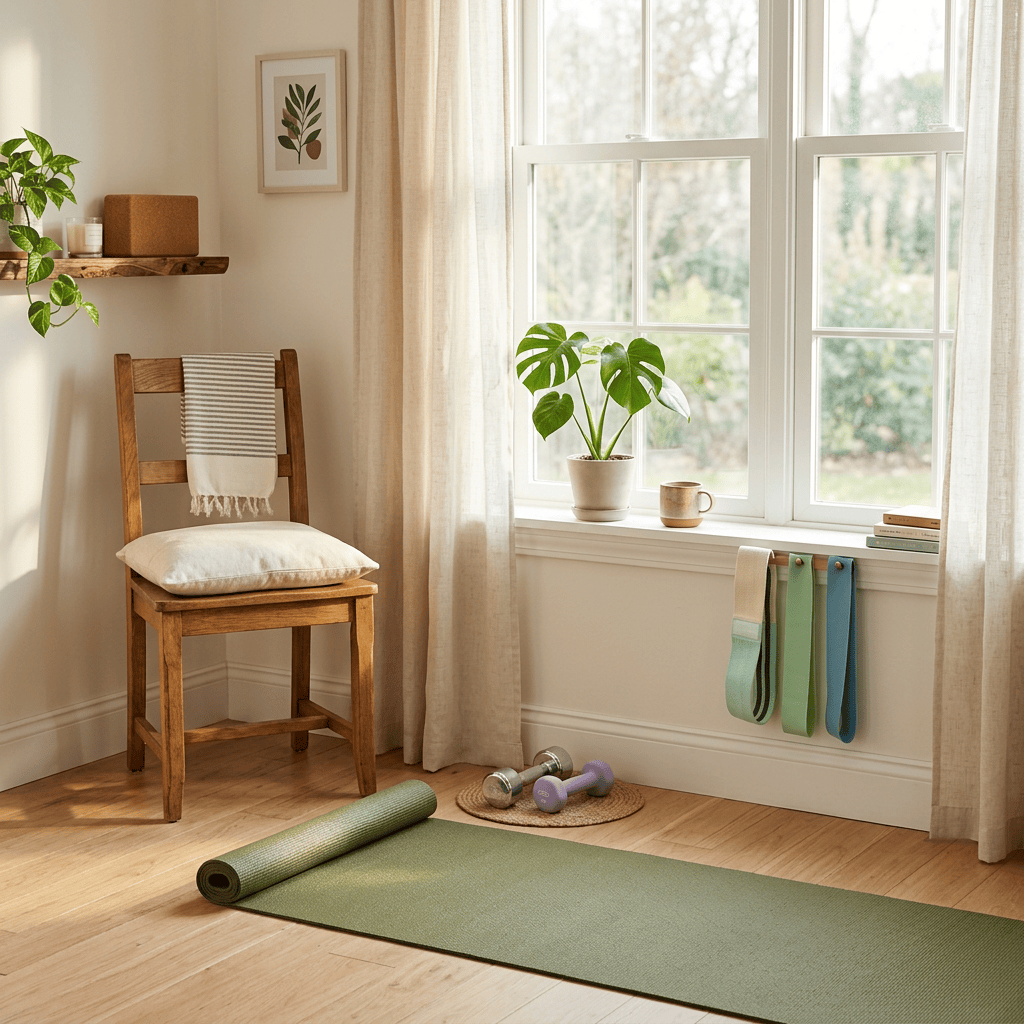
    When I am homebound and cannot manage the walks or the stairs, I shift the work to the floor. I get down and move through a small set of exercises I can do without equipment: leg raises to work the hips and lower body, tall-kneel crawling to practice controlled weight-bearing and coordination without worrying about the strength of my ankles, one-legged bridges to strengthen the glutes and challenge balance on a single side, and planks to hold the trunk steady. I also spend plenty of time stretching, working through the ranges that feel restricted so the joints and muscles stay usable between sessions.

    Sunlit room with yoga mat, dumbbells, resistance bands, and houseplants
    A sunlit home workout space combines yoga equipment with warm, inviting decor.

    Alongside that, I use a mirror exercise whose purpose is less about building strength and more about retraining the brain. I watch myself and practice matching the left side to the right, reinforcing the idea that the left side of my body can function the way the right side does. The repetition is deliberate: see the movement, copy it, and give the nervous system another chance to treat the two sides as equally capable. In that sense the floor work is both physical practice and a form of motor relearning, filling the gaps on the days when therapy and outdoor activity are not available.

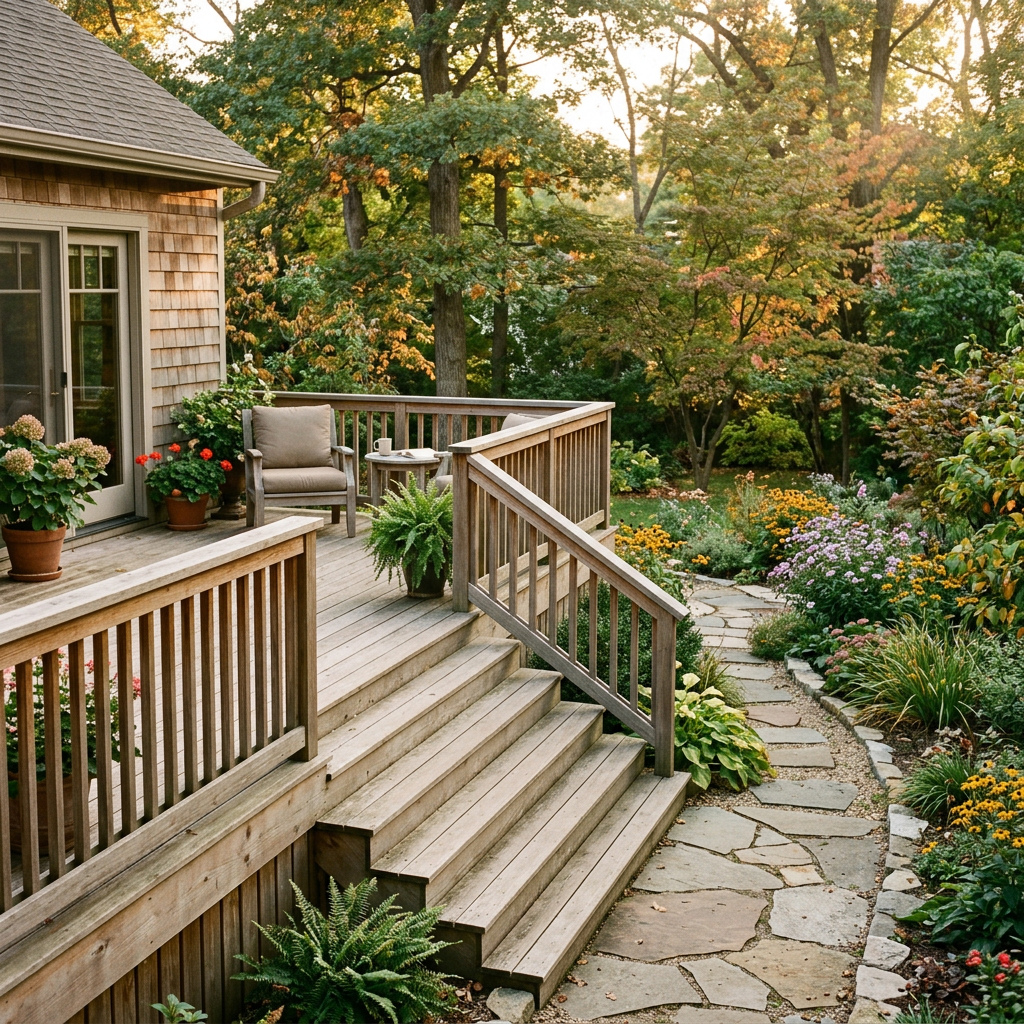
    Wooden deck with chairs overlooking a flower-filled garden and woodland path
    A welcoming deck overlooks a colorful garden and peaceful woodland path.

    I also take a walk on the back deck every day after my afternoon rest. It is not a long walk, and it is not meant to replace the longer outings I do when I can leave the house. The point is repetition in a familiar place: a short circuit I can manage at the end of the day, when the rest of the work is already done.

    Along that railing I gradually train myself to let go. At first the hand stays close, ready to catch the rail if balance shifts. Over time I practice taking steps without holding on, then more of them, so the walk becomes less about the support and more about the legs doing the work. I also stop at the end of the railing and simply stand there—not gripping, not leaning into it, not bracing with a hip or a shoulder. The task is narrower than it sounds: stay upright, feel both feet on the deck, and try to trust my own two legs and feet to hold me without the rail as a backup. Some days that stand lasts only a moment. Other days it holds a little longer. Either way, it is part of the same slow practice as the floor work and the therapy sessions—asking the body, and the balance system that governs it, to rely a little more on itself.