Tag: fitness

  • My deepest passion is nutrition — but ultimately, it’s all for him

    What are you passionate about?

    He is the prize at the end of the journey. To fully receive that gift and build the life I dream of with him, I have made my health non-negotiable. Nutrition is not just a hobby for me; it is something I can wax poetic about for hours with genuine excitement. I have explored it all — from the MAHA movement (seed oils, fluoride, ultra-processed additives, and all the hidden toxins) to Ray Peat’s principles and everything in between. I have lived the experiments myself: vegan, gluten-free, paleo, keto. I have been underweight and overweight. Through trial and error, I have learned what truly makes the body and mind thrive.

    Bright multicolored heart-shaped light swirl in starry cosmic background
    A glowing, multicolored heart-shaped swirl glimmers vividly in space.

    A brain injury years ago left me with some lasting effects I can be self-conscious about. It does not stop me from loving deeply or building a lasting relationship— as seen in my current form attracting him (thankfully, the “disability” does not seem to bother him at all), but I still carry that quiet desire to show up as my strongest, healthiest self. I want to move through life with ease — for me, and especially for him.

    Currently. Wifely duties from afar.

    Because more than anything, I long to be his perfect little housewife. I can already manage it beautifully with one hand, but two steady hands would let me pour even more love into our home. And yes — almost every girl dreams of the aisle. So I am committed to walking strong, not just so I can hold his hand while we stroll down the street or along the beach, but so I can walk down that damn aisle toward him, radiant and ready for forever.

    Two illuminated houses on mountain cliffs linked by a glowing light trail under starry sky
    Love from a Distance.
  • Stop Subtracting Joy, Start Adding It

    Stop Subtracting Joy, Start Adding It

    The wellness industry has been gaslighting you for decades. We have all bought into this masochistic cult of “less is more.” Cut the carbs. Skip the sugar. Punish your body into submission with celery juice and intermittent fasting until you are a hollow-eyed shell pretending kale tastes like freedom.

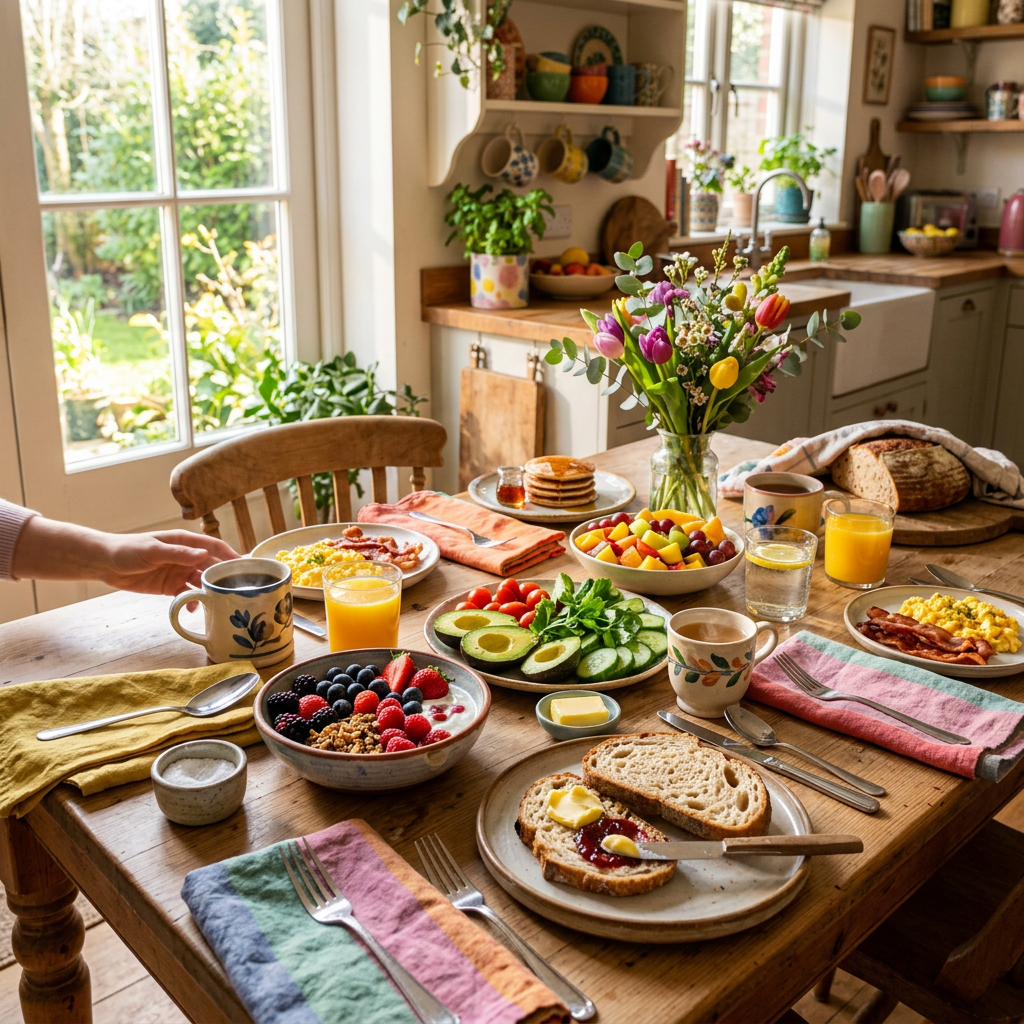
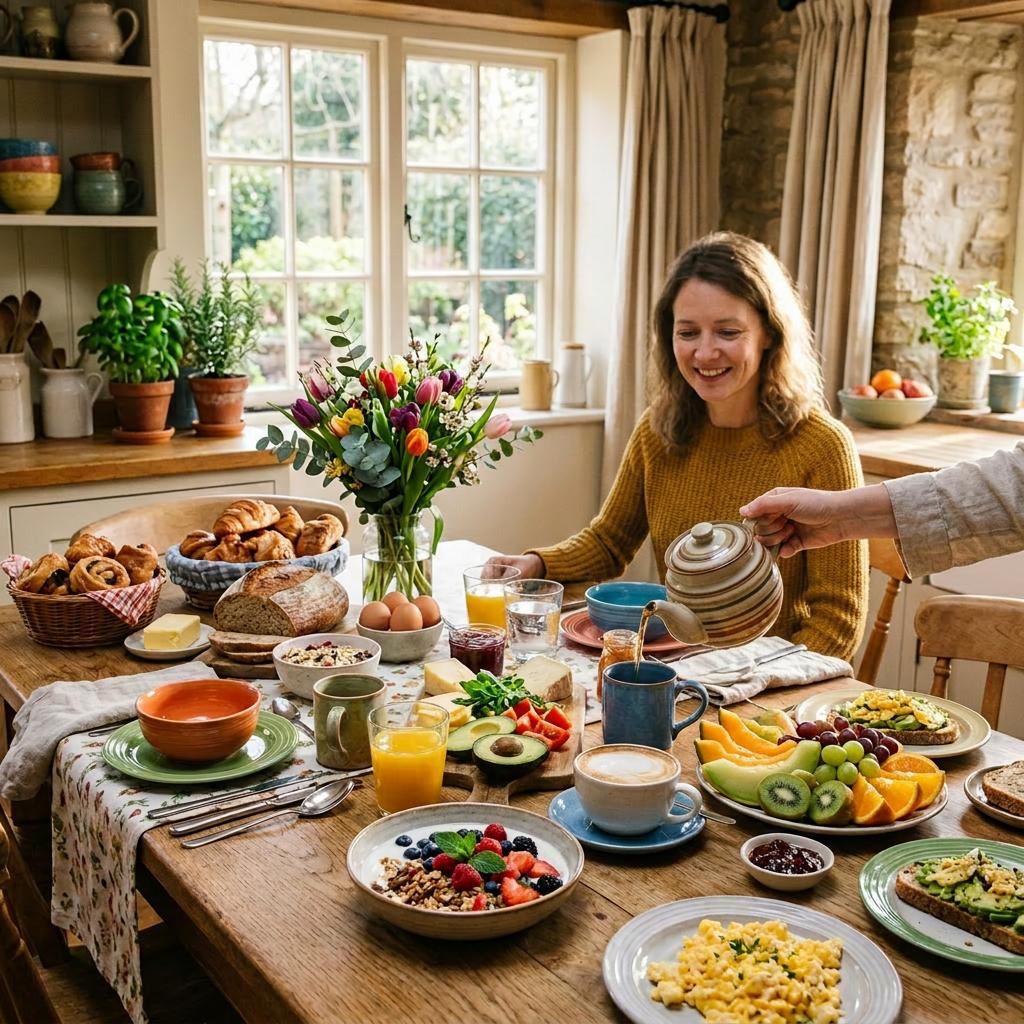
    Table with breakfast foods including bread, berries, avocado, eggs, pancakes, juice, coffee, and flower vase
    A cozy kitchen table set with a colorful, healthy breakfast and fresh flowers

    Maybe the real path to joy is not about what you remove from your life—it is about what you add. Add in love. Add in laughter. Stop playing defense against pleasure and start stacking the deck with everything that actually lights you up. Your body is not a prison to be starved into submission. It is a playground (you can have your kale and some cake too!)

    Think about food. The moment something tastes amazing—creamy pasta, rich chocolate, a greasy burger that hits like a warm hug—we are trained to feel immediate guilt. “That’s bad.” “You’ll regret this.” Cue the shame spiral, the compensatory workout from hell, the mental ledger where every bite is tallied like a war crime.

    What if we flipped the script? Instead of obsessing over what to banish, what if we flooded our plates (and lives) with more of what genuinely feels good: real, unapologetic pleasure?

    Add more meals that make you moan a little when you eat them. Add spices that make your tongue dance. Obviously you should never add that second helping because no one’s soul needs that today. Fat is not beautiful. It is masked shame and sadness. Instead we should add movement that feels like play instead of penance—dancing in your kitchen at 2 a.m. to terrible music, not another soul-crushing HIIT session. Workouts do not work anyway (bodies are made in the kitchen). You can “workout” daily, but the gut does not go away when you drink booze every day. So just be happy. Do not add anything that will only make you stressed and anxious. Often, telling yourself that you cannot have something leads to unnecessary stress. Add people who make you laugh until your abs hurt. Add boundaries that protect your peace instead of toxic productivity.

    The subtraction mindset is for control freaks and people who secretly hate themselves. “I must suffer to be worthy.” No. You add layers of joy until everything that does not serve you naturally falls away. Because you are too busy feeling alive to waste time on garbage.

    Cracked floral ceramic plate with coiled yellow measuring tape on wooden surface

    Your relationships? Start adding more of the ones that make you feel electric. Your career? Add skills, side hustles, or straight-up pivots that excite you. Your downtime? Delete the endless scroll that makes you feel bad and add books, hobbies, or straight-up doing nothing without guilt.

    Constant restriction does not build character. It builds resentment, binge cycles, and a weird superiority complex that alienates everyone around you. Believe me: I know this from my personal journey. Joy compounds. Pleasure is information—your body’s way of saying “more of this, please.” Shame is just cultural programming designed to sell you supplements, apps, and memberships.

    I have watched people torture themselves into “optimal” bodies only to crash harder— me in college for example. Meanwhile, the people who seem genuinely radiant? They are not perfect, but they are the ones who chase what feels good without performing virtue.

    This is not hedonistic chaos. Being disciplined is definitely still important. This is radical self-trust. Your body knows what it needs if you stop shouting over it with diet dogma. Crave something? Add it mindfully. Do not feel well after? Micro-dose it. Add more of what restores you next time. Experiment like a mad scientist of your own life instead of following some guru’s subtraction gospel.

    The wellness industry wants you broken and buying. True vitality is additive. Greedy, even. Pile on the good until the bad has no oxygen left.

    So next time that voice whispers “you shouldn’t,” tell it off and take another bite. Add the walk in the sun. Speak the truth. Add the nap, the indulgence, the unfiltered laugh.

    We do not need a diet of “no.” Make it a feast of “hell yes.”

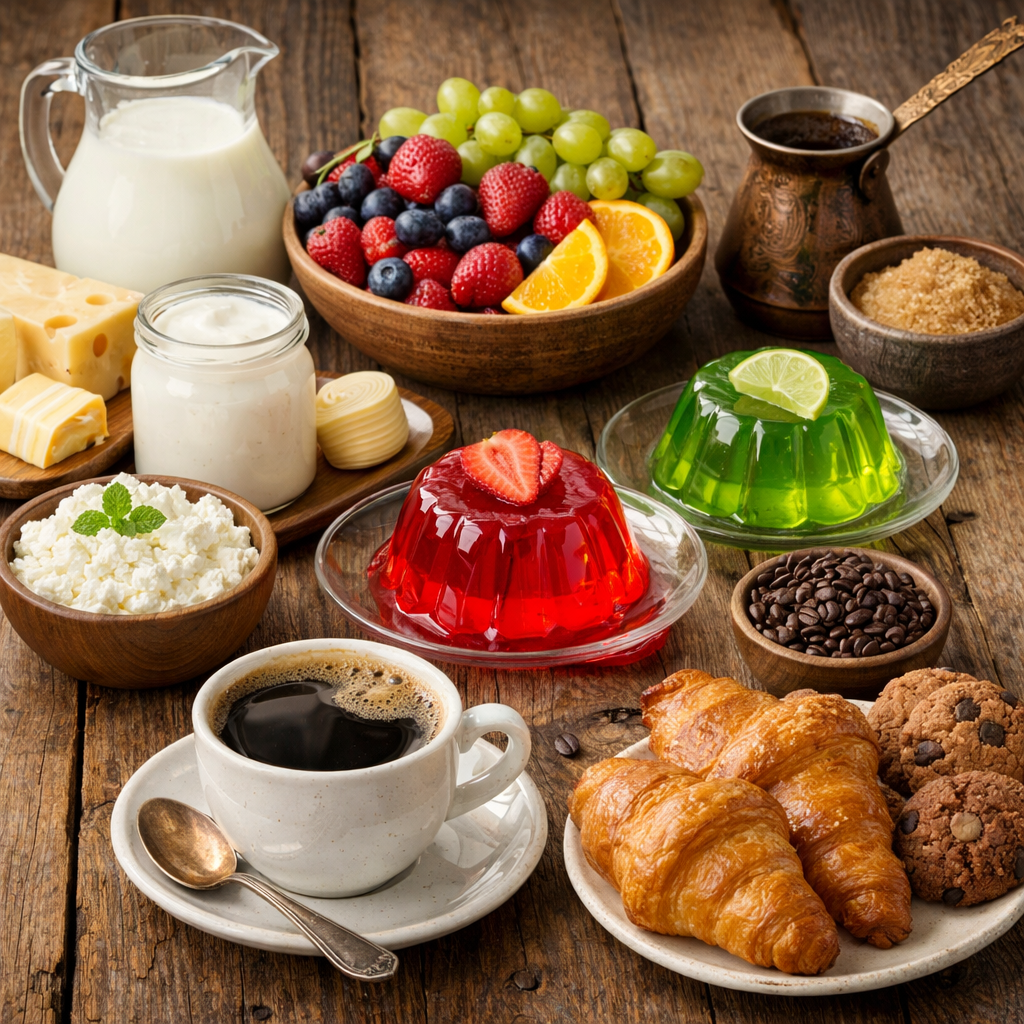
    Breakfast table with fresh fruit, pastries, coffee, and people enjoying meal
    A cheerful morning breakfast spread featuring fresh fruits, pastries, and coffee

    All in all, I am not just talking about food. But do not overdo things. If a food makes you happy in the moment, but makes you feel like shit afterwords, you should probably cut down. Basically, just stop taking life so seriously— add in some fun and play.

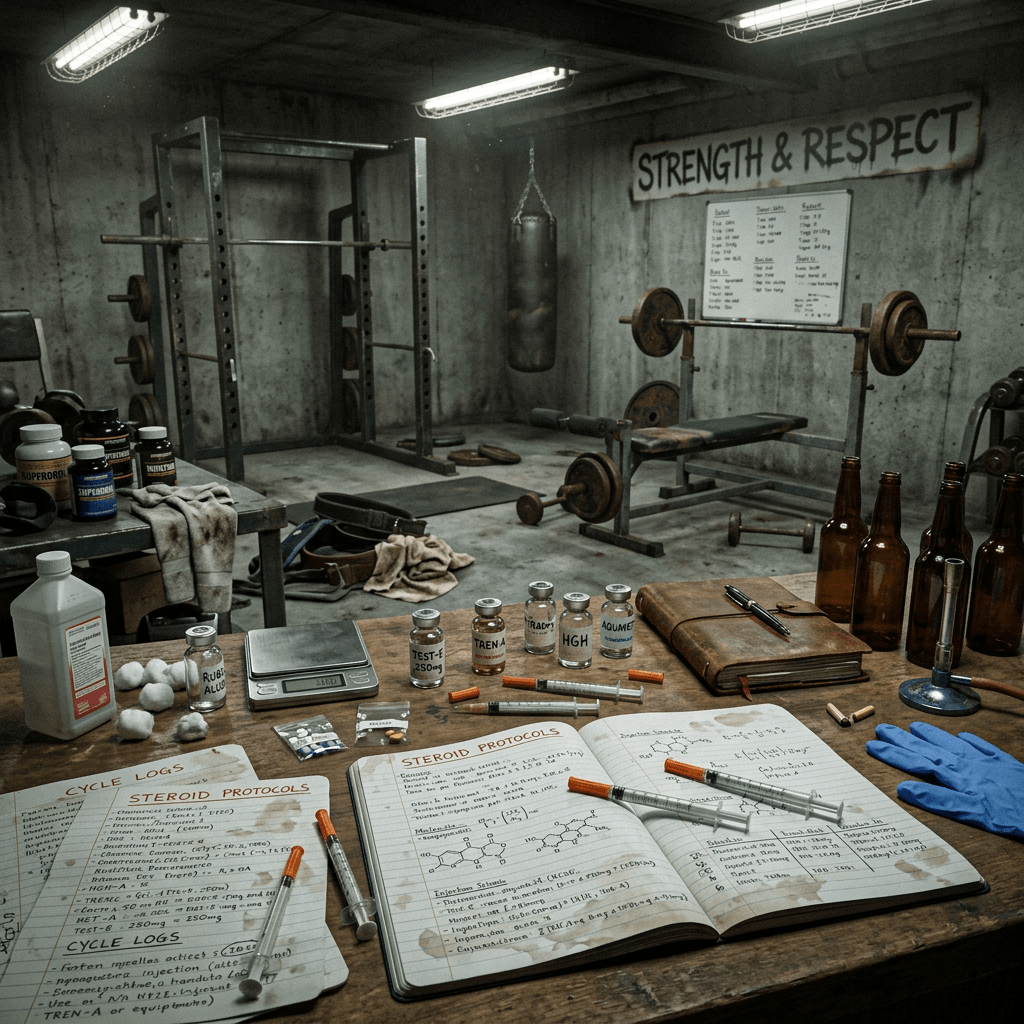
  • Peptides: The Biohackers’ Secret to Recovery and Longevity

    Peptides: The Biohackers’ Secret to Recovery and Longevity

    While the normies are out there grinding away on treadmills, choking down kale smoothies, and begging their physicians for another round of statins like good little compliant cattle, a shadow economy of peptides is rewriting the rules of human performance, recovery, and even mortality. These are not your grandma’s collagen powders from the health aisle. These are lab-synthesized chains of amino acids that tell your body to stop acting like a broken-down car and start performing like a war machine.

    Peptides are short protein fragments. Sounds boring until you realize they are the cheat code Big Pharma and the supplement bros both desperately ignore. One side calls them “research chemicals” to cover their asses. The other side pretends they do not exist because they cannot patent the fountain of youth and sell it for $200 a pill. All while I call them the middle finger to aging, injury, and the slow, pathetic decline we are all supposed to accept.

    Proteins are the big, lumbering construction workers of your body. Peptides are the snipers—tiny, precise signals that flip switches in your cells without the bureaucratic bullshit. Your body makes thousands of them naturally, but modern life—stress, seed oils, blue light, and whatever microplastic cocktail we are all marinating in—has turned those signals into static.

    Inject, swallow, or slap on a cream version of the right peptide, and suddenly your body gets very specific instructions: “Heal faster.” “Burn fat like it is 1999.” “Grow more muscle while you sleep.” “Don’t die of inflammation.”

    This is no bro-science. It is cold, hard biochemistry that has been weaponized by biohackers, athletes, and the kind of rich weirdos who treat their bodies like experimental Ferraris. The FDA hates it because they cannot control the narrative. Your local gym rat loves it because it works when creatine and chicken breast tap out.

    BPC-157 – The ultimate of the peptide world. Derived from a stomach protein Nature already solved gut health; we just stole the cheat sheet. This thing repairs tendons, ligaments, and leaky guts like it. Torn rotator cuff? BPC says “hold my beer.” People are using it off-label for everything from IBS to blown knees, and the recovery stories sound like science fiction. The side effects are the occasional “I feel too good to be legal” vibes.

    TB-500 – BPC’s partner in crime. Promotes actin production, which basically means your cells rebuild tissue at warp speed. Bodybuilders swear by it for nagging injuries that would normally sideline them for months. It is like giving your body a “factory reset” button for damage control.

    CJC-1295 + Ipamorelin stack – The growth hormone secret without the full roid rage or the $10k-a-month bill. These  trick your pituitary into pumping out more of your own natural GH. Result? Deeper sleep, faster fat loss, skin that looks like you sold your soul to a Korean skincare influencer. No water retention bullshit. Just quiet, clean gains that make your bloodwork look like you time-traveled back to age 25.

    Semaglutide/Tirzepatide (the Ozempic cousins) – Yeah, the weight-loss drugs everyone is suddenly on. They are peptides too. They do not just suppress appetite; they hack your entire metabolic signaling. The mainstream acts like it was some miracle breakthrough. Biohackers have been stacking peptide versions of this tech for years in the gray market, titrating doses like mad scientists while the normies pay $1,300 a month for the branded version. 

    Melanotan II – Because why settle for pale and pasty when you can look like you vacation in Mykonos year-round? Tanning, fat loss, and a libido that makes 19-year-old you look like a monk. Side effect: spontaneous boners in public. Worth it.

    And that is just the tip of the iceberg. Thymosin alpha-1 for immune hacking. DSIP for sleep that feels like a coma. The list goes on, and the underground forums are full of people turning themselves into optimized freaks while the rest of society argues about seed oils on Reddit.

    Do not pretend this is all sunshine and six-packs. Peptides exist in a legal gray zone that makes the Wild West look regulated. Sourcing them means trusting some Chinese lab or a dude in a Discord server who swears his batch is “third-party tested.” Dosing wrong can mess you up in creative ways—hormone crashes, injection site reactions, etc. 

    The medical establishment screams “dangerous and unproven!” while happily pushing antidepressants that turn people into emotional zombies. Make it make sense. The real risk is not the peptides. It is becoming so optimized that you start looking down on everyone still playing the game on difficult mode.

    We are in the middle of the great biohacking schism. One side is still preaching “eat less, move more, die at 78 with dignity” (I live by this!). The other side is quietly extending health span by decades using tools that were “experimental” five years ago. Peptides are not the endgame—they are the gateway drug to gene therapy, senolytics, and whatever longevity tech comes next.

    The elites have been on this for years. You think billionaires look 20 years younger because of kale? Please. The plebs get Ozempic commercials. The players get custom peptide stacks delivered in discreet packaging.

    You gonna keep waiting for “more studies” while your telomeres shorten? Or are you gonna do the research, find a reputable source, and start hacking the meat suit before it hacks you?

    The peptides are already here. The future doesn’t give a shit about your comfort zone.

  • Forget Diet Rules: Enjoy Ray Peat’s Nutrient-Rich Approach

    Forget Diet Rules: Enjoy Ray Peat’s Nutrient-Rich Approach

    You know that heavy, bloated, “I just swallowed a brick” feeling after smashing a carb- or protein-loaded meal? Yeah, that is not happening to me anymore. So I ditched the rules and went full “Eat Whatever the Fuck I Want” — and for me, that means going Ray Peat/ paleo.

    This is not some calorie-counting prison or macro-obsessed cult. It is a pro-metabolic, bioenergetic middle finger to the standard “choke down kale” or chicken breasts for every meal bullshit. Basically it is a scientific excuse for me to indulge in my dainty way of enjoying all sorts of goodies. 

    Developed by the late biologist Dr. Ray Peat, it is all about cranking your metabolism, supporting your thyroid, balancing hormones (more progesterone, less estrogen and cortisol chaos), and keeping inflammation down.

    Peat basically said most of our problems — fatigue, stubborn fat, hormonal issues, premature aging — boil down to one thing: a sluggish metabolism. I am 100% on board with that diagnosis.

    The goal is to create a safe, energy-rich environment inside your body with easy-to-digest, nutrient-dense foods that let your cells actually produce energy instead of just being stressed. 

    The Core Rules (that I mostly follow when I feel like it):

    • Carbs are king. Simple sugars from fruit, juice, honey, and sugar. Enough of the “sugar is poison” crowd — I am loading up on orange juice, mangoes, papayas, cherries, melons, ripe berries, and apples. I adore fruits!  Fast fuel, vitamins, minerals, antioxidants. Tastes like victory.
    • Saturated fats over everything. Butter, coconut oil, ghee, full-fat dairy, cocoa butter. Seed oils (canola, soy, sunflower, corn) are straight-up toxic according to Peat. I avoid that industrial sludge (I write about this, here).
    • Smart sources of protein: This is an aspect of my diet that I do not particularly prioritize. I am not some big hulking man   Gelatin, collagen, bone broth, shellfish, oysters, eggs, and dairy. I could see myself enjoying a nice cup of bone broth for lunch. 
    • Dairy is back and might be a new favorite: Milk, cheese, ice cream — preferably full-fat and high quality. Cheese. My new obsession.
    • Root veggies and well-cooked starches. Potatoes, sweet potatoes (I LOVE ME SOME SWEET POTATO!), carrots, squash. Cooked fully so your gut will not throw a tantrum.
    • Coffee, salt, sugar (in reason), and constant fluids. My black espresso still fits. Peat loved it with milk and sugar anyway.
    • Avoid the inflammatory: Most grains, legumes, raw cruciferous veggies,  fatty fish, and all that processed garbage loaded with iron and additives.

    Peat said eat frequently — no fasting, no severe restriction — to keep blood sugar and energy steady. Here is where we clash: I still love fasting and eating like a dainty fairy princess who barely needs calories to look after her man, run the house, and do activaties like Pilates. But I am playing with the Peaty principles because they feel better for me. 

    He wants you eating to appetite, 4-6 times a day, pairing protein with carbs and fat. I love to get these protein and fats in through avocado and nut butters for dipping, but I will never eat more than once a day (plus an evening snack). Plus, he suggests cooking everything well. I will cook most things well… but tartare and sushi still hit my personal menu because rules are suggestions when they taste good.

    People on this way of eating report better energy, thyroid function, digestion, skin, hair, hormones, and way fewer cravings. Ray Peat himself lived to 86, slamming orange juice and ice cream while most diet gurus look like they are one kale smoothie from the grave.

    Critics scream it is”too much sugar,” lacks big clinical trials, and laughs in the face of mainstream advice to avoid sat fat and eat more fiber. I love that part. If the mainstream says it, I am already suspicious.

    It might not work for everyone — dairy issues, specific conditions, etc. Talk to a doctor before you go full rebel, blah blah.

    Bottom line: This is a flexible framework inspired by Peat’s work (raypeat.com has the deep dives). I am not following it like scripture — I am stealing the parts that make me feel alive, energetic, and less bloated while still indulging my sweet tooth (plus I am stealing most of my dietary “rules” from the cavemen— paleo— but with a bit more sweetness). 

    So I stopped feeling weighted down. I would rather feel light, sharp, and fueled by fruit, ice cream, and spite.

  • My Passion for Nutrition (pt. 3)

    My Passion for Nutrition (pt. 3)

    “Drink more water!” is solid advice, but the full story of staying hydrated is far more nuanced and fascinating than simply filling up a bottle and chugging it down.

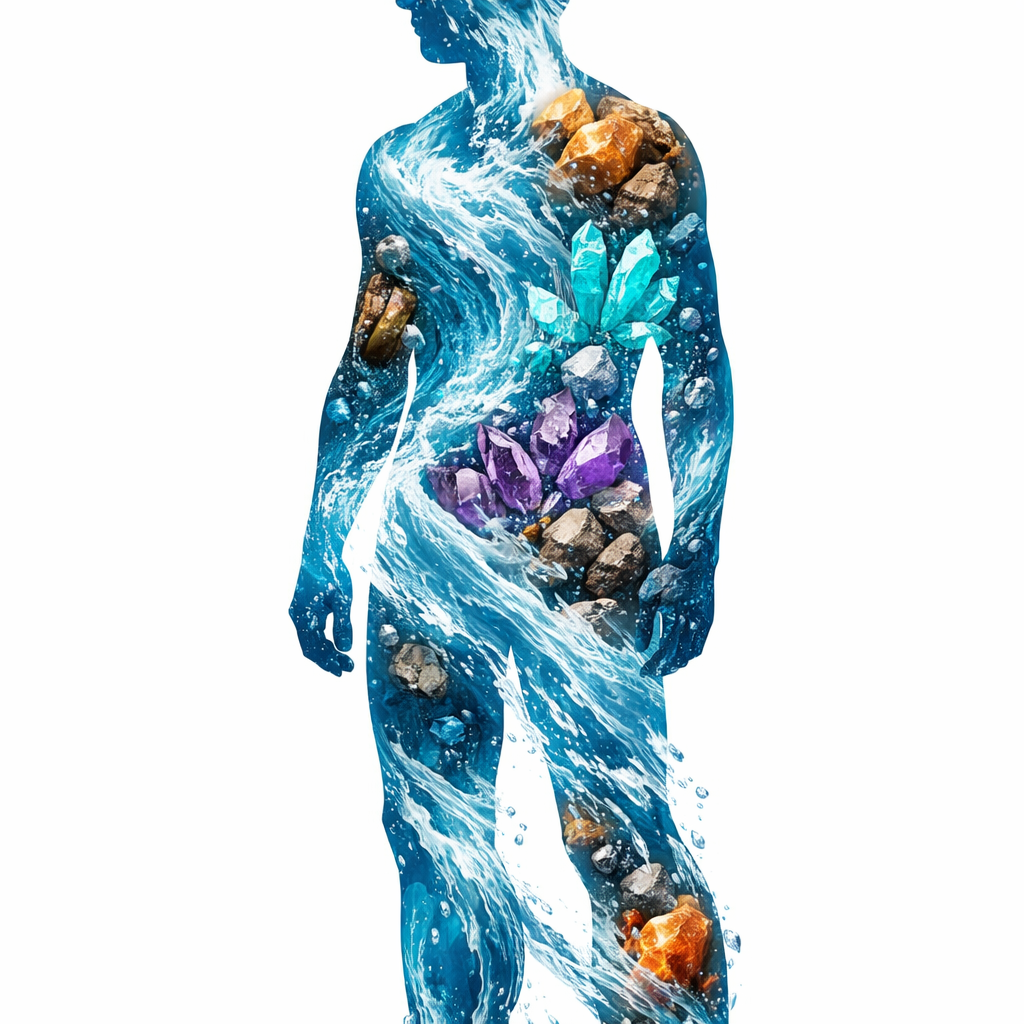
    Your body is roughly 60% water, with your brain, heart, lungs, and muscles relying on a balance to function. Yet many people miss the mark by focusing only on volume while overlooking how the body actually absorbs and uses that water.

    True hydration is not just about quenching thirst—it is about delivering moisture to every cell, organ, and system efficiently. And that process depends heavily on electrolytes.

    Contrary to popular belief, simply drinking large amounts of plain water is not the most effective way to hydrate your entire body. Water from beverages primarily satisfies your tummy and immediate thirst signals, but it can pass through your system quickly without fully going into tissues if the right supporting minerals are not present.

    (Think of it like trying to water a garden with a hose but no proper soil or nutrients—the water might run off instead of nourishing the roots.)

    Instead, a significant portion of our daily hydration actually comes from the foods we eat, particularly water-rich fruits and vegetables. Cucumbers (ew), watermelon (ew), oranges, spinach, strawberries, celery (ew), and tomatoes are all examples. These foods deliver water along with natural electrolytes, vitamins, and fiber, allowing for better absorption and retention. This food-based hydration is gentler and more sustained than liquid alone.

    Electrolytes—primarily sodium, potassium, magnesium, and calcium—are essential minerals that carry an electric charge. They regulate fluid movement in and out of cells, support nerve impulses, muscle contractions, and pH balance. Without adequate electrolytes, water cannot do its job properly. Your cells essentially use these minerals as “gatekeepers” to pull water where it is needed most.

    When electrolyte levels are low (from sweating, stress, exercise, illness, and especially a typical modern diet), drinking plain water can lead to a phenomenon sometimes described as “cascading” through the body rather than deeply hydrating it. In extreme cases, overdoing plain water without electrolytes can dilute blood sodium levels, leading to symptoms like fatigue, headaches, muscle cramps, or brain fog. This is why athletes, people in hot climates, or those on low-carb/keto diets (speaking from personal experience here!) often feel dramatically better when they add electrolytes rather than just increasing water intake.

    Chugging large quantities of plain water in one go is a bit like waterboarding your digestive system—it overwhelms your stomach and kidneys without providing balanced support for the rest of your body. Your kidneys can only process so much fluid at once, and excess water without electrolytes gets peed out quickly, taking some valuable minerals with it. This can leave you feeling bloated or still dehydrated.

    The smarter approach is consistent, balanced intake throughout the day. Sip water steadily, pair it with electrolyte sources, and incorporate hydrating foods. This method supports better absorption, sustained energy, clearer thinking, glowing skin, and improved physical performance.

    Thankfully, getting electrolytes does not have to be boring or clinical. Nature provides plenty of yummy potassium-rich foods: avocados, bananas, sweet potatoes, and leafy greens., magnesium sources: nuts, seeds, dark chocolate, and pumpkin seeds, sodium: pinch of high-quality sea salt or Himalayan salt in your water or meals (especially if you sweat a lot or eat very clean).

    For ease, many people turn to quality electrolyte supplements. My man started getting me LMNT packets, and they have become a game-changer for my daily workouts. The lemonade flavor is my absolute favorite—tart, refreshing, and perfectly balanced without any junk. Or maybe you want a morning Jolly-Rancher-like drink— try the Watermelon or Raspberry (they both literally taste like sucking on candy!) I mix it into mineral water, and the combination is delicious.

    There is something luxurious about the fizz; it feels like a sophisticated treat, reminiscent of sipping champagne or San Pellegrino on a sunny afternoon. The bubbles make it extra enjoyable, turning hydration into something I actually look forward to. He also got me a machine for making my own bubbly water at home using filtered non-fluoride water (I want to try making bubbly coffee with it!)

    Bubbly mineral waters naturally contain trace minerals too, so pairing them with a good electrolyte mix elevates both taste and function. Whether you are post-workout, recovering from a long day, or just starting your morning, this combo keeps me feeling energized and balanced.

    Proper hydration with electrolytes is not about restriction or rigid rules. It is about listening to your body and giving it what it truly needs to thrive. When you get the balance right, the benefits show up everywhere: better focus, steadier mood, stronger workouts, and even improved sleep.

    Staying hydrated is one of the simplest/most powerful things you can do for your health. By shifting from “just drink more water” to a thoughtful approach that honors electrolytes and whole foods, you can experience deeper, more effective hydration.