Tag: neuroplasticity

  • 5 No‑Equipment Home Exercises for Strength, Balance and Control

    5 No‑Equipment Home Exercises for Strength, Balance and Control

    What are five simple exercises to do at home?

    For my workouts, I generally rely mostly on my physical therapy sessions rather than on a separate gym routine or a self-designed program. Those sessions set the structure, and my physical activity is fairly simple and consistent: long walks, climbing stairs, and the strengthening exercises that have been built into my day. Taken together, those pieces account for nearly all of the movement I get when I am able to be up and out.

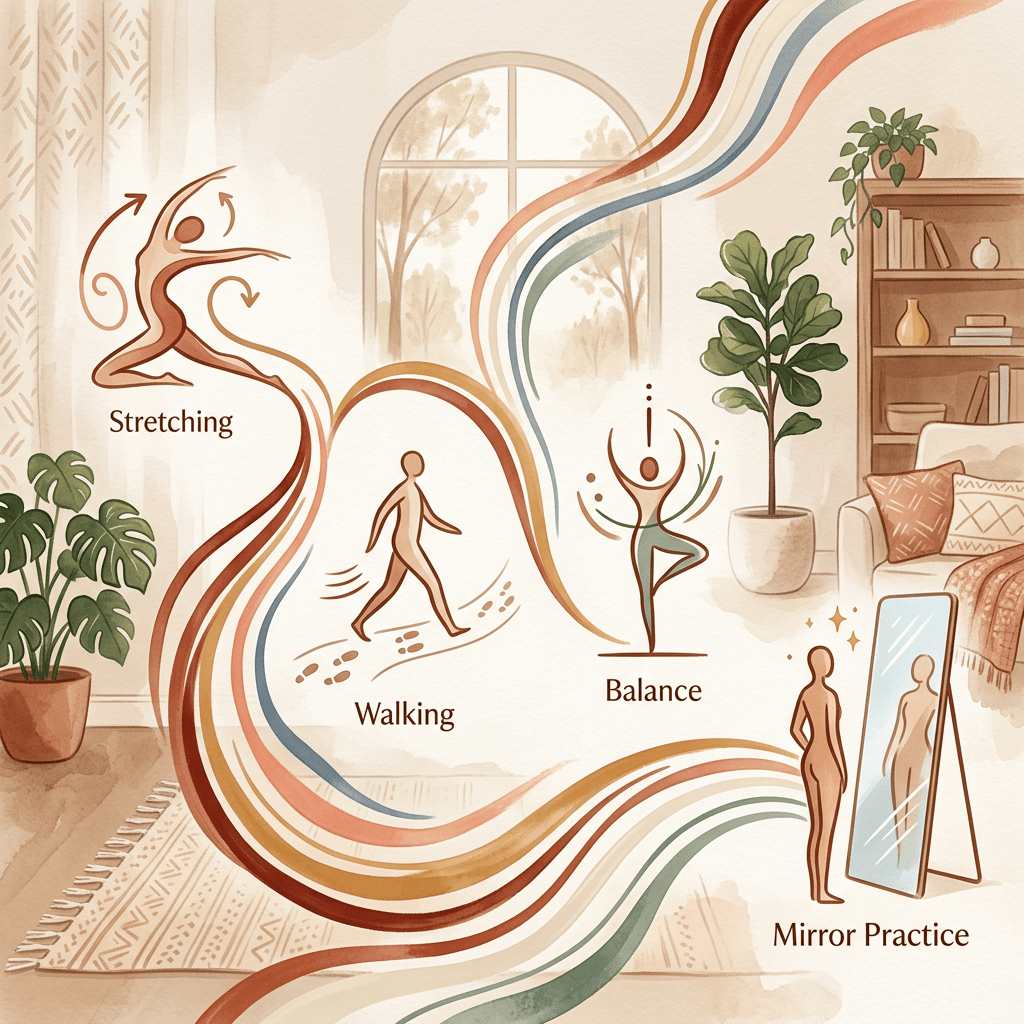
    When I am homebound and cannot manage the walks or the stairs, I shift the work to the floor. I get down and move through a small set of exercises I can do without equipment: leg raises to work the hips and lower body, tall-kneel crawling to practice controlled weight-bearing and coordination without worrying about the strength of my ankles, one-legged bridges to strengthen the glutes and challenge balance on a single side, and planks to hold the trunk steady. I also spend plenty of time stretching, working through the ranges that feel restricted so the joints and muscles stay usable between sessions.
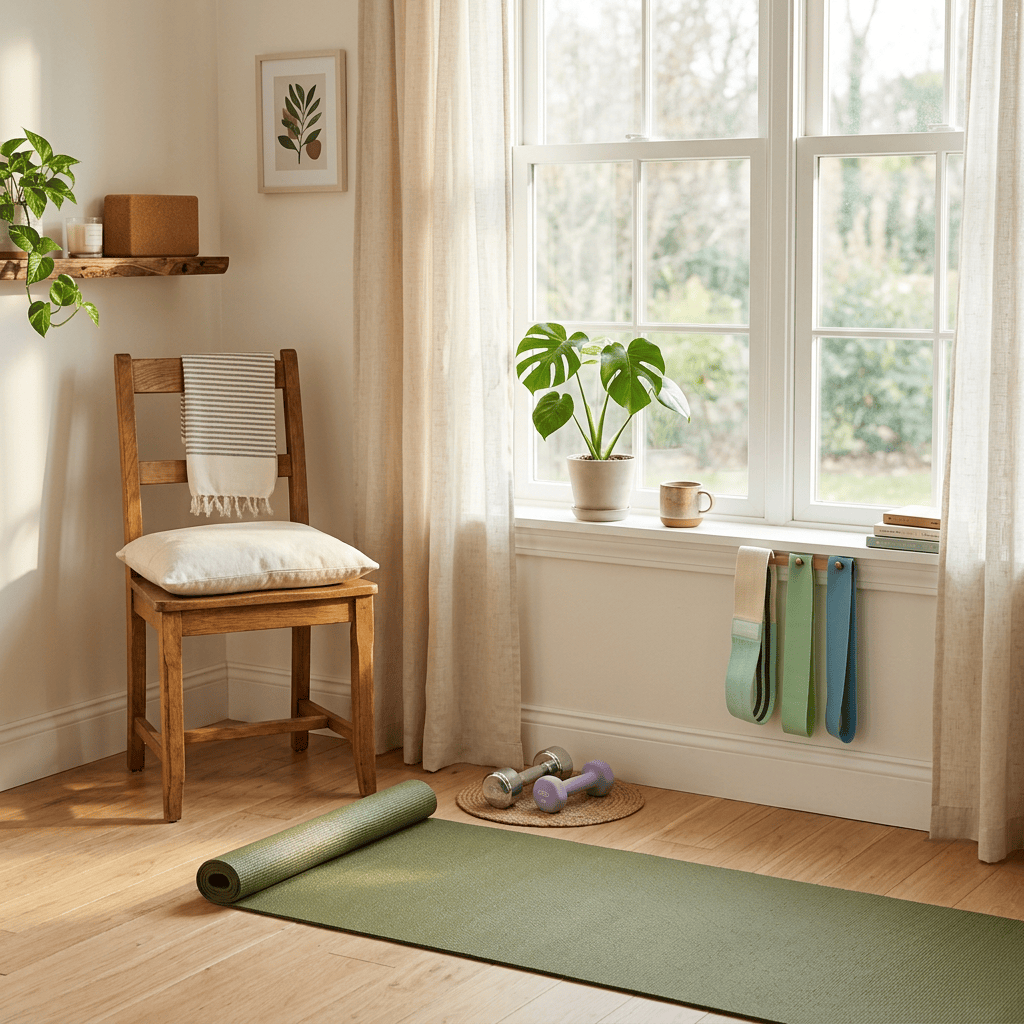
    Sunlit room with yoga mat, dumbbells, resistance bands, and houseplants
    A sunlit home workout space combines yoga equipment with warm, inviting decor.

    Alongside that, I use a mirror exercise whose purpose is less about building strength and more about retraining the brain. I watch myself and practice matching the left side to the right, reinforcing the idea that the left side of my body can function the way the right side does. The repetition is deliberate: see the movement, copy it, and give the nervous system another chance to treat the two sides as equally capable. In that sense the floor work is both physical practice and a form of motor relearning, filling the gaps on the days when therapy and outdoor activity are not available.
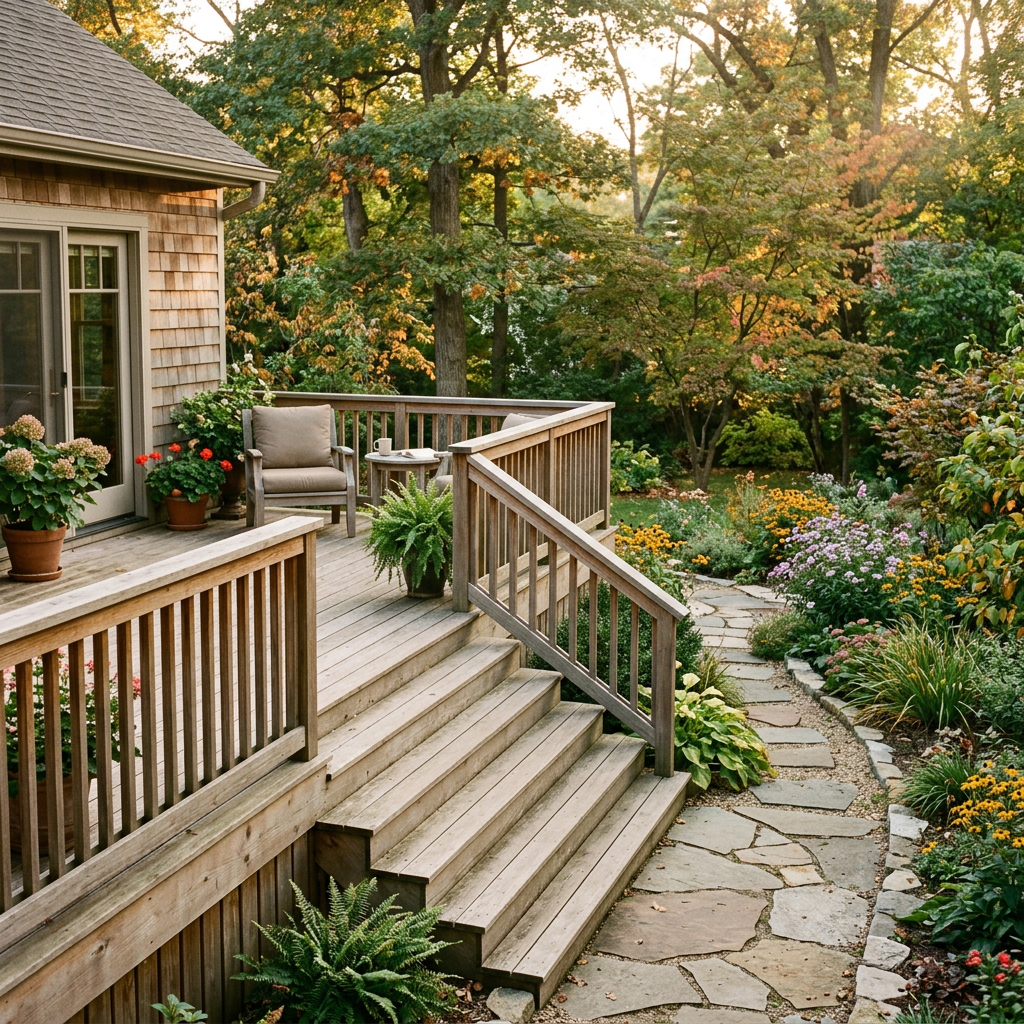
    Wooden deck with chairs overlooking a flower-filled garden and woodland path
    A welcoming deck overlooks a colorful garden and peaceful woodland path.

    I also take a walk on the back deck every day after my afternoon rest. It is not a long walk, and it is not meant to replace the longer outings I do when I can leave the house. The point is repetition in a familiar place: a short circuit I can manage at the end of the day, when the rest of the work is already done.

    Along that railing I gradually train myself to let go. At first the hand stays close, ready to catch the rail if balance shifts. Over time I practice taking steps without holding on, then more of them, so the walk becomes less about the support and more about the legs doing the work. I also stop at the end of the railing and simply stand there—not gripping, not leaning into it, not bracing with a hip or a shoulder. The task is narrower than it sounds: stay upright, feel both feet on the deck, and try to trust my own two legs and feet to hold me without the rail as a backup. Some days that stand lasts only a moment. Other days it holds a little longer. Either way, it is part of the same slow practice as the floor work and the therapy sessions—asking the body, and the balance system that governs it, to rely a little more on itself.
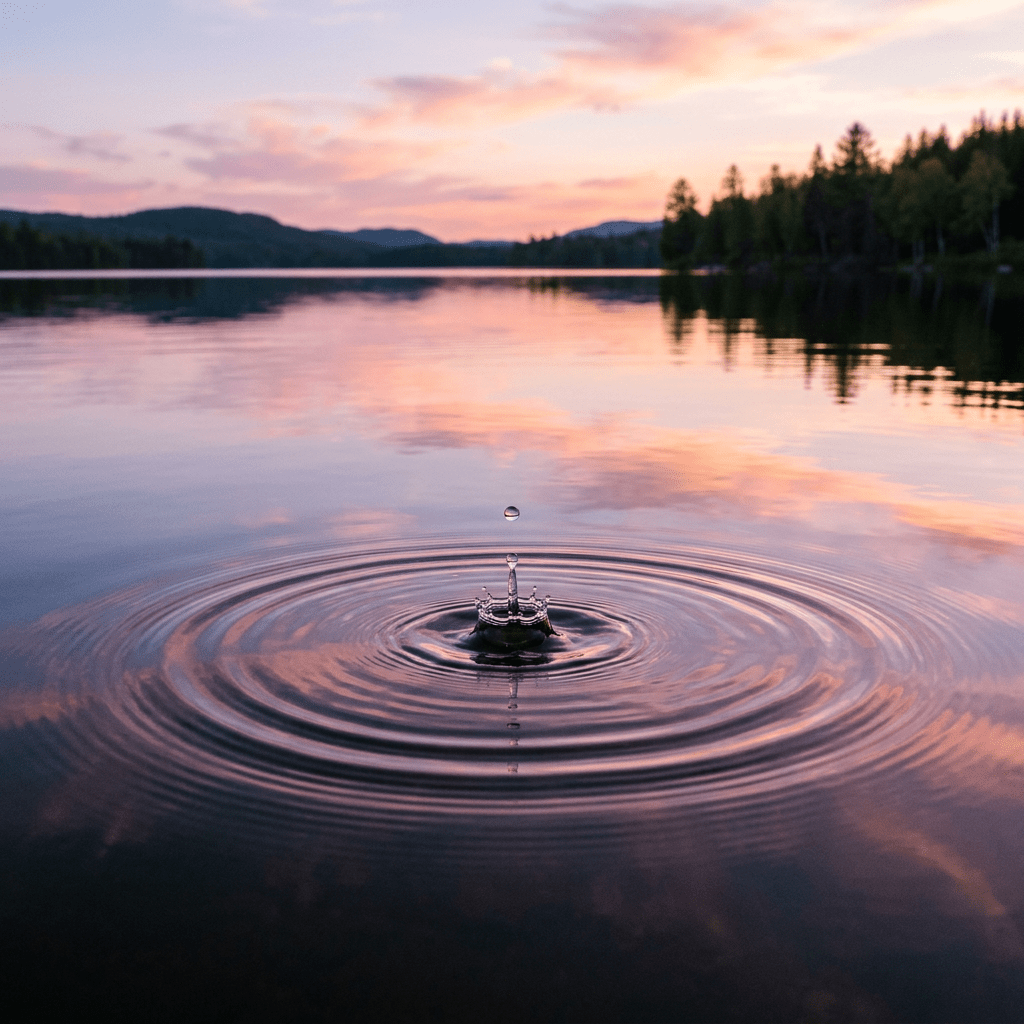

  • The Ripple Effect: More of What You Love

    The Ripple Effect: More of What You Love

    It is easy to overlook the quiet “miracles” that surround us every single day. Yet one of the most profound truths about human fulfillment—and about creating even more goodness in our lives—is this: It is vital to be thankful for everything that is good in your life.

    Gratitude has become an overused buzzword. Gratitude is not just a polite “thank you” or a fleeting warm feeling. It is a deliberate, heart-centered practice that shifts your entire energy, perspective, and ultimately, your reality. We all know, on some level, that we should not take the basics for granted. Running water that flows clean and hot at the turn of a tap. Reliable heating that keeps your home cozy when winter bites (this is uber important to my constantly freezing body!). A solid roof overhead that shields you from rain, wind, and the elements. Yet for many of us, these “luxuries” become background noise.

    The same goes for the people in our lives. Friends and family. My family—especially—have shown up, even imperfectly. I am beyond grateful that I was not tossed out when I became needy and helpless. Typically, we appreciate them in moments of crisis or celebration, but how often do we pause in ordinary moments to truly feel the gift of our family’s presence?

    Here is where the magic happens. Casual appreciation is nice, but to bring about more in our lives, we need to feel truly grateful for everything and everyone—not just the obvious blessings, but the small, the mundane, and even the challenging things that shape us.

    Think about it. When you wake up and genuinely feel thankful for the bed that held you through the night, the air filling your lungs, the sunlight (or even the rain) outside your window, something inside you softens and expands. Your nervous system calms. Your mind clears. Opportunities that once hid in plain sight suddenly become visible. Psychologists call this the “broaden-and-build” theory: positive emotions like gratitude widen our awareness and help us build resources—relationships, skills, resilience—for the future.

    On a more spiritual or energetic level, many traditions and modern manifestation teachings emphasize that what you appreciate appreciates. Gratitude acts like a magnet. When you radiate sincere thanks for what you already have, you signal to the universe that you are a good steward of blessings. You are ready for more. Contrast this with the scarcity mindset: constant wanting, complaining, or comparing. That energy tends to keep us stuck exactly where we are, focused on lack.

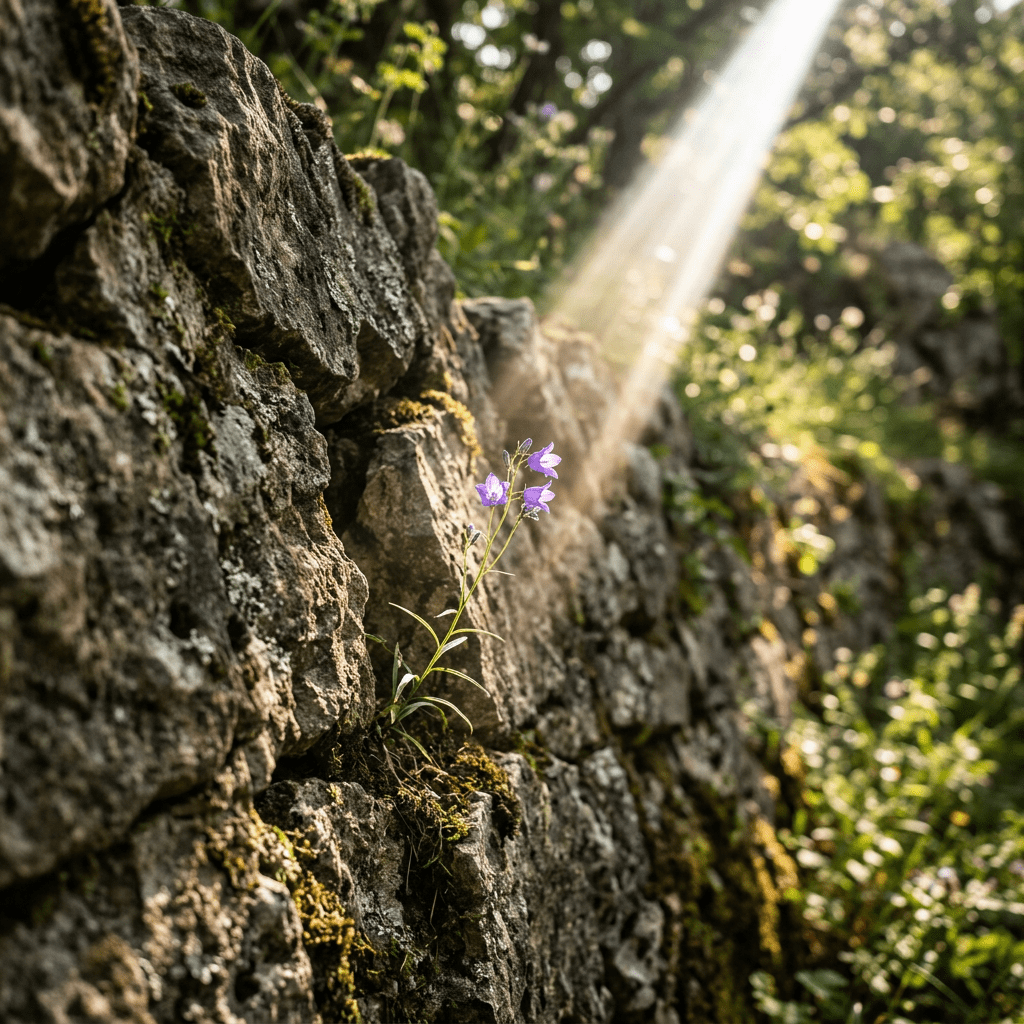
    Purple wildflower growing out of a crevice in a moss-covered stone wall with sunbeam
    A delicate purple wildflower blooms from a crack in a mossy stone wall illuminated by sunlight

    Even in hardship, gratitude works its alchemy. Being grateful for the quiet strength you discover in loss is something that I had to discover. These are not toxic positivity exercises—they are honest acknowledgments that every experience contains seeds of growth.

    Turning gratitude into a life-changing habit does not require hours of your day. Ask, “What is this situation trying to teach me?” Then thank it in advance for the wisdom or strength it will bring.Bookend your day with gratitude. Start with thanks for the day ahead and end with thanks for what unfolded.

    Journal, pen, steaming coffee cup, and vase on a windowsill with sunrise over mountains
    A peaceful morning scene with a journal, coffee, and sunrise view

    When you embody this level of gratitude, life responds. Relationships deepen because people feel genuinely valued. Health improves as stress decreases and joy increases. Abundance flows—at least in steady, meaningful ways: unexpected help, creative ideas, synchronicities, and a profound sense of “enough” that paradoxically opens the door to more.

    So today, pause. Look around. Feel the chair supporting you, the device in your hands bringing these words, the breath moving through you. Say thank you—and really mean it. For the basics. For the people. For the lessons. For everything.