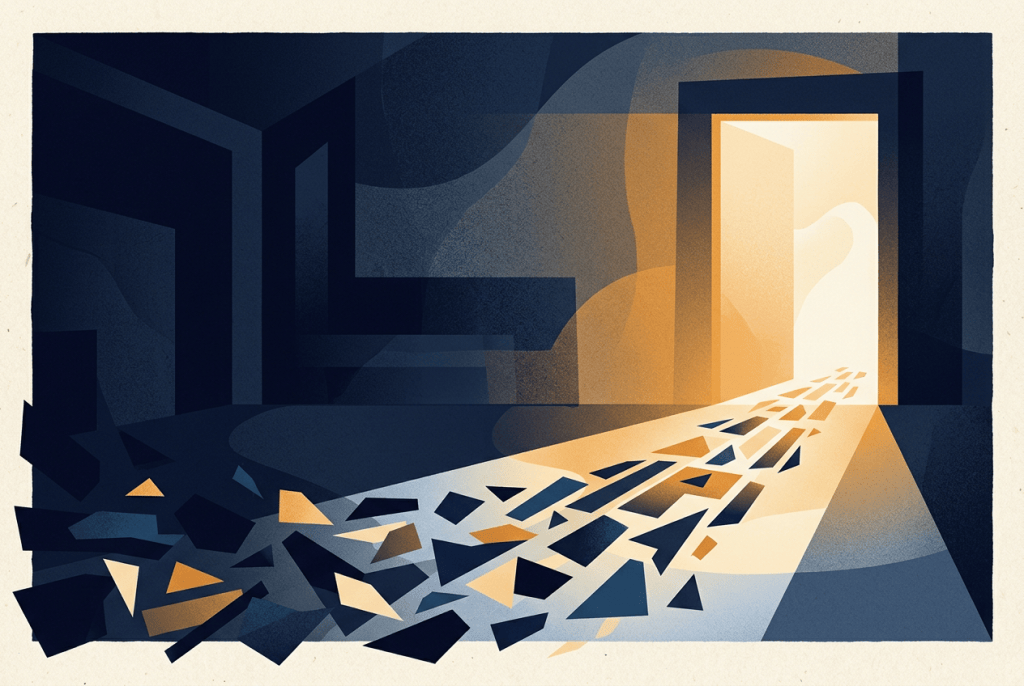
Describe a failure that, looking back, was actually one of the best things that ever happened to you.
View all responses

Most of us are taught, early and often, to minimize our mistakes. Minimize ourselves. We learn to polish the edges of our failures, shift blame when it feels safer, or quietly bury the evidence so the story we tell about ourselves stays clean. Yet the people whose lives feel richest, most trustworthy, and most compelling are rarely the ones who never stumbled. They are the ones who learned to turn around, look at the mess they helped create, and say, without drama or self-flagellation: This was mine. Now what?
Owning your faults is not the same as wallowing in them. It is the deliberate choice to take full responsibility for your part in an outcome, even when others share the blame, even when the cost is high. That single habit quietly rewires character and, over time, writes a life story that feels genuine rather than staged.
When we refuse to own our faults, we outsource our power. We wait for other people to change, for circumstances to shift, or for time to erase what we will not face. Relationships thin out because trust requires the other person to believe you will name what is true. Personal growth stalls because you cannot correct a pattern you will not acknowledge. The story you end up living becomes a series of near-misses and unfinished chapters—interesting in fragments, but hollow in the middle.
Ownership does the opposite. It returns the pen to your hand.

Character is not built in the moments we get everything right. It is forged in the moments we get something wrong and still choose integrity.
- Humility grows when you stop needing to be the hero of every scene. You become someone others can approach with hard truths because they have watched you handle your own.
- Courage is practiced each time you speak the uncomfortable sentence instead of the convenient one. Over years, that muscle makes larger risks feel possible.
- Empathy deepens because you remember what it feels like to be the one who caused harm. You stop treating other people’s mistakes as moral failures and start treating them as shared human territory.
- Resilience strengthens when failure is no longer a verdict on your worth. It becomes data. You learn faster, adjust sooner, and recover with less self-contempt.
None of these traits arrive overnight. They accumulate in ordinary decisions: the apology sent before you are forced to make it, the project you restart instead of quietly abandoning, the conversation you reopen even though it would be easier to let the silence stand.
A beautiful life story is not a flawless one. Perfect stories feel thin because real readers know they are incomplete. The stories that move us contain recognition of error, a clear-eyed acceptance of consequence, and the visible work of repair.
Think of the chapters that still matter to you years later. They are rarely the ones in which everything went according to plan. They are the ones in which someone—sometimes you—admitted the gap between intention and impact, absorbed the cost, and chose a different next action. That sequence creates shape. It creates stakes. It creates the sense that the person at the end of the story is meaningfully different from the person at the beginning.
When you own your faults, you give your life shape. You stop editing out the messy middle. The resulting narrative may not be tidy, but it is coherent. People can follow it. More importantly, you can follow it. You know which choices were yours, which lessons belong to you, and which version of yourself is still becoming.
Ownership is a skill. Like any skill, it improves with deliberate repetition.
- Separate facts from story. Write down, in plain language, what you did or failed to do. Leave motives and justifications for later.
- Name your specific contribution. Avoid the vague “I could have been better.” Identify the decision, the silence, the tone, or the priority that was yours.
- Make the repair proportional. Sometimes repair is an apology and changed behavior. Sometimes it is restitution. Sometimes it is simply stopping the pattern so it does not continue. Match the action to the harm.
- Extract the usable lesson. Ask what you will do differently the next time the same conditions appear. Then build a small system or reminder that makes the new choice easier.
- Release the rest. Once you have owned the fault and done what you can to address it, continued self-punishment adds nothing to character and subtracts energy from the next chapter.
A life spent refusing to own faults tends to shrink. Relationships become careful. Ambitions become safer. The self becomes a defended position rather than an evolving person.
A life spent owning faults tends to expand. You become someone who can be trusted with more—more responsibility, more intimacy, more complex work—because others have seen you handle the hard material. You also become someone who can trust yourself. You know that when you err, you will not abandon the truth. That knowledge is quiet, but it is stabilizing.
The beautiful life story is not the one free of faults. It is the one in which the faults were met with honesty, the damage was faced, and the person kept writing. That story has texture. It has evidence of growth. And when someone later asks how you became who you are, you will not need to invent an answer. The chapters will already be there, marked by the moments you chose to own what was yours.


Leave a Reply