Tag: past

  • Ivermectin’s Role in Modern Medicine and Parasite Awareness

    Ivermectin’s Role in Modern Medicine and Parasite Awareness

    This might as well be a part of ‘My Passion for Nutrition’ series…

    Remember the “Horse Paste” Hysteria? Time to Talk Honestly About Parasites and Ivermectin

    Back in the chaotic 2020s, when the world felt like it was spinning out of control, one of the strangest battles was the all-out demonization of ivermectin. Labeled everything from “horse paste” to dangerous misinformation, it became a cultural exclamation point. But it is time to step back from the noise: Ivermectin is a legitimate, Nobel Prize-winning antiparasitic medication with a proven track record in human medicine. And yes—there is a broader conversation worth having about whether most of us could benefit from thinking more seriously about parasites in our modern lives.

    Discovered from soil bacteria in Japan and developed into a powerful tool against parasites, ivermectin has transformed global health. It paralyzes and kills certain worms and parasites by disrupting their nerve and muscle functions. It earned its discoverers the 2015 Nobel Prize in Physiology or Medicine for its impact on river blindness (onchocerciasis) and lymphatic filariasis—diseases that blinded and debilitated millions.

    Petri dish containing glowing green bacterial colonies with soil samples in a laboratory
    A petri dish with glowing bacterial colonies under lab conditions

    It is incredibly inexpensive to manufacture—estimates put production costs as low as two pennies (I guess you should round up to a full nickel now!) per dose in bulk. Generic versions sell affordably (often under $50–$100 for a treatment course in the US with discounts), which means it does not line Big Pharma’s pockets like patented drugs. Through donation programs, billions of doses have been distributed for free in endemic regions. This accessibility is part of what makes it such a public health success story.

    Here is where things get uncomfortable but real. Many of us in developed countries like the US do not wash our hands as thoroughly as we should. Fresh produce (especially organic!) is not always perfectly cleaned. Pets track in dirt, fleas, or other critters. International travel, imported foods, and close contact with others can introduce risks. Thus,intestinal parasites like Giardia, pinworms (Enterobius vermicularis), or others are not unheard of—even in “clean” societies.

    I am not here to advocate staring into your toilet bowl (I am a lady, after all).But cleanses can rid us of all the environmental toxins that infiltrate our daily lives.

    Earth with illustrations of bacteria, viruses, DNA, medical symbols, and scientific instruments around it
    An artistic portrayal of Earth surrounded by microorganisms and medical symbols, highlighting global health connections.

    Ivermectin remains a wonder drug for what it was designed to do. The 2020s taught us many lessons about questioning narratives, but also about respecting evidence-based medicine (even if it does not bring in the big bucks!). Routine cleansing for everyone may be necessary, even for most in sanitary environments. Disease invades those in developed countries. Parasites can also make us ladies act like “lunatics” during full moons (The word “lunatic” comes from Latin luna (moon), reflecting ancient beliefs that the full moon drove people—especially women—mad)…Greater awareness and targeted use of something like Ivermectin is absolutely worth discussing without the {political} drama.

  • From Black-Pilled to White-Pilled: A Mindset Shift

    From Black-Pilled to White-Pilled: A Mindset Shift

    I am not typically a negative person (read more here). I see the glass half full not half empty. However, I often feel that lack in my life—my man will say, “I wish they did that for you… you deserve a win” and my response? “That’s just how life works out for me now…. Whether it is my recovery, my relationship… I always have to wait”. Recovery crawling. Relationship hitting every red light. Opportunities? I am always waiting. Always.

    Sounds like some emo, woe-is-me playlist on repeat, right? But I am owning this pattern like its designer. I have stopped fighting the current and started riding the wave. Everything—everything—is gonna drop when it is supposed to. Not a second sooner, not a millisecond later. The delays are not punishments; they are plot armor. Call me delulu if you want, but I am wearing that label.

    Now let us talk about the real cancer that is eating souls these days: being black-pilled. You know the type. These miserables look at society’s flaming dumpster fire and the wreckage of their own lives and decide the only logical response is to glorify the potential apocalypse. “It is all doomed. Women are finished. Men are finished. The future is soy, depression, and climate lockdowns. Might as well rot in bed.” Black-pillers do not see problems—they call it realism. They marinate in present-day suckage and future-cucked despair like it is a personality trait. Spoiler: this is not deep. It is just being an emotional with extra steps. Zero growth. All cope.

    Personally, I am riding the white-pill wave so hard. White-pilled is not some naive sunshine and rainbows. It is refined, razor-sharp clarity with a side of patience. You start seeing every “delay” as divine diversion for your own good. That job that ghosted you? Saved you from becoming a soulless cubicle zombie. The slow recovery? It is the universe wrapping you in bubble wrap so you do not shatter before you are ready to become the final version of yourself.

    DIVINE TIMING ✨✨✨

    Nothing takes “too long.” It takes exactly as long as it needs to. You are not being ignored—you are being protected. That glorious 20/20 hindsight always rolls up: Every closed door, every late blessing, every “not yet” is the cosmos playing 4D chess while you are still stuck on checkers.

    Thus , I am done romanticizing the wait. I am weaponizing it. The black-pillers can keep doom-scrolling and crying into their half-empty drinks. I will be over here, glass half full (of celebratory champagne,probably), watching the universe cook up my victory lap.

    Timing is not the enemy. It is the ultimate plot armor. And when my moment hits it is going to be so loud that even the black pillers will not be able to ignore it.

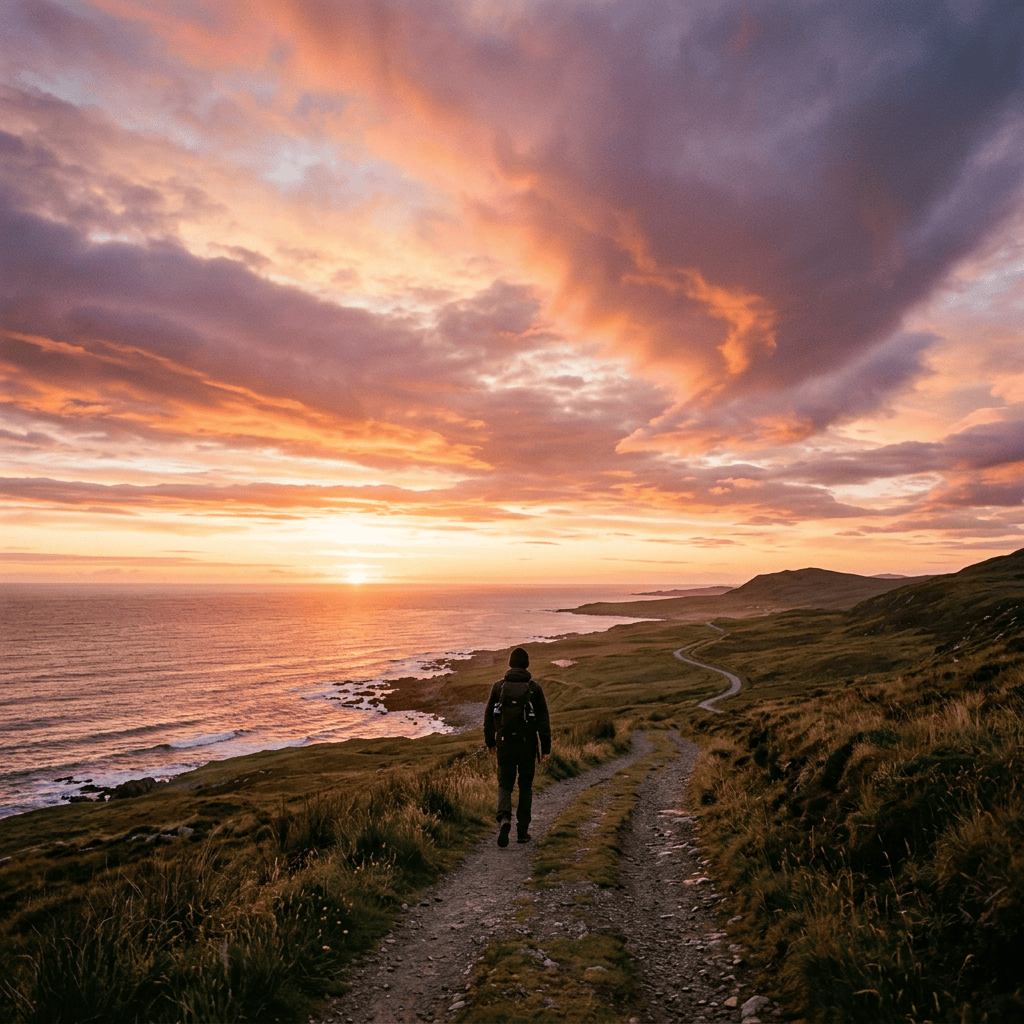
    Winding dirt path through vibrant wildflowers with sun setting behind distant hills
    A winding path through a colorful wildflower meadow at sunset

    Stay white-pilled, kings and queens. The wait sucks, but the glow-up? Worth every second.

  • Understanding Memorial Day: Origins and Observances

    Understanding Memorial Day: Origins and Observances


    This Memorial Day, my boyfriend and I will be doing what we do best lately: sharing our usual FaceTime coffee date from opposite sides of the country. We have spent several recent Memorial Day weekends physically together, but somehow these long holiday stretches still end up with us glued to our phones — sipping coffee, chatting, and wishing we were in the same room. His grandfather served in the Second World War (but passed away in 2010). Because of that, my history-buff boyfriend feels a deep, personal connection to this holiday that I, as a Russian immigrant, can never quite match.

    In Russia, we grow up honoring May 9th — Victory Day — with parades, red carnations, and stories of grandparents who fought in the Great Patriotic War. Patriotism there is loud, emotional, and woven into everyday life. Here in America, it feels quieter. More subdued. I understand why. This land has not seen the kind of devastation and loss that so many other countries have endured on their own soil. America’s wars have largely been fought far away, on someone else’s beaches and battlefields. That distance changes how the day lands in people’s hearts.Still, I find myself reflecting on the sacrifices made by those who came before — especially the ones who made my boyfriend’s family possible. Even from a screen, I am grateful to share this day with him.

    American flag at half-mast above Arlington National Cemetery with U.S. Capitol building and sunset sky

    Most people treat Memorial Day as the beginning of the summer. However, Memorial Day is more than just a long weekend marking the unofficial start of summer. It should not just be a holiday for another coffee date. It is a solemn national holiday dedicated to remembering and honoring the men and women of the United States Armed Forces who made the ultimate sacrifice in service to their country.

    A Brief History of Memorial Day

    The roots of Memorial Day trace back to the aftermath of the American Civil War, one of the bloodiest conflicts in U.S. history, which claimed the lives of approximately 620,000 soldiers. In the years following the war, communities across the nation began decorating the graves of fallen soldiers with flowers, wreaths, and flags—a practice that gave rise to the original name, “Decoration Day.”

    White house porch decorated with red, white, and blue patriotic bunting and American flags

    On May 5, 1868, General John A. Logan, commander-in-chief of the Grand Army of the Republic (an organization of Union veterans), issued a proclamation establishing Decoration Day on May 30. That first national observance drew thousands to Arlington National Cemetery, where flowers were placed on the graves of both Union and Confederate soldiers.

    While several locations claim to be the birthplace of the holiday (including Charleston, South Carolina, and Boalsburg, Pennsylvania), the tradition spread rapidly. After World War I, it expanded to honor all American service members who died in any war. The name officially became “Memorial Day,” and in 1971, Congress passed the Uniform Monday Holiday Act, moving it to the last Monday in May to create a three-day weekend.

    The True Meaning and Significance

    At its core, Memorial Day is about remembrance and gratitude. It acknowledges that freedom is not free and that countless individuals—sons, daughters, fathers, mothers, brothers, and sisters—paid with their lives to defend the ideals of liberty, democracy, and justice.

    This day serves as a powerful reminder of the human cost of conflict. From the Revolutionary War through today’s global operations, these heroes stepped forward when their nation called, often knowing the risks involved. Their sacrifice ensures that future generations can enjoy the blessings of peace and opportunity.

    Memorial Day also fosters national unity. It transcends politics, reminding Americans of shared values and the collective debt owed to those who defended them.

    How Americans Observe Memorial Day

    Traditions vary, but the spirit remains consistent:

    • Cemetery visits and grave decorations: Families and volunteers place American flags and flowers on the graves of fallen service members. National cemeteries like Arlington become seas of red, white, and blue.
    • Parades and ceremonies: Military parades, speeches, and moments of silence honor the fallen. The National Memorial Day Concert in Washington, D.C., is a highlight.
    • Flags at half-staff: From sunrise until noon, U.S. flags fly at half-staff to symbolize mourning, then raised to full staff to honor the living who continue the legacy.
    • BBQs and family gatherings: While celebrations often include cookouts, many use the time to reflect, teach children about history, and express thanks.
    World War I cemetery with crosses, poppies, and flags of UK, France, USA, and Canada at sunrise

    It is important to distinguish Memorial Day from Veterans Day (November 11 AKA my boyfriend and I’s physical anniversary!)), which honors all who have served—living and deceased. Memorial Day specifically focuses on those who died in service.

    Why It Still Matters Today

    In an increasingly fast-paced world, Memorial Day calls us to pause. It invites reflection on sacrifice, service, and the responsibilities that come with freedom. For Gold Star families—those who have lost loved ones—it is a day of both profound grief and national recognition.

    As we enjoy barbecues, beach trips, and time with loved ones, let us remember the true reason for the holiday.

    To all who gave their lives so we might live in freedom: Thank you. We will never forget.

    This Memorial Day, may we honor their memory not just with words, but with lives lived in gratitude and service to the country they loved.

  • Cottagecore: Embrace the Gentle Rebellion Against Hustle Culture

    Cottagecore: Embrace the Gentle Rebellion Against Hustle Culture

    In a world that glorifies the relentless grind—the 5 a.m. alarms, the overflowing inboxes, the endless cycle of productivity hacks and side hustles—there is a quiet revolution blooming in meadows and on windowsills. It is called cottagecore, and it is not just an aesthetic. It is a lifeline for those of us whose nervous systems have been fried by the modern expectation to do it all, be it all, and still look effortlessly polished while doing so.

    Cottagecore is the dream of soft mornings wrapped in linen, the scent of fresh bread cooling on the windowsill, hands stained with berry juice from jam-making rather than ink . It is the gentle rejection of a life that was never designed for human flourishing. And for many burned-out Zoomers (and yes, some of us who came just before them), it became the soft landing we desperately needed.

    Picture this: You are rushing out the door, hobbling in stilettos, latte in one hand, briefcase threatening to burst just like your barely-contained anxiety. You Uber across the city for a meeting that could have been an email, all while mentally preparing for happy hour later—because heaven forbid you miss the narrow window to “meet someone” who might join you for brunch on the weekend. Then, because society demands you remain a certain shape, you drag yourself to a workout class at dawn so you do not become one of those “sad piles of fat.”

    Businesswoman in suit crossing street quickly with coffee cup and folders
    A businesswoman confidently strides across a busy city street holding coffee and files

    Layer on top of that the constant family obligations, notifications that never stop pinging, and the quiet terror that if you slow down for even a moment, you can fall behind. Our nervous systems were never meant to handle this level of stimulation. We are wired for seasonal rhythms, for community in small doses, for rest that actually restores.

    The pandemic, for many, cracked the illusion wide open. Suddenly the hamster wheel paused. No more commuting. No more forced socializing that left us emptier than before. And in that stillness, a truth emerged: we do not actually want the girlboss life. We want to bake sourdough at 10 a.m. on a Tuesday. We want to knit by the window while it rains. We want to tend a garden that feeds us more than just vegetables—it feeds our souls.

    Hands planting a small herb seedling in soil with thyme label visible
    A person plants a young herb in a sunny garden bed surrounded by labeled plants and gardening tools.

    I am not Gen Z. I did not discover cottagecore because the hustle culture finally broke me during lockdown. I chose this life because I fell in love—with a person, with a pace, with a vision of days that felt like poetry instead of performance.

    While the world was collectively reevaluating during those strange years, my slower lifestyle was already taking root. The pandemic did not force my hand; it simply confirmed what my heart already knew. I did not want to optimize my life for maximum output. I wanted to nurture. To create a home that felt like an embrace. To build something sustainable not just for my bank account, but for my spirit.

    There is profound strength in choosing the wooden spoon over the corner office. In trading stilettos for wool socks and well-worn boots. In measuring success by how many jars of jam line your pantry shelves instead of how many LinkedIn connections you have made.

    This is not about cosplaying: romanticizing poverty or playing pretend farm. It is about reclaiming what actually makes us feel alive.

    Cottagecore reminds us that caring— for a home, a garden, a partner, ourselvesis not weakness. It is the most radical act in a culture that tells us to outsource our softness.

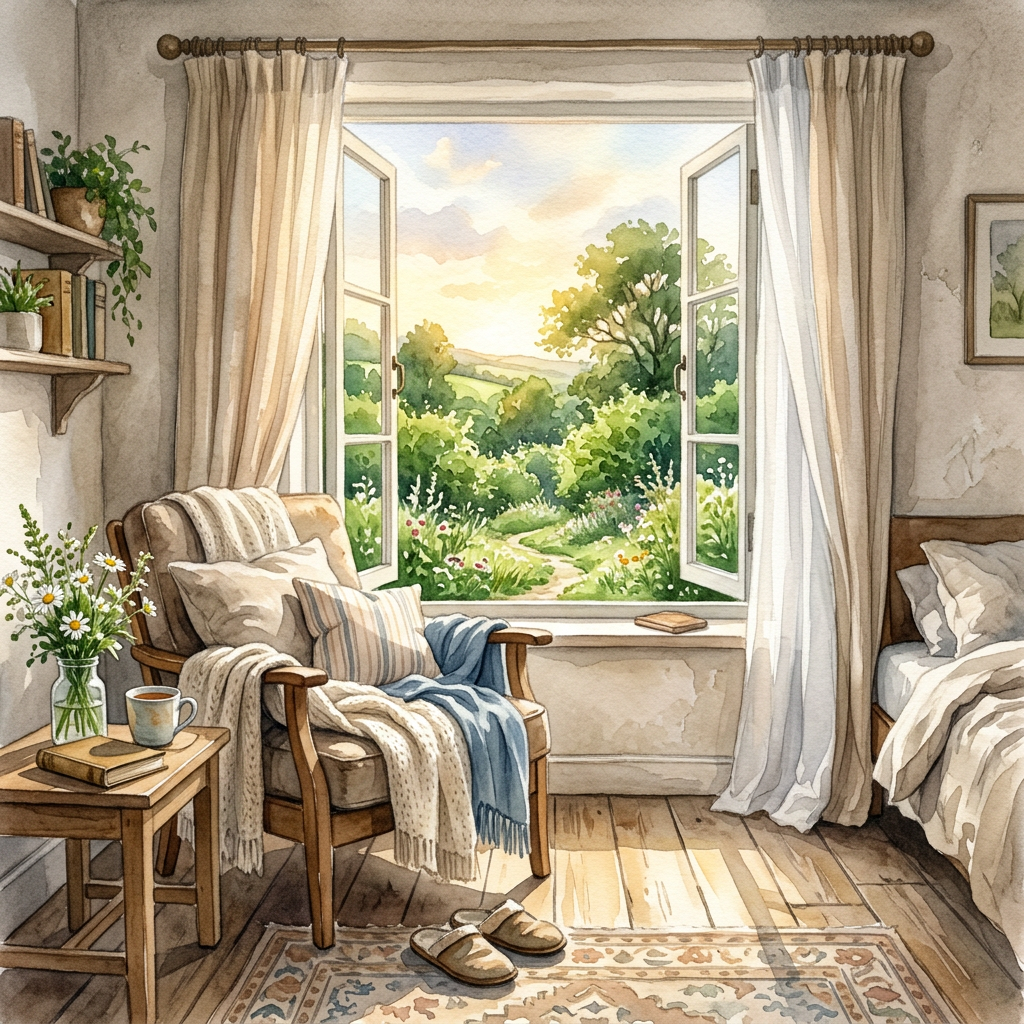
    Rustic kitchen interior with wooden table, bread, coffee, and a floral bouquet
    A warm rustic kitchen bathed in morning sunlight overlooking a garden

    We were not built for constant performance. Our bodies and minds crave the slow turn of seasons, the satisfaction of self-sufficiency, the deep peace that comes from creating rather than consuming.

    To every soul who feels the pull toward this softer path: you are not lazy. You are not failing at modern life. You are remembering something ancient and true.

    Cottagecore is not an escape. It is a homecoming.

  • Why I Embrace My Ego: A Counter to Eckhart Tolle’s Philosophy

    Why I Embrace My Ego: A Counter to Eckhart Tolle’s Philosophy

    Look, I am not here to hate on spirituality. I am deep in the gratitude game. I say my thank-yous to the universe, I journal my little wins, I burn sage when the vibe feels off. I am not some closed-off cynic. But The Power of Now? Eckhart Tolle’s whole “dissolve your ego and float in the present moment like a neutered zen monk” sermon? Hard pass. That does not sit right with me. It actually pisses me off a little.

    The core of his gospel is this idea that your ego — those loud, chaotic, nonstop voices in your head — is the enemy. The villain that keeps you trapped in regret about yesterday and anxiety about tomorrow. Just drop it, he says. Surrender. Become pure consciousness. Be here. Be now.

    Nah. I love my ego. I cherish it. The ego has been my ride-or-die since day one.

    I definitely do not dwell on the past like most people. No endless loops of “what if I’d done this differently” or chewing on ancient mistakes. I burned those bridges and kept going. But the future? Oh, I am projecting that, I am out here scripting scenes, imagining outcomes, weighing risks, and feeling a healthy dose of hesitation about what is coming. That is not a flaw. That is survival.

    My ego has always been the loudest voice in the room — and I like it that way. Sure, acting like I am slightly better than everyone else has slammed some doors in my face. I have been called arrogant. Intimidating. “Too much.” Whatever. Those doors probably led to boring rooms full of beige people anyway. The same ego that rubbed some the wrong way also pulled in the chaotic, brilliant, ride-or-die humans I actually stuck with. It carved out a life that is messy, dramatic, and mine. I am not trading that for some sterile, ego-less void where I am supposed to smile at my IKEA furniture and pretend the present moment is peak existence.

    Because let’s be real: I do not love the Now.

    My current living situation? It is mid at best. The walls are closing in, the vibe is stale, and every day I am reminded this is not where I am supposed to settle. Everything is improving — slowly. My love life finally exists after what felt like a years in the Sahara, which should be a win, right? Except it is not all butterflies and multiple orgasms nightly. It comes with this sharp, gnawing loneliness that hits at 2 a.m. and makes me stress-eat like a raccoon in a dumpster. The Now, in 2026, tastes like lukewarm disappointment with a side of “is this it?

    And Tolle wants me to dissolve into this? To stop thinking ahead and just marinate in the current flavor of meh? Sorry, Eckhart. I am not enlightened enough to find bliss in my fridge and relationship anxiety.

    I get it — rumination is a trap. Endless future-tripping can paralyze you. But pretending the ego is pure poison ignores how much fire it gives you. My ego is the part that says “I want more.” It is the voice that pushes me to level up, to demand better, to not settle for spiritual crumbs when I could build an empire (or at least a life that does not make me want to die ).

    So, I will keep my ego. I will keep my sharp edges, my projections, my cocky little strut through a world that keeps trying to humble me. I will stay ungrateful about certain parts of the Now because that discontent is rocket fuel. Maybe one day I will evolve into some floating consciousness who does not need anything external. But right now? I am stress-eating, plotting my next move, and loving the chaos in my head that refuses to shut up.

    Call it toxic. Call it resistance. I call it being alive.

  • Down Under Dreams: My Wild Teenage Adventure in Australia with People to People

    Down Under Dreams: My Wild Teenage Adventure in Australia with People to People

    At fifteen years old, I stepped off a plane into a world that felt like it had leaped straight out of a National Geographic. The air was warmer, drier, and carried the faint scent of eucalyptus. I was part of the People to People Ambassador Program, a life-changing opportunity that took a group of wide-eyed American teens halfway around the globe to Australia. What started as a simple cultural exchange trip quickly became a whirlwind of big-city glamour, rugged outback exploration, family-style homestays, and the kind of teenage chaos that only happens when you are far from home and the usual rules do not quite apply (the innocent kind though, not really what we see on teenager television shows).

    Our itinerary was perfectly balanced between urban sophistication and raw Australian wilderness. We bounced between the gleaming harbors of Sydney and Melbourne and endless stretches of red earth in the outback. Long bus rides became our moving classrooms—hours spent watching the landscape shift from bustling streets to golden grasslands. We stayed with local families who opened their homes (and hearts) to us, sharing meals, stories, and glimpses into everyday Aussie life that no guidebook could ever capture.

    Sydney hit me like a fever dream. The iconic Opera House rose like white sails against the sparkling harbor, its curves even more breathtaking in person than in any photo I had seen. We toured the Olympic facilities from the 2000 Games, walking through stadiums that once echoed with global cheers. I remember standing there, imagining the roar of the crowd, feeling tiny yet somehow part of something enormous.

    But beneath the excitement, I carried a heavy secret. This was the year after I started high school, and the pressure to look and be “perfect” had already taken root in my mind. Australia felt like the ultimate reset button—a chance to reinvent myself far from judgmental eyes back home. Before the trip even began, I emailed the volunteer chaperones with a carefully worded note: I would not be eating much, and they should not worry about me. Looking back now, it breaks my heart to think of that determined, insecure fifteen-year-old girl trying so hard to control the one thing she could in a brand-new country.

    On those long bus rides, packed lunches were handed out like clockwork—sandwiches thick with deli meats, crisp chips, and sweet treats. I would politely unwrap mine, eat only the apple, and quietly put the rest aside. The volunteers were kind, but I could feel their concerned glances. During our homestay in Melbourne, the warm “mom” of the house cooked a hearty Australian meal just for us. I pushed the plate away after a few bites, murmuring something about being full. Her disappointed but understanding look still lingers with me. Food became both enemy and background noise while the real adventure swirled around me.

    Of course, no trip at fifteen would be complete without plenty of youthful mischief. I flirted shamelessly with the boys in our group—stolen glances across bus aisles, whispered jokes during tours, and that electric buzz of first crushes amplified by the freedom of being overseas.

    The Australian sun, however, showed no mercy. Wanting to be perfect meant that I wanted golden skin. I ended up severely sunburned. My skin turned lobster-red, peeling in painful sheets for days. Lesson learned: respect the ozone hole Down Under.

    One of my biggest hurdles was begging my mother—via crackly payphone calls from a random shopping mall —to let me get my belly button pierced. I pleaded, I reasoned, I dramatically described how “everyone” was doing it. She held firm.

    Instead, I settled for a temporary tattoo from a quirky shop near the harbor. It was some butterfly design that I proudly showed off to the group. When I got home, I let everyone believe it was real, basking in the temporary cool factor before it faded in the shower. Small rebellions, big memories.

    The real soul of the trip was during our long bus tours through the outback. The landscape stretched endlessly—red dirt, scrubby bushes, and skies so vast they made you feel wonderfully insignificant. We learned about Aboriginal culture, their deep connection to the land, and the stories passed down through oldtime legends.

    Vehicle driving on winding red dirt road in arid outback landscape
    A vehicle traverses a winding red dirt road through arid outback terrain under a partly cloudy sky

    One unforgettable stop was a wildlife sanctuary where I finally got to hold a tiny koala. He was everything I imagined: fluffy gray fur, button eyes, and a sleepy demeanor (apparently they are constantly high from eating the eucalyptus). I beamed for the camera, arms gently cradling him. But internally? I was screaming. Those adorable little claws dug into my arm like tiny needles. Sharp did not even begin to describe it. Still, worth every scratch for that photo and the story.

    We spotted kangaroos hopping freely in the wild—elegant, powerful creatures that seemed to defy gravity. At the sanctuary, we got closer, feeding them and watching their curious faces up close. Later, in a remote outback experience hosted by Aboriginal elders, we were treated to kangaroo tail. It was an honor to share in their traditional food. The tail was tough, mostly dense muscle with very little fat or tenderness—chewy, gamey, and completely unlike anything I had eaten before. It was not about gourmet flavor; it was about connection, respect, and tasting a piece of the land itself.

    That trip to Australia did not magically fix my insecurities around food and body image. Those battles continued for years as I eventually got down to double digits on the bathroom scale. But it planted seeds of perspective. I saw a country that was both modern and ancient, vibrant and harsh, welcoming and wild. I learned that adventures are messy—full of sunburns, awkward flirtations, hidden struggles, and moments of pure wonder.

    Holding that koala, even through the pain, symbolized something bigger: sometimes the cutest, most picture-perfect experiences are actually concealing something painful. Pushing away plates did make me feel more in control; but it also made me miss out on shared meals and hospitality. The temporary tattoo washed off, but the memories never did.

    Years later, I look back on that fifteen-year-old girl with compassion. She was brave enough to travel across the world, curious enough to embrace new cultures, and human enough to make mistakes. Australia taught me that life is best experienced fully—sunburns, sharp claws, kangaroo tail, and all.

    If you ever get the chance to say yes to an adventure that scares and excites you, just do it (like Nike!). Whether it is Australia or somewhere closer to home, the outback of your own growth is waiting.

  • The Faux Pas of Following the Script in Life

    The Faux Pas of Following the Script in Life

    Faux pas.

    Literally, it means “false step” in French—like you tripped over your own feet in the middle of a crowded ballroom and everyone turned to stare. In American English, we have borrowed the term to describe any social blunder, any tiny (or not-so-tiny) violation of the invisible rulebook that supposedly keeps society running smoothly. Say the wrong thing at a dinner party. Wear white after Labor Day. Ask a woman when she is expecting … when she is not actually pregnant. Boom. Faux pas. Social death.

    The phrase has always fascinated me because it is so perfectly French in its elegance and so perfectly American in its judgment. It sounds sophisticated, almost romantic—but really it is just polite code for “you messed up and now everyone’s secretly judging you.”

    And that got me thinking.

    Why are we so obsessed with these invisible lines? Who drew them? Who keeps redrawing them every few years? And why does the mere idea of being told how I am“supposed” to behave in any given situation make my skin crawl and my inner rebel kick into overdrive?

    I have never been good at following scripts. Not in recitals, not in job interviews, and definitely not in the grand theater of adult life. The older I get, the more I realize that a huge chunk of my personal growth has come from deliberately stepping on the lines everyone else is so busy tiptoeing around. Not out of spite (okay, sometimes out of spite), but because performing for an invisible audience feels like slow suffocation.

    Let me give you an example. My lack of job or career. My relationship and its status.

    Translation: Sweetie, that’s a faux pas. You’re supposed to say you are a “marketing coordinator” or “nurse practitioner” or anything that sounds like you have a 401(k) and a five-year plan.

    And: He is suppossed to choose you immediately. You should live together, get married and become a family, like everyone else…

    Because apparently everyone is the same and has the same path in life.

    Stability is overrated when you are busy living the life you actually want. And I want to be his 100%.

    That moment I am told how to live my life is never about being rude. It is all about refusing to shrink myself into the neat little box labeled “Acceptable Adult Woman.” Society has a whole collection of those boxes—career boxes, relationship boxes, body boxes, personality boxes—and they all come with instruction manuals disguised as “just common sense” or “what everyone does.”  News flash: most people do not even have any sense whatsoever (so it is not really that common). 

    Here is the thing I have learned the hard way: those expectations are not there to protect us. They are there to keep things comfortable. Comfortable for everyone else. Predictable. Easy to categorize. If I follow the script—get the degree, land the safe job, marry at the right age, have the right number of kids, post the curated vacation photos, never admit I sometimes cry in my shower—then nobody has to feel awkward. Nobody has to question their own choices. The machine keeps humming.

    But what if the machine is boring? What if the script was written by people who were terrified of their own shadow? What if “fitting in” is just another way of saying “quietly dying inside”?

    I am not advocating for chaos. I still say please and thank you. Basic decency is not the enemy. The enemy is the quiet tyranny of “this is how it’s done” when “it” no longer fits who you actually are.

    I hate being told what to do because I spent too many years doing exactly that and waking up wondering whose life I was living. I hate performative expectations because they turn human connection into a performance review. And I especially hate the way media has turned every single faux pas into a public execution. One off-color political joke, one long distance relationship, one honest opinion and suddenly you are struggling to get followers on social networks.

    The irony is that the people quickest to call out faux pas are often the ones most trapped by them. They are not free; they are just better at pretending.

    So here is my quiet rebellion: I am going to keep committing the occasional faux pas. Not the cruel ones—never those—but the ones that come from refusing to edit myself for other people’s comfort. I am going to wear the “wrong” outfit, say the “wrong” thing at the “wrong” time, and build a life that looks messy and inconsistent and deeply, unapologetically mine.

    Because the real false step is not tripping over some arbitrary social rule.

    The real false step is spending your whole life walking someone else’s path so carefully that you forget how to walk your own.

    And relearning how to walk has taught me that:  I would rather stumble forward in my own Yeezys than glide perfectly in someone else’s shoes. 

  • The Rise of Comfort: Embracing the Free-Bra Movement

    The Rise of Comfort: Embracing the Free-Bra Movement

    Remember when getting a bra that actually fit felt like a sacred, slightly humiliating pilgrimage? We would trek to the mall, hearts pounding, ready to surrender our bare chests to a stranger armed with nothing but a measuring tape and a clipboard. Victoria’s Secret was not just a store—it was a temple. And the goddess was that perfectly coiffed sales associate with the tape dangling around her neck.

    You would stand there in a tiny fitting room that smelled faintly of vanilla candles and desperation, arms raised while she poked, prodded, lifted, and adjusted. “Okay, honey, breathe out… now inhale… A cup? Or is that a B on a heavy day?” Brassiere itself sounds like industrial equipment. We endured it all for the promise of “lift and separation,” for the illusion of perfect, perky cleavage that could launch a thousand thirsty glances in high school. We contorted our bodies, sucked in our stomachs, and prayed the underwire would make us look like a goddess instead of committing war crimes on our young teenage bodies.

    Those were the days.

    Fast-forward to now, and the entire ritual has collapsed. I do not even think most women under 36 could tell you their real bra size if you held a gun to their head. We have collectively ghosted the fitting rooms. The measuring tape is an old relic only used by the boys now. Victoria’s Secret angels? Still gorgeous, but we are no longer buying what they are selling—literally.

    Instead, we are out here living our best soft-girl lives in cute little bandeaus, buttery-soft sports bras, and those barely-there bralettes that feel like a gentle hug from a cloud rather than a structural engineering project. No more wires digging into our ribs (I have a large ribcage!) like medieval torture devices. No more adjusting straps in public like a nervous tic. We are free-boobing it through Zoom calls, grocery runs, and yes, even date nights if the vibe is right (plus, my man enjoys my itty bittys).

    Let’s be real—this shift is not just about laziness. It is a quiet revolution.

    Society spent decades telling us our boobs needed to be contained, supported, weaponized. Push-up bras. Minimizer bras. Convertible bras with more hooks than a slasher film. We bought into the lie that comfort was secondary to looking “put together.” All for the boys to pay attention to us. That a proper lady had to have everything strapped down and presented like gift-wrapped perfection.

    Then came the pandemic. Sweatpants became uniforms. Loungewear went mainstream. And suddenly, we realized something revolutionary: our boobs do not actually need constant structural support to be valid. They are not structural hazards waiting to collapse. They are just… there. Soft, warm, part of us. And when we stopped squeezing them into unnatural shapes for eight hours a day, the world did not end. In fact, it got better. For me, nothing changed whether there was a pandemic or not. So I was free- boobing before it was “cool”.

    Woman sitting cross-legged on bed reading a book in cozy bedroom with natural light
    A woman enjoys a quiet morning reading a book in a sunlit bedroom.

    We discovered the joy of the bandeau—that rebellious little tube top that says, “I’m cute, I’m comfy, and I’m not apologizing for jiggle.” Sports bras that handle actual movement without turning us into armored tanks. Wireless wonders that whisper sweet nothings like, “Girl, breathe.”

    And let us talk about the knowledge gap. Ask a group of women their bra size today and watch the panic. “Umm… medium? Whatever fits” We have stopped obsessing over the numbers because the numbers were always a scam anyway. Bra sizing is notoriously inconsistent across brands. One store’s 32C is another’s 34B. It was all smoke, mirrors, and marketing.

    Ditching the heavy-duty bra is not just about comfort. It also is about reclaiming ownership of our bodies in a world that has long tried to dictate their shape, size, and presentation. I personally prefer being on the Itty Bitty Titty Committee , but advertisements and media companies love to shove triple Ds and Sydney Sweeney in my face…

    We are done performing for the male gaze with engineered cleavage. Done pretending that underwire equals empowerment. The free-boob movement—yes, I am calling it that—feels like the only level of body positivity I accept. It says: my breasts do not need to be edited, lifted, or minimized to be worthy.

    Of course, not everyone is on board. Older women clutch their pearls. The fitness bros complain about the materials in said bras. Some days even I miss the old sculpted look, but mostly I love sliding into a soft bralette and feeling like my natural body is enough.

    We traded poking and prodding for stretchy, breathable freedom. And I do not think we are going back.

    So next time you catch yourself reaching for that lacy, restrictive contraption out of habit, ask yourself: Do I really need this? Or am I just performing femininity from 2007?

    Throw on the bandeau. Rock the sports bra. Let them breathe.

  • Lessons from Dogs: Unconditional Love and Healing

    Lessons from Dogs: Unconditional Love and Healing

    I have never been much of a people person. Crowds exhaust me, small talk feels like a chore, and I have always found it easier to connect with animals than with most humans. But dogs? Dogs have been my constants, my comforters, my chaos-makers, and my greatest teachers in love. From the high-energy terriers of my childhood to the massive guardians who came later, each one has left paw prints on my heart—some gentle, some chaotic, and a few that healed wounds I did not even know were bleeding.

    Our first dog arrived when we moved to America: Visa, a spirited Jack Russell Terrier. She was pure gasoline wrapped in a small, wiry body—endless energy, boundless affection, and an ability to produce litters of adorable puppies every few years. We sold those puppies, but keeping Visa was never a question. She was family. She lived with us until my senior year of high school, long enough to see me through the awkward years with her wagging tail and zoomies that could clear a room.

    Then there was Boy, our gentle giant Rottweiler. He was the ultimate teddy bear—massive, sweet, and protective in that quiet, soulful way Rottweilers can be. Losing him to choking on a golf ball felt like losing a piece of the family in a cruel way. I still remember the heavy silence in the house after he was gone. He was replaced by Toby— a Pitt Bull who was also a sweetheart of a burly dog. He died of cancer as my family and I were in Cuba– one year before I got sick.

    In high school, I went through a full Paris Hilton phase. You know the one—tiny dog in a designer carrier, strutting like it was a runway. In order to properly cosplay, I begged my parents relentlessly until they surprised me with Gucci, a toy Maltese so small and fluffy he looked like a living stuffed animal (I did not want a chihuahua-like creature). He rode proudly in his carrier as I paraded him around, living my best Y2K celebrity fantasy. Gucci was my accessory and my buddy.

    But college changed everything. When I left for school, my mother “babysat” him, and by the time I returned, he was a completely different dog—yappy, spoiled, and obsessed with spinning in circles for treats. The quiet cuddles we once shared were replaced by constant begging and zoomie demands. I loved him, but it was a lesson in how dogs absorb the energy of their environment.

    While I was away at university, my parents brought home Max, an Argentinian Mastiff built like a tank. He was… a character. He growled at me whenever I tried to lie down on my childhood bed and he had expensive taste—specifically, my mother’s designer shoes. Our relationship was tense at best.

    Then came the day the wheelchair van dropped me off from the hospital after the stroke. As soon as the door opened, Max made his great escape. He bolted and never looked back. Respect. Even the big tough dog knew when it was time to hit the road.

    Not long after, my father brought home a Cane Corso puppy from Oregon that we named Polo. From the moment he entered our lives, we clicked. By then I was navigating life as a disabled young woman, and Polo only ever knew me that way. He did not see limitations—he saw his person. We became inseparable. He would lean his solid, muscular body against me for support (both literal and emotional), and his calm presence grounded me on the hardest days.

    Losing Polo in 2018 shattered me. My friends had drifted away as my health changed, and I felt profoundly alone. Polo’s death left a hole that nothing else could fill. I was heartbroken in a way I still feel echoes of today. He was not just a dog; he was my solace, my companion through isolation, and proof that unconditional love can come with fur and a wet nose.

    A couple years later, my parents rescued Xena from a trailer park nearby. An Anatolian Shepherd. She was scruffy, wild, and full of attitude. I could not stand her. I would lovingly (or not-so-lovingly) call her “Trash” and physically squirm away whenever she tried to get close. She was too much—too… everything.

    Then, a year later, they brought home Zorro, a Black Russian Terrier puppy. I was instantly smitten. He was tiny, ridiculously cute, and fit perfectly in my lap. I met him over FaceTime with my boyfriend, who watched my face light up and immediately got on board with the new puppy fever. Zorro was pure joy in a fluffy black coat.

    When my boyfriend finally met the whole crew in person, something magical happened. He fell in love with Xena—the dog I had written off. He played with her, doted on her, and treated her like the treasure she actually was. Seeing his genuine affection for my “Trash” dog melted every wall I had built. Suddenly, I saw Xena through new eyes. Now, on lonely days, I find myself talking to her. Her kind eyes see deep into my soul. She has become a source of comfort I never expected.

    Zorro, of course, grew into a massive, still-adorable giant. He is a total mama’s boy these days and mostly ignores me in favor of my mother. That is okay—dogs get to choose their favorites too.

    Looking back across Visa, Boy, Gucci, Max, Polo, Xena, and Zorro, I realize dogs have been consistent relationships in my life. They do not care about social performance or perfect health. They meet you where you are—whether you are a high schooler dreaming of Paris Hilton fame or a disabled woman learning to rebuild her world.

    They have brought chaos (puppies, chewed shoes, runaway Mastiffs), heartbreak (medical incidents, cancer, putting down beloved companions), and healing (lap-sized puppies and unexpected second chances with “Trash” dogs). Through it all, they have reminded me that love does not always come from people. Sometimes it barks and teaches you that even the dogs you initially reject can become the ones you talk to when you feel alone.

    If you are not a people person either, consider this your sign: open your heart to a dog (or several). They might just turn your “Trash” into treasure—and fill your life with more loyalty and laughter than you ever thought possible.

  • From Homewrecker to Homemaker.

    From Homewrecker to Homemaker.

    What is your career plan?

    The “It” Girls—the glossy, untouchable, “main character” women who once defined the era—are quietly, deliciously, scandalously… going domestic. Yes, those girls. The ones who used to jet-set to Mykonos in mini dresses, post mirror selfies in vintage Dior, and make “hot girl summer” a global brand. We are now knee-deep in homemade pasta, linen napkins, and 6 a.m. lattes brewed in our own perfectly imperfect kitchens.

    This is not your grandmother’s homemaking. This is haute homemaking. Cottagecore on ‘roids and cashmere. The new “It” Girl is not just nesting—she is curating a whole aesthetic religion around it. Think: barefoot in a silk slip dress whisking eggs, filming 45-second reels of her sourdough rising while her engagement ring catches the golden hour light, (🙏🏼🙏🏼🙏🏼). She is not hiding the domestic labor. She is flaunting it because it is the ultimate flex.

    Remember the 2010s “It” Girl blueprint? Hustle. Club to boardroom. Rosé all day. Side hustle turned empire (you can still rosè in the kitchen!). Burnout was a badge of honor. “I have not slept in three days but the bag is secure.” We were sold the fantasy that real power looked like never being home long enough to need a vacuum.

    I am not someone who claims that the pandemic caused this renaissance. Articles claim that post-pandemic exhaustion hit like a truck and that is why we are choosing to stay home. The “girlboss” script started sounding hollow—lonely hotel rooms, endless content creation, dating apps full of situationships, and a quiet ache that no amount of brand deal could fill. Personally, I see that the same women who once bragged about never cooking (famously Carrie Bradshaw in Sex in the City kept her sweaters in the oven!) are posting stories of them slow-roasting a chicken with rosemary from their windowsill garden.

    It is seen as rebellious/ controversial because it is a direct middle finger to the narrative we have been force-fed for decades: domesticity equals oppression. That wanting a beautiful home, a stocked fridge, and a man who comes home to the smell of garlic and love is somehow regressive. The hottest, most followed, most desired women on the planet are proving the opposite—homemaking done right is high-value, high-status, and insanely seductive.

    Walk into any cool girl’s apartment in 2026 and you can see it: the Le Creuset Dutch oven in a tasteful color, the vintage rolling pin displayed like art, and of course the sourdough starter. They are not just cooking—they are romanticizing the mundane. Morning dewy skin routines followed by watering herbs. Evening candlelit dinners they actually prepared instead of ordering from some immigrant driver.

    This is not tradwife cosplay for the poor. These are women with options. Models. Influencers. Actresses. They could be on yachts in Ibiza but they are choosing farmers’ markets and Sunday roasts. Why? Because it feels good. It feels feminine. It feels like control in a chaotic world.

    And let me be brutally honest—the men are losing their minds over it (at least mine is!). There is something primal about watching a beautiful woman who could have the world at her feet choose to pour that energy into creating a sanctuary. It hits different. It is not submission; it is sovereignty. She is not forced into the kitchen. She claimed it as her “queendom.”

    Hence, modern career feminism sold women a version of success that left many emotionally bankrupt. The “It” Girls who are “opting in” to homemaking are not rejecting ambition—they are redefining it. They are building empires in the home. We are not anti-work. We are anti-misery.

    Of course the purists are furious. “This is anti-feminist!” “You are setting women back!” Meanwhile those same critics are stress-eating takeout alone in their minimalist apartments wondering why their stress is through the roof. The new homemaker “It” Girl does not care. She is too busy teaching her followers how to make the perfect bolognese while looking like a Renaissance painting.

    This movement exposes the lie: that fulfillment can only come from cubicles and corner offices. That domestic skills are beneath a “modern woman.” The “It” Girls are proving domesticity—when chosen freely and done beautifully—is one of the ultimate luxuries.

    They are not trapped. They are thriving. Soft lighting, slow mornings, real food, real connection. And yes, sometimes a hot husband who worships the ground they walk on because they make the house feel like heaven.

    You do not need to quit your job tomorrow. But maybe the “It” Girl homemaker renaissance is permission to stop demonizing the domestic. To light the damn candle. To learn how to roast vegetables everyone asks for the recipe. To make your space so warm and intentional that people feel it the second they walk in.