What’s a moment in your life that made you feel truly alive?
Surviving my own near-death experience should have been the moment I felt most alive. That is what the stories promise, is it not? The white light, the sudden clarity, the gratitude that crashes over you like a second heartbeat. Instead, I woke up the way people wake from anesthesia—disoriented, heavy, bargaining with a body that no longer trusted me. It took years before I understood that survival and living are not the same verb.
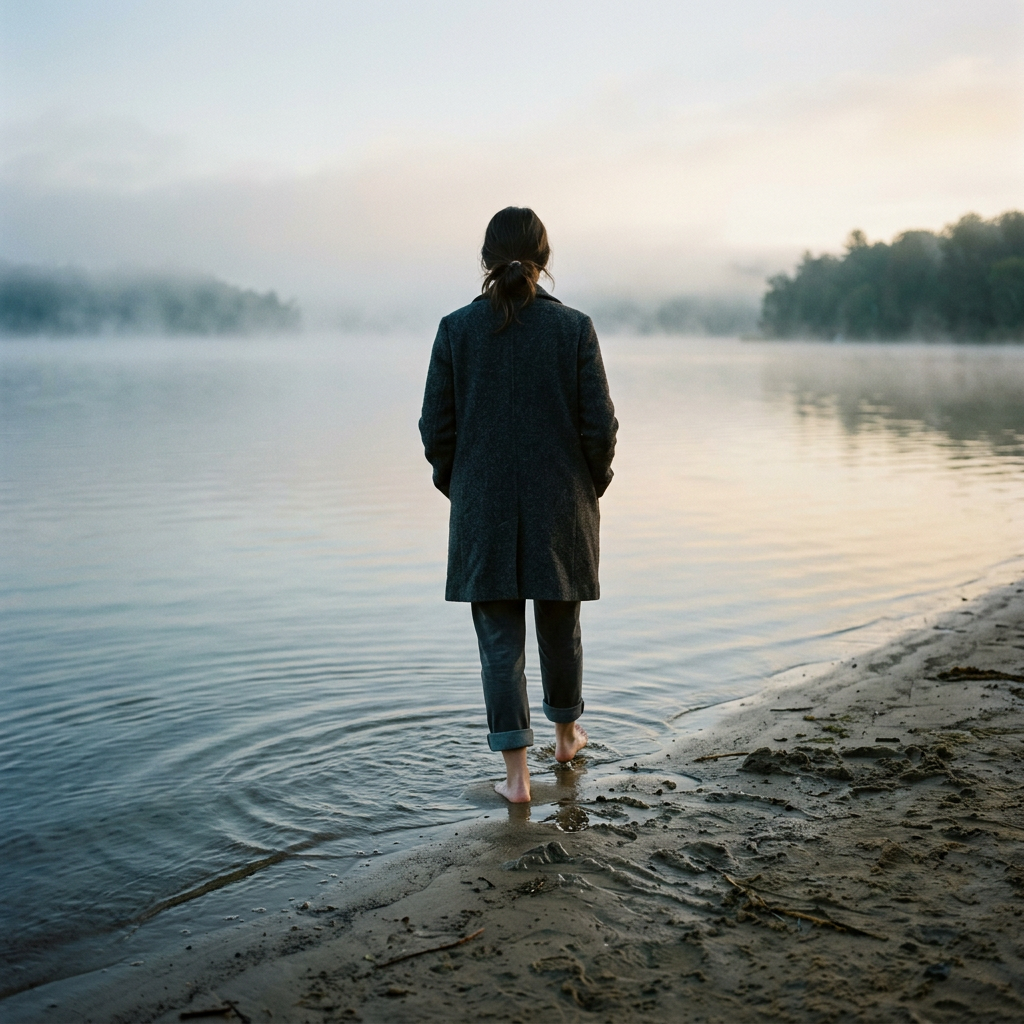
I have been addicted to losing weight since I was eleven. Not in the tidy, magazine-friendly way that gets turned into before-and-after slides. Addicted to the high of control when everything else felt unmanageable. Now for sixteen years I lived inside the sentence “when I can walk around again.” It was both promise and postponement. Walking was the future tense I kept conjugating so I would not have to inhabit the present one. Hospitals, mobility devices, the particular ache of a body that has been asked to carry too much for too long—those were the actual days. The walking was always later.
Later has not arrived yet, Only in Physical therapy. The first steps that felt less like triumph and more like negotiation. Muscles relearning their jobs. The strange, ordinary miracle of carrying my own weight from one room to another without a plan for how I would rest. And still, even then, a part of me keeps scanning the horizon for the real beginning.
Now add the fact that I am not physically with the person I love. Not in the abstract, not in the “we will figure it out” sense, but in the same space, the same bed, the same domestic gravity. His hand on the small of my back when I stand up. The way he notices when my breathing changes before I do. It should feel like arrival. Some days it does. Most days it feels like I have stepped into a room I spent decades decorating in my head and am waiting to check whether the furniture is real.
So I have to wonder—have I ever actually felt alive before?
The question sits with me the way certain aches do: not constant, but reliable when I stop moving. Alive, I suspect, is not the same as busy, or productive, or even happy. It might be closer to the sensation of being inside a body that is no longer primarily a project. For so long the body was the obstacle and the assignment. Every meal, every step, every number on a scale or a chart was data in service of a future self who would finally be allowed to start. Even after the near-death, the old script kept running underneath the new one: survive, then optimize, then live.
Being with someone who wants the version of me that already exists—not the lighter one, not the more mobile one, not the one who has finished recovering—keeps interrupting that script. He does not wait for me to become more alive before he treats me as if I already am. That is both a gift and a kind of vertigo. It forces the question into the open: if life is no longer waiting on weight, or on perfect walking, or on some final medical clearance, then what is it waiting on now?
I still catch myself postponing. I make plans for when energy is better, when the residual pain is quieter, when I feel more like the person I was rehearsing to become. The difference is that the postponement is shorter now, and I can usually see myself doing it. Some afternoons I sit on the edge of the bed longer than necessary, yearning to listen to the ordinary sounds of another person moving through the same rooms, while I practice the small, unspectacular choice to stand up and join him before I feel ready.
Maybe aliveness is less a peak than a practice. Maybe it is the gradual refusal to keep treating the present as a waiting room. The near-death experience did not hand me that practice fully formed. Neither did the walking, or the love. They only removed some of the more obvious reasons I had for staying in the hallway. The rest—the decision to stop narrating my own life in the future tense—is still being learned, one ordinary morning at a time.
I am not sure I have ever felt fully alive. I am more certain than I used to be that I am willing to find out what it feels like when I stop waiting for the feeling to arrive first.


Leave a Reply