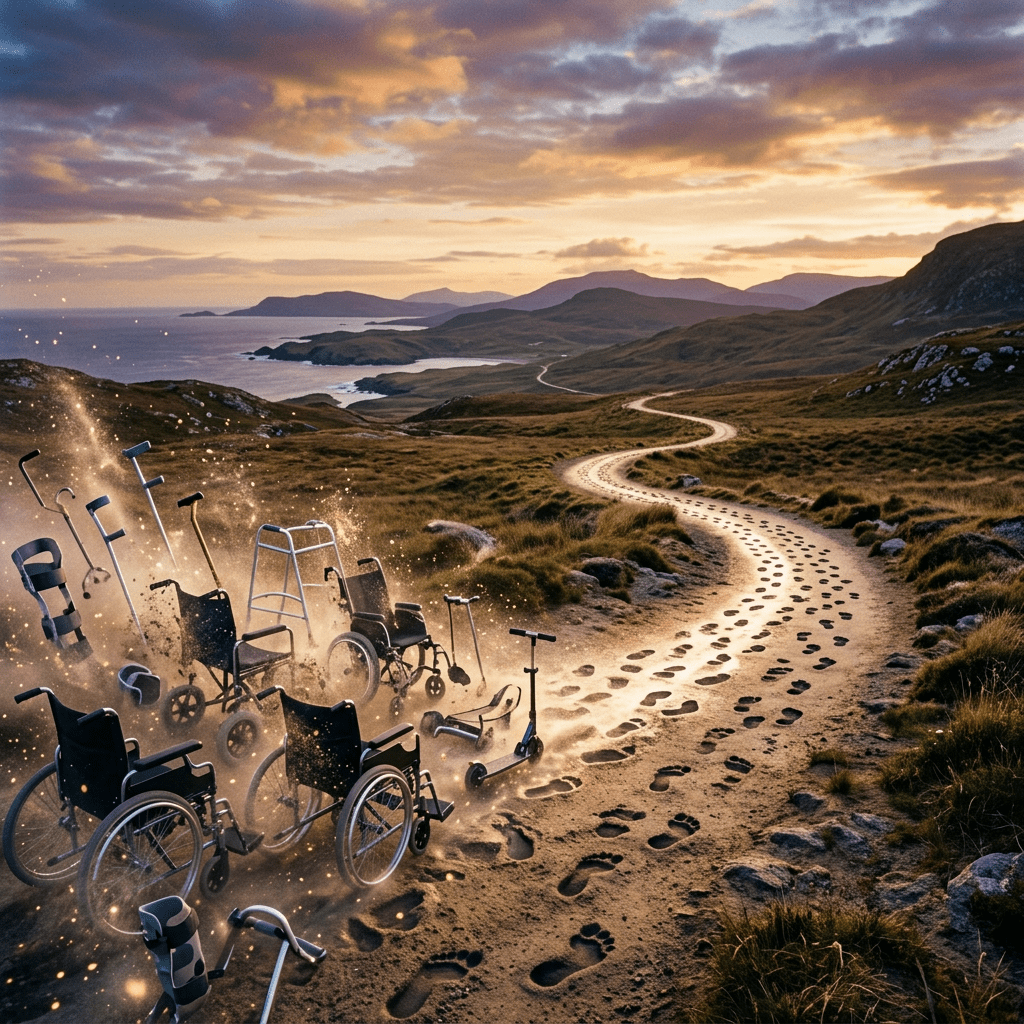
There is something viciously satisfying about stomping up a grassy knoll with nothing but your own two shaky legs and your physical therapist’s hand clamped on the gait belt like a human safety harness. No clanking metal nightmare beside you. Just dirt under your sneakers, wind slapping your face, and the quiet middle finger you are flipping to the broken version of yourself that once existed…. Every step feels like a small rebellion against the version of me that once was told that walking again might not be feasible.

I carry immense pride in these walks. Not just because I am challenging my body, but because I remember—vividly—how it all began. The early days of rehabilitation were a blur of frustration, disbelief, and a stubborn refusal to accept what my body had become. I kept envisioning the woman that I desired to be… Yet, I could not walk. And balance was a foreign concept, something I had taken for granted like breathing. I was like a baby giraffe on an ice rink. When my parents and therapists first brought out the walker, I stared at it like it was an alien artifact dropped into my life. This clunky, industrial-looking one sided thing
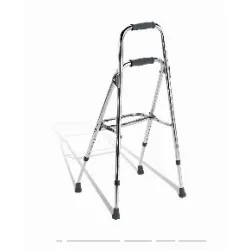
with its ugly gray frame was supposed to be my new normal?
I was young. Walkers were for “the olds,” for geriatrics with silver hair and stories spanning decades. Not for me. In my head, I was still the person who moved through the world with effortless confidence. So I resisted. I would not lean into it properly. I refused to put meaningful weight through my arms, convinced it looked weak, pitiful, unnatural. Seeing someone else shuffle along with a cane or walker had always struck me as heartbreakingly vulnerable. Now that vulnerability was mine, and I rejected it outright. “It looks weird,” I would think, as if aesthetics could somehow override physics or healing.
The wheelchair, oddly enough, felt more palatable. Sleeker. Less like an admission of defeat and more like a temporary chariot. I could sit tall, roll with some semblance of dignity, and pretend this was just a phase. Anything but gripping that handle and hobbling along like I was suddenly ancient at a young age. Like I had given up. Denial is a powerful force—it shields you from the full weight of loss, but it also delays the work of rebuilding.
Years passed in that strange space. Progress came slowly, measured in inches and small victories that felt monumental. There were falls. Many falls. There were days when fear gripped my chest so tightly that my legs simply refused to cooperate, as if my brain and body had declared a temporary truce that fear could shatter in seconds. That is when the gait belt became more than a safety tool—it became psychological armor. My therapist’s steady hand there gives me the permission to take risks. Without it, panic creeps in, muscles lock, and suddenly I am frozen, overthinking every shift of weight. With it, I can push. I can try. I can be.
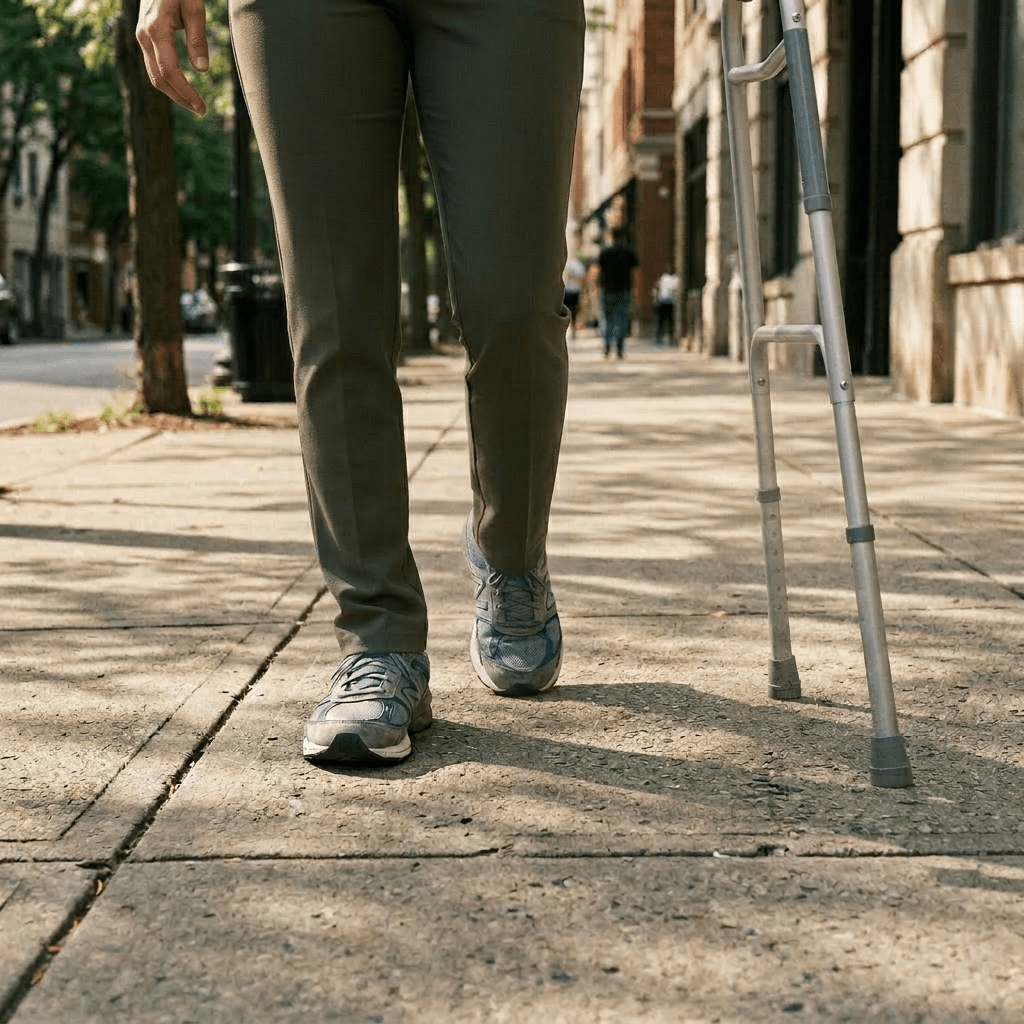
And now? I am walking without devices. Real, unassisted (mostly) steps outdoors, feeling the breeze, hearing birds, noticing how the ground changes texture from pavement to grass to mulch. The pride swells in my chest because I fought for this. I outlasted the version of myself that was not good enough. Thankfully, I was too proud, too vain, too scared to accept help in the “ugly” forms it took. Healing is not always graceful or Instagram-worthy. Sometimes it looks like tight muscles and shaky legs. Sometimes it requires stubbornness, not swallowing your ego and refusing to grip the walker that you swore you would never need.
I still cannot stand the walker, if I am honest. I am still vain. The idea of using my arms to walk feels fundamentally wrong to me—like recruiting the wrong tools for the job. Legs are for walking. Arms are for reaching, hugging, creating. For a long time, that mental block held me back. But I have learned that true strength is in believing. Even if it is believing you do not need support.
These outdoor walks with my therapist are more than exercise. They are proof of resilience. They are quiet celebrations of a body that was broken and is mending. They are reminders that “human again” is not about returning to who you were before (I do not want to be that person)—it is about becoming someone new, someone wiser…
Cheers to every awkward, eyesore-assisted mile that led me here. And to every device-free one still ahead.


Leave a Reply