My Red Sox lost in the Wild Card series—on the road to the World Series so let me focus on something else…
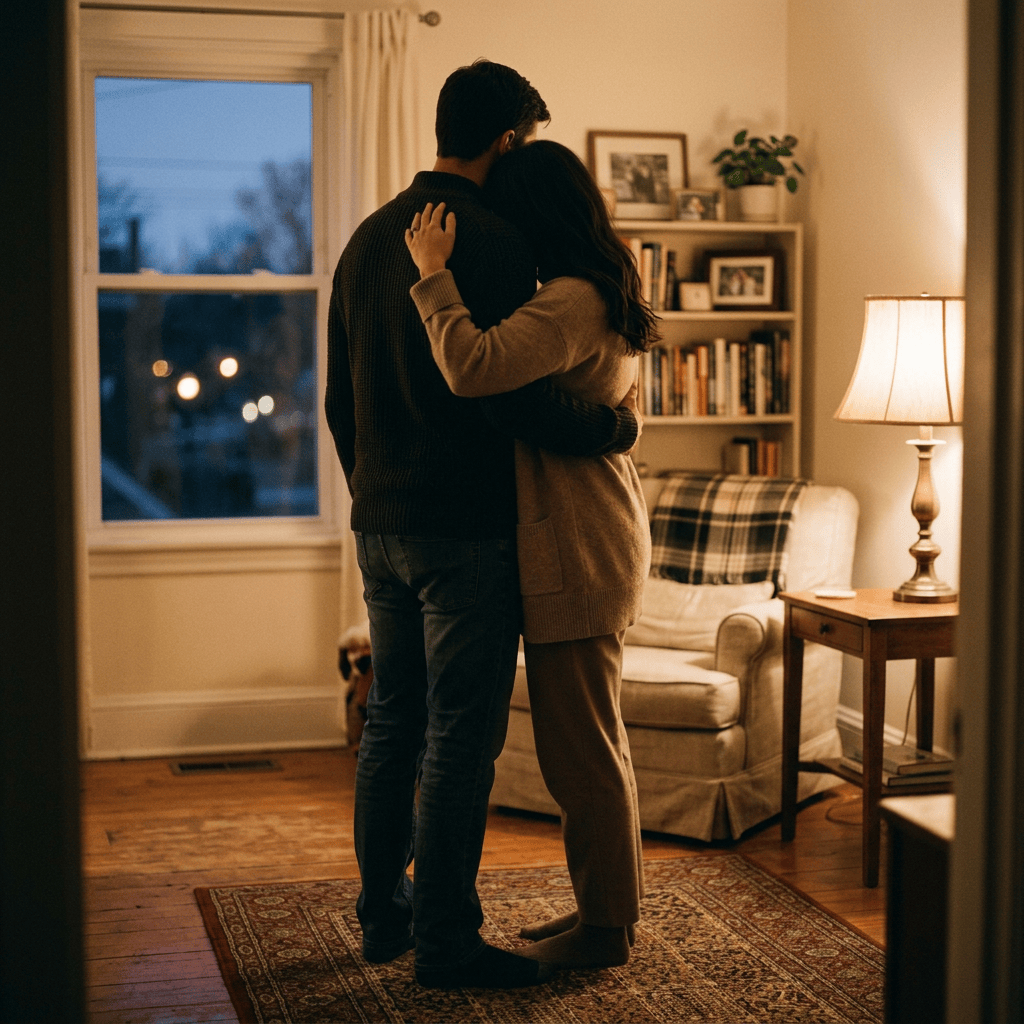
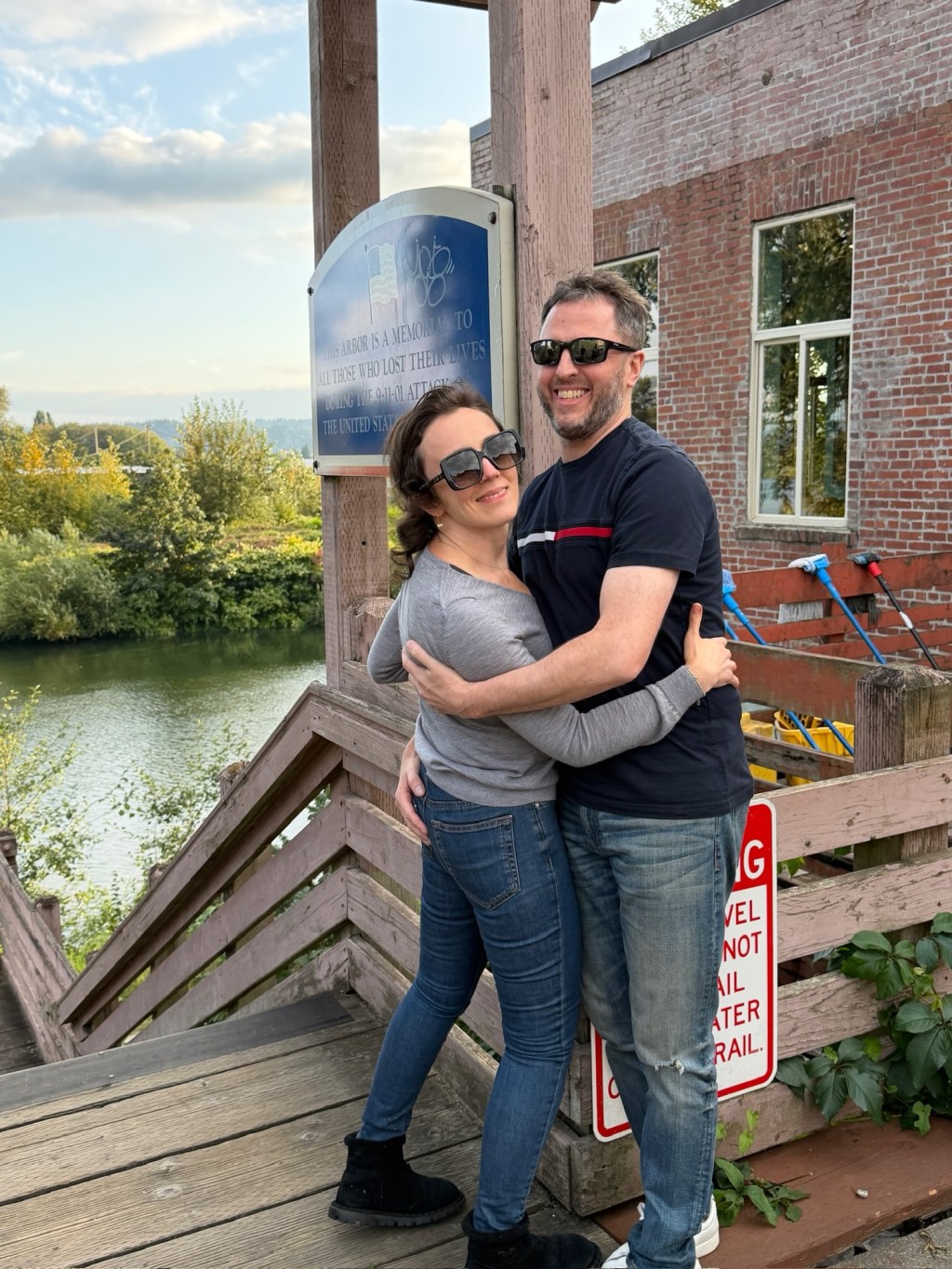
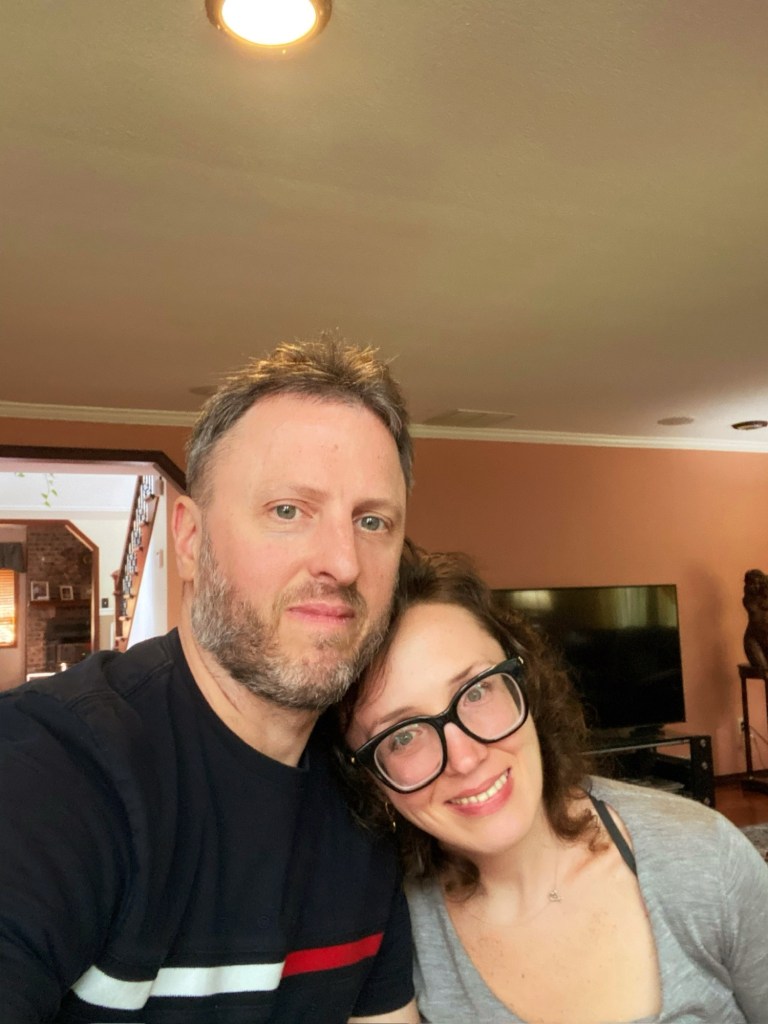
I feel at home in his arms.
Not the kind of home with the walls all scratched up via my wheelchair or the kind you decorate for the holidays. The kind that arrives after years of being in doorways that never quite opened. When he holds me, the rest of the world does not disappear so much as it loses its sharpness. The noise thins. My shoulders drop. My breath remembers how to land instead of hover. I actually smile. I am not performing calm. I am not bracing for the next disappointment. I am simply there, against him, and that is enough.
For a long time I dreamt of a love like this without knowing its shape. I only knew the absence of it. I knew the particular ache of lying awake and feeling too much and not enough at the same time. Anxiety has a way of making a person feel both crowded and abandoned. Loneliness does the same. I spent years searching for someone who could ease that double weight, not by fixing me, but by staying close enough that I no longer had to carry it alone.
I looked in the usual places and in the desperate ones. I learned how to hope carefully, which is another way of saying I learned how to protect myself with hope. There were nights I cried until my body felt wrung out, not because one particular person had failed me, but because I could not shake the suspicion that I was the problem. That I was too much. That I was not enough. That the kind of love I wanted existed only in stories written for other women.
Then we met online. I was not searching for anything. Neither was he.
It did not arrive like fireworks. It arrived like recognition. Conversation after conversation, something in me unclenched. He did not rush to complete me, and I did not have to shrink to be understood. I could tell him about the trembling parts of myself without watching him look for the exit. For the first time in years, the old story began to loosen: the story that said my loneliness was proof of my unworthiness, that my anxiety made me unlovable, that I would always be waiting just outside the warmth.
I started to believe, slowly and almost against my will, that the long season of crying might actually have an ending.
When we finally met in person, the body confirmed what the heart had already begun to trust. There is a difference between imagining a person and standing close enough to feel the heat of them. There is a difference between written affection and the moment a hand finds the small of your back and stays there. I had wanted this for so long that part of me expected to freeze, to second-guess it, to ruin it with my own fear. Instead I felt something simpler and more startling: relief.
Eventually he held me.
Not as a gesture. Not as a performance. He held me as if he had been waiting for the same thing, as if my body was not a question he needed to solve but a place he already knew how to inhabit. I melted. That is the only honest word for it. The tightness I had worn for years softened. The girl who used to apologize for needing comfort stopped apologizing. In his arms I was not a collection of old wounds trying to look presentable. I was a woman being received.
He feels like a cozy home.
Unfortunately, I still know what loneliness feels like. I still know the old reflex of bracing. But now I also know this: there is a kind of love that does not ask you to earn rest. There is a kind of holding that tells the nervous system, at last, you can come down from the watchtower. I dreamt of that love for years. Then I met him. Then he put his arms around me, and for the first time in a long time, I felt like I had arrived.
It is so important—vital, even—to make time for self-care. Not as an afterthought squeezed between everyone else’s needs, and not as a luxury reserved for the rare day when nothing is demanded of you. Self-care is the necessary act of remaining whole.
Do not pour yourself out completely into someone else. Love generously if you choose to, show up fully, give your time and tenderness without keeping a ledger. But do not empty the well so thoroughly that there is nothing left when you turn back toward yourself. A person who never refills cannot keep giving without eventually resenting, fracturing, or disappearing. The most sustainable kindness you can offer others begins with the kindness you first offer yourself.
Self-care does not have to be extravagant. It can be a long soak in the tub while the water cools around you and the day’s noise finally recedes. It can be getting your nails done, not because anyone else will notice, but because the small ritual of being tended to reminds you that you are worth tending. It can be an hour spent watching something pleasant that asks nothing of you except your presence. It can be returning to a hobby you once loved and then quietly set aside—painting, reading, walking without destination, cooking something only you will eat, sitting with a podcast that belongs only to you.
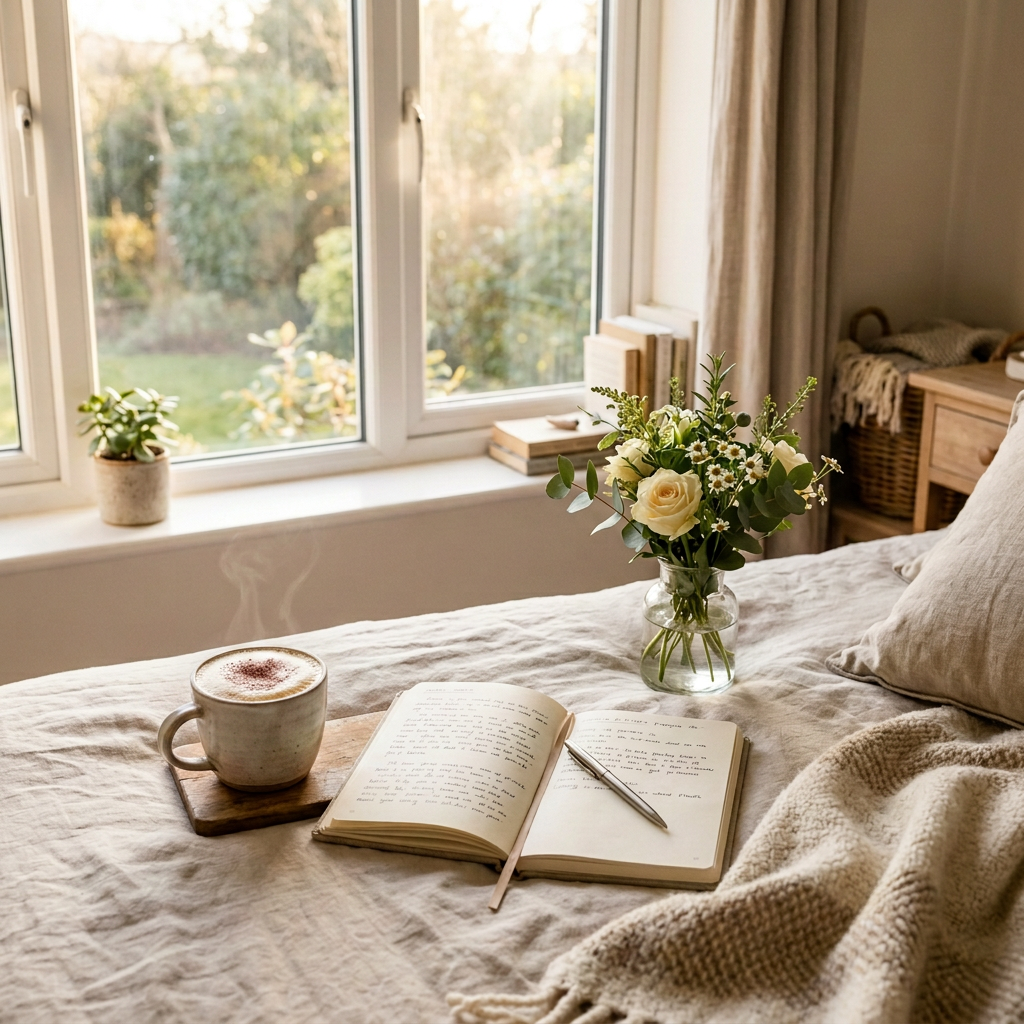
A steaming cappuccino, open journal, and fresh flowers create a peaceful bedroom reading nook.
These moments are not selfish. They are maintenance. They restore the part of you that gets worn thin by caring, by housework, by the constant low-level negotiation of other people’s feelings and expectations. When you regularly take time to relax and enjoy yourself, you return to your life with more patience, more clarity, and more genuine warmth. You become harder to exhaust and easier to love—including by yourself.
A serene watercolor landscape pairs smooth river stones and greenery with flowing blue water beneath a glowing sun.
Make the appointment with yourself the way you would make one for anyone else you refuse to disappoint. Protect the hour. Close the door. Put the phone face down. Let the world wait. You are not abandoning anyone by doing so. You are simply refusing to abandon yourself.
Take the time. Spoil yourself a little. Rest without apology. The version of you that emerges on the other side of that rest is the one who can keep showing up—not emptied, but replenished.
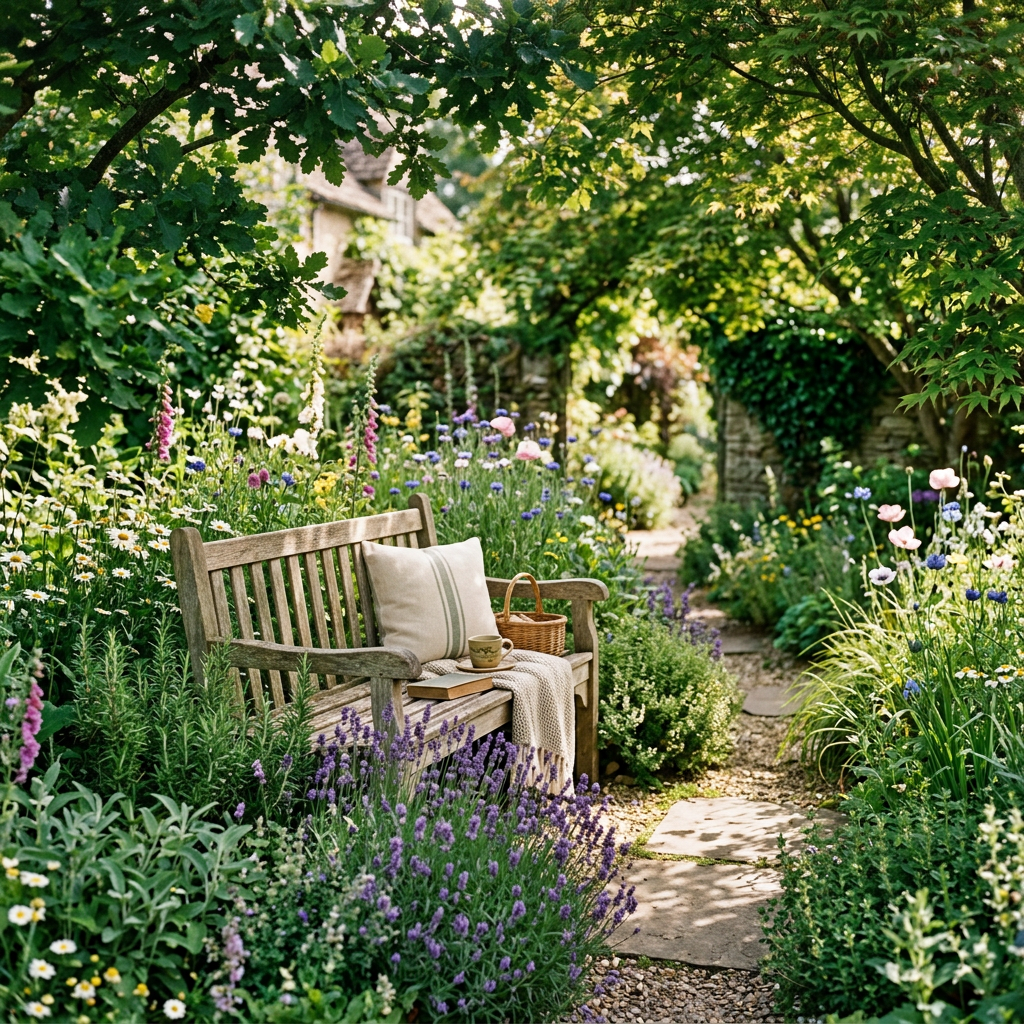
A charming garden bench invites quiet relaxation among blooming flowers and lush greenery.
Sometimes I get frustrated with my future and the rate it will get here.
The kind that sits in your chest on a Monday afternoon when you realize another week has passed and the version of your life you keep picturing still has not shown up. The apartment is not here. The recovery is not quite the there. The relationship, the city, the sense that things are finally lining up—none of it is arriving on the schedule you invented for it when you thought time was something you could negotiate with.
So I do what a lot of us do when the personal timeline feels stalled: I disappear into Boston sports.
It used to be the Red Sox. For months this year I lived inside the delusion that they were this close. That one more streak, one more midseason acquisition, one more month would finally deliver the thing I needed from them. I treated this 87-win season like a moral victory and last season’s early playoff exit like a personal betrayal I had somehow earned. That particular brand of hope is exhausting. It requires you to keep rewriting the story every game.
Lately that same energy has migrated, almost without my permission, to the Patriots.
Everyone is jumping ship on Drake Maye.
I see it everywhere. After the 35-6 loss in Jacksonville, the takes arrived: He is broken. The honeymoon is over. Last year’s Super Bowl run was a fluke. The confidence is gone. Bring in someone else. Trade him. Sit him. The usual New England speed-run from “franchise quarterback” to “we’ve seen this movie before.”
I refuse.
I watched the same game everyone else watched. I saw the interceptions, the fumbles, the way he stood on the sideline with his hands on his pads looking like he wanted to be anywhere else. I know the numbers this season are ugly. I know A.J. Brown is hurt and the offensive line is banged up and Buffalo is next. I know last year’s version of him—the one who completed 72 percent of his passes and finished second in MVP voting—feels very far away right now.
None of that changes the fact that I am not getting off the boat.
This is not sophisticated analysis. This is not a film-study argument about footwork or processing speed. This is just the stubborn part of me that has already invested too much to leave (similar to other parts of my life that I refuse to leave). The same part that used to convince itself the Red Sox were one bounce away. The part that treats sports as a place where loyalty is still allowed to be irrational.
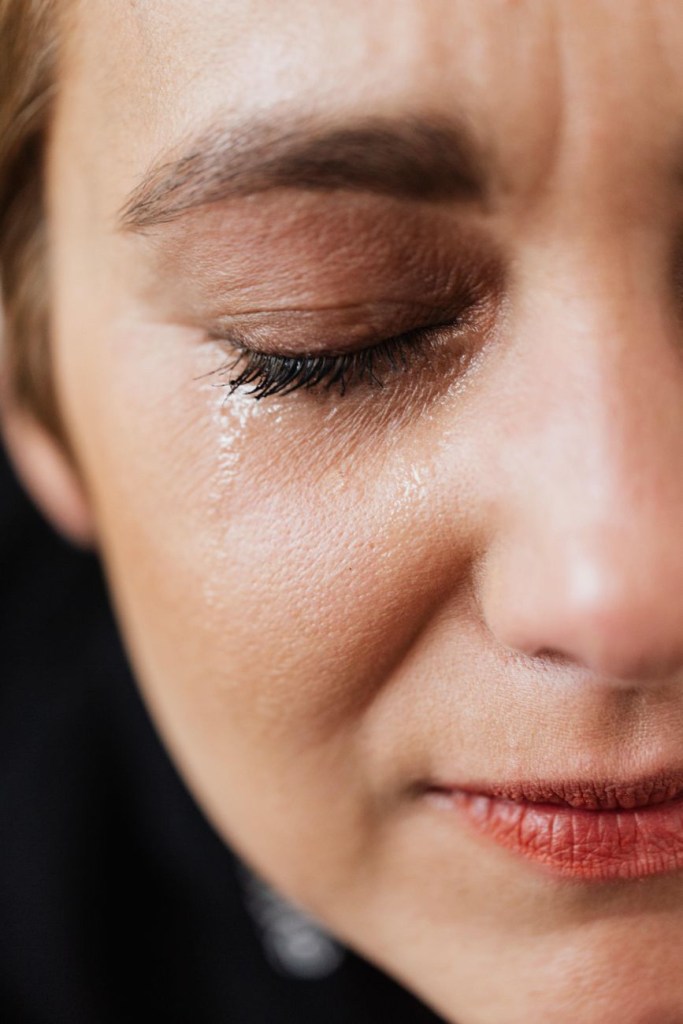
The crying blotches on my face point to my frustrations.
They show up at strange times. After a bad loss, yes, but also on ordinary nights when the future I keep waiting for still has not materialized. Sports is supposed to be the escape hatch, the thing that lets you feel something clean and simple for three hours. Instead it has started to feel like another version of the same problem: something you believed in is taking longer than you thought it would, and the people around you are already writing the obituary.
My heart points toward my unwillingness to let go.
I do not know if Drake Maye is going to be the guy. I do not know if this season is a slump or a reveal. I do not know if the Patriots are building something durable or just living off last year’s fumes. I only know that I am not ready to treat him the way so many people treated the last few quarterbacks who came through here. I am not ready to perform the public ritual of disappointment on schedule.
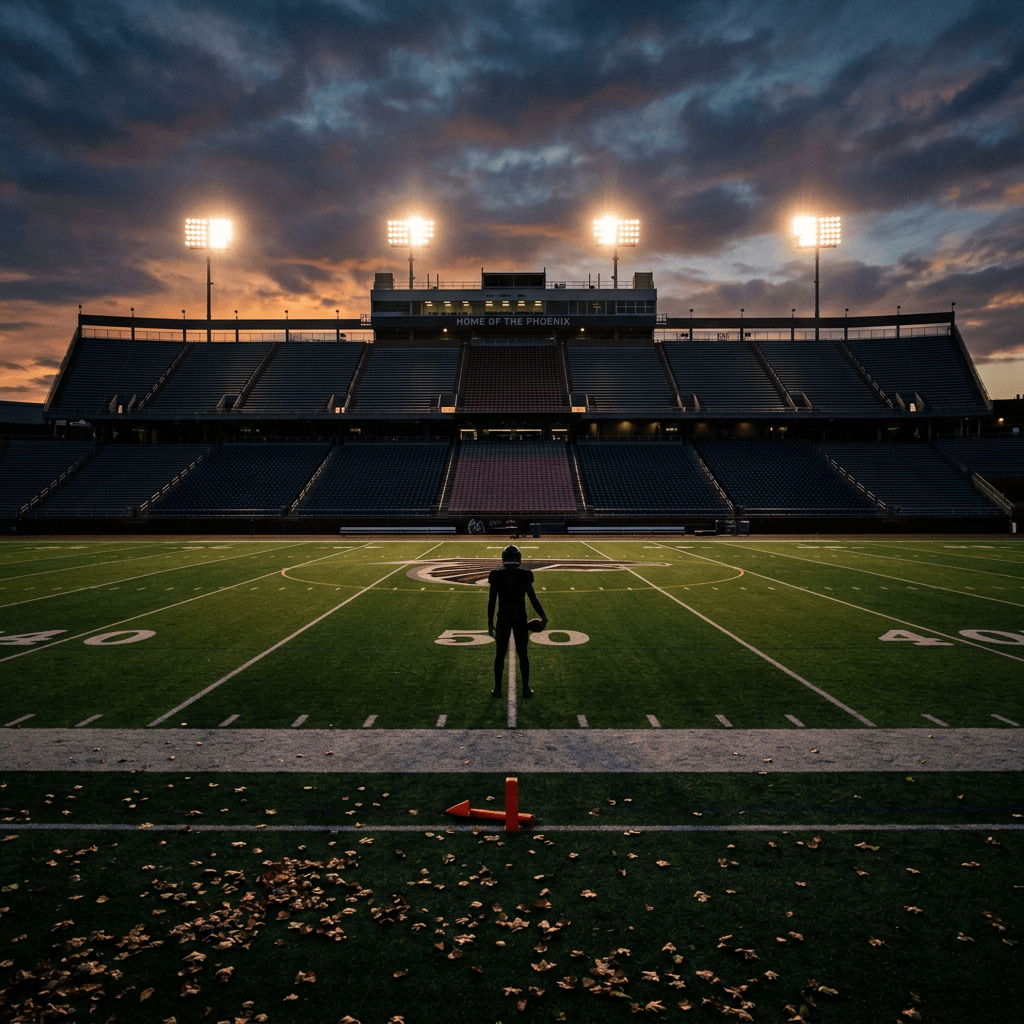
A solitary figure stands at midfield as stadium lights glow beneath a dramatic evening sky.
Maybe that is just another delusion. The Red Sox kind. The kind that keeps you coming back even when the evidence is mixed and the wait is longer than advertised.
But right now, with the future still arriving too slowly and the scoreboard in Jacksonville still ugly, that delusion is the only thing that feels like mine. I am staying. Not because I have a clever argument. Because walking away would feel like giving up on more than a quarterback.
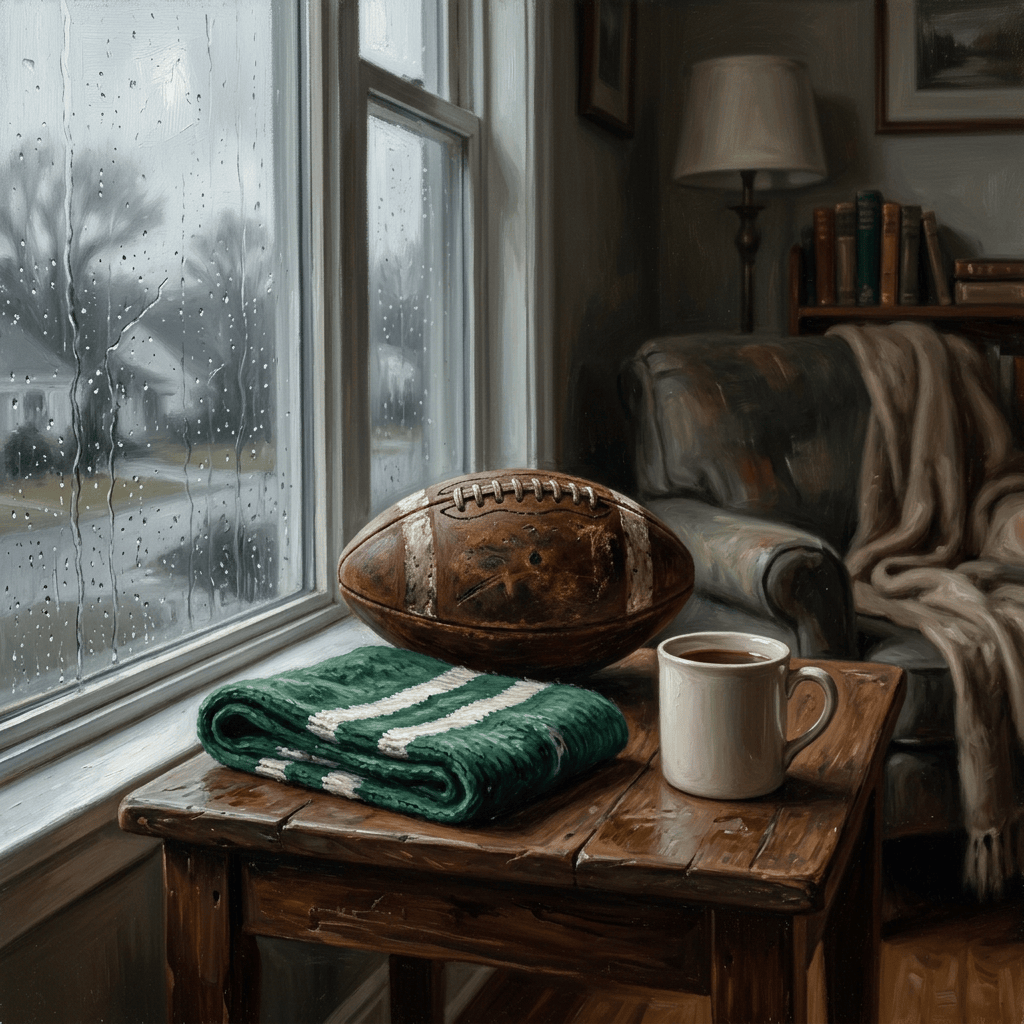
A football, warm coffee, and folded blanket create a cozy rainy-day retreat by the window.
The idea of karma has always sat uneasily with me. On the surface it feels simple, almost tidy. Be decent. Do not be cruel for sport. Do not treat people like they are disposable. The universe will eventually even the score. If you are rude, selfish, or vicious, something will come back around and collect the debt. That version of karma is easy to repeat because it sounds moral and useful. It also flatters us a little. It suggests the world is keeping score, that character is not wasted, that meanness is not free.
Then the obvious objection arrives and the whole neat story starts to buckle. What about children? What about babies who die of disease before they have had a chance to form a lasting thought, let alone a pattern of action? If karma is personal payback aimed at the child, the idea becomes grotesque. A three-month-old does not have a ledger of cruelty. A toddler with leukemia is not being taught a lesson about last year’s gossip. I do not believe the sick child is the one being sentenced. That picture is too small and too cruel. It turns a baby into a moral invoice.
A winding mountain trail leads through lush hills toward a glowing sunset beneath stormy clouds.
What I do believe is harder, and I know how it sounds. I think the test is aimed at the parents. I think the punishment, if that is the word, is meant for them. Not because every grieving mother or father is secretly a monster. I am not saying that. I am saying the blow does not land on the child as a completed person with a history of choices. The child is the point of impact. The parents are the ones left standing in the blast. They are the ones who have to keep living inside a world that just proved it can take the one thing they would have died to protect. That is a test of a different order. It does not ask what a baby deserved. It asks what the adults become when the worst thing they can imagine stops being imaginary.
I hold that view loosely because I cannot prove it, and because it is ugly enough that I would rather be wrong. But the popular story — that disease is the child’s karma — has never made sense to me. The child’s body is too new to be the courtroom. The parents’ lives are where the sentence continues. Sleep, marriage, faith, work, the sound of a quiet house, the question of whether they still believe anything is watching. That is where the weight stays.
A rustic woodland balance scale contrasts natural treasures with scattered broken mirrors.
The same cheap version of karma gets applied to ego. A lot of people talk as if walking around with an inflated sense of yourself is a spiritual crime, something the universe will eventually tax. Be humble. Shrink. Remember you are nothing special. I have heard that sermon my whole life, and I do not buy it. I personally believe ego is good. Not the kind that needs to crush other people to feel tall, but the kind that looks in the mirror and decides, without apology, that you are the greatest. That belief has helped me more than being “humbled” ever did. Being told I was a piece of shit never made me kinder, stronger, or more useful. It just made me smaller. Believing I was exceptional gave me a reason to act like the work mattered.
I think the universe tests us. Not always individually, and not always fairly in the way a courtroom is fair. Sometimes the test is private: loss, illness, humiliation, a long season of being unseen. Sometimes it is public and collective. A flood, an earthquake, a plague, a famine. Those events do not look to me like the universe picking out the guilty children and smashing them. They look like pressure applied to the people who have to answer for what happens next. Pressure builds diamonds. Who runs toward the wreckage. Who hoards. Who lies. Who builds again. Who uses the disaster as an excuse to become smaller. In the case of a sick child, the wreckage is a crib, a hospital hallway, a diagnosis. The test is not the infant’s character. The test is whether the parents collapse into bitterness, vanish into numbness, turn on each other, or somehow remain capable of love in a world that just showed them it does not negotiate.
Rough stones and brilliant diamonds illustrate how pressure can create lasting value.
That is not the same as saying the suffering is good. It is not. The point is not that a dying child is a gift wrapped in pain. The point is that the event exposes the real architecture of the people left behind. Comfort hides it. This kind of grief does not.
There is an old line that keeps coming back to me: the toughest soldiers always have the heaviest cross to bear. It mixes two languages, military and religious, but the meaning is plain enough. Capacity and burden often travel together. The person who can carry more is often given more to carry. Not because the universe is sadistic for sport, but because weight reveals strength that lighter loads never would. I will not pretend that makes a child’s death just. It does not turn a nursery into a proving ground for the baby. If there is a soldier in that picture, it is the parent. The heaviest cross is not laid on the one who never got to live long enough to understand the metaphor. It is laid on the ones who have to carry the body of the story afterward.
Ego belongs in that picture too. A crushed self does not carry a heavy cross well. A person who has been trained to think they are worthless will fold under pressure and call the folding humility. I would rather go into the test believing I am built for it. That does not mean I think the universe owes me a soft life. It means I refuse to enter difficulty already defeated. If I ever had to stand where those parents stand, I would rather meet it as someone who still believes he is capable of greatness than as someone who spent years practicing self-erasure and then called that wisdom.
Maybe that is why karma never quite settled in my mind in its popular form. The slogan wants a clean moral physics. Do wrong, get hit. Do right, get shielded. Get proud, get slapped down. The child gets sick because the child earned it. Life does not behave that way. Good people drown. Vicious people die rich and admired. Infants get sick. Whole towns vanish in weather. And sometimes the blow that looks aimed at the smallest person in the room is actually aimed at the adults who have to outlive it.
If there is any pattern at all, it seems slower, wider, and less personal than the slogan — except in this one terrible sense, which feels personal to the bone. The child is not being punished for thoughts they never had. The parents are the ones inside the trial. The universe, if it is doing anything, is not grading a baby. It is asking what kind of people remain when the thing they loved most is placed on the altar and not given back.
I still think we should be better. Not because a cosmic clerk is watching the receipt printer, but because cruelty adds weight to a world that already has more than enough. Kindness does not guarantee safety. It does not buy immunity for your children. An honest ego does not guarantee safety either. Nothing does. What remains is the manner of the response. And if the universe is testing anyone in the death of a sick child, I do not think it is the child. I think it is the parents — and, after them, everyone who watches and decides whether to look away, explain it too quickly, or admit that some tests are not meant to make us humble. They are meant to show us whether we can still stand.
Have you ever liked a villain more than the hero? Who and why?
I have always preferred the villain.
Not in the cheap, poster-on-the-dorm-wall way. Not because of the dominatrix vibes— leather looks good in low lighting— or because a monologue about destiny is more interesting than a speech about believing in yourself. I prefer the villain because the heroine keeps asking me to pretend I am someone I am not.
You know the one. She sings to animals. Birds land on her finger as if they have been waiting all morning for the privilege. Mice stitch her a dress. Squirrels pause mid-scamper to receive her wisdom. She is luminous, unguarded, and permanently slightly out of breath from all the hope. My own mother talks to the squirrels we see out the window. She does it with genuine warmth, the way some people bless the mail. I would never. I watch the same squirrel, note that it is fat and opportunistic, and go back to whatever I was doing. That is the distance.
I am, for the record, extremely optimistic. A vibes gal. I am generally whimsical. I believe in second chances, late-night plans that should not work, and the possibility that something beautiful is still unfolding even when the evidence is mixed. I am not cynical. I am just not going to perform enchantment on command. You are far more likely to find me rolling my eyes and swearing under my breath about the thing that is actually happening than composing a verse about how the forest loves me.
The classic heroine often feels like a demand. Be bubbly. Softer. Be more grateful. Be astonished by ordinary animals. Let the world rearrange itself around your goodness. The villain, by contrast, rarely asks you to lie about your temperature. They are allowed to be irritated. They are allowed to want something specific and then pursue it with unpretty competence. They notice the machinery. They do not pretend the castle is kind just because the lighting is flattering.
That is the real seduction. Not evil. Attention.
Heroes in the old template are frequently written as if awareness itself were a moral failing. To see the cost of the system, to name the bargain, to refuse the song—that is framed as corruption. Villains get to keep their eyes open. They get strategy. They get a private language. They get the dignity of not having to make every feeling edible for an audience of woodland creatures.
I do not actually want to poison the kingdom. I want permission to be complicated without being recast as the problem. I want a character who can love the world and still find it faintly ridiculous. Who can be hopeful and still say, out loud, that this particular meeting, this particular speech, this particular expectation that I will melt at the sight of a deer is nonsense.
There is a version of “relating to the villain” that is just edgelord cosplay. That is not what I mean. I mean the relief of a figure who does not require me to flatten my voice. The heroine’s sweetness is often a costume the story needs her to wear so the plot can stay simple. The villain’s sharpness is frequently just the story admitting that people have interiors.
My optimism is not the singing kind. It is the kind that survives the eye-roll. It is the kind that swears, then keeps going. It looks at the squirrel and thinks: impressive little opportunist, truly, and also I am not having a conversation with you. That is not bitterness. That is proportion.
So yes. Give me the one in the darker coat. Not because I want the throne (although I do). Because I want the room to be a person who can see the joke, keep the hope, and still refuse to perform a duet with the wildlife. The forest can keep its chorus. I will take the character who notices the wiring.
Instead of doomscrolling, I spend my days BLOOMscrolling—until the day I get to do something.
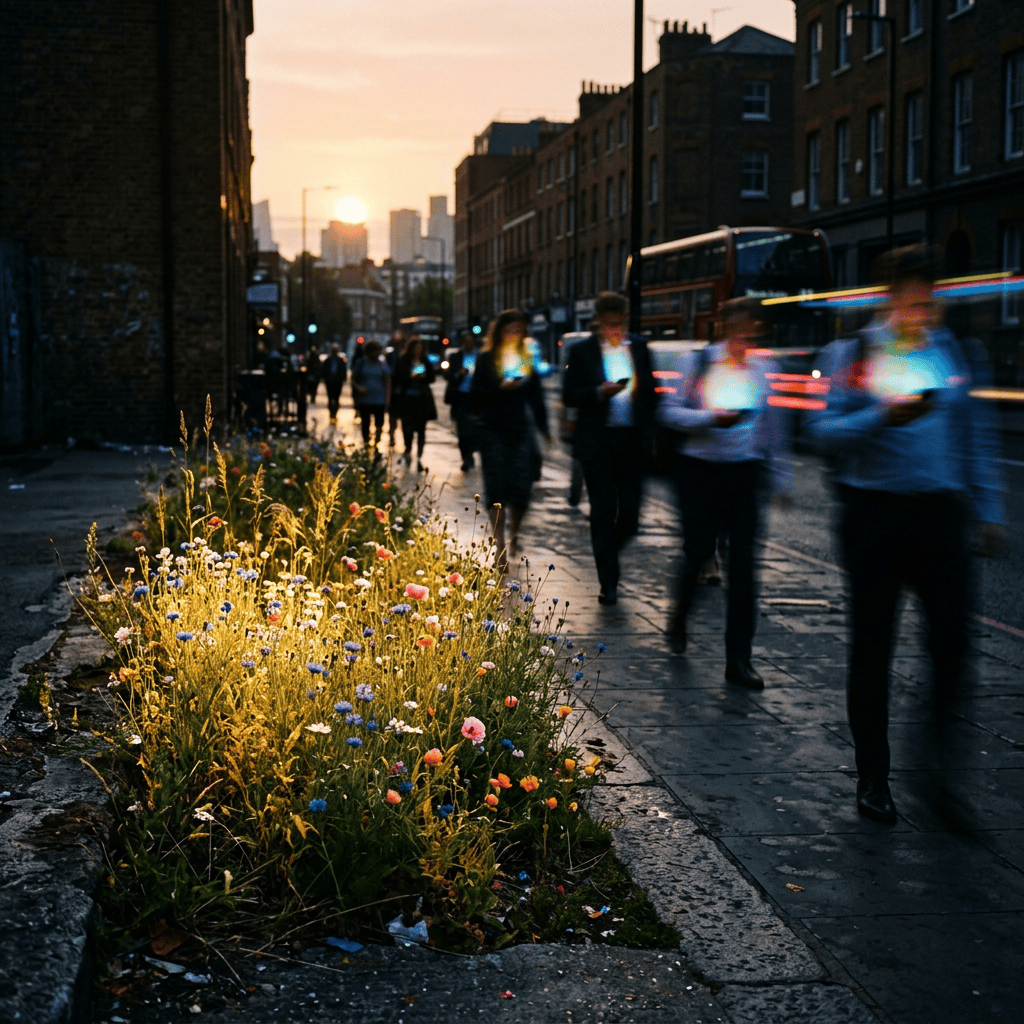
Wildflowers brighten a busy city sidewalk as commuters pass beneath the setting sun.
I refuse to hand my attention to the negative. Not because I pretend the world is gentle, or because I have never been marked by it. I refuse because attention is not casual. It is an offering. It is a vote. It is the raw material from which a life is assembled, hour after hour, until the hours become a person. I will not feed what I do not wish to grow inside me.
That is my energy. Vital energy. Not the thin, jittery kind that comes from outrage and endless refresh. The other kind: the kind that still knows how to turn toward light. The kind that notices a sentence that lands cleanly, a color that should not work and somehow does, a stranger’s small mercy, a piece of work made with care. I would rather give my full attention to the positive and the beautiful—not as decoration, not as denial, but as discipline.
When I say “bloom,” I do not mean flowers. Although those do make me happy. I mean the moment a person, an idea, a day, a skill, a friendship, a room, a future begins to open instead of collapse. I mean the refusal to live as a spectator of wreckage. I mean looking for what is still alive and giving it enough presence to keep living.
A luminous tree of jewel-toned leaves emerges from glowing ripples against a deep blue backdrop.
People often criticize the bloomscrolls. They treat them as proof that I am idle, ornamental, unserious—as if noticing beauty were the opposite of action, as if I were decorating my mind instead of building one. As if I were not already doing something. As if attention itself were not labor. As if keeping the spirit from rotting were a hobby rather than a form of work.
But I know what it costs to stay open. I know how easy it is to mistake constant reaction for usefulness, and constant despair for depth. Doom has a way of dressing itself up as engagement. It tells you that if you are not consuming the worst of everything, you are not awake. I do not believe that. I believe some of us are gathering strength. I believe some of us are protecting the part of ourselves that will be required later—when there is something to make, to mend, to begin, to carry.
Bloomscrolling is not innocence. It is a practice. I scroll toward what expands me. Toward what is well-made. Toward what is kind without being weak, and beautiful without being empty. Toward proof that something can still ripen. I collect the evidence that life is not only erosion. I let my mind linger where there is form, color, humor, craft, courage, tenderness, astonishment.
And I wait—not passively, not as someone hiding—but as someone gathering. Until the day I get to do something. Until the waiting becomes motion. Until attention becomes action. Until the energy I have protected is spent on making, not merely witnessing.
Until then, I keep choosing the bloom. Not as a slogan. Not as an escape. As a way of staying intact. As a way of remaining capable. As a way of doing the first necessary thing: refusing to go dark before the work even begins.
The first day of autumn arrives with a quiet, precise moment: the autumnal equinox. In 2026 that instant is 00:05 UTC on September 23 — the evening of September 22 across much of North America. The Sun crosses the celestial equator heading south, day and night are nearly equal, and the Northern Hemisphere officially tilts toward longer nights.
Meteorological autumn already began on September 1. Astronomical autumn begins now. Both definitions are useful; one tracks weather records, the other tracks the sky.
Earth’s axis is tilted 23.5 degrees. For half the year the Northern Hemisphere leans toward the Sun; for the other half it leans away (that is why places like Australia are in winter when we in North America are in the summer, etc.) At the equinox the tilt is sideways to the Sun, so sunlight falls evenly on both hemispheres. Spring and Autumn. After this moment, the North begins its slow turn toward winter. Days shorten, nights lengthen, and the quality of light changes — lower, golden, slanted.
True equal day and night (the equilux) usually arrives a few days later because the atmosphere bends sunlight and we measure sunrise and sunset from the upper edge of the Sun’s disk. The equinox itself is a geometric event, not a perfect 12-hour split.
Leaves begin their color change as chlorophyll breaks down and hidden yellows, oranges, and reds appear. Maples, oaks, and aspens put on the show first in higher latitudes and higher elevations. Cooler nights arrive even if daytime temperatures linger. The air smells different — woodsmoke, damp earth, ripening fruit.
Harvest is the oldest reason to notice this turning. Grain, apples, squash, grapes, and late vegetables come in. Communities have marked the moment for thousands of years with feasting, thanksgiving, and preparation for the leaner months ahead. Modern versions include pumpkin patches, cider pressing, harvest festivals, and the simple act of bringing the last tomatoes inside before frost.
In East Asia the same seasonal shift coincides with Mid-Autumn Festival traditions of moon viewing and reunion. In Europe, church harvest festivals still decorate pews with produce. Across North America, farm stands overflow and people start planning Thanksgiving. The calendar date is recent; the impulse is ancient.
Mark the date by stepping outside at golden hour and noticing the light. Walk somewhere with trees (because I can’t yet) and look up. Cook seasonally—something that actually tastes like the season: roasted squash, apple crisp, a pot of soup. Cuddle up with your loved ones and enjoy some movies and shows! Note the time of sunset. Unfortunately it will keep moving earlier. And of course, if you garden, like I hope to one day, begin the gradual work of putting beds to rest. No one likes cold weather.
Autumn is not a sudden drop in temperature. It is a gradual handover — summer’s abundance meeting winter’s restraint. The first day simply names the handover. The rest of the season will do the work of changing the landscape, the table, and the pace of daily life.
Welcome to the quieter half of the year. The leaves are already starting to turn. The warmer clothes, fuzzy socks and football viewing are beckoning.
That sentence still feels strange to write. For most of my adult life I assumed a “first paycheck” was something that happened in your early twenties—something you celebrated with cheap champagne and a slightly embarrassing Instagram caption before life moved on. Mine arrived later, after years of personal work that never came with a stub, a deposit, or the quiet little thrill of seeing your name next to a number that someone else decided your time was worth.
For a time that work was my mother’s spa. I grew up in that space. I learned how to fold towels the exact way she liked them, how to greet a regular by name before they even sat down, how to mix oils so the scent lingered just long enough after a client left. I learned the business side too—inventory, bookings, the particular diplomacy required when someone is unhappy with their facial but does not quite know how to say it. I was good at it. I was useful. And for years that felt like enough.
It was also, if I am honest, a kind of postponement. Helping her was not just love and duty; it was a way of staying inside a story that already made sense. I had time to achieve my goals (aka perfection). The spa had its own rhythm. My days had a shape. I did not have to answer the question of what I wanted to build.
The thing I wanted to build started was not a career or a legacy. As a younger woman all I wanted was a beautiful body and excellent grades. I only started writing as a hobby. A place to grieve during my lonely university years. Something I did because it made my brain quiet. I did not treat it like a career. I treated it like oxygen. I practiced. I got better. I shared a little of it with friends. One of those friends runs her sister’s business. During a coffee date, she asked if I could help with the website. I said yes before I had time to talk myself out of it.
That yes turned into freelance work. The work turned into invoices. And today one of those invoices turned into a paycheck with my name on it.
It is not a fortune. It does not rewrite the last decade. It does not erase the years I spent pouring energy into someone else’s dream because it was also, in many ways, the family dream. But it is mine. It is proof that the thing I kept doing in the margins—the thing I almost dismissed as “just a hobby”—had weight. That it could travel outside the house. That someone would pay for it.
I keep thinking about how late this feels and how on time it also feels. Thirty-six is not old. It is also not the age the culture usually hands you a first-paycheck story. I have always been a late bloomer, just look at my first [and only] relationship. There is a particular tenderness in arriving here after you have already learned how to be responsible, how to keep running even when you are tired. The version of me who is cashing this check is not the same person who might have received one at twenty-two. She knows more about endurance. She also knows more about what she is unwilling to abandon.
I am proud of the years at the spa. I am proud of my mother. I am proud of the part of me that showed up there. And I am proud, in a quieter, newer way, of the part that kept the hobby alive long enough for it to become work.
Tonight the paycheck is just a number in an account. Tomorrow it will start becoming something else—a little more room to keep going. Mostly it is a marker. A first one. Proof that a passion practiced in the leftover hours can eventually walk out of the leftover hours and stand on its own.
I’m late, I guess.
I’m also exactly here.
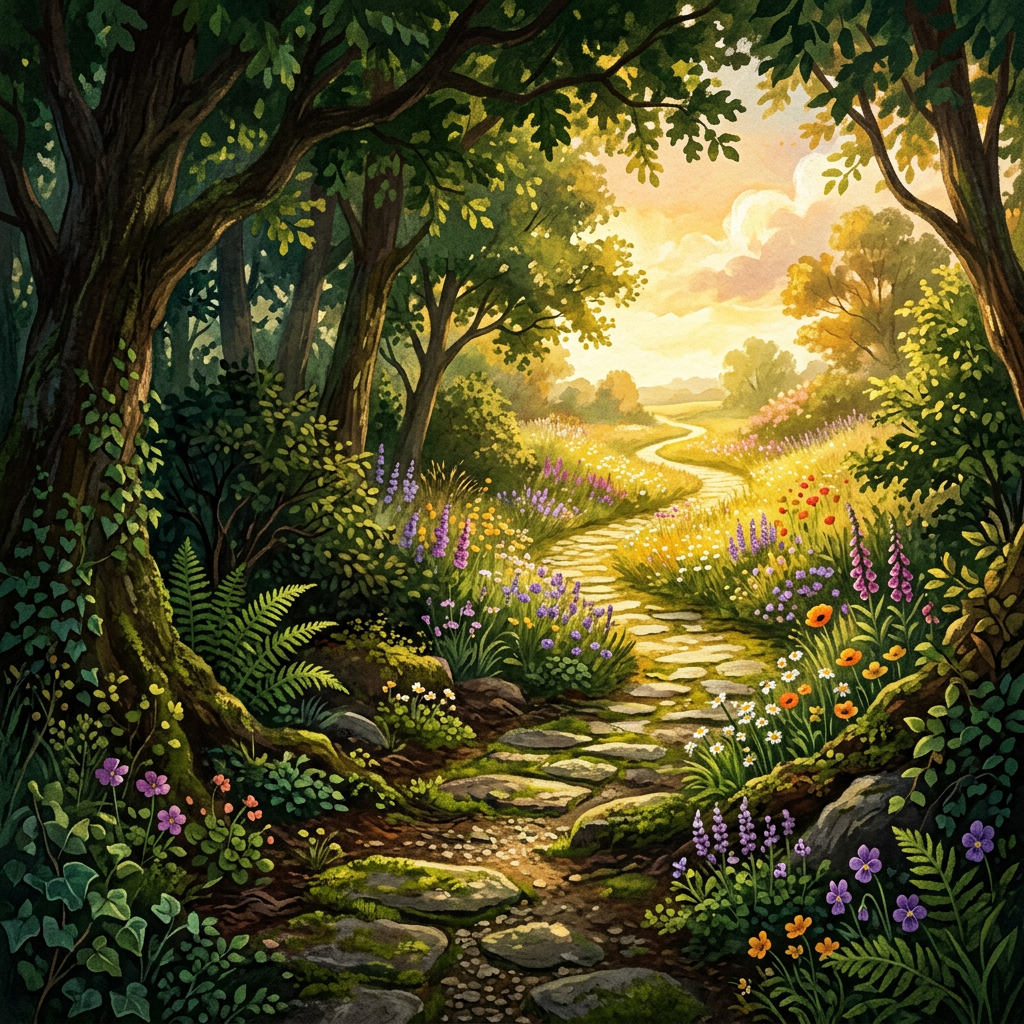
A flower-lined woodland path winds through lush trees toward a warm, sunlit meadow.
I miss him in a way that settles into the bones. It is not a passing ache or a fleeting thought that comes and goes with the weather. It is the kind of missing that lives in the quiet hours, in the space between one day and the next, in the moment just after I close my eyes and just before I open them again. I wish more people understood how much it hurts every time I have to kiss him goodbye. Those goodbyes are never casual. They are small ruptures. Each one feels like tearing something tender that has only just begun to knit itself back together. The kiss is soft, familiar, full of everything we cannot say out loud in the time we have, and then it is over, and I am left in the aftermath of it, carrying the weight of the next stretch of distance.
For many years I lived with an extremely lonely and broken heart. That is not poetry. It is simply what it was. I was miserable in a deep, unshowy way that does not photograph well and does not invite easy comfort. The kind of misery that makes ordinary mornings feel like work. Everyone abandoned me when I got sick. I do not say that for drama. I say it because it happened. People I thought were permanent grew distant, then silent, then gone. Some left because they did not know what to do with illness. Some left because my world became smaller and less convenient. Some left because I changed.
Yes, I formed my own opinions. I stopped performing the version of myself that made other people comfortable. I became sharper in places, quieter in others, less willing to pretend that everything was fine when it was not. That may have alienated people. I accept that now with less bitterness than I used to. At the time I did not have the purpose or the desire to heal and get better. Healing requires a reason to stay in the fight, and I did not have one. Everything seemed worthless. The future felt like a hallway with no doors. Effort felt pointless. Getting out of bed felt like an argument I kept losing.
Until now.
It has been nearly four years since my man and I physically met. Three years before that were full of screens and voices and the strange intimacy of people who know each other’s silences before ever even touching. That number still surprises me when I say it out loud. We have not had the ordinary accumulation of shared rooms, shared meals, shared weather. What we have had instead is his constant support and his steady encouragement. He did not arrive with grand speeches or easy fixes. He stayed. He listened when I had nothing graceful to offer. He reminded me, again and again, that I was not as finished as I believed I was.
That kind of presence does not transform a life overnight. It works incrementally. A little more willingness to try. A little more belief that effort might not be wasted. A slightly firmer sense that my status in life is not fixed in the place where illness and loneliness left it. I am not writing this from a mountaintop. I am writing it from the middle of the climb, still missing him, still feeling the sting of every goodbye, still carrying the old loneliness in certain rooms of myself. But I am no longer living as if everything is worthless. That shift matters more than I once thought it would.
I miss him. I will keep missing him until the next time we can close the distance, however briefly. And when that time comes, I will kiss him knowing exactly what it costs to let go afterward. I will do it anyway. Some things are worth the ache.
Thirty-seven years. That number sits heavy and beautiful in the chest at the same time. It is not a round, cinematic milestone that the world automatically pauses for. It is quieter than that. It is the kind of anniversary that belongs to people who kept showing up long after the original reason they stood in front of each other had grown up, gotten complicated, and still needed them.
My parents got married because she was pregnant with me.
I have always known that. It was never a secret in our house, never something whispered only when the children were asleep. They chose each other in the middle of a decision that was already bigger than both of them. They did not wait for perfect timing or a finished plan. They looked at the future that had already arrived inside her and decided they would meet it together. In that sense, I did not just arrive into their marriage. I was the reason the marriage began.
I have spent a lifetime knowing that their entire marriage has, in one way or another, been about me. That sentence used to feel like a weight I should apologize for. Now it feels like the most honest love story I know.
They built a home around the fact of me. They learned how to be husband and wife while learning how to be parents at the same time. There was no separate chapter where they got to practice being a couple first. The practice was the life. The late-night feedings, the worries, the ordinary days that stacked into years, the arguments that were never only about money or dishes but also about the child sleeping in the next room. Everything was braided together from the start.
I grew up watching them choose each other again and again inside that braid. Not always gracefully. Not always with the right words. But they stayed. They made a family out of a beginning that some people would have called an accident. They made it look like intention.
Now I am an adult, disabled, and still living at home. The house that once held a child now holds the same person, older, changed, still needing care in ways no one planned for when they said their vows. There is a particular tenderness in that. The people who first rearranged their lives because of me are still rearranging their days because of me. The marriage that started with my existence continues to organize itself around my presence.
It would be easy to write that as burden. I refuse to. What I see instead is a long, stubborn kind of love that never stopped making room. They did not sign up for a thirty-seven-year project with an expiration date. They signed up for us.
And then there is my man.
He loves to spend time together as a family. He does not treat this house as a place he visits. He treats it as a place that already belongs to him in the way that matters most: he wants to be in it. He wants the four of us around the same table, the same television, the same ordinary evening that other people might take for granted. He likes the sound of all of us in one space. He likes the way my parents look at him when he shows up not as a guest but as someone who understands that this family is still the center.
That matters more than I can easily say. Disability can make a home feel smaller and larger at the same time. Smaller because the world outside is harder to reach. Larger because the people inside it keep expanding what “family time” can mean. My man walking into that space with genuine happiness, not obligation, not pity, just the simple desire to be here with all of us, feels like another chapter of the same story my parents started thirty-seven years ago. They made a family because of me. He chooses to keep sitting inside that family because he loves me and, by extension, the people who loved me first.
I think about the young woman who was pregnant and the young man who decided to stay. I think about the years that followed: the jobs, the bills, the holidays that were never magazine-perfect, the quiet mornings, the hospital waiting rooms, the ordinary Tuesday nights that added up to a life. I think about how many times they could have decided that the original reason was no longer enough and how they never quite did.
Thirty-seven years later I am still here. Still theirs. Still the person their marriage has always been about, even as that “about” has changed shape. And now there is one more person at the table who wants to be part of the same unfinished story.
Thank you for choosing each other when I was only a possibility. Thank you for choosing each other when I was a child. Thank you for still choosing this life now that I am grown and still home. Thank you for making room for the man who loves spending time with all of us.
Happy anniversary. The house is still full because of you. The family is still here because you decided, a long time ago, that we would be one.