The first day of autumn arrives with a quiet, precise moment: the autumnal equinox.
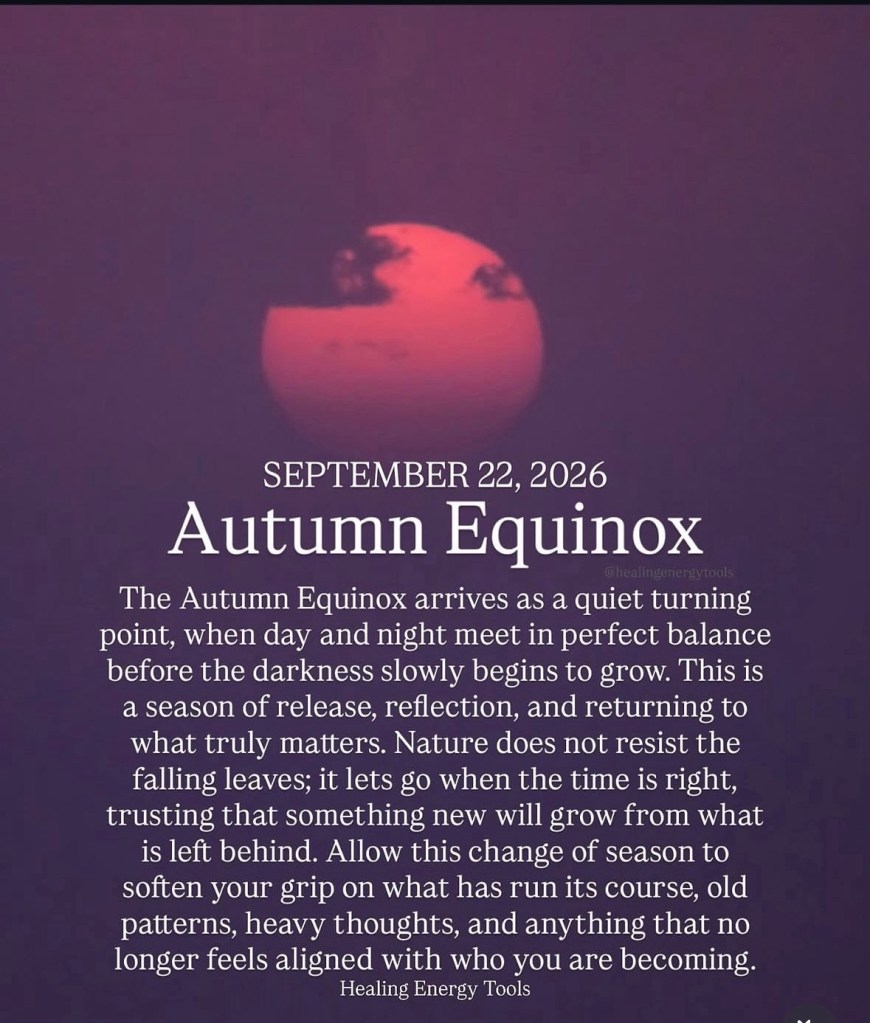
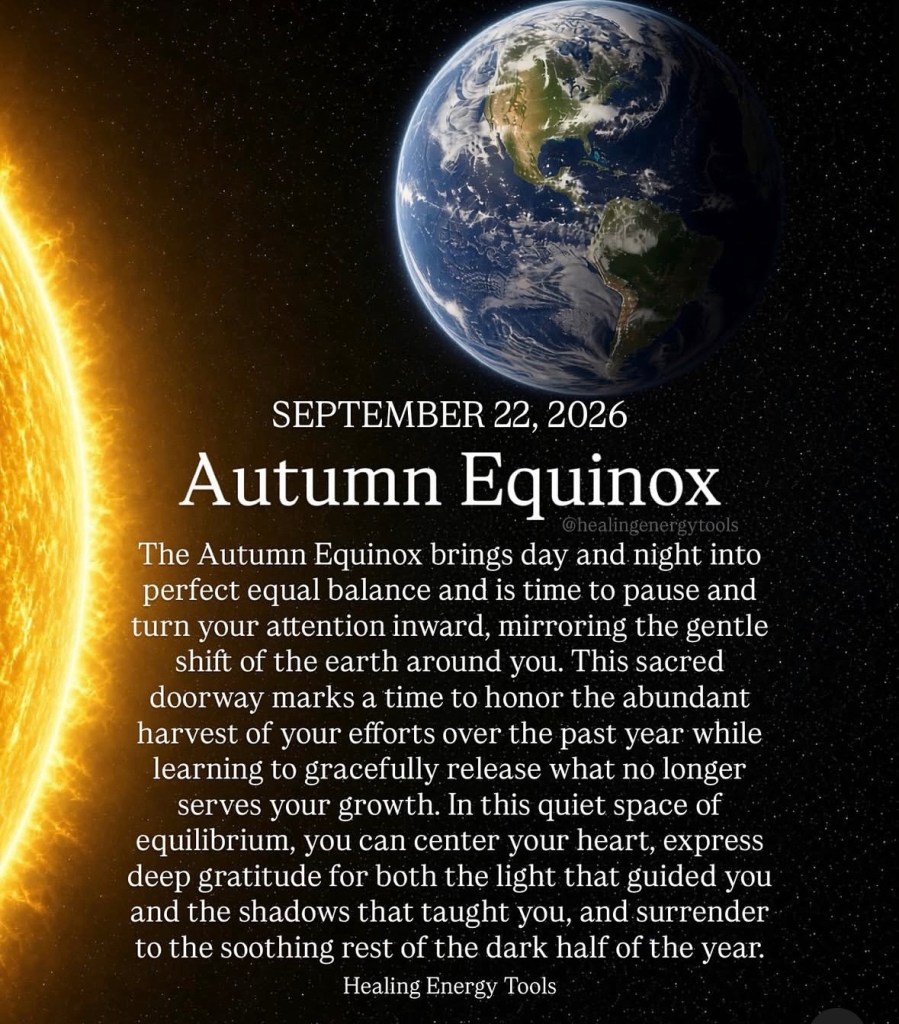
In 2026 that instant is 00:05 UTC on September 23 — the evening of September 22 across much of North America. The Sun crosses the celestial equator heading south, day and night are nearly equal, and the Northern Hemisphere officially tilts toward longer nights.
Meteorological autumn already began on September 1. Astronomical autumn begins now. Both definitions are useful; one tracks weather records, the other tracks the sky.
Earth’s axis is tilted 23.5 degrees. For half the year the Northern Hemisphere leans toward the Sun; for the other half it leans away (that is why places like Australia are in winter when we in North America are in the summer, etc.) At the equinox the tilt is sideways to the Sun, so sunlight falls evenly on both hemispheres. Spring and Autumn. After this moment, the North begins its slow turn toward winter. Days shorten, nights lengthen, and the quality of light changes — lower, golden, slanted.
True equal day and night (the equilux) usually arrives a few days later because the atmosphere bends sunlight and we measure sunrise and sunset from the upper edge of the Sun’s disk. The equinox itself is a geometric event, not a perfect 12-hour split.
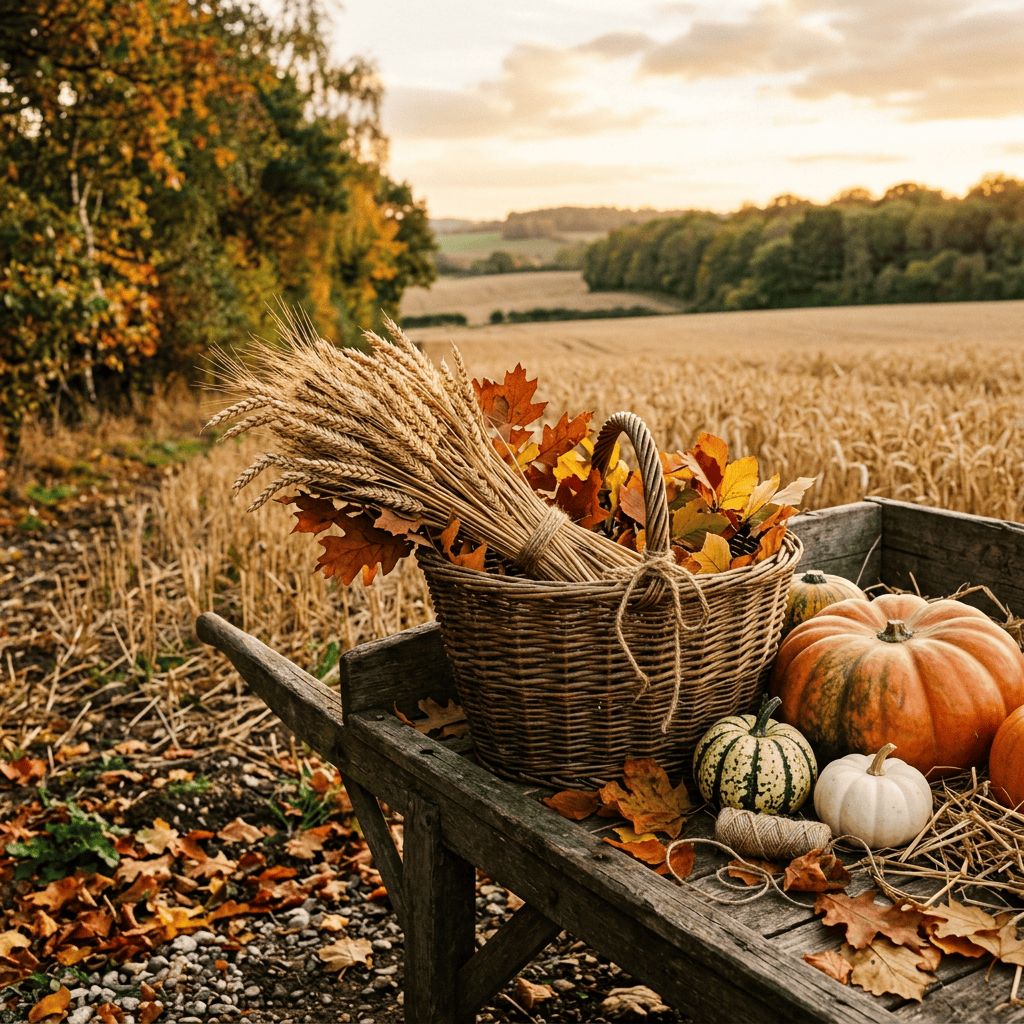
Leaves begin their color change as chlorophyll breaks down and hidden yellows, oranges, and reds appear. Maples, oaks, and aspens put on the show first in higher latitudes and higher elevations. Cooler nights arrive even if daytime temperatures linger. The air smells different — woodsmoke, damp earth, ripening fruit.
Harvest is the oldest reason to notice this turning. Grain, apples, squash, grapes, and late vegetables come in. Communities have marked the moment for thousands of years with feasting, thanksgiving, and preparation for the leaner months ahead. Modern versions include pumpkin patches, cider pressing, harvest festivals, and the simple act of bringing the last tomatoes inside before frost.
In East Asia the same seasonal shift coincides with Mid-Autumn Festival traditions of moon viewing and reunion. In Europe, church harvest festivals still decorate pews with produce. Across North America, farm stands overflow and people start planning Thanksgiving. The calendar date is recent; the impulse is ancient.
Mark the date by stepping outside at golden hour and noticing the light. Walk somewhere with trees (because I can’t yet) and look up. Cook seasonally—something that actually tastes like the season: roasted squash, apple crisp, a pot of soup. Cuddle up with your loved ones and enjoy some movies and shows! Note the time of sunset. Unfortunately it will keep moving earlier. And of course, if you garden, like I hope to one day, begin the gradual work of putting beds to rest. No one likes cold weather.
Autumn is not a sudden drop in temperature. It is a gradual handover — summer’s abundance meeting winter’s restraint. The first day simply names the handover. The rest of the season will do the work of changing the landscape, the table, and the pace of daily life.
Welcome to the quieter half of the year. The leaves are already starting to turn. The warmer clothes, fuzzy socks and football viewing are beckoning.
 Kat’s Musings
Leave a comment