Author: katandrea111

  • The Power of Conviction: Choosing Natural Over Synthetic

    The Power of Conviction: Choosing Natural Over Synthetic

    I have always been a bit stubborn when it comes to my convictions. Not the everyday kind of stubbornness that digs in over which restaurant to choose or which route to take home. Mine runs deeper. It is the kind that settles into the bones, that refuses negotiation even when the cost is high, even when the path leads straight into an operating room. Convictions, for me, are not opinions to be updated with new data or softened by social pressure. They are lines drawn in permanent ink. Cross them, and something essential in me fractures.

    That stubbornness once led me to talk a doctor into performing brain surgery. Not for a tumor. Not for trauma. For removal. Years earlier, a shunt had been placed in my head to drain excess fluid—standard medical intervention for a condition that, left unchecked, can press against the brain and threaten life itself. The device did its job. It kept the pressure down. It kept me functional. And yet, every day I lived with the knowledge that something foreign—metal, plastic, tubing that did not belong to the original design of a human body—was sitting inside my skull.

    Antique surgical instrument resting on wooden table by window with plant and cup
    An antique surgical tool is displayed on a rustic wooden table near a bright window.

    I do not believe in having anything in my body that is not naturally supposed to be there. Metals. Plastics. Synthetic valves. Permanent implants. To me they represent a quiet violation. The body is not a machine to be endlessly upgraded or patched with industrial materials. It is a living system shaped by forces far older and more intricate than any operating theater. If that system cannot fight off whatever illness or imbalance is ailing it, perhaps it is not meant to. Perhaps the struggle itself is part of a larger design. Maybe this is God’s plan.

    I know how that sounds. In an age that treats every physical limitation as a technical problem awaiting a better device, the idea that some conditions might simply be allowed to run their course feels almost heretical. Modern medicine has achieved miracles—lives extended, suffering reduced, functions restored that once would have ended in early graves. I do not deny the skill of the surgeons or the ingenuity of the engineers who design these interventions. What I reject is the assumption that every intervention is automatically an improvement, or that the body is incomplete without the latest hardware.

    The decision to remove the shunt was not impulsive. It grew from years of living with the quiet presence of something that felt alien. I researched. I prayed. I examined the risks with the same intensity most people reserve for deciding whether to undergo the implant in the first place. The fluid imbalance that once required the device could return. Pressure could rebuild. But what I cared most about was that I had just started losing weight and I could start to feel the tube that dangled down the side of my throat (from my brain and into my stomach). Aesthetics matter. There were no guarantees. Still, the conviction held: better to face whatever came next with a body returned to its natural state than to continue carrying an object that, in my view, did not belong.

    Glass vase breaking into many pieces illuminated by sunlight beam
    A glass vase shatters dramatically in a sunlit rustic room

    Convincing a surgeon was its own ordeal. My own neurologist told me that I would have to have it for my entire life. Suddenly I imagined having to go through airport security with a chunk of metal lodged in my head. Doctors are trained to preserve function and prevent harm. Asking one to open a skull in order to extract a working device runs against every protective instinct the profession cultivates. I had to sweet talk my way. I had gotten good at this and got my way again obviously. I did not demand recklessness. I presented the case as a considered philosophical and spiritual position, not a whim. I accepted full responsibility for the outcome. Eventually the procedure happened. The shunt came out. The recovery was not simple. There were adjustments, monitoring, moments of uncertainty. But the foreign object was gone. The body was, as much as possible, itself again.

    This experience did not turn me into an opponent of all medicine. Infections still require treatment. Broken bones still need setting. Acute crises still call for intervention. What it clarified is the boundary I refuse to cross: the permanent installation of materials that the body did not generate and cannot fully integrate. That boundary is rooted in a larger view of human limitation and divine order. If the body’s own systems cannot overcome a particular challenge, the solution may not always be to override those systems with hardware. Sometimes the wiser path is to accept the constraint, to live within it, or to trust that the constraint itself carries meaning.

    Conviction of this intensity is not comfortable. It isolates. It invites judgment. People hear the story and see either reckless defiance or admirable consistency, rarely anything in between. Yet I have found that living without such anchors leaves a person drifting—susceptible to every new medical fashion, every technological promise, every cultural pressure to optimize and upgrade. Stubbornness in conviction is the refusal to be optimized according to someone else’s blueprint.

    I do not claim this path is for everyone. Bodies differ. Beliefs differ. Risk tolerances differ. What I do claim is the right—and the responsibility—to inhabit my own body according to the deepest principles I hold. For me those principles include the integrity of the natural form, the acceptance of mortality as part of a larger design, and the willingness to act on those beliefs even when the action is extreme. The brain surgery was not a rejection of life. It was an affirmation of a particular way of living it: unadorned, uncompromised, and aligned with the conviction that what is meant to be will find its way, and what is not may be better left untouched.

    In the end, the devices we install and the ones we refuse both say something about what we believe a human being is for. My answer has always been the same. We are not projects under continuous construction. We are creatures living inside a plan larger than our own engineering. Sometimes that plan includes the hard choice to remove what was once thought necessary. Sometimes it simply asks us to stand firm in the belief that the body, left as close as possible to its original state, is already enough.

  • Overcoming Fear: The Psychology of Walking Again

    Overcoming Fear: The Psychology of Walking Again

    I think at this point I know how to walk.
    I can. Mechanically, neurologically, structurally—I can. The circuitry is there. The muscles fire. The joints articulate. The proprioceptors still report in. I have proven it enough times under controlled conditions that the evidence is no longer debatable. I just don’t. Not when it counts. Not when the room empties and the only person left holding the responsibility for my body is me.

    Footprints in sand along a misty beach with gentle waves nearby
    Footprints trail along a quiet, misty shoreline at dawn

    The only time the machinery truly fails—when my legs turn to wet rope, when the floor starts pitching like a boat deck, when my ankles decide they no longer trust the ground—is when fear arrives. Not the polite, manageable kind of fear. The full-body, ancient, animal kind. The kind that floods the nervous system with so much chemical static that every signal coming up from my feet gets scrambled on the way to the brain. Balance does not disappear because the hardware is broken. Balance disappears because the software has decided the body is under lethal threat and starts aborting non-essential processes. Walking, apparently, is non-essential when the mind has already decided you are about to die.

    Ultimately, my recovery is almost entirely psychological now. The physical work is largely done. What is left is the terror of being alone with a body that once betrayed me and might—according to the most primitive parts of my brain—betray me again at any second.

    Abstract colorful human figure walking with multiple overlapping silhouettes showing motion
    A colorful abstract illustration depicting a human figure in fluid motion.

    When I am with my physical therapist, something almost arrogant wakes up in me. A cold, sharp confidence. Sometimes it edges into cockiness. I know he has a hand near my gait belt clipped around my waist. That single point of contact is enough. It is not even that I need the physical support—most of the time he never has to catch me. It is the knowledge that the safety net exists. In that narrow window of external reassurance, I can walk. Long distances. Steady. Controlled. Almost normal. My stride lengthens. I can even get a little reckless with it, testing edges, turning faster than I should, because some part of me is performing. Showing off. Proving a point to both of us.

    Silhouette of a running person enveloped in fiery flames and dynamic energy streaks
    An abstract figure bursts forward surrounded by flames and energy trails.

    Then I am alone.

    The door closes. The professional competence leaves the room. And the fear that was waiting in the house walks in and takes the controls. Suddenly the same legs that just carried me fifty meters without drama start trembling like they are made of paper. My ankles soften and roll without warning. The ground tilts. My center of gravity becomes a rumor. I throw all caution to the wind not because I am brave, but because the alternative—moving carefully, deliberately, with awareness—feels even more dangerous. Carefulness requires trust. And trust is exactly what fear has already revoked.

    Physical therapy room with two treatment tables, exercise bands, stability balls, and anatomical charts
    A bright physical therapy room with treatment tables and exercise equipment bathed in warm sunlight.

    So I lurch. I overcorrect. I plant my feet too hard or too soft. I start shaking, and the shaking makes the ankle turn, and the turned ankle makes the leg weaker, and the weakness feeds the fear, and the fear deepens the shaking. It is a closed loop, elegant in its cruelty. The body is not failing because it is incapable. It is failing because the mind has already written the ending and is simply forcing the body to act it out.

    I know how to walk.


    I just do not know how to walk while terrified of what walking might cost me.

  • The Harsh Realities of Love in “It Ends With Us”

    The Harsh Realities of Love in “It Ends With Us”

    I read Colleen Hoover’s It Ends With Us years ago and ugly-cried so hard while recapping the entire plot to my boyfriend that I probably looked like a raccoon mid-breakdown. The kind of crying where your face contorts into something unnatural and you start gasping between sobs like you are drowning in your own feelings. I am, unapologetically, a hopeless romantic—one of those people who still believes in the fairy-tale version of love even while the rest of the world rolls its eyes. So when I picked up the audiobook about five years ago, it was for the purest, most naive reason possible: I wanted to soak in another epic love story. Instead, it reached into my chest, ripped out my heart, and stomped on it in front of me.

    I could not wrap my head around it at first. Why was this seemingly perfect man—the one who was so deeply, desperately in love—painted as the villain? He was not some cartoonish monster. He was charming, intense, devoted… and then the cracks showed. The story is not some soft-focus romance; it is a brutal dissection of abuse, jealousy, and the kind of anger issues that poison everything they touch. It shows how those things do not just “happen” in relationships—they metastasize. They rewrite the rules. They make you question your own instincts until you do not recognize yourself anymore.

    Shattered transparent glass heart on pink and gray watercolor paper
    A shattered glass heart resting on a watercolor paper with soft pink and gray hues

    The thing is: I am still relatively new to real-life love. No dramatic exes, no war stories, no “he cheated and I burned his clothes” lore (just the firefighter situationship). Books and movies have always been my reference library for how relationships are supposed to work. So when a story refuses to hand me the neat, tied-with-a-bow happy ending I have been conditioned to expect, it hits differently. It feels personal. Like the universe is actively trying to ruin my idealism.

    The movie adaptation—starring Blake Lively, who has somehow transformed from relatable blonde (à la Gossip Girl) into full-time annoying diva energy—follows a young woman who falls hard for a young neurosurgeon in Boston. Cue the meet-cute, the chemistry, the magnetic pull. Then his anger starts leaking into the relationship like a slow poison, and an old flame shows up to complicate everything further. It is messy. It is ugly. It is the opposite of the polished rom-com fantasy I keep chasing.

    Open book titled The Silent Echo on a wooden table beside a lit candle with a blurred TV and armchair in the background.
    An open book and lit candle on a wooden table in a cozy living room.

    I have what feels like a genuinely perfect man in my own life. The kind who does not make me walk on eggshells and does not turn love into a battlefield. So any love story that refuses to deliver the fairy-tale resolution just wrecks me. I end up ugly-crying, rambling about fictional people to my very real, very patient boyfriend, while he probably wonders how someone so soft can get this emotionally annihilated by a book and a film.

    Pink lilies with raindrops on petals and leaves
    Bright pink lilies standing tall under falling rain

    Maybe It Ends With Us is designed to gut people like me—the ones still clinging to the idea that love should always conquer everything. It does, but sometimes it ends exactly where it needs to. And that truth is still sitting heavy in my chest.

  • From Midnight Prayers to Quiet Surrender: A Love Story That Still Confuses Everyone

    From Midnight Prayers to Quiet Surrender: A Love Story That Still Confuses Everyone

    What’s a promise you made to yourself that you’ve actually kept?

    Ever since I was a little self-conscious preteen, the nights felt longer than they should have. I would lie in bed with the covers pulled up to my chin, staring at the ceiling filled with glow in the dark stars, and beg the universe—quietly, desperately, almost bargaining—for one simple thing: that the teasing would stop. (that I would be good enough).That people like my cousin would finally leave me alone. The words were never spoken out loud, but they lived in the space between my ribs and the soft glow of the stars. I wanted to shrink, to disappear, to become someone no one felt the need to pick apart. Those silent pleas were the first contracts I ever tried to write with fate.

    Open journal with handwritten notes and sketches next to lit candle and coffee cup on a wooden desk
    A journal lies open on a wooden desk beside a glowing candle and a cup of coffee, creating a warm writing atmosphere.

    What followed felt almost inevitable. The anorexia arrived. I literally disappeared. Along with it came the exhausting performance of people-pleasing—smiling when I wanted to cry, agreeing when every cell in me screamed no, molding myself into whatever shape might earn a little peace. I learned to measure my worth in the empty spaces on my plate and the approval of others. The universe was listening and it seemed to answer in complicated ways.

    Years later, the prayers changed. I no longer asked only to be left alone. I began begging for a life that did not require me to lie to the people I loved most. The lies about food, about fullness, about “I’m fine, I already ate,” had become a second skin I could no longer wear without choking. I was hurting everyone around me and it pained my people-pleasing-little heart. So I stopped. I stopped caring about anything. No matter how much I studied, starved etc. I was still not good enough. So I told the truth. I let the food in. And my body, in its own fierce and complicated way, responded. I gained twice the weight I had once fought so hard to lose. Of course there were other factors—grief, a heartbreak, not caring about anything anymore and the slow unraveling of old survival patterns—but the scale still delivered its blunt verdict. That heavier body felt, for a long time, like a sad existence I had somehow invited. Yet even in the middle of that discomfort, I still talked to the universe. Still begged.

    These days my midnight conversations with the universe have narrowed to a single subject: him, and the future we are building. The old desperate bartering has softened. It seems, against every earlier fear, to have worked. The life I once begged for—one without the constant weight of deception—has arrived, soon I will be wrapped in ordinary mornings and the steady presence of a man who sees me. Still, I am learning a new practice: to stop negotiating so hard and simply go with the flow. To meet each experience without immediately trying to reshape it into something more acceptable or more controlled.

    Swirling cosmic vortex with glowing gold, blue, and purple colors
    A dazzling swirl of luminous cosmic energy in deep space; symbolizing confusion turning to clarity

    I have, somehow, regained a surprising amount of agency over my physical appearance. The mirror no longer feels like an enemy I have to outwit. I can choose how I present myself, how I move through the world in this body that has carried so much history. And while I pour myself fully into the role of housewife—cooking, tending, creating a home that feels soft and lived-in—our love story continues to puzzle almost everyone who watches it unfold. People tilt their heads. Relatives exchange glances. Strangers on the periphery of our life seem quietly bewildered by how we met , by the “plan for our future.”

    Perhaps that confusion is part of the point. We are figuring it out. The path from a scared preteen whispering into the dark, through years of restriction and performance, through weight regained and truths finally spoken, even through stroke recovery was never going to look tidy from the outside. What matters is the quieter internal shift: the prayers that once begged for escape have become quiet with hope and trust. The bartering has eased into something closer to trust. And while the onlookers keep trying to solve the puzzle of us, I am learning, day by day, to stop solving everything myself—to simply live inside the story as it is, one honest meal, one ordinary morning, one unforced moment at a time. So clearly the universe and I have quite the relationship. The difference is now that I am going with the flow. Trusting that it knows my heart and will deliver what is best.

  • Cheers to Seven Years.

    Cheers to Seven Years.

    Seven Years: How Love Found Me When I Least Expected It

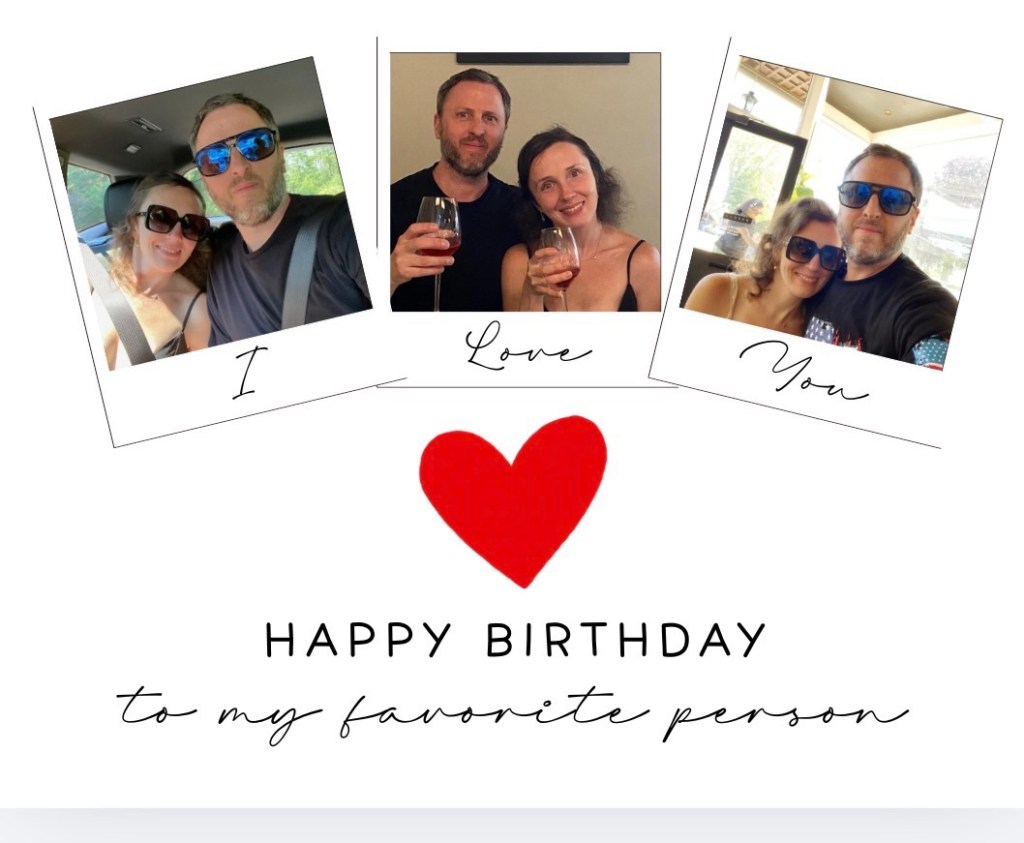
    Today is our anniversary. Seven years.

    Seven years ago, I was sitting on my ass, absolutely hating life. Recovery had stripped away so much of what I thought I needed, forcing me into a kind of isolation that felt heavy and permanent. The world kept moving, but I was stuck in a quiet, lonely version of myself—proud of the progress I made, yet aching for connection I did not know how to find. Loneliness had become the default setting. I had finally discovered my own voice after so much silence, and I was fiercely proud of it. I wanted the world to hear it. So I took to the internet and let that voice run wild. I acted out as much as possible—raw, unfiltered, sometimes chaotic—because for the first time in a long time, I felt like I existed out loud.

    And somehow, he noticed.

    FaceTime life (same outfit!)

    That single moment of being seen changed everything. My life did not just shift; it flipped completely. The sadness and the loneliness that had settled into my bones began to loosen their grip. This man walked into my digital world and rewrote the story I thought I was stuck in. Before I ever laid eyes on him in person, my soul recognized him. It fell in love first—quietly, completely, without needing permission from the rest of me. He showed me a love and kindness I had never even known existed. Not the loud, performative kind, but the steady, patient, everyday kind that makes you feel safe enough to keep becoming yourself.

    For four years we messaged back and forth, building something real across screens and time zones. Those three-hour FaceTime coffee dates every weekend became sacred. We talked about everything and nothing, shared the ordinary and the hard, laughed until our faces hurt, and somehow made the distance feel smaller than it was. When I finally met him in person after all that time, it did not feel like meeting someone new. It felt like arriving. Like my body finally caught up to what my heart had known for years. I stood there and thought, This is where I was meant to be.

    From day one—truly from the first messages—he understood me. Not the polished version, not the version I sometimes still try to present, but the full, complicated, recovering, loud-voiced me. He inspires me. He motivates me. And when we are together, the impossible starts to look doable. We can conquer and accomplish anything, not because life suddenly became easy, but because we face it side by side.

    We are truly best friends—as corny as that sounds. Best friends who chose each other long before the physical world caught up. Before he ever held me in his arms, he held me in his heart. That truth still takes my breath away.

    I love you always and forever. Thank you for giving me my life back. Not just the version I thought I wanted, but a fuller, warmer, more honest one than I ever imagined possible.

    Seven years in, and I am still grateful every single day that you noticed. Cheers to seven years— cheers to many more years.

    Couple standing on mountain overlook holding hands watching sunset
    A couple holding hands while watching a stunning sunset over the mountains
  • The Power of Tone: Charm or Control?

    The Power of Tone: Charm or Control?

    I have been toying around with my tone of voice for years now—not casually, not accidentally, but with the deliberate precision of someone who understands that the voice is one of the last remaining weapons that cannot be confiscated. I shape it. I stretch it. I lower it into that honey-dripped, breathy register that sounds like it was distilled somewhere between a late-night confession and a soft threat. When I want to be extra sweet, extra agreeable, extra useful to the moment, I let it slip into that sweet-sultry cadence that makes people lean in without realizing they’ve already started negotiating against themselves.

    Blame it on my Marilyn Monroe era.

    Person sitting alone at a long boardroom table with city skyline through large windows
    The power of silence

    Shortly after, I did not even speak for six weeks. Not a word. Not a sound. After I finally clawed my way out of the coma I was still completely mute—locked inside my own head while the world kept talking at me. I remember this mean-ass Russian nurse scrat me at my bedside. She was loud, harsh, relentless. The doctors, in their infinite clinical wisdom, decided I had somehow forgotten English through the stroke and must have reverted to Russian. So they kept trying to communicate with me in a language I have barely spoken fluently in years. When that predictably failed, a speech therapist decided the next logical step was to jam his fingers down my throat. The goal, apparently, was to force a coughing noise so they could prove my vocal cords were still intact. Nothing like having a stranger’s digits in your airway while you are already half-paralyzed and terrified, to make you feel truly human again.

    Blue and purple neon waveforms on black background representing sound or energy waves
    Bright blue and purple swirling waveforms float against a dark background.

    I did not speak again until August 13, 2010 (from June 30, 2010). The first sound that came out was not even a word. It was more of a bark. Rough, broken, animal. I could not string more than a few syllables together without running out of air like someone who just sprinted up a flight of stairs. Every attempt at speech felt like hauling something heavy uphill with lungs that no longer trusted me. Progress was slow, ugly, and humiliating in the way only neurological damage can be.

    There was a stretch of time in the past when I studied Marilyn Monroe the way some people study scripture. And I reverted back to that. Not the cartoon version people paste on dorm-room walls, but the calculated softness: the way she could make a simple sentence feel like an invitation and a dismissal at the same time. That breathy, almost-too-gentle delivery was not fragility. It was strategy wrapped in perfume. I absorbed it. I practiced it in empty room until the sound no longer felt like a costume and started feeling like a second tongue.

    Wooden vanity table with gloves, perfume bottle, mirror, and makeup items
    A vintage wooden vanity table adorned with retro beauty items and gloves

    Now it is automatic. When the situation calls for compliance—or the appearance of it—I dial the voice down into that warm, velvet register. The pitch softens. The edges blur. Words land slower, heavier, coated in something that reads as warmth even when the content is pure calculation. People respond to it the way they respond to low lighting and expensive liquor: they relax. They lower their defenses. They start believing the sweetness is the whole story instead of the opening move.

    It is not about being liked. It is about control dressed up as charm. A higher, sharper tone gets you labeled difficult, intense, “a lot.” The Marilyn register gets you permission. It buys time. It turns potential conflict into something that feels almost intimate, even when you are steering the conversation exactly where you want it to go. There is a particular power in watching someone melt under a voice that sounds like it could not possibly be dangerous—while knowing full well that the danger is precisely in how little they suspect it.

    1950s dressing room glowing vanity, gloves, perfume

    I have used this tone in what could-have-been arguments that could have escalated, in moments when being blunt would have cost me more than I was willing to spend. I have watched jaws-unclench, postures soften, eyes linger a second too long. The voice does half the work before the words even finish landing. And yes, part of me enjoys the quiet theater of it—the knowledge that I am performing a version of softness that people still fall for, a century after the original blonde perfected the act.

    Some call it manipulative. They are not entirely wrong. But then again, every social interaction is a performance. Most people just never bother to refine their instrument. I did. I took the breathy, agreeable, almost-submissive tone and made it mine—not as surrender, but as a precise, elegant tool. Marilyn knew the game. I just decided to keep playing it long after the credits rolled.

    So if you ever catch me speaking like that—low, sweet, almost liquid—do not assume it is pure affection. Sometimes it is affection. Sometimes it is strategy. Often it is both, tangled together so tightly that I do not even bother separating them anymore. The voice is the first thing I offer and the last thing I fully reveal. And I have been refining this for years.

    Abstract flowing shapes with warm tones of brown, orange, and beige
    Abstract fluid shapes blend warm colors in a smooth gradient
  • From Digital Misunderstandings to Real Connections

    From Digital Misunderstandings to Real Connections

    What’s the funniest misunderstanding you’ve ever been part of?

    My boyfriend and I did not start with butterflies and perfect timing. We started with my speech impediment, static, lag, and constant miscommunication. Long-distance relationships are not “character-building.” They are a masterclass in how technology can ruin the moment.

    Two smartphones standing on a wooden table showing messaging apps screens with text conversations, illuminated by warm fairy lights.
    Two smartphones displaying message screens side by side on a wooden surface with warm fairy lights in the background.

    Misunderstanding was not an occasional guest in our relationship. It was the roommate who never paid rent. Every FaceTime call was a game of emotional telephone. Every text was a potential landmine. The tone was lost, the context was murdered and the intent I completely reinvented by anxiety. You think constant communication builds connection? Try living on opposite schedules, different time zones, and the quiet terror that the person on the other end of the screen is slowly becoming a wishful thinking vision board instead of a real human. That is not intimacy. That is digital cosplay.

    And then there was my contribution to the chaos: the trust issues. The kind you build after years of people who treated affection and any sort of relationship like a limited-time offer they could revoke the second it stopped benefiting them. I did not just have walls. I had something much thicker— possibly pushing anyone else away. Every delayed reply felt like proof. Every slightly off message became evidence in the courtroom of my own head. Long-distance did not create those issues—it just fed them.

    Change silhouettes to man and woman

    We had our share of ridiculous misunderstandings over the years. The kind you look back on later and laugh about, but only after you survived them. The “why did you leave me on read for three hours” spiral. The “that emoji felt cold” debate. The classic “I said I was busy, not that I was ignoring you, Jesus Christ” arguments that somehow still managed to feel personal. None of it was cute in the moment. It was exhausting. And it made the gap between us feel wider than the actual miles.

    Then we met in person.

    And the entire script flipped.

    Train arriving at platform 3 in the evening with travelers and luggage waiting
    Travelers wait on a platform as an evening train arrives

    The man who walked up to me was not the pixelated, slightly delayed version I had been talking with for years. He was solid. Present. The kind of present that does not just say the right things—he does them without keeping score. He put me first in ways that felt almost suspicious at first, because no one had ever done that without an agenda. No performance. No transactional energy. Just quiet, consistent care that made my carefully constructed defenses look suddenly childish.

    Train at platform 3 with suitcases on the station platform under evening sky
    Suitcases wait on an airport waiting area

    That was the part that broke me open. Not the grand gestures. The everyday ones. The way he noticed when I went quiet and did not punish me for it. The way he made space without making it a production. For the first time, someone was not treating my presence like a convenience. And that realization hit hard.

    The wall existed because every previous person had given me a reason to build it. Selfishness dressed up as “independence.” Emotional unavailability rebranded as “mystery.” People who loved the idea of being loved more than the actual work of loving someone. So yes, I entered every interaction half-armored. Of course I did. That is what survival looks like when you have been treated like an option one too many times.

    Silhouettes of a man and woman separated by shattered glass at a bus shelter at night
    A man and woman face each other at a broken glass emotional barrier

    But meeting him in the flesh did not just melt the trust issues. It exposed how much of the distance had been amplifying my worst assumptions. Suddenly the man who used to feel like a question mark became the answer. And the communication that once felt like walking through a minefield became something we could actually fix—because now there was a real person in front of me instead of a glowing rectangle.

    Communication is still key. It is the bare-minimum truth. Without it, you are not in a relationship—you are in a slow-motion misunderstanding with benefits. Trust is not something you demand after enough messages. It is something that either survives contact with reality or not. And when it finally does survive—when the person in front of you is better than the version you were terrified of losing—that is when the real relationship starts. (This is why we celebrate two anniversaries— the online one and the in-person one).

    I still hate that I go into things guarded. I hate that my default setting is skepticism instead of openness. But I am learning that the right person does not need you to dismantle the wall overnight. They just keep showing up on the other side of it until you finally decide it’s safe to let him in.

    Long distance could have broke us with noise and silence. Meeting him in person fixed what years of calls never could.

  • Finding Balance: Solitude and Connection

    Finding Balance: Solitude and Connection

    There is something deeply liberating about being alone. Not the hollow, restless kind of solitude that feels like waiting, but the rich, expansive kind that arrives when you are left entirely to your own devices for a stretch of days or weeks. In those quiet stretches, time softens. The external noise fades, and what remains is a clearer conversation with yourself—unfiltered, unhurried, and unapologetic.

    Small tree with green, yellow, and orange leaves in a grassy field
    A small tree stands alone with leaves turning colors stands in a green meadow.

    I do want to be with him, of course. That desire is steady and real. Being with him would be an entirely different situation from the one I inhabit right now. It would mean shared rhythms, shared space, the soft comfort of another person’s presence woven into the everyday. But right now, I find myself almost obsessively drawn to complete independence. There is a particular freedom in not having to consider how my choices might land in someone else’s eyes. No quiet calculation about whether the way I move through a task is efficient enough, whether the meal chosen is “healthy” enough, whether the small pleasures I reach for are acceptable or indulgent. Alone, I simply do. I eat what calls to me. I follow the thread of whatever interests me without the subtle background hum of self-consciousness. The judgment I fear is not his—when I am with him, those worries dissolve. With him, I feel held in a way that removes the need for performance. There are literally no worries. And in that absence of worry, my body settles. My health improves. Stress loosens its grip.

    Woman sitting barefoot on a cushioned porch swing, smiling with eyes closed in a garden
    A woman enjoys a peaceful moment on a porch swing surrounded by nature.

    I have come to believe that health is largely dictated by the presence—or absence—of stress, worry, and anxiety. We all carry illness inside us, latent possibilities that wait for the right conditions to surface. Those conditions are often emotional and mental long before they become physical. When we live in a constant state of sadness or overwhelm, life tends to mirror that internal weather. The body tightens, sleep frays, energy drains. Conversely, when we deliberately choose activities and people that lower the volume on stress, something shifts. Life begins to feel more generous. Enjoyment becomes accessible again. The ordinary moments regain their color.

    Right now I am trying to find the balance between two deep longings. I desperately want to recover—fully, steadily, in body and mind. And I desperately want to be physically with my man forever, sharing a life that feels permanent and close. Yet I am careful not to force those desires into the universe with clenched fists. I do not want my needs, however legitimate, to become a weight that pulls against the very life I am trying to build. So I practice a quieter posture: I go about my days accepting everything as it is. I hope. I believe. I trust that what I want is already on its way, unfolding in its own timing. Manifestation, for me, is less about demanding and more about aligning—tending to my own ground so that when the things I long for arrive, I am ready to receive them without scrambling or scarcity.

    Balanced stack of stones on a rocky lakeshore with calm water and forested hills reflecting at sunset
    Balanced stones sit peacefully by a calm lake during sunset

    This season of solitude is not a rejection of love. It is a searching. It is a temporary devotion to self-possession. It is the space in which I remember how to move without apology, how to rest without justification, how to heal without rushing the process. And somewhere in that freedom, I am also preparing the version of myself who will one day be with him—not from need or fear, but from a place of fullness.

  • The Escapism of Girly Shows

    The Escapism of Girly Shows

    I will be honest: I love me some Emily in Paris. Right now I am deep into Elle too, that high-gloss, leggy fever dream that is unfortunately a bit too woke for me, but my Millennial upbringing has me glued to the screen. Millennial women who grew up practicing courtroom monologues in the bathroom mirror while quoting “What, like it’s hard?”—this is our official reunion tour. And apparently we are not alone. Hell, even today’s vice president is out here watching Emily in Paris. When the second-most powerful person in the country is also mainlining the same frothy French fantasy, you know the show has officially transcended “problematic” and become pure cultural infrastructure. He is also a millennial, afterall…

    Convert overall layout to pink color palette

    Most nights my boyfriend and I do the responsible-couple thing: we pick a show “together.” Something dense and dramatic—plot twists we can unpack afterward like amateur therapists. It is intimate. It is grown-up. It is the relationship equivalent of a thoughtfully plated tasting menu. But every once in a while the craving hits hard: pure, unfiltered escapism. Not the heavy kind of craving that forces you to confront your own life choices. The frivolous kind that lets you clock out of reality entirely and live inside someone else’s carefully filtered chaos (something I am blamed for doing far too often). So he hands over the Netflix password like a soft-dom sugar daddy he can be and I disappear into a binge that demands zero emotional labor from either of us.

    Couple sitting on a couch watching Casablanca on TV, drinking red wine by a fireplace
    A couple enjoys a relaxed movie night at home by the fireplace with glasses of red wine.

    Emily in Paris supposedly blew up during the pandemic—when the entire planet was locked inside, starved for color, and desperate for anything that did not look like sweatpants and existential dread. The algorithm fed us that glossy Parisian candy like a collective coping mechanism. Fine. Whatever. I was not there for the quarantine comfort. It is not like I let some silly, little sickness take over my life! Instead, I got sucked in by the constant, unapologetic collision between American and European cultures…the wide-eyed hustle versus the practiced eye-roll, the “why not?” energy slamming into the “why would you ever?” attitude. That friction felt familiar as hell. I lived versions of it in real time: the moments my own optimistic, slightly chaotic American wiring collides with cooler, more restrained European mindsets and neither side is willing to fully surrender.

    Woman holding cup on balcony overlooking Paris skyline and Eiffel Tower at sunset
    A woman enjoys a warm drink on a Paris balcony at sunset with the Eiffel Tower in view

    Obviously the fashion is its own controlled substance—outfits so aggressively styled, colors that refuse to apologize, accessories that scream “I woke up like this and still look richer than you.” But the real high, at least at first, is not just watching it alone. It is the after-party of telling him about every ridiculous plot point, every cultural micro-aggression, every look that made me want a beret collection. I map the show’s exaggerated culture wars onto my own experiences—the times I have been the loud American in a quieter room, the times I have watched someone side-eye my enthusiasm like it was a personal attack, the times fashion became armor or a middle finger. It turns passive binge-watching into this ongoing private conversation, half roast, half confession, and somehow more addictive than the show itself.

    So yes—I take a few deliberate days every year to slip straight back into full girly-era mode. No apologies. No intellectual alibis. Just me, the algorithm, and an unapologetic dive into the pinkest, most over-the-top corners of television. Because sometimes the most rebellious thing you can do is refuse to grow out of the things that still make you feel electric.

  • Your Aura Is Nowhere in That Photo—And That’s Exactly How It Should Be

    Your Aura Is Nowhere in That Photo—And That’s Exactly How It Should Be

    An aura is not some pastel Instagram filter floating around your head. In the spiritual sense, an aura is often described as a subtle energy field or luminous glow surrounding a living being (especially a person), object, or place. Believers claim it reflects a person’s emotional, mental, physical, or spiritual state and can appear in different colors, each supposedly carrying symbolic meaning.  Thus, it is a shifting energy field that announces whether you are dangerous, magnetic, exhausted, or about to lose it. Sensitive people feel it. Animals react to it. Most humans just call it a “vibe” and move on.

    Silhouette of a person filled with colorful galaxies and cosmic swirls against a star-filled sky
    A silhouette filled with swirling galaxies stands against a starry night sky.

    A camera does not effectively convey that vibe. It is a light-hungry machine hardwired for the visible spectrum and nothing else. Photons in, pixels out. Your biofield, electromagnetic signature, soul-static—whatever you want to call the invisible electricity that makes you you—doesn’t register. The lens is not broken. It is just not built for the real data.  Only experiencing someone in the real world captures the aura and vibe. 

    Silhouetted person emitting glowing multicolored energy aura in dark room
    A silhouetted figure stands surrounded by vibrant, colorful energy waves in a dimly lit room.

    In real life, you are a full-spectrum event: micro-expressions, temperature shifts, the subtle pressure of your presence expanding or collapsing the room. Your nervous system is constantly broadcasting and receiving. A photograph freezes one thin, dead slice of reflected light and throws the rest in the trash.

    That is why you hate most pictures of yourself. It is not insecurity. It is pattern recognition. The image captured the meat puppet and left the operator out of frame. You are looking at evidence of your own absence.

    Every once in a while a shot hits different—golden hour, pure chaos, someone laughing hysterically. The candid moments are usually the best photographs, since they actually show your “essence.”Those images carry residual charge because the moment was so loud the camera could not completely murder it. Some photographers try to “charge” their work with intention or ritual. Adorable. But this still does not put your actual aura on the sensor. It just makes your corpse look slightly warmer.

    The gap between you and your photograph is not a technical failure. It is a brutal reminder: the most interesting parts of being human refuse to be archived. Your aura is a living current. A photo is a freeze-dried souvenir. One is dangerous and alive. The other is safe enough to post.

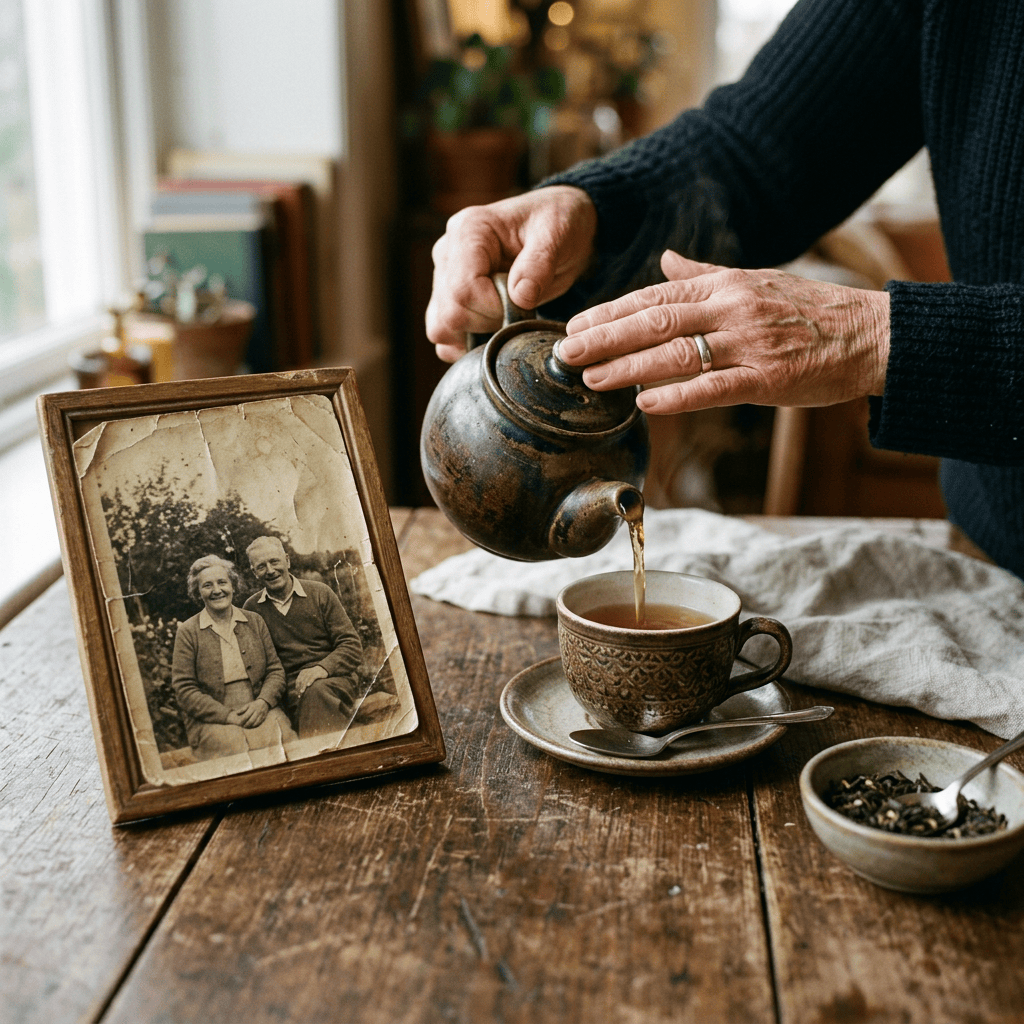
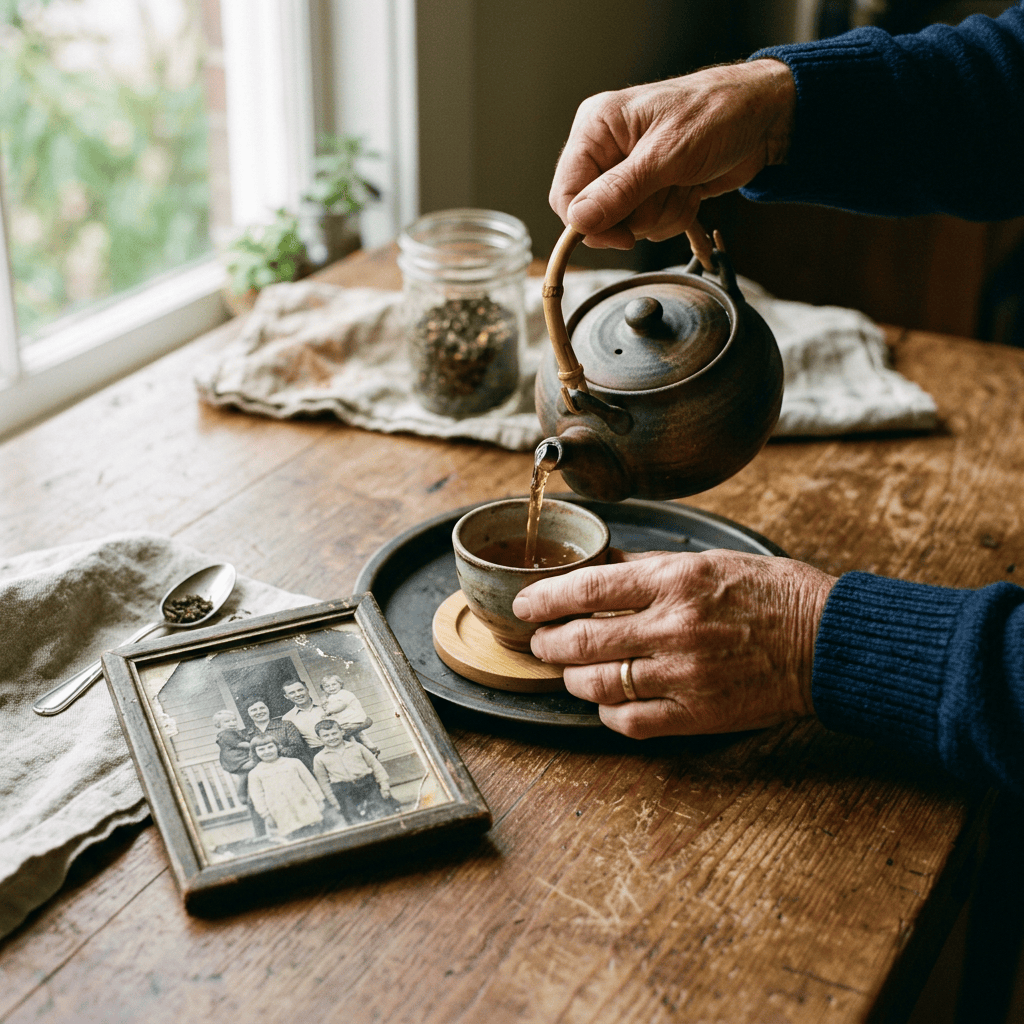
    Black and white vintage family photo with colorful magical aura rising
    A vintage family photo radiates colorful magical energy on a wooden table

    So next time a picture of you feels like a stranger wearing your face, do not delete it in shame. Look at it, smirk, and remember—the real version of you was never dumb enough to get trapped inside a lens in the first place.

    You are still out here, uncaptured, and probably judging the photos that tried to pass off as you.