He is the prize at the end of the journey. To fully receive that gift and build the life I dream of with him, I have made my health non-negotiable. Nutrition is not just a hobby for me; it is something I can wax poetic about for hours with genuine excitement. I have explored it all — from the MAHA movement (seed oils, fluoride, ultra-processed additives, and all the hidden toxins) to Ray Peat’s principles and everything in between. I have lived the experiments myself: vegan, gluten-free, paleo, keto. I have been underweight and overweight. Through trial and error, I have learned what truly makes the body and mind thrive.
A glowing, multicolored heart-shaped swirl glimmers vividly in space.
A brain injury years ago left me with some lasting effects I can be self-conscious about. It does not stop me from loving deeply or building a lasting relationship— as seen in my current form attracting him (thankfully, the “disability” does not seem to bother him at all), but I still carry that quiet desire to show up as my strongest, healthiest self. I want to move through life with ease — for me, and especially for him.
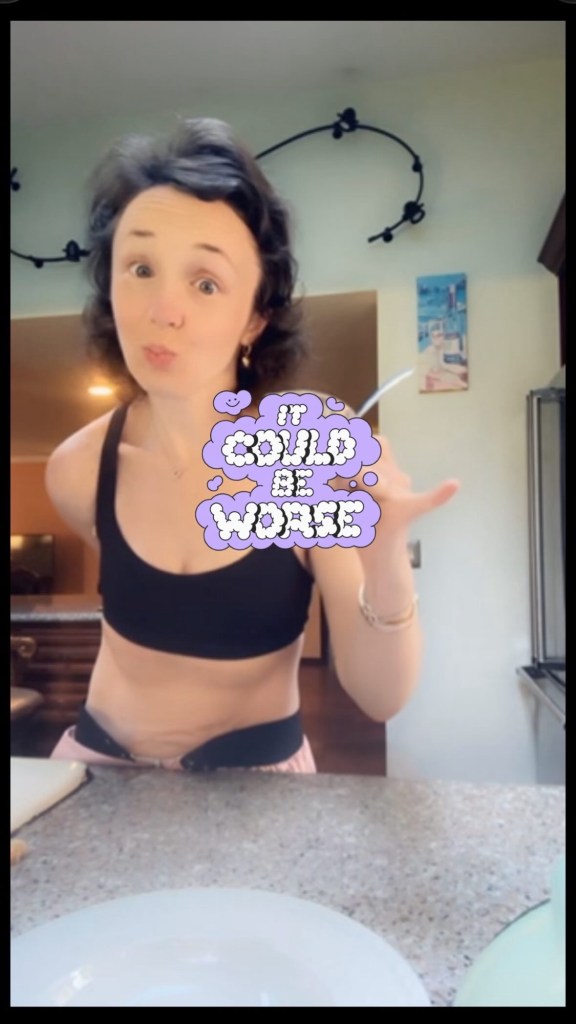
Currently. Wifely duties from afar.
Because more than anything, I long to be his perfect little housewife. I can already manage it beautifully with one hand, but two steady hands would let me pour even more love into our home. And yes — almost every girl dreams of the aisle. So I am committed to walking strong, not just so I can hold his hand while we stroll down the street or along the beach, but so I can walk down that damn aisle toward him, radiant and ready for forever.
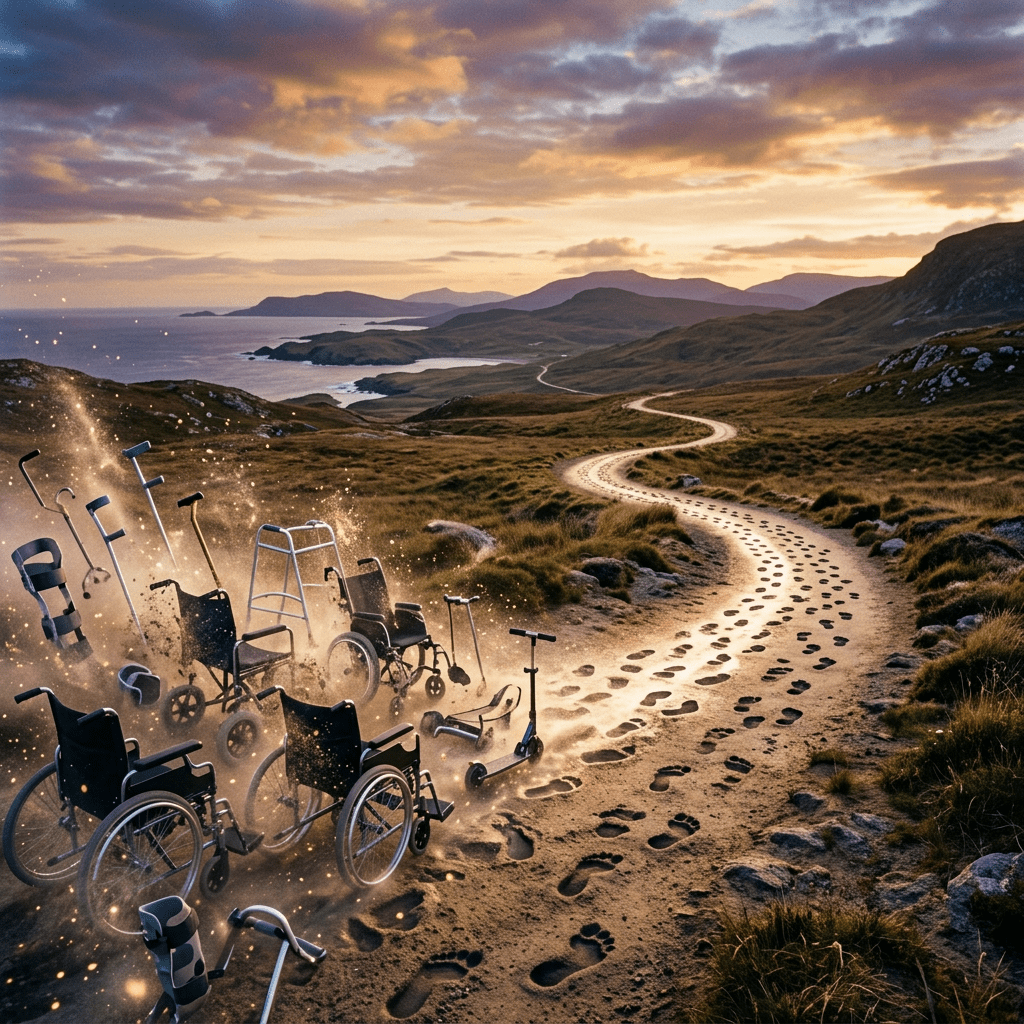
There is something viciously satisfying about stomping up a grassy knoll with nothing but your own two shaky legs and your physical therapist’s hand clamped on the gait belt like a human safety harness. No clanking metal nightmare beside you. Just dirt under your sneakers, wind slapping your face, and the quiet middle finger you are flipping to the broken version of yourself that once existed…. Every step feels like a small rebellion against the version of me that once was told that walking again might not be feasible.
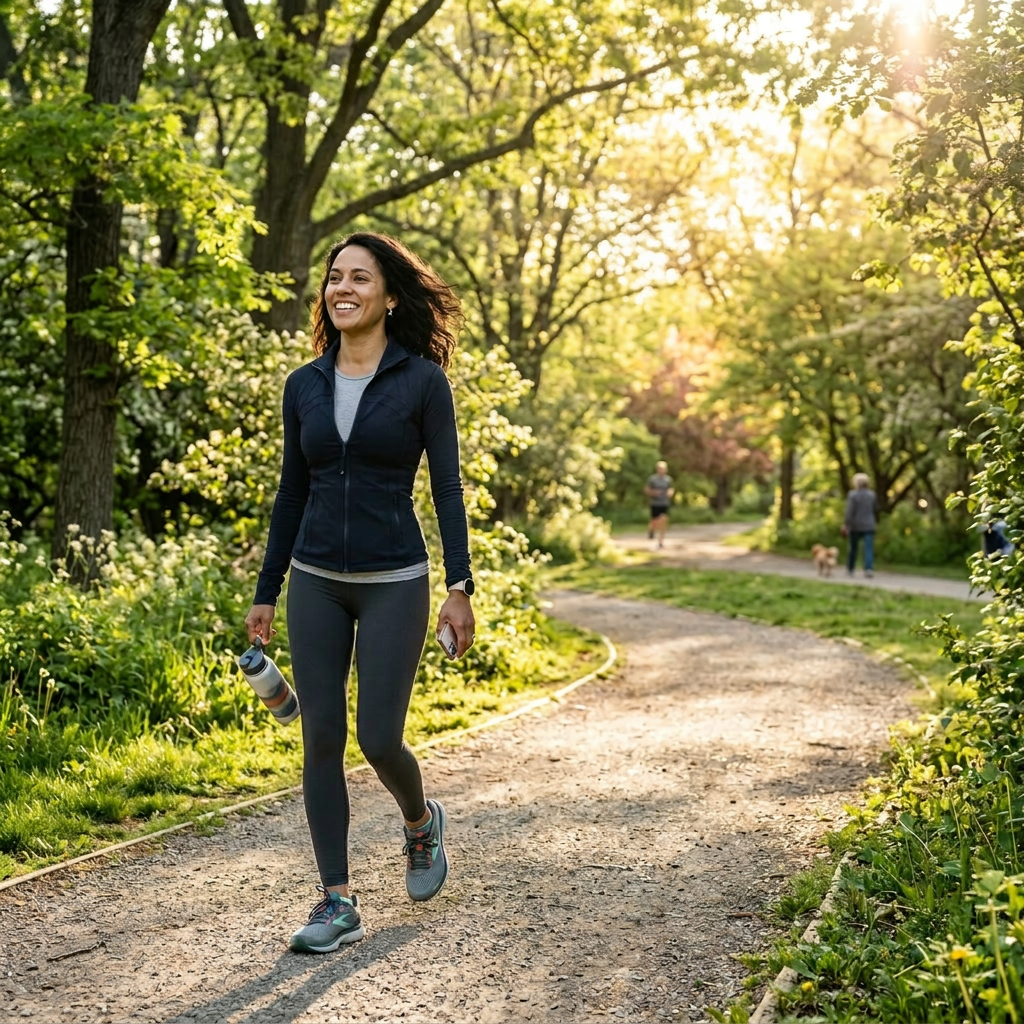
A smiling woman takes a leisurely walk on a sunny park trail.
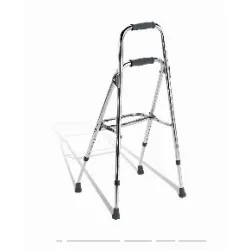
I carry immense pride in these walks. Not just because I am challenging my body, but because I remember—vividly—how it all began. The early days of rehabilitation were a blur of frustration, disbelief, and a stubborn refusal to accept what my body had become. I kept envisioning the woman that I desired to be… Yet, I could not walk. And balance was a foreign concept, something I had taken for granted like breathing. I was like a baby giraffe on an ice rink. When my parents and therapists first brought out the walker, I stared at it like it was an alien artifact dropped into my life. This clunky, industrial-looking one sided thing
Given that my entire left side does not function, I have to use this contraption
with its ugly gray frame was supposed to be my new normal?
I was young. Walkers were for “the olds,” for geriatrics with silver hair and stories spanning decades. Not for me. In my head, I was still the person who moved through the world with effortless confidence. So I resisted. I would not lean into it properly. I refused to put meaningful weight through my arms, convinced it looked weak, pitiful, unnatural. Seeing someone else shuffle along with a cane or walker had always struck me as heartbreakingly vulnerable. Now that vulnerability was mine, and I rejected it outright. “It looks weird,” I would think, as if aesthetics could somehow override physics or healing.
The wheelchair, oddly enough, felt more palatable. Sleeker. Less like an admission of defeat and more like a temporary chariot. I could sit tall, roll with some semblance of dignity, and pretend this was just a phase. Anything but gripping that handle and hobbling along like I was suddenly ancient at a young age. Like I had given up. Denial is a powerful force—it shields you from the full weight of loss, but it also delays the work of rebuilding.
Years passed in that strange space. Progress came slowly, measured in inches and small victories that felt monumental. There were falls. Many falls. There were days when fear gripped my chest so tightly that my legs simply refused to cooperate, as if my brain and body had declared a temporary truce that fear could shatter in seconds. That is when the gait belt became more than a safety tool—it became psychological armor. My therapist’s steady hand there gives me the permission to take risks. Without it, panic creeps in, muscles lock, and suddenly I am frozen, overthinking every shift of weight. With it, I can push. I can try. I can be.
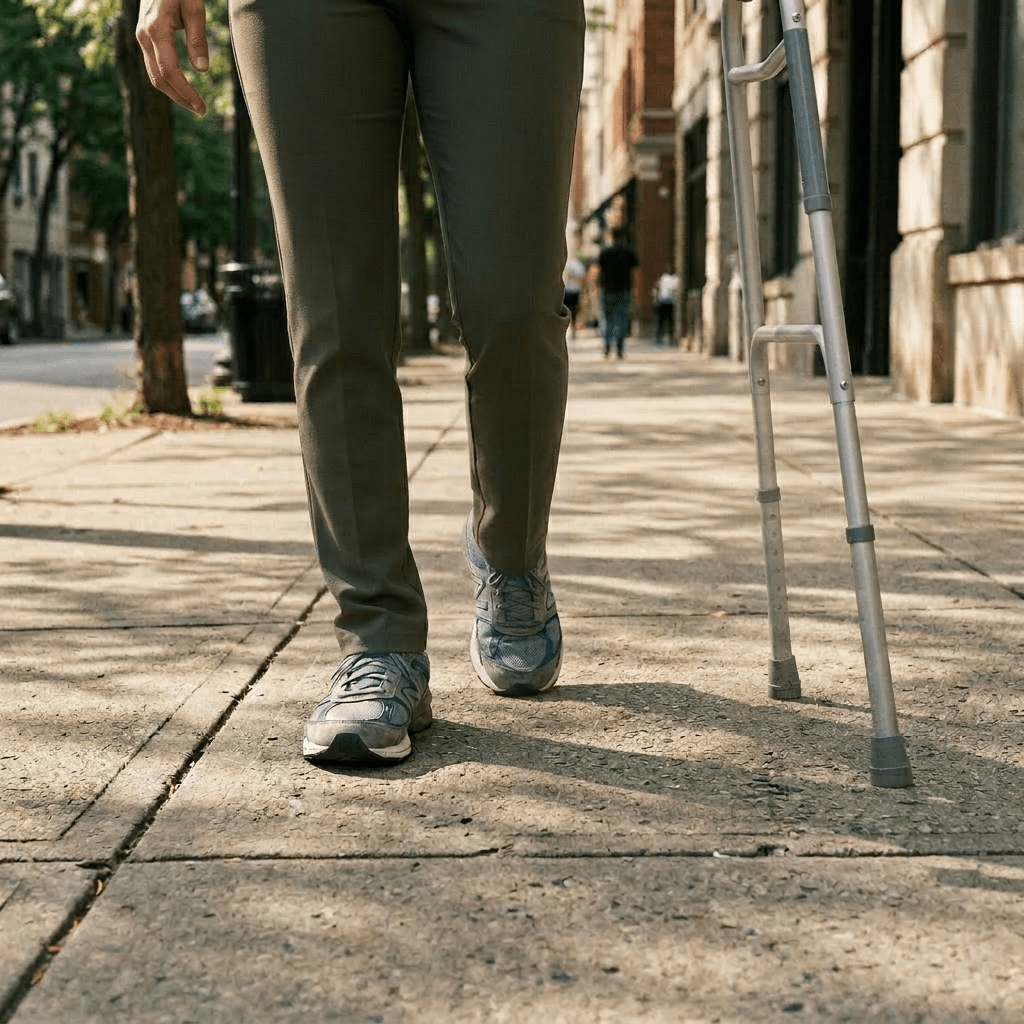
A person walking on a sidewalk using a support
And now? I am walking without devices. Real, unassisted (mostly) steps outdoors, feeling the breeze, hearing birds, noticing how the ground changes texture from pavement to grass to mulch. The pride swells in my chest because I fought for this. I outlasted the version of myself that was not good enough. Thankfully, I was too proud, too vain, too scared to accept help in the “ugly” forms it took. Healing is not always graceful or Instagram-worthy. Sometimes it looks like tight muscles and shaky legs. Sometimes it requires stubbornness, not swallowing your ego and refusing to grip the walker that you swore you would never need.
I still cannot stand the walker, if I am honest. I am still vain. The idea of using my arms to walk feels fundamentally wrong to me—like recruiting the wrong tools for the job. Legs are for walking. Arms are for reaching, hugging, creating. For a long time, that mental block held me back. But I have learned that true strength is in believing. Even if it is believing you do not need support.
These outdoor walks with my therapist are more than exercise. They are proof of resilience.They are quiet celebrations of a body that was broken and is mending. They are reminders that “human again” is not about returning to who you were before (I do not want to be that person)—it is about becoming someone new, someone wiser…
Cheers to every awkward, eyesore-assisted mile that led me here. And to every device-free one still ahead.
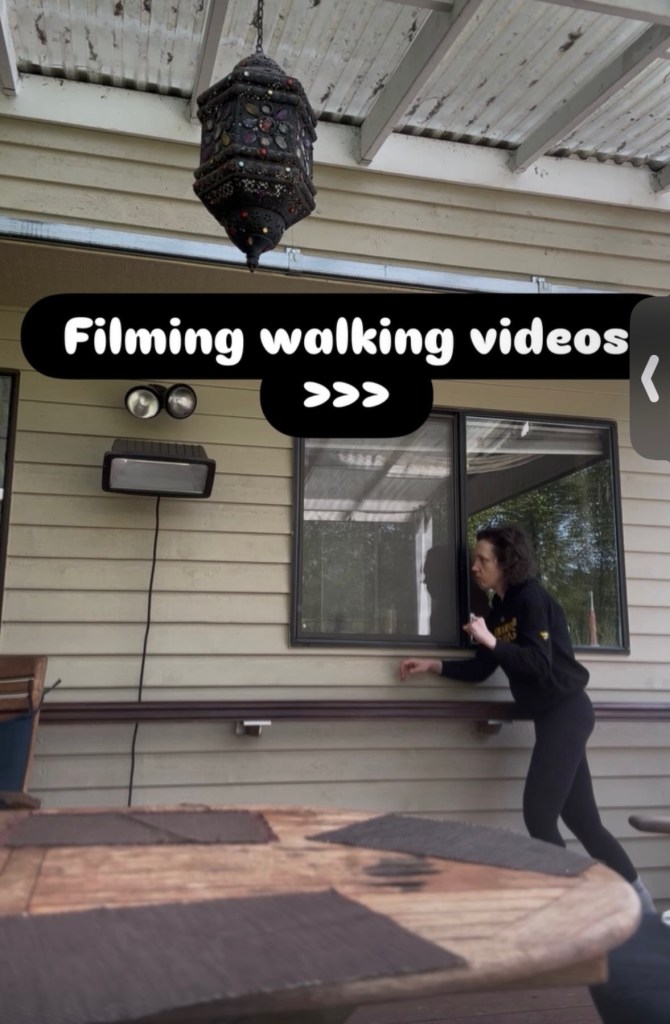
Every single afternoon, after the nap my body demands like a stubborn toddler, I film myself walking. It is only about ten feet. To most people, that probably looks like nothing at all. But to me, those ten feet are everything. A step closer. They are proof that I am still moving forward—literally—one brave, wobbly step at a time. It feels incredible.
My days start brutally early. I am up at 4 a.m., already chasing the version of myself I desire. By the time lunch is over, my body is spent from the morning’s workout and the constant grind of rehabilitation. My eyes grow heavy, my muscles scream for mercy, and I surrender to the bed like a little baby who earned her nap time. I used to fight it, but I learned to listen. The nap is not weakness; it is fuel. When I wake up an hour or two later, something magical happens. Energy surges back. Determination reignites. And suddenly I am excited—actually excited—to challenge myself again.
That is when I head to the back deck.
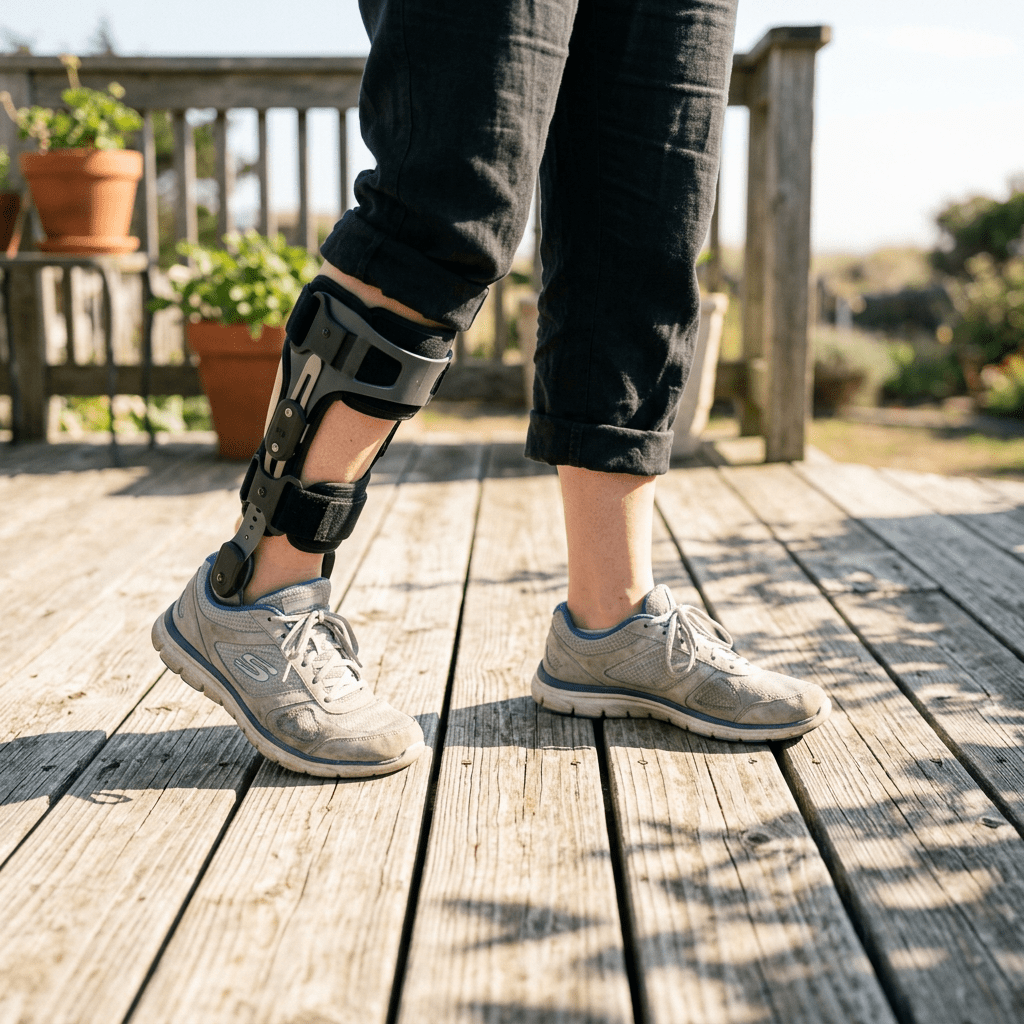
I strap on my brace even though I hate it. Most days I go without, stubborn as hell, refusing any device that reminds me I am not “normal” yet. But when I am about to push my limits, safety first applies (*eye roll*). The deck has a sturdy railing on one side—my own private parallel bar. I used to grip it at first, today I just walk along it slowly, no longer feeling the wood warm under my palm. At the end of the railing, I just stand there, working on my balance. Feet planted, core engaged, eyes focused on a spot in the distance (the heating lamp usually). The world narrows to that single task: don’t fall.
I film every attempt. Sometimes it is a clean walk. Sometimes it is shaky. First, my left (weak) leg pushes forward. That is the easy one. I do not need balance or strength help on this side, but then I have to shift onto this weak side and move my right leg forward. Sometimes the left side refuses to hold me up. Sometimes I end up on the ground. I have fallen more times than I can count out there—head cracking against the deck, shoulder slamming into the wall. Each bruise is a story. Each tumble is data.
I send the videos to my boyfriend anyway. I do not even know if he is watching them but the simple act of having an audience changes everything. It turns a lonely struggle into a performance. It makes me bolder. I love showing off for him. There is something powerful about letting the person you love witness your rawest, most determined moments.
I remember the early days when I had to clutch that railing for dear life, knuckles white, heart pounding. Letting go felt terrifying—like stepping off a cliff (hence why I wear my brace out there— in case my weak side refuses to hold me upright). But I did it anyway. Because I want this more than I fear the falls. I want to walk across a room without thinking. I want to stroll through a park holding his hand instead of a cane or brace. I want zero differentiation between me and everyone else. No explanations. No pitying glances. Just me, moving through the world the way I used to—freely, confidently, joyfully.
This recovery is not linear. Some days the ten feet feel like a marathon. Other days I surprise myself and push for more. The falls rarely happen anymore , but they sting a little less because I know they are temporary. Every time I stand back up, dust myself off, and hit record again, I am rewriting my story.
Small steps matter. Naps are not laziness; they are strategy. Now I see that my stubborn refusal to stay down is beautiful. I keep filming. Keep showing off. Keep chasing the version othat refuses to be defined by limitations.
I am not there yet. But every afternoon, after my nap, I get a little closer. Ten feet at a time.
And it feels amazing.
I am already dreaming bigger—longer distances, no railing, maybe even a real walk around the block. I will keep sharing the journey here, bruises and all.