Tag: love

  • With Love, Meghan: The Quiet Beauty of a Housewifey, Devoted Life I Wish More People Could See

    With Love, Meghan: The Quiet Beauty of a Housewifey, Devoted Life I Wish More People Could See

    The Netflix series I had mentioned watching was With Love, Meghan—the show about Meghan Markle and her [failed] attempt at creating a new life for her family here—and I cannot stop thinking about it. Not in the way the headlines want me to. Not with the usual swirl of opinions and side-eyes. Just… watching a woman move through her own home with care, intention, and this soft, steady devotion that feels almost radical in how ordinary it is.
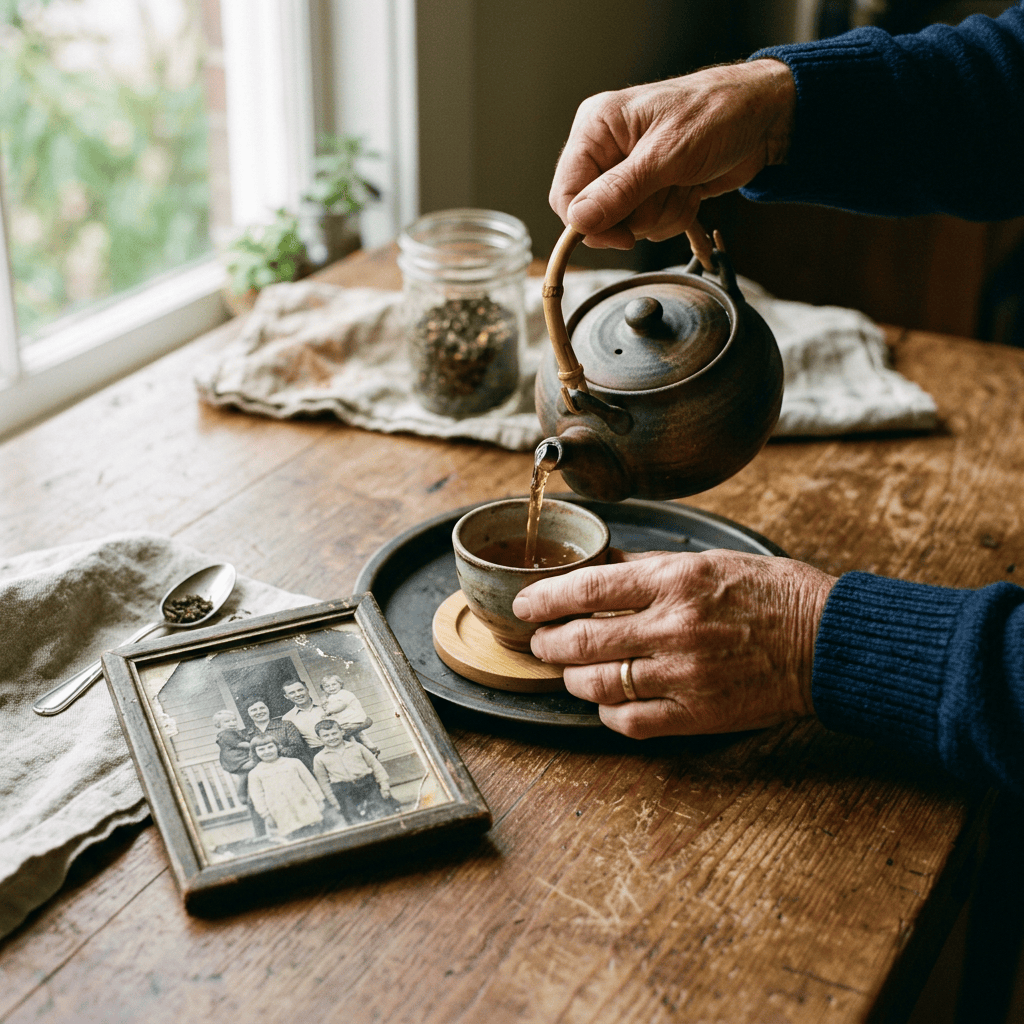
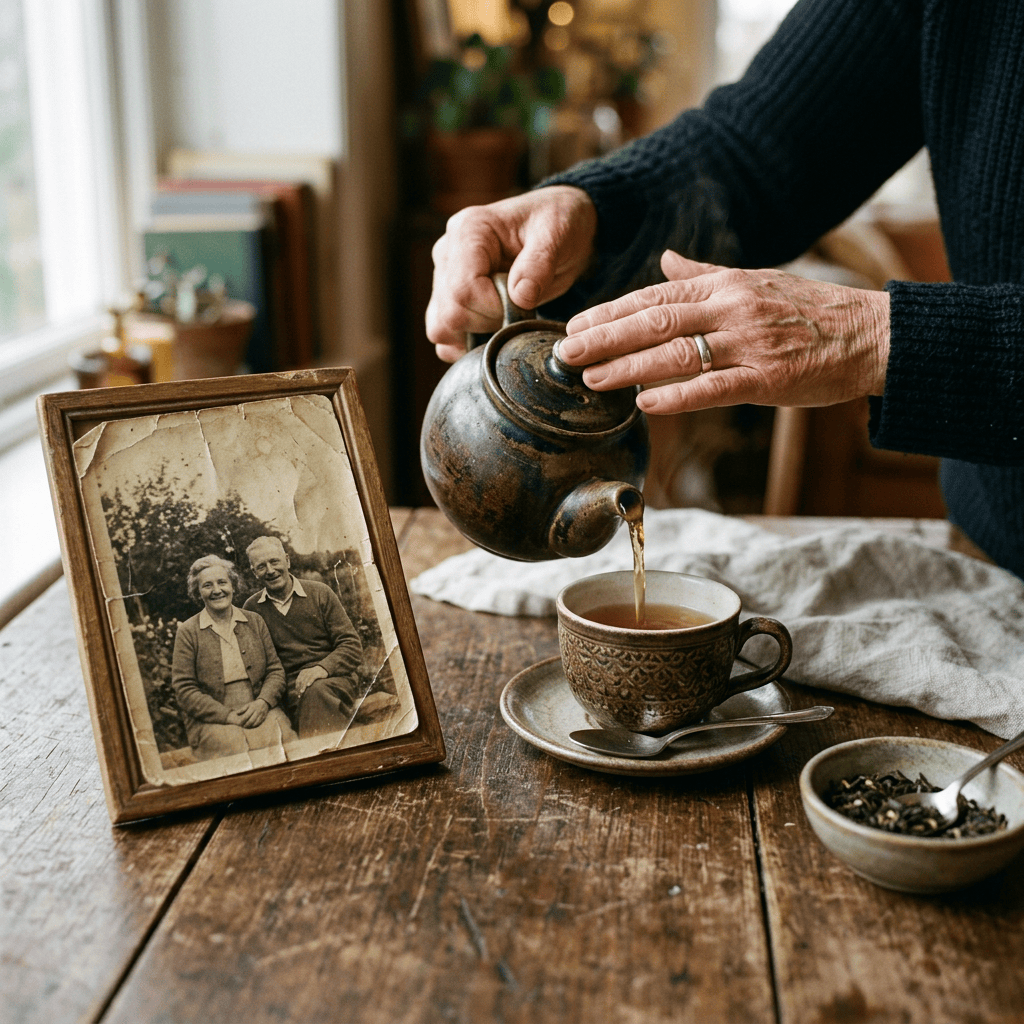
    Person pouring tea beside a framed vintage family photograph
    A soothing tea ritual unfolds beside a cherished family photograph on a rustic wooden table.

    From the first episode, what struck me hardest was how unapologetically housewifey Meghan is. My boyfriend says that I am similar to her. Someone who wants her man all to herself. So much so that she would take him away from his family. Meghan is not performing domesticity for the camera; she is living inside it. You see her in the kitchen of that Montecito house, sleeves rolled, hands in flour or carefully arranging herbs she grew herself. The way she talks about a simple roasted chicken or a lemon cake is not about showing off some glossy, unattainable lifestyle. It is about the quiet satisfaction of feeding people you love. She lingers over the details—the smell of citrus on her fingers, the way a perfectly set table can make an ordinary afternoon feel like a small celebration. There is something deeply grounding about watching someone treat the everyday acts of homemaking as worthy of attention and joy.

    Winding mountain trail leading to a lit cottage in misty hills
    A winding hillside trail leads toward a warmly lit cottage beneath misty mountains at dawn.

    That same devotion shows up in how she speaks about her family. The way her voice softens when she mentions “H” (Harry), the little private smiles when she talks about the children, the careful way she protects their privacy while still letting you feel the warmth of their life together. It is not grand declarations. It is smaller, truer things: the ritual of making breakfast, the shared garden, the decision to build a home that feels safe and soft after years of public pressure. You can sense the deliberate choice she has made—to pour herself into creating a peaceful domestic world. In a culture that often treats “housewife” like a diminishing word, Meghan wears it with quiet pride. She makes it look like strength.

    And yet so many people still seem determined to misunderstand her. I used to skim the surface-level takes myself—until I actually watched her move through these spaces The criticism often paints her as calculating or performative, but what I saw felt like the oppositeb(and do not tell me that it is all an act— I have seen Suits — she is not that good of an actress!): a woman who has been through intense public scrutiny choosing, again and again, to invest in the private, nurturing parts of life. The gardening, the thoughtful hosting, the careful attention to how a home can hold people. Those are not the actions of someone chasing relevance. They are the actions of someone who has decided that devotion—to partner, to children, to the small rituals that make a house a home—is worth more than the noise outside.

    There is a particular tenderness in the way she approaches hospitality on the show. Friends arrive, and you watch her light up at the chance to care for them—pouring drinks, arranging flowers she cut herself, making sure everyone feels seen. It is the classic housewifey impulse, elevated by genuine warmth rather than obligation. And when she talks about wanting to share these simple pleasures, it does not land as branding. It lands as someone who found peace in these acts and wants to offer a little of that peace outward.
    Abstract watercolor artwork displayed across a wooden-framed window
    An abstract watercolor panel transforms a window into a translucent, atmospheric artwork.

    I keep coming back to how misunderstood that whole picture feels. People reduce her to headlines, to old narratives, to whatever version of her fits the story they already decided on. But With Love, Meghan shows something softer and more consistent: a woman building a life around care. Around cooking for the people she loves. Around making a home that feels like a refuge. Around showing up, day after day, as a devoted partner and mother in the most unglamorous, beautiful ways.

    Watching it left me with this unexpected sense of calm. In a world that constantly pushes women to be more—more ambitious in public, more visible, more everything—there is something quietly powerful about choosing to be deeply present in the domestic sphere and finding real fulfillment there. Meghan does not apologize for it. She does not dress it up as something else. She just lives it, camera rolling or not, and that sincerity is what stayed with me long after the episodes ended.

    Maybe that is the real gift of the series. Not the recipes or the pretty gifts (though those are lovely), but the reminder that devotion looks different for everyone—and that for some of us, the most meaningful work is the work of making a house feel like home, of pouring love into the people who live there, of treating ordinary days as something worth tending with care. I am glad I watched. I am even more glad I let myself see her without the usual filters. Housewifey. Devoted. And, I truly believe, still so often misunderstood.

  • Being trad.

    Being trad.

    What’s a cultural tradition from your country that you love?

    Being Raised Russian Has Truly Taught Me How to Be a Traditional Woman/Wife

    Winding dirt path through an autumn birch forest with exposed roots
    A winding woodland path passes beneath golden birch trees and exposed twisting roots.

    There is something powerful about the way I was raised. Growing up Russian did not just give me a language, a cuisine, or a set of holidays—it shaped an entire understanding of womanhood and marriage that feels increasingly rare in this modern world. It taught me, without lectures or manifestos, how to be a traditional woman and wife: grounded, capable, devoted, and proud of the role rather than apologetic for it.

    In a Russian household, the home is not merely a place you sleep. It is the center of life, the domain where a woman’s care, order, and warmth determine the emotional climate for everyone else. From an early age, I watched my mother transform ordinary spaces into places of comfort and beauty. Floors were clean, tables were set properly, food was prepared with intention, and the atmosphere mattered. This was never framed as oppression. It was framed as competence and love. A well-kept home and a well-fed man was an expressions of strength, not subordination. I absorbed the lesson that domestic skill is not “less than” a career; it is a different, equally demanding form of mastery.

    Brass samovar and tea setting inside a rustic cabin beside snowy window
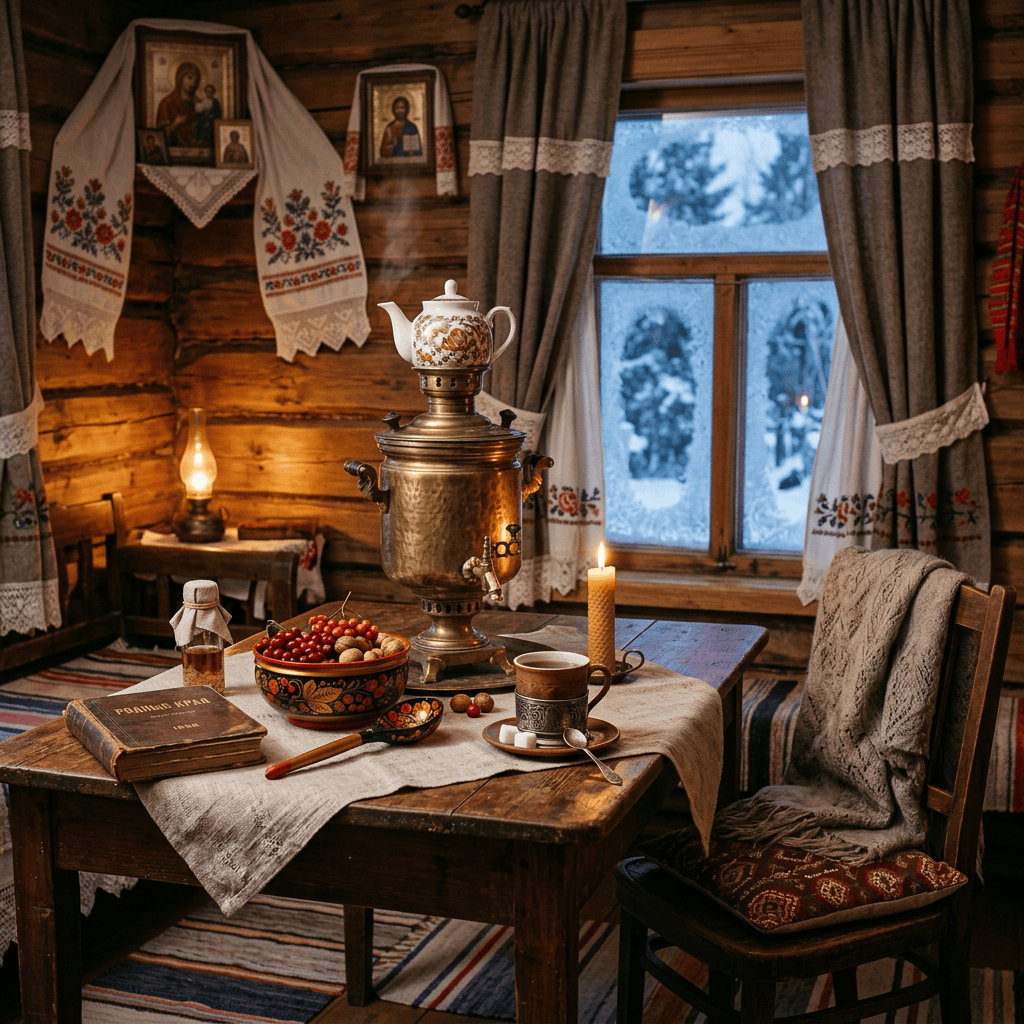
    A warmly lit cabin table features a brass samovar, tea, berries, and embroidered folk textiles.

    Traditional Russian upbringing also instills a clear-eyed view of complementarity between men and women. Men are expected to protect, provide, and lead with responsibility. Women are expected to nurture, support, and create the emotional and physical conditions in which that protection and provision can flourish. This is not a rigid hierarchy of worth; it is a practical division of labor rooted in observed differences and mutual dependence. I was never taught that needing a man’s strength made me weak, or that offering softness and loyalty made me less intelligent. On the contrary, the ability to soften a hard world for the people you love was presented as one of the highest forms of feminine power.

    Loyalty sits at the center of this model. Russian culture has long valued endurance—through winters, through history, through difficulty. That same endurance is expected in marriage. You do not discard a partnership at the first serious inconvenience. You work, you adapt, you protect the family unit. This does not mean tolerating abuse or remaining in a destructive situation. It means entering marriage with the seriousness of a lifelong covenant rather than a temporary lifestyle arrangement. Being raised with that expectation made me less interested in endless options and more interested in depth, continuity, and the quiet satisfaction of building something that lasts.

    There is also an unspoken standard of self-presentation. Russian women are often raised with an awareness that appearance is part of how you honor yourself and those around you. Looking put-together is not vanity for its own sake; it is a form of respect—for your husband, for guests, for the occasion, and for your own dignity. Combined with an expectation of competence in the kitchen and the home, it produces a woman who can be both soft and capable, elegant and practical.

    None of this requires rejecting education, ambition, or personal development. Many of the strongest traditional Russian wives I know are highly educated, multilingual, and sharp. The difference is priority. Career and self-expression are valuable, but they do not automatically outrank the creation of a stable, loving home and the support of a husband who carries heavy external burdens. The traditional model I absorbed does not demand that a woman disappears; it asks her to invest her gifts where they produce the deepest long-term fruit for the people she loves most.

    Of course, no culture is the same, and not every Russian family embodies these ideals perfectly. Yet the cultural inheritance is real. It prizes resilience over fragility, duty over pure self-expression, and the tangible results of care over abstract declarations of independence. In a time when many people feel adrift in relationships that prioritize individual fulfillment above all else, that inheritance feels like a quiet advantage.

    Being raised Russian did not only teach me to be smaller. It taught me how to be solid. It showed me that there is profound dignity in cooking a real meal, keeping a peaceful home, standing beside a man through difficulty, and having clear values. Traditional womanhood and wifehood, in this framing, are not relics. They are disciplines—demanding, beautiful, and deeply rewarding when practiced with eyes open and heart engaged.

    That is the gift the culture handed me. I am still learning how to live it fully, but I no longer question its worth.

  • I Cannot Erase Any Part of My Life

    I Cannot Erase Any Part of My Life

    If you could erase one event from your history, what would it be?

    There are days when the weight of everything I have lived through presses so heavily on my chest that the temptation to rewrite history feels almost unbearable. I catch myself wondering what it would be like to go back—to delete the chapters filled with pain, the choices I regret, the nights I barely survived. Yet every time that thought surfaces, I stop myself cold. I cannot erase any part of my life. Because if I did, I would not have met him. The love of my life.

    It is a strange and beautiful paradox, is it not? The very path that brought me to my lowest points is the same one that led me straight into his arms. Every wrong turn, every heartbreak, every season of darkness carved the version of me that was ready to recognize him when he appeared. Had I skipped the struggle, I might never have developed the depth, the resilience, or the quiet hunger for real connection that allowed me to see him—and to be seen by him in return.

    Winding path through woodland with autumn leaves, spring flowers, and distant green hills
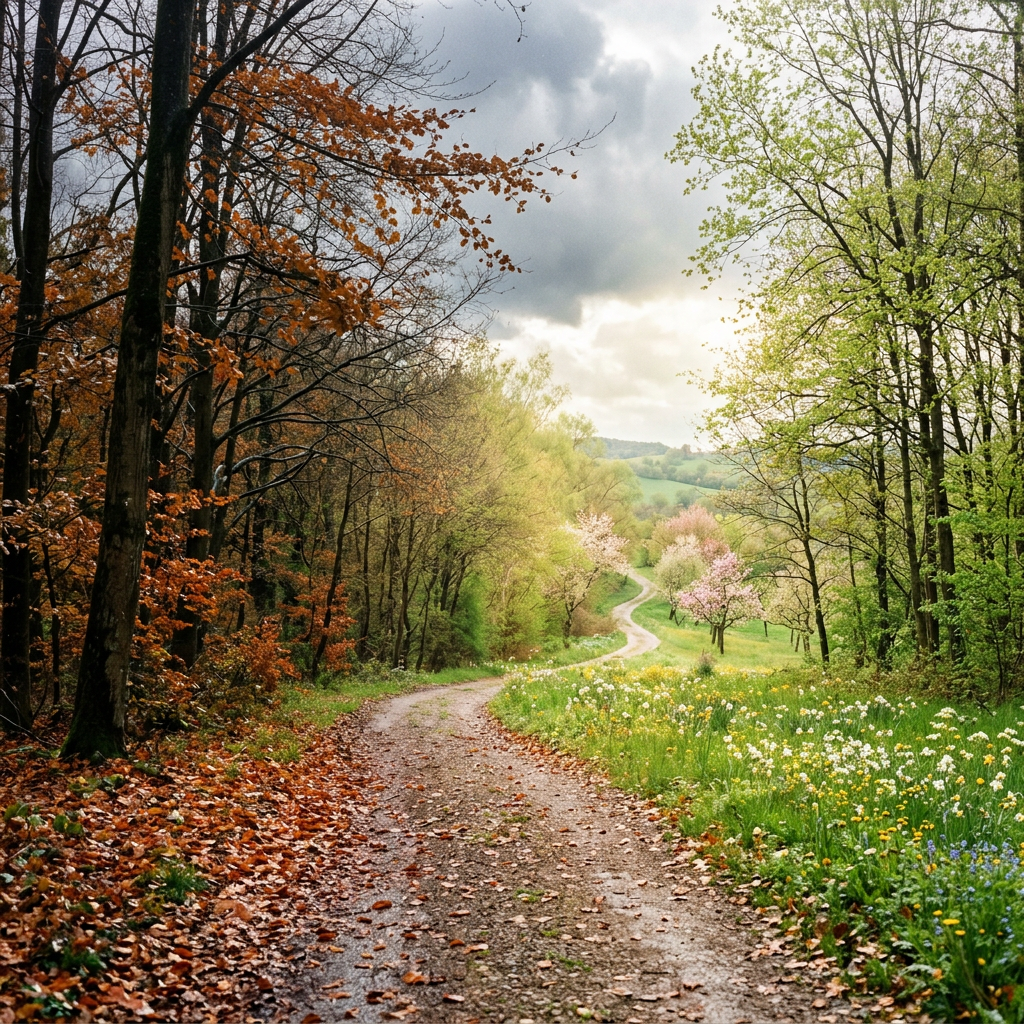
    A winding woodland path leads through autumn leaves and spring wildflowers toward sunlit hills.

    I know I am not where I need to be in life. My recovery is still a work in progress, messy and nonlinear. Some mornings I wake up feeling strong, only to find myself slipping by afternoon. There are still triggers I have not fully disarmed, still patterns I catch myself repeating, still days when the old version of me tries to reclaim the driver’s seat. Progress is not a straight line; it is a spiral. I revisit the same lessons at higher altitudes, learning them more gently each time. And while I can acknowledge that I am not yet the healed, steady person I aspire to become, I also know this truth with absolute clarity: I would not trade a single moment of the journey that brought me here.

    Because “here” includes him. Even if he is not physically here.

    He did not arrive after I had everything figured out. He showed up in the middle of the unfinished story. He has seen the raw edges of my recovery—the days I struggle, the moments when old “wounds” reopen without warning, the quiet battles I still fight behind a brave face. And somehow, instead of turning away, he stays He stays even though no one wants this. To be a part of this.. Yet, he holds space for the parts of me that are still healing. In his presence I feel both completely known and completely safe, a rare combination I never believed I would find.

    Looking back, I can trace the invisible thread that connects every hardship to this love. The loneliness that came with my disability taught me how to cherish companionship. The heartbreak (that I received from my own family) taught me what I would never again settle for. The rock bottom taught me that I am worth fighting for—and that lesson made me capable of receiving the kind of love that does not demand perfection, only honesty. If I had erased the pain, I would have erased the soil in which this relationship took root.

    So I choose, again and again, to keep the whole story. The beautiful and the broken. The triumphs and the near-misses. The version of me who fell is the same version who eventually looked up and found him standing there. I may still be climbing toward the place I need to be in my recovery, but I carry no desire to rewrite the map that led me to this love.

    I cannot erase any part of my life.
    And more than that—I no longer want to, despite the fact that I still get frustrated and incredibly sad/ angry (I just do my best to be positive about it).

  • The 8/8 Portal is Open.

    The 8/8 Portal is Open.

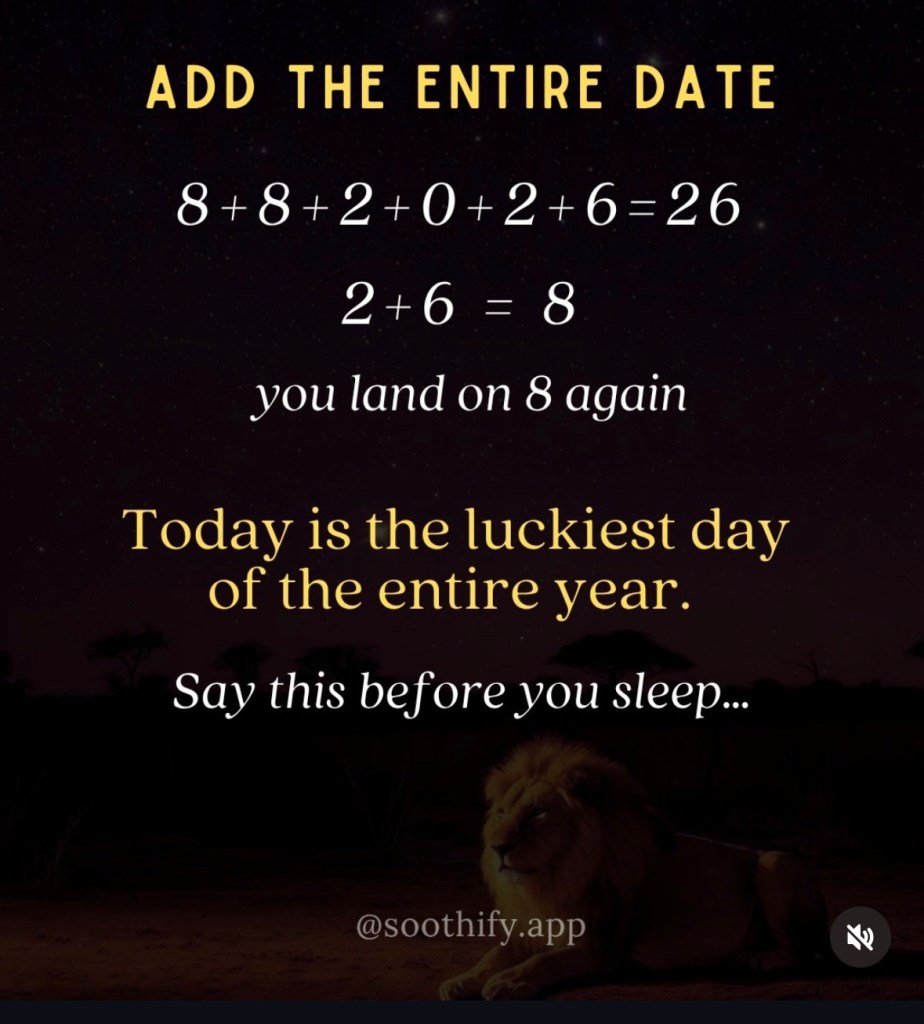
    Today—Saturday, August 8, 2026—marks the peak of one of the most talked-about energetic windows of the year: the Lion’s Gate Portal, also known simply as the 8/8 portal. Whether you approach it as astrology, numerology, ancient star lore, or pure modern spirituality, this date carries a collective invitation to step into greater power, clarity, and manifestation.

    Every year during Leo season (roughly July 23–August 22), the Sun moves through the sign of the Lion. Around this time, the bright star Sirius—the brightest in our night sky and often called the “spiritual sun”—makes its heliacal rising, becoming visible again just before dawn after a period of being hidden by the Sun’s glare.

    Spiritual traditions describe this as an alignment of Earth, the Sun in Leo, Sirius, and sometimes Orion’s Belt, creating what many call a cosmic “portal” or gateway of heightened energy. The window typically stretches from about July 28 to August 12, with the strongest focus on August 8 (8/8).

    The name “Lion’s Gate” comes from Leo’s symbolism—courage, heart-centered leadership, authenticity, and radiant self-expression. Ancient Egyptians watched Sirius closely because its rising coincided with the annual flooding of the Nile, a time of renewal, abundance, and new beginnings. While the specific term “Lion’s Gate Portal” is a modern spiritual concept rather than an ancient ritual, the star’s historical importance is real.

    The Power of the Number 8

    Why August 8 specifically? Numerology plays a starring role. The number 8 is associated with infinity (turn it on its side and you see the ∞ symbol), abundance, material achievement, personal power, discipline, and the bridge between the spiritual and physical worlds.

    On 8/8 the energy doubles. In 2026 it triples: add the digits of 8 + 8 + 2 + 0 + 2 + 6 = 26, then 2 + 6 = 8. Many are calling this a powerful 8/8/8 manifestation day.

    This year’s portal arrives with extra cosmic support. Jupiter, the planet of expansion, luck, and abundance, is currently in Leo—amplifying the bold, creative, heart-led energy of the season. The portal also sits just before a total solar eclipse in Leo on August 12, adding a layer of transformation and fresh starts.

    Many spiritual practitioners describe the Lion’s Gate as a time when the veil between the physical and higher realms feels thinner, intuition sharpens, and intentions set with clear focus can gain extra momentum.

    You do not need elaborate rituals to engage with this portal. The most effective practices are simple, intentional, and heartfelt

    Some people incorporate crystals (citrine, sunstone, or clear quartz), light a candle, or simply sit under the open sky and connect with Sirius if visible. The key is sincerity over complexity.6

    It is worth noting that mainstream science does not recognize a literal energetic “portal.” So obviously I am all for it. The astronomy of Sirius’s heliacal rising is real and has been observed for millennia; the amplified spiritual significance is a matter of belief, symbolism, and personal experience.

    Many find value in the portal simply as a cultural and seasonal reminder: a built-in annual checkpoint to pause, realign with what matters, and deliberately create rather than drift.

    Whether you fully embrace the mysticism or simply appreciate the poetic timing of midsommer Leo energy meeting the brightest star, August 8 offers a potent symbolic moment. The Lion’s Gate invites you to roar a little louder, dream a little bigger, and trust the infinite loop of giving to the Universe and receiving what the number 8 represents.

    Stepping is key here

    The portal is open. What will you walk through it toward?

    May your intentions be clear, your heart open, and your path illuminated. Happy 8/8.

  • I don’t worry anymore

    I don’t worry anymore

    What’s something you used to worry about but don’t anymore?

    I Don’t Worry Anymore

    I used to be a head case about everything.

    Every possible future lived rent-free in my mind. “What if X happens?” “What if Y falls apart?” My brain ran constant disaster simulations—late at night, early in the morning, in the middle of ordinary days. I could turn a neutral silence into a catastrophe, a delayed text into abandonment, a quiet stretch of life into proof that something was about to go wrong. Restless, sleepless nights became normal. Imagined scenarios would tighten my chest and fill my eyes with tears before anything real had even occurred. Our brains do not know the difference between the real and the imagined. Worry is not just a habit; for many, it is the operating system.

    That is not who I am anymore.

    Now I simply let go. I trust the universe and its divine timing.

    It did not happen overnight, and it was not some dramatic single revelation. It was the slow, repeated evidence of my own life. Things that once felt unbearable eventually rearranged themselves. Doors I thought were permanently closed opened in unexpected places. Losses that seemed final made space for something better, or at least something necessary. Again and again, the story resolved—not always the way I wanted in the moment, but in a way that eventually made sense. The universe, it turns out, has a longer timeline and a wider view than my anxious mind ever did.

    I still fall back into the old ways sometimes. The old machinery is still there, dusty but functional. A trigger hits, the familiar spiral starts, and for a brief moment I am right back in it—restless, sleepless, eyes welling up over something that has not happened and probably never will. The difference is that the spiral no longer owns the whole night. It lasts only a mere moment before I catch myself.

    In that moment I remind myself of everything I have already been through. I inventory the storms I have survived, the outcomes that looked impossible until they were not, the quiet proof that life has a way of working itself out even when I could not see how. That reminder is enough. The worry loosens its grip. I return to trust—not a passive, naive kind of trust, but an active one rooted in lived experience.

    This shift has not made me careless or indifferent. I still plan, still care, still show up. What I have released is the exhausting belief that constant mental vigilance is the only thing holding the world together. It never was. The world kept turning while I was busy catastrophizing. Divine timing kept arranging the pieces whether I was watching or not.

    If you are still living inside the “what ifs,” I will not pretend the jump is easy. The mind loves its old stories. It is comfortable. But every time you catch the spiral early and choose to remember what has already worked out, you weaken the old pattern a little more. Over time the moments of relapse get shorter. The trust gets quieter and more solid. Eventually you look up and realize you are no longer a head case about everything. You are just living—present, imperfect, and surprisingly okay with not knowing how the next chapter will unfold.

    Because it always works out.
    Not always on your preferred schedule.
    Not always in the form you first imagined.
    But it works out.

  • Overcoming Fear: The Psychology of Walking Again

    Overcoming Fear: The Psychology of Walking Again

    I think at this point I know how to walk.
    I can. Mechanically, neurologically, structurally—I can. The circuitry is there. The muscles fire. The joints articulate. The proprioceptors still report in. I have proven it enough times under controlled conditions that the evidence is no longer debatable. I just don’t. Not when it counts. Not when the room empties and the only person left holding the responsibility for my body is me.

    Footprints in sand along a misty beach with gentle waves nearby
    Footprints trail along a quiet, misty shoreline at dawn

    The only time the machinery truly fails—when my legs turn to wet rope, when the floor starts pitching like a boat deck, when my ankles decide they no longer trust the ground—is when fear arrives. Not the polite, manageable kind of fear. The full-body, ancient, animal kind. The kind that floods the nervous system with so much chemical static that every signal coming up from my feet gets scrambled on the way to the brain. Balance does not disappear because the hardware is broken. Balance disappears because the software has decided the body is under lethal threat and starts aborting non-essential processes. Walking, apparently, is non-essential when the mind has already decided you are about to die.

    Ultimately, my recovery is almost entirely psychological now. The physical work is largely done. What is left is the terror of being alone with a body that once betrayed me and might—according to the most primitive parts of my brain—betray me again at any second.

    Abstract colorful human figure walking with multiple overlapping silhouettes showing motion
    A colorful abstract illustration depicting a human figure in fluid motion.

    When I am with my physical therapist, something almost arrogant wakes up in me. A cold, sharp confidence. Sometimes it edges into cockiness. I know he has a hand near my gait belt clipped around my waist. That single point of contact is enough. It is not even that I need the physical support—most of the time he never has to catch me. It is the knowledge that the safety net exists. In that narrow window of external reassurance, I can walk. Long distances. Steady. Controlled. Almost normal. My stride lengthens. I can even get a little reckless with it, testing edges, turning faster than I should, because some part of me is performing. Showing off. Proving a point to both of us.

    Silhouette of a running person enveloped in fiery flames and dynamic energy streaks
    An abstract figure bursts forward surrounded by flames and energy trails.

    Then I am alone.

    The door closes. The professional competence leaves the room. And the fear that was waiting in the house walks in and takes the controls. Suddenly the same legs that just carried me fifty meters without drama start trembling like they are made of paper. My ankles soften and roll without warning. The ground tilts. My center of gravity becomes a rumor. I throw all caution to the wind not because I am brave, but because the alternative—moving carefully, deliberately, with awareness—feels even more dangerous. Carefulness requires trust. And trust is exactly what fear has already revoked.

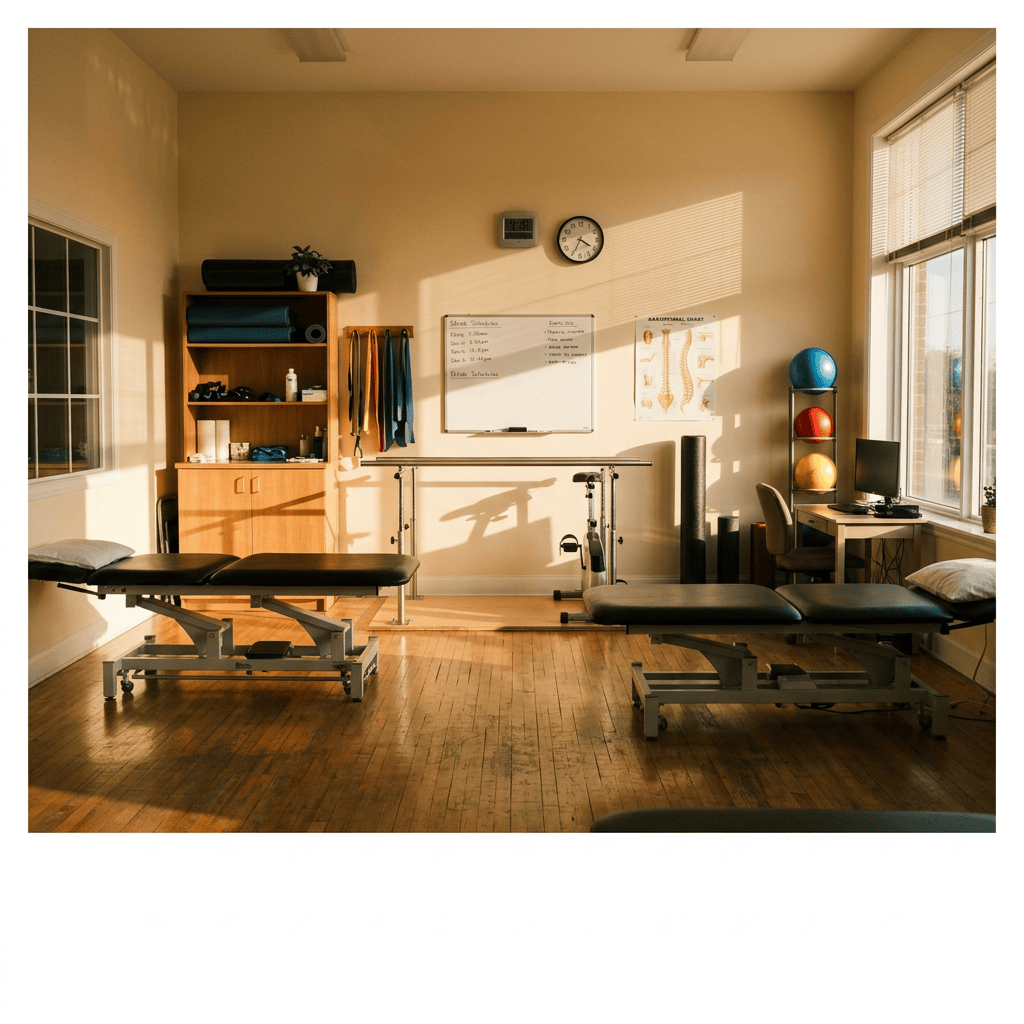
    Physical therapy room with two treatment tables, exercise bands, stability balls, and anatomical charts
    A bright physical therapy room with treatment tables and exercise equipment bathed in warm sunlight.

    So I lurch. I overcorrect. I plant my feet too hard or too soft. I start shaking, and the shaking makes the ankle turn, and the turned ankle makes the leg weaker, and the weakness feeds the fear, and the fear deepens the shaking. It is a closed loop, elegant in its cruelty. The body is not failing because it is incapable. It is failing because the mind has already written the ending and is simply forcing the body to act it out.

    I know how to walk.


    I just do not know how to walk while terrified of what walking might cost me.

  • The Harsh Realities of Love in “It Ends With Us”

    The Harsh Realities of Love in “It Ends With Us”

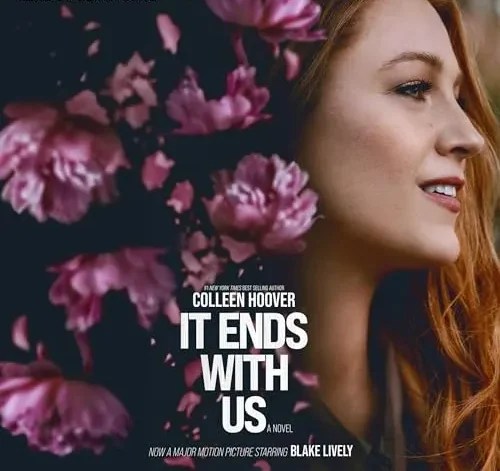
    I read Colleen Hoover’s It Ends With Us years ago and ugly-cried so hard while recapping the entire plot to my boyfriend that I probably looked like a raccoon mid-breakdown. The kind of crying where your face contorts into something unnatural and you start gasping between sobs like you are drowning in your own feelings. I am, unapologetically, a hopeless romantic—one of those people who still believes in the fairy-tale version of love even while the rest of the world rolls its eyes. So when I picked up the audiobook about five years ago, it was for the purest, most naive reason possible: I wanted to soak in another epic love story. Instead, it reached into my chest, ripped out my heart, and stomped on it in front of me.

    I could not wrap my head around it at first. Why was this seemingly perfect man—the one who was so deeply, desperately in love—painted as the villain? He was not some cartoonish monster. He was charming, intense, devoted… and then the cracks showed. The story is not some soft-focus romance; it is a brutal dissection of abuse, jealousy, and the kind of anger issues that poison everything they touch. It shows how those things do not just “happen” in relationships—they metastasize. They rewrite the rules. They make you question your own instincts until you do not recognize yourself anymore.

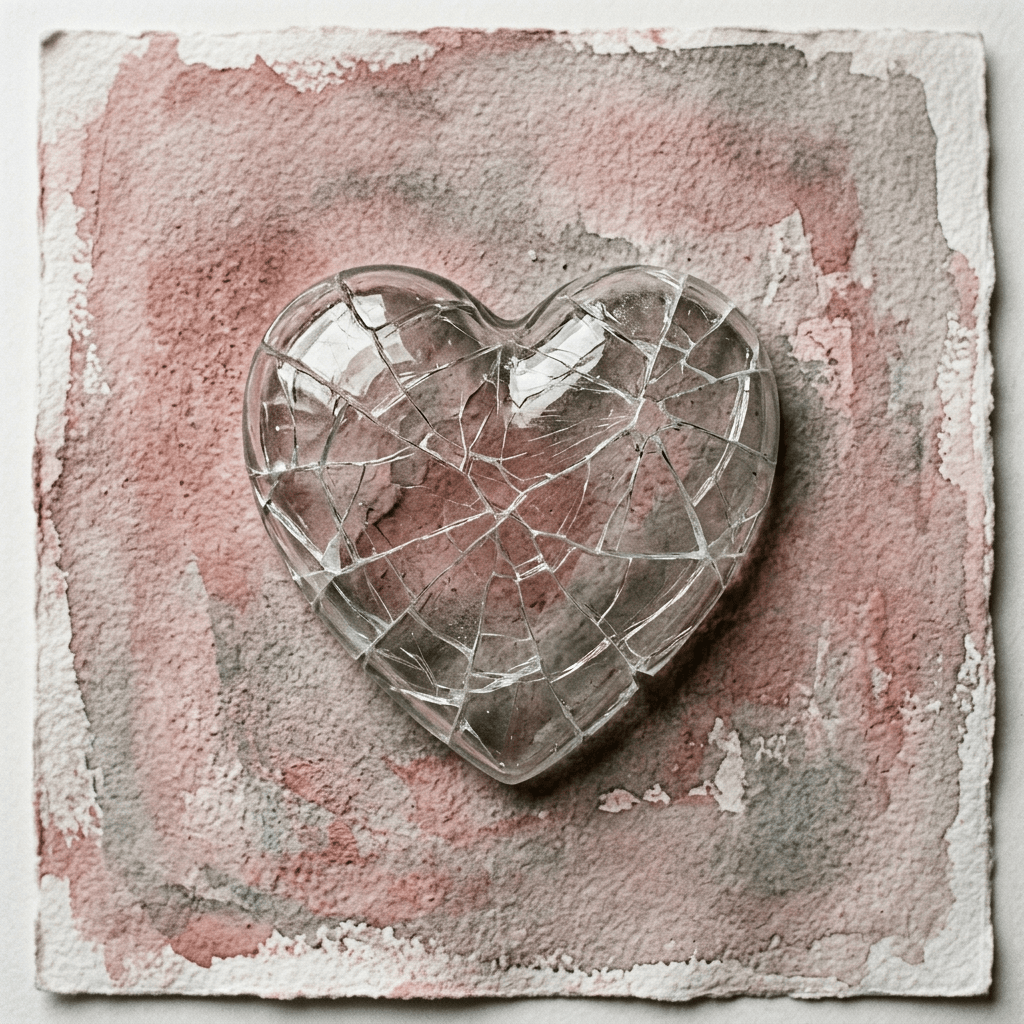
    Shattered transparent glass heart on pink and gray watercolor paper
    A shattered glass heart resting on a watercolor paper with soft pink and gray hues

    The thing is: I am still relatively new to real-life love. No dramatic exes, no war stories, no “he cheated and I burned his clothes” lore (just the firefighter situationship). Books and movies have always been my reference library for how relationships are supposed to work. So when a story refuses to hand me the neat, tied-with-a-bow happy ending I have been conditioned to expect, it hits differently. It feels personal. Like the universe is actively trying to ruin my idealism.

    The movie adaptation—starring Blake Lively, who has somehow transformed from relatable blonde (à la Gossip Girl) into full-time annoying diva energy—follows a young woman who falls hard for a young neurosurgeon in Boston. Cue the meet-cute, the chemistry, the magnetic pull. Then his anger starts leaking into the relationship like a slow poison, and an old flame shows up to complicate everything further. It is messy. It is ugly. It is the opposite of the polished rom-com fantasy I keep chasing.

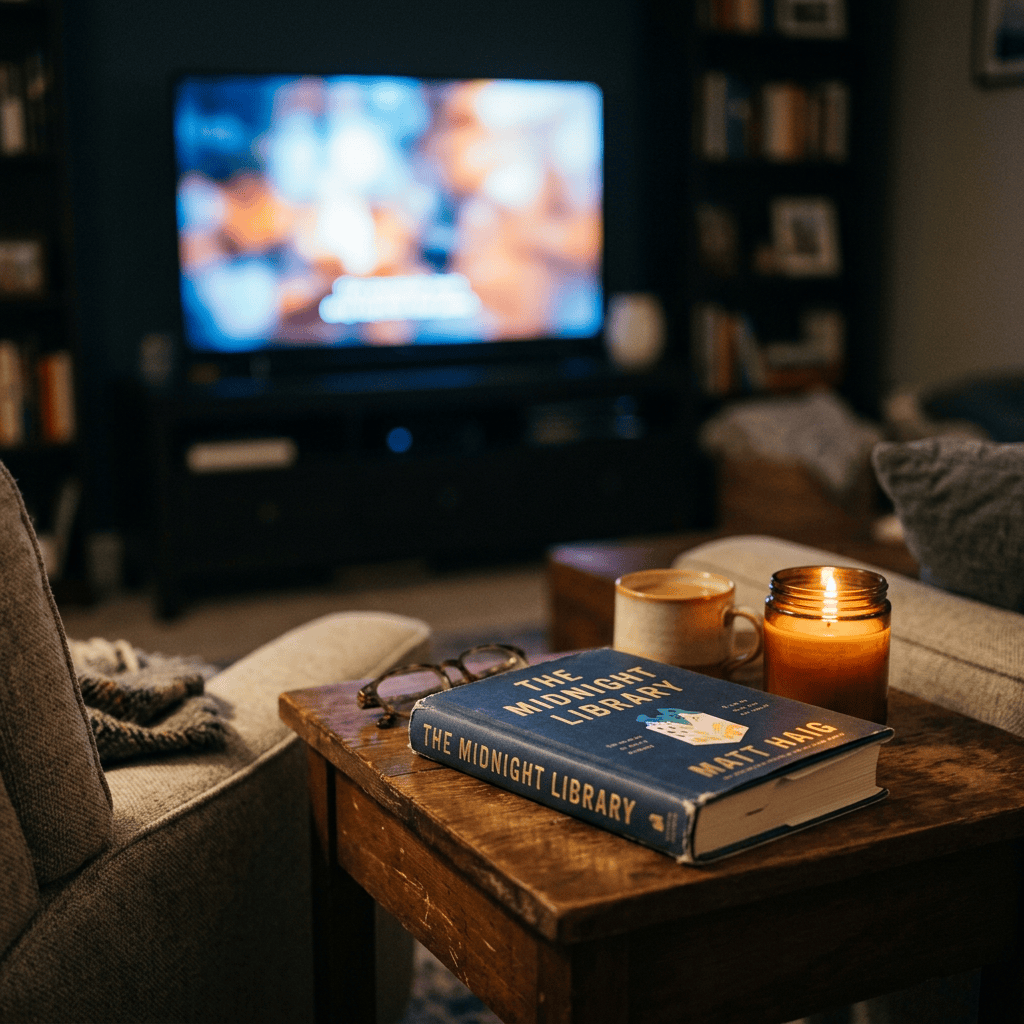
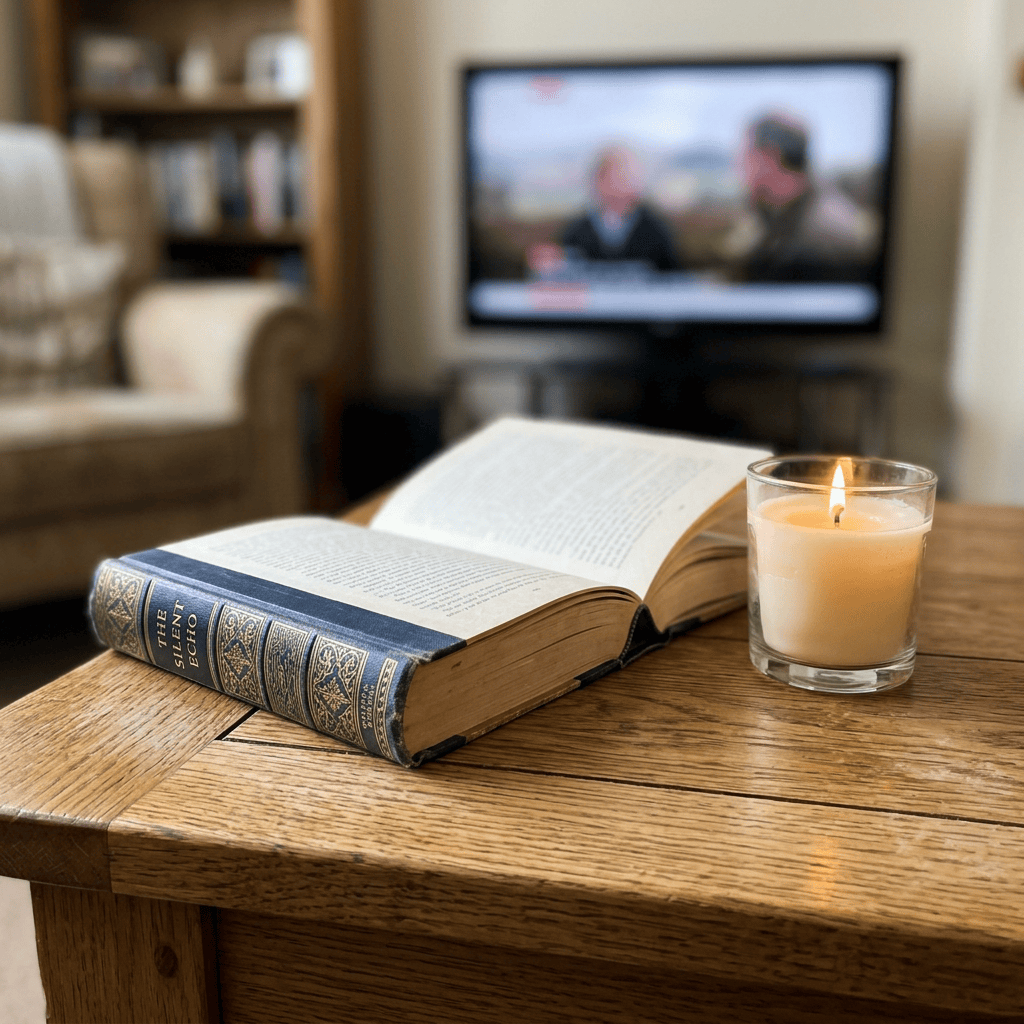
    Open book titled The Silent Echo on a wooden table beside a lit candle with a blurred TV and armchair in the background.
    An open book and lit candle on a wooden table in a cozy living room.

    I have what feels like a genuinely perfect man in my own life. The kind who does not make me walk on eggshells and does not turn love into a battlefield. So any love story that refuses to deliver the fairy-tale resolution just wrecks me. I end up ugly-crying, rambling about fictional people to my very real, very patient boyfriend, while he probably wonders how someone so soft can get this emotionally annihilated by a book and a film.

    Pink lilies with raindrops on petals and leaves
    Bright pink lilies standing tall under falling rain

    Maybe It Ends With Us is designed to gut people like me—the ones still clinging to the idea that love should always conquer everything. It does, but sometimes it ends exactly where it needs to. And that truth is still sitting heavy in my chest.

  • From Midnight Prayers to Quiet Surrender: A Love Story That Still Confuses Everyone

    From Midnight Prayers to Quiet Surrender: A Love Story That Still Confuses Everyone

    What’s a promise you made to yourself that you’ve actually kept?

    Ever since I was a little self-conscious preteen, the nights felt longer than they should have. I would lie in bed with the covers pulled up to my chin, staring at the ceiling filled with glow in the dark stars, and beg the universe—quietly, desperately, almost bargaining—for one simple thing: that the teasing would stop. (that I would be good enough).That people like my cousin would finally leave me alone. The words were never spoken out loud, but they lived in the space between my ribs and the soft glow of the stars. I wanted to shrink, to disappear, to become someone no one felt the need to pick apart. Those silent pleas were the first contracts I ever tried to write with fate.

    Open journal with handwritten notes and sketches next to lit candle and coffee cup on a wooden desk
    A journal lies open on a wooden desk beside a glowing candle and a cup of coffee, creating a warm writing atmosphere.

    What followed felt almost inevitable. The anorexia arrived. I literally disappeared. Along with it came the exhausting performance of people-pleasing—smiling when I wanted to cry, agreeing when every cell in me screamed no, molding myself into whatever shape might earn a little peace. I learned to measure my worth in the empty spaces on my plate and the approval of others. The universe was listening and it seemed to answer in complicated ways.

    Years later, the prayers changed. I no longer asked only to be left alone. I began begging for a life that did not require me to lie to the people I loved most. The lies about food, about fullness, about “I’m fine, I already ate,” had become a second skin I could no longer wear without choking. I was hurting everyone around me and it pained my people-pleasing-little heart. So I stopped. I stopped caring about anything. No matter how much I studied, starved etc. I was still not good enough. So I told the truth. I let the food in. And my body, in its own fierce and complicated way, responded. I gained twice the weight I had once fought so hard to lose. Of course there were other factors—grief, a heartbreak, not caring about anything anymore and the slow unraveling of old survival patterns—but the scale still delivered its blunt verdict. That heavier body felt, for a long time, like a sad existence I had somehow invited. Yet even in the middle of that discomfort, I still talked to the universe. Still begged.

    These days my midnight conversations with the universe have narrowed to a single subject: him, and the future we are building. The old desperate bartering has softened. It seems, against every earlier fear, to have worked. The life I once begged for—one without the constant weight of deception—has arrived, soon I will be wrapped in ordinary mornings and the steady presence of a man who sees me. Still, I am learning a new practice: to stop negotiating so hard and simply go with the flow. To meet each experience without immediately trying to reshape it into something more acceptable or more controlled.

    Swirling cosmic vortex with glowing gold, blue, and purple colors
    A dazzling swirl of luminous cosmic energy in deep space; symbolizing confusion turning to clarity

    I have, somehow, regained a surprising amount of agency over my physical appearance. The mirror no longer feels like an enemy I have to outwit. I can choose how I present myself, how I move through the world in this body that has carried so much history. And while I pour myself fully into the role of housewife—cooking, tending, creating a home that feels soft and lived-in—our love story continues to puzzle almost everyone who watches it unfold. People tilt their heads. Relatives exchange glances. Strangers on the periphery of our life seem quietly bewildered by how we met , by the “plan for our future.”

    Perhaps that confusion is part of the point. We are figuring it out. The path from a scared preteen whispering into the dark, through years of restriction and performance, through weight regained and truths finally spoken, even through stroke recovery was never going to look tidy from the outside. What matters is the quieter internal shift: the prayers that once begged for escape have become quiet with hope and trust. The bartering has eased into something closer to trust. And while the onlookers keep trying to solve the puzzle of us, I am learning, day by day, to stop solving everything myself—to simply live inside the story as it is, one honest meal, one ordinary morning, one unforced moment at a time. So clearly the universe and I have quite the relationship. The difference is now that I am going with the flow. Trusting that it knows my heart and will deliver what is best.

  • Cheers to Seven Years.

    Cheers to Seven Years.

    Seven Years: How Love Found Me When I Least Expected It

    Today is our anniversary. Seven years.

    Seven years ago, I was sitting on my ass, absolutely hating life. Recovery had stripped away so much of what I thought I needed, forcing me into a kind of isolation that felt heavy and permanent. The world kept moving, but I was stuck in a quiet, lonely version of myself—proud of the progress I made, yet aching for connection I did not know how to find. Loneliness had become the default setting. I had finally discovered my own voice after so much silence, and I was fiercely proud of it. I wanted the world to hear it. So I took to the internet and let that voice run wild. I acted out as much as possible—raw, unfiltered, sometimes chaotic—because for the first time in a long time, I felt like I existed out loud.

    And somehow, he noticed.

    FaceTime life (same outfit!)

    That single moment of being seen changed everything. My life did not just shift; it flipped completely. The sadness and the loneliness that had settled into my bones began to loosen their grip. This man walked into my digital world and rewrote the story I thought I was stuck in. Before I ever laid eyes on him in person, my soul recognized him. It fell in love first—quietly, completely, without needing permission from the rest of me. He showed me a love and kindness I had never even known existed. Not the loud, performative kind, but the steady, patient, everyday kind that makes you feel safe enough to keep becoming yourself.

    For four years we messaged back and forth, building something real across screens and time zones. Those three-hour FaceTime coffee dates every weekend became sacred. We talked about everything and nothing, shared the ordinary and the hard, laughed until our faces hurt, and somehow made the distance feel smaller than it was. When I finally met him in person after all that time, it did not feel like meeting someone new. It felt like arriving. Like my body finally caught up to what my heart had known for years. I stood there and thought, This is where I was meant to be.

    From day one—truly from the first messages—he understood me. Not the polished version, not the version I sometimes still try to present, but the full, complicated, recovering, loud-voiced me. He inspires me. He motivates me. And when we are together, the impossible starts to look doable. We can conquer and accomplish anything, not because life suddenly became easy, but because we face it side by side.

    We are truly best friends—as corny as that sounds. Best friends who chose each other long before the physical world caught up. Before he ever held me in his arms, he held me in his heart. That truth still takes my breath away.

    I love you always and forever. Thank you for giving me my life back. Not just the version I thought I wanted, but a fuller, warmer, more honest one than I ever imagined possible.

    Seven years in, and I am still grateful every single day that you noticed. Cheers to seven years— cheers to many more years.

    Couple standing on mountain overlook holding hands watching sunset
    A couple holding hands while watching a stunning sunset over the mountains
  • The Power of Tone: Charm or Control?

    The Power of Tone: Charm or Control?

    I have been toying around with my tone of voice for years now—not casually, not accidentally, but with the deliberate precision of someone who understands that the voice is one of the last remaining weapons that cannot be confiscated. I shape it. I stretch it. I lower it into that honey-dripped, breathy register that sounds like it was distilled somewhere between a late-night confession and a soft threat. When I want to be extra sweet, extra agreeable, extra useful to the moment, I let it slip into that sweet-sultry cadence that makes people lean in without realizing they’ve already started negotiating against themselves.

    Blame it on my Marilyn Monroe era.

    Person sitting alone at a long boardroom table with city skyline through large windows
    The power of silence

    Shortly after, I did not even speak for six weeks. Not a word. Not a sound. After I finally clawed my way out of the coma I was still completely mute—locked inside my own head while the world kept talking at me. I remember this mean-ass Russian nurse scrat me at my bedside. She was loud, harsh, relentless. The doctors, in their infinite clinical wisdom, decided I had somehow forgotten English through the stroke and must have reverted to Russian. So they kept trying to communicate with me in a language I have barely spoken fluently in years. When that predictably failed, a speech therapist decided the next logical step was to jam his fingers down my throat. The goal, apparently, was to force a coughing noise so they could prove my vocal cords were still intact. Nothing like having a stranger’s digits in your airway while you are already half-paralyzed and terrified, to make you feel truly human again.

    Blue and purple neon waveforms on black background representing sound or energy waves
    Bright blue and purple swirling waveforms float against a dark background.

    I did not speak again until August 13, 2010 (from June 30, 2010). The first sound that came out was not even a word. It was more of a bark. Rough, broken, animal. I could not string more than a few syllables together without running out of air like someone who just sprinted up a flight of stairs. Every attempt at speech felt like hauling something heavy uphill with lungs that no longer trusted me. Progress was slow, ugly, and humiliating in the way only neurological damage can be.

    There was a stretch of time in the past when I studied Marilyn Monroe the way some people study scripture. And I reverted back to that. Not the cartoon version people paste on dorm-room walls, but the calculated softness: the way she could make a simple sentence feel like an invitation and a dismissal at the same time. That breathy, almost-too-gentle delivery was not fragility. It was strategy wrapped in perfume. I absorbed it. I practiced it in empty room until the sound no longer felt like a costume and started feeling like a second tongue.

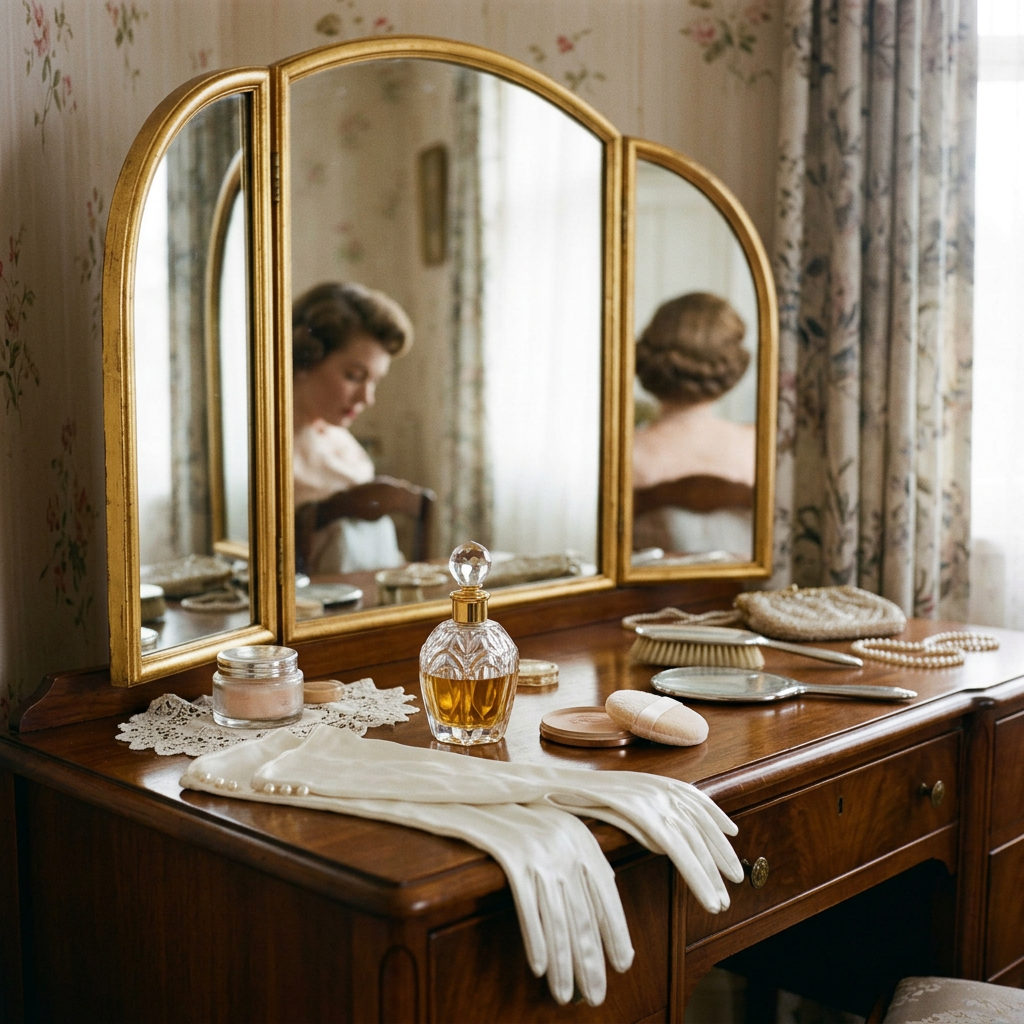
    Wooden vanity table with gloves, perfume bottle, mirror, and makeup items
    A vintage wooden vanity table adorned with retro beauty items and gloves

    Now it is automatic. When the situation calls for compliance—or the appearance of it—I dial the voice down into that warm, velvet register. The pitch softens. The edges blur. Words land slower, heavier, coated in something that reads as warmth even when the content is pure calculation. People respond to it the way they respond to low lighting and expensive liquor: they relax. They lower their defenses. They start believing the sweetness is the whole story instead of the opening move.

    It is not about being liked. It is about control dressed up as charm. A higher, sharper tone gets you labeled difficult, intense, “a lot.” The Marilyn register gets you permission. It buys time. It turns potential conflict into something that feels almost intimate, even when you are steering the conversation exactly where you want it to go. There is a particular power in watching someone melt under a voice that sounds like it could not possibly be dangerous—while knowing full well that the danger is precisely in how little they suspect it.

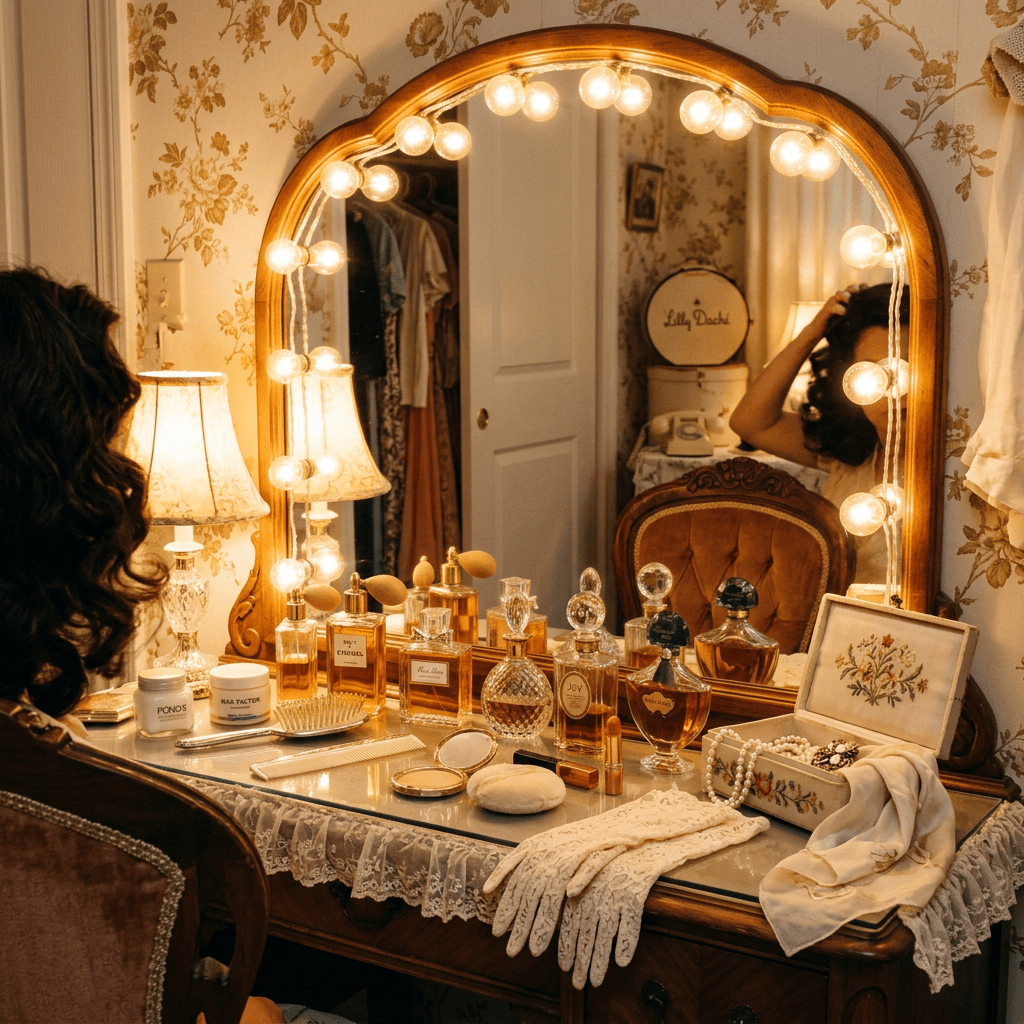
    1950s dressing room glowing vanity, gloves, perfume

    I have used this tone in what could-have-been arguments that could have escalated, in moments when being blunt would have cost me more than I was willing to spend. I have watched jaws-unclench, postures soften, eyes linger a second too long. The voice does half the work before the words even finish landing. And yes, part of me enjoys the quiet theater of it—the knowledge that I am performing a version of softness that people still fall for, a century after the original blonde perfected the act.

    Some call it manipulative. They are not entirely wrong. But then again, every social interaction is a performance. Most people just never bother to refine their instrument. I did. I took the breathy, agreeable, almost-submissive tone and made it mine—not as surrender, but as a precise, elegant tool. Marilyn knew the game. I just decided to keep playing it long after the credits rolled.

    So if you ever catch me speaking like that—low, sweet, almost liquid—do not assume it is pure affection. Sometimes it is affection. Sometimes it is strategy. Often it is both, tangled together so tightly that I do not even bother separating them anymore. The voice is the first thing I offer and the last thing I fully reveal. And I have been refining this for years.

    Abstract flowing shapes with warm tones of brown, orange, and beige
    Abstract fluid shapes blend warm colors in a smooth gradient