Tag: books

  • Dinner with F. Scott Fitzgerald: The Allure of Literary Luxury

    Dinner with F. Scott Fitzgerald: The Allure of Literary Luxury

    Which author would you love to have dinner with?

    If I were to have dinner with an author, it would be F. Scott Fitzgerald. Not because of the obvious masterpiece everyone names first—The Great Gatsby—but because he understood luxury as a temperature, a texture, a way of moving through a room. He did not merely describe wealth. He lived inside its shimmer and its hangover, and he wrote as if both were equally sacred.

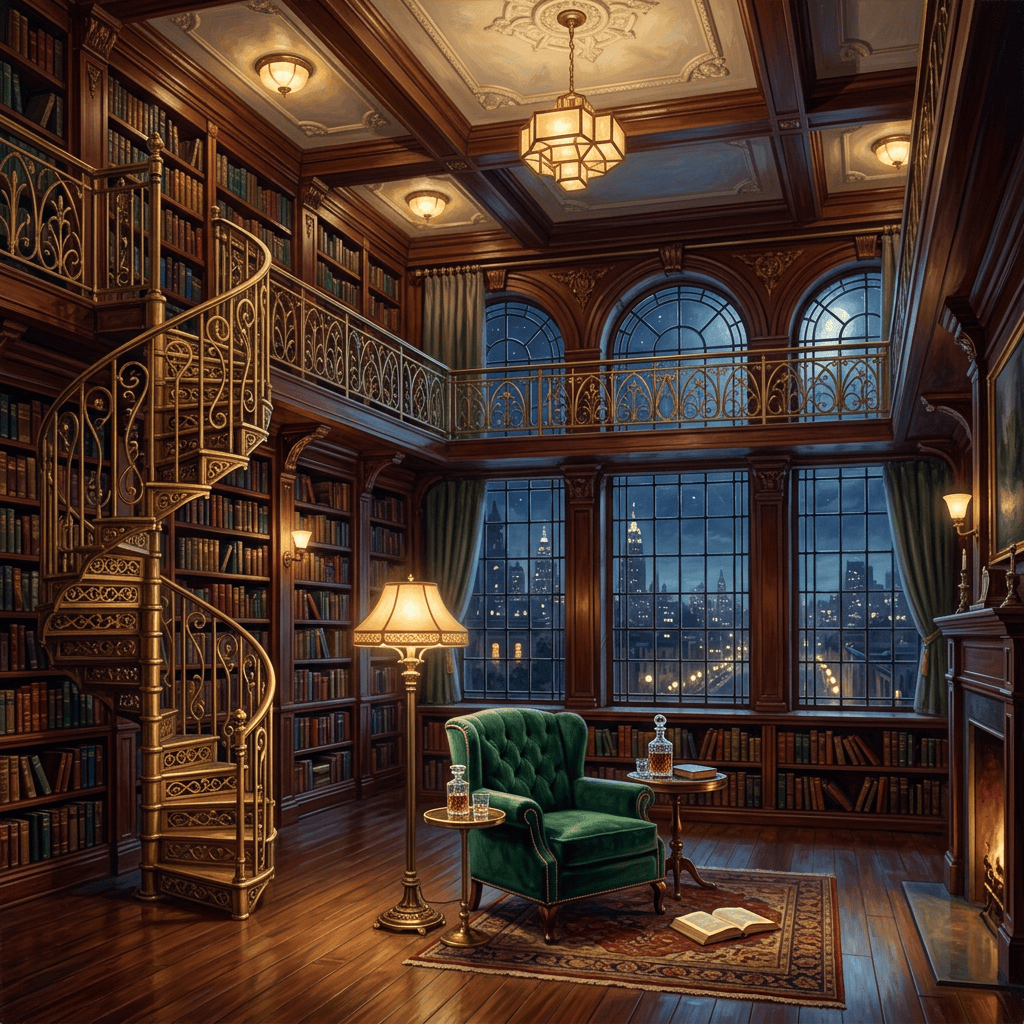
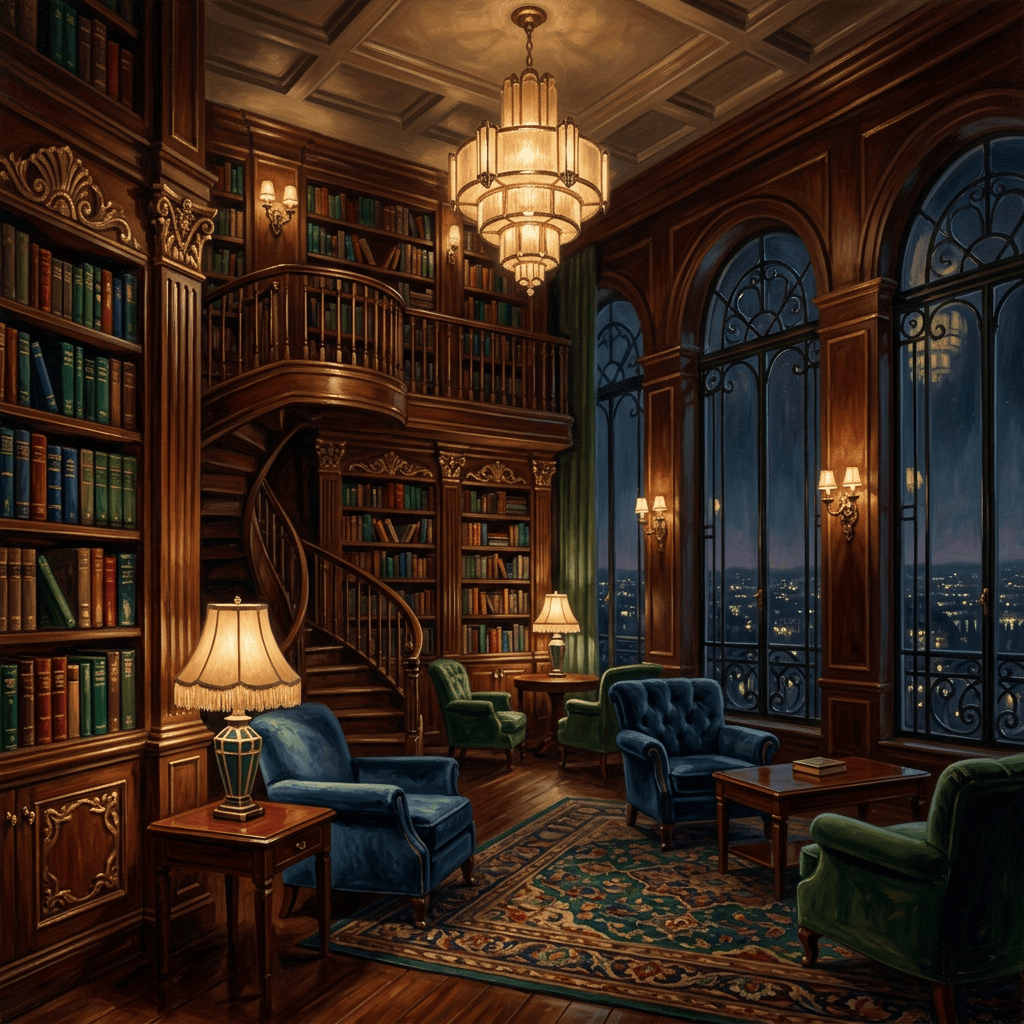
    Ornate wood-paneled library with bookshelves, seating, chandelier, and city views
    A richly appointed library lounge invites quiet reading beneath a glowing chandelier and tall arched windows.

    I have never been especially moved by stories that ask me to stay where I already am. Many people prefer fantasy worlds they can visit and leave, or novels that feel “relatable,” which often means ordinary kitchens, ordinary disappointments, ordinary weather. I have always been drawn the other way: toward silk, late hours, expensive mistakes, and the particular loneliness that arrives when the party is still going and you realize you are the only one who notices the light has changed. Fitzgerald paints that picture better than almost anyone. He makes luxury look not like a shopping list but like a climate.

    The Great Gatsby is the public cathedral. It is the book of the green light, the orchestra, the rumor. It is magnificent. But The Beautiful and Damned is the private room. Anthony Patch and Gloria Gilbert are not striving toward a dream so much as they are already inside one and slowly ruining the furniture. They are beautiful, idle, certain the future will keep paying their bills because it always has. They drink, they quarrel, they buy a second house they cannot afford because the idea of a gray country house is prettier than the math. They treat inheritance like weather: something that will arrive if you wait long enough in the right clothes. I recognize that hunger. Not the poverty of wanting more, but the more dangerous appetite of people who already have enough to be ruined by taste.

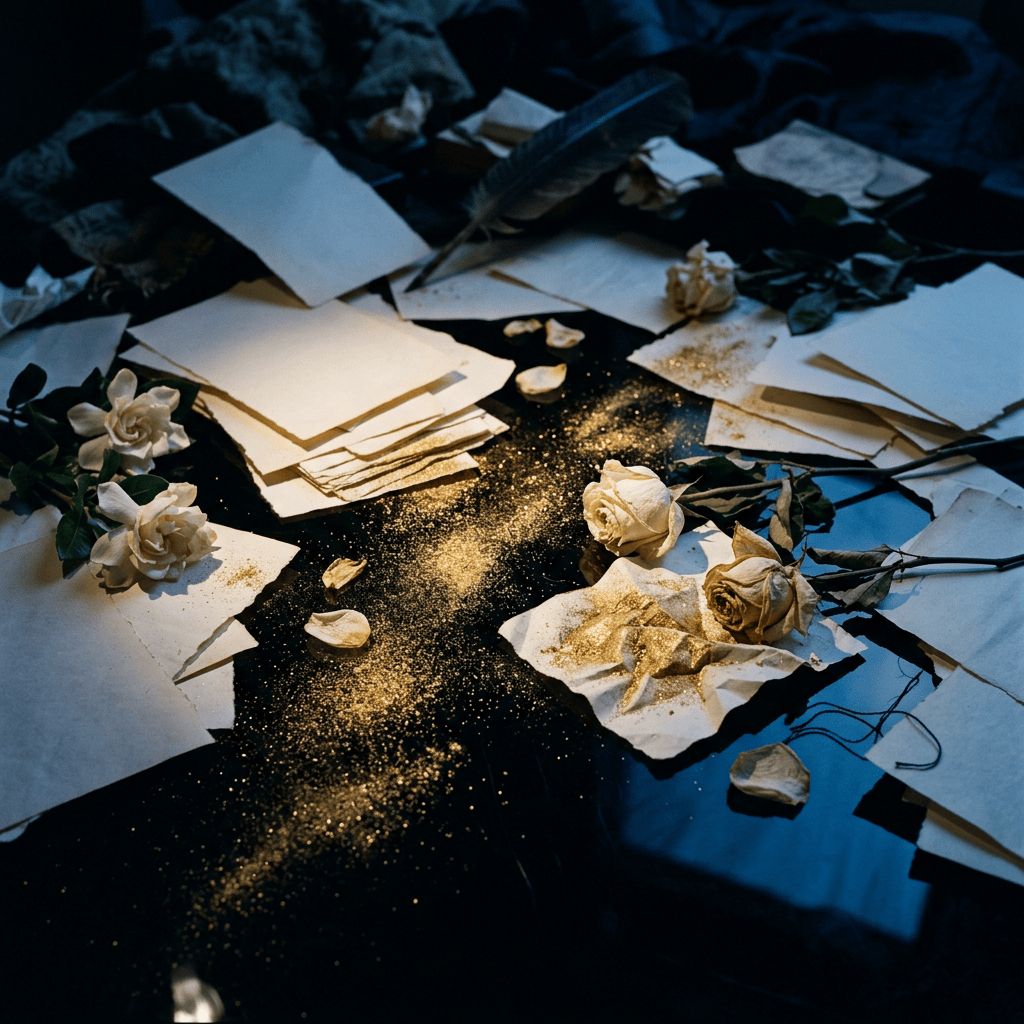
    Dried roses and scattered letters covered in golden dust on dark fabric
    Dried roses, scattered letters, and golden dust create a hauntingly romantic still life.

    Fitzgerald and his wife Zelda lived the same plot in public. Newly famous, they took over hotel lobbies as if the city were a set built for them. They spun in revolving doors, slid down banisters, jumped into fountains, arrived at parties on all fours, locked a jazz band in a bedroom and made it play until morning. They crossed the Atlantic with too much luggage and rented villas above the Mediterranean because New York had become too loud and too expensive for the kind of living they refused to scale back. He wrote about living on practically nothing a year while still ordering champagne. The contradiction is the point. Luxury, in Fitzgerald, is never only possession. It is performance, mood, and the brief conviction that beauty can postpone consequence.

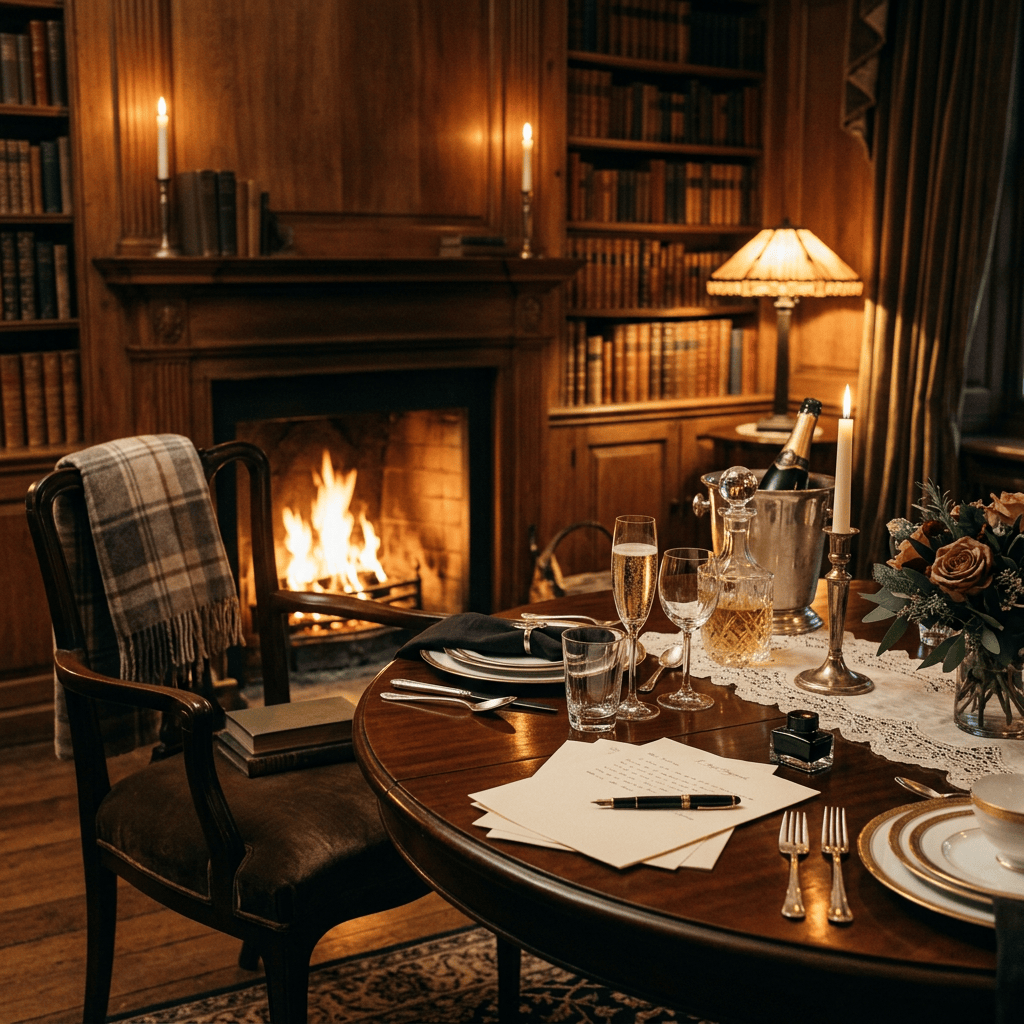
    Elegant dinner table beside a roaring fireplace with champagne and flowers
    A warmly lit fireside table is prepared with champagne, flowers, and handwritten invitations.

    That is why I want dinner with him rather than a seminar on his most famous novel. I do not want the monument. I want the man who knew that parties are intimate precisely because they are large, that the very rich are different because they possess early and grow soft and cynical in places the rest of us stay hard, that “eat, drink, and be merry” is both a philosophy and a slow form of suicide. I want the writer who could make a cloth-of-gold dress and a platinum ring feel like plot. Zelda once advertised The Beautiful and Damned by listing the clothes she could buy if enough people purchased the book. That is not a joke to me. That is the aesthetic I live toward: art that funds the next beautiful object, beauty that funds the next sentence.

    Dinner would not be modest. I imagine a table that looks casually expensive and is, in fact, carefully so: low light, heavy silver, something cold and gold in the glass, a room that smells of perfume, cigarette smoke, and citrus from a bowl no one will eat. He would talk too much and then go quiet in a way that makes you lean in. He would notice the cut of a jacket before the content of a confession. He would be funny about money and then suddenly exact about it. He would understand, without needing it explained, why some of us do not want stories that return us to the life we already know how to survive. We want stories we can project onto the life we are trying to inhabit: the late dinner, the borrowed glamour, the risk that beauty is both the prize and the damage.

    The Beautiful and Damned is that projection. It is not a cautionary tale I read in order to become more responsible. It is a mirror I hold up when I want to see the version of myself that still believes atmosphere is a moral category. Anthony and Gloria fail, of course. They waste time, money, youth, and each other. Fitzgerald knew the bill always comes. He just refused to pretend the evening was not worth it while the candles were still lit.

    More stories about that, please. Not more worlds of dragons or more kitchens of quiet endurance. More rooms where the lighting is unforgivable, the clothes are too fine for the bank balance, the conversation is half seduction and half autopsy, and someone at the table still believes that if you live beautifully enough, the universe might keep the lights on a little longer. Fitzgerald made that belief look like literature. I would like to sit across from him and see whether, for one night, it still looks like a plan.

  • The Harsh Realities of Love in “It Ends With Us”

    The Harsh Realities of Love in “It Ends With Us”

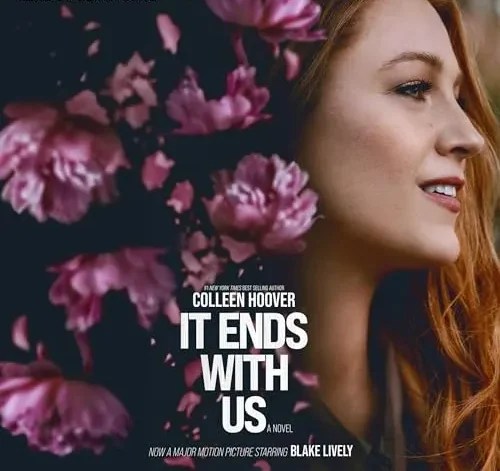
    I read Colleen Hoover’s It Ends With Us years ago and ugly-cried so hard while recapping the entire plot to my boyfriend that I probably looked like a raccoon mid-breakdown. The kind of crying where your face contorts into something unnatural and you start gasping between sobs like you are drowning in your own feelings. I am, unapologetically, a hopeless romantic—one of those people who still believes in the fairy-tale version of love even while the rest of the world rolls its eyes. So when I picked up the audiobook about five years ago, it was for the purest, most naive reason possible: I wanted to soak in another epic love story. Instead, it reached into my chest, ripped out my heart, and stomped on it in front of me.

    I could not wrap my head around it at first. Why was this seemingly perfect man—the one who was so deeply, desperately in love—painted as the villain? He was not some cartoonish monster. He was charming, intense, devoted… and then the cracks showed. The story is not some soft-focus romance; it is a brutal dissection of abuse, jealousy, and the kind of anger issues that poison everything they touch. It shows how those things do not just “happen” in relationships—they metastasize. They rewrite the rules. They make you question your own instincts until you do not recognize yourself anymore.

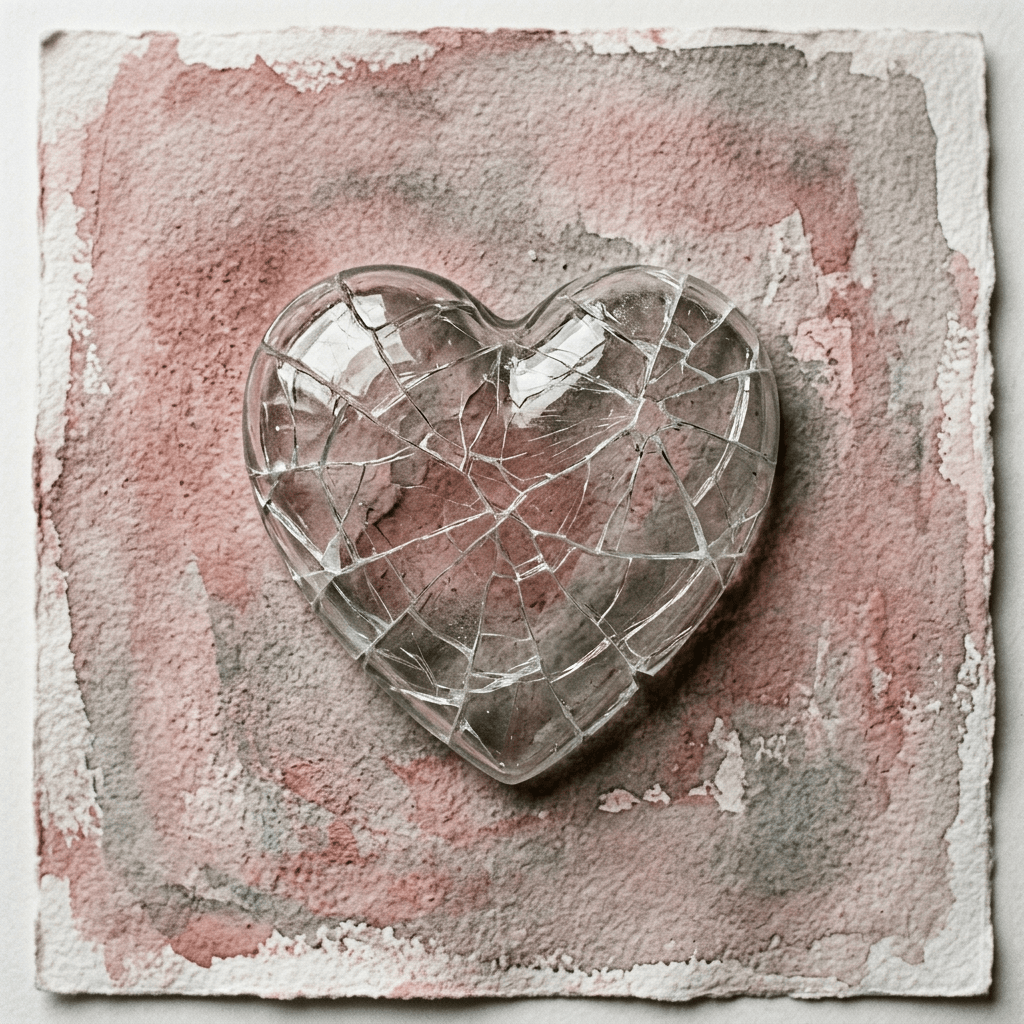
    Shattered transparent glass heart on pink and gray watercolor paper
    A shattered glass heart resting on a watercolor paper with soft pink and gray hues

    The thing is: I am still relatively new to real-life love. No dramatic exes, no war stories, no “he cheated and I burned his clothes” lore (just the firefighter situationship). Books and movies have always been my reference library for how relationships are supposed to work. So when a story refuses to hand me the neat, tied-with-a-bow happy ending I have been conditioned to expect, it hits differently. It feels personal. Like the universe is actively trying to ruin my idealism.

    The movie adaptation—starring Blake Lively, who has somehow transformed from relatable blonde (à la Gossip Girl) into full-time annoying diva energy—follows a young woman who falls hard for a young neurosurgeon in Boston. Cue the meet-cute, the chemistry, the magnetic pull. Then his anger starts leaking into the relationship like a slow poison, and an old flame shows up to complicate everything further. It is messy. It is ugly. It is the opposite of the polished rom-com fantasy I keep chasing.

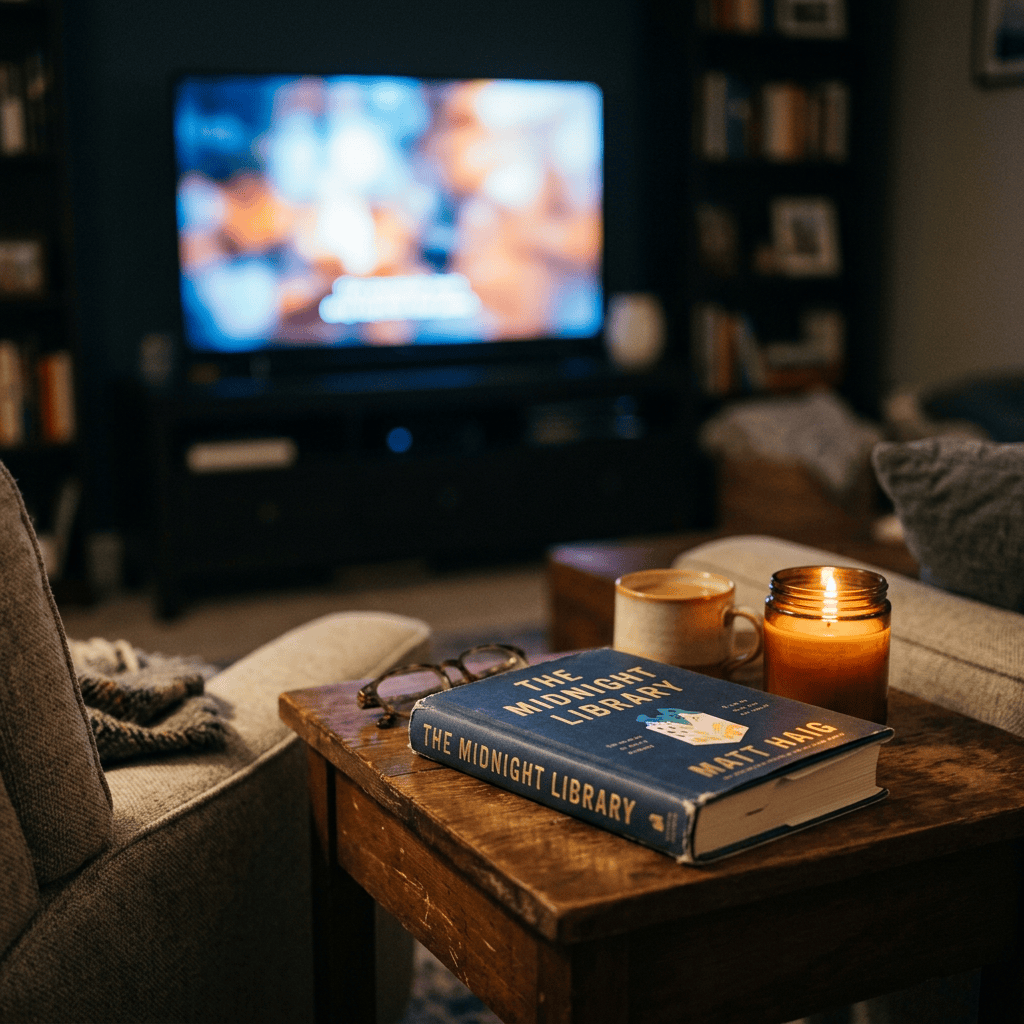
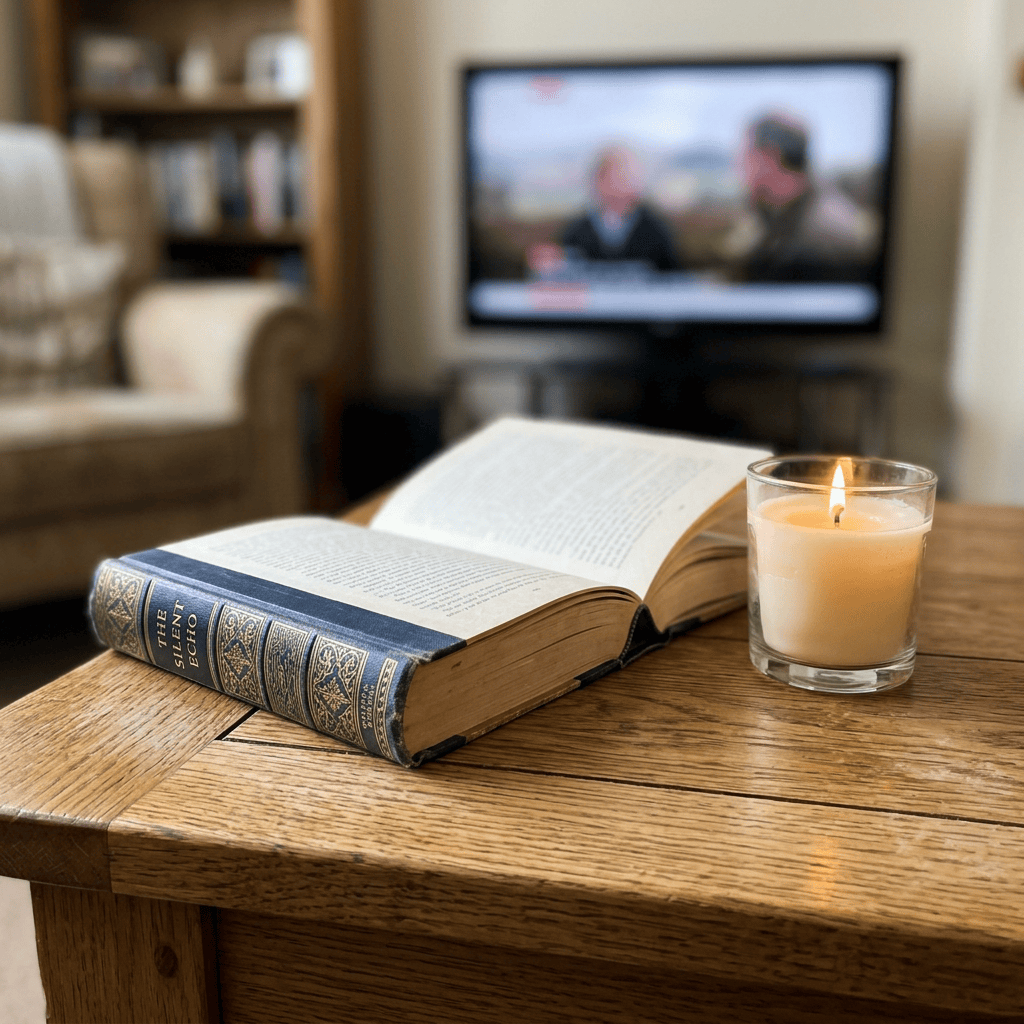
    Open book titled The Silent Echo on a wooden table beside a lit candle with a blurred TV and armchair in the background.
    An open book and lit candle on a wooden table in a cozy living room.

    I have what feels like a genuinely perfect man in my own life. The kind who does not make me walk on eggshells and does not turn love into a battlefield. So any love story that refuses to deliver the fairy-tale resolution just wrecks me. I end up ugly-crying, rambling about fictional people to my very real, very patient boyfriend, while he probably wonders how someone so soft can get this emotionally annihilated by a book and a film.

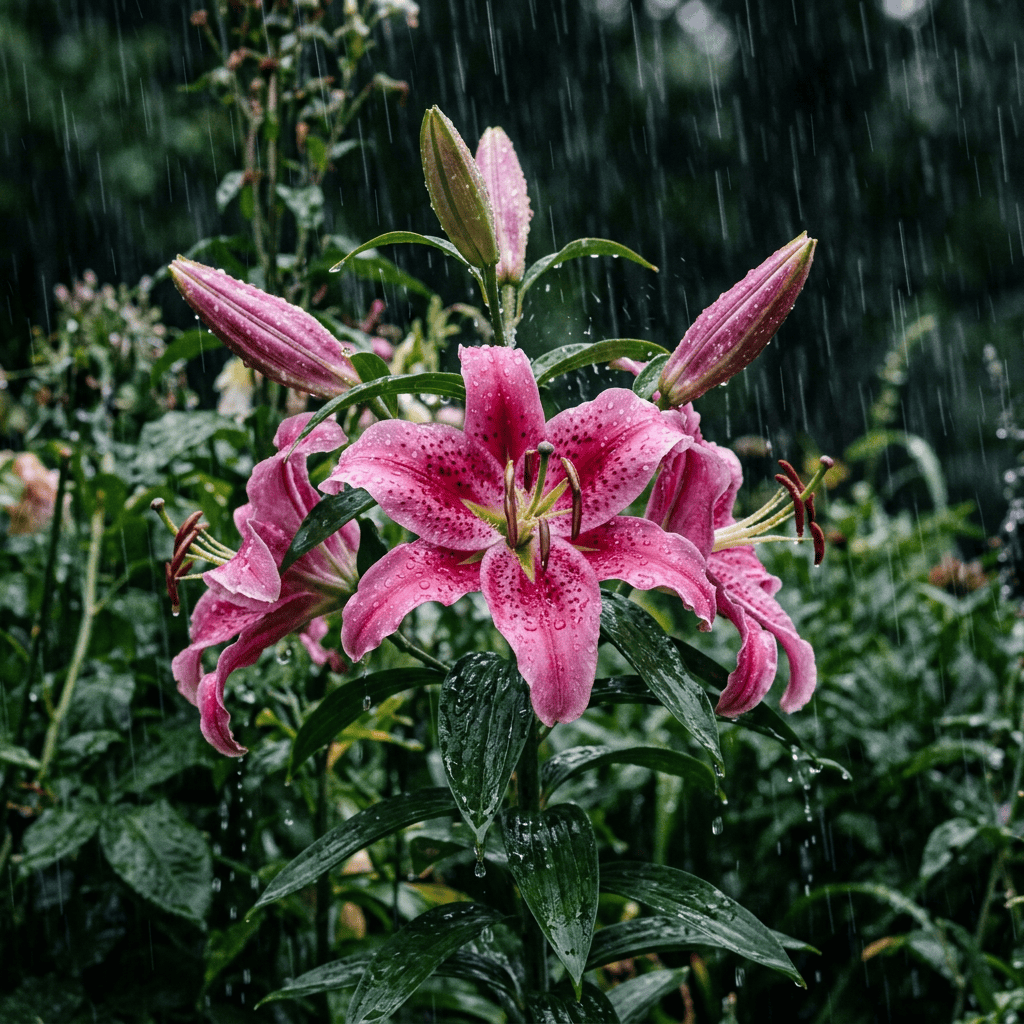
    Pink lilies with raindrops on petals and leaves
    Bright pink lilies standing tall under falling rain

    Maybe It Ends With Us is designed to gut people like me—the ones still clinging to the idea that love should always conquer everything. It does, but sometimes it ends exactly where it needs to. And that truth is still sitting heavy in my chest.

  • The Escapism of Girly Shows

    The Escapism of Girly Shows

    I will be honest: I love me some Emily in Paris. Right now I am deep into Elle too, that high-gloss, leggy fever dream that is unfortunately a bit too woke for me, but my Millennial upbringing has me glued to the screen. Millennial women who grew up practicing courtroom monologues in the bathroom mirror while quoting “What, like it’s hard?”—this is our official reunion tour. And apparently we are not alone. Hell, even today’s vice president is out here watching Emily in Paris. When the second-most powerful person in the country is also mainlining the same frothy French fantasy, you know the show has officially transcended “problematic” and become pure cultural infrastructure. He is also a millennial, afterall…

    Convert overall layout to pink color palette

    Most nights my boyfriend and I do the responsible-couple thing: we pick a show “together.” Something dense and dramatic—plot twists we can unpack afterward like amateur therapists. It is intimate. It is grown-up. It is the relationship equivalent of a thoughtfully plated tasting menu. But every once in a while the craving hits hard: pure, unfiltered escapism. Not the heavy kind of craving that forces you to confront your own life choices. The frivolous kind that lets you clock out of reality entirely and live inside someone else’s carefully filtered chaos (something I am blamed for doing far too often). So he hands over the Netflix password like a soft-dom sugar daddy he can be and I disappear into a binge that demands zero emotional labor from either of us.

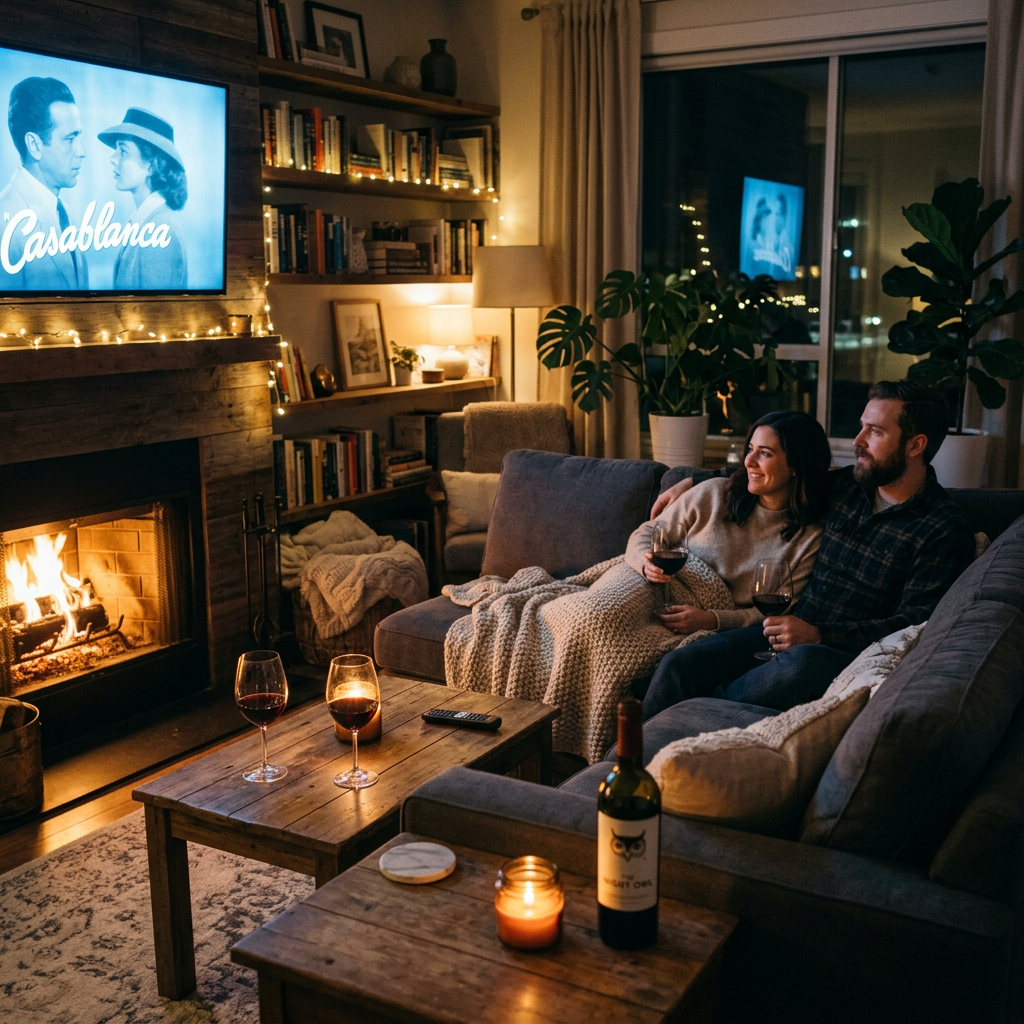
    Couple sitting on a couch watching Casablanca on TV, drinking red wine by a fireplace
    A couple enjoys a relaxed movie night at home by the fireplace with glasses of red wine.

    Emily in Paris supposedly blew up during the pandemic—when the entire planet was locked inside, starved for color, and desperate for anything that did not look like sweatpants and existential dread. The algorithm fed us that glossy Parisian candy like a collective coping mechanism. Fine. Whatever. I was not there for the quarantine comfort. It is not like I let some silly, little sickness take over my life! Instead, I got sucked in by the constant, unapologetic collision between American and European cultures…the wide-eyed hustle versus the practiced eye-roll, the “why not?” energy slamming into the “why would you ever?” attitude. That friction felt familiar as hell. I lived versions of it in real time: the moments my own optimistic, slightly chaotic American wiring collides with cooler, more restrained European mindsets and neither side is willing to fully surrender.

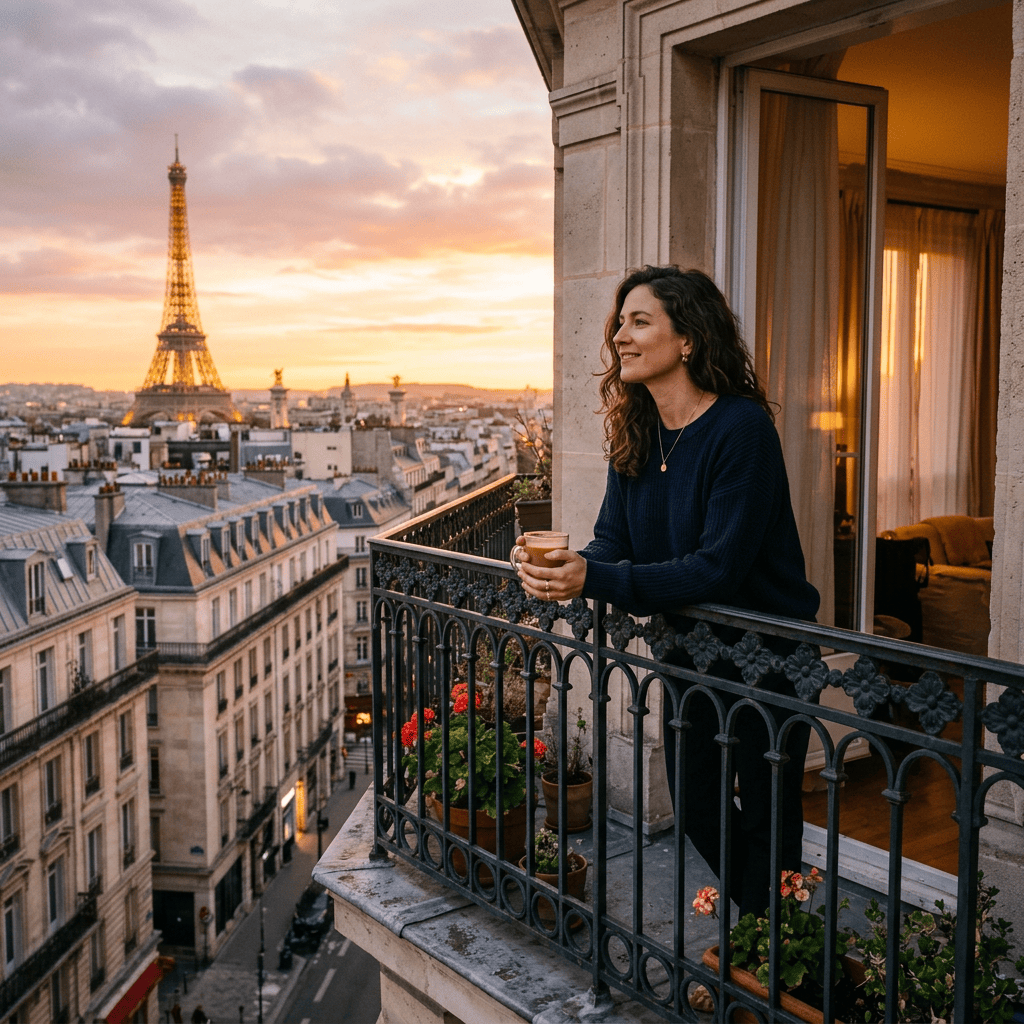
    Woman holding cup on balcony overlooking Paris skyline and Eiffel Tower at sunset
    A woman enjoys a warm drink on a Paris balcony at sunset with the Eiffel Tower in view

    Obviously the fashion is its own controlled substance—outfits so aggressively styled, colors that refuse to apologize, accessories that scream “I woke up like this and still look richer than you.” But the real high, at least at first, is not just watching it alone. It is the after-party of telling him about every ridiculous plot point, every cultural micro-aggression, every look that made me want a beret collection. I map the show’s exaggerated culture wars onto my own experiences—the times I have been the loud American in a quieter room, the times I have watched someone side-eye my enthusiasm like it was a personal attack, the times fashion became armor or a middle finger. It turns passive binge-watching into this ongoing private conversation, half roast, half confession, and somehow more addictive than the show itself.

    So yes—I take a few deliberate days every year to slip straight back into full girly-era mode. No apologies. No intellectual alibis. Just me, the algorithm, and an unapologetic dive into the pinkest, most over-the-top corners of television. Because sometimes the most rebellious thing you can do is refuse to grow out of the things that still make you feel electric.

  • My Cringey, Hungry, Blonde Obsession Years

    My Cringey, Hungry, Blonde Obsession Years

    When I was young, I was obsessed with Britney Spears (another basic bitch tendency). I know today she is a total mess, but there was a time when my walls were covered in pictures of her—I was straight-up obsessed with Britney Spears. The one with the flat stomach, tiny outfits, and that “Hit Me Baby One More Time” schoolgirl fantasy that made every pre-teen’s hormones go haywire.

    My bedroom walls were a full-on Britney shrine. Posters from floor to ceiling, magazine cutouts taped up in my closet. I wanted to be her — that perfect blend of innocent and filthy, the girl every guy wanted and every girl secretly envied. People definitely thought I was a lesbian back then. I mean, can you blame them? I was plastering my room with images of a half-naked pop princess. 

    And yes, I took it to the extreme. During the darkest days of my eating disorder, I followed her old workout routine religiously. Twelve hundred sit-ups a day. That was my way of insuring that I was working off every calorie I was forced to eat. No exaggeration. I would lie on my living room floor, starving, counting every crunch while imagining my stomach getting as flat and tight as hers. (Sometimes it would be until two in the morning and then I would be up at six). That kind of obsession is not cute — it is unhinged. But at the time it felt like devotion. Britney was my thinspiration, my goddess, my unattainable fuck-you to my own body.

    Then eighth grade hit and I had a full personality 180. I ditched the pop princess fantasy and became the ultimate “surfer girl.” Still skinny, but not glitzy and glamorous. You know the type — sun-bleached hair, golden skin (spray on tans FTW), that effortless, just-fucked beach vibe. I traded in my old wardrobe for head-to-toe Abercrombie & Fitch and Hollister. I lived in those graphic tees and low-rise jeans that sat dangerously on my hip bones. I wanted to look like I just rolled out of a beach bonfire with sand still in my hair and saltwater on my skin.

    I begged my parents to send me to surfing camp in California. I actually went all the way to Australia chasing that fantasy life. I studied the skinny beach bum girls like they were my new religion — the ones with long, tangled blonde hair, tiny bikini bodies, and that lazy, seductive way they carried themselves. I dyed my hair with platinum blonde streaks and spent hours perfecting the windswept look. I wanted to be the girl guys stared at while I walked down the beach carrying a surfboard, all tan legs and collarbones. 

    This was right in the middle of my most extreme anorexic era, too. The thinner I got, the better my “surfer girl” costume fit. My hip bones jutted out, my thighs did not touch, and my stomach was concave enough to make those Abercrombie shorts hang just right. I was starving myself into the aesthetic. Every wave I caught, every mile I ran, every skipped meal was part of the transformation. I was not just playing dress-up — I was trying to disappear into this fantasy version of myself: blonde, effortless, desired, and dangerously thin.

    Looking back, it was wild how seamlessly I went from worshipping Britney’s polished, sexy pop-star body to chasing the raw, sun-drenched, barely-there surfer chick fantasy. Both versions of me were starving — literally and figuratively — for the same thing: to be wanted. To be the fantasy. To be the girl that made people lose their minds a little.

    I chased that high hard. From bedroom Britney dances to riding waves, bleaching my hair until it snapped, and counting every single sit-up like it would bring me closer to perfection.

    Those years were intense, messy, desperate for attention, and strangely formative.