Tag: book-review

  • I Lied… I Did Continue

    I Lied… I Did Continue

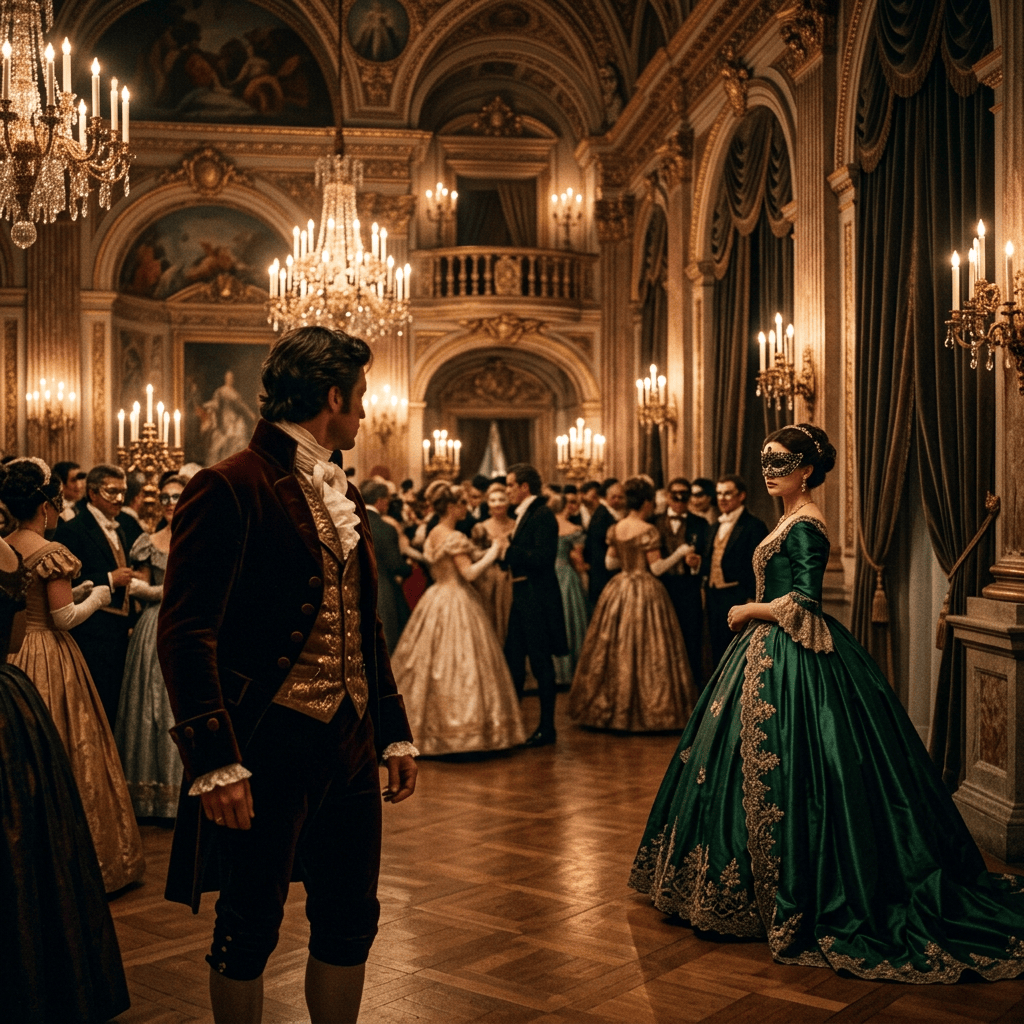
    I did not plan on still being here. When the first season of Bridgerton arrived, I treated it like a pretty, slightly silly costume piece I could dip in and out of while my boyfriend was away. The balls were gorgeous, the gossip was sharp, and the clothes were elegant. I expected to enjoy the surface and then move on. Instead, I kept pressing play. Then I pressed it again. Now the evenings arrive and I catch myself calculating how many episodes I can reasonably fit in before I have to be a functional girlfriend again

    Part of it is simply that I love love. Not the practical kind that makes for solid marriages and shared grocery lists, but the kind that arrives unexpectedly. The kind that rearranges a person’s life without asking permission. Bridgerton specializes in that. The glances across a ballroom last half a second too long. The almost-touches in crowded rooms carry more charge than most shows manage in an entire season of explicit content. I know the plot beats are coming. I can usually predict the misunderstanding that will stretch across three episodes. I still lean forward. I still feel the small, ridiculous drop in my stomach when the music swells and someone finally says the thing they have been refusing to say. It is not particularly sophisticated of me. It is also not something I feel any particular urge to outgrow.

    The “woke” elements—the color-blind casting, the occasional anachronistic social commentary, the way the show sometimes winks at its own modern audience—do not bother me nearly as much as i assumed they would. They exist. I notice them. Then the story drops me back into a drawing room or a garden or a carriage at night, and the noticing stops mattering. I am not watching Bridgerton for a rigorous seminar on social history. I am watching it because, for roughly fifty minutes at a time, the rest of the day gets to stand outside and wait. The intensity is allowed to take up all the available space. Passion is not required to be tasteful or restrained or especially realistic. It is allowed to be too much. I let it be too much. There is a particular relief in that permission.

    What has surprised me most is the sex. I expected tasteful fades to black and a few artfully arranged limbs. What I got was considerably more direct. Bodies are shown learning each other. Hands map skin that has never been mapped that way before. Mouths figure out, in real time, what the other person likes. The show does not treat these moments as interruptions to the romance; it treats them as the place where the romance becomes legible. That has turned out to be more compelling than I anticipated.

    Part of the fascination is historical, or at least historical-adjacent. The young women in these stories are not raised with any practical knowledge of sex. They are raised with a great deal of knowledge about propriety, reputation, and the precise distance one must keep between one’s body and the possibility of scandal. Desire is something they are expected to feel only after a ring is on the finger, and even then only in carefully managed amounts. When a man who has actually lived in the world begins to show one of them what her own body can do, the scene carries a particular charge. It is not just arousal. It is the sudden, disorienting arrival of information that was deliberately withheld. I find myself watching the women’s faces as much as the rest of the scene. The surprise. The concentration. The moment when embarrassment gives way to curiosity and curiosity gives way to something less polite. It feels, in its heightened way, like a kind of education that the period itself refused to provide.

    My boyfriend finds this whole situation funny. We have our evening shows. We settle in and fade into whichever adventure he chooses and I will sit there half-listening while my mind drifts toward whatever Bridgerton episode is waiting. He has started narrating my restlessness in a dry voice. “You don’t even want to watch our show anymore.” Or, more recently, “You’re calculating whether you have time for one more before bed.” He is not wrong. I have tried to be normal about it. I have failed. There is something slightly embarrassing about looking forward to a show this much when you are an adult with a a perfectly good partner waiting on you. The embarrassment has not been enough to stop me.Plus he just loves to listen to the lofty recaps I give after each episode.

    What keeps me going is the way the show lets intensity be the point instead of a problem to be solved. Real life requires proportion. It requires that I notice when I am being unreasonable, that I keep some part of myself available for ordinary tasks and ordinary people. Bridgerton does not. For the length of an episode I am allowed to be entirely occupied by whether two people who should not, by every rule of their world, want each other this badly are going to manage to be honest about it before the season ends. The wanting is allowed to be total. The consequences are allowed to feel enormous. I come back to it because that scale of feeling is rare, and because the show is unusually willing to stay inside it instead of apologizing for it.

    I do not expect this to last forever. At some point the seasons will end, or the particular flavor of longing will stop working on me, or I will simply get tired of the same emotional notes played at the same volume. Until then, I am still here. In fact, I almost flew through all the seasons. I still feel the small, private lift when the opening credits begin and the world on the other side of the screen is once again allowed to be louder and more beautiful and more willing to risk everything than the one I actually live in. My boyfriend will keep laughing. I will keep watching. For now, that arrangement seems to be working well enough for both of us.
  • Dinner with F. Scott Fitzgerald: The Allure of Literary Luxury

    Dinner with F. Scott Fitzgerald: The Allure of Literary Luxury

    Which author would you love to have dinner with?

    If I were to have dinner with an author, it would be F. Scott Fitzgerald. Not because of the obvious masterpiece everyone names first—The Great Gatsby—but because he understood luxury as a temperature, a texture, a way of moving through a room. He did not merely describe wealth. He lived inside its shimmer and its hangover, and he wrote as if both were equally sacred.

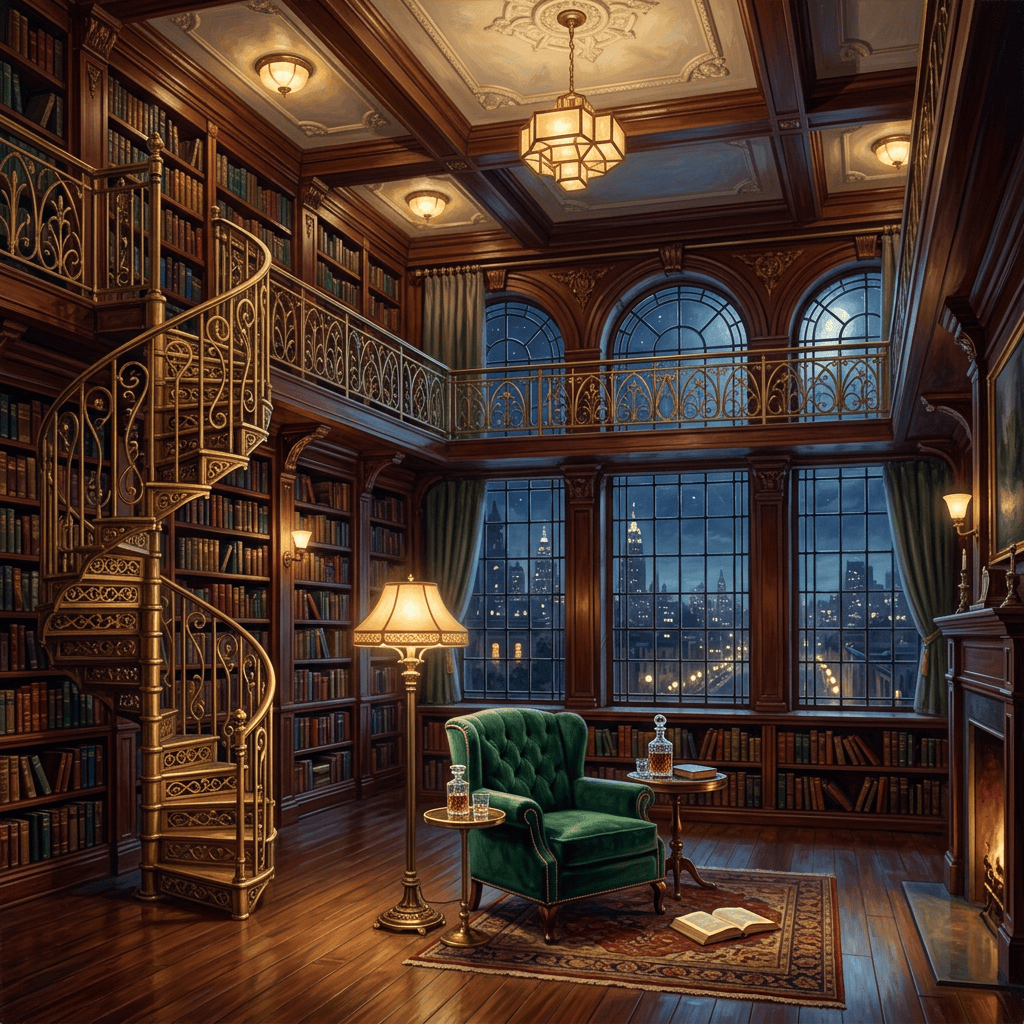
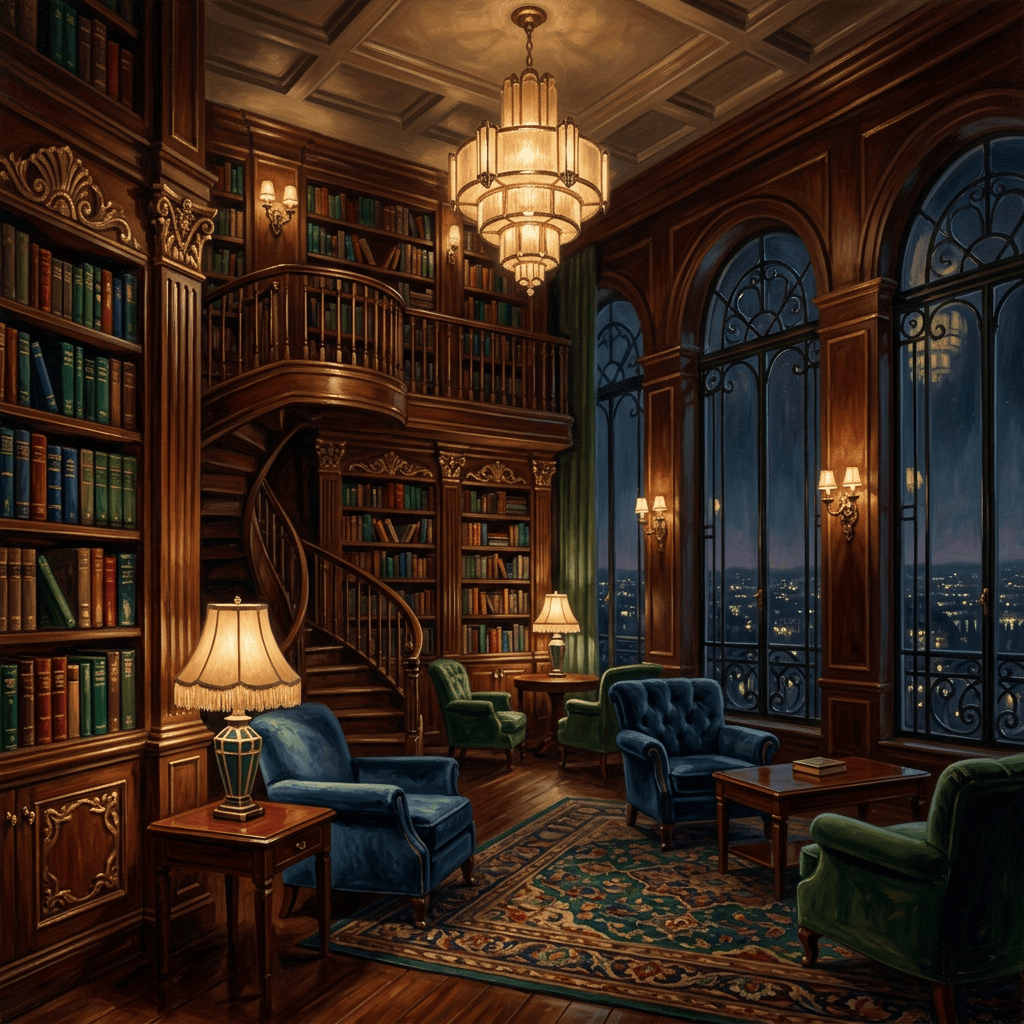
    Ornate wood-paneled library with bookshelves, seating, chandelier, and city views
    A richly appointed library lounge invites quiet reading beneath a glowing chandelier and tall arched windows.

    I have never been especially moved by stories that ask me to stay where I already am. Many people prefer fantasy worlds they can visit and leave, or novels that feel “relatable,” which often means ordinary kitchens, ordinary disappointments, ordinary weather. I have always been drawn the other way: toward silk, late hours, expensive mistakes, and the particular loneliness that arrives when the party is still going and you realize you are the only one who notices the light has changed. Fitzgerald paints that picture better than almost anyone. He makes luxury look not like a shopping list but like a climate.

    The Great Gatsby is the public cathedral. It is the book of the green light, the orchestra, the rumor. It is magnificent. But The Beautiful and Damned is the private room. Anthony Patch and Gloria Gilbert are not striving toward a dream so much as they are already inside one and slowly ruining the furniture. They are beautiful, idle, certain the future will keep paying their bills because it always has. They drink, they quarrel, they buy a second house they cannot afford because the idea of a gray country house is prettier than the math. They treat inheritance like weather: something that will arrive if you wait long enough in the right clothes. I recognize that hunger. Not the poverty of wanting more, but the more dangerous appetite of people who already have enough to be ruined by taste.

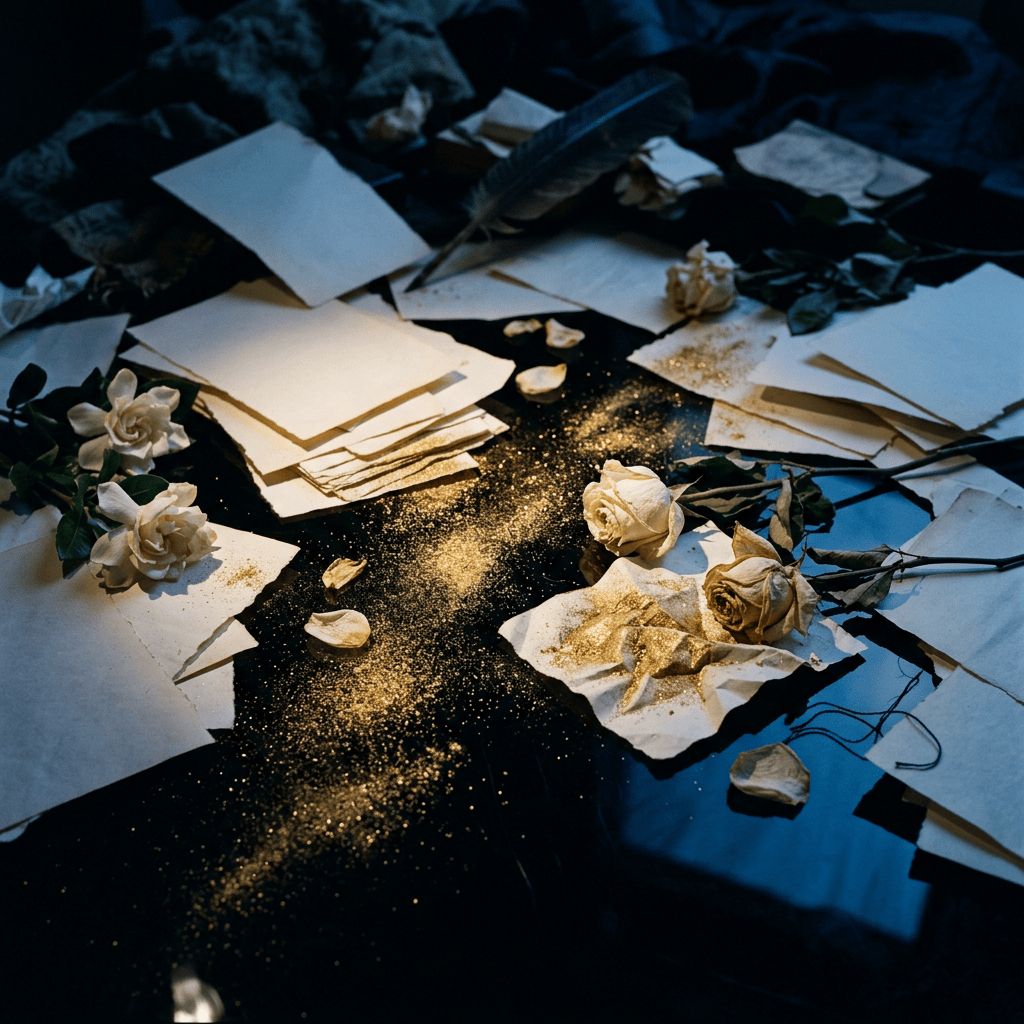
    Dried roses and scattered letters covered in golden dust on dark fabric
    Dried roses, scattered letters, and golden dust create a hauntingly romantic still life.

    Fitzgerald and his wife Zelda lived the same plot in public. Newly famous, they took over hotel lobbies as if the city were a set built for them. They spun in revolving doors, slid down banisters, jumped into fountains, arrived at parties on all fours, locked a jazz band in a bedroom and made it play until morning. They crossed the Atlantic with too much luggage and rented villas above the Mediterranean because New York had become too loud and too expensive for the kind of living they refused to scale back. He wrote about living on practically nothing a year while still ordering champagne. The contradiction is the point. Luxury, in Fitzgerald, is never only possession. It is performance, mood, and the brief conviction that beauty can postpone consequence.

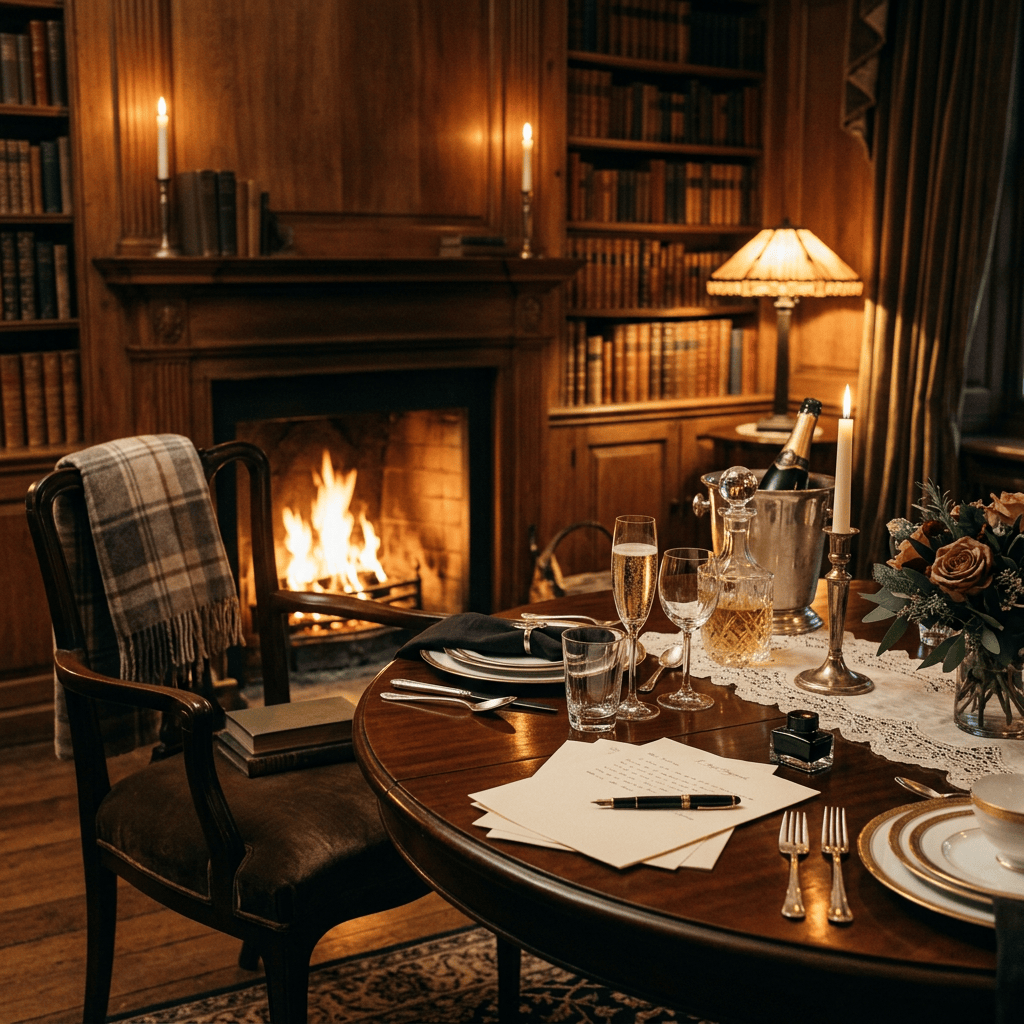
    Elegant dinner table beside a roaring fireplace with champagne and flowers
    A warmly lit fireside table is prepared with champagne, flowers, and handwritten invitations.

    That is why I want dinner with him rather than a seminar on his most famous novel. I do not want the monument. I want the man who knew that parties are intimate precisely because they are large, that the very rich are different because they possess early and grow soft and cynical in places the rest of us stay hard, that “eat, drink, and be merry” is both a philosophy and a slow form of suicide. I want the writer who could make a cloth-of-gold dress and a platinum ring feel like plot. Zelda once advertised The Beautiful and Damned by listing the clothes she could buy if enough people purchased the book. That is not a joke to me. That is the aesthetic I live toward: art that funds the next beautiful object, beauty that funds the next sentence.

    Dinner would not be modest. I imagine a table that looks casually expensive and is, in fact, carefully so: low light, heavy silver, something cold and gold in the glass, a room that smells of perfume, cigarette smoke, and citrus from a bowl no one will eat. He would talk too much and then go quiet in a way that makes you lean in. He would notice the cut of a jacket before the content of a confession. He would be funny about money and then suddenly exact about it. He would understand, without needing it explained, why some of us do not want stories that return us to the life we already know how to survive. We want stories we can project onto the life we are trying to inhabit: the late dinner, the borrowed glamour, the risk that beauty is both the prize and the damage.

    The Beautiful and Damned is that projection. It is not a cautionary tale I read in order to become more responsible. It is a mirror I hold up when I want to see the version of myself that still believes atmosphere is a moral category. Anthony and Gloria fail, of course. They waste time, money, youth, and each other. Fitzgerald knew the bill always comes. He just refused to pretend the evening was not worth it while the candles were still lit.

    More stories about that, please. Not more worlds of dragons or more kitchens of quiet endurance. More rooms where the lighting is unforgivable, the clothes are too fine for the bank balance, the conversation is half seduction and half autopsy, and someone at the table still believes that if you live beautifully enough, the universe might keep the lights on a little longer. Fitzgerald made that belief look like literature. I would like to sit across from him and see whether, for one night, it still looks like a plan.