Author: katandrea111

  • AI’s Future: Collaboration, Not Replacement

    AI’s Future: Collaboration, Not Replacement

    The normies salivate over the fact that artificial intelligence is going to take over our jobs. They think that the economy will tank because we only employ robots to do every job. News flash: the robots are not taking over any time soon (maybe thirty years?). Yes, we have gotten to the point where we all are consistently asking computers to assist with any questions (Grok!) that we have and any mathematical or numerical problems. In essence, I can see how AI can tackle desk work jobs, but do you really think robots are about to running around building and fixing something?  They will need human assistance and supervision for the near future. 

    You have seen this in headlines. You probably have scrolled past the doomsday posts and cable segments. “Artificial Intelligence is coming for your job!” scream the commentators. Normies everywhere are practically salivating at the thought—some with an evil smile, imagining a world of universal basic income (UBI) and endless leisure (Netflix all day!); others hoarding canned goods with dread, picturing bread lines filled with former office workers and factory hands. The narrative is everywhere: robots will replace us all, the economy will collapse under the weight of mass unemployment, and humanity will be left twiddling its thumbs while silicon overlords run the show.

    News flash: the robots are not taking over anytime soon. Not next year. Not in five years. Maybe—not even—in thirty.

    Let’s be real about where we actually stand.

    Yes, we have reached a point where asking an AI for help has become as natural as googling something in the early 2000s. Need to draft an email, analyze a spreadsheet, brainstorm marketing ideas, debug code, or solve a complex math problem? AI handles it with faster than the average midwit. Tools like my all time favorite Grok, or even Claude, GPT models, and other rapidly improving ones are already reshaping desk-based, cognitive, and creative work.

    White-collar jobs are watching their skillset get dominated by AI. Jobs that once required hours of research, writing, or number-crunching are getting automated. A junior analyst who used to spend days building financial models can now get a strong first draft in minutes. A copywriter can generate ten headline variations instantly. Lawyers can summarize case law faster than ever. This is real, measurable productivity gain.

    But here is the crucial distinction most fear-mongering articles miss: there is a massive gap between digital intelligence and physical dexterity (being good at life itself).

    Do you honestly believe we are on the verge of humanoid robots scurrying around construction sites, plumbing bathrooms, fixing electrical systems, or performing delicate surgeries at scale? Not even close, all they really do is dance and only perform in controlled settings.

    Current robotics still struggles with the messy, unpredictable nature of the physical world. A robot might nail a repetitive task in a perfectly controlled factory environment (think automotive assembly lines that have used automation for decades), but throw in a surprise—like a slightly misaligned beam, a puddle on the floor, or a non-standard part—and things fall apart quickly. They require improvisation, tactile feedback, spatial reasoning in unstructured spaces, and the kind of monkey-brain common sense that humans develop from childhood.

    Even the most advanced robots today, like those from Boston Dynamics or Figure AI, are impressive in demos but remain expensive, power-hungry, and limited in practical deployment. They need constant human supervision, specialized environments, and frequent maintenance. Scaling that to replace millions of tradespeople, warehouse workers, mechanics, or caregivers? That is not a software update away. It is an engineering, materials science, energy, and cost problem that will take decades to solve.

    “AI does not replace humans. It replaces the boring, repetitive, low-judgment parts of what humans do.”

    Do we really envision the cheapskates of our society to spend billions of their hard-earned money on fleets of finicky machines?

    And, while robots might handle 80% of a task, that final 20% often requires human judgment, creativity, or physical adaptability.

    The smarter take is not “AI replaces humans.” It is “AI augments humans.”

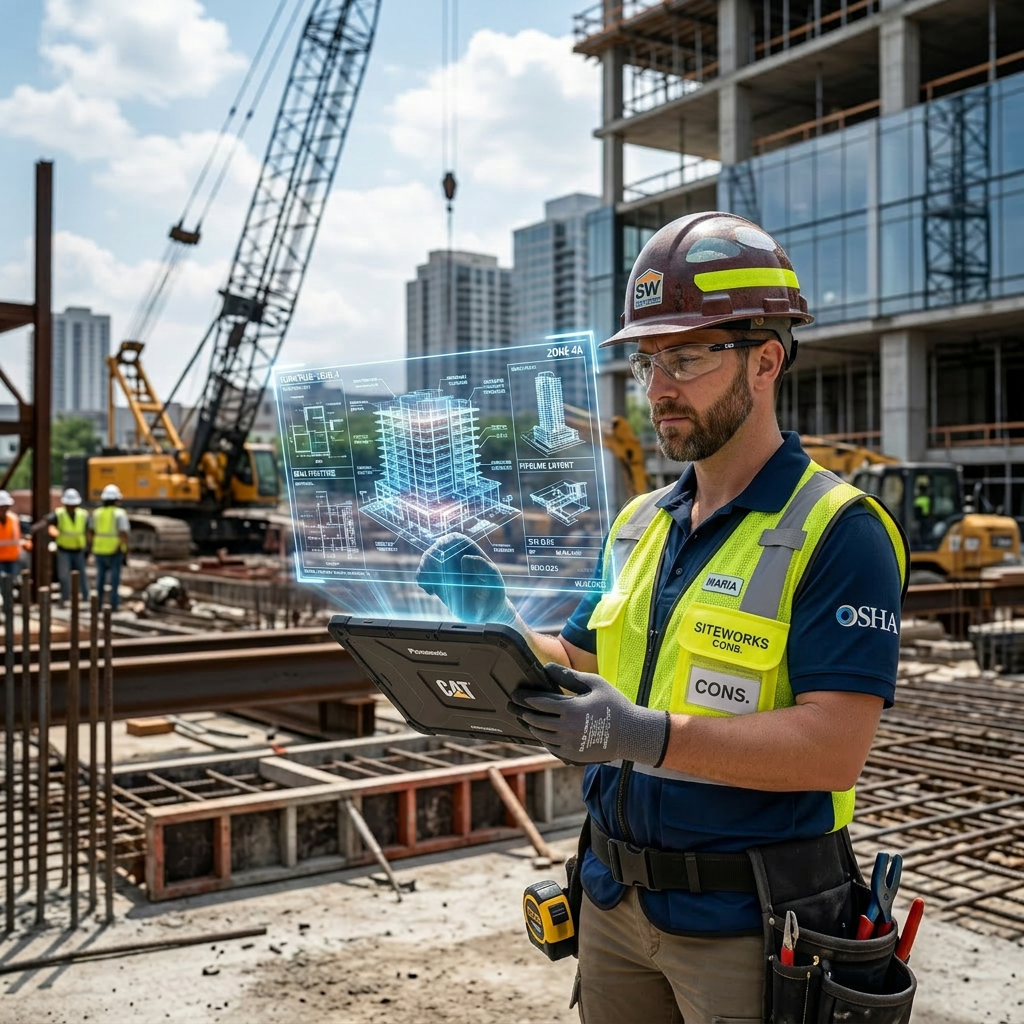
    Construction workers using AI-powered design tools and augmented reality glasses. Plumbers with diagnostic AIs that pinpoint leaks before they dig. Mechanics with predictive maintenance systems that tell them exactly what is failing. Healthcare workers supported by AI that handles paperwork and initial diagnostics, freeing them up for actual patient care. But, again, I have an extremely hard time believing that regular businesses (not giant global interprises) will be paying big bucks for even these AI tools.

    This is not a zero-sum game. Historically, technological revolutions do not just destroy jobs—they create entirely new ones we could not have imagined before. The automobile did not just kill buggy-whip makers; it birthed entire industries: mechanics, road builders, logistics networks, suburban development(the drive-thru), and car culture itself.

    AI will do the same. Cry about it, or adapt. We will need people to train models, maintain robots, design ethical frameworks, manage human-AI teams, create new forms of art and entertainment, and solve problems we have not even identified yet. The economy does not “tank” when productivity rises—it grows, often dramatically.

    In the next 5–10 years, yes, we can definitely expect significant disruption in purely cognitive fields: data entry, basic customer service, routine legal work, simple coding, content generation. Some of these roles will shrink. But others will evolve into higher-value versions.

    Physical trades will be safe for everyone. We will still need firefighters to fight fires, surgeons to perform operations (I definitely do not foresee a machine maneuvering the human brain, etc), etc. They will face pressure at the margins, but widespread replacement is still science fiction. We are more likely to see hybrid systems where humans and machines collaborate than full robot takeovers.

    Thirty years out? Who knows. By then, we might have more capable robots. But even then, human oversight, creativity, and social intelligence will remain premium skills. AI is just a ridiculously powerful new tool that kills soul-crushing tedium and hands ambitious people rocket fuel.

    The world will still need builders, fixers, caregivers, teachers, strategists, and visionaries.

    Bottom Line

    The sky is not falling. The AI revolution is coming, but it is not the Terminator-style many are hyping. It is a powerful new tool—one that will eliminate dullness, boost productivity, and open doors to abundance if we approach it wisely.

    Instead of panicking or salivating over collapse narratives, let us focus on adaptation. Learn to work with AI. Develop skills that complement it: physical trades, emotional intelligence, complex problem-solving, and hands-on expertise. The future belongs to those who see AI as a collaborator, not a competitor.

    The robots are not coming for your job tomorrow. But they might just make your job—and your life—better. The real question is whether we are ready to seize that opportunity.
  • My Passion for Nutrition (pt. 4)

    My Passion for Nutrition (pt. 4)

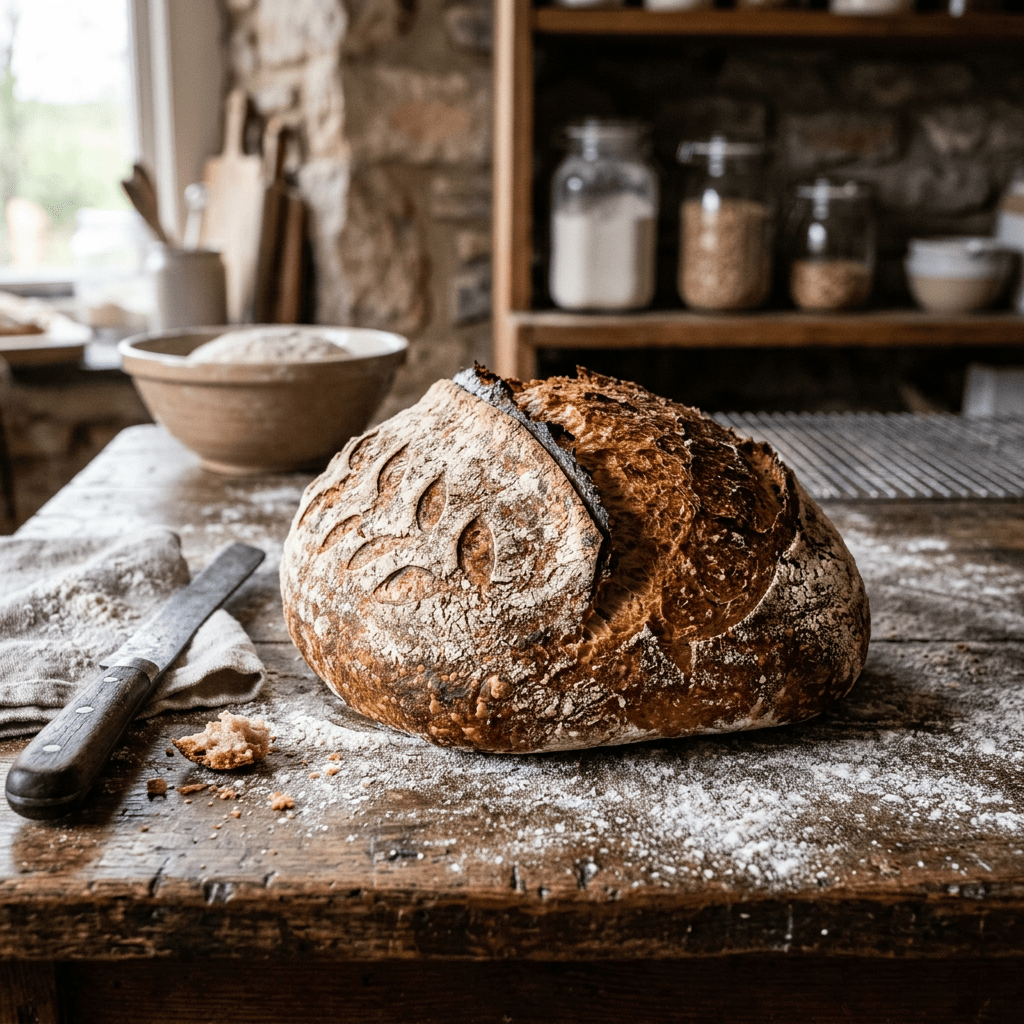
    Bread has been a dietary staple for thousands of years, but not all loaves are created equal. Sourdough — the ancient, tangy favorite that has seen a massive resurgence in home kitchens— is not only a cottagecore trend in which people are opting to live a quiet and peaceful lifestyle. Conventional bread — the convenient, soft slices that fill supermarket shelves— is basically just considered optimal because of the mass production ability of it.

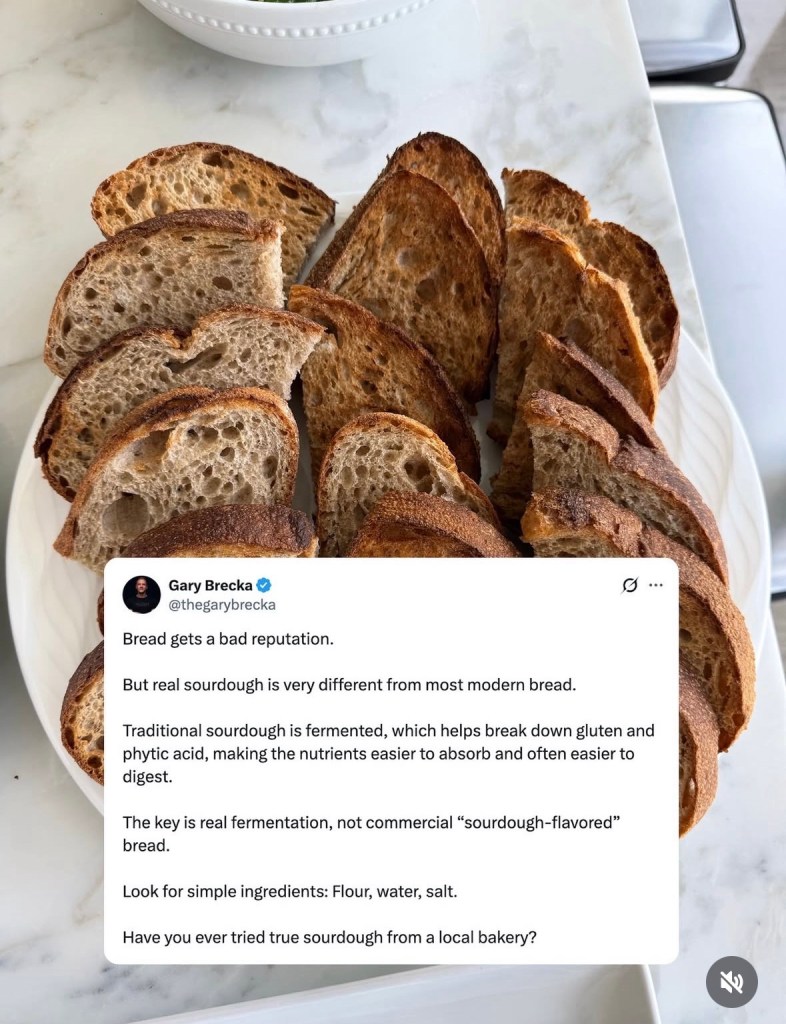
    The great health guru- Gary Brecka!

    Sourdough Bread vs. Conventional Bread: Which One Deserves a Spot on Your Table?

    Sourdough is one of the oldest forms of leavened bread, dating back to ancient Egypt around 1500 BCE (with even earlier evidence possibly from 3700 BCE in Switzerland). It likely started accidentally when dough was left out and colonized by wild yeast and bacteria. This method spread to the Greeks and Romans and remained the primary way to make bread for most of human history until the late 19th and early 20th centuries.

    Commercial baker’s yeast, isolated in the 19th century, revolutionized bread-making by speeding up the process. This enabled mass production of consistent, soft loaves.

    Sourdough stuck around in places like San Francisco (famous during the Gold Rush, where miners kept starters warm), but conventional bread became the everyday norm.

    The biggest distinction between the two types lies in leavening and fermentation:

    • Sourdough: Made with a “starter” — a live culture of flour and water harboring wild yeast and lactic acid bacteria. The dough ferments slowly (often 12–48 hours or more). Ingredients are simple: flour, water, salt, and the starter. No commercial yeast needed. This long fermentation creates lactic and acetic acids, giving the signature tang.
    • Conventional bread: Uses fast-acting commercial yeast for a quick rise (often just 1–2 hours). Many store-bought versions include additives like dough conditioners, preservatives (e.g., calcium propionate), emulsifiers, sugars, or even vinegar for fake “sour” flavor. “Sourdough” labels on grocery shelves are not always true sourdough — check ingredients! It should literally be 3-4 items listed.

    True artisan sourdough is a labor of love. Handmade from the loving baker in your home (or a small local bakery). Conventional bread prioritizes speed, shelf life, and uniformity (a sad state of affairs).

    Sourdough often helps with digestion and blood sugar, thanks to fermentation.

    Fermentation breaks down phytic acid (which binds minerals), reducing it significantly more than yeast alone (up to 62% vs. 38%). It also lowers hard-to-digest carbs. Fermentation also partially breaks down gluten, helping many with sensitivities. Result: Less bloating!

    Sourdough bread has a lower glycemic index (GI): Sourdough typically has a lower GI (~54) than white bread (~71), leading to steadier blood sugar and potentially more satiety.

    It also has a better absorption of minerals like magnesium, iron, and zinc. It may support gut health via prebiotics from the fermentation.

    Unfortunately, sourdough can be similar or slightly higher in calories/protein/fiber depending on the flour. This is why most normies prefer regular shelf life. They think that the less calories the better. Never mind the quality and nutrients.

    Conventional breads are often fortified with vitamins. Whole-grain conventional options can be healthy too. Sourdough is definitely not a miracle food, but the slow process generally makes it more “gut-friendly.”

    Sourdough is very complex and tangy in flavor with nutty, acidic notes. It has a chewy crumb, crisp crust, and open holes from the long fermentation. It toasts beautifully and pairs with everything from butter to soups.

    Conventional bread is a milder, sweeter taste. Softer, more uniform texture — great for sandwiches or French toast, but often lacks depth.

    Many prefer sourdough for its artisanal appeal, though it stales faster without preservatives. All natural is not always cute. Think of sourdough as a beautiful woman who does not get work done versus all the “Instagram models” who often look identical full of plastic surgery.

    Sourdough bread is certainly superior in flavor, with potential health perks, and very minimal ingredients, (plus it is satisfying to make!) however it is often time-intensive (or pricier if buying), with variable results and a shorter shelf life.

    Personally, I adore sourdough… We get fresh loaves from a local (gluten free!) bakery. It is so scrumptious; literally whenever I feel like I am wasting away, I go to the kitchen and fist the inside of the loaf- leaving the inside for everyone else (smirk)…

  • Down Under Dreams: My Wild Teenage Adventure in Australia with People to People

    Down Under Dreams: My Wild Teenage Adventure in Australia with People to People

    At fifteen years old, I stepped off a plane into a world that felt like it had leaped straight out of a National Geographic. The air was warmer, drier, and carried the faint scent of eucalyptus. I was part of the People to People Ambassador Program, a life-changing opportunity that took a group of wide-eyed American teens halfway around the globe to Australia. What started as a simple cultural exchange trip quickly became a whirlwind of big-city glamour, rugged outback exploration, family-style homestays, and the kind of teenage chaos that only happens when you are far from home and the usual rules do not quite apply (the innocent kind though, not really what we see on teenager television shows).

    Our itinerary was perfectly balanced between urban sophistication and raw Australian wilderness. We bounced between the gleaming harbors of Sydney and Melbourne and endless stretches of red earth in the outback. Long bus rides became our moving classrooms—hours spent watching the landscape shift from bustling streets to golden grasslands. We stayed with local families who opened their homes (and hearts) to us, sharing meals, stories, and glimpses into everyday Aussie life that no guidebook could ever capture.

    Sydney hit me like a fever dream. The iconic Opera House rose like white sails against the sparkling harbor, its curves even more breathtaking in person than in any photo I had seen. We toured the Olympic facilities from the 2000 Games, walking through stadiums that once echoed with global cheers. I remember standing there, imagining the roar of the crowd, feeling tiny yet somehow part of something enormous.

    But beneath the excitement, I carried a heavy secret. This was the year after I started high school, and the pressure to look and be “perfect” had already taken root in my mind. Australia felt like the ultimate reset button—a chance to reinvent myself far from judgmental eyes back home. Before the trip even began, I emailed the volunteer chaperones with a carefully worded note: I would not be eating much, and they should not worry about me. Looking back now, it breaks my heart to think of that determined, insecure fifteen-year-old girl trying so hard to control the one thing she could in a brand-new country.

    On those long bus rides, packed lunches were handed out like clockwork—sandwiches thick with deli meats, crisp chips, and sweet treats. I would politely unwrap mine, eat only the apple, and quietly put the rest aside. The volunteers were kind, but I could feel their concerned glances. During our homestay in Melbourne, the warm “mom” of the house cooked a hearty Australian meal just for us. I pushed the plate away after a few bites, murmuring something about being full. Her disappointed but understanding look still lingers with me. Food became both enemy and background noise while the real adventure swirled around me.

    Of course, no trip at fifteen would be complete without plenty of youthful mischief. I flirted shamelessly with the boys in our group—stolen glances across bus aisles, whispered jokes during tours, and that electric buzz of first crushes amplified by the freedom of being overseas.

    The Australian sun, however, showed no mercy. Wanting to be perfect meant that I wanted golden skin. I ended up severely sunburned. My skin turned lobster-red, peeling in painful sheets for days. Lesson learned: respect the ozone hole Down Under.

    One of my biggest hurdles was begging my mother—via crackly payphone calls from a random shopping mall —to let me get my belly button pierced. I pleaded, I reasoned, I dramatically described how “everyone” was doing it. She held firm.

    Instead, I settled for a temporary tattoo from a quirky shop near the harbor. It was some butterfly design that I proudly showed off to the group. When I got home, I let everyone believe it was real, basking in the temporary cool factor before it faded in the shower. Small rebellions, big memories.

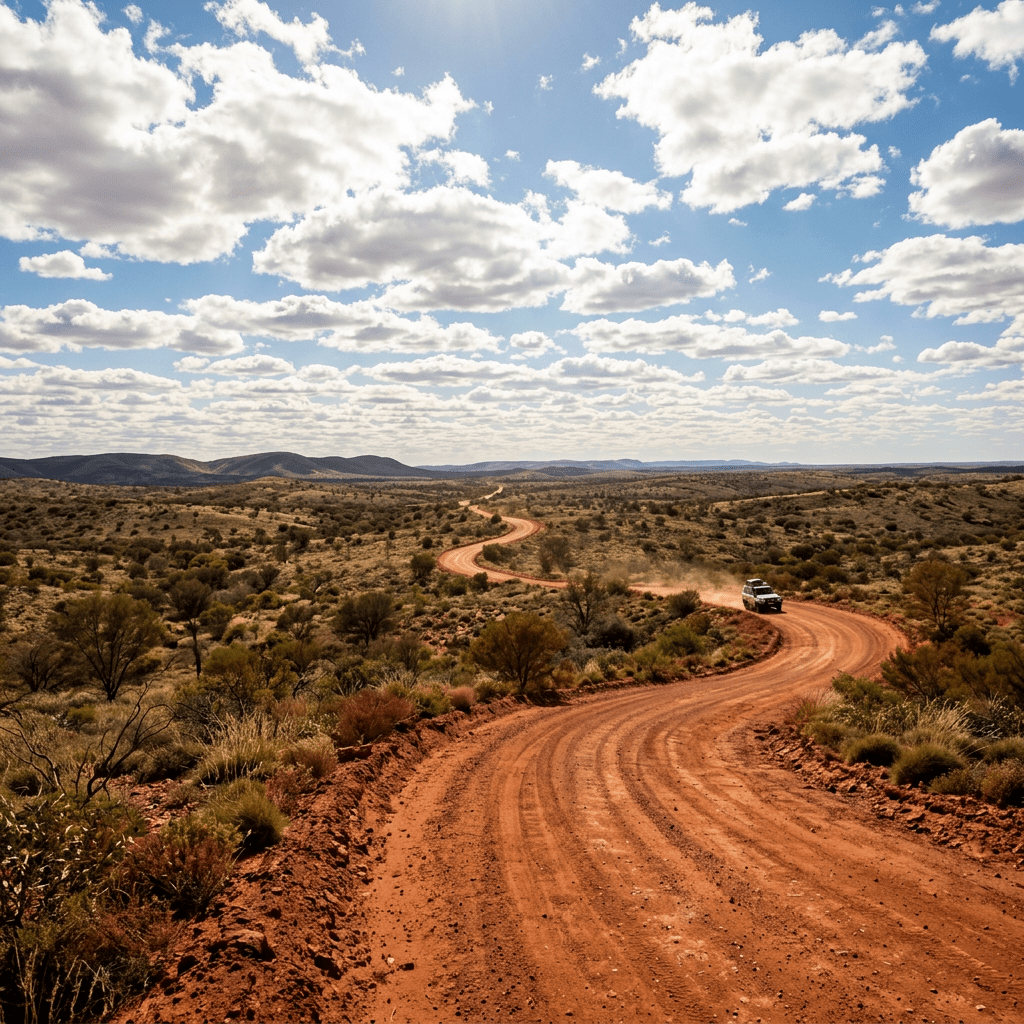
    The real soul of the trip was during our long bus tours through the outback. The landscape stretched endlessly—red dirt, scrubby bushes, and skies so vast they made you feel wonderfully insignificant. We learned about Aboriginal culture, their deep connection to the land, and the stories passed down through oldtime legends.

    Vehicle driving on winding red dirt road in arid outback landscape
    A vehicle traverses a winding red dirt road through arid outback terrain under a partly cloudy sky

    One unforgettable stop was a wildlife sanctuary where I finally got to hold a tiny koala. He was everything I imagined: fluffy gray fur, button eyes, and a sleepy demeanor (apparently they are constantly high from eating the eucalyptus). I beamed for the camera, arms gently cradling him. But internally? I was screaming. Those adorable little claws dug into my arm like tiny needles. Sharp did not even begin to describe it. Still, worth every scratch for that photo and the story.

    We spotted kangaroos hopping freely in the wild—elegant, powerful creatures that seemed to defy gravity. At the sanctuary, we got closer, feeding them and watching their curious faces up close. Later, in a remote outback experience hosted by Aboriginal elders, we were treated to kangaroo tail. It was an honor to share in their traditional food. The tail was tough, mostly dense muscle with very little fat or tenderness—chewy, gamey, and completely unlike anything I had eaten before. It was not about gourmet flavor; it was about connection, respect, and tasting a piece of the land itself.

    That trip to Australia did not magically fix my insecurities around food and body image. Those battles continued for years as I eventually got down to double digits on the bathroom scale. But it planted seeds of perspective. I saw a country that was both modern and ancient, vibrant and harsh, welcoming and wild. I learned that adventures are messy—full of sunburns, awkward flirtations, hidden struggles, and moments of pure wonder.

    Holding that koala, even through the pain, symbolized something bigger: sometimes the cutest, most picture-perfect experiences are actually concealing something painful. Pushing away plates did make me feel more in control; but it also made me miss out on shared meals and hospitality. The temporary tattoo washed off, but the memories never did.

    Years later, I look back on that fifteen-year-old girl with compassion. She was brave enough to travel across the world, curious enough to embrace new cultures, and human enough to make mistakes. Australia taught me that life is best experienced fully—sunburns, sharp claws, kangaroo tail, and all.

    If you ever get the chance to say yes to an adventure that scares and excites you, just do it (like Nike!). Whether it is Australia or somewhere closer to home, the outback of your own growth is waiting.

  • The Faux Pas of Following the Script in Life

    The Faux Pas of Following the Script in Life

    Faux pas.

    Literally, it means “false step” in French—like you tripped over your own feet in the middle of a crowded ballroom and everyone turned to stare. In American English, we have borrowed the term to describe any social blunder, any tiny (or not-so-tiny) violation of the invisible rulebook that supposedly keeps society running smoothly. Say the wrong thing at a dinner party. Wear white after Labor Day. Ask a woman when she is expecting … when she is not actually pregnant. Boom. Faux pas. Social death.

    The phrase has always fascinated me because it is so perfectly French in its elegance and so perfectly American in its judgment. It sounds sophisticated, almost romantic—but really it is just polite code for “you messed up and now everyone’s secretly judging you.”

    And that got me thinking.

    Why are we so obsessed with these invisible lines? Who drew them? Who keeps redrawing them every few years? And why does the mere idea of being told how I am“supposed” to behave in any given situation make my skin crawl and my inner rebel kick into overdrive?

    I have never been good at following scripts. Not in recitals, not in job interviews, and definitely not in the grand theater of adult life. The older I get, the more I realize that a huge chunk of my personal growth has come from deliberately stepping on the lines everyone else is so busy tiptoeing around. Not out of spite (okay, sometimes out of spite), but because performing for an invisible audience feels like slow suffocation.

    Let me give you an example. My lack of job or career. My relationship and its status.

    Translation: Sweetie, that’s a faux pas. You’re supposed to say you are a “marketing coordinator” or “nurse practitioner” or anything that sounds like you have a 401(k) and a five-year plan.

    And: He is suppossed to choose you immediately. You should live together, get married and become a family, like everyone else…

    Because apparently everyone is the same and has the same path in life.

    Stability is overrated when you are busy living the life you actually want. And I want to be his 100%.

    That moment I am told how to live my life is never about being rude. It is all about refusing to shrink myself into the neat little box labeled “Acceptable Adult Woman.” Society has a whole collection of those boxes—career boxes, relationship boxes, body boxes, personality boxes—and they all come with instruction manuals disguised as “just common sense” or “what everyone does.”  News flash: most people do not even have any sense whatsoever (so it is not really that common). 

    Here is the thing I have learned the hard way: those expectations are not there to protect us. They are there to keep things comfortable. Comfortable for everyone else. Predictable. Easy to categorize. If I follow the script—get the degree, land the safe job, marry at the right age, have the right number of kids, post the curated vacation photos, never admit I sometimes cry in my shower—then nobody has to feel awkward. Nobody has to question their own choices. The machine keeps humming.

    But what if the machine is boring? What if the script was written by people who were terrified of their own shadow? What if “fitting in” is just another way of saying “quietly dying inside”?

    I am not advocating for chaos. I still say please and thank you. Basic decency is not the enemy. The enemy is the quiet tyranny of “this is how it’s done” when “it” no longer fits who you actually are.

    I hate being told what to do because I spent too many years doing exactly that and waking up wondering whose life I was living. I hate performative expectations because they turn human connection into a performance review. And I especially hate the way media has turned every single faux pas into a public execution. One off-color political joke, one long distance relationship, one honest opinion and suddenly you are struggling to get followers on social networks.

    The irony is that the people quickest to call out faux pas are often the ones most trapped by them. They are not free; they are just better at pretending.

    So here is my quiet rebellion: I am going to keep committing the occasional faux pas. Not the cruel ones—never those—but the ones that come from refusing to edit myself for other people’s comfort. I am going to wear the “wrong” outfit, say the “wrong” thing at the “wrong” time, and build a life that looks messy and inconsistent and deeply, unapologetically mine.

    Because the real false step is not tripping over some arbitrary social rule.

    The real false step is spending your whole life walking someone else’s path so carefully that you forget how to walk your own.

    And relearning how to walk has taught me that:  I would rather stumble forward in my own Yeezys than glide perfectly in someone else’s shoes. 

  • The Rise of Comfort: Embracing the Free-Bra Movement

    The Rise of Comfort: Embracing the Free-Bra Movement

    Remember when getting a bra that actually fit felt like a sacred, slightly humiliating pilgrimage? We would trek to the mall, hearts pounding, ready to surrender our bare chests to a stranger armed with nothing but a measuring tape and a clipboard. Victoria’s Secret was not just a store—it was a temple. And the goddess was that perfectly coiffed sales associate with the tape dangling around her neck.

    You would stand there in a tiny fitting room that smelled faintly of vanilla candles and desperation, arms raised while she poked, prodded, lifted, and adjusted. “Okay, honey, breathe out… now inhale… A cup? Or is that a B on a heavy day?” Brassiere itself sounds like industrial equipment. We endured it all for the promise of “lift and separation,” for the illusion of perfect, perky cleavage that could launch a thousand thirsty glances in high school. We contorted our bodies, sucked in our stomachs, and prayed the underwire would make us look like a goddess instead of committing war crimes on our young teenage bodies.

    Those were the days.

    Fast-forward to now, and the entire ritual has collapsed. I do not even think most women under 36 could tell you their real bra size if you held a gun to their head. We have collectively ghosted the fitting rooms. The measuring tape is an old relic only used by the boys now. Victoria’s Secret angels? Still gorgeous, but we are no longer buying what they are selling—literally.

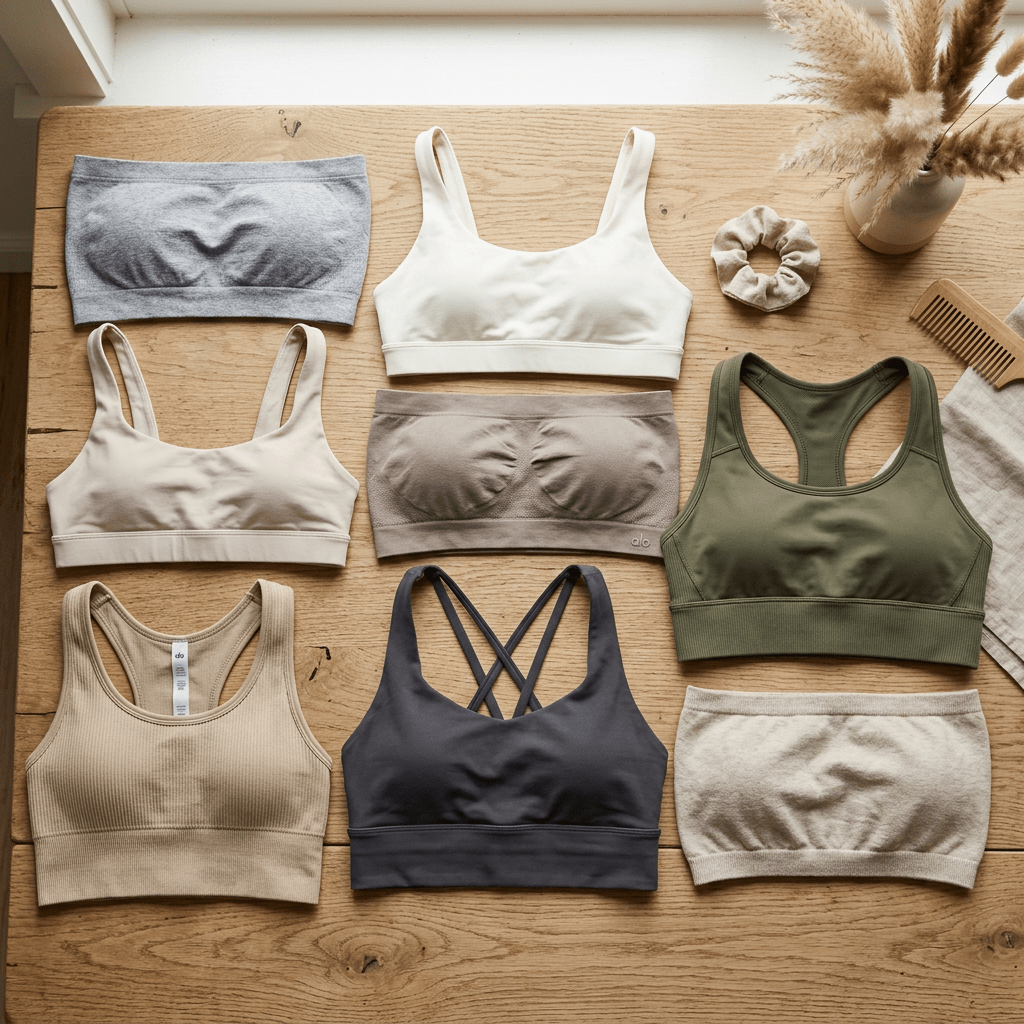
    Instead, we are out here living our best soft-girl lives in cute little bandeaus, buttery-soft sports bras, and those barely-there bralettes that feel like a gentle hug from a cloud rather than a structural engineering project. No more wires digging into our ribs (I have a large ribcage!) like medieval torture devices. No more adjusting straps in public like a nervous tic. We are free-boobing it through Zoom calls, grocery runs, and yes, even date nights if the vibe is right (plus, my man enjoys my itty bittys).

    Let’s be real—this shift is not just about laziness. It is a quiet revolution.

    Society spent decades telling us our boobs needed to be contained, supported, weaponized. Push-up bras. Minimizer bras. Convertible bras with more hooks than a slasher film. We bought into the lie that comfort was secondary to looking “put together.” All for the boys to pay attention to us. That a proper lady had to have everything strapped down and presented like gift-wrapped perfection.

    Then came the pandemic. Sweatpants became uniforms. Loungewear went mainstream. And suddenly, we realized something revolutionary: our boobs do not actually need constant structural support to be valid. They are not structural hazards waiting to collapse. They are just… there. Soft, warm, part of us. And when we stopped squeezing them into unnatural shapes for eight hours a day, the world did not end. In fact, it got better. For me, nothing changed whether there was a pandemic or not. So I was free- boobing before it was “cool”.

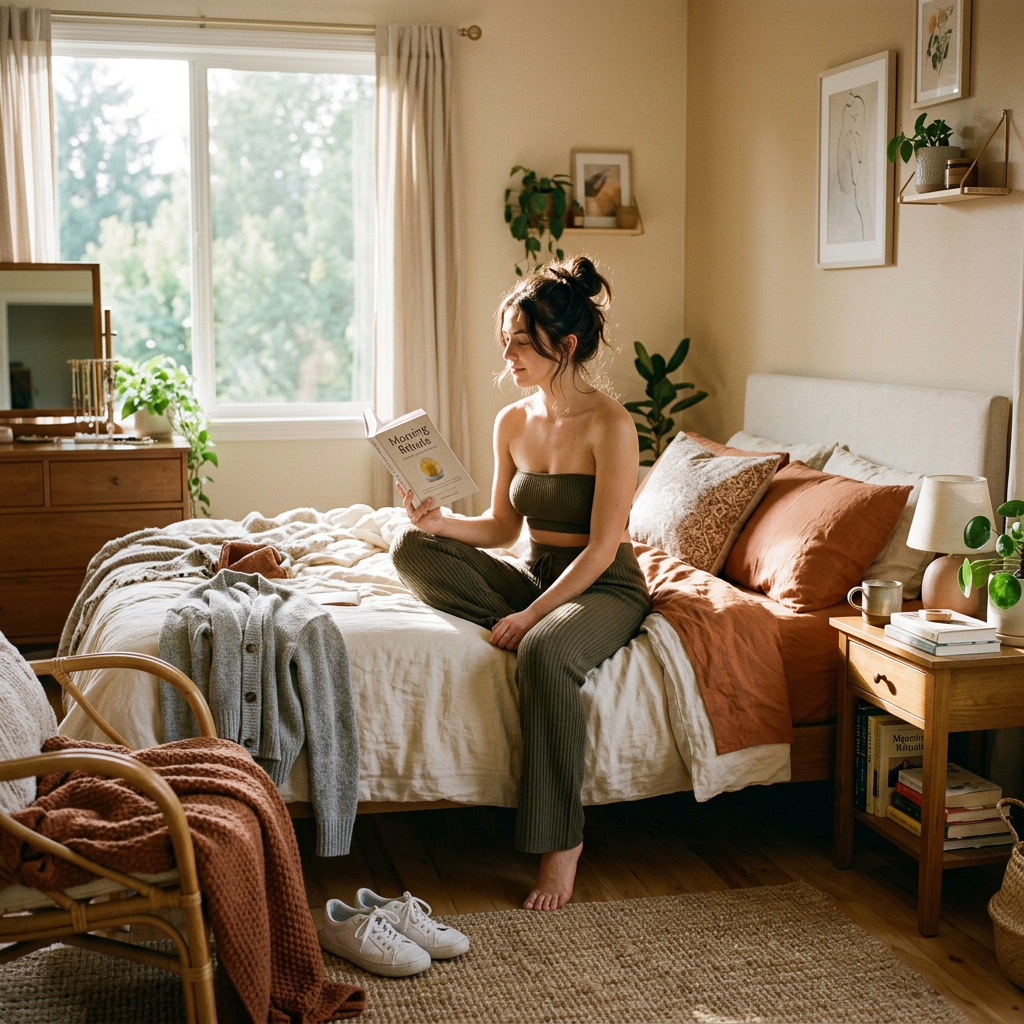
    Woman sitting cross-legged on bed reading a book in cozy bedroom with natural light
    A woman enjoys a quiet morning reading a book in a sunlit bedroom.

    We discovered the joy of the bandeau—that rebellious little tube top that says, “I’m cute, I’m comfy, and I’m not apologizing for jiggle.” Sports bras that handle actual movement without turning us into armored tanks. Wireless wonders that whisper sweet nothings like, “Girl, breathe.”

    And let us talk about the knowledge gap. Ask a group of women their bra size today and watch the panic. “Umm… medium? Whatever fits” We have stopped obsessing over the numbers because the numbers were always a scam anyway. Bra sizing is notoriously inconsistent across brands. One store’s 32C is another’s 34B. It was all smoke, mirrors, and marketing.

    Ditching the heavy-duty bra is not just about comfort. It also is about reclaiming ownership of our bodies in a world that has long tried to dictate their shape, size, and presentation. I personally prefer being on the Itty Bitty Titty Committee , but advertisements and media companies love to shove triple Ds and Sydney Sweeney in my face…

    We are done performing for the male gaze with engineered cleavage. Done pretending that underwire equals empowerment. The free-boob movement—yes, I am calling it that—feels like the only level of body positivity I accept. It says: my breasts do not need to be edited, lifted, or minimized to be worthy.

    Of course, not everyone is on board. Older women clutch their pearls. The fitness bros complain about the materials in said bras. Some days even I miss the old sculpted look, but mostly I love sliding into a soft bralette and feeling like my natural body is enough.

    We traded poking and prodding for stretchy, breathable freedom. And I do not think we are going back.

    So next time you catch yourself reaching for that lacy, restrictive contraption out of habit, ask yourself: Do I really need this? Or am I just performing femininity from 2007?

    Throw on the bandeau. Rock the sports bra. Let them breathe.

  • Lessons from Dogs: Unconditional Love and Healing

    Lessons from Dogs: Unconditional Love and Healing

    I have never been much of a people person. Crowds exhaust me, small talk feels like a chore, and I have always found it easier to connect with animals than with most humans. But dogs? Dogs have been my constants, my comforters, my chaos-makers, and my greatest teachers in love. From the high-energy terriers of my childhood to the massive guardians who came later, each one has left paw prints on my heart—some gentle, some chaotic, and a few that healed wounds I did not even know were bleeding.

    Our first dog arrived when we moved to America: Visa, a spirited Jack Russell Terrier. She was pure gasoline wrapped in a small, wiry body—endless energy, boundless affection, and an ability to produce litters of adorable puppies every few years. We sold those puppies, but keeping Visa was never a question. She was family. She lived with us until my senior year of high school, long enough to see me through the awkward years with her wagging tail and zoomies that could clear a room.

    Then there was Boy, our gentle giant Rottweiler. He was the ultimate teddy bear—massive, sweet, and protective in that quiet, soulful way Rottweilers can be. Losing him to choking on a golf ball felt like losing a piece of the family in a cruel way. I still remember the heavy silence in the house after he was gone. He was replaced by Toby— a Pitt Bull who was also a sweetheart of a burly dog. He died of cancer as my family and I were in Cuba– one year before I got sick.

    In high school, I went through a full Paris Hilton phase. You know the one—tiny dog in a designer carrier, strutting like it was a runway. In order to properly cosplay, I begged my parents relentlessly until they surprised me with Gucci, a toy Maltese so small and fluffy he looked like a living stuffed animal (I did not want a chihuahua-like creature). He rode proudly in his carrier as I paraded him around, living my best Y2K celebrity fantasy. Gucci was my accessory and my buddy.

    But college changed everything. When I left for school, my mother “babysat” him, and by the time I returned, he was a completely different dog—yappy, spoiled, and obsessed with spinning in circles for treats. The quiet cuddles we once shared were replaced by constant begging and zoomie demands. I loved him, but it was a lesson in how dogs absorb the energy of their environment.

    While I was away at university, my parents brought home Max, an Argentinian Mastiff built like a tank. He was… a character. He growled at me whenever I tried to lie down on my childhood bed and he had expensive taste—specifically, my mother’s designer shoes. Our relationship was tense at best.

    Then came the day the wheelchair van dropped me off from the hospital after the stroke. As soon as the door opened, Max made his great escape. He bolted and never looked back. Respect. Even the big tough dog knew when it was time to hit the road.

    Not long after, my father brought home a Cane Corso puppy from Oregon that we named Polo. From the moment he entered our lives, we clicked. By then I was navigating life as a disabled young woman, and Polo only ever knew me that way. He did not see limitations—he saw his person. We became inseparable. He would lean his solid, muscular body against me for support (both literal and emotional), and his calm presence grounded me on the hardest days.

    Losing Polo in 2018 shattered me. My friends had drifted away as my health changed, and I felt profoundly alone. Polo’s death left a hole that nothing else could fill. I was heartbroken in a way I still feel echoes of today. He was not just a dog; he was my solace, my companion through isolation, and proof that unconditional love can come with fur and a wet nose.

    A couple years later, my parents rescued Xena from a trailer park nearby. An Anatolian Shepherd. She was scruffy, wild, and full of attitude. I could not stand her. I would lovingly (or not-so-lovingly) call her “Trash” and physically squirm away whenever she tried to get close. She was too much—too… everything.

    Then, a year later, they brought home Zorro, a Black Russian Terrier puppy. I was instantly smitten. He was tiny, ridiculously cute, and fit perfectly in my lap. I met him over FaceTime with my boyfriend, who watched my face light up and immediately got on board with the new puppy fever. Zorro was pure joy in a fluffy black coat.

    When my boyfriend finally met the whole crew in person, something magical happened. He fell in love with Xena—the dog I had written off. He played with her, doted on her, and treated her like the treasure she actually was. Seeing his genuine affection for my “Trash” dog melted every wall I had built. Suddenly, I saw Xena through new eyes. Now, on lonely days, I find myself talking to her. Her kind eyes see deep into my soul. She has become a source of comfort I never expected.

    Zorro, of course, grew into a massive, still-adorable giant. He is a total mama’s boy these days and mostly ignores me in favor of my mother. That is okay—dogs get to choose their favorites too.

    Looking back across Visa, Boy, Gucci, Max, Polo, Xena, and Zorro, I realize dogs have been consistent relationships in my life. They do not care about social performance or perfect health. They meet you where you are—whether you are a high schooler dreaming of Paris Hilton fame or a disabled woman learning to rebuild her world.

    They have brought chaos (puppies, chewed shoes, runaway Mastiffs), heartbreak (medical incidents, cancer, putting down beloved companions), and healing (lap-sized puppies and unexpected second chances with “Trash” dogs). Through it all, they have reminded me that love does not always come from people. Sometimes it barks and teaches you that even the dogs you initially reject can become the ones you talk to when you feel alone.

    If you are not a people person either, consider this your sign: open your heart to a dog (or several). They might just turn your “Trash” into treasure—and fill your life with more loyalty and laughter than you ever thought possible.

  • From Homewrecker to Homemaker.

    From Homewrecker to Homemaker.

    What is your career plan?

    The “It” Girls—the glossy, untouchable, “main character” women who once defined the era—are quietly, deliciously, scandalously… going domestic. Yes, those girls. The ones who used to jet-set to Mykonos in mini dresses, post mirror selfies in vintage Dior, and make “hot girl summer” a global brand. We are now knee-deep in homemade pasta, linen napkins, and 6 a.m. lattes brewed in our own perfectly imperfect kitchens.

    This is not your grandmother’s homemaking. This is haute homemaking. Cottagecore on ‘roids and cashmere. The new “It” Girl is not just nesting—she is curating a whole aesthetic religion around it. Think: barefoot in a silk slip dress whisking eggs, filming 45-second reels of her sourdough rising while her engagement ring catches the golden hour light, (🙏🏼🙏🏼🙏🏼). She is not hiding the domestic labor. She is flaunting it because it is the ultimate flex.

    Remember the 2010s “It” Girl blueprint? Hustle. Club to boardroom. Rosé all day. Side hustle turned empire (you can still rosè in the kitchen!). Burnout was a badge of honor. “I have not slept in three days but the bag is secure.” We were sold the fantasy that real power looked like never being home long enough to need a vacuum.

    I am not someone who claims that the pandemic caused this renaissance. Articles claim that post-pandemic exhaustion hit like a truck and that is why we are choosing to stay home. The “girlboss” script started sounding hollow—lonely hotel rooms, endless content creation, dating apps full of situationships, and a quiet ache that no amount of brand deal could fill. Personally, I see that the same women who once bragged about never cooking (famously Carrie Bradshaw in Sex in the City kept her sweaters in the oven!) are posting stories of them slow-roasting a chicken with rosemary from their windowsill garden.

    It is seen as rebellious/ controversial because it is a direct middle finger to the narrative we have been force-fed for decades: domesticity equals oppression. That wanting a beautiful home, a stocked fridge, and a man who comes home to the smell of garlic and love is somehow regressive. The hottest, most followed, most desired women on the planet are proving the opposite—homemaking done right is high-value, high-status, and insanely seductive.

    Walk into any cool girl’s apartment in 2026 and you can see it: the Le Creuset Dutch oven in a tasteful color, the vintage rolling pin displayed like art, and of course the sourdough starter. They are not just cooking—they are romanticizing the mundane. Morning dewy skin routines followed by watering herbs. Evening candlelit dinners they actually prepared instead of ordering from some immigrant driver.

    This is not tradwife cosplay for the poor. These are women with options. Models. Influencers. Actresses. They could be on yachts in Ibiza but they are choosing farmers’ markets and Sunday roasts. Why? Because it feels good. It feels feminine. It feels like control in a chaotic world.

    And let me be brutally honest—the men are losing their minds over it (at least mine is!). There is something primal about watching a beautiful woman who could have the world at her feet choose to pour that energy into creating a sanctuary. It hits different. It is not submission; it is sovereignty. She is not forced into the kitchen. She claimed it as her “queendom.”

    Hence, modern career feminism sold women a version of success that left many emotionally bankrupt. The “It” Girls who are “opting in” to homemaking are not rejecting ambition—they are redefining it. They are building empires in the home. We are not anti-work. We are anti-misery.

    Of course the purists are furious. “This is anti-feminist!” “You are setting women back!” Meanwhile those same critics are stress-eating takeout alone in their minimalist apartments wondering why their stress is through the roof. The new homemaker “It” Girl does not care. She is too busy teaching her followers how to make the perfect bolognese while looking like a Renaissance painting.

    This movement exposes the lie: that fulfillment can only come from cubicles and corner offices. That domestic skills are beneath a “modern woman.” The “It” Girls are proving domesticity—when chosen freely and done beautifully—is one of the ultimate luxuries.

    They are not trapped. They are thriving. Soft lighting, slow mornings, real food, real connection. And yes, sometimes a hot husband who worships the ground they walk on because they make the house feel like heaven.

    You do not need to quit your job tomorrow. But maybe the “It” Girl homemaker renaissance is permission to stop demonizing the domestic. To light the damn candle. To learn how to roast vegetables everyone asks for the recipe. To make your space so warm and intentional that people feel it the second they walk in.

  • The Power of Positive Thinking on Health

    The Power of Positive Thinking on Health

    A positive mindset does not just make you feel fuzzy and motivated. It straight-up rewires your biology, dials down inflammation, cranks up your immune system, and turns everyday movement into fat-burning rocket fuel.

    A negative mindset is slow-motion poison. It floods your veins with stress hormones, tanks your recovery, packs on visceral fat, and basically programs your body to break down faster.

    This is no woo-woo Instagram spirituality. This is hard science meeting cold, hard reality. And yeah, I am saying it loud because I have lived the nightmare version.

    I truly believe the reason I am sitting here in my current health status—in a wheelchair and the use of only one arm—is because for years I viewed myself and my life like absolute garbage. I woke up every day expecting the worst, replaying every failure on loop, and treating my body like it was already doomed. Surprise: it started acting doomed.

    The Brutal Science: Your Brain Is Running the Show Whether You Like It or Not

    Your thoughts are not cute little clouds floating in your head. They are chemical commands. Sugar coating this fact is keeping people sick. 

    Every time you think “I’m such a worthless piece of shit” or “Nothing ever works out for me,” your brain hits the panic button. Cortisol and adrenaline spike. Inflammation skyrockets. Your immune system gets told to stand down. Sleep quality tanks. Cravings for junk food go nuclear because your body is now in survival mode, hoarding energy (calories).

    Chronic negative mindset is not“just stress.” It is a physiological wrecking ball [enter Miley Cyrus “Wrecking Ball”]. Studies show people who marinate in pessimism have higher rates of heart disease, slower wound healing, weaker immune responses, and even faster cellular aging. Your telomeres—the protective caps on your DNA—literally shorten faster when you are stuck in doom-scroll mode.

    Flip it around, like a pancake: shift to a positive, resilient mindset and the opposite happens. Blood pressure drops. Recovery speeds up. You actually enjoy moving your body instead of dragging yourself through workouts like punishment. Inflammation cools off. Your gut stops revolting. Hell, even the placebo effect proves it—people who believe a sugar pill will fix them often get real, measurable improvements because their brain buys in and starts the repair work.

    The nocebo effect is the evil twin: tell someone a harmless thing will make them sick and watch their body obey. Expectation is that powerful. Your mindset is not a passenger—it is the driver.

    I used to roll my eyes at this stuff. “Yeah, sure, just think happy thoughts and your autoimmune issues vanish.” But the data does not lie, and neither does my mirror. I spent years in that negative spiral, and my body paid the bill.

    Look, I am not here to play victim. I am just here to own it.

    For the longest time I looked at myself and saw failure. “Too broken to fix. Too tired to try. Life’s already screwed me, why fight it?” I would stare at my reflection and pick apart every flaw, every pound, every missed workout. I would doom-scroll through other people’s perfect lives and feel physically sick with envy and resentment. That is one reason why I deleted all of my social media.

    That constant inner monologue was never harmless. It was a full-time job for my stress response. My sleep turned to garbage. My digestion went haywire. I gained weight— more than doubled it—because my body was too busy pumping out cortisol to let any real healing or fat-burning happen.

    I genuinely believe that is exactly why I am in the health spot I am in right now. The mindset that I have been carrying around throughout this life. So it was not one bad year. Not “bad luck.” It was years of treating myself like I did not deserve better. Years of expecting my body to fail because that is what I kept telling it.

    And the craziest part was that once I started calling myself on that toxic bullshit, things began to shift. Not overnight fairy-tale magic, but measurable changes. Energy crept back. Cravings got quieter. My body started responding to the same workouts and meals that used to do nothing.

    Thus. your mindset is not just affecting your health—it is the architect of it.

    A positive mindset does not mean pretending everything is sunshine and rainbows while your life burns down.

    That is toxic positivity and it is just as damaging. Real positive mindset is gritty optimism: “This sucks right now, but I’m capable of handling it and coming out stronger.” It also is hope. How I approach Boston Sports. It is choosing to see your body as an ally that has been waiting for better instructions, not an enemy that is out to get you.

    People with this mindset move more because exercise stops feeling like torture and starts feeling like investment. They recover faster because they are not marinating in self-sabotaging thoughts. Their immune systems stay online. Their hormones chill out. Even food tastes better and digests better when you are not eating it with a side of guilt and shame.

    Alia Crum’s Stanford research proved it in real life: hotel housekeepers who were told their daily grind counted as exercise suddenly dropped weight, lowered blood pressure, and improved body composition—without changing a single thing about their routine. Same work, different story in their heads. Same bodies, different outcomes. Mindset flipped the switch.

    That is not motivational poster nonsense. That is biology bending to belief.

    The Bottom Line: Your Mindset Is Either Medicine or Poison—Choose

    I am not claiming positive thinking cures everything. You still need sleep, real food, movement, and actual medical care when shit is broken. But your mindset is the multiplier. It decides whether those things work for you or against you.

    I believe—deep in my bones—that my own health turnaround started the day I stopped viewing myself as a lost cause and started viewing myself as worth the fight. My body is finally listening.

    Stop feeding the negative loop. Start rewriting the story. Your body is waiting for new orders.

  • Waxing Poetic

    Waxing Poetic

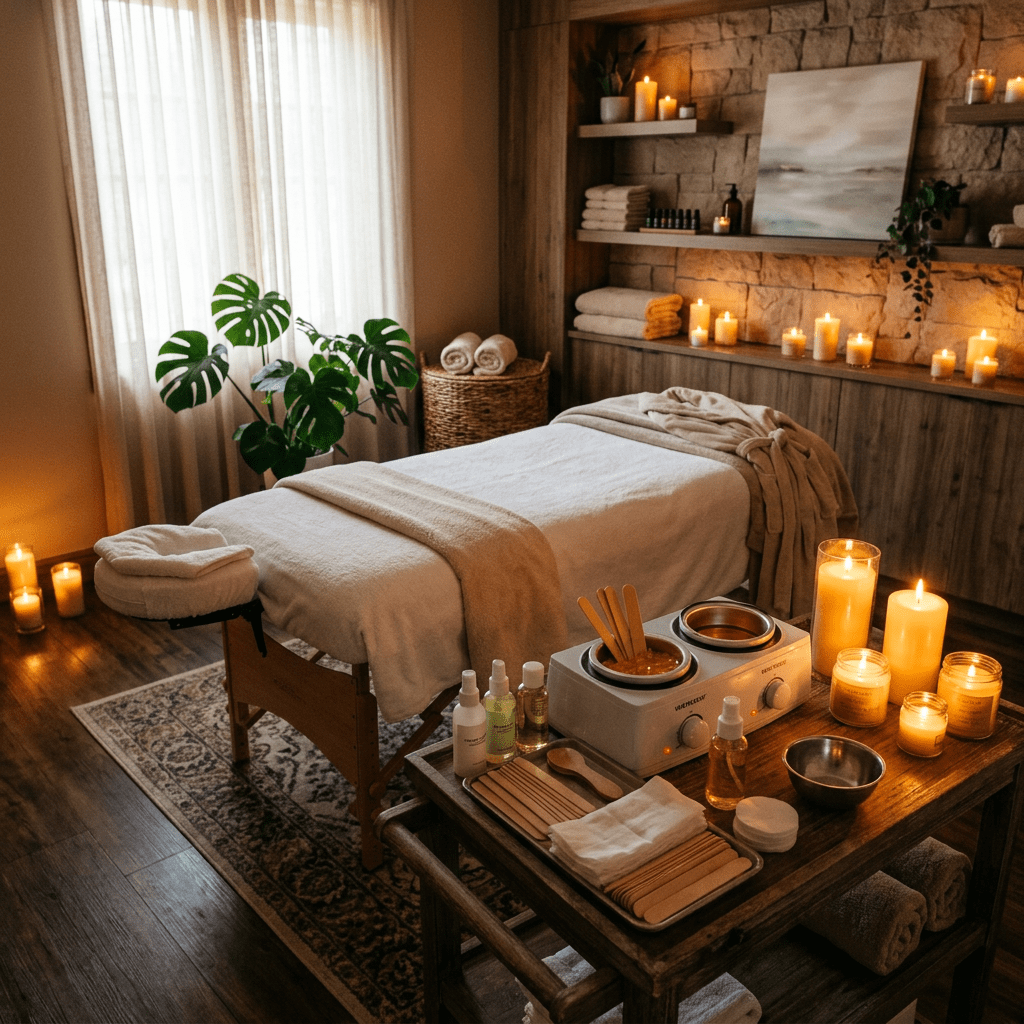
    I do not shave. And I never will. I wax. Every. Single. Inch. And yes, I know exactly what you are thinking—that little eyebrow raise, the sly smirk, the unspoken “high-maintenance princess alert.” Guilty as charged. But here is the delicious truth: I have been doing this since I was old enough to beg my mother for it, and after all these years, my skin is so flawlessly smooth, so impossibly touchable, that I would never trade the ritual for anything. Not for a razor, not for convenience, not even for the illusion of “low effort.” Because when I come out of that room—pink, tingling, and utterly bare—I do not just feel clean. I feel dangerous. Like a secret weapon wrapped in silk. Like every curve, every hollow, every secret place on my body is now an open invitation to pure, unfiltered pleasure.

    Let me take you back to the beginning, because this obsession did not start in some fancy spa. Picture recess in elementary school—sun beating down on scraped knees and grass-stained sneakers. The cool girls were already rolling up their shorts just enough to flash those freshly shaved legs, all glossy and defiant under the playground lights. They would strut like they owned the world, whispering about razors and lotion and how “grown-up” it felt. I was desperate to join them. I wanted that same shiny confidence, that same “look at me” glow. But my mother? Oh, she shut it down with one firm, no-nonsense glare. “The hair isn’t long enough yet,” she would say, arms crossed like a fortress. I sulked for weeks, staring at my own legs in the mirror, willing those fine little strands to hurry up and become something worth taming. Little did I know, she was planting the seed for something far more luxurious than a cheap disposable razor ever could.

    Fast-forward through the years, and waxing became my religion. Not just legs—everything. Underarms, brows, and the full Brazilian (front, back). I have surrendered it all to hot wax and skilled hands more times than I can count. And here is the wicked little secret no one tells you about lifelong waxing: your body eventually surrenders right back. The hair grows back thinner, fairer, almost translucent. These days, it is barely there at all—like a whisper of a secret rather than a bold declaration. I can go weeks without a touch-up and still feel like a goddess who just stepped out of a dream. No five o’clock shadow. No prickly regrowth that ruins the mood mid-makeout. Just endless, velvety smoothness that makes my skin look lit from within, like I am permanently photoshopped in real life.

    But the real magic happens the second that last strip is ripped away and I run my palms over my freshly waxed body. The heat lingers. The skin flushes a soft, satisfied pink. And suddenly, I am smooth as a baby seal—that is the only way to describe it. Sleek. Gleaming. Utterly irresistible. I feel it in my bones: a rush of pure, unapologetic confidence that radiates outward like perfume. It is not just about looking good. It is about feeling like every inch of me has been polished for pleasure.

    Shaving is a scam sold to women who do not want to admit they are scared of a little pain.

    Waxing hurts like a bitch the first few times. Good. Pain is honest. It reminds you are in control. You are choosing this. Every strip yanked off is a middle finger to the idea that we should quietly deal with constant maintenance. I go out of every appointment raw, red, and victorious. My skin feels brand new, like I have been factory reset. Smooth as a baby seal . Zero drag. Zero surprises.

    And the confidence is feral. I am not “glowing softly” — I feel sharp. Untouchable in the best way. Like my body is finally on my terms. No more hiding, no more half-measures. Full send or nothing.

    Shower after a fresh wax?The water just glides. No catching, no friction, no bullshit. Lounging in an oversized shirt post-hotel check-in? I feel light, clean, dangerous in my own skin. No prickly reminders that I “forgot” to shave. Just pure, unapologetic smoothness that makes me move different.

    People love to preach about “body positivity” while still secretly shaving. Cool story, bro. I am over here committing war crimes on my own follicles because half-measures are for cowards. Waxing is no self-care. It is self-warfare. Taking territory back from genetics and lazy societal expectations.

    If you are still dragging a razor across every other day, leaving micro-cuts and ingrowns like landmines, I am judging you. Harshly. Book the wax. Embrace the scream. Your future self — and anyone who gets to touch you — will thank you.

    I look like temptation personified. Hairless, carefree, radiating that elusive je ne sais quoi that makes my man (and honestly, myself) weak in the knees. It is not arrogance. It is alchemy. The wax turns maintenance into foreplay. It turns my body into a playground that is always open, always ready, always more.

    I get it—waxing sounds extreme to the uninitiated. The sting, the cost, the commitment. But for me, it is the ultimate act of self-indulgence. It is saying, “My body deserves this level of devotion.” It is choosing long-term seduction over quick fixes. And the payoff is a quiet, constant sensuality that follows me everywhere. One day I will be lounging by the pool in the tiniest bikini. Slipping into lingerie that clings like a second skin. Or simply being naked in front of my reflection after a long day, running my hands down my sides and feeling nothing but soft, flawless perfection. 

  • Crying vs. Weakness: A New Perspective on Masculinity

    Crying vs. Weakness: A New Perspective on Masculinity

    I have said it before, loud and proud: a crying man is no man at all. I have written it, I have posted it (here), I have probably screenshot it. And I still stand by that… mostly.

    But when my man cries because he is feeling my pain—because something is ripping me apart and he cannot fix it, no matter how big, strong, or capable he is? Fuck. That shit is incredibly hot.

    Please do not get it twisted. This is not some Hallmark-movie, sensitive-new-age-guy bullshit. I am not talking about the dude who was snifflling into his popcorn during The Notebook or ugly-crying because the Packers lost in overtime. That is not emotion, that is weakness with a side of emotional diarrhea.

    And do not even get me started on Victor Wembanyama—yeah, the 7’4” alien freak of nature who was out here sobbing like a toddler after a playoff first round clinch that literally means nothing in the grand scheme of basketball. Bro, you just won a game. Plenty of other people do this. The league does not hand out participation trophies for feelings. Sit down.

    Real men do not cry over fiction.

    Real men do not cry over insignificant victories. Real men sure as hell do not cry because someone was “mean” to them on the internet or their fantasy football team tanked. That is not depth. That is soft. That is the sound of a man auditioning for the role of “emotional support boytoy ” while the rest of us are out here looking for someone who can actually carry the weight.

    But when the tears come because I am hurting? When he is staring at me with those red-rimmed eyes, jaw clenched so tight, because he is watching me go through something dark and heavy and he cannot punch it, fix it, or make it disappear? That is certainly different. That is raw. That is the moment masculinity actually shows up and says, “I’m strong enough to feel this with you—and still be the one who holds it together when you can’t.”

    It is not weakness. It is power in its most dangerous form. It is proof he is not some emotionless robot programmed by Andrew Tate. It is proof he cares. Deeply. Violently. In a way that makes my stomach flip because I know, right then, that I am not just another notch or a warm body. I am the thing that can crack his armor. 

    Society has got it all fucked up. We spent decades screaming at men to “get in touch with their feelings” and now, post #MeToo, we have got a generation of dudes who think therapy-speak and public meltdowns make them enlightened. Nah. Emotional intelligence is not crying at every little thing. It is knowing when to let the mask slip—and only letting it slip for the woman who earned it. For the pain that actually matters. For the moment where he looks at you and says, without words, “This is destroying me too, but I’m still here. Still yours. Still the man who will burn the world down the second there’s something I can do.”

    So should grown men cry?

    Yes. But only when it counts. Only when it is for something real. Only when it is private, raw, and reserved for the person who makes his whole chest throb. Anything else? Keep that shit private with your therapist and the rest of the soft boys.

    I want a man who can handle my problems and still let me see the crack in the foundation when he cannot. I want the tears that prove he is not unbreakable—he is just unbreakable for me.

    And if that makes me a hypocrite? Fine. I own it. Because at the end of the day, I do not want a robot. (Maybe one of those Optimus robots ala Elon Musk). I do not want a crybaby. I want a man who is strong enough to cry… and dangerous enough that those tears are the rarest, most intimate thing I will ever get from him.