Halloween, as we currently practice it, is one of the most aesthetically defeated holidays on the calendar. It is not scary, not beautiful, not even particularly fun once you look past the sugar. It is mostly dusty. The entire visual language is cheap plastic left out in the weather: orange pumpkins that never decay, synthetic spiderwebs that never catch anything real, skeletons that look like they were extruded in a factory in 2003 and have been slowly yellowing ever since. Everything has that slightly greasy, light-absorbing sheen of mass-produced decoration. Walk through any suburban street in late October and the cumulative effect is not atmosphere. It is clutter that has already started to look tired.
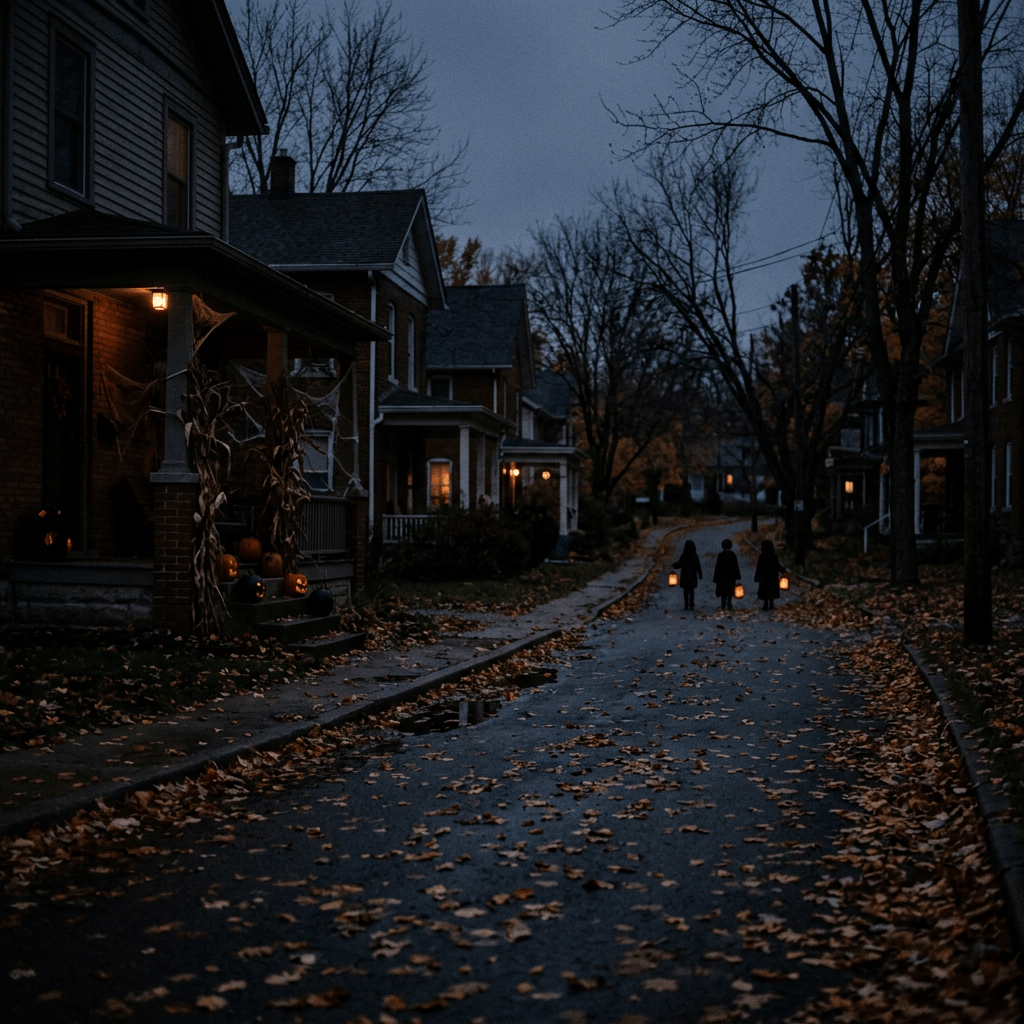
The costumes make it worse. I have never found a man dressed as a “greater man”—a superhero, a historical figure, a cartoon character—particularly appealing when the whole ensemble is held together by foam, hot glue, and polyester that reflects light the wrong way. The plastic quality is not a detail; it is the point. It turns the attempt at transformation into something faintly pathetic. There is a difference between play and costume-as-product. One can be charming. The other usually looks like the wearer has agreed to become temporary signage for a brand or a franchise. And while I have absolutely no objection to people dressing in ways that are deliberately sexual or revealing—sluttiness itself is not the problem—most of what currently passes for sexy Halloween is just the same plastic-and-polyester problem in a shorter hemline. Worn by the wrong types of people. The materials kill the effect before the body can do any of the work.
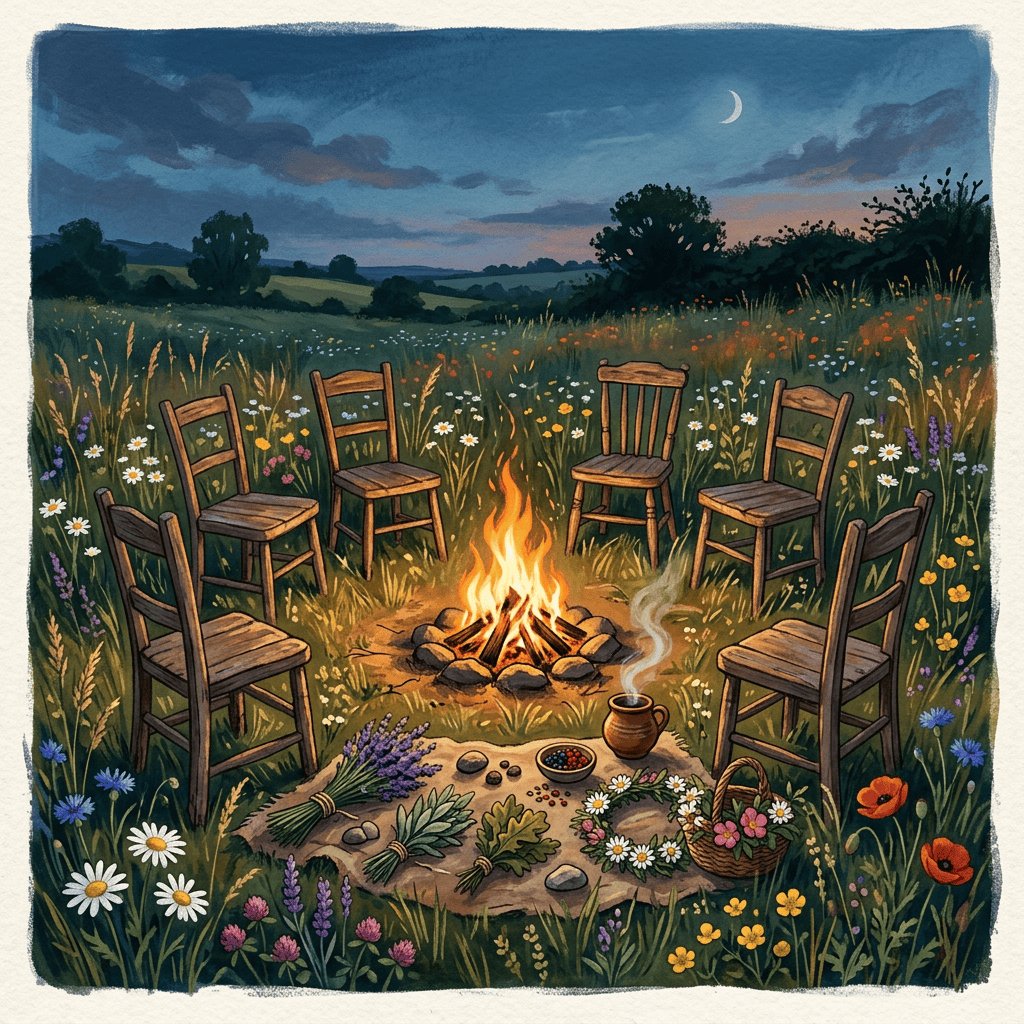
What is missing is any real sense of occasion. Halloween began, in various forms, as a threshold festival: the end of harvest, the start of the darker half of the year, a moment when the boundary between ordinary life and something else was treated as thinner. That does not require fake cobwebs. It requires people deciding, collectively, that the night is different from other nights and acting accordingly. The closest living model I can think of is Midsummer. Not the commercial version, but the older practice of gathering outdoors, using what the season actually supplies (flowers, greenery, fire, food), dancing, processing, and treating the whole thing as an act of praise rather than an act of consumption.
Midsummer works because it is still legible as a celebration of something outside the participants. People move through the landscape. They use real materials that will not survive the week. They sing and circle and eat and stay up late because the light itself is the excuse. The result is not always elegant, but it is rarely dusty. There is a difference between temporary and cheap. Temporary can be lush. Cheap is usually just permanent-looking garbage that someone will eventually have to throw away.
A Halloween worth having would borrow that structure rather than the current one. Real produce and real branches instead of molded plastic. Processions instead of porch displays. Dancing that is allowed to be a little unruly rather than content that exists mainly to be photographed. Food that is seasonal and shared rather than individually packaged candy handed out under porch lights. Costumes, if they exist at all, made from cloth, paper, natural materials, or nothing much at all—things that can be worn and then discarded or burned without leaving a residue of synthetic fibers. The point would not be to look like a character from a movie. The point would be to mark the turn of the year with other people, using what is actually around, and treating the night as an interval rather than a retail event.
None of this requires purity or historical reenactment. It only requires refusing the version of the holiday that treats both the dead and the living as an opportunity to sell more orange-and-black polymer. Midsummer already shows that large groups of people will still gather, dance, and parade if the materials and the premise feel real enough. Halloween could do the same. It would just have to stop looking like everything in it was ordered in bulk and left outside until the color faded.


Leave a Reply