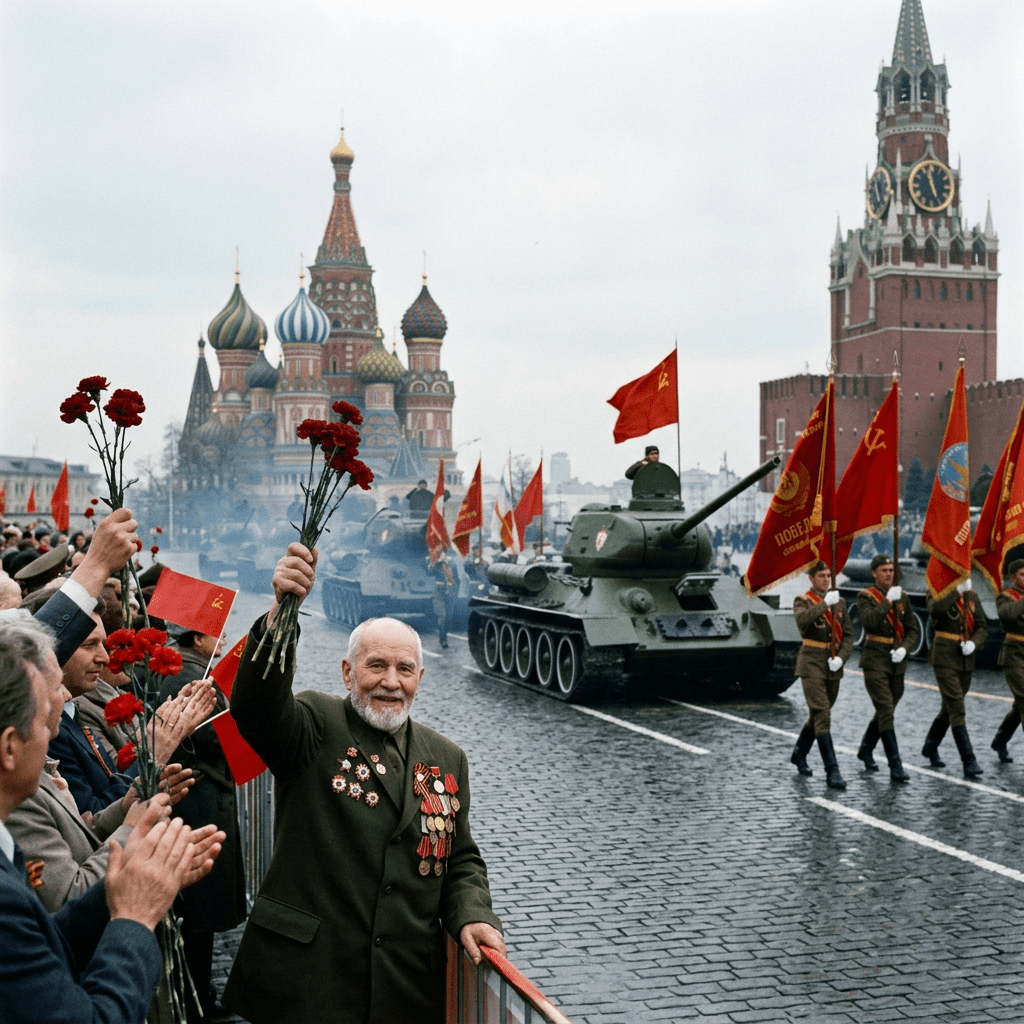
Every year on May 9, Russia and many post-Soviet nations (Ukraine…) pause to mark Victory Day (Den’ Pobedy), commemorating the Soviet Union’s hard-won triumph over Nazi Germany in World War II.
While the grand military parades unfold on Red Square in Moscow, Russian-American communities across the United States quietly yet passionately observe this solemn holiday in their own way—blending deep historical pride, family stories, and cultural traditions on American soil.
The Historical Significance
Victory Day honors the immense sacrifices of the “Great Patriotic War.” The Soviet Union lost an estimated 27 million lives—soldiers and civilians alike—in the brutal fight against fascism. The German surrender was signed late on May 8, 1945 (Reims time), but due to the time difference, it became May 9 in Moscow. What began as a Soviet holiday gained renewed importance under leaders like Leonid Brezhnev and has become Russia’s most sacred secular observance under Vladimir Putin.
In the U.S., where V-E Day (May 8) is acknowledged more quietly as part of the broader Allied victory, Russian immigrants and their descendants often frame May 9 as a personal and communal tribute to ancestors who fought, endured, or perished. It is less about geopolitics and more about remembering the human cost and the resilience of families.
How Russian-Americans Celebrate
Russian communities in places like New York, Boston, Los Angeles, Seattle, and smaller hubs turn out for events that feel both intimate and vibrant:
- Community Gatherings and Veteran Honors: Elderly veterans or their descendants don medals and share stories at Russian community centers. In Lynn, Massachusetts, for example, the Russian-Jewish community has long gathered at places like the “Care” center for celebrations that mix food, music, and reflection.
- The Immortal Regiment: This moving worldwide tradition sees participants carry portraits of relatives who served. Marches have taken place in Washington, D.C., and other U.S. cities, creating living tributes that connect generations.
- Cultural Performances: Expect wartime songs like “Katyusha” (my namesake!) or “Den’ Pobedy,” folk dances, poetry readings, and screenings of classic Soviet films. Orange-and-black St. George ribbons—symbols of military glory—appear on lapels and car antennas.
- Parades and Rallies: Smaller processions or embassy-adjacent events sometimes occur, though they can draw counter-protests amid current events. The focus for most remains personal remembrance rather than spectacle.
Many celebrations include traditional Russian foods: borscht, Olivier salad, blini, and toasts with vodka (or champagne or wine for the ladies) to the fallen and the veterans. Younger generations often participate through school projects, social media posts of family photos, or visits to local WWII memorials.
A Bridge Between Histories
America itself played a crucial role in WWII through Lend-Lease aid to the Soviets and joint Allied efforts. Some older celebrations even featured moments of shared history, such as U.S. troops marching in Moscow parades in past decades.
For Russian-Americans, Victory Day offers a way to honor one heritage while fully embracing life in the United States. It is a day of gratitude for survival and freedom, even as it carries the weight of loss. In an era of complex international relations, these community observances often emphasize universal themes: the horror of war, the value of sacrifice, and the hope for peace.
Why It Matters in America
Celebrating Victory Day in the U.S. highlights the richness of immigrant stories. We do not have family here, so celebrating this day with my family can be a powerful act of solidarity with the Greatest Generation—on both sides of the former Iron Curtain— even though we just have family friends over to drink.
Thus, history lives on through the people who remember it.
С Днём Победы — Happy Victory Day. May the lessons of the past guide us toward a better future.
 Kat’s Musings