Tag: therapy

  • The Ripple Effect: More of What You Love

    The Ripple Effect: More of What You Love

    It is easy to overlook the quiet “miracles” that surround us every single day. Yet one of the most profound truths about human fulfillment—and about creating even more goodness in our lives—is this: It is vital to be thankful for everything that is good in your life.

    Gratitude has become an overused buzzword. Gratitude is not just a polite “thank you” or a fleeting warm feeling. It is a deliberate, heart-centered practice that shifts your entire energy, perspective, and ultimately, your reality. We all know, on some level, that we should not take the basics for granted. Running water that flows clean and hot at the turn of a tap. Reliable heating that keeps your home cozy when winter bites (this is uber important to my constantly freezing body!). A solid roof overhead that shields you from rain, wind, and the elements. Yet for many of us, these “luxuries” become background noise.

    The same goes for the people in our lives. Friends and family. My family—especially—have shown up, even imperfectly. I am beyond grateful that I was not tossed out when I became needy and helpless. Typically, we appreciate them in moments of crisis or celebration, but how often do we pause in ordinary moments to truly feel the gift of our family’s presence?

    Here is where the magic happens. Casual appreciation is nice, but to bring about more in our lives, we need to feel truly grateful for everything and everyone—not just the obvious blessings, but the small, the mundane, and even the challenging things that shape us.

    Think about it. When you wake up and genuinely feel thankful for the bed that held you through the night, the air filling your lungs, the sunlight (or even the rain) outside your window, something inside you softens and expands. Your nervous system calms. Your mind clears. Opportunities that once hid in plain sight suddenly become visible. Psychologists call this the “broaden-and-build” theory: positive emotions like gratitude widen our awareness and help us build resources—relationships, skills, resilience—for the future.

    On a more spiritual or energetic level, many traditions and modern manifestation teachings emphasize that what you appreciate appreciates. Gratitude acts like a magnet. When you radiate sincere thanks for what you already have, you signal to the universe that you are a good steward of blessings. You are ready for more. Contrast this with the scarcity mindset: constant wanting, complaining, or comparing. That energy tends to keep us stuck exactly where we are, focused on lack.

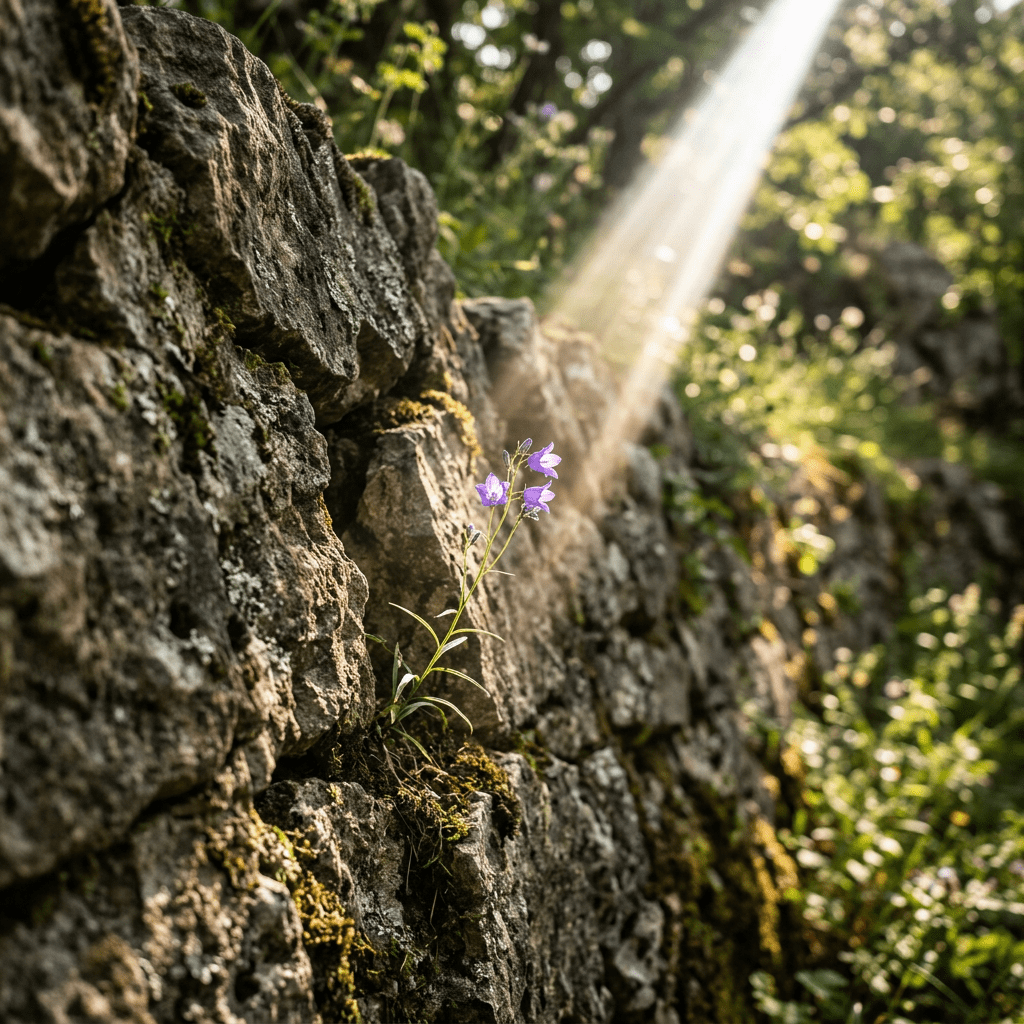
    Purple wildflower growing out of a crevice in a moss-covered stone wall with sunbeam
    A delicate purple wildflower blooms from a crack in a mossy stone wall illuminated by sunlight

    Even in hardship, gratitude works its alchemy. Being grateful for the quiet strength you discover in loss is something that I had to discover. These are not toxic positivity exercises—they are honest acknowledgments that every experience contains seeds of growth.

    Turning gratitude into a life-changing habit does not require hours of your day. Ask, “What is this situation trying to teach me?” Then thank it in advance for the wisdom or strength it will bring.Bookend your day with gratitude. Start with thanks for the day ahead and end with thanks for what unfolded.

    Journal, pen, steaming coffee cup, and vase on a windowsill with sunrise over mountains
    A peaceful morning scene with a journal, coffee, and sunrise view

    When you embody this level of gratitude, life responds. Relationships deepen because people feel genuinely valued. Health improves as stress decreases and joy increases. Abundance flows—at least in steady, meaningful ways: unexpected help, creative ideas, synchronicities, and a profound sense of “enough” that paradoxically opens the door to more.

    So today, pause. Look around. Feel the chair supporting you, the device in your hands bringing these words, the breath moving through you. Say thank you—and really mean it. For the basics. For the people. For the lessons. For everything.

  • My deepest passion is nutrition — but ultimately, it’s all for him

    What are you passionate about?

    He is the prize at the end of the journey. To fully receive that gift and build the life I dream of with him, I have made my health non-negotiable. Nutrition is not just a hobby for me; it is something I can wax poetic about for hours with genuine excitement. I have explored it all — from the MAHA movement (seed oils, fluoride, ultra-processed additives, and all the hidden toxins) to Ray Peat’s principles and everything in between. I have lived the experiments myself: vegan, gluten-free, paleo, keto. I have been underweight and overweight. Through trial and error, I have learned what truly makes the body and mind thrive.

    Bright multicolored heart-shaped light swirl in starry cosmic background
    A glowing, multicolored heart-shaped swirl glimmers vividly in space.

    A brain injury years ago left me with some lasting effects I can be self-conscious about. It does not stop me from loving deeply or building a lasting relationship— as seen in my current form attracting him (thankfully, the “disability” does not seem to bother him at all), but I still carry that quiet desire to show up as my strongest, healthiest self. I want to move through life with ease — for me, and especially for him.

    Currently. Wifely duties from afar.

    Because more than anything, I long to be his perfect little housewife. I can already manage it beautifully with one hand, but two steady hands would let me pour even more love into our home. And yes — almost every girl dreams of the aisle. So I am committed to walking strong, not just so I can hold his hand while we stroll down the street or along the beach, but so I can walk down that damn aisle toward him, radiant and ready for forever.

    Two illuminated houses on mountain cliffs linked by a glowing light trail under starry sky
    Love from a Distance.
  • So Much For Therapy’s Deficit Model: I’m Actually Winning Right Now

    So Much For Therapy’s Deficit Model: I’m Actually Winning Right Now

    I am done pretending I need to hunt for problems like some emotional truffle pig. Therapy loves to open every session with that tired script: “What’s been bothering you lately?” or the classic “What’s on your mind today?” Like clockwork. Every. Single. Time.

    It is exhausting. Not because I am repressing trauma or whatever buzzword they are peddling this week, but because it forces you into this permanent defeatist mindset. Your brain starts scanning for cracks in life.. I used to play along. I used to dutifully excavate my worries about recovery—will my body ever feel like mine again? Will the future with my boyfriend actually stick or are we just trauma-bonded?—and hand them over like a good little patient.

    Not lately though. Lately the script flipped and I am not apologizing for it.

    I have been incredibly blessed, and saying that out loud feels almost rebellious in a culture addicted to struggle porn. My recovery is not some fragile domino set anymore; it is steady. The kind of steady where I wake up and do not immediately audit every pain like a hypochondriac auditor. My relationship? We are not just surviving—we are actually building something that does not feel like it is one bad night away from collapsing. He promises me the world and I hold him to it. We are laughing more than we are spiraling. Wild concept.

    And then there was Friday.

    I met my friend at that little corner café—the one with the ketogenic goodies. She has not seen me in a couple months, but she was the only one I met with post-stroke-we reconnected in 2015– when I was still drooling all over the place and pissing myself. She has since divorced, remarried, birthed two children and dominated the business world.

    I just smirked and ordered my usual. Because, my own glow-up is also real. And yes I owe it mostly to him— making me less self-conscious about my body and showing me how I can be loved just by being me. Unfortunately, my entire existence has been riddled with the feeling that I am somehow “not good enough” (read more about that here and here). Enter him. My boyfriend. My knight in shining armor. Skin clearer, posture straighter, that quiet confidence that does not need to announce itself with neon. Quietly improving in all aspects of life. I have been working out with actual consistency instead of performative self-punishment. Eating like I respect my body instead of bargaining with it. Dressing like I actually want to be seen. The kind of changes that happen when you stop waiting for permission to feel good.

    She kept saying I looked “different.” Lighter. Like I have shed an invisible backpack full of other people’s expectations. And she is right. I have.

    Therapy wants me to pathologize this. To poke at it until I find the hidden rot. “But what if the other shoe drops?” “Are you avoiding processing—?” Nope. I am not avoiding. I am just refusing to live in the waiting room of my own life anymore, endlessly prepping for the next disaster that might not even show up.

    This is not toxic positivity. This is pattern recognition. For once the scale is tipping toward good, and I am not going to self-sabotage by being suspicious about it . The universe finally tossed me a W streak and I am milking it. I am wearing the glow like it is my princess crown. Let the worried voices stay with the parents; I am out here collecting evidence that healing does not have to be miserable theater.

    So next time some well-meaning therapist asks what is bothering me, I might just lean back, smile like the villain who won, and say:

    Nothing. For the first time in forever, absolutely fucking nothing. Next question.”

    The glow-up is not just skin-deep. It is systemic. And I am not going back to deficit mode just to make the session notes sound productive.

    Stay winning.

  • The Faux Pas of Following the Script in Life

    The Faux Pas of Following the Script in Life

    Faux pas.

    Literally, it means “false step” in French—like you tripped over your own feet in the middle of a crowded ballroom and everyone turned to stare. In American English, we have borrowed the term to describe any social blunder, any tiny (or not-so-tiny) violation of the invisible rulebook that supposedly keeps society running smoothly. Say the wrong thing at a dinner party. Wear white after Labor Day. Ask a woman when she is expecting … when she is not actually pregnant. Boom. Faux pas. Social death.

    The phrase has always fascinated me because it is so perfectly French in its elegance and so perfectly American in its judgment. It sounds sophisticated, almost romantic—but really it is just polite code for “you messed up and now everyone’s secretly judging you.”

    And that got me thinking.

    Why are we so obsessed with these invisible lines? Who drew them? Who keeps redrawing them every few years? And why does the mere idea of being told how I am“supposed” to behave in any given situation make my skin crawl and my inner rebel kick into overdrive?

    I have never been good at following scripts. Not in recitals, not in job interviews, and definitely not in the grand theater of adult life. The older I get, the more I realize that a huge chunk of my personal growth has come from deliberately stepping on the lines everyone else is so busy tiptoeing around. Not out of spite (okay, sometimes out of spite), but because performing for an invisible audience feels like slow suffocation.

    Let me give you an example. My lack of job or career. My relationship and its status.

    Translation: Sweetie, that’s a faux pas. You’re supposed to say you are a “marketing coordinator” or “nurse practitioner” or anything that sounds like you have a 401(k) and a five-year plan.

    And: He is suppossed to choose you immediately. You should live together, get married and become a family, like everyone else…

    Because apparently everyone is the same and has the same path in life.

    Stability is overrated when you are busy living the life you actually want. And I want to be his 100%.

    That moment I am told how to live my life is never about being rude. It is all about refusing to shrink myself into the neat little box labeled “Acceptable Adult Woman.” Society has a whole collection of those boxes—career boxes, relationship boxes, body boxes, personality boxes—and they all come with instruction manuals disguised as “just common sense” or “what everyone does.”  News flash: most people do not even have any sense whatsoever (so it is not really that common). 

    Here is the thing I have learned the hard way: those expectations are not there to protect us. They are there to keep things comfortable. Comfortable for everyone else. Predictable. Easy to categorize. If I follow the script—get the degree, land the safe job, marry at the right age, have the right number of kids, post the curated vacation photos, never admit I sometimes cry in my shower—then nobody has to feel awkward. Nobody has to question their own choices. The machine keeps humming.

    But what if the machine is boring? What if the script was written by people who were terrified of their own shadow? What if “fitting in” is just another way of saying “quietly dying inside”?

    I am not advocating for chaos. I still say please and thank you. Basic decency is not the enemy. The enemy is the quiet tyranny of “this is how it’s done” when “it” no longer fits who you actually are.

    I hate being told what to do because I spent too many years doing exactly that and waking up wondering whose life I was living. I hate performative expectations because they turn human connection into a performance review. And I especially hate the way media has turned every single faux pas into a public execution. One off-color political joke, one long distance relationship, one honest opinion and suddenly you are struggling to get followers on social networks.

    The irony is that the people quickest to call out faux pas are often the ones most trapped by them. They are not free; they are just better at pretending.

    So here is my quiet rebellion: I am going to keep committing the occasional faux pas. Not the cruel ones—never those—but the ones that come from refusing to edit myself for other people’s comfort. I am going to wear the “wrong” outfit, say the “wrong” thing at the “wrong” time, and build a life that looks messy and inconsistent and deeply, unapologetically mine.

    Because the real false step is not tripping over some arbitrary social rule.

    The real false step is spending your whole life walking someone else’s path so carefully that you forget how to walk your own.

    And relearning how to walk has taught me that:  I would rather stumble forward in my own Yeezys than glide perfectly in someone else’s shoes. 

  • Defying Disability: My Daily Act of Rebellion

    Defying Disability: My Daily Act of Rebellion

    Every single morning, I whisper sleepy sweet nothings to my man. After that, I rise with fire in my veins. I spend the entire day fighting against the disability that constantly tries to drag me down.

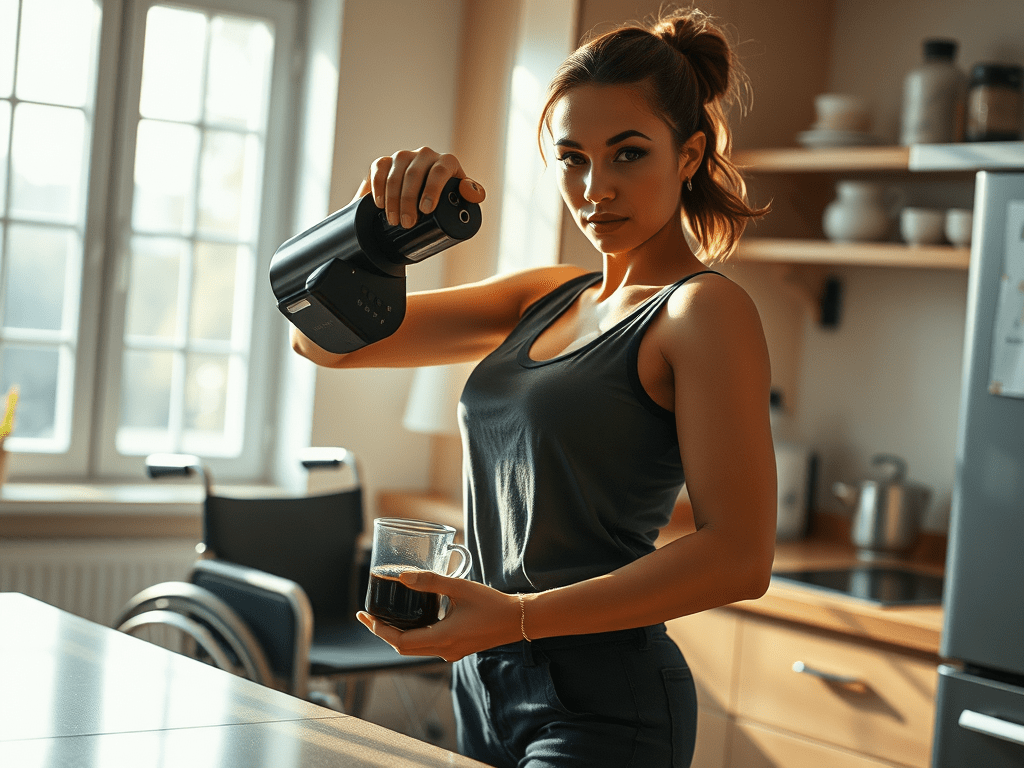
    I push this stubborn, trembling body to its absolute breaking point. I lean hard against the bathroom counter while brushing my teeth. My legs shake as I take selfies for him in the mirror. I refuse to let weakness win. In the kitchen, I grip the edge of the counter. I make my espresso with gritted teeth. My knees threaten to snap back beneath me. I refuse to constantly sit in a wheelchair. I refuse to strap on those ugly, soul-crushing leg braces that would mark me as conquered.(Only HE is allowed to do that!).

    A physical therapist once looked me dead in the eye. She suggested I stop relying on my mother to drive me to appointments. She calmly recommended I call a WHEELCHAIR VAN! It would pick me up and drop me off. She acted like I was some fragile invalid. The words barely left her mouth before I shut that shit down. I was not feeling it. The idea of being loaded and unloaded like cargo made my blood boil. The thought of sitting in a wheelchair instead of the seat of a car was infuriating. I told her no, thank you, and never went back. Now I get down onto the floor everyday and do my own exercises, No van needed. I refuse to give in. I refuse to let anyone reduce me to a scheduled pickup in a van built for surrender.

    Life keeps trying to force me onto my ass. There is even a goddamn chair sitting right there in my shower like a permanent joke . Most days I have no choice but to sit under the hot water like a broken doll while it cascades over me. But the only time I truly get to stand—proud, naked, water streaming down my body—is when my man steps in behind me, his strong hands gripping my hips as he holds me upright so I can clean myself. I love the way he steadies me, the way his hard body presses against mine, keeping me vertical through pure possessive strength while steam fills the air. In those heated moments I feel rebelliously alive, even as my legs scream and tremble beneath me.

    I face that humiliating chair and the endless war with gravity everyday. Yet, I reject every medical enhancement. I refuse every synthetic crutch and modern healthcare. I do not believe in any of it. If it is meant to be, it is meant to be. If sickness is coming for you, it will find you. It does not matter how many pills, injections, gene therapies, or experimental treatments they invent. All the advances in medicine are nothing more than dressed up as progress.

    I will not be synthetically made better.  
    I refuse to be rebuilt, patched, upgraded, or artificially propped up like some defective machine.  
    Only the natural way.  
    Only the forever way.

    And my hands? That is another story. For over fifteen years now, I have had the use of only my right hand. My left hand is dead weight, a silent traitor that sways useless at my side while I fight like hell. I have mastered one-handed shoe tying, buttoning, and zipping. I have learned to handle my personal hygiene with stubborn grace. However, some cooking (chopping, etc) and deep cleaning are still slow and frustrating for me. They are nowhere near as efficient as I demand of myself. I practice longer to get better physically. I refuse to accept the limitation. My ultimate goal is to do it all for my man. I want to cook his meals with these one-and-a-half hands. I want to deep clean our home until it shines, all for him. I want to serve HIM. I want to care for him. My broken body can still rise up and give him everything he deserves.

    This is my daily mantra. It is my middle finger to disability and to weakness. It defies a world obsessed with comfort and “fixing” every imperfection. I choose to feel every tremor, every ache, every exhausting victory on my own raw terms. I lean on counters instead of rolling in chairs. I am held up by my lover’s grip instead of cold metal and plastic. I struggle one-handed. I am eager for the day when I can entirely care for the man I love.

    In a society that worships ease and vulnerability, I stand as a living, breathing, unapologetic rebellion. My legs may shake and threaten to give out. My left hand may be useless dead weight. However, my spirit is lava. I will keep going every single day. I will keep whispering filthy sweet nothings into my man’s ear at night. I will keep fighting with everything I have left.

    This is how I love.  
    This is how I fight.  
    This is how I remain fiercely, provocatively, alive.

  • Embracing Life’s Chaos: Finding Meaning in Pain

    Embracing Life’s Chaos: Finding Meaning in Pain

    There was a time when I saw life as nothing more than a chaotic tangle of random events—senseless pain. I spent years fighting against the current, clenching my fists at the universe, demanding answers for every unfair event. But one day, exhausted from the resistance, I finally let go. I stopped fighting the detours and started tracing the threads that connected them. What I discovered surprised me deeply.

    Every heartbreak, every closed door, every tear-soaked “why me?” moment… none of it was an accident. They were (gluten free) breadcrumbs scattered along a path I could not yet see.

    The misery was not punishment. It was preparation — raw, necessary preparation for the woman I was becoming.

    I think about the guys who chose other girls over me. At the time, the rejection felt devastating, like a statement that I was not good enough. It cut deep. But looking back now, I see how those experiences were teaching me something important. I had been shrinking myself. I dimmed my light and apologized for my ambitions and my desires. I did this just to fit into someone else’s limited version of love. I hid who I truly was with certain friends. I also did this with family members to keep the peace or earn approval. Those painful rejections became the jumping off point that forced me to stop. They motivated me to stand taller. I reclaimed my voice. I refused to apologize anymore for wanting more. I wanted real, deep, reciprocal love and respect.

    Because I finally stopped shrinking, I created space for something better. Now I am with a man who does not just tolerate me — he truly sees me. He celebrates the parts of me that others overlooked or asked me to tone down. The beautiful truth is that I can accept love now. I finally learned to see and value myself first.

    The brain injury was terrifying. Those life-altering chapters turned out to be crucial. It became one of the most important turning points of all. It felt like the universe hitting the brakes on a car speeding toward disaster. Without that sudden stop, I honestly do not know. I would have ever slowed down enough to notice how far off course I had drifted.

     I was heading down a dark, exhausting path— chasing things that were never meant for me, ignoring the universe’s warnings. The injury forced me to pause. I had to seek the help I had been avoiding. In that healing process, I met the real me. This was the version of myself that had been buried under layers of fat: pain, expectations, and survival mode. 

    Rediscovering myself changed everything. This version of myself found the courage to take a completely different path. This path eventually led me to the man I now share my life with.

    I do not know exactly what the future holds. I feel a deep sense of trust and excitement as we step into it together. The universe has surprised me before, and I believe it will again. I am ready to see what beautiful, unexpected chapters it has planned for us — for our forever.

    It is not magic, though sometimes it feels that way. It is a pattern — one I can finally recognize when I look back (20/20 right?!)

    Every “no” was a redirection, gently (or sometimes forcefully) steering me away from what was not mine. Every scar I carry has become armor. I have plenty of those scars now, and I wear them with pride instead of shame. The universe never handed me a neat script or a perfectly mapped-out plan. It simply kept nudging me — through joy and through pain — until I stopped resisting and started listening.

    So yes… I truly believe everything has happened for a reason. Not because some distant cosmic puppet master was orchestrating every detail from above. But because I kept showing up, kept moving forward even when it hurt, and kept choosing growth over bitterness. 

    Somewhere along the way, without me even realizing it at first, the chaos began to transform. The random, messy pieces started falling into place. What once looked like pure disaster slowly revealed itself as something far more elegant. It was a kind of dance. A dance I was always meant to learn, step by imperfect step.

  • Losing Friends and Achieving Goals Through Physical Therapy

    Losing Friends and Achieving Goals Through Physical Therapy

    I have been through a lot of physical therapy throughout the years. One thing that I noticed was that many people treat their patients as a protocol and not just a person. 

    It can definitely be life changing. Still, you may need to wade through a series of therapists. I will admit that— at first— I used my physical therapy as a way to indulge my social cravings. I did not speak coherently. It was not easy for me to speak. But, I felt great pride and took immense pleasure in being capable of speaking. (I was mute from June thirtieth- August thirteenth, twenty-ten).  

     I became absolutely starved of social interaction. Even my friends faded away from me once I got ill and became unable to go out. My body betrayed me, and doctors only shrugged. It felt like a life on pause type of sickness. It started small. Texts went unanswered. Group chats dried up until it became absolutely nothing. Not even a heart emoji. Like I had vanished. At first I blamed the timing. People are busy, right? Work, kids, their own drama. But then weeks turned into months. The invites stopped. Just silence. 

    For the first few years, a few hung around but they eventually had to live their own lives. They finished school. Got jobs. They got married. Had babies.   All while I was drooling every time I went out in public and spent years in adult diapers.  I get it. Illness is not sexy. It is not funny. It is not a vibe. It is just… heavy. And nobody wants to carry that. But here was the part that stung: they did not leave because I changed. They left because I cannot keep up. Could not laugh at their jokes. Not pretend everything was fine. So they ghosted—not out of malice, but out of convenience— people vanish when it becomes too hard to stay. 

    At this point in my life, I needed someone to gossip with about the shows I was watching. I also wanted to discuss current events with them. Thus, I used physical therapy to cure my newly found loneliness.

    All the while I was desperate to recover but the many therapists I saw did not care about my recovery. They gave me false hope and promised to fix me. 

    Essentially, physical therapy only appeased my craving to chat. No tweaks to the recovery plan. No follow-up questions. They simply saw me as a paycheck. Someone who they could put through cookie-cutter exercise routines while they were on the clock. It seemed like a scam. 

    Now I have a physical therapist who actually watches how I move. He sees that I am compensating for my lack of strength in my left side. We both love sport. I no longer desire to talk about television or popular culture. So, I still get a good battery recharge from the quick recap we do during our sessions. But he also applies sports knowledge to the exercise program that he designs for me. It is crucial for me to understand the why behind my actions. I don’t want to be treated like a robot on a conveyor belt. 

    I also love getting to walk and I absolutely adore that he acknowledges it. He allows me to explore walking around without any cane or walker. I get teary-eyed when I am allowed to operate like a regular human being. It seems silly. Stupid. But it means so much. No one else did this for me. I find that odd because it is the point of my ultimate goal in physical therapy. My goal in physical therapy is walking around by myself on my own. 

    Good physical therapists exist. They are the ones who treat you like a person, not a protocol. And they will stay— not dismiss you because you do not fit conveniently into their narrative.