
Tag: Sleep

  • The Power of Remembering Vivid Dreams

    The Power of Remembering Vivid Dreams

    Waking up from a vivid dream and actually remembering it is one of the purest, most underrated signs that your brain has not completely surrendered to the modern meat grinder.

    Most people stagger out of bed like lobotomized cattle, eyes glassy, muttering “I never dream” while they reach for the phone that spent the night irradiating their skull. That is peak “normal.” But this not healthy. It is your nervous system waving a little white flag. When you open your eyes and the dream is still clinging to you—colors too sharp, emotions too raw, plot so absurd it makes waking life look like a corporate PowerPoint—you should take a second to feel smug about it. Your mind is still alive in there.
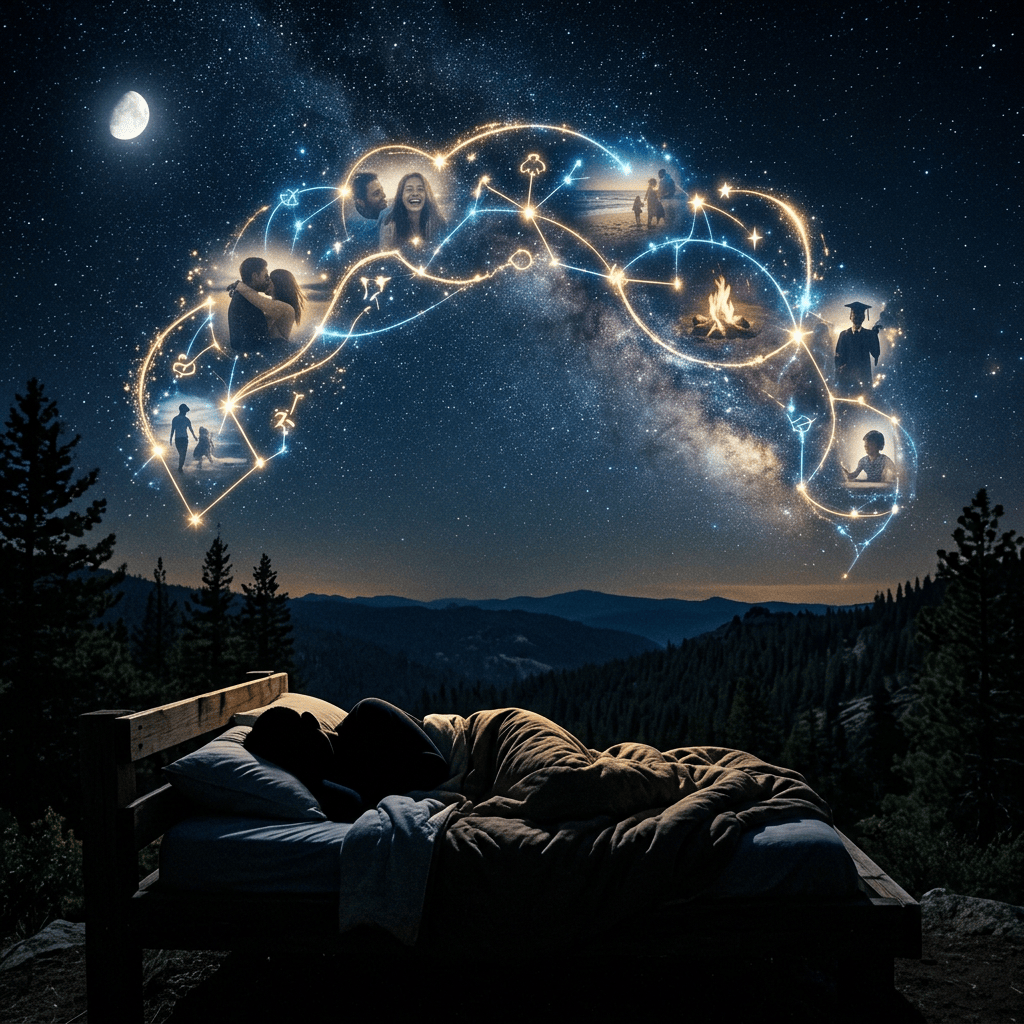
    Couple sleeping outdoors beneath stars with glowing scenes connected overhead
    A couple sleeps beneath a star-filled sky as glowing connections evoke shared memories and dreams.

    Dreams are the brain’s nightly audit. While the rest of the world is scrolling, numbing, medicating, and microdosing their way into emotional flatness, a vivid, sticky dream means the machinery is still running hot. REM sleep is doing its job. Memory consolidation is happening. Emotional processing is not completely bottled up behind a wall of SSRIs, blue light, and existential exhaustion. You are not just surviving the night; you are metabolizing the day like a functional animal instead of a medicated office drone.

    The people who claim they “don’t dream” are usually lying to themselves or so sleep-deprived and chemically smoothed that their brains have stopped bothering to stage the nightly theater. Chronic stress, alcohol, weed every night, melatonin abuse, glowing rectangles until 2 a.m.—all of it blunts the signal. You wake up empty. No residual weirdness. No half-remembered chase sequences or conversations with dead relatives or the inexplicable feeling that you just lived an entire second life in six hours. That is not enlightenment. That is neurological quiet quitting.
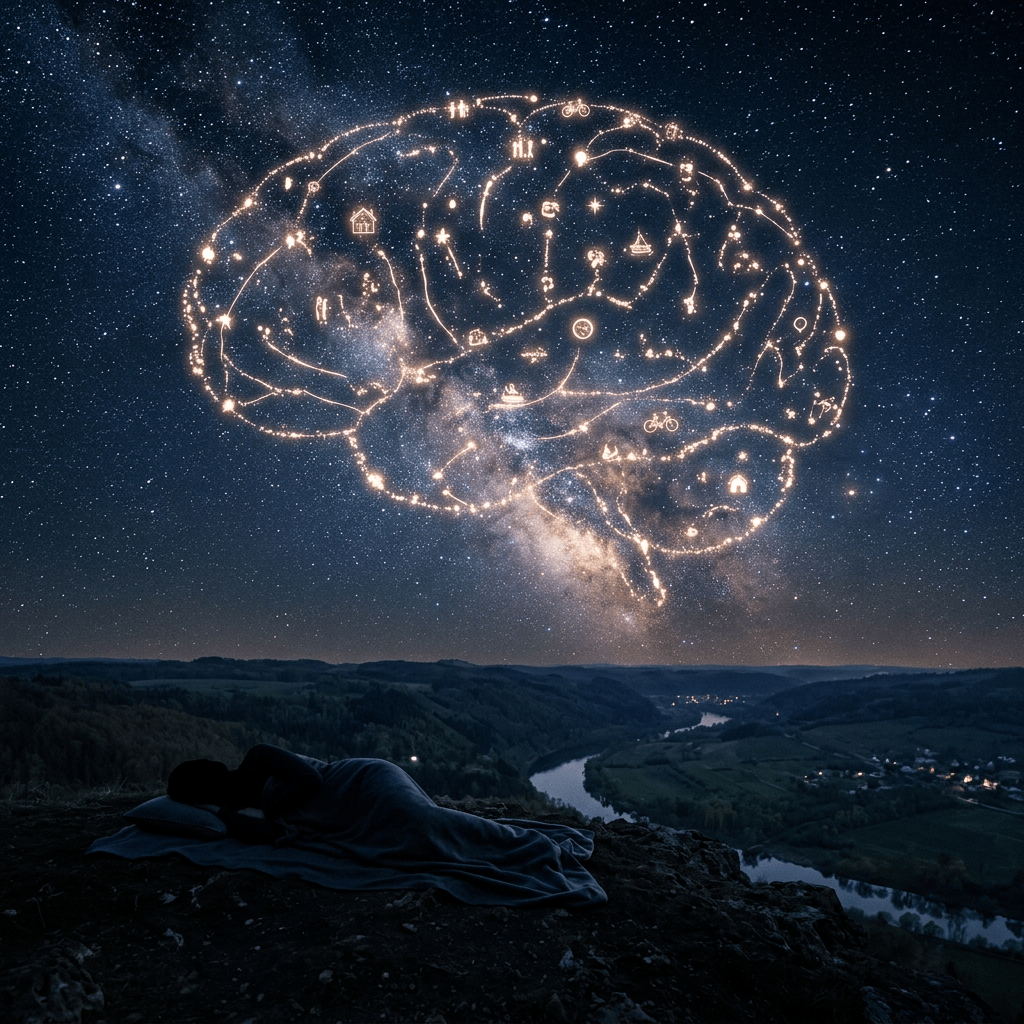
    Sleeping figure beneath glowing brain-shaped constellation over a river valley
    A sleeping figure rests beneath a glowing constellation shaped like a connected world of ideas.

    A remembered dream is evidence that the boundary between conscious and unconscious is still permeable. The subconscious is still allowed to throw its chaotic, unfiltered show and some of it lasts long enough for you to notice. That is healthy. That is human. In a culture that treats any unscripted internal experience as something to be pathologized or optimized away, remembering a vivid dream is almost subversive. You are not fully domesticated yet.

    There is a reason ancient cultures treated dreams like messages, omens, or diagnostics. They were not just wrong. A mind that can produce and retain rich nocturnal narratives is a mind that still has bandwidth, plasticity, and a functioning emotional thermostat. The opposite—waking up blank, night after night—is often the first quiet symptom that something deeper is offline. Sleep architecture is crumbling. Anxiety is winning. The prefrontal cortex is too fried to even stage a proper nightmare.

    So the next time you bolt upright at 3:47 a.m. with the full cinematic replay still burning behind your eyes, do not roll over and immediately open Instagram to forget it. Sit with the weirdness. Write it down if you are into that. Feel the residual charge. That jolt of aliveness is proof that the lights are still on upstairs. In an age where most people’s internal worlds have been reduced to algorithmic sludge and prescription fog, a vivid, remembered dream is a small, private rebellion.

    Your brain just threw a wild, unfiltered party while the rest of the house was asleep. And you got the invite. That is not trivial. That is health.


  • Why So Many “Settled” Health Rules Are Overhyped or Outright Wrong

    Why So Many “Settled” Health Rules Are Overhyped or Outright Wrong

    I know some of my health beliefs sound unhinged to people raised on the standard public-health script. I am fine with that. I sincerely believe the mind and mindset are primary drivers—capable of causing, amplifying, or resolving far more of what ails us than most mainstream advice admits. Chronic stress, unresolved emotional patterns, expectation, and the stories we tell ourselves about our bodies shape immune function, inflammation, hormone balance, pain perception, and recovery far more powerfully than the average wellness checklist acknowledges. Placebo and nocebo effects are no-nonsense; they are measurable physiology. When someone is convinced they are broken, poisoned, or doomed, the body often cooperates. When someone refuses that story and orients toward agency and resilience, outcomes frequently improve—even in the face of imperfect “lifestyle hygiene.” This is not magical thinking. It is an insistence that the organism is not a passive machine waiting for external inputs to dictate its fate.

    That same skepticism extends to several specific claims that get treated as gospel.

    Cancer is largely a product of the modern chemical environment, not the sun.

    Seaside table with Neutrogena Sheer Zinc sunscreen, fruit, water, and sunglasses
    A sunlit seaside table pairs sunscreen with fresh fruit, chilled water, and summer accessories.

    I do not accept that the sun—the same source of vitamin D, circadian signaling, and the light that has bathed life for billions of years—is the primary villain behind skin cancer. Melanoma and other skin cancers existed long before industrial chemistry, but the sharp rise in diagnoses tracks far more closely with the explosion of synthetic compounds, persistent organic pollutants, endocrine disruptors, processed foods, and novel exposures than with people suddenly spending more time outdoors. The idea that a “beautiful ball of fire in the sky” was waiting all this time to randomly attack us while we invent new solvents, plastics, and preservatives every decades seems suspicious.

    Sunscreen deserves particular scrutiny. The dramatic increase in reported skin-cancer rates after the widespread adoption of chemical sunscreens is not a coincidence I am willing to ignore. Many conventional formulas rely on ingredients that themselves raise questions about systemic absorption, hormonal interference, and oxidative stress under UV exposure. Mineral-based options (non-nano zinc oxide and titanium dioxide without the aluminum or chemical filters) are a far less concerning compromise when protection is genuinely needed. The larger point remains: treating the sun as the enemy while treating the chemical soup of modern life as background noise is a category error. Focus on reducing the big toxins first.

    The “eight glasses of water a day” rule is arbitrary dogma

    Hydration matters. Obsessive water-chugging does not. The body is not a simple tank that requires a fixed volume of plain water regardless of climate, activity, diet, or individual physiology. Electrolyte balance—sodium, potassium, magnesium, and the rest—determines whether fluid actually stays where it is useful. People eating real food, salting to taste, and paying attention to thirst and urine color generally do better than those forcing down liters of plain water out of fear of “dehydration.” Overhydration is real; electrolyte dilution is real. The eight-glass mantra is a marketing-friendly oversimplification that ignores context.

    Eight hours of sleep every night is not a universal law

    Sleep is essential. The idea that every adult must hit exactly eight hours or face inevitable decline is not. Could I even sleep eight straight hours? Individual variation is large. Some people function optimally on less, others need more, and quality (continuity, depth, alignment with natural light cycles) often matters more than the raw number. Rigid enforcement of an eight-hour quota can itself become a source of anxiety that undermines the very rest it claims to protect. Track how you actually feel and perform rather than worshiping a round number. Or purchasing a tacky tracking device.

    Wrinkles are not a disease

    The cultural war on wrinkles treats a normal consequence of decades of facial expression, sun exposure, and collagen changes as a medical emergency requiring endless products, procedures, and self-surveillance. Aging skin is not a failure of willpower or product compliance. Accepting that some lines are inevitable—and that they often signal a life lived—is more coherent than the anti-aging industry’s promise of perpetual smoothness.

    Sugar does not uniquely “feed” tumors in the way the slogan implies

    Cancer cells are metabolically greedy and often rely heavily on glucose. That observation has been stretched into the claim that dietary sugar is the direct fuel that keeps tumors growing, so cutting sugar starves them. The reality is more complicated. The body tightly regulates blood glucose; restricting dietary sugar does not selectively deprive malignant cells while leaving healthy tissue untouched. Tumors can use other substrates, and the metabolic flexibility of both cancer and host is not reducible to “sugar feeds cancer.” Obsessing over every gram of carbohydrate while ignoring overall metabolic health, inflammation, and the rest of the diet is another example of a partial truth turned into a rigid rule.

    Eat what makes you feel good—happiness is not optional

    The final point is the practical corollary of the first. Chronic stress from rigid dietary rules, moralizing food choices, and constant self-monitoring is itself a health risk. People who eat in a way that supports stable energy, digestion, and genuine enjoyment—without the background noise of guilt or fear—tend to do better long-term than those locked in perpetual restriction or purity contests. This is not a license for chaos. It is a recognition that psychological well-being and physiological well-being are not separate ledgers. When the rules become the stressor, the rules have failed.

    None of this requires rejecting every useful medical intervention or every piece of evidence-based guidance. It does require refusing to treat every official recommendation as sacred, every correlation as causation, and every commercial product as the solution to a problem the product may have helped create. The mind is not a side character in health. The modern chemical environment is not neutral. And many of the tidy rules we are handed—water quotas, sleep quotas, sunscreen as non-negotiable shield, sugar as tumor fertilizer—are simpler and less accurate than the marketing suggests.