What’s a cultural tradition from your country that you love?
Being Raised Russian Has Truly Taught Me How to Be a Traditional Woman/Wife

There is something powerful about the way I was raised. Growing up Russian did not just give me a language, a cuisine, or a set of holidays—it shaped an entire understanding of womanhood and marriage that feels increasingly rare in this modern world. It taught me, without lectures or manifestos, how to be a traditional woman and wife: grounded, capable, devoted, and proud of the role rather than apologetic for it.
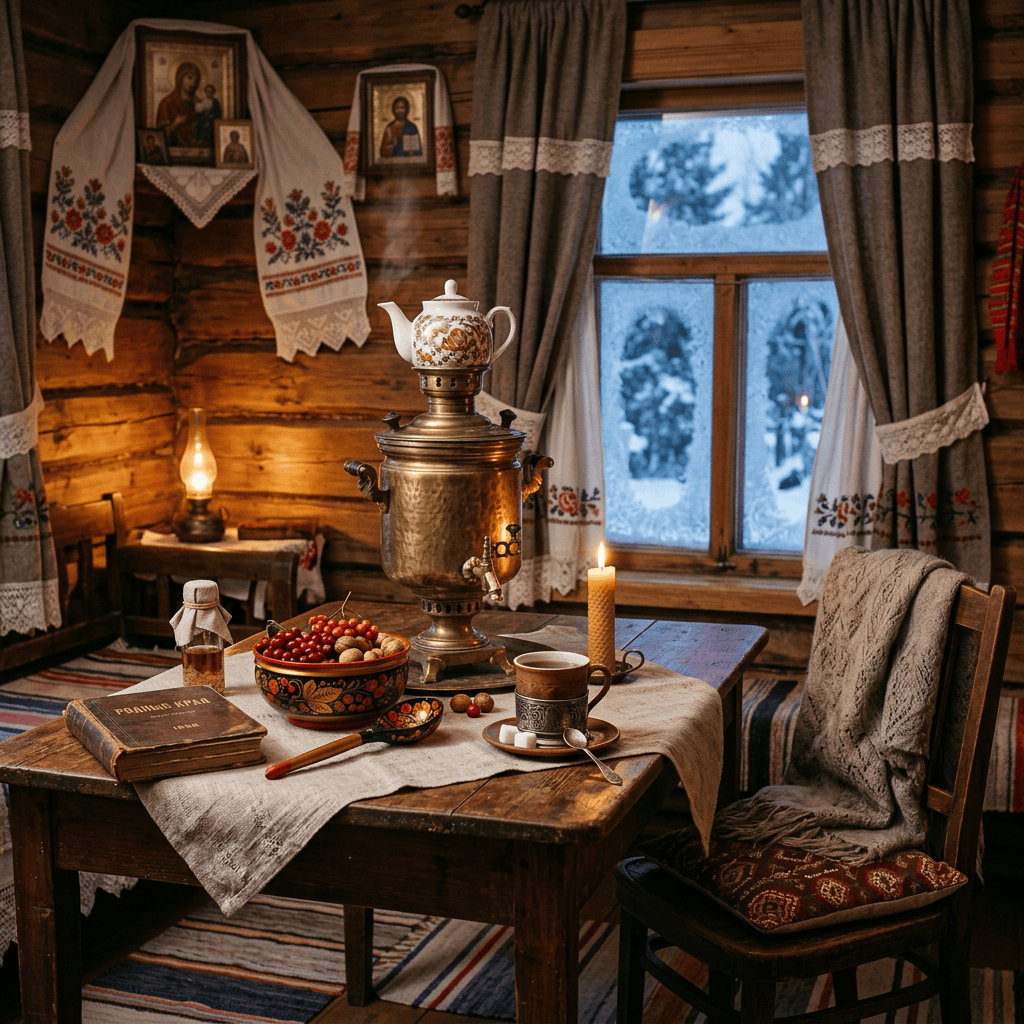
In a Russian household, the home is not merely a place you sleep. It is the center of life, the domain where a woman’s care, order, and warmth determine the emotional climate for everyone else. From an early age, I watched my mother transform ordinary spaces into places of comfort and beauty. Floors were clean, tables were set properly, food was prepared with intention, and the atmosphere mattered. This was never framed as oppression. It was framed as competence and love. A well-kept home and a well-fed man was an expressions of strength, not subordination. I absorbed the lesson that domestic skill is not “less than” a career; it is a different, equally demanding form of mastery.
Traditional Russian upbringing also instills a clear-eyed view of complementarity between men and women. Men are expected to protect, provide, and lead with responsibility. Women are expected to nurture, support, and create the emotional and physical conditions in which that protection and provision can flourish. This is not a rigid hierarchy of worth; it is a practical division of labor rooted in observed differences and mutual dependence. I was never taught that needing a man’s strength made me weak, or that offering softness and loyalty made me less intelligent. On the contrary, the ability to soften a hard world for the people you love was presented as one of the highest forms of feminine power.
Loyalty sits at the center of this model. Russian culture has long valued endurance—through winters, through history, through difficulty. That same endurance is expected in marriage. You do not discard a partnership at the first serious inconvenience. You work, you adapt, you protect the family unit. This does not mean tolerating abuse or remaining in a destructive situation. It means entering marriage with the seriousness of a lifelong covenant rather than a temporary lifestyle arrangement. Being raised with that expectation made me less interested in endless options and more interested in depth, continuity, and the quiet satisfaction of building something that lasts.
There is also an unspoken standard of self-presentation. Russian women are often raised with an awareness that appearance is part of how you honor yourself and those around you. Looking put-together is not vanity for its own sake; it is a form of respect—for your husband, for guests, for the occasion, and for your own dignity. Combined with an expectation of competence in the kitchen and the home, it produces a woman who can be both soft and capable, elegant and practical.
None of this requires rejecting education, ambition, or personal development. Many of the strongest traditional Russian wives I know are highly educated, multilingual, and sharp. The difference is priority. Career and self-expression are valuable, but they do not automatically outrank the creation of a stable, loving home and the support of a husband who carries heavy external burdens. The traditional model I absorbed does not demand that a woman disappears; it asks her to invest her gifts where they produce the deepest long-term fruit for the people she loves most.
Of course, no culture is the same, and not every Russian family embodies these ideals perfectly. Yet the cultural inheritance is real. It prizes resilience over fragility, duty over pure self-expression, and the tangible results of care over abstract declarations of independence. In a time when many people feel adrift in relationships that prioritize individual fulfillment above all else, that inheritance feels like a quiet advantage.
Being raised Russian did not only teach me to be smaller. It taught me how to be solid. It showed me that there is profound dignity in cooking a real meal, keeping a peaceful home, standing beside a man through difficulty, and having clear values. Traditional womanhood and wifehood, in this framing, are not relics. They are disciplines—demanding, beautiful, and deeply rewarding when practiced with eyes open and heart engaged.
That is the gift the culture handed me. I am still learning how to live it fully, but I no longer question its worth.