
Tag: nostalgia

  • Down Under Dreams: My Wild Teenage Adventure in Australia with People to People

    Down Under Dreams: My Wild Teenage Adventure in Australia with People to People

    At fifteen years old, I stepped off a plane into a world that felt like it had leaped straight out of a National Geographic. The air was warmer, drier, and carried the faint scent of eucalyptus. I was part of the People to People Ambassador Program, a life-changing opportunity that took a group of wide-eyed American teens halfway around the globe to Australia. What started as a simple cultural exchange trip quickly became a whirlwind of big-city glamour, rugged outback exploration, family-style homestays, and the kind of teenage chaos that only happens when you are far from home and the usual rules do not quite apply (the innocent kind though, not really what we see on teenager television shows).

    Our itinerary was perfectly balanced between urban sophistication and raw Australian wilderness. We bounced between the gleaming harbors of Sydney and Melbourne and endless stretches of red earth in the outback. Long bus rides became our moving classrooms—hours spent watching the landscape shift from bustling streets to golden grasslands. We stayed with local families who opened their homes (and hearts) to us, sharing meals, stories, and glimpses into everyday Aussie life that no guidebook could ever capture.

    Sydney hit me like a fever dream. The iconic Opera House rose like white sails against the sparkling harbor, its curves even more breathtaking in person than in any photo I had seen. We toured the Olympic facilities from the 2000 Games, walking through stadiums that once echoed with global cheers. I remember standing there, imagining the roar of the crowd, feeling tiny yet somehow part of something enormous.

    But beneath the excitement, I carried a heavy secret. This was the year after I started high school, and the pressure to look and be “perfect” had already taken root in my mind. Australia felt like the ultimate reset button—a chance to reinvent myself far from judgmental eyes back home. Before the trip even began, I emailed the volunteer chaperones with a carefully worded note: I would not be eating much, and they should not worry about me. Looking back now, it breaks my heart to think of that determined, insecure fifteen-year-old girl trying so hard to control the one thing she could in a brand-new country.

    On those long bus rides, packed lunches were handed out like clockwork—sandwiches thick with deli meats, crisp chips, and sweet treats. I would politely unwrap mine, eat only the apple, and quietly put the rest aside. The volunteers were kind, but I could feel their concerned glances. During our homestay in Melbourne, the warm “mom” of the house cooked a hearty Australian meal just for us. I pushed the plate away after a few bites, murmuring something about being full. Her disappointed but understanding look still lingers with me. Food became both enemy and background noise while the real adventure swirled around me.

    Of course, no trip at fifteen would be complete without plenty of youthful mischief. I flirted shamelessly with the boys in our group—stolen glances across bus aisles, whispered jokes during tours, and that electric buzz of first crushes amplified by the freedom of being overseas.

    The Australian sun, however, showed no mercy. Wanting to be perfect meant that I wanted golden skin. I ended up severely sunburned. My skin turned lobster-red, peeling in painful sheets for days. Lesson learned: respect the ozone hole Down Under.

    One of my biggest hurdles was begging my mother—via crackly payphone calls from a random shopping mall —to let me get my belly button pierced. I pleaded, I reasoned, I dramatically described how “everyone” was doing it. She held firm.

    Instead, I settled for a temporary tattoo from a quirky shop near the harbor. It was some butterfly design that I proudly showed off to the group. When I got home, I let everyone believe it was real, basking in the temporary cool factor before it faded in the shower. Small rebellions, big memories.

    The real soul of the trip was during our long bus tours through the outback. The landscape stretched endlessly—red dirt, scrubby bushes, and skies so vast they made you feel wonderfully insignificant. We learned about Aboriginal culture, their deep connection to the land, and the stories passed down through oldtime legends.
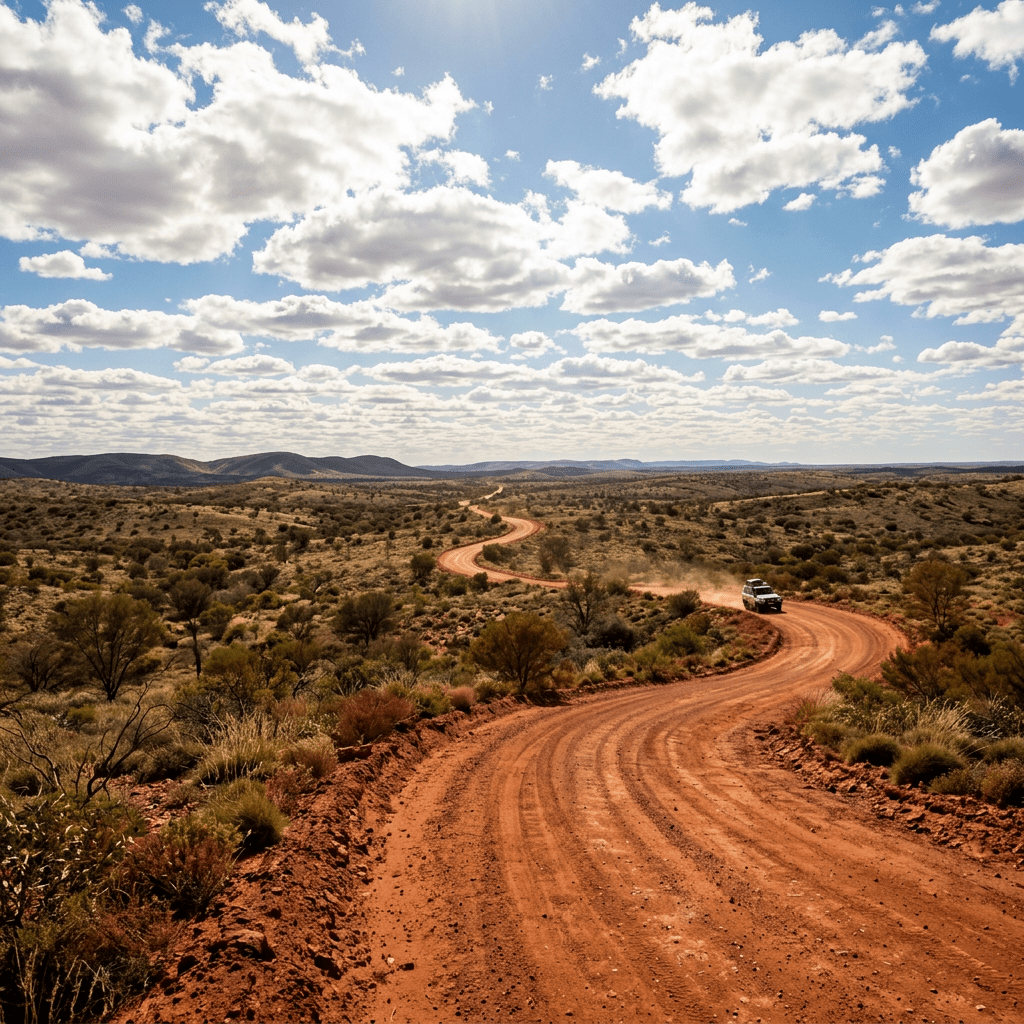
    Vehicle driving on winding red dirt road in arid outback landscape
    A vehicle traverses a winding red dirt road through arid outback terrain under a partly cloudy sky

    One unforgettable stop was a wildlife sanctuary where I finally got to hold a tiny koala. He was everything I imagined: fluffy gray fur, button eyes, and a sleepy demeanor (apparently they are constantly high from eating the eucalyptus). I beamed for the camera, arms gently cradling him. But internally? I was screaming. Those adorable little claws dug into my arm like tiny needles. Sharp did not even begin to describe it. Still, worth every scratch for that photo and the story.

    We spotted kangaroos hopping freely in the wild—elegant, powerful creatures that seemed to defy gravity. At the sanctuary, we got closer, feeding them and watching their curious faces up close. Later, in a remote outback experience hosted by Aboriginal elders, we were treated to kangaroo tail. It was an honor to share in their traditional food. The tail was tough, mostly dense muscle with very little fat or tenderness—chewy, gamey, and completely unlike anything I had eaten before. It was not about gourmet flavor; it was about connection, respect, and tasting a piece of the land itself.

    That trip to Australia did not magically fix my insecurities around food and body image. Those battles continued for years as I eventually got down to double digits on the bathroom scale. But it planted seeds of perspective. I saw a country that was both modern and ancient, vibrant and harsh, welcoming and wild. I learned that adventures are messy—full of sunburns, awkward flirtations, hidden struggles, and moments of pure wonder.

    Holding that koala, even through the pain, symbolized something bigger: sometimes the cutest, most picture-perfect experiences are actually concealing something painful. Pushing away plates did make me feel more in control; but it also made me miss out on shared meals and hospitality. The temporary tattoo washed off, but the memories never did.

    Years later, I look back on that fifteen-year-old girl with compassion. She was brave enough to travel across the world, curious enough to embrace new cultures, and human enough to make mistakes. Australia taught me that life is best experienced fully—sunburns, sharp claws, kangaroo tail, and all.

    If you ever get the chance to say yes to an adventure that scares and excites you, just do it (like Nike!). Whether it is Australia or somewhere closer to home, the outback of your own growth is waiting.


  • From Sugar Baby to Trad. Wife:

    From Sugar Baby to Trad. Wife:

    I will say it out loud, no shame: I used to want to be a full-on Sugar Baby. Not the cheap fantasy version you see online, but the real thing—pampered, polished, and possessed by a man who could afford to keep me dripping in luxury and attention. I was never on Seeking Arrangements or any of those sites, but when I got really sick, that dream became my secret lifeline. While my body was failing me, my mind was busy painting a future where I was not disabled anymore. I imagined myself as this feminine goddess: luscious long hair cascading down my back, completely hairless and smooth everywhere that mattered, skinny, full makeup—the whole package. The kind of girl men could not look away from.

    I joined a private Facebook group full of girls who knew exactly how to weaponize their femininity. They taught me how to dress, how to move, how to speak, how to flirt with power and money. Every post, every tip, every “how to make him obsessed” thread lit a fire under me. It gave me something to fight for on the worst days. While I was stuck in a wheelchair, I was mentally rehearsing the version of me that would turn heads and drain wallets. I wanted to be noticed. I wanted to be admired. Craved. Spoiled. Chosen. Deep down, I did not feel worthy of any of it yet—but that fantasy made me believe I could be.

    And then… it actually happened.

    When we first connected on Twitter (yes, Twitter, before Elon Musk saved us with X) the sugar baby lifestyle was all that I hoped for and I absolutely was not looking for anything real. Commitment? Hard pass. Feelings? Too risky. But attention and shiny new toys? Those I could handle. So that was what I settled for. I strung him along, playing it cool, dropping hints about what I wanted without ever sounding desperate. He read between the lines perfectly.

    He knew the game from the jump. I gave him a PO Box instead of my real address at first—safety first,—and every single week, like clockwork, a new package would show up. AirPods? Delivered with a cheeky video of him on the Apple website ordering them while I was lounging in Cabo, both of us convinced our flirty Twitter phase was fizzling out. A Pretty Woman DVD (yes, an actual physical DVD, the man has taste and nostalgia). Barstool Sports gear for days because we bonded hard over the unfiltered sports talk that made us both laugh like idiots. He spoiled me rotten, and I let him. No guilt. No apologies.

    Every girl should experience sugar baby vibes at least once. There is something powerfully feminine about being pursued, pampered, and provided for while you keep your little heart in a little locked box. The hundred-dollar Venmos, the surprise drops, the thrill of knowing he is thinking about you every time he swipes his card—it is intoxicating. It is not just about the stuff. It is the power dynamic. The way it makes you feel desired, expensive, worth the chase.

    But then it got real. 

    The constant contact—the good-morning texts, the voice notes that made me smirk in public, the weekends that turned into three hour-long FaceTime coffee dates—started cracking my walls. What began as “he buys me things, I give him attention” slowly became I can’t quit him. The sugar daddy arrangement was the gateway drug, but the real addiction was him. His humor. His voice. The way he matched my chaotic energy and then some.

    Now? He still pays my bills. No more random Venmos, but the support is deeper, steadier, sexier in its reliability. He is not just a sugar daddy anymore—he is my man. My love. My favorite person on the planet.

    Yet those Baby and Daddy vibes? They never left. They evolved into something deliciously playful and immature that keeps the spark filthy and fun.

    We act like absolute children together. The kind of childish that involves wrestling over the remote (when we are physically together), ridiculous nicknames, and the kind of uncontrollable laughter that turns into happy tears and breathless squeals. I have never laughed as hard in my life as I do with him. The squeals he pulls out of me—they are embarrassing and addictive. When we first started talking, I used to slap my hand over my mouth— hiding my crooked smile from his view. We are talking full-on belly laughs that leave my abs sore and my face hurting. Pure, unfiltered joy. The man makes me happy in a way I did not know was possible. The kind of happy that makes you glow, that makes everyone side-eye you like, “Who the hell are you right now?”

    There is something profoundly hot about a relationship that can go from “Daddy’s spoiling his baby” to deep, soul-quenching love without losing the playfulness. The power exchange is still there. He provides, I tease. He leads, I challenge. He has me feeling both safe and completely unraveled.  A feeling I never expected. I thought that I would be the other woman. Or a sugar baby. Not the main event. 

    So if a man is willing to show up for you like that—financially, emotionally, playfully—do not be afraid to lean in. Sugar baby energy is not about being shallow; it is about knowing your worth and letting someone prove they can match it. And when the gifts turn into genuine love, when the “arrangement” becomes “forever,” it hits different. Deeper. Wetter. Louder.

    I went from stringing him along with a PO Box to being completely, stupidly in love with the man who still makes me feel like the most spoiled and cherished woman alive—went from a sick girl who did not feel worthy of being looked at to the woman who gets spoiled, and loved so intensely/passionately it leaves me ruined for anyone else.

    And those squeals? They are just getting started.

  • Stop Romanticizing the Past: Embrace Today

    Stop Romanticizing the Past: Embrace Today

    We have all heard it. We have all said it. “Man, things were better back then.” People are always yearning for the good old days—start appreciating everything today:

    Nostalgia is not a memory—it is a seductive liar.

    It edits out the bad.

    The ugly.

    We airbrush the boredom, the limited choices, the untreated depression, the rotten teeth (yay for healthcare!) and the way information trickled so slowly that ignorance felt like wisdom. I kind of do wish we ladies were still dumb, though… I rely more on my man to know what is going on in the world so that I can just be delulu about things.

    And while we are busy pining for that heavily filtered past, the actual miracles are all around us right now. We are living in the most abundant, connected, opportunistic era in human history, and most of us are too busy doom-scrolling and whining to notice.

    Technology seems to be sprinting. AI that writes better essays than most college students. Instant access to the entire library of human knowledge in your pocket. You can video call your grandmother on another continent while ordering takeout that arrives piping hot. And still, people scroll past miracles to complain that their coffee order took four minutes instead of three.

    This change terrifies people. It always has. That is why every generation thinks the next one is doomed. But here is my hot take: your nostalgia is a coping mechanism for your fear of the unknown. It is easier to idealize 1997 than confront 2026. People are afraid. What is going to happen tomorrow or next month?

    It seems easier to romanticize rotary phones than master and learn the new tools.

    Stop yearning. Start appreciating—aggressively.

    The secret is not in the past. It is in the lens. Shift it—or stay miserable.

    Look at your smartphone not as a distraction device but as a doorway for wonder. With it, you can learn a language in weeks, watch a live surgery in Tokyo, or hear the voice of someone who died decades ago (I know… Creepy.) We treat these luxuries like it is normal. It is not. It is insane.

    We find food in our grocery stores from every corner of the world. Planes and automobiles have actually united us. We consume other cultures and cuisines. This is the true meaning of America.

    Surgery and modern medicine (despite its faults) make it absolutely insane to continue complaining about the small aches and pains. Some of us do not even walk; are you really going to cry about a hangnail?

    The internet has also demolished geographic and social barriers. You can meet your person- someone who actually matches your weird frequency- instead of settling for the least awful option within a 10-mile radius. I personally would despise settling down with someone from around here. The old days had arranged marriages and shotgun weddings. We now have sad dating apps and yes, we rate each other based on our looks. So yes, trade-offs exist, but pretending the past was pure romance is historical fan-fiction.

    In a culture addicted to outrage and comparison, choosing to appreciate the present is rebellious. It is punk rock. It flips off the algorithm that profits from dissatisfaction. People really do love to complain, criticize, and comment.

    Essentially, the world is blossoming with possibility while you are staring at old yearbooks. One thing that has always bothered me is that most of our bodies are a biological marvel capable of running, dancing, orgasming, and healing—and yet people are mad about theirs not looking like a filtered influencer. It is called do something about it—if a disabled girl can lose more than one hundred pounds, you can do anything. The body is truly a marvel.

    The mind is too.
    Your mind can comprehend quantum physics (or silly girly things—like writing a blog!) and write love poems, yet you use it to relive 2008 politics.

    The good old days are a trap. They keep you small, bitter, and blind to the abundance screaming for your attention. Every moment you spend mourning a myth is a moment stolen from building something better.

    The world is changing so fast that if you blink too long in nostalgia, you will miss the best parts of being alive right here, right now. The coffee is hot. The internet works—until the power goes out, because living in the woods is great. Your heart is beating. The future is wide open.

    Appreciate it all—fiercely, obnoxiously, unapologetically.

    Or keep complaining. The past will not care, and the present will keep delivering miracles whether you notice them or not.

    The choice is yours. But only one of them feels like living.