Tag: news

  • Ivermectin’s Role in Modern Medicine and Parasite Awareness

    Ivermectin’s Role in Modern Medicine and Parasite Awareness

    This might as well be a part of ‘My Passion for Nutrition’ series…

    Remember the “Horse Paste” Hysteria? Time to Talk Honestly About Parasites and Ivermectin

    Back in the chaotic 2020s, when the world felt like it was spinning out of control, one of the strangest battles was the all-out demonization of ivermectin. Labeled everything from “horse paste” to dangerous misinformation, it became a cultural exclamation point. But it is time to step back from the noise: Ivermectin is a legitimate, Nobel Prize-winning antiparasitic medication with a proven track record in human medicine. And yes—there is a broader conversation worth having about whether most of us could benefit from thinking more seriously about parasites in our modern lives.

    Discovered from soil bacteria in Japan and developed into a powerful tool against parasites, ivermectin has transformed global health. It paralyzes and kills certain worms and parasites by disrupting their nerve and muscle functions. It earned its discoverers the 2015 Nobel Prize in Physiology or Medicine for its impact on river blindness (onchocerciasis) and lymphatic filariasis—diseases that blinded and debilitated millions.

    Petri dish containing glowing green bacterial colonies with soil samples in a laboratory
    A petri dish with glowing bacterial colonies under lab conditions

    It is incredibly inexpensive to manufacture—estimates put production costs as low as two pennies (I guess you should round up to a full nickel now!) per dose in bulk. Generic versions sell affordably (often under $50–$100 for a treatment course in the US with discounts), which means it does not line Big Pharma’s pockets like patented drugs. Through donation programs, billions of doses have been distributed for free in endemic regions. This accessibility is part of what makes it such a public health success story.

    Here is where things get uncomfortable but real. Many of us in developed countries like the US do not wash our hands as thoroughly as we should. Fresh produce (especially organic!) is not always perfectly cleaned. Pets track in dirt, fleas, or other critters. International travel, imported foods, and close contact with others can introduce risks. Thus,intestinal parasites like Giardia, pinworms (Enterobius vermicularis), or others are not unheard of—even in “clean” societies.

    I am not here to advocate staring into your toilet bowl (I am a lady, after all).But cleanses can rid us of all the environmental toxins that infiltrate our daily lives.

    Earth with illustrations of bacteria, viruses, DNA, medical symbols, and scientific instruments around it
    An artistic portrayal of Earth surrounded by microorganisms and medical symbols, highlighting global health connections.

    Ivermectin remains a wonder drug for what it was designed to do. The 2020s taught us many lessons about questioning narratives, but also about respecting evidence-based medicine (even if it does not bring in the big bucks!). Routine cleansing for everyone may be necessary, even for most in sanitary environments. Disease invades those in developed countries. Parasites can also make us ladies act like “lunatics” during full moons (The word “lunatic” comes from Latin luna (moon), reflecting ancient beliefs that the full moon drove people—especially women—mad)…Greater awareness and targeted use of something like Ivermectin is absolutely worth discussing without the {political} drama.

  • Spencer Pratt’s Mayoral Bid: Unpacking Local Political Rot

    Spencer Pratt’s Mayoral Bid: Unpacking Local Political Rot

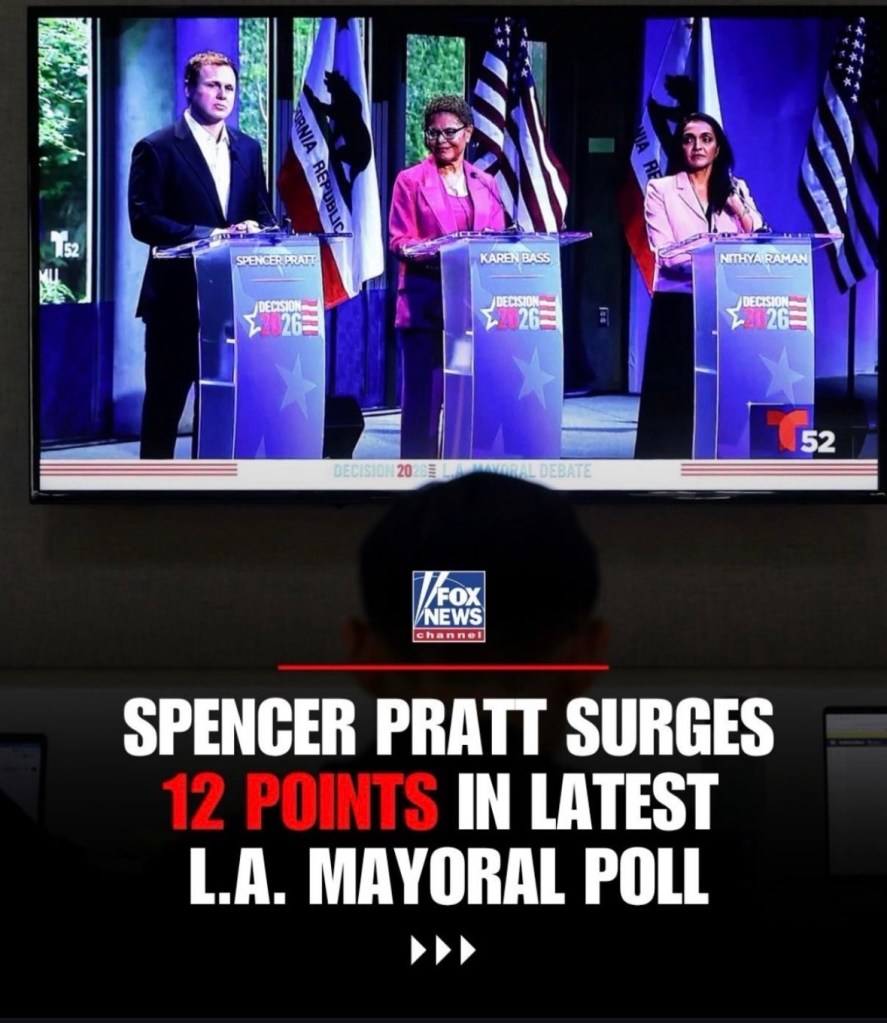
    There is something refreshingly raw about a figure like Spencer Pratt, the infamous “villain” from The Hills, stepping into the political arena. Yes, I admit it: I have always been drawn to the villain in the story— the one who everyone else seems to hate. And right now, as Pratt campaigns for Mayor of Los Angeles in the 2026 race, that glossing over him is driving me absolutely insane.

    The 2026 Experience

    Pratt, who announced his bid on the one-year anniversary of the devastating Palisades Fire that claimed his own home, is not running a conventional campaign. He is on a mission to expose what he calls deep-seated fraud, mismanagement, and dysfunction in California. He talks boldly about cleaning up the streets, tackling homelessness (those “zombies”— as he calls them— wandering the city in a drug-fueled haze), and holding the powers-that-be accountable. It is the kind of outsider energy that resonates in a city plagued by visible decay. Yet the media and political insiders treat him like a punchline rather than a serious contender polling in the twenties and surging with real voter frustration. There should be a lesson in that.

    Here is the core lesson I have learned from observing politics at every level, and this is not a partisan jab—it is a structural truth that transcends red, blue, or whatever color-coded tribe you belong to: If you truly want meaningful change, you have to drive it locally. Primarily, start with yourself. National spectacles and global posturing grab headlines, but the day-to-day realities that crush or elevate ordinary lives—trash on the sidewalks, skyrocketing rents, failing schools, unchecked crime—are decided in city halls, county offices, and state capitals. The so-called “global elite,” do not lose sleep over the average taxpayer scraping by. They are insulated by distance, wealth, and influence. Real accountability starts at the street level.

    Yes, Pratt promises to shine a light on the waste, the fraud, and the entrenched interests that have turned parts of LA into an open-air disaster zone. But let us be brutally honest: do we really believe the system will simply let him? The mayor’s office sits beneath the governor’s shadow in the hierarchy of power. Look at the Zohran guy who won the mayoral election in NYC. never mind that I personally do not support his policies, I am pretty sure that he was never allowed to install his vision. It is because the governor makes the policies. And governors, like California’s Gavin Newsom, are in the business of creating jobs and opportunities—or at least the appearance of them. Here is where the cynical machinery reveals itself:

    A cracked hourglass leaking gold and silver coins over a wall separating two contrasting city areas.
    An hourglass with coins spilling over divides a prosperous city from a poorer settlement below.

    Imagine a city where homelessness and open drug use are largely erased. No more tent encampments. No more “zombies” shuffling through downtown or Venice Beach. On the surface, that sounds like victory. But zoom out: entire industries, nonprofits, task forces, union contracts, consulting gigs, and government programs depend on the existence of these problems. Cleanup crews, social workers, outreach teams, mental health contractors, housing initiative funders—the list goes on. If the problem vanishes, so does the justification for the budgets, the grants, and the jobs that flow from it.

    This is not conspiracy; it is economics 101. Problems that fester generate employment. Politicians can campaign on “solutions” year after year, securing votes from those dependent on the system while reassuring the frustrated public that help is always just one more program, one more tax increase, one more initiative away. “We’re working on it,” they say, as the tents multiply and the needles pile up. Clean it all up too effectively, and suddenly there is a surplus of idle bureaucrats and contractors wondering where their next paycheck comes from. Better to manage the crisis than solve it outright.

    That is the quiet cynicism at the heart of so much local governance. The people are left in a dependent loop, turning to “daddy government” for salvation while the same officials who presided over the decline promise yet another fresh start. Meanwhile, the average Angeleno deals with the fallout: unsafe streets, businesses fleeing, quality of life evaporating. Pratt’s outsider status—reality TV fame, no long political résumé—might be exactly what makes him threatening to this ecosystem. He does not owe favors to the same players as the regular politicians. He lost his home to what he sees as failed leadership. That personal stake could fuel genuine disruption, or it could highlight just how immovable the bureaucratic blob really is. We will see how this all plays out…

    I am not endorsing every plank of Pratt’s platform, nor am I blind to the spectacle of a Hills villain turned mayoral hopeful. But the visceral reaction against him from certain corners says more about the defenders of the status quo than about Pratt himself. In an era where frustration with visible failure is boiling over, his surge in the polls (recent numbers putting him in striking distance) reflects an electorate tired of the same scripted failures. But I remain skeptical whether his lofty vision is plausible.

    I know that is not how the political game is played. Local politics matters because it is where we see the proof in action. If we keep waiting for distant saviors or global resets, we will stay stuck in this cycle of decline. Whether Pratt can actually break it remains to be seen on June 2 and beyond. But ignoring the messenger because of his reality TV past, while the city continues its slide, would be the real insanity. Change starts local. The question is whether we will let the problems keep paying the salaries, or finally demand they end.