
Tag: Movies

  • The Allure of TV’s Most Powerful Men

    The Allure of TV’s Most Powerful Men

    Television (and me humbly) has always had a soft spot for powerful men. Not the polite, boardroom variety who smile for cameras and donate to the right charities—the ones who bend the world to their will through force, cunning, money, charisma, or sheer force of personality. And, yes, my boyfriend does know about my affinity with these men. These characters dominate screens because power, when portrayed honestly, is magnetic, messy, and often corrosive. Here are some of the most compelling examples of powerful men in TV history, and what makes their authority so gripping. (I am the one person who has never seen Breaking Bad so I have not included those simpletons).

    Tony Soprano – The Sopranos

    Tony Soprano remains the gold standard. A New Jersey mob boss who juggles therapy sessions, family dinners, and brutal enforcement of his criminal empire, Tony wields power that is both institutional and deeply personal. His authority comes from fear, loyalty, and an almost animalistic ability to read the room. What makes him unforgettable is the contradiction: the same man who orders hits also frets about his kids’ futures and panics over ducks in his pool. Power, The Sopranos argues, does not erase vulnerability—it amplifies it.

    Don Draper – Mad Men

    Don Draper’s power is quieter, more seductive, and rooted in the art of persuasion. As the creative director of a top Madison Avenue advertising agency, he does not rule through violence or political office—he shapes desire itself. In the smoke-filled offices of the 1960s, Don’s authority comes from his unmatched ability to sell not just products, but identities and dreams. His charisma is effortless, his insights razor-sharp, and his personal mythology carefully constructed. Yet beneath the tailored suits and cool detachment lies a man permanently on the run from his own past. Mad Men shows that cultural power—the ability to define what people want—can be just as absolute, and just as isolating, as any other form of dominance.

    Harvey Specter – Suits

    Harvey Specter walks into a room and owns it. As the best closer in New York, the sharp-dressed senior partner at Pearson Hardman (and its later iterations) wields power through unmatched legal brilliance, psychological warfare, and an unshakable confidence that borders on arrogance. Harvey does not just win cases—he dismantles opponents, negotiates impossible deals, and operates by a personal code that prioritizes loyalty and results above all else. His authority is performative and intellectual: the perfect suit, the perfect line, the perfect read of every angle. Yet Suits continually reveals the cost of that invincibility, showing a man whose greatest battles are often with his own need for control and the vulnerabilities he works so hard to conceal.

    Bobby Axelrod – Billions

    Bobby “Axe” Axelrod is the embodiment of modern financial power—raw, street-smart, and relentlessly competitive. A self-made billionaire hedge-fund titan, he built his empire from nothing and defends it with a mix of genius strategy, loyalty to his people, and a willingness to play dirtier than anyone else in the room. Axe’s power is both economic and personal: he moves markets, outmaneuvers regulators and rivals, and treats every confrontation like a high-stakes game he intends to win. What makes him compelling is the contradiction at his core—a blue-collar kid who never forgot where he came from, even as he lives in a world of private jets and political influence. Billions thrives on watching Axe turn every threat into an opportunity for greater dominance.

    Logan Roy – Succession

    Logan Roy does not need guns or superpowers. He has money, media empires, and an unparalleled talent for psychological warfare. The aging media titan in Succession treats his children like pieces on a chessboard and the world like a family business he refuses to relinquish. His power is cold, transactional, and absolute within his domain. Every boardroom confrontation and holiday dinner becomes a demonstration of dominance. Logan proves that the most terrifying power is often the quietest—and the one that never needs to raise its voice.

    Frank Underwood – House of Cards

    Frank Underwood operates in the highest corridors of American politics with the precision of a surgeon and the morality of a snake. His power is procedural and performative: he masters the rules of the game so thoroughly that he can rewrite them. The direct-to-camera asides make the audience complicit in his rise. Underwood’s authority rests on information, timing, and an absolute willingness to sacrifice anyone—including those closest to him. He is the purest expression of political power as performance art.
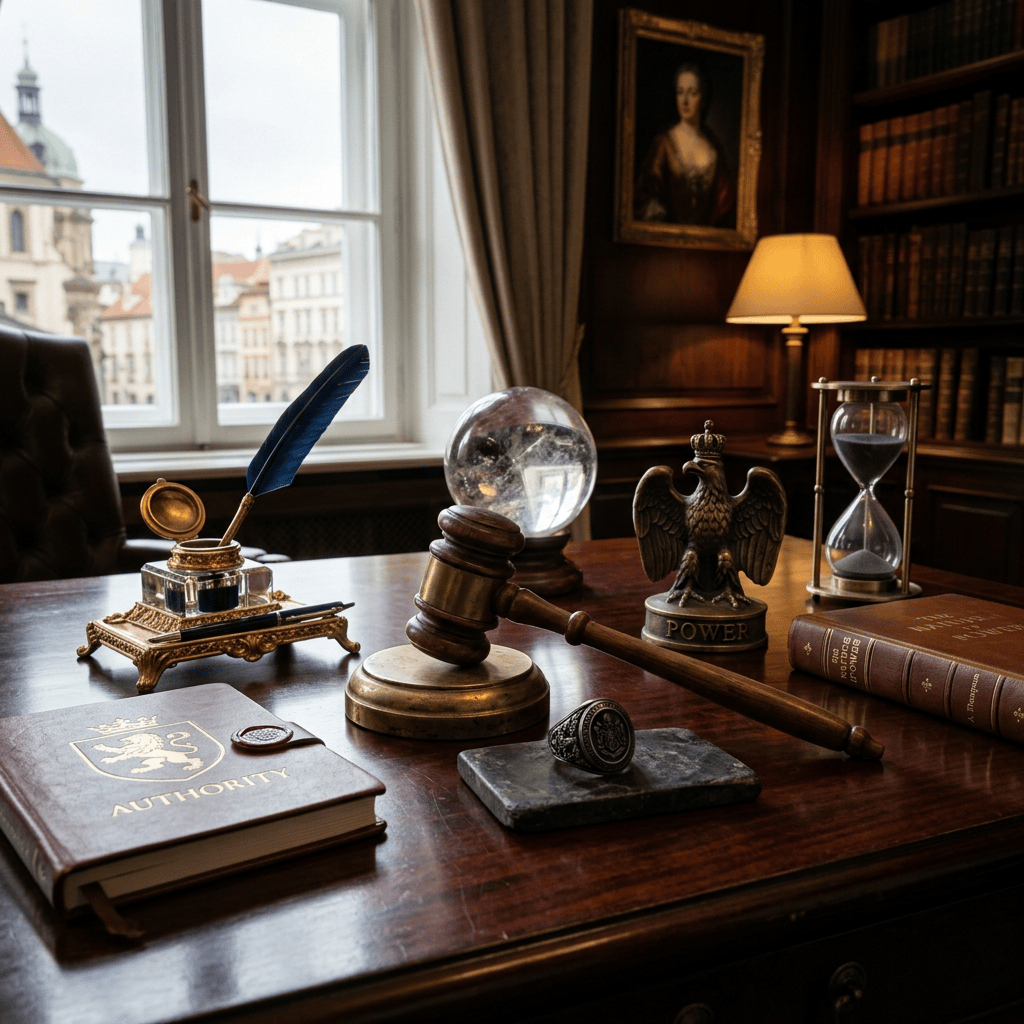
    Desk with gavel, quill, books labeled AUTHORITY, eagle marked POWER, and hourglass
    A richly styled study desk brings together objects symbolizing law, power, and authority.

    Across these characters, certain patterns emerge. Power on television is rarely clean. It is usually bought with compromise, isolation, or violence. The most interesting portrayals show men who are simultaneously architects and prisoners of their own authority. Tony’s panic attacks,

    , Don’s carefully guarded emptiness, Harvey’s carefully maintained invincibility, Axe’s relentless competitiveness, Logan’s loneliness and Frank’s emptiness all suggest the same uncomfortable truth: absolute power rarely delivers the satisfaction its seekers expect.

    Television keeps returning to these figures because audiences recognize something true in them. We are drawn to competence, to dominance, to the fantasy of control in an unpredictable world. At the same time, the best shows refuse to let us enjoy that fantasy uncritically. They force us to sit with the human cost.

    The powerful men of television do not just rule their fictional worlds. They hold up a mirror to our own complicated relationship with power—its allure, its price, and the quiet ways it can hollow a person out from the inside. And as long as that tension remains unresolved in real life, these characters will keep commanding our attention.
  • A League of Their Own: Reimagining Feminism

    A League of Their Own: Reimagining Feminism

    In a world drowning in performative activism and corporate girlboss-ness, I find myself returning to one movie that actually gets feminism right: Penny Marshall’s 1992 classic A League of Their Own.

    The film does not lecture you. It does not scream about the patriarchy or demand that you affirm anyone’s feelings. Instead, it shows women rolling up their sleeves, stepping onto the baseball diamond, and proving they belong—not because someone owed them a spot, but because they earned it through talent, grit, and sheer stubbornness.

    Real Empowerment, No Victimhood Required

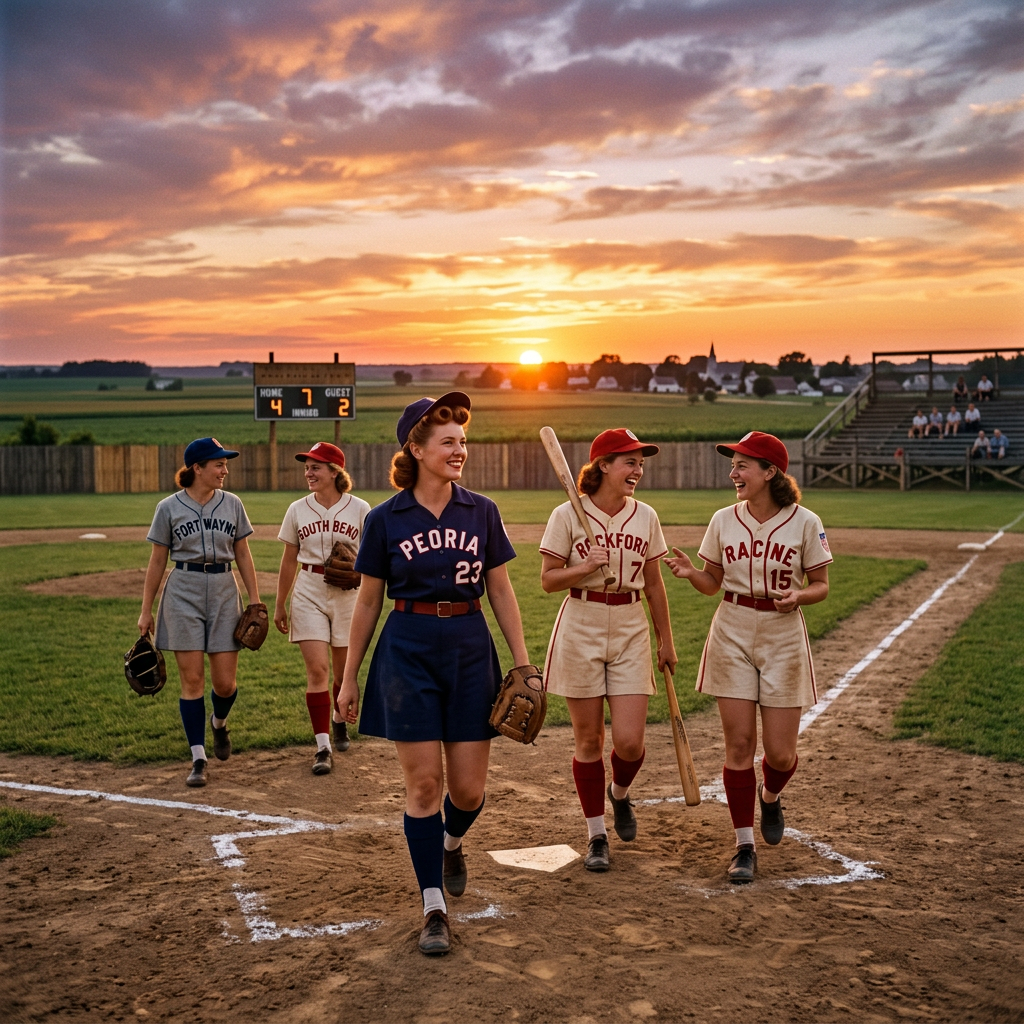
    Set during World War II, A League of Their Own tells the story of the All-American Girls Professional Baseball League. With the men off fighting, these women were not waiting for permission or special treatment. They tried out, competed fiercely, and played real baseball in front of skeptical crowds. The movie nails the tension between traditional expectations (“be ladylike!”) and the raw reality of sliding into bases, spitting tobacco, and throwing like you mean it.

    The women face ridicule, ridiculous uniforms, and mandatory charm school, yet they respond by getting better at the game. That is the kind of feminism worth celebrating: one that expands opportunity through excellence rather than lowering standards or rewriting rules.

    Tom Hanks delivers one of his most quotable performances as Jimmy Dugan, the washed-up, foul-mouthed and drunken manager who starts off dismissive of his new team. He dives into his arsenal of acting skills and proves to one of the greatest/ all encompassing talents to watch. His arc from cynical has-been to proud coach is pure gold, and his legendary “There’s no crying in baseball!” rant remains one of the funniest moments. Hanks does not mansplain or apologize for his initial attitude—he grows because the women force him to see their competence. It is organic character development, not a scripted takedown of toxic masculinity (because clearly there is no such thing!).

    The supporting cast is stacked in the most 90s way possible. Madonna as “All the Way” Mae brings swagger and showmanship, and Rosie O’Donnell as Doris provides heart and humor. Watching them now is oddly nostalgic—they were vibrant, funny, and unapologetic without being cringe with the heavy ideological baggage they now adopt. It is a reminder of a time when pop culture could just be fun instead of a constant sermon.

    The whole ensemble feels like a genuine team. These characters have flaws, rivalries, and personal stakes, but they are never reduced to their gender or used as props for a message. The feminism emerges naturally from the story: women being capable, competitive, and resilient when given the chance. Not women who think that they are superior to men.

    A League of Their Own celebrates women’s strength without tearing down men or pretending biology does not matter on the field (obviously women sports are not as competitive/ popular as men’s and that is OK). It shows sisterhood that includes healthy competition. It acknowledges hardship, (as the whole reasoning behind this team is the separation from loved ones during war) without wallowing in it. It is, thus, extremely patriotic—Most importantly, the women win respect by playing well, not by demanding it (*cough, cough * Women’s USA Soccer Team).

    In contrast to today’s discourse, which often frames women as perpetual victims needing protection from “the system,” this movie says: Here is an opportunity—go seize it. And they did. The real AAGPBL players inspired the film, and their legacy still feels refreshing thirty-plus years later.

    If more modern feminism looked like the Rockford Peaches—tough, talented, and focused on achievement rather than outrage—I suspect a lot more people would get on board.

  • How Pretty Woman Shaped My Understanding of Love

    How Pretty Woman Shaped My Understanding of Love

    I want to elaborate on this post. Pretty Woman was one of the first movies that I watched in America. I was four years old. I did not speak any English. But I understood it completely. 


    To me, it is not a story about a sex worker. This contrasts with the Oscar movie Anora, which I was told was a modern version of Pretty Woman. It is a story of a woman who needs saving. So I spent my entire life aspiring to be a damsel in distress.

    At four years old, I was not sure what I would need to be saved from. I knew that Vivienne also saved Edward. So, I aspired that I would need to be a savior to my own man. 

    Ultimately, this is how I have arranged my own life. I am strong enough for him but I need him to save me from..myself? And everything that have been through. Women are not supposed to be “I do not need a man” strong—and while I do not blame anyone or anything that has happened to me— I simply should have reacted differently.

    Therefore, I need some saving. I need my man to save me from overreacting and overthinking everything that happens.


    I guess that is what I admire about this character and this story. Vivienne did not simply demand a check or cash to cure her status in life. She needed a man who actually cared enough about her and gave her guidance to achieve a better life. She also showed him that there is more to life than the money and status that he was chasing. She helped him overcome his fear of heights etc. overall, this movie is a beautiful fairytale for girls of all ages. 


    After viewing this fairytale throughout the years, I now know what is happening in the dialogue and the story. While Vivienne is definitely sharp and witty, she is a character who I am proud to have embodied as an influence