Tag: local

  • Spencer Pratt’s Mayoral Bid: Unpacking Local Political Rot

    Spencer Pratt’s Mayoral Bid: Unpacking Local Political Rot

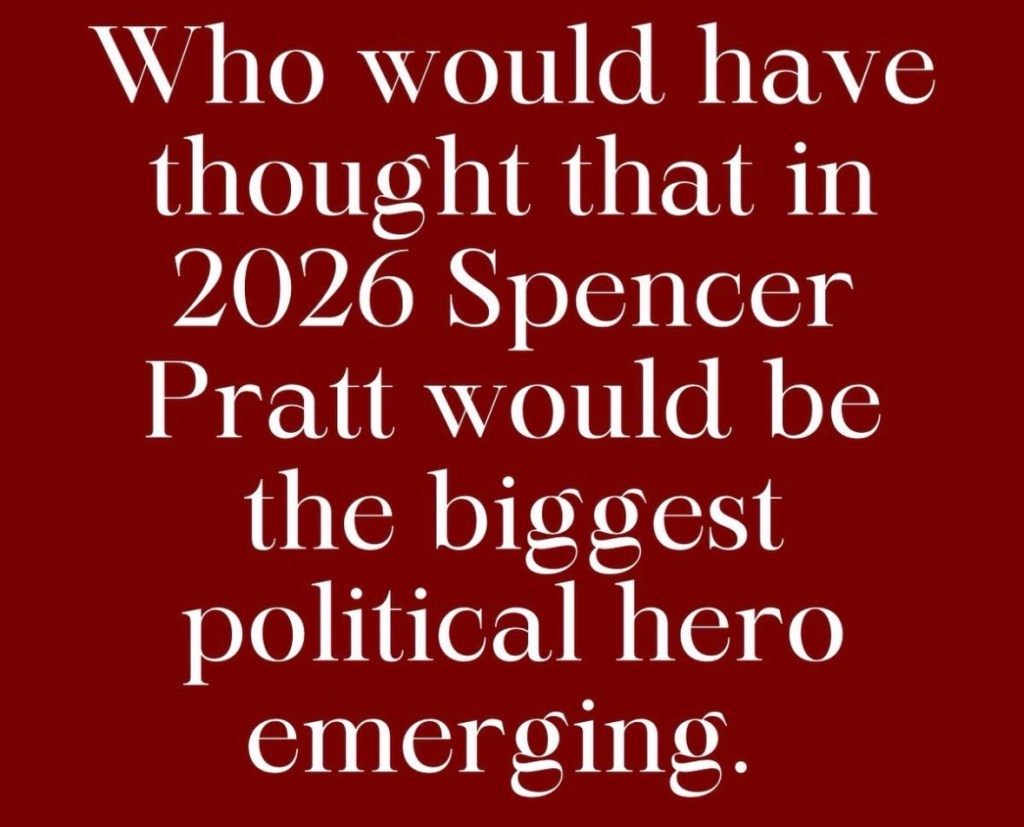
    There is something refreshingly raw about a figure like Spencer Pratt, the infamous “villain” from The Hills, stepping into the political arena. Yes, I admit it: I have always been drawn to the villain in the story— the one who everyone else seems to hate. And right now, as Pratt campaigns for Mayor of Los Angeles in the 2026 race, that glossing over him is driving me absolutely insane.

    The 2026 Experience

    Pratt, who announced his bid on the one-year anniversary of the devastating Palisades Fire that claimed his own home, is not running a conventional campaign. He is on a mission to expose what he calls deep-seated fraud, mismanagement, and dysfunction in California. He talks boldly about cleaning up the streets, tackling homelessness (those “zombies”— as he calls them— wandering the city in a drug-fueled haze), and holding the powers-that-be accountable. It is the kind of outsider energy that resonates in a city plagued by visible decay. Yet the media and political insiders treat him like a punchline rather than a serious contender polling in the twenties and surging with real voter frustration. There should be a lesson in that.

    Here is the core lesson I have learned from observing politics at every level, and this is not a partisan jab—it is a structural truth that transcends red, blue, or whatever color-coded tribe you belong to: If you truly want meaningful change, you have to drive it locally. Primarily, start with yourself. National spectacles and global posturing grab headlines, but the day-to-day realities that crush or elevate ordinary lives—trash on the sidewalks, skyrocketing rents, failing schools, unchecked crime—are decided in city halls, county offices, and state capitals. The so-called “global elite,” do not lose sleep over the average taxpayer scraping by. They are insulated by distance, wealth, and influence. Real accountability starts at the street level.

    Yes, Pratt promises to shine a light on the waste, the fraud, and the entrenched interests that have turned parts of LA into an open-air disaster zone. But let us be brutally honest: do we really believe the system will simply let him? The mayor’s office sits beneath the governor’s shadow in the hierarchy of power. Look at the Zohran guy who won the mayoral election in NYC. never mind that I personally do not support his policies, I am pretty sure that he was never allowed to install his vision. It is because the governor makes the policies. And governors, like California’s Gavin Newsom, are in the business of creating jobs and opportunities—or at least the appearance of them. Here is where the cynical machinery reveals itself:

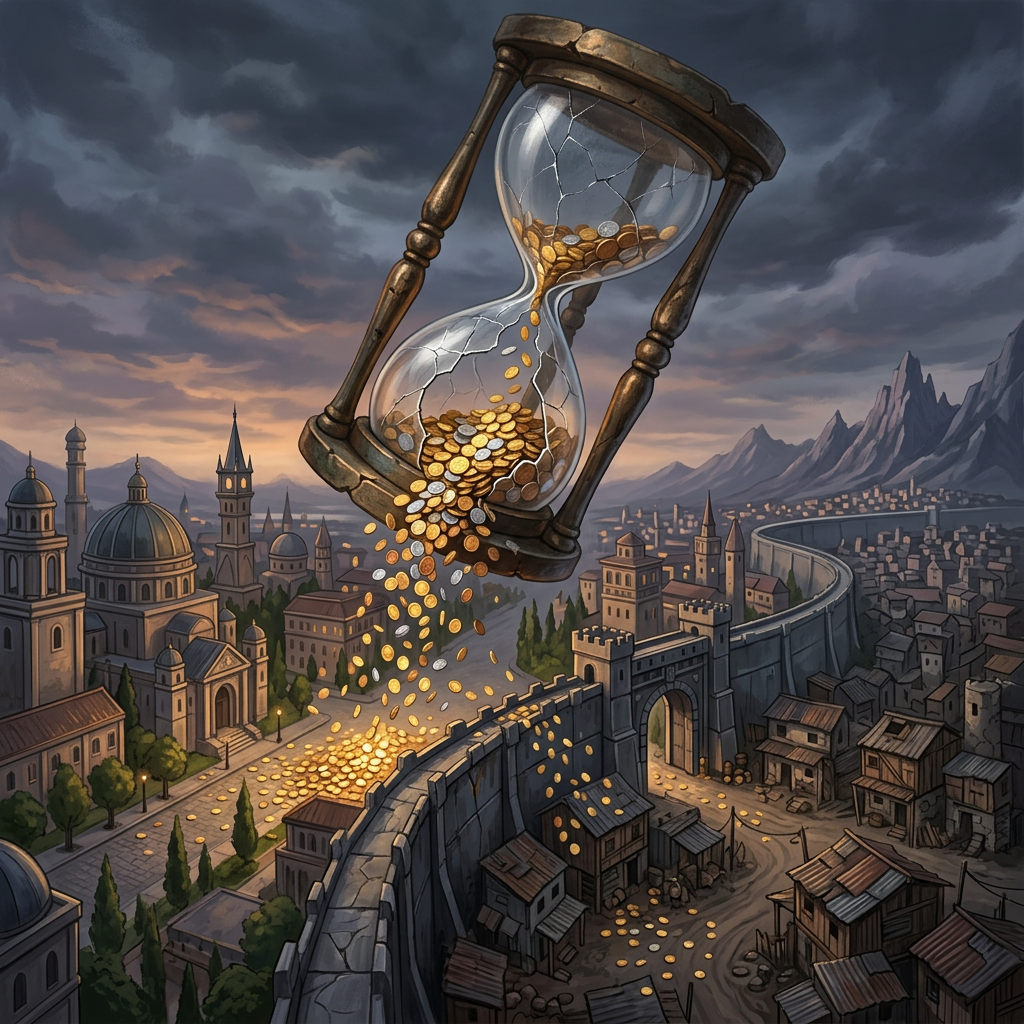
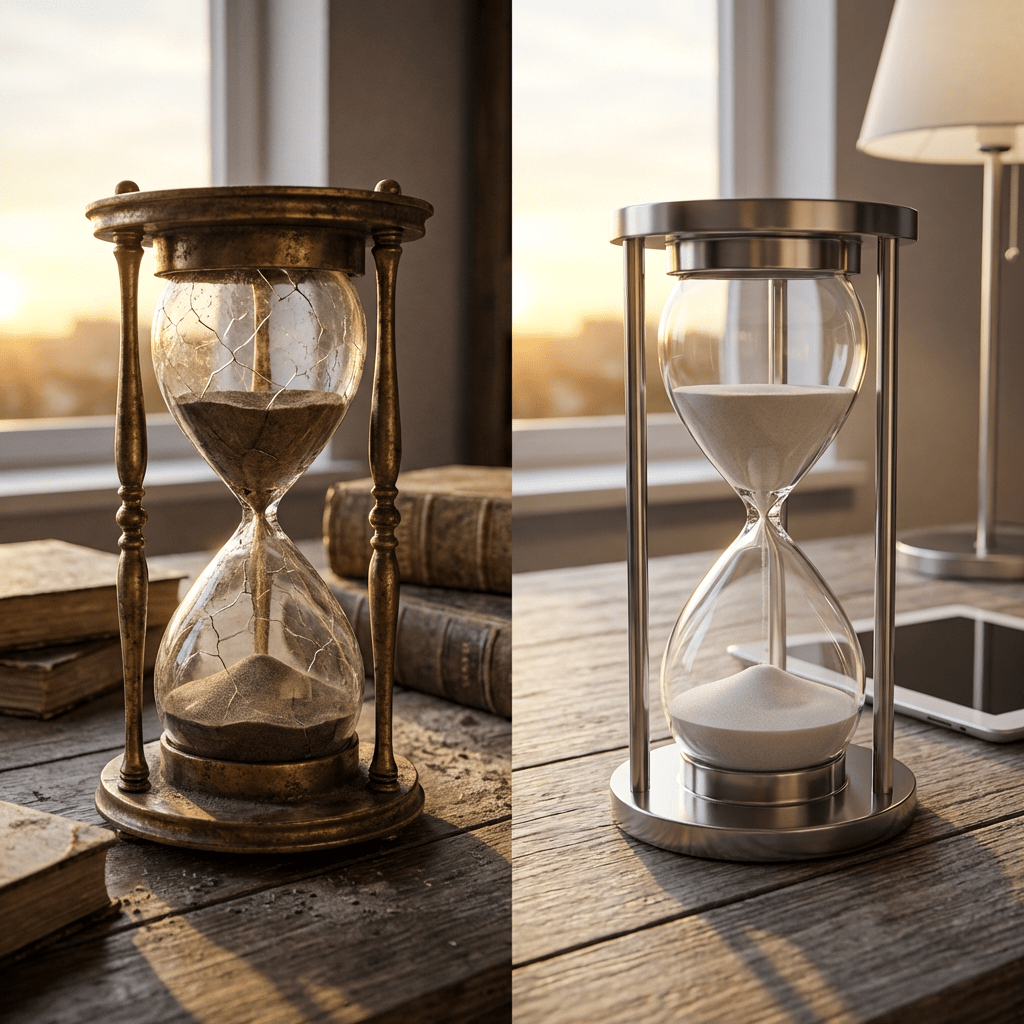
    A cracked hourglass leaking gold and silver coins over a wall separating two contrasting city areas.
    An hourglass with coins spilling over divides a prosperous city from a poorer settlement below.

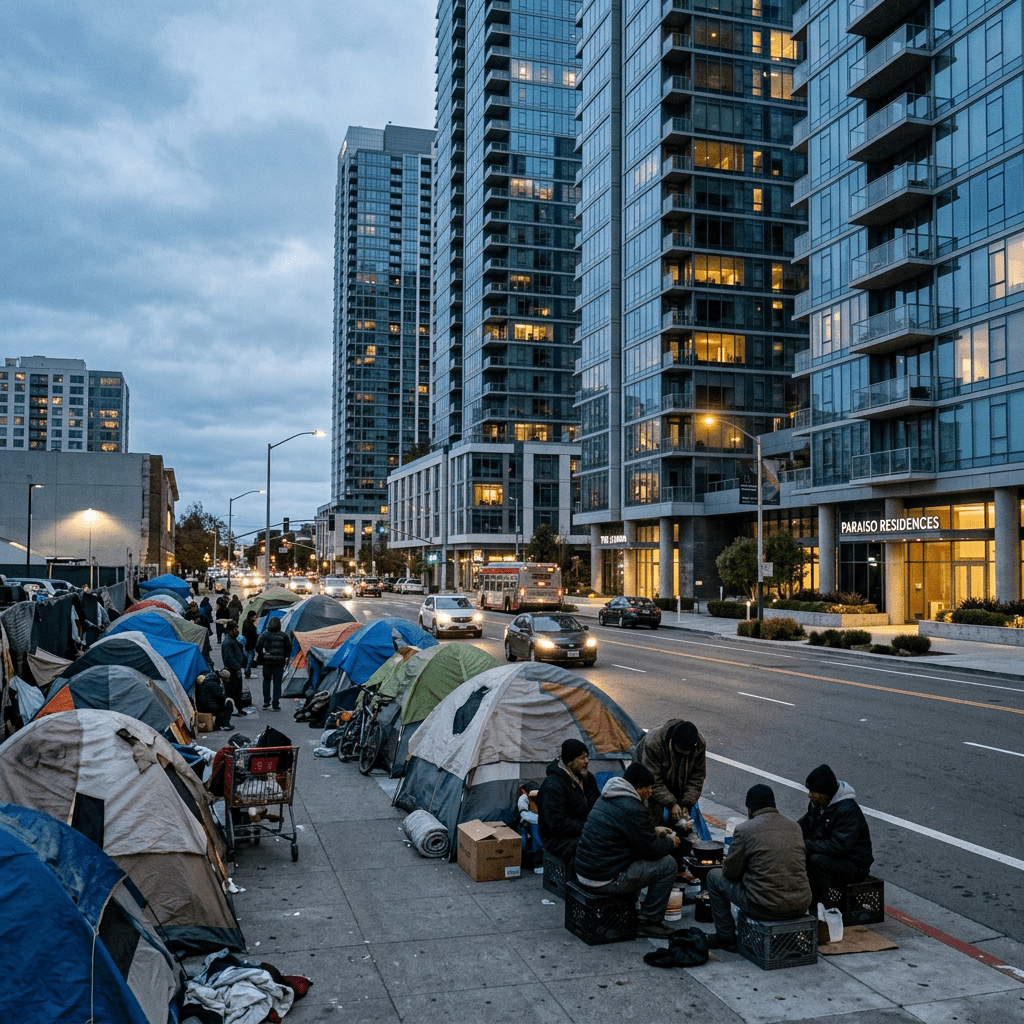
    Imagine a city where homelessness and open drug use are largely erased. No more tent encampments. No more “zombies” shuffling through downtown or Venice Beach. On the surface, that sounds like victory. But zoom out: entire industries, nonprofits, task forces, union contracts, consulting gigs, and government programs depend on the existence of these problems. Cleanup crews, social workers, outreach teams, mental health contractors, housing initiative funders—the list goes on. If the problem vanishes, so does the justification for the budgets, the grants, and the jobs that flow from it.

    This is not conspiracy; it is economics 101. Problems that fester generate employment. Politicians can campaign on “solutions” year after year, securing votes from those dependent on the system while reassuring the frustrated public that help is always just one more program, one more tax increase, one more initiative away. “We’re working on it,” they say, as the tents multiply and the needles pile up. Clean it all up too effectively, and suddenly there is a surplus of idle bureaucrats and contractors wondering where their next paycheck comes from. Better to manage the crisis than solve it outright.

    That is the quiet cynicism at the heart of so much local governance. The people are left in a dependent loop, turning to “daddy government” for salvation while the same officials who presided over the decline promise yet another fresh start. Meanwhile, the average Angeleno deals with the fallout: unsafe streets, businesses fleeing, quality of life evaporating. Pratt’s outsider status—reality TV fame, no long political résumé—might be exactly what makes him threatening to this ecosystem. He does not owe favors to the same players as the regular politicians. He lost his home to what he sees as failed leadership. That personal stake could fuel genuine disruption, or it could highlight just how immovable the bureaucratic blob really is. We will see how this all plays out…

    I am not endorsing every plank of Pratt’s platform, nor am I blind to the spectacle of a Hills villain turned mayoral hopeful. But the visceral reaction against him from certain corners says more about the defenders of the status quo than about Pratt himself. In an era where frustration with visible failure is boiling over, his surge in the polls (recent numbers putting him in striking distance) reflects an electorate tired of the same scripted failures. But I remain skeptical whether his lofty vision is plausible.

    I know that is not how the political game is played. Local politics matters because it is where we see the proof in action. If we keep waiting for distant saviors or global resets, we will stay stuck in this cycle of decline. Whether Pratt can actually break it remains to be seen on June 2 and beyond. But ignoring the messenger because of his reality TV past, while the city continues its slide, would be the real insanity. Change starts local. The question is whether we will let the problems keep paying the salaries, or finally demand they end.

  • My Passion for Nutrition (pt. 4)

    My Passion for Nutrition (pt. 4)

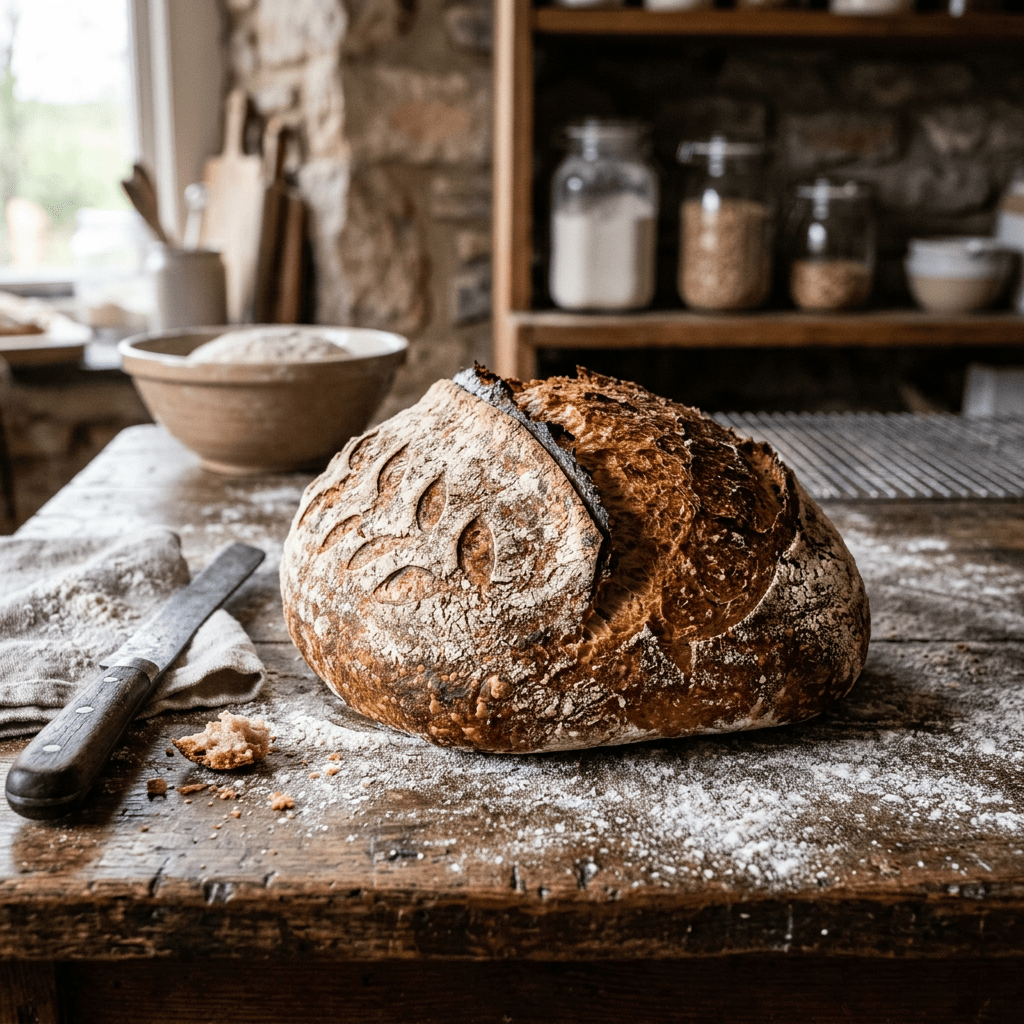
    Bread has been a dietary staple for thousands of years, but not all loaves are created equal. Sourdough — the ancient, tangy favorite that has seen a massive resurgence in home kitchens— is not only a cottagecore trend in which people are opting to live a quiet and peaceful lifestyle. Conventional bread — the convenient, soft slices that fill supermarket shelves— is basically just considered optimal because of the mass production ability of it.

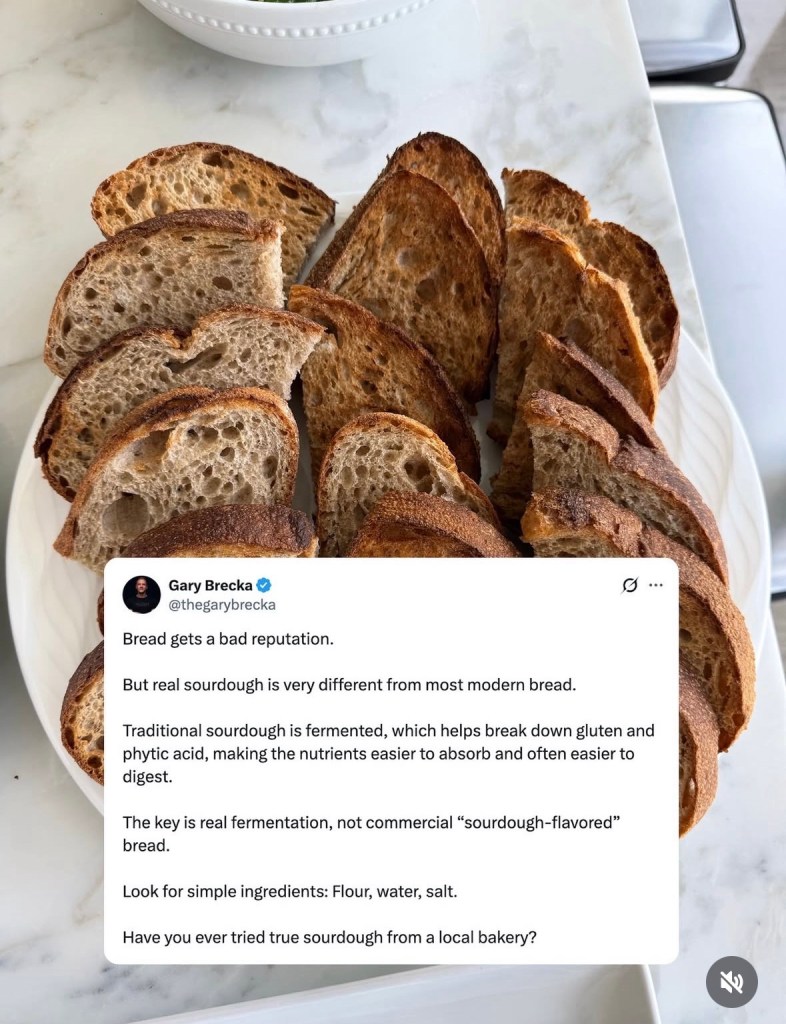
    The great health guru- Gary Brecka!

    Sourdough Bread vs. Conventional Bread: Which One Deserves a Spot on Your Table?

    Sourdough is one of the oldest forms of leavened bread, dating back to ancient Egypt around 1500 BCE (with even earlier evidence possibly from 3700 BCE in Switzerland). It likely started accidentally when dough was left out and colonized by wild yeast and bacteria. This method spread to the Greeks and Romans and remained the primary way to make bread for most of human history until the late 19th and early 20th centuries.

    Commercial baker’s yeast, isolated in the 19th century, revolutionized bread-making by speeding up the process. This enabled mass production of consistent, soft loaves.

    Sourdough stuck around in places like San Francisco (famous during the Gold Rush, where miners kept starters warm), but conventional bread became the everyday norm.

    The biggest distinction between the two types lies in leavening and fermentation:

    • Sourdough: Made with a “starter” — a live culture of flour and water harboring wild yeast and lactic acid bacteria. The dough ferments slowly (often 12–48 hours or more). Ingredients are simple: flour, water, salt, and the starter. No commercial yeast needed. This long fermentation creates lactic and acetic acids, giving the signature tang.
    • Conventional bread: Uses fast-acting commercial yeast for a quick rise (often just 1–2 hours). Many store-bought versions include additives like dough conditioners, preservatives (e.g., calcium propionate), emulsifiers, sugars, or even vinegar for fake “sour” flavor. “Sourdough” labels on grocery shelves are not always true sourdough — check ingredients! It should literally be 3-4 items listed.

    True artisan sourdough is a labor of love. Handmade from the loving baker in your home (or a small local bakery). Conventional bread prioritizes speed, shelf life, and uniformity (a sad state of affairs).

    Sourdough often helps with digestion and blood sugar, thanks to fermentation.

    Fermentation breaks down phytic acid (which binds minerals), reducing it significantly more than yeast alone (up to 62% vs. 38%). It also lowers hard-to-digest carbs. Fermentation also partially breaks down gluten, helping many with sensitivities. Result: Less bloating!

    Sourdough bread has a lower glycemic index (GI): Sourdough typically has a lower GI (~54) than white bread (~71), leading to steadier blood sugar and potentially more satiety.

    It also has a better absorption of minerals like magnesium, iron, and zinc. It may support gut health via prebiotics from the fermentation.

    Unfortunately, sourdough can be similar or slightly higher in calories/protein/fiber depending on the flour. This is why most normies prefer regular shelf life. They think that the less calories the better. Never mind the quality and nutrients.

    Conventional breads are often fortified with vitamins. Whole-grain conventional options can be healthy too. Sourdough is definitely not a miracle food, but the slow process generally makes it more “gut-friendly.”

    Sourdough is very complex and tangy in flavor with nutty, acidic notes. It has a chewy crumb, crisp crust, and open holes from the long fermentation. It toasts beautifully and pairs with everything from butter to soups.

    Conventional bread is a milder, sweeter taste. Softer, more uniform texture — great for sandwiches or French toast, but often lacks depth.

    Many prefer sourdough for its artisanal appeal, though it stales faster without preservatives. All natural is not always cute. Think of sourdough as a beautiful woman who does not get work done versus all the “Instagram models” who often look identical full of plastic surgery.

    Sourdough bread is certainly superior in flavor, with potential health perks, and very minimal ingredients, (plus it is satisfying to make!) however it is often time-intensive (or pricier if buying), with variable results and a shorter shelf life.

    Personally, I adore sourdough… We get fresh loaves from a local (gluten free!) bakery. It is so scrumptious; literally whenever I feel like I am wasting away, I go to the kitchen and fist the inside of the loaf- leaving the inside for everyone else (smirk)…

  • Stop Romanticizing the Past: Embrace Today

    Stop Romanticizing the Past: Embrace Today

    We have all heard it. We have all said it. “Man, things were better back then.” People are always yearning for the good old days—start appreciating everything today:

    Nostalgia is not a memory—it is a seductive liar.

    It edits out the bad.

    The ugly.

    We airbrush the boredom, the limited choices, the untreated depression, the rotten teeth (yay for healthcare!) and the way information trickled so slowly that ignorance felt like wisdom. I kind of do wish we ladies were still dumb, though… I rely more on my man to know what is going on in the world so that I can just be delulu about things.

    And while we are busy pining for that heavily filtered past, the actual miracles are all around us right now. We are living in the most abundant, connected, opportunistic era in human history, and most of us are too busy doom-scrolling and whining to notice.

    Technology seems to be sprinting. AI that writes better essays than most college students. Instant access to the entire library of human knowledge in your pocket. You can video call your grandmother on another continent while ordering takeout that arrives piping hot. And still, people scroll past miracles to complain that their coffee order took four minutes instead of three.

    This change terrifies people. It always has. That is why every generation thinks the next one is doomed. But here is my hot take: your nostalgia is a coping mechanism for your fear of the unknown. It is easier to idealize 1997 than confront 2026. People are afraid. What is going to happen tomorrow or next month?

    It seems easier to romanticize rotary phones than master and learn the new tools.

    Stop yearning. Start appreciating—aggressively.

    The secret is not in the past. It is in the lens. Shift it—or stay miserable.

    Look at your smartphone not as a distraction device but as a doorway for wonder. With it, you can learn a language in weeks, watch a live surgery in Tokyo, or hear the voice of someone who died decades ago (I know… Creepy.) We treat these luxuries like it is normal. It is not. It is insane.

    We find food in our grocery stores from every corner of the world. Planes and automobiles have actually united us. We consume other cultures and cuisines. This is the true meaning of America.

    Surgery and modern medicine (despite its faults) make it absolutely insane to continue complaining about the small aches and pains. Some of us do not even walk; are you really going to cry about a hangnail?

    The internet has also demolished geographic and social barriers. You can meet your person- someone who actually matches your weird frequency- instead of settling for the least awful option within a 10-mile radius. I personally would despise settling down with someone from around here. The old days had arranged marriages and shotgun weddings. We now have sad dating apps and yes, we rate each other based on our looks. So yes, trade-offs exist, but pretending the past was pure romance is historical fan-fiction.

    In a culture addicted to outrage and comparison, choosing to appreciate the present is rebellious. It is punk rock. It flips off the algorithm that profits from dissatisfaction. People really do love to complain, criticize, and comment.

    Essentially, the world is blossoming with possibility while you are staring at old yearbooks. One thing that has always bothered me is that most of our bodies are a biological marvel capable of running, dancing, orgasming, and healing—and yet people are mad about theirs not looking like a filtered influencer. It is called do something about it—if a disabled girl can lose more than one hundred pounds, you can do anything. The body is truly a marvel.

    The mind is too.
    Your mind can comprehend quantum physics (or silly girly things—like writing a blog!) and write love poems, yet you use it to relive 2008 politics.

    The good old days are a trap. They keep you small, bitter, and blind to the abundance screaming for your attention. Every moment you spend mourning a myth is a moment stolen from building something better.

    The world is changing so fast that if you blink too long in nostalgia, you will miss the best parts of being alive right here, right now. The coffee is hot. The internet works—until the power goes out, because living in the woods is great. Your heart is beating. The future is wide open.

    Appreciate it all—fiercely, obnoxiously, unapologetically.

    Or keep complaining. The past will not care, and the present will keep delivering miracles whether you notice them or not.

    The choice is yours. But only one of them feels like living.

  • The Truth About My “Jet-Setting” Life: Wheelchair Edition

    The Truth About My “Jet-Setting” Life: Wheelchair Edition

    Let us get one thing straight right out of the gate. If you think I have been out here living some glamorous, globe-trotting influencer fantasy, you are cute. But you are dead wrong. 

    For people who rarely leave their own state, my recent passport stamps might look impressive. Brazil. Spain. London. Paris. Dubai. “Wow, she’s been everywhere!” Yeah, well, news flash: I have not. Not really. These trips happened in the era my body decided to betray me and park me in a wheelchair. 

    There was no carefree frolicking through exotic streets. No sexy bikini photo shoots with golden-hour lighting and a cocktail in hand (sad!). Most of the time I was either hooked up to treatments or too exhausted to do anything but stare at clinic walls.

    Brazil and Spain? Those were not vacations. They were medical missions. Spiritual awakening. Healing quests. I traded sandy beaches and nightlife for IV drips, experimental protocols, and the sterile smell of hope. I saw the inside of healing centers far more than I saw the actual countries. The world outside my treatment room might as well have been a postcard.

    But here is the provocative part most “wellness girlies” will never admit: even when your body is falling apart, your appetite for life (and flavor) does not die. I refused to be that sad girl. I did not want to just order chicken tenders.. Especially not in some of the most delicious countries on Earth.

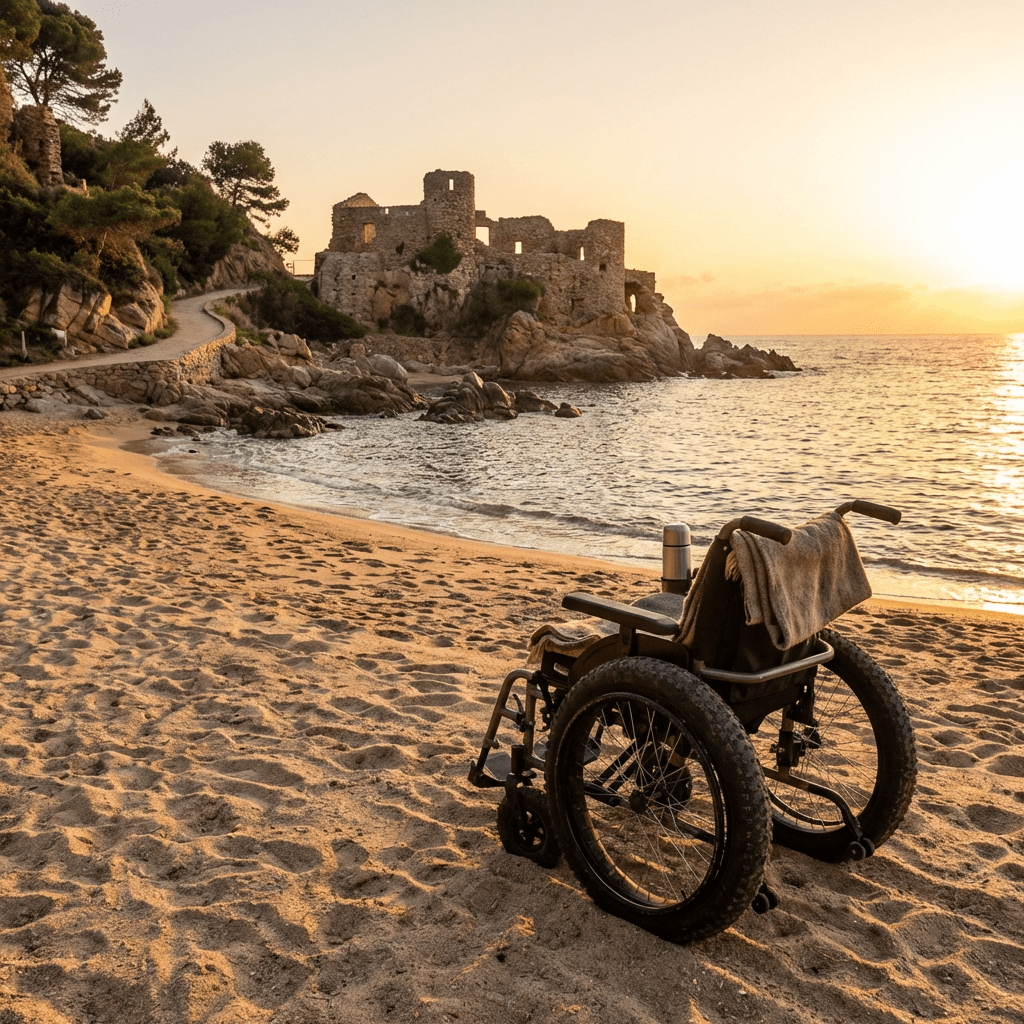
    When I was on Spain’s stunning coastline, I was mostly inside of a wellness treatment, but I was not playing it safe. I dove straight into the deep end — squid ink paella that turned my teeth and tongue midnight black, sardine pizza that made more than a few locals raise an eyebrow. I wanted the real Spain, not the sanitized tourist version. Same energy in France: I devoured crusty, glyphosate-free bread finally and happily slurped down garlicky escargot. 

    I do not clutch my pearls or wrinkle my nose at “weird” foreign food. That closed-minded attitude is for cowards who travel just to take photos and brag later. Eating like a local is how you actually touch the culture. It is intimate. It is sensual. It is one of the few ways a broken body can still fully say “yes” to the world.

    Dubai was a completely different beast. That trip was not about healing — it was about living dangerously, even if my version of danger looked different. I have this “uncle” who has powerful friends in the Emirates. So off I went. I stood (well, sat) in front of the Burj Khalifa like a proper tourist. I felt unworthy beneath all that glittering excess. And yes, I rode a camel through the desert — an experience that was equal parts magical and chaotic. My sitting balance was trash at the time. My father had to squeeze in behind me. He was like some kind of reluctant bodyguard. He held me steady while the camel swayed beneath us. 

    Picture it: a wheelchair user, her dad, and a camel in the middle of the Arabian desert. The poor thing was carrying around 500 pounds (I was still a big girl). Not exactly the sexy desert romance novel scene, but it was unforgettable in its own ridiculous way.

    The point is not that I have “seen the world.” The point is that I have clawed my way into experiences most people in my condition would never dare attempt. I have eaten the strange foods. I have ridden the camels. I have stared down some of the most beautiful skylines on Earth. Meanwhile, my body screamed at me to stay in bed. 

    I am not sharing this for sympathy. I am sharing it because I am sick of the sanitized, filtered version of disabled travel people expect. I may have had to get help getting into the plane but in all of my travels— I did not go gently. I went hungry for flavor, for views, for stories — even when it hurt. Even when it was messy. Even when I had to be held upright on a damn camel.

    So yeah, I have been places. But not in the way you think. So here I am… unapologetically eating squid ink. While half-broken might not be as interesting as the bikini-on-the-beach photograph, it is me… part of my story.