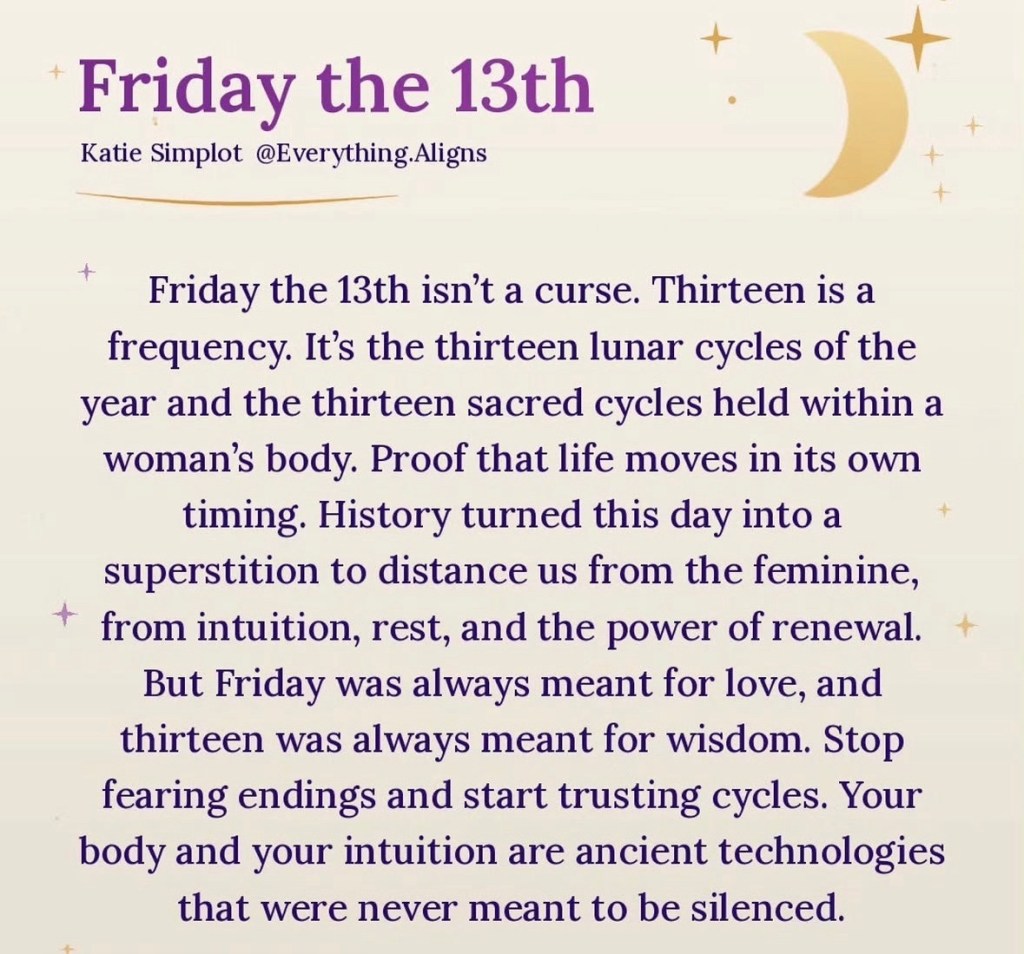
The Lore Behind Friday the 13th: From Loki’s Crash to Templar Raids and Beyond
Today is Friday, November 13, 2026—the third and final Friday the 13th of the year. I finally got my arm looked at. Turns out it is not an elbow injury like I thought. It is a shoulder fracture. Now my left arm will officially be 6 cm. shorter. Great news is that I am already healing and so I can bypass the sling aspect/ not moving my arm (since my left arm is in constant motion so that would nearly be impossible!)
For millions of other people, the combination of day and date (Friday the 13th) still triggers a twinge of unease. Hotels skip the 13th floor, some refuse to schedule surgery or travel, and the phrase “Friday the 13th” instantly conjures hockey-masked slashers. But the superstition actually comes from a tangle of ancient stories, medieval history, and 19th-century popular culture rather than any single ancient curse.
Two Separate Fears That Collided
The number 13 and Friday were each considered unlucky long before anyone linked them. In many Western traditions, 12 represented completeness—12 months, 12 tribes of Israel, 12 Olympian gods, 12 labors of Hercules. Thirteen disrupted that order.
One of the oldest stories attached to the number comes from Norse mythology. Twelve gods were gathered for a feast in Valhalla when the uninvited trickster Loki arrived as the 13th guest. He deceived the blind god Höðr into killing his beloved brother Balder with a mistletoe-tipped weapon. Balder’s death plunged the gods into grief and set larger forces of chaos in motion. The tale of a disastrous 13th guest spread and helped cement the idea that 13 people at a table was an omen of death.
Christian tradition supplied a parallel. At the Last Supper there were 13 people present—Jesus and the 12 apostles. Judas Iscariot, often described as the 13th to arrive or the betrayer among them, set in motion the events that led to the crucifixion. Friday itself already carried heavy associations: tradition held that Jesus was crucified on a Friday, that Eve offered Adam the forbidden fruit on a Friday, and that Cain killed Abel on a Friday. Friday was also the customary day for hangings in parts of Europe.
Interestingly, Friday’s name itself is pagan. It derives from the Old English Frīgedæg, “Frigg’s day,” after the Norse goddess Frigg (sometimes conflated with Freyja). In some earlier Germanic contexts Friday was actually a favorable day for weddings and fertility rites—quite the opposite of the later Christian gloom attached to it.
When Friday and 13 Became a Pair
There is no solid evidence that people specifically feared the combination “Friday the 13th” before the 19th century. The earliest clear written references appear in France in 1834. One literary piece remarked that “It is always Fridays and the number 13 that bring bad luck!” Another character in a play blamed all his misfortunes on having been born on Friday, December 13. In English sources, mentions become more common later in the century. A biography of the composer Rossini noted that he died on Friday the 13th of November and wondered whether his Italian superstitions about both Friday and 13 had any significance.
The idea spread more widely after 1907, when American stock promoter Thomas Lawson published a novel titled Friday, the Thirteenth about a scheme to crash the stock market on that day. The book sold tens of thousands of copies quickly and helped fix the date in the public imagination.
The Knights Templar Story—and Why It’s a Later Overlay
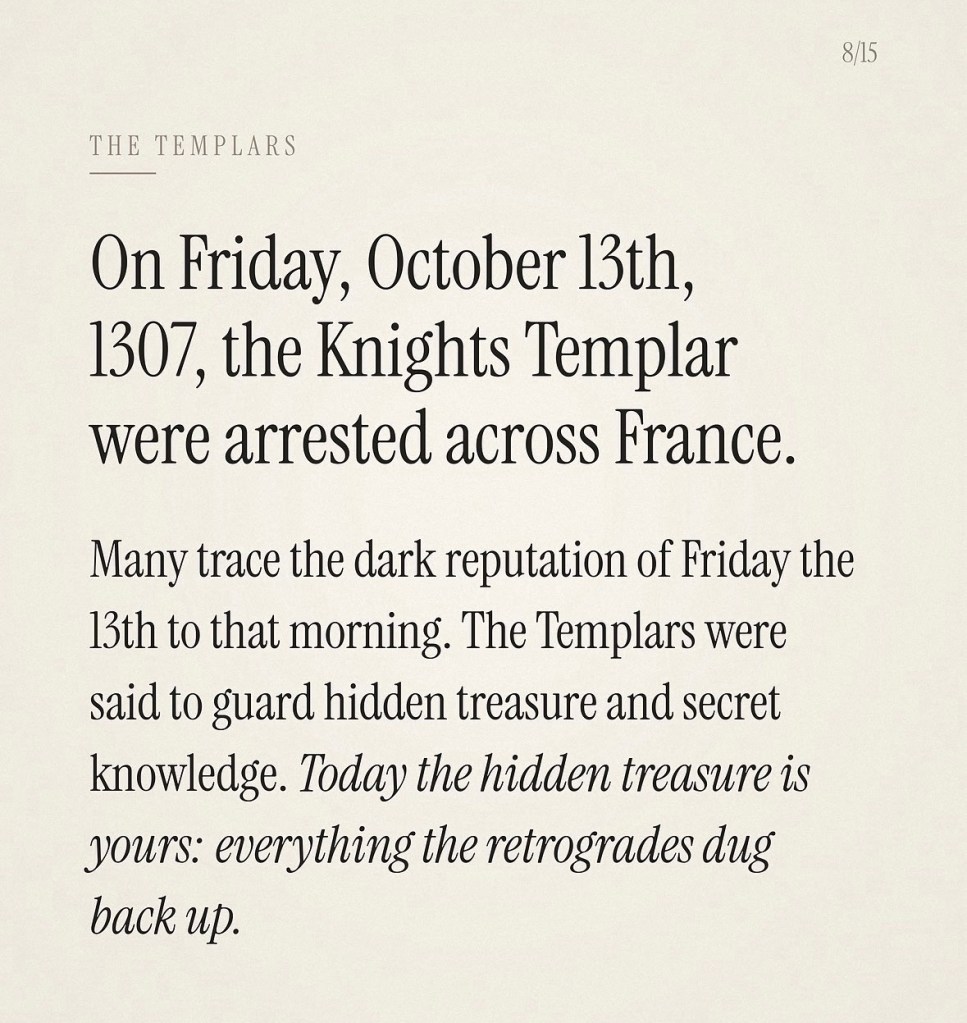
One of the most popular modern explanations points to October 13, 1307. On that Friday, King Philip IV of France ordered the simultaneous arrest of the Knights Templar across his realm. The powerful military-religious order was accused of heresy, idolatry, and other crimes. Many members were tortured into confessions; some were later executed. Grand Master Jacques de Molay was burned at the stake in 1314, and legend claims he cursed the king and pope from the flames. Both men died within the year.
The date is historically accurate, and the fall of the Templars was a dramatic injustice driven largely by Philip’s debts and desire for their wealth. However, historians emphasize that no one appears to have connected those arrests to a general superstition about Friday the 13th until the 20th century. The link was dramatically popularized by Dan Brown’s 2003 novel The Da Vinci Code. It is a compelling story that retroactively fits the date, but it is not the origin of the belief.
Debunkers, Clubs, and Pop Culture
Not everyone accepted the bad luck. In the late 19th century, former Union captain William Fowler founded the Thirteen Club in New York. Members deliberately dined in groups of 13, walked under ladders, broke mirrors, and opened umbrellas indoors—all on the 13th, often on Friday. Four U.S. presidents (Chester A. Arthur, Grover Cleveland, Benjamin Harrison, and Theodore Roosevelt) became honorary members at various points.
In the 20th century the date received a massive boost from the Friday the 13th film franchise that began in 1980. Jason Voorhees turned a calendar superstition into a global horror icon. The fear even acquired formal names: triskaidekaphobia (fear of the number 13) and the tongue-twisting paraskevidekatriaphobia (or friggatriskaidekaphobia) for fear of Friday the 13th specifically.
Is It Actually Unlucky?
Multiple studies have looked at accidents, hospital admissions, unexpected deaths, and stock-market performance. The consistent finding is that Friday the 13th is not statistically more dangerous than any other day. In some datasets it is slightly safer—possibly because people behave more cautiously. Markets have occasionally done a bit better rather than worse. Confirmation bias does the rest: when something goes wrong on that date, it gets remembered and shared; ordinary bad days on other dates do not.
The 13th is also slightly more likely to fall on a Friday than on any other weekday across the calendar cycle, which may help keep the association alive.
A Cultural Meme More Than an Ancient Curse
Friday the 13th is a genuine piece of modern folklore built on much older ingredients: Norse stories of a disruptive 13th guest, Christian associations with betrayal and crucifixion, medieval political violence that happened to fall on the right date, and the amplifying power of novels, clubs, and movies. The specific pairing is relatively young, yet it feels ancient because it draws on deep cultural currents.
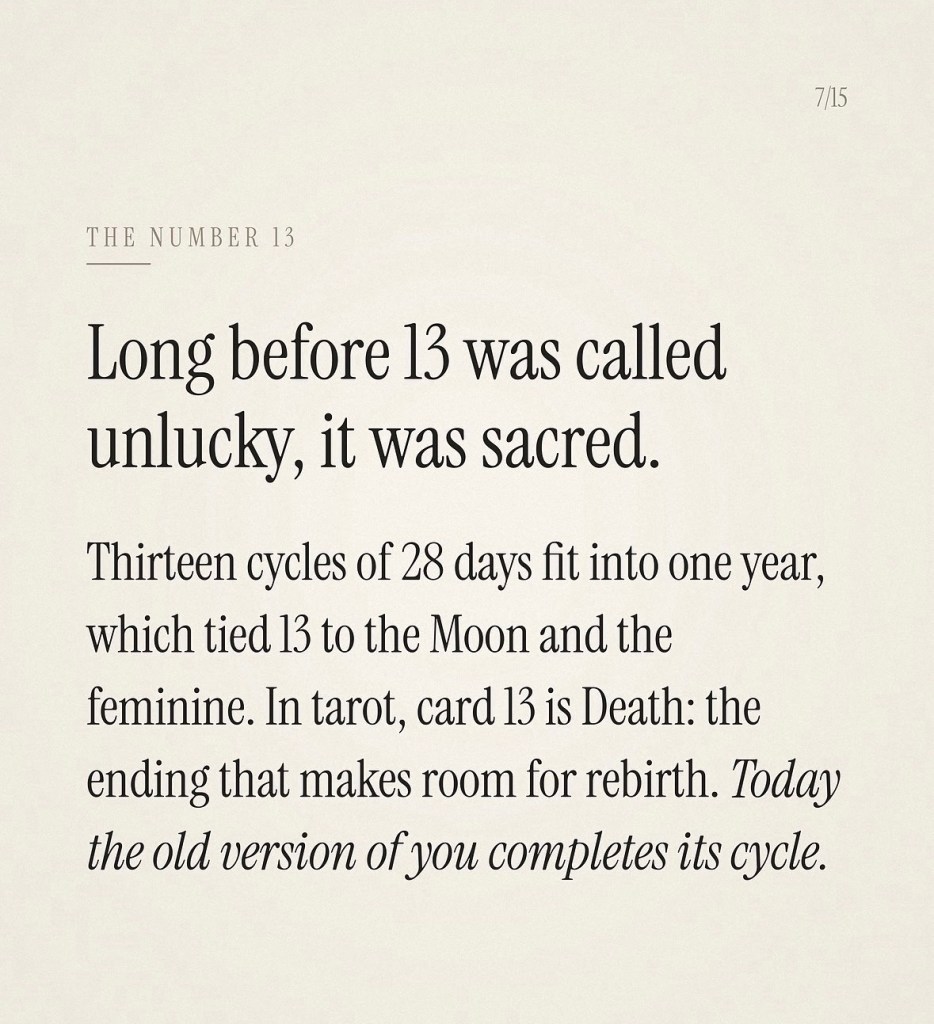
On this particular Friday the 13th in 2026, the lore is richer than the risk. Whether you treat the day with extra caution, lean into the spooky fun, or ignore it entirely, you are participating in a tradition that has been stitched together over centuries from myths, history, and human pattern-seeking. The calendar keeps producing the date. The stories keep evolving with it.

