Tag: home

  • From Complaint to Gratitude: A Life Transformation

    From Complaint to Gratitude: A Life Transformation

    I roll my eyes so hard it almost hurts, as I (not so secretly) loathe it when people complain. Not the occasional vent after a genuinely brutal day. The habit. The reflex. The way some people turn every inconvenience into a monologue, as if the universe personally owes them cheaper gas, a bigger kitchen, quieter neighbors, and a life that never pinches.

    To me it is one of the most unattractive things a person can do. Not morally unforgivable. Just ugly. It changes the face. It slumps the shoulders. It makes the voice thinner and more entitled at the same time. You can watch someone become less magnetic in real time the second they start listing everything that is “so unfair” and acting like a victim over something that you cannot even control.

    Gas prices too high? Oh no. Whatever are you going to do? Not drive? Walk a little? Combine errands? Sit with the fact that the world does not run on your preferred numbers? I am not saying prices cannot be painful.

    I am a millennial after all. I watched people lose houses, jobs, and the story they had been told about adulthood in 2008. I was handed student debt as if it were a rite of passage. I lived through the surreal, politicized, isolating stretch we still casually call “the pandemic.” I was even priced out of the little boondocks hometown I once assumed would always have a place for me. None of that made complaining noble. It made it tempting. Tempting is not the same as useful.
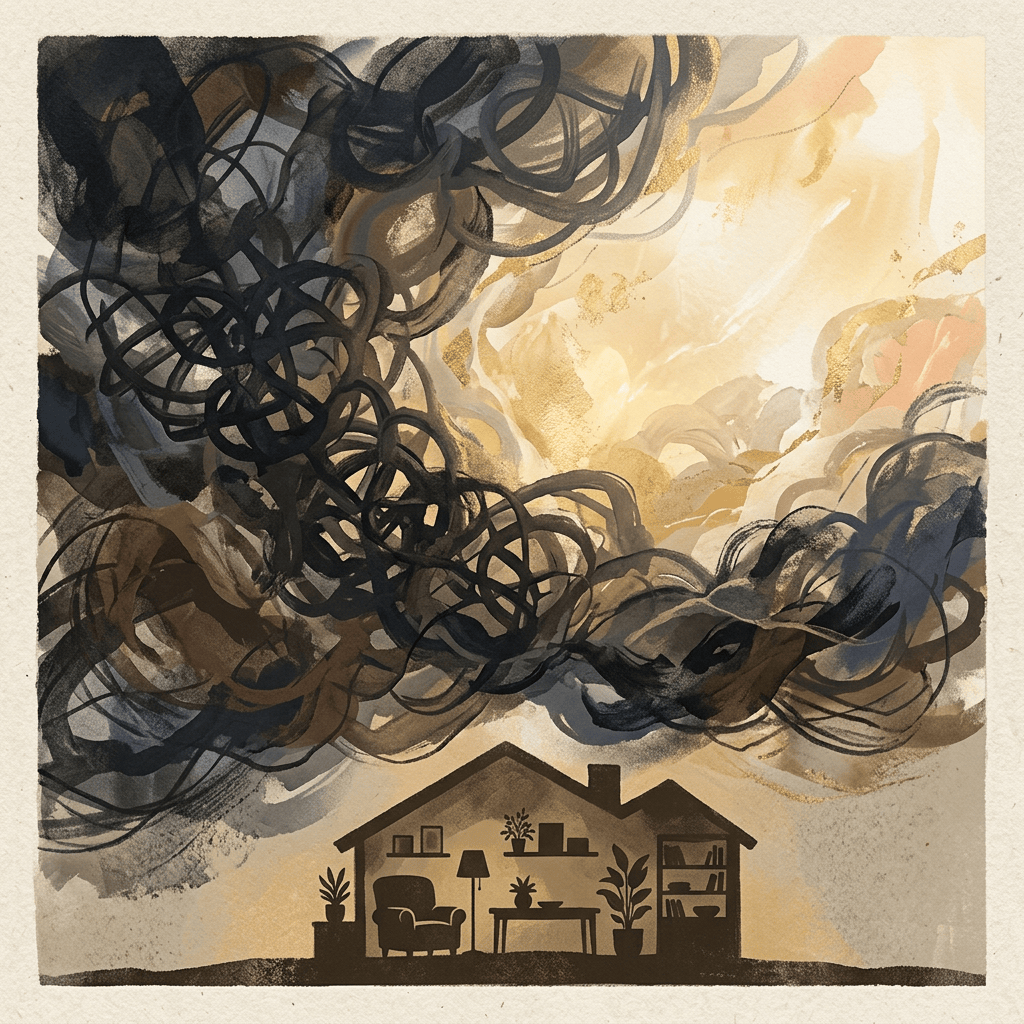
    Abstract dark storm clouds above a warmly lit house silhouette
    An abstract storm gathers above a warmly grounded home interior, suggesting emotional refuge and resilience.

    There is also the energetic piece people skip because it sounds soft until you watch it happen in real time. Complaining is not just words. It is a frequency. You glow differently when you live in grievance. The jaw tightens. The eyes scan for the next offense. The body rehearses scarcity.

    Appreciation does the opposite. It does not pretend the apartment is a penthouse. It notices that there is a roof and running water. It does not erase the bill. It refuses to let the bill become the whole identity.

    Yes, your place could be better. The kitchen is small. The landlord is slow. The neighborhood is louder than you wanted. And you still have shelter. Heat. A door that locks. A toilet that flushes. Those are not consolation prizes. For a lot of human history, and for a lot of people alive right now, they are the prize.
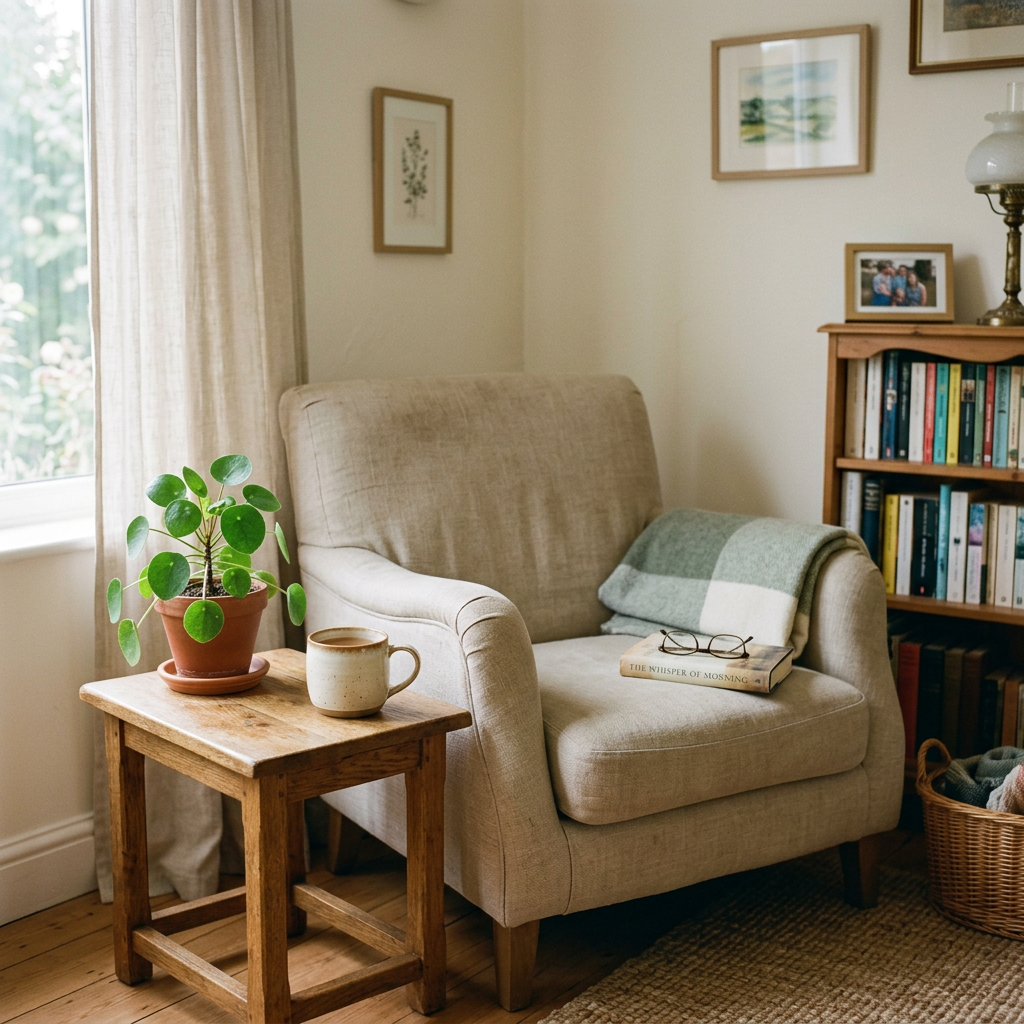
    Cozy armchair beside a table with coffee and potted plant
    A sunlit reading nook pairs a cozy armchair with coffee, books, and greenery.

    I say this from a body that does not let me pretend otherwise. I sit here in a wheelchair with one working hand and reteach myself how to use the restroom or reteach myself how to breathe/how to talk. The learning is not poetic— it is slow, humiliating, necessary, and occasionally holy. Occasionally it can feel terrifying. Some days the victory is simply that I did the thing without panicking. Some days the victory is that I did not scream.

    From that seat, a lot of the usual complaints sound like luxury noise. You still get to stand up and walk to the fridge. You still get to drive. You still get two hands that do what you ask. And—this is the part that lands hardest—you at least get to live with the person you love. Same rooms. Same ordinary evenings. The privilege of proximity that people treat as background furniture until it is threatened or gone.
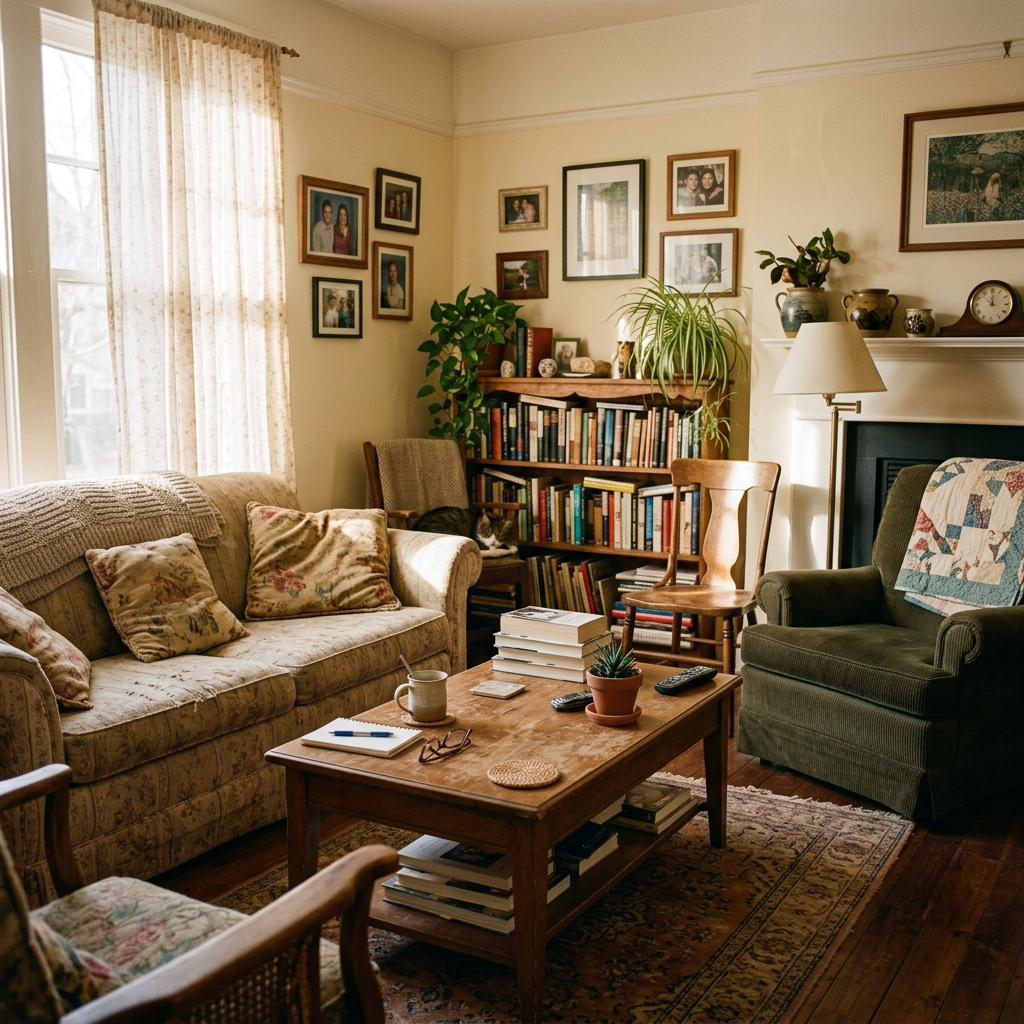
    Sunlit living room with bookshelves, plants, framed photos, and seating
    Sunlight fills this welcoming living room, centered around books, plants, and comfortable seating.

    You get to turn toward your person in the night without asking a body that no longer cooperates. You get to share a joke across a room without calculating air and effort. You get ordinary proximity. Do not waste that on a running commentary about what is missing.

    Gratitude is not denial. It is discipline. It is the decision to name what is still intact before you catalog what is broken. It will not lower gas prices. It will not erase student debt or bring a hometown back within reach. It will change the way you inhabit the life you actually have. And that life, even when it is smaller, stranger, or harder than the one you pictured, is still a life. Treat it like one.

    The performance of outrage has become a social default, and it is exhausting to witness. The same goes for the apartment that “could be better.” Of course it could. Almost everything could. And yet: roof. Walls. Running water. A door that locks. Heat or at least the possibility of it. That is not nothing.

    I am not asking anyone to perform fake cheer or pretend pain is not real. Pain is real. Limits are real. Money stress is real. I am asking for proportion. For a pause before the reflex. For the humility to notice what is already working before you catalog what is missing.

    Appreciation is not denial. It is orientation. It is choosing, again and again, to look at the roof before you curse the square footage. It is remembering that a working body, a shared home, a person who comes back to you at night—these are not small things. They are the whole plot for a lot of us.

    So yes. I will keep rolling my eyes at the soundtrack of complaint. And I will keep trying, from this smaller, harder life, to glow like someone who still knows how lucky some of the unglamorous parts actually are.
  • Being trad.

    Being trad.

    What’s a cultural tradition from your country that you love?

    Being Raised Russian Has Truly Taught Me How to Be a Traditional Woman/Wife

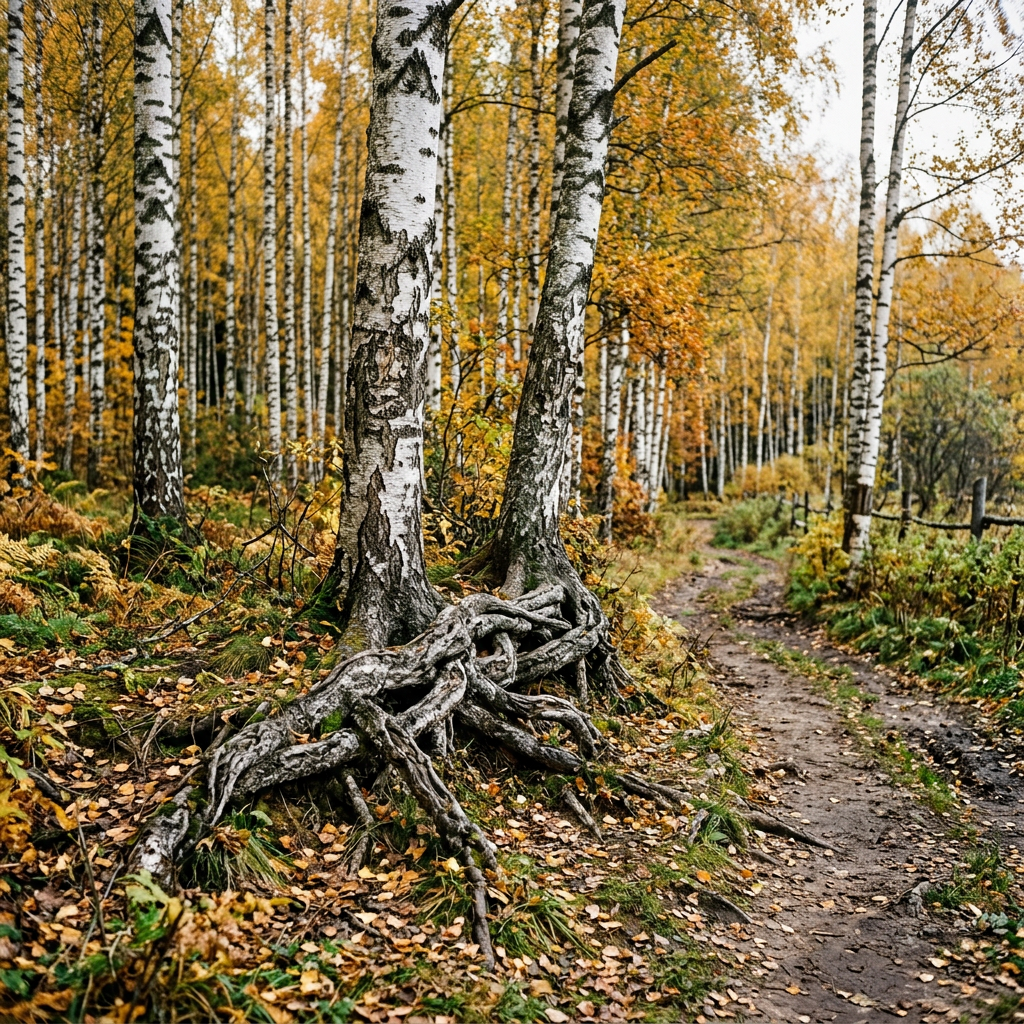
    Winding dirt path through an autumn birch forest with exposed roots
    A winding woodland path passes beneath golden birch trees and exposed twisting roots.

    There is something powerful about the way I was raised. Growing up Russian did not just give me a language, a cuisine, or a set of holidays—it shaped an entire understanding of womanhood and marriage that feels increasingly rare in this modern world. It taught me, without lectures or manifestos, how to be a traditional woman and wife: grounded, capable, devoted, and proud of the role rather than apologetic for it.

    In a Russian household, the home is not merely a place you sleep. It is the center of life, the domain where a woman’s care, order, and warmth determine the emotional climate for everyone else. From an early age, I watched my mother transform ordinary spaces into places of comfort and beauty. Floors were clean, tables were set properly, food was prepared with intention, and the atmosphere mattered. This was never framed as oppression. It was framed as competence and love. A well-kept home and a well-fed man was an expressions of strength, not subordination. I absorbed the lesson that domestic skill is not “less than” a career; it is a different, equally demanding form of mastery.

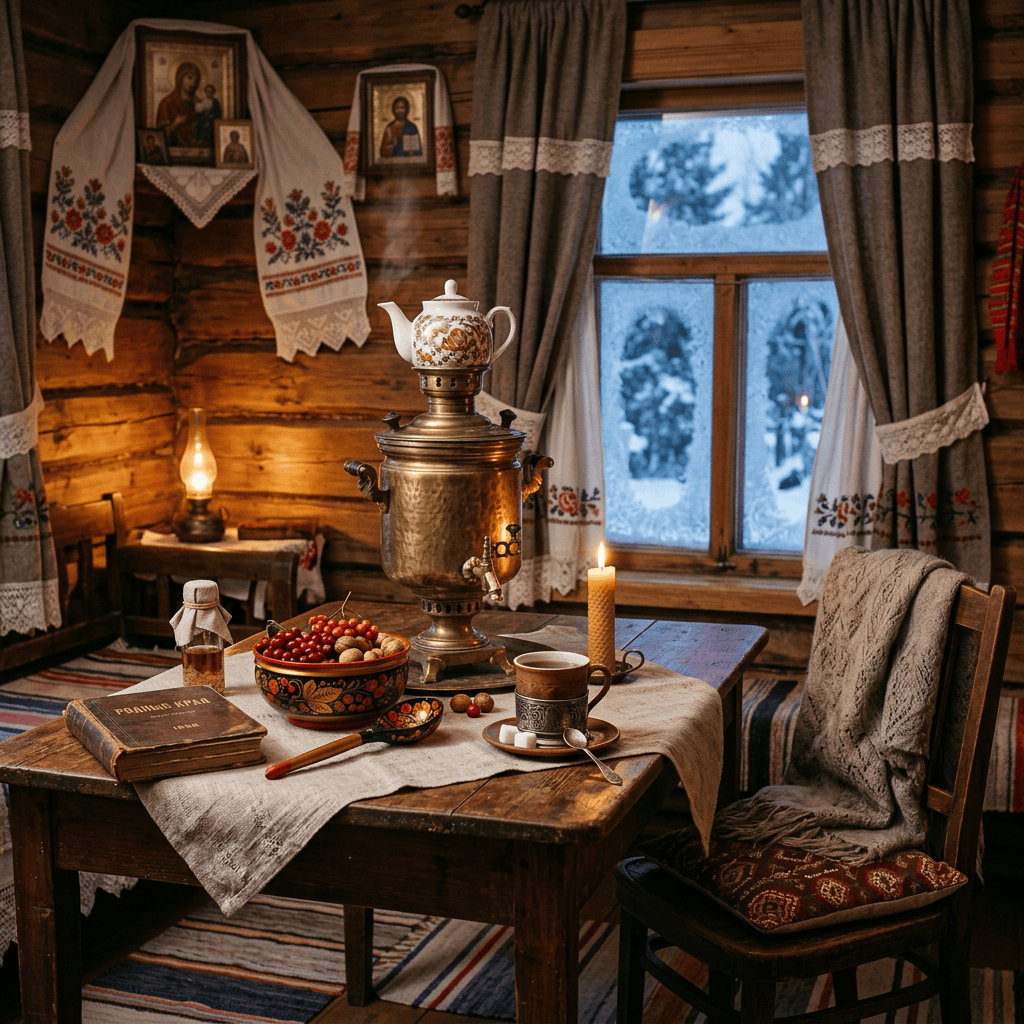
    Brass samovar and tea setting inside a rustic cabin beside snowy window
    A warmly lit cabin table features a brass samovar, tea, berries, and embroidered folk textiles.

    Traditional Russian upbringing also instills a clear-eyed view of complementarity between men and women. Men are expected to protect, provide, and lead with responsibility. Women are expected to nurture, support, and create the emotional and physical conditions in which that protection and provision can flourish. This is not a rigid hierarchy of worth; it is a practical division of labor rooted in observed differences and mutual dependence. I was never taught that needing a man’s strength made me weak, or that offering softness and loyalty made me less intelligent. On the contrary, the ability to soften a hard world for the people you love was presented as one of the highest forms of feminine power.

    Loyalty sits at the center of this model. Russian culture has long valued endurance—through winters, through history, through difficulty. That same endurance is expected in marriage. You do not discard a partnership at the first serious inconvenience. You work, you adapt, you protect the family unit. This does not mean tolerating abuse or remaining in a destructive situation. It means entering marriage with the seriousness of a lifelong covenant rather than a temporary lifestyle arrangement. Being raised with that expectation made me less interested in endless options and more interested in depth, continuity, and the quiet satisfaction of building something that lasts.

    There is also an unspoken standard of self-presentation. Russian women are often raised with an awareness that appearance is part of how you honor yourself and those around you. Looking put-together is not vanity for its own sake; it is a form of respect—for your husband, for guests, for the occasion, and for your own dignity. Combined with an expectation of competence in the kitchen and the home, it produces a woman who can be both soft and capable, elegant and practical.

    None of this requires rejecting education, ambition, or personal development. Many of the strongest traditional Russian wives I know are highly educated, multilingual, and sharp. The difference is priority. Career and self-expression are valuable, but they do not automatically outrank the creation of a stable, loving home and the support of a husband who carries heavy external burdens. The traditional model I absorbed does not demand that a woman disappears; it asks her to invest her gifts where they produce the deepest long-term fruit for the people she loves most.

    Of course, no culture is the same, and not every Russian family embodies these ideals perfectly. Yet the cultural inheritance is real. It prizes resilience over fragility, duty over pure self-expression, and the tangible results of care over abstract declarations of independence. In a time when many people feel adrift in relationships that prioritize individual fulfillment above all else, that inheritance feels like a quiet advantage.

    Being raised Russian did not only teach me to be smaller. It taught me how to be solid. It showed me that there is profound dignity in cooking a real meal, keeping a peaceful home, standing beside a man through difficulty, and having clear values. Traditional womanhood and wifehood, in this framing, are not relics. They are disciplines—demanding, beautiful, and deeply rewarding when practiced with eyes open and heart engaged.

    That is the gift the culture handed me. I am still learning how to live it fully, but I no longer question its worth.

  • I Cannot Erase Any Part of My Life

    I Cannot Erase Any Part of My Life

    If you could erase one event from your history, what would it be?

    There are days when the weight of everything I have lived through presses so heavily on my chest that the temptation to rewrite history feels almost unbearable. I catch myself wondering what it would be like to go back—to delete the chapters filled with pain, the choices I regret, the nights I barely survived. Yet every time that thought surfaces, I stop myself cold. I cannot erase any part of my life. Because if I did, I would not have met him. The love of my life.

    It is a strange and beautiful paradox, is it not? The very path that brought me to my lowest points is the same one that led me straight into his arms. Every wrong turn, every heartbreak, every season of darkness carved the version of me that was ready to recognize him when he appeared. Had I skipped the struggle, I might never have developed the depth, the resilience, or the quiet hunger for real connection that allowed me to see him—and to be seen by him in return.

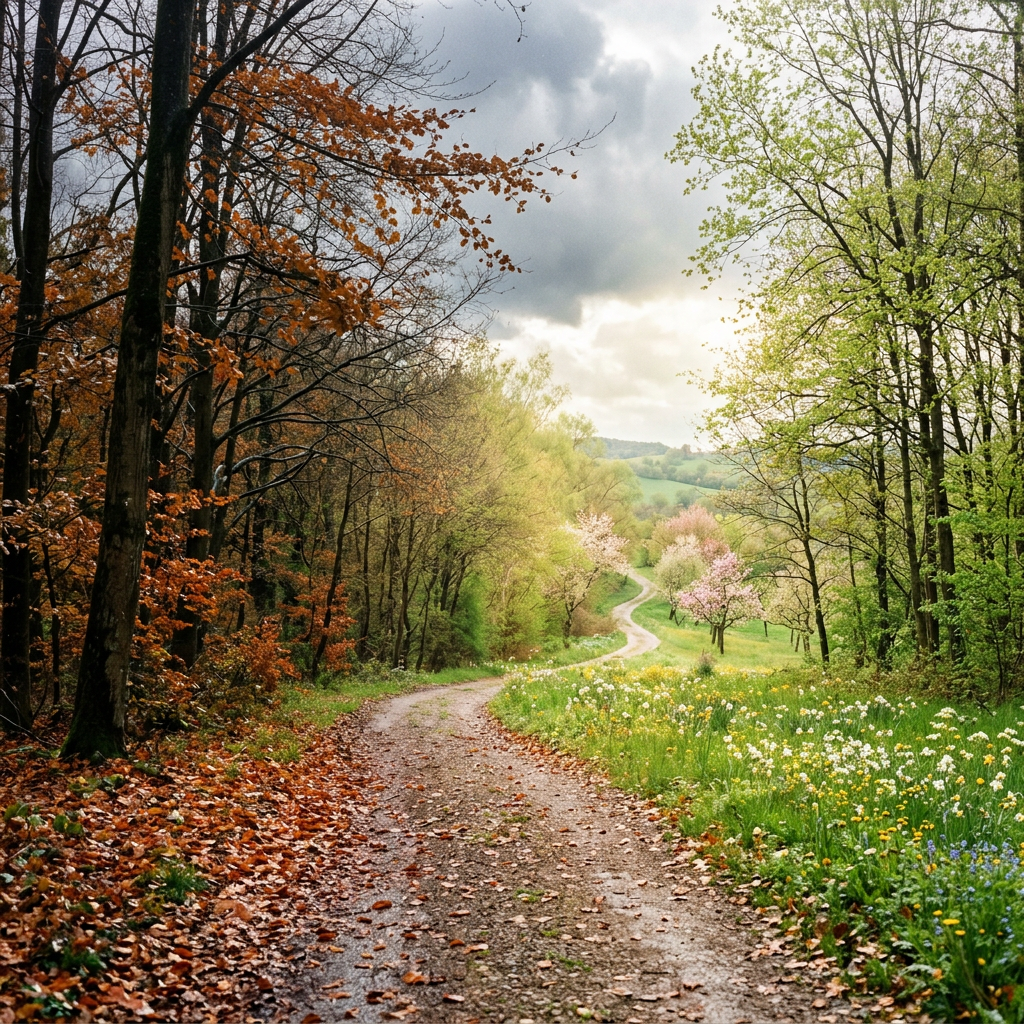
    Winding path through woodland with autumn leaves, spring flowers, and distant green hills
    A winding woodland path leads through autumn leaves and spring wildflowers toward sunlit hills.

    I know I am not where I need to be in life. My recovery is still a work in progress, messy and nonlinear. Some mornings I wake up feeling strong, only to find myself slipping by afternoon. There are still triggers I have not fully disarmed, still patterns I catch myself repeating, still days when the old version of me tries to reclaim the driver’s seat. Progress is not a straight line; it is a spiral. I revisit the same lessons at higher altitudes, learning them more gently each time. And while I can acknowledge that I am not yet the healed, steady person I aspire to become, I also know this truth with absolute clarity: I would not trade a single moment of the journey that brought me here.

    Because “here” includes him. Even if he is not physically here.

    He did not arrive after I had everything figured out. He showed up in the middle of the unfinished story. He has seen the raw edges of my recovery—the days I struggle, the moments when old “wounds” reopen without warning, the quiet battles I still fight behind a brave face. And somehow, instead of turning away, he stays He stays even though no one wants this. To be a part of this.. Yet, he holds space for the parts of me that are still healing. In his presence I feel both completely known and completely safe, a rare combination I never believed I would find.

    Looking back, I can trace the invisible thread that connects every hardship to this love. The loneliness that came with my disability taught me how to cherish companionship. The heartbreak (that I received from my own family) taught me what I would never again settle for. The rock bottom taught me that I am worth fighting for—and that lesson made me capable of receiving the kind of love that does not demand perfection, only honesty. If I had erased the pain, I would have erased the soil in which this relationship took root.

    So I choose, again and again, to keep the whole story. The beautiful and the broken. The triumphs and the near-misses. The version of me who fell is the same version who eventually looked up and found him standing there. I may still be climbing toward the place I need to be in my recovery, but I carry no desire to rewrite the map that led me to this love.

    I cannot erase any part of my life.
    And more than that—I no longer want to, despite the fact that I still get frustrated and incredibly sad/ angry (I just do my best to be positive about it).

  • From Globetrotting Toddler Slut to Aspiring Housewife: How Life Broke My Promiscuity and Built My Domestic Cage

    Crowded beach with colorful umbrellas and people swimming alongside a woman reading by a fireplace indoors
    A bustling beach day contrasted with a quiet evening reading by the fire

    My early years were pure, unfiltered chaos — the kind that would get a kid checked on today. My parents and I traveled the globe like it was our personal playground. No five-star resorts or curated “experiences.” Just raw movement. My father had this mountain bike with a little seat rigged to the back, and I would perch there like a tiny, curious creature , wind whipping my face while he pedaled through foreign cities. I could not even reach the pedals, but I was along for the ride anyway. That was me: five years old, zero fear, maximum adventure.

    And yeah, I was incredibly promiscuous. Do not clutch your pearls — I am not talking anything illegal or tragic, just the raw, unashamed chaos of a feral kid who had not yet internalized society’s shame software. I would flirt with strangers in markets, wrote love letters to my classmates, and I even had a little boyfriend who I was constantly kissing and laying naked with. I collected attention like currency. I especially did not believe in boundaries. I was a walking diplomatic incident in pigtails. From little boys, grown men and even a girl cousin. I was living proof that toddlers can be absolute heathens if you let them.

    Silhouette of hiker holding glowing compass with mountain range at sunset
    A hiker holds an illuminated compass while overlooking rugged mountains at sunset.

    Fast-forward to now, and holy shit, the contrast is brutal. I still chase adventure, but it is domesticated. I demolish raw meat and fish, organs and I still fantasize about packing a bag and disappearing. The itch is there. But the execution is different now. I am a homebody now, and it feels almost traitorous to admit. The girl who once rode shotgun on a mountain bike across continents now dreams of becoming his housewife. Not in some tradwife cosplay way for clout, but genuinely. Apron on, dinner simmering, waiting for the door to open so I can hand him a drink and melt into that quiet, possessive domestic bliss. Something that I got a little taste of this last week.

    Life happened I guess. Adulthood installs its updates whether you want them or not. Never mind the disability that has shackled me to the house. The same kid who thrived on constant motion discovered that true comfort can be found in one well-chosen address. The promiscuity died somewhere along the way — not with shame, exactly, but with the realization that cheap thrills and scattered attention leave you hollow. I traded the dopamine hits of “everyone likes me” for something deeper, rarer, and way more dangerous: wanting to belong to one person so completely it rewires your entire operating system.

    Wooden desk with a steaming blue cup of tea, a green journal, a pen, and a lamp by a rain-speckled window showing rough ocean waves and dark clouds
    A steaming cup of coffee and a journal sit on a wooden desk by a window overlooking a stormy ocean.

    I still get the urge to book a one-way ticket and vanish. I used to scroll through flight deals like a junkie. But then I picture coming home to him — the house smelling like whatever chaotic fusion dish I attempted that day, laundry folded (badly), me barefoot in the kitchen wearing nothing but his oversized shirt. That fantasy hits harder than any passport stamp ever did. The bike seat on the back of father’s mountain bike taught me motion. Adulthood taught me anchorage. And weirdly, I am greedy for both.

    Replace tea with glass of wine

    Ultimately, I guess I am out here living this schizophrenic existence: still ordering the rarest thing on the menu, still plotting future escapes, but happiest when I am nesting. The former global toddler slut has been tamed — not by force, but by choice. And if that makes me basic or boring or a walking contradiction, fine. I will own it while I perfect his favorite recipe and secretly plan my next chaotic food order.

    The adventure did not die. It just moved inside the house, put on an apron, and started calling one man “home.”

    Deal with it. I am thriving in this paradox.

  • Embrace Playfulness: Ignite Your Feminine Whimsy

    Embrace Playfulness: Ignite Your Feminine Whimsy

    In a world that often feels heavy with deadlines, expectations, and endless scrolling, there is a quiet rebellion happening—one that sparkles with giggles, twirls in soft fabrics, and finds magic in the ordinary. It is the art of being playful, feminine, and whimsical. Not as a performance, but as a return to the part of you that once spun in circles until dizzy, named clouds after animals, and believed dresses were made for dancing.

    This is not about becoming someone else. It is about remembering who you have always been underneath the armor that the world has forced you to wear.

    Playful is the permission to be silly without apology./ how he makes me feel. It is making up silly songs with your love, or turning grocery shopping into an adventure by only choosing items that are the prettiest colors (AKA the healthiest ones). 

    Feminine is not about stereotypes—it is about softness, intuition, sensuality, and flow. How your nervous system naturally responds to the calm presence of a dominant man. It is the gentle strength in receiving compliments gracefully, nurturing your space with fresh flowers, or moving through the world with a sway instead of a march (I. am currently learning how to do just that).

    Whimsical is the fairy dust sprinkled on top: unexpected joy, curiosity, wonder. Essentially it is what a stroke survivor becomes after relearning how to speak, write, use utensils and experiencing life anew. Being childlike as a thirty-six year-old. It is believing in little miracles, collecting vintage dishes “just because,” or imagining your life as the plot of a storybook where the heroine always finds reasons to smile.

    Together, they create a lifestyle that feels like wearing your favorite sundress on a breezy day—light, free (panty-less), and utterly you.

    We have been taught that seriousness equals success and productivity equals worth. But research (and our tired souls) knows better: play reduces stress, boosts creativity, and actually makes us more effective in the “real world.” Feminine energy brings balance to a hyper-masculine culture obsessed with grinding. Whimsy keeps our inner child alive—the one who has never forgotten how to dream (enter my wannabe princess era). 

    When you live playfully, femininely, and whimsically, you:

    • Attract lighter relationships (people feel relaxed around joy/ you find the love of your life)
    • Feel more connected to your body and intuition
    • Turn mundane days into tiny adventures
    • Radiate a magnetic energy that draws good things to you

    So…

    Cultivate a Whimsical Home
    Your space should feel like a secret garden.This is something I aspire to create in our home! Fresh flowers, twinkling string lights, candles that smell like vanilla and dreams, crystals catching rainbows on the windowsill, and a playlist of soft acoustic or elevator music (Sade).

    Move Like Water, Not Steel (that is his job!)
    Walk with a gentle sway (I am currently training for this). Sway to the music. Let your body remember it is allowed to be soft and expressive.

    Collect Moments, Not Things
    Take note of three magical things each day: the way the light hit the trees, a stranger’s kind smile, the perfect cup of coffee. Over time, you will train your eyes to spot wonder everywhere.

    Some days you will wake up feeling anything but whimsical. That is okay. Whimsy is not about constant happiness—it is about choosing lightness when you can. Give yourself permission to be a moody fairy on tough days. The spark will return.

    She is already inside you.

    She has been waiting.

    So go ahead—buy the sparkly shoes. Make the silly joke. Leave a trail of glitter (metaphorical or literal) wherever you go. The world does not need more seriousness. It needs more girls who remember how to play.