Tag: history

  • Spencer Pratt’s Mayoral Bid: Unpacking Local Political Rot

    Spencer Pratt’s Mayoral Bid: Unpacking Local Political Rot

    There is something refreshingly raw about a figure like Spencer Pratt, the infamous “villain” from The Hills, stepping into the political arena. Yes, I admit it: I have always been drawn to the villain in the story— the one who everyone else seems to hate. And right now, as Pratt campaigns for Mayor of Los Angeles in the 2026 race, that glossing over him is driving me absolutely insane.
    The 2026 Experience

    Pratt, who announced his bid on the one-year anniversary of the devastating Palisades Fire that claimed his own home, is not running a conventional campaign. He is on a mission to expose what he calls deep-seated fraud, mismanagement, and dysfunction in California. He talks boldly about cleaning up the streets, tackling homelessness (those “zombies”— as he calls them— wandering the city in a drug-fueled haze), and holding the powers-that-be accountable. It is the kind of outsider energy that resonates in a city plagued by visible decay. Yet the media and political insiders treat him like a punchline rather than a serious contender polling in the twenties and surging with real voter frustration. There should be a lesson in that.

    Here is the core lesson I have learned from observing politics at every level, and this is not a partisan jab—it is a structural truth that transcends red, blue, or whatever color-coded tribe you belong to: If you truly want meaningful change, you have to drive it locally. Primarily, start with yourself. National spectacles and global posturing grab headlines, but the day-to-day realities that crush or elevate ordinary lives—trash on the sidewalks, skyrocketing rents, failing schools, unchecked crime—are decided in city halls, county offices, and state capitals. The so-called “global elite,” do not lose sleep over the average taxpayer scraping by. They are insulated by distance, wealth, and influence. Real accountability starts at the street level.

    Yes, Pratt promises to shine a light on the waste, the fraud, and the entrenched interests that have turned parts of LA into an open-air disaster zone. But let us be brutally honest: do we really believe the system will simply let him? The mayor’s office sits beneath the governor’s shadow in the hierarchy of power. Look at the Zohran guy who won the mayoral election in NYC. never mind that I personally do not support his policies, I am pretty sure that he was never allowed to install his vision. It is because the governor makes the policies. And governors, like California’s Gavin Newsom, are in the business of creating jobs and opportunities—or at least the appearance of them. Here is where the cynical machinery reveals itself:
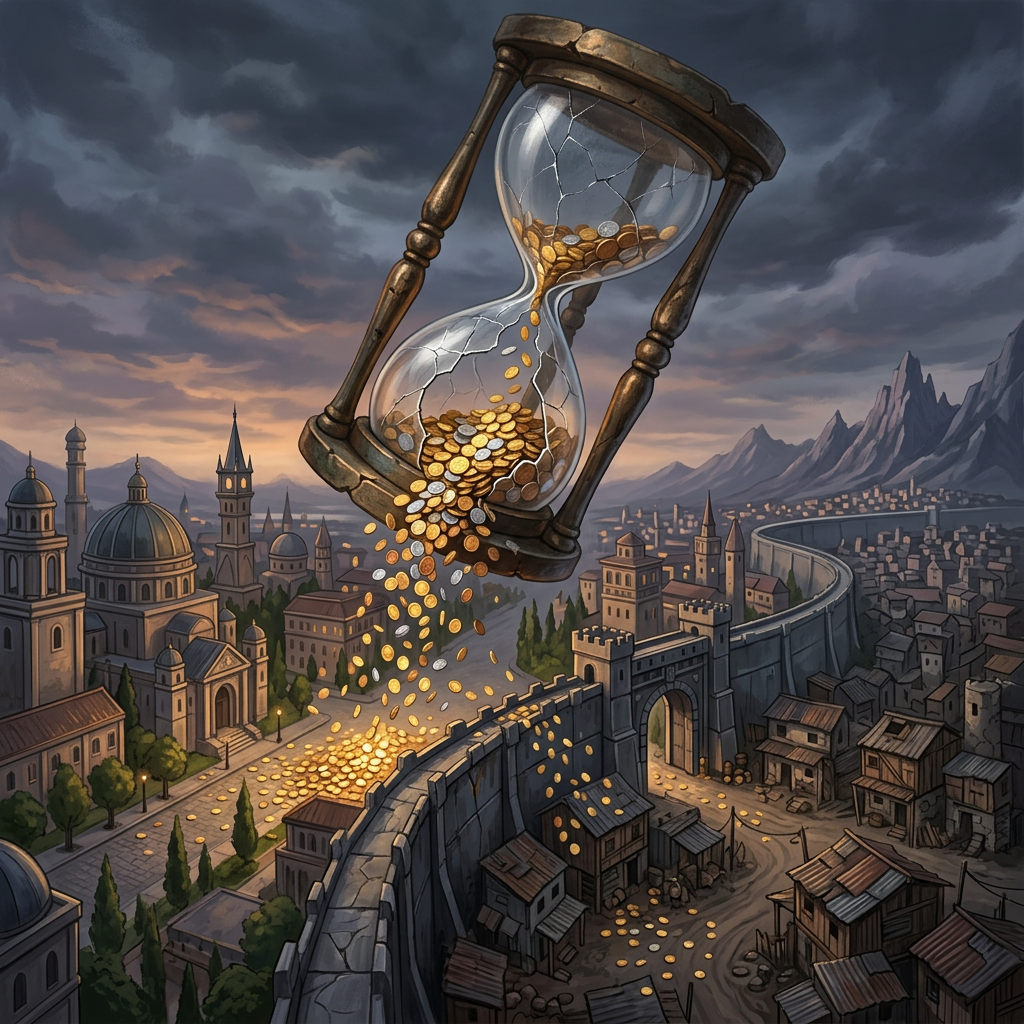
    A cracked hourglass leaking gold and silver coins over a wall separating two contrasting city areas.
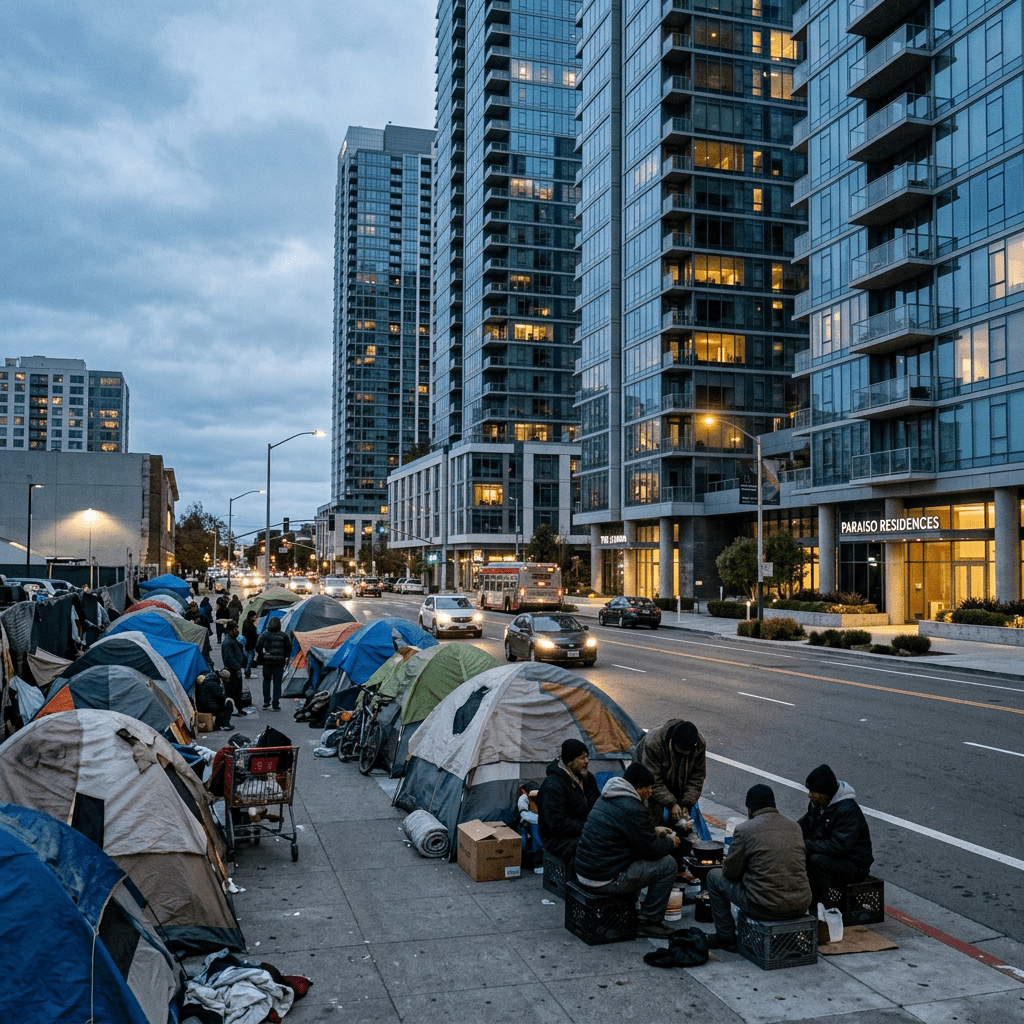
    An hourglass with coins spilling over divides a prosperous city from a poorer settlement below.

    Imagine a city where homelessness and open drug use are largely erased. No more tent encampments. No more “zombies” shuffling through downtown or Venice Beach. On the surface, that sounds like victory. But zoom out: entire industries, nonprofits, task forces, union contracts, consulting gigs, and government programs depend on the existence of these problems. Cleanup crews, social workers, outreach teams, mental health contractors, housing initiative funders—the list goes on. If the problem vanishes, so does the justification for the budgets, the grants, and the jobs that flow from it.

    This is not conspiracy; it is economics 101. Problems that fester generate employment. Politicians can campaign on “solutions” year after year, securing votes from those dependent on the system while reassuring the frustrated public that help is always just one more program, one more tax increase, one more initiative away. “We’re working on it,” they say, as the tents multiply and the needles pile up. Clean it all up too effectively, and suddenly there is a surplus of idle bureaucrats and contractors wondering where their next paycheck comes from. Better to manage the crisis than solve it outright.

    That is the quiet cynicism at the heart of so much local governance. The people are left in a dependent loop, turning to “daddy government” for salvation while the same officials who presided over the decline promise yet another fresh start. Meanwhile, the average Angeleno deals with the fallout: unsafe streets, businesses fleeing, quality of life evaporating. Pratt’s outsider status—reality TV fame, no long political résumé—might be exactly what makes him threatening to this ecosystem. He does not owe favors to the same players as the regular politicians. He lost his home to what he sees as failed leadership. That personal stake could fuel genuine disruption, or it could highlight just how immovable the bureaucratic blob really is. We will see how this all plays out…

    I am not endorsing every plank of Pratt’s platform, nor am I blind to the spectacle of a Hills villain turned mayoral hopeful. But the visceral reaction against him from certain corners says more about the defenders of the status quo than about Pratt himself. In an era where frustration with visible failure is boiling over, his surge in the polls (recent numbers putting him in striking distance) reflects an electorate tired of the same scripted failures. But I remain skeptical whether his lofty vision is plausible.

    I know that is not how the political game is played. Local politics matters because it is where we see the proof in action. If we keep waiting for distant saviors or global resets, we will stay stuck in this cycle of decline. Whether Pratt can actually break it remains to be seen on June 2 and beyond. But ignoring the messenger because of his reality TV past, while the city continues its slide, would be the real insanity. Change starts local. The question is whether we will let the problems keep paying the salaries, or finally demand they end.
  • Understanding Memorial Day: Origins and Observances

    Understanding Memorial Day: Origins and Observances


    This Memorial Day, my boyfriend and I will be doing what we do best lately: sharing our usual FaceTime coffee date from opposite sides of the country. We have spent several recent Memorial Day weekends physically together, but somehow these long holiday stretches still end up with us glued to our phones — sipping coffee, chatting, and wishing we were in the same room. His grandfather served in the Second World War (but passed away in 2010). Because of that, my history-buff boyfriend feels a deep, personal connection to this holiday that I, as a Russian immigrant, can never quite match.

    In Russia, we grow up honoring May 9th — Victory Day — with parades, red carnations, and stories of grandparents who fought in the Great Patriotic War. Patriotism there is loud, emotional, and woven into everyday life. Here in America, it feels quieter. More subdued. I understand why. This land has not seen the kind of devastation and loss that so many other countries have endured on their own soil. America’s wars have largely been fought far away, on someone else’s beaches and battlefields. That distance changes how the day lands in people’s hearts.Still, I find myself reflecting on the sacrifices made by those who came before — especially the ones who made my boyfriend’s family possible. Even from a screen, I am grateful to share this day with him.

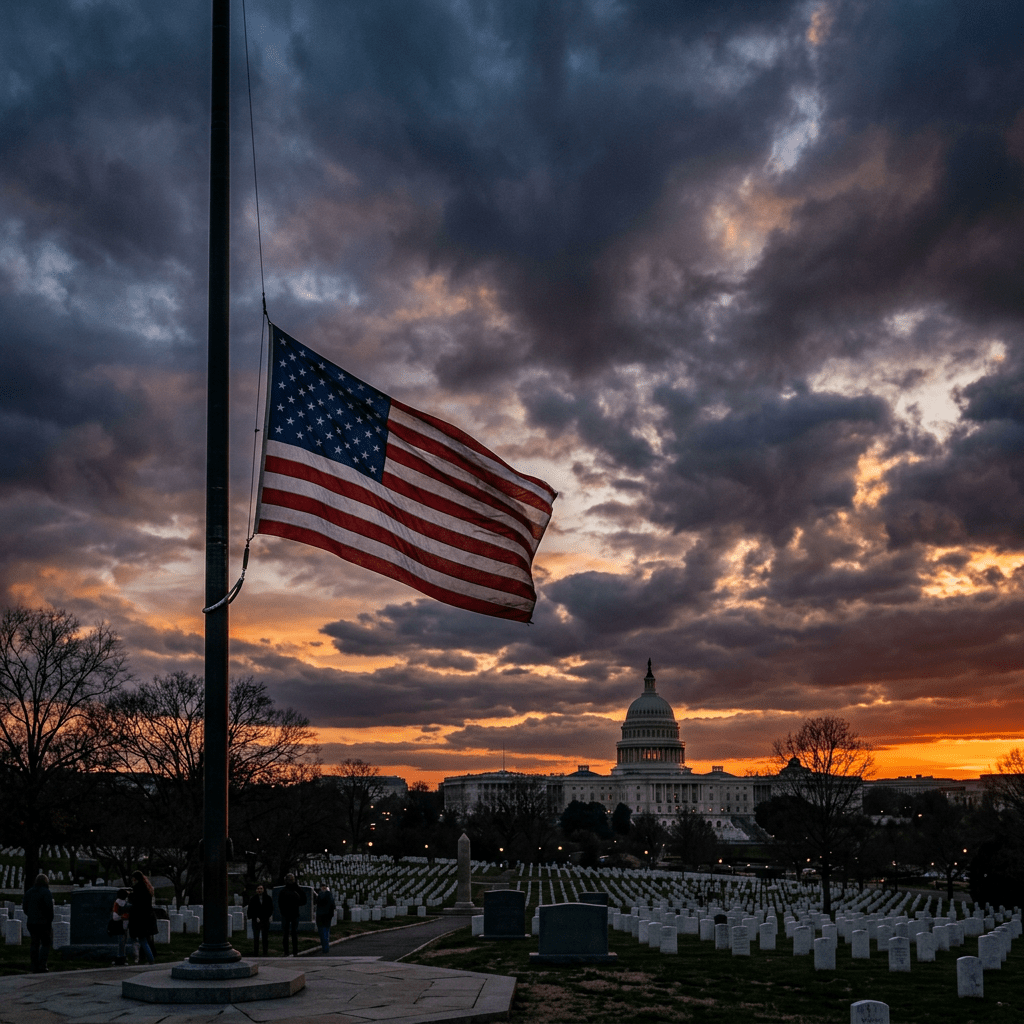
    American flag at half-mast above Arlington National Cemetery with U.S. Capitol building and sunset sky

    Most people treat Memorial Day as the beginning of the summer. However, Memorial Day is more than just a long weekend marking the unofficial start of summer. It should not just be a holiday for another coffee date. It is a solemn national holiday dedicated to remembering and honoring the men and women of the United States Armed Forces who made the ultimate sacrifice in service to their country.

    A Brief History of Memorial Day

    The roots of Memorial Day trace back to the aftermath of the American Civil War, one of the bloodiest conflicts in U.S. history, which claimed the lives of approximately 620,000 soldiers. In the years following the war, communities across the nation began decorating the graves of fallen soldiers with flowers, wreaths, and flags—a practice that gave rise to the original name, “Decoration Day.”

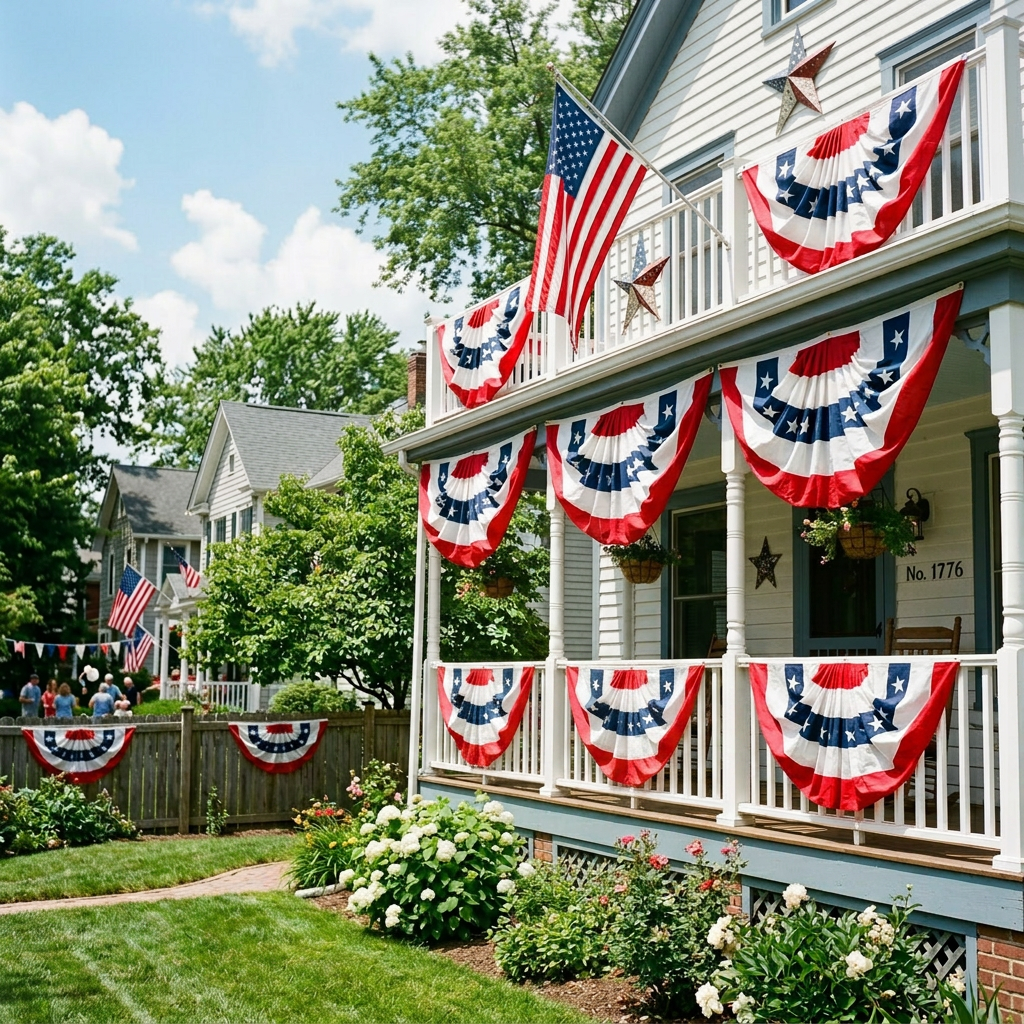
    White house porch decorated with red, white, and blue patriotic bunting and American flags

    On May 5, 1868, General John A. Logan, commander-in-chief of the Grand Army of the Republic (an organization of Union veterans), issued a proclamation establishing Decoration Day on May 30. That first national observance drew thousands to Arlington National Cemetery, where flowers were placed on the graves of both Union and Confederate soldiers.

    While several locations claim to be the birthplace of the holiday (including Charleston, South Carolina, and Boalsburg, Pennsylvania), the tradition spread rapidly. After World War I, it expanded to honor all American service members who died in any war. The name officially became “Memorial Day,” and in 1971, Congress passed the Uniform Monday Holiday Act, moving it to the last Monday in May to create a three-day weekend.

    The True Meaning and Significance

    At its core, Memorial Day is about remembrance and gratitude. It acknowledges that freedom is not free and that countless individuals—sons, daughters, fathers, mothers, brothers, and sisters—paid with their lives to defend the ideals of liberty, democracy, and justice.

    This day serves as a powerful reminder of the human cost of conflict. From the Revolutionary War through today’s global operations, these heroes stepped forward when their nation called, often knowing the risks involved. Their sacrifice ensures that future generations can enjoy the blessings of peace and opportunity.

    Memorial Day also fosters national unity. It transcends politics, reminding Americans of shared values and the collective debt owed to those who defended them.

    How Americans Observe Memorial Day

    Traditions vary, but the spirit remains consistent:

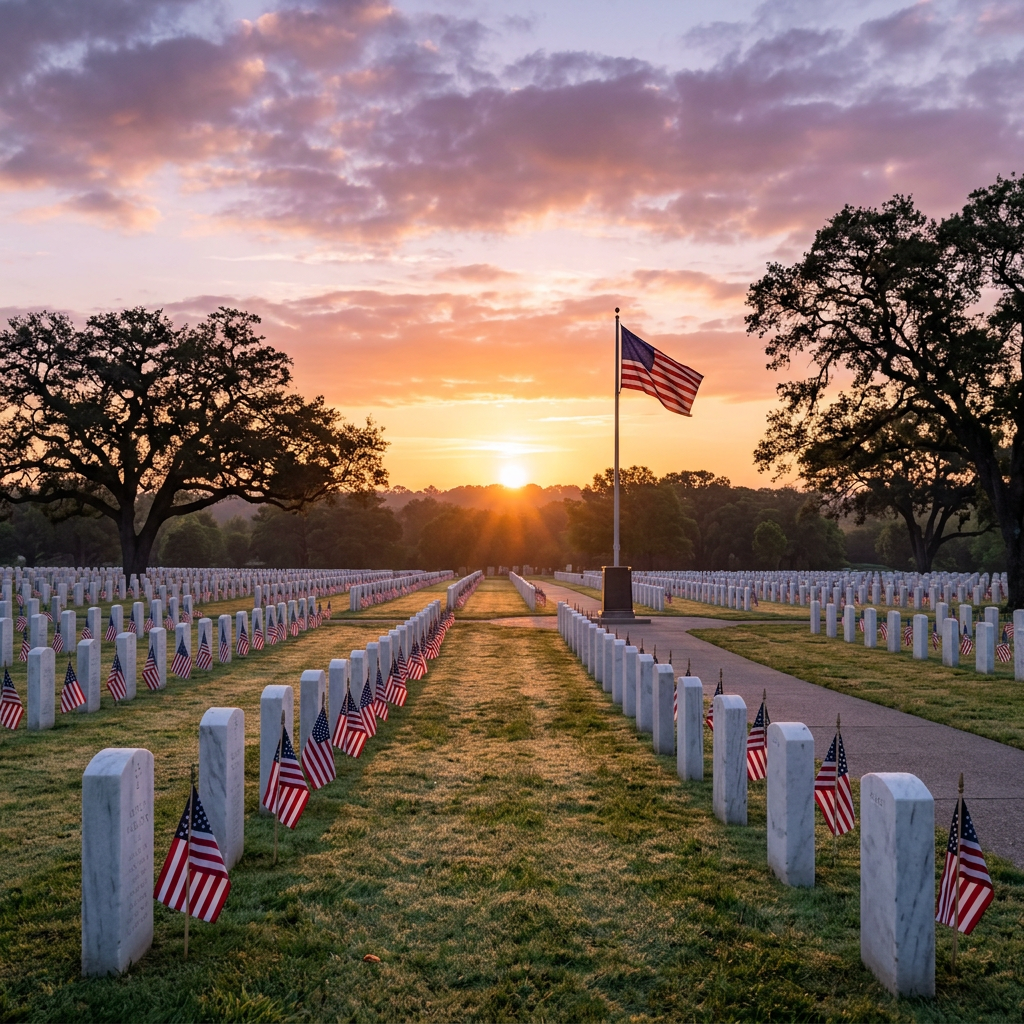
    • Cemetery visits and grave decorations: Families and volunteers place American flags and flowers on the graves of fallen service members. National cemeteries like Arlington become seas of red, white, and blue.
    • Parades and ceremonies: Military parades, speeches, and moments of silence honor the fallen. The National Memorial Day Concert in Washington, D.C., is a highlight.
    • Flags at half-staff: From sunrise until noon, U.S. flags fly at half-staff to symbolize mourning, then raised to full staff to honor the living who continue the legacy.
    • BBQs and family gatherings: While celebrations often include cookouts, many use the time to reflect, teach children about history, and express thanks.
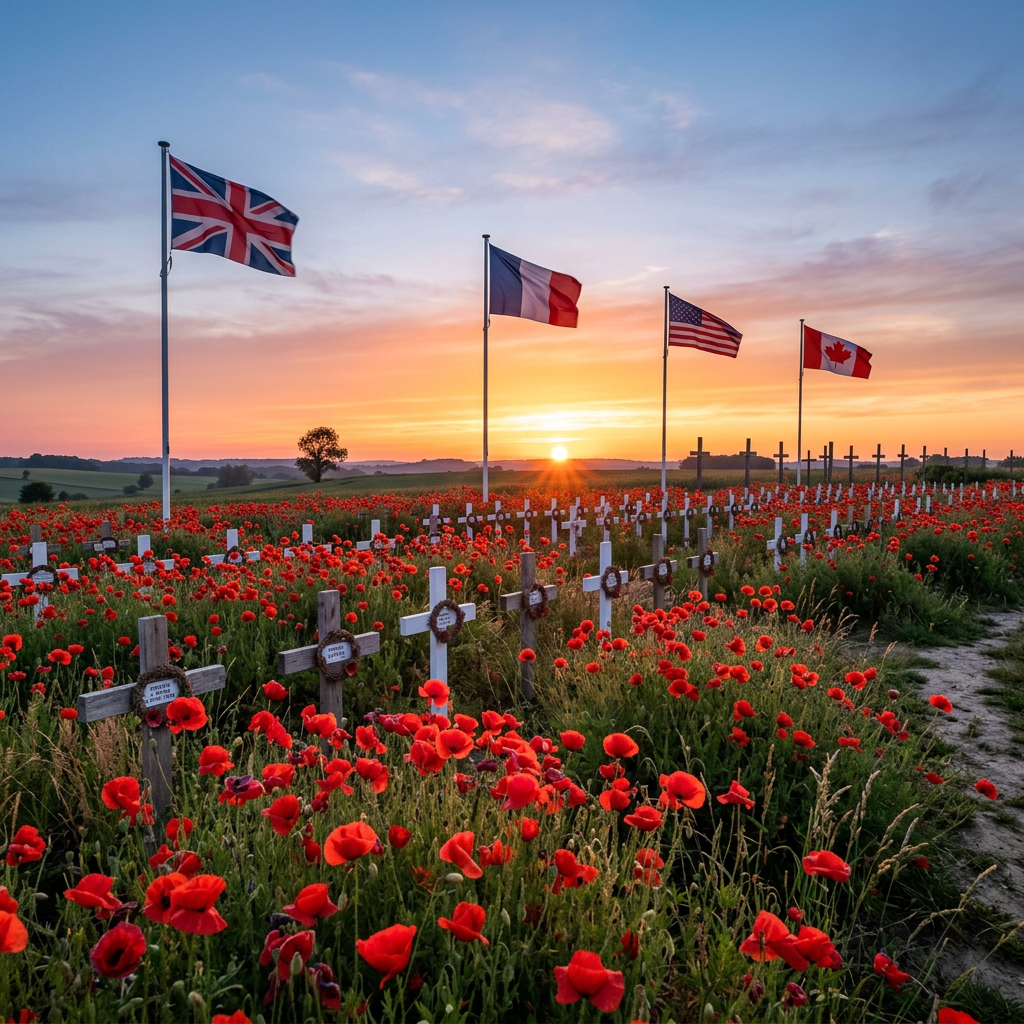
    World War I cemetery with crosses, poppies, and flags of UK, France, USA, and Canada at sunrise

    It is important to distinguish Memorial Day from Veterans Day (November 11 AKA my boyfriend and I’s physical anniversary!)), which honors all who have served—living and deceased. Memorial Day specifically focuses on those who died in service.

    Why It Still Matters Today

    In an increasingly fast-paced world, Memorial Day calls us to pause. It invites reflection on sacrifice, service, and the responsibilities that come with freedom. For Gold Star families—those who have lost loved ones—it is a day of both profound grief and national recognition.

    As we enjoy barbecues, beach trips, and time with loved ones, let us remember the true reason for the holiday.

    To all who gave their lives so we might live in freedom: Thank you. We will never forget.

    This Memorial Day, may we honor their memory not just with words, but with lives lived in gratitude and service to the country they loved.

  • Celebrating Russia’s Victory Day in America: A Day of Remembrance Across Borders

    Celebrating Russia’s Victory Day in America: A Day of Remembrance Across Borders

    Every year on May 9, Russia and many post-Soviet nations (Ukraine…) pause to mark Victory Day (Den’ Pobedy), commemorating the Soviet Union’s hard-won triumph over Nazi Germany in World War II.

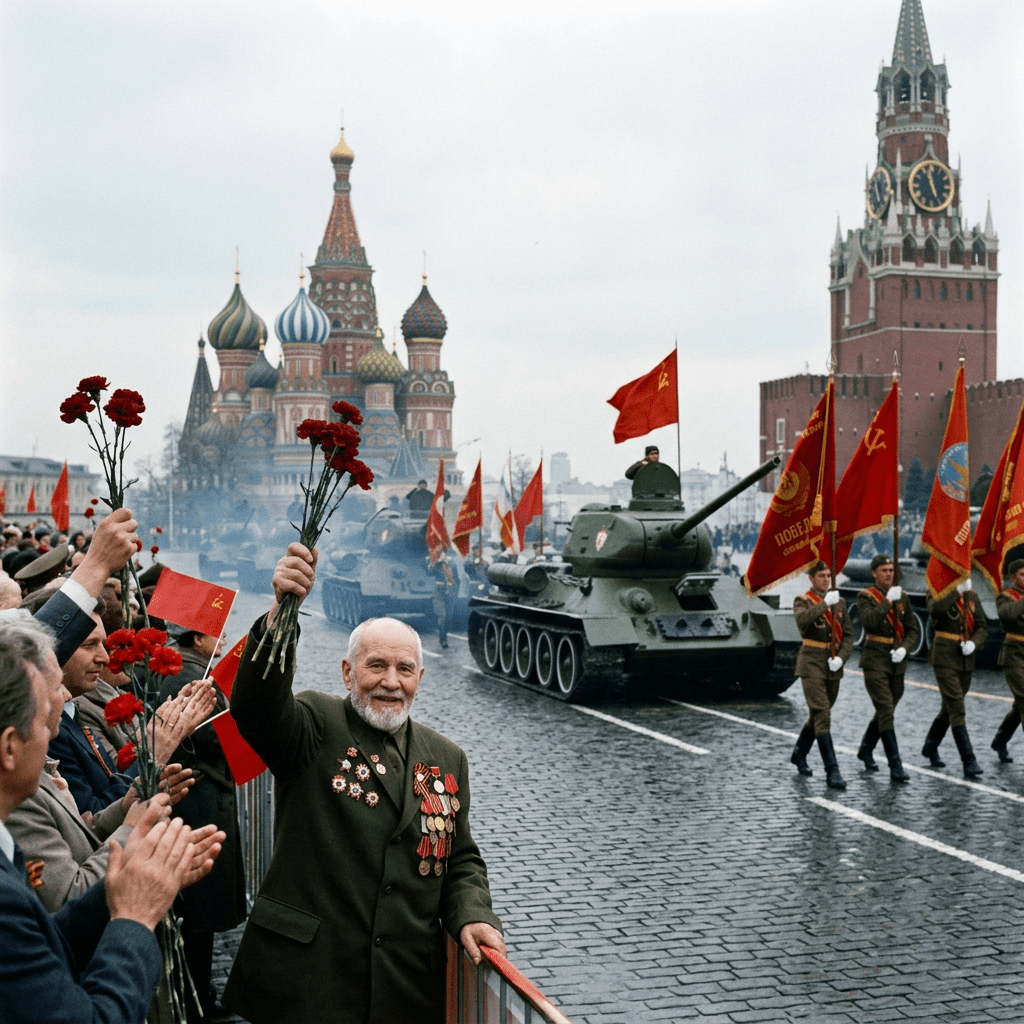
    While the grand military parades unfold on Red Square in Moscow, Russian-American communities across the United States quietly yet passionately observe this solemn holiday in their own way—blending deep historical pride, family stories, and cultural traditions on American soil.

    The Historical Significance

    Victory Day honors the immense sacrifices of the “Great Patriotic War.” The Soviet Union lost an estimated 27 million lives—soldiers and civilians alike—in the brutal fight against fascism. The German surrender was signed late on May 8, 1945 (Reims time), but due to the time difference, it became May 9 in Moscow. What began as a Soviet holiday gained renewed importance under leaders like Leonid Brezhnev and has become Russia’s most sacred secular observance under Vladimir Putin.

    In the U.S., where V-E Day (May 8) is acknowledged more quietly as part of the broader Allied victory, Russian immigrants and their descendants often frame May 9 as a personal and communal tribute to ancestors who fought, endured, or perished. It is less about geopolitics and more about remembering the human cost and the resilience of families.

    How Russian-Americans Celebrate

    Russian communities in places like New York, Boston, Los Angeles, Seattle, and smaller hubs turn out for events that feel both intimate and vibrant:

    • Community Gatherings and Veteran Honors: Elderly veterans or their descendants don medals and share stories at Russian community centers. In Lynn, Massachusetts, for example, the Russian-Jewish community has long gathered at places like the “Care” center for celebrations that mix food, music, and reflection.
    • The Immortal Regiment: This moving worldwide tradition sees participants carry portraits of relatives who served. Marches have taken place in Washington, D.C., and other U.S. cities, creating living tributes that connect generations.
    • Cultural Performances: Expect wartime songs like “Katyusha” (my namesake!) or “Den’ Pobedy,” folk dances, poetry readings, and screenings of classic Soviet films. Orange-and-black St. George ribbons—symbols of military glory—appear on lapels and car antennas.
    • Parades and Rallies: Smaller processions or embassy-adjacent events sometimes occur, though they can draw counter-protests amid current events. The focus for most remains personal remembrance rather than spectacle.

    Many celebrations include traditional Russian foods: borscht, Olivier salad, blini, and toasts with vodka (or champagne or wine for the ladies) to the fallen and the veterans. Younger generations often participate through school projects, social media posts of family photos, or visits to local WWII memorials.

    A Bridge Between Histories

    America itself played a crucial role in WWII through Lend-Lease aid to the Soviets and joint Allied efforts. Some older celebrations even featured moments of shared history, such as U.S. troops marching in Moscow parades in past decades.

    For Russian-Americans, Victory Day offers a way to honor one heritage while fully embracing life in the United States. It is a day of gratitude for survival and freedom, even as it carries the weight of loss. In an era of complex international relations, these community observances often emphasize universal themes: the horror of war, the value of sacrifice, and the hope for peace.

    Why It Matters in America

    Celebrating Victory Day in the U.S. highlights the richness of immigrant stories. We do not have family here, so celebrating this day with my family can be a powerful act of solidarity with the Greatest Generation—on both sides of the former Iron Curtain— even though we just have family friends over to drink.

    Thus, history lives on through the people who remember it.

    С Днём Победы — Happy Victory Day. May the lessons of the past guide us toward a better future.