Tag: high school

  • Navigating Youthful Chaos: My High School Journey

    Navigating Youthful Chaos: My High School Journey

    My boyfriend and I have been mainlining our childhood like it is a caffeine drip—Beverly Hills, 90210, Melrose Place, and now it is my turn to open his eyes to my own high school drama—the glossy, sun-soaked fever dream that was The OC. God, I used to worship that world. I wanted the luxury car, the beach house, the effortless drama. Mostly I wanted the body. Marissa Cooper’s surfboard silhouette—long, lean, zero percent body fat, the kind of thin that makes clothes hang on your protruding bones. Paris Hilton-esque. vacant-eyed and untouchable. I wanted to be built like a surfboard. Instead, I got my own high school experience, which played out less like a Fox teen soap and more like a psychological horror.

    I changed school districts right before freshman year so that I could attend private school. Fresh start! New hallways, new faces, new chance to reinvent myself as someone people actually wanted to sit with at lunch. I showed up with the kind of desperate optimism only a fourteen-year-old can muster. I smiled too wide. I laughed at jokes that were not actually funny. I even joined the school soccer team, even though I was only a little speedster without any soccer ball skills. I was ready to collect friends like limited-edition.

    Middle school had already done its damage, though (read here). That was where I learned the rules of the game: be thin, get straight A’s, and the world will throw compliments at you like confetti. Teachers beamed. Boys stared. My mother bragged. It was the easiest dopamine I had ever scored. So when high school hit, I doubled down like a junkie with a new dealer. Social life? Optional. Body? A full-time job. Grades? Non-negotiable. Everything else could rot.

    I did try, in my own half-assed way. I met boys. Kissed one. The “bad boy” ala Ryan from The OC. Let him finger me through my Juicy Couture jeans (try explaining that hole in your jeans). I even went back to my old district just to play tennis for their team—commuting like a masochist because apparently I still needed some thread connecting me to “normal” teenage life. Those bus rides were surreal: me in my little skirt, racquet between my knees, pretending I was just like everyone else while my brain screamed calorie counts and tomorrow’s biology test.

    But the obsession was already metastasizing. One solid year of high school—that is all I really got before the sickness took the wheel. Freshman year had moments of light. I remember walking the halls in low-rise jeans that showed the sharp edges of my hip bones like trophies. I remember the rush when a senior looked twice. I remember thinking, This is working. Keep going.

    Then the mirror became my enemy, my priest, and my dealer all at once. I stopped eating lunch. I did sit-ups until 2 am. I measured my worth in the gap between my thighs and the numbers on the scale. Straight A’s were never enough anymore—they were just part of the game. The real prize was disappearing. Becoming so small that people worried. That kind of worry felt like love.

    The new school never really knew me. How could they? I was a ghost in Abercrombie. I showed up, aced everything, then vanished into my room to count ribs and cry over missed carbs. Friends tried. I pushed them away with the polite brutality of a girl who is already in love with her own destruction. Boys were easier—they wanted the fantasy, not the full dossier of my neuroses. So I became that girl… the boys’ friend. I gave them pieces. Never the whole haunted house.

    Looking back, it is grotesque how romantic I made it all seem. The OC soundtrack in my head  while I did crunches at midnight. The way I would stare at Marissa’s collarbones like they were scripture. I wanted that coastal California emptiness so badly I carved it into myself in the middle of nowhere suburbia. Meanwhile, the real kids around me were making memories—bonfires, breakups, bad decisions with cheap beer. I was making spreadsheets of my intake and hating myself in HD.

    There is something darkly funny about it now. I traded four years of messy, stupid, glorious teenage chaos for a body that still was not thin enough and a transcript that could not hug me back. I was the girl who had it “together.” Teachers loved me. My report cards were porn for my Russian parents. And I was rotting from the inside out, polite smile stapled to my face.

    If I could go back, I would tell that wide-eyed freshman something brutal: the praise feels good until it does not. The boys will not save you. The scale lies. And no amount of straight A’s will make you feel safe in your own skin. Sometimes the rebellion is not starving—it is eating the pizza and going to the dumb party anyway.

    But I cannot go back. So instead I am here, rewatching The OC with my boyfriend, laughing at how fake it all looks now. Marissa’s tragic glamour hits different when you have lived a version of it and survived. I am softer now. Older. Still fucked up in new and exciting ways. But at least I am not measuring my worth in negative space anymore.

    High school me would call that weak. Adult me calls it winning.

    What a twisted little victory lap.

  • Down Under Dreams: My Wild Teenage Adventure in Australia with People to People

    Down Under Dreams: My Wild Teenage Adventure in Australia with People to People

    At fifteen years old, I stepped off a plane into a world that felt like it had leaped straight out of a National Geographic. The air was warmer, drier, and carried the faint scent of eucalyptus. I was part of the People to People Ambassador Program, a life-changing opportunity that took a group of wide-eyed American teens halfway around the globe to Australia. What started as a simple cultural exchange trip quickly became a whirlwind of big-city glamour, rugged outback exploration, family-style homestays, and the kind of teenage chaos that only happens when you are far from home and the usual rules do not quite apply (the innocent kind though, not really what we see on teenager television shows).

    Our itinerary was perfectly balanced between urban sophistication and raw Australian wilderness. We bounced between the gleaming harbors of Sydney and Melbourne and endless stretches of red earth in the outback. Long bus rides became our moving classrooms—hours spent watching the landscape shift from bustling streets to golden grasslands. We stayed with local families who opened their homes (and hearts) to us, sharing meals, stories, and glimpses into everyday Aussie life that no guidebook could ever capture.

    Sydney hit me like a fever dream. The iconic Opera House rose like white sails against the sparkling harbor, its curves even more breathtaking in person than in any photo I had seen. We toured the Olympic facilities from the 2000 Games, walking through stadiums that once echoed with global cheers. I remember standing there, imagining the roar of the crowd, feeling tiny yet somehow part of something enormous.

    But beneath the excitement, I carried a heavy secret. This was the year after I started high school, and the pressure to look and be “perfect” had already taken root in my mind. Australia felt like the ultimate reset button—a chance to reinvent myself far from judgmental eyes back home. Before the trip even began, I emailed the volunteer chaperones with a carefully worded note: I would not be eating much, and they should not worry about me. Looking back now, it breaks my heart to think of that determined, insecure fifteen-year-old girl trying so hard to control the one thing she could in a brand-new country.

    On those long bus rides, packed lunches were handed out like clockwork—sandwiches thick with deli meats, crisp chips, and sweet treats. I would politely unwrap mine, eat only the apple, and quietly put the rest aside. The volunteers were kind, but I could feel their concerned glances. During our homestay in Melbourne, the warm “mom” of the house cooked a hearty Australian meal just for us. I pushed the plate away after a few bites, murmuring something about being full. Her disappointed but understanding look still lingers with me. Food became both enemy and background noise while the real adventure swirled around me.

    Of course, no trip at fifteen would be complete without plenty of youthful mischief. I flirted shamelessly with the boys in our group—stolen glances across bus aisles, whispered jokes during tours, and that electric buzz of first crushes amplified by the freedom of being overseas.

    The Australian sun, however, showed no mercy. Wanting to be perfect meant that I wanted golden skin. I ended up severely sunburned. My skin turned lobster-red, peeling in painful sheets for days. Lesson learned: respect the ozone hole Down Under.

    One of my biggest hurdles was begging my mother—via crackly payphone calls from a random shopping mall —to let me get my belly button pierced. I pleaded, I reasoned, I dramatically described how “everyone” was doing it. She held firm.

    Instead, I settled for a temporary tattoo from a quirky shop near the harbor. It was some butterfly design that I proudly showed off to the group. When I got home, I let everyone believe it was real, basking in the temporary cool factor before it faded in the shower. Small rebellions, big memories.

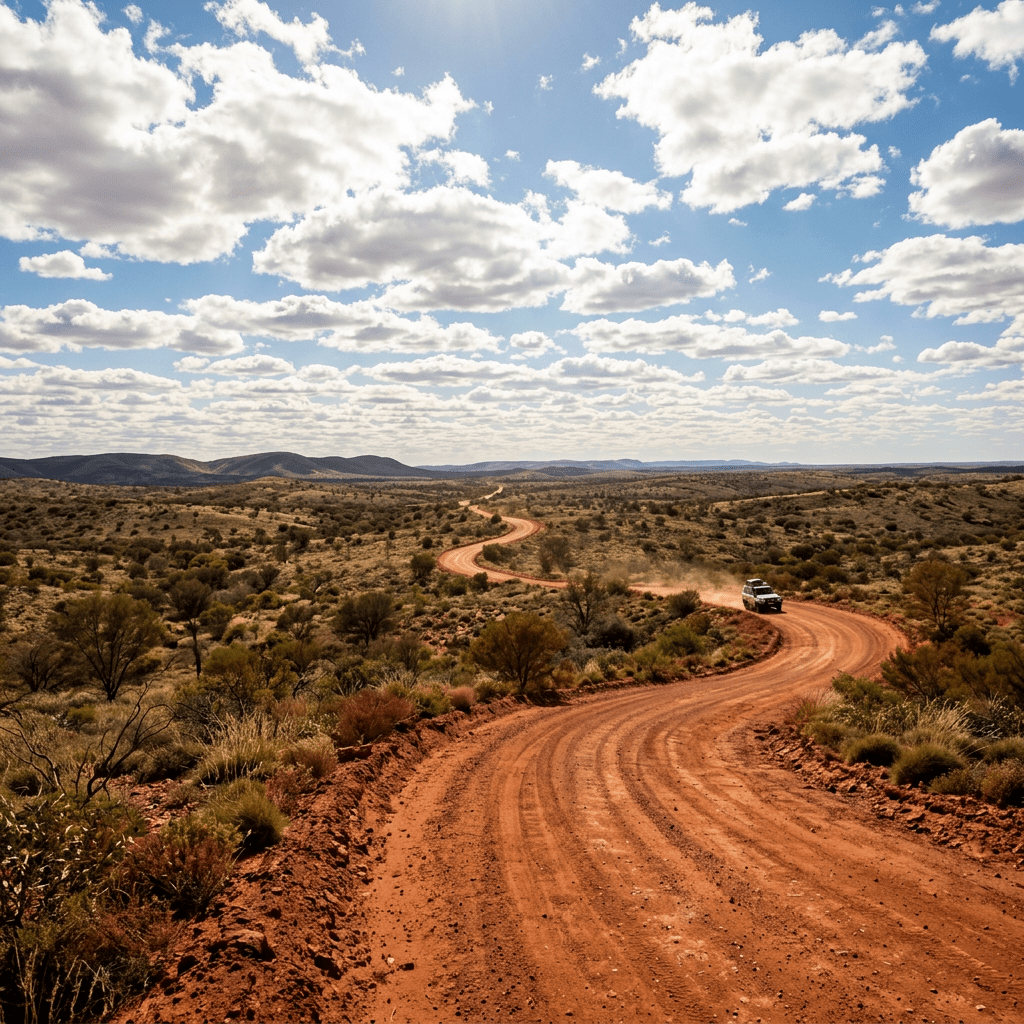
    The real soul of the trip was during our long bus tours through the outback. The landscape stretched endlessly—red dirt, scrubby bushes, and skies so vast they made you feel wonderfully insignificant. We learned about Aboriginal culture, their deep connection to the land, and the stories passed down through oldtime legends.

    Vehicle driving on winding red dirt road in arid outback landscape
    A vehicle traverses a winding red dirt road through arid outback terrain under a partly cloudy sky

    One unforgettable stop was a wildlife sanctuary where I finally got to hold a tiny koala. He was everything I imagined: fluffy gray fur, button eyes, and a sleepy demeanor (apparently they are constantly high from eating the eucalyptus). I beamed for the camera, arms gently cradling him. But internally? I was screaming. Those adorable little claws dug into my arm like tiny needles. Sharp did not even begin to describe it. Still, worth every scratch for that photo and the story.

    We spotted kangaroos hopping freely in the wild—elegant, powerful creatures that seemed to defy gravity. At the sanctuary, we got closer, feeding them and watching their curious faces up close. Later, in a remote outback experience hosted by Aboriginal elders, we were treated to kangaroo tail. It was an honor to share in their traditional food. The tail was tough, mostly dense muscle with very little fat or tenderness—chewy, gamey, and completely unlike anything I had eaten before. It was not about gourmet flavor; it was about connection, respect, and tasting a piece of the land itself.

    That trip to Australia did not magically fix my insecurities around food and body image. Those battles continued for years as I eventually got down to double digits on the bathroom scale. But it planted seeds of perspective. I saw a country that was both modern and ancient, vibrant and harsh, welcoming and wild. I learned that adventures are messy—full of sunburns, awkward flirtations, hidden struggles, and moments of pure wonder.

    Holding that koala, even through the pain, symbolized something bigger: sometimes the cutest, most picture-perfect experiences are actually concealing something painful. Pushing away plates did make me feel more in control; but it also made me miss out on shared meals and hospitality. The temporary tattoo washed off, but the memories never did.

    Years later, I look back on that fifteen-year-old girl with compassion. She was brave enough to travel across the world, curious enough to embrace new cultures, and human enough to make mistakes. Australia taught me that life is best experienced fully—sunburns, sharp claws, kangaroo tail, and all.

    If you ever get the chance to say yes to an adventure that scares and excites you, just do it (like Nike!). Whether it is Australia or somewhere closer to home, the outback of your own growth is waiting.

  • Why Mean Girls Is the Ultimate Guide to Human Nature

    Why Mean Girls Is the Ultimate Guide to Human Nature

    Despite everything that I have gone through and my trad ways: I can be a full-blown basic millennial bitch sometimes. And nothing makes that more obvious than the fact that I still rewatch Mean Girls. Lindsay Lohan’s Cady Heron, Regina George’s icy glare, that iconic burn book— I am obsessed. But here is the part that actually pisses people off: this so-called silly teen comedy from 2004 is not just funny. It is one of the most brutally honest dissections of human behavior ever made. It exposes the raw, ugly truth that high school is not some quirky phase we all grow out of. It also is an example of the entire human condition.

    We like to pretend that we evolved. We tell ourselves that survival, food, shelter, sex, and basic needs are what really drive us. Bullshit. Mean Girls rips that illusion to shreds and laughs. The real engine of human behavior—the thing that makes us lie, scheme, backstab, conform, and sometimes destroy each other—is not hunger or safety (sometimes it is sex, though!). It is the desperate need to be popular. To be liked. To be loved. To belong. To win the social game.

    And we never outgrow it. We just trade the cafeteria for Instagram, the Burn Book for group chats, and plastic crowns for clout.

    Think about it. In the movie, these girls are not fighting over food or territory in some primal sense. They are clawing for the throne of the cafeteria. Regina George does not need to steal your lunch money—she needs to own your entire personality. She wants you wearing her approved jeans, repeating her approved phrases, and fearing her. That power is currency. Social currency. And once you have it, you control the tribe.

    This is not exaggeration. Everything in this life revolves around power. This is evolutionary psychology wearing a pink “On Wednesdays we wear pink” shirt.

    Evolutionary biologists can talk all day about Maslow’s Hierarchy of Needs and how we are wired for shelter and reproduction. Cool story, bro. But watch Mean Girls and tell me the real hierarchy is not social status first. Cady literally abandons her authentic math-nerd self, her values, and her real friends the second she gets a taste of the Plastics’ world. All of this, because the rewards center of the primate brain lights up when it senses acceptance from the high-status group. Being exiled is death in social terms. In ancient tribes, it basically was death. Today it feels like it too—ask anyone who has ever been canceled, ghosted, or removed from the group chat.

    We are not rational actors driven by logic. We are status-obsessed monkeys in Lululemon who would rather be feared and desired than safe and anonymous. Mean Girls just had the balls to make it hilarious and horrifying at the same time.

    High School never ends—it just gets better lighting and Venmos.

    This movie is not about teenagers. It is about all of us. The Plastics run the school the same way certain women run certain friend groups, the same way certain men dominate certain industries, the same way influencers dictate what we are all supposed to want this week.

    We all see it everywhere: the coworkers who sabotage your promotion, the “wellness” ladies who passive-aggressively shame others’ choices, judging people on their appearance in their dating profiles or any other social media where low interaction results in social death.

    We mock high school cliques, but then spend our adulthood curating the exact same hierarchies online. “I’m not like other girls” energy? I hear/say it all the time, still alive and thriving. Now, the Burn Book has just been digitized.

    We all know it is all fake. We all know the game is ridiculous. Yet we keep playing because the alternative—being invisible, unliked, uncool—is apparently worse than selling pieces of our soul.

    It says that humans are all vain. Shallow. Tribal. Cruel. And painfully human.

    Mean Girls celebrates this chaos. It shows that the desire to be loved and admired can make you brilliant, strategic, funny, and ruthless all at once. Cady’s transformation is not just a plot device—it is every person who has ever reinvented themselves to fit in. Every time you bought the “right” bag, posted the “right” vacation photo, or bit your tongue to stay in the group, you were living your own Mean Girls moment.

    So call me basic. Call me obsessed. But I will keep rewatching because every single time I do, I see myself, my enemies, everyone I know, and the entire trajectory of human civilization reflected back in those chaotic cafeteria scenes.

    Popularity does not just matter… In the grand scheme of things, it might matter most.

  • Americana.

    Americana.

    I have lived in the tiny town of Snohomish, Washington,since I was seven years old. Snohomish is not flashy. It is not Seattle. It is the kind of place where you grow up slow. The biggest drama is who forgot to lock the barn. In Snohomish, “good morning” still means something.

    I used to hate that. I wanted to be a big city girl (ala Samantha Jones in Sex and the City). I even went away from the public school I was supposed to attend. I did this so I could dress and be a little more high class. 

    The girls who live in Snohomish pride themselves for living in a Bodunk town. “Fancy” usually means that you will sink into the muddy fields. It is not the norm.  But I did not like that. I did not want to wear pajamas and slippers to class. I wanted to wear stilettos and I dreamt of living in a penthouse. 

     None of that ended up happening. It became dangerous to even visit a city. Now I have a different perspective of this small town. It feels like living inside a postcard and that postcard smells like rain and fresh-cut grass most days. 

    This town is tiny, maybe ten thousand people. Main Street still looks like it did in the nineteen-twenties. It has brick storefronts, a hardware store that sells everything from nails to fudge, and diners. The river runs right through the middle—Snohomish River, wide and slow. Packed with sunburned locals in July. Around here, summers are for the county fair (something that I do not partake in). It is not the flashy kind with Ferris wheels taller than trees. It’s just a dusty field off Second Street, filled with goats baaa-ing, cotton candy, and sketchy ride operators. Winters are quieter. Fog rolls in off of Puget Sound like a blanket, and school buses crawl through it, headlights glowing. 

    People here do not rush. You wave at strangers because you have seen them before— since the town is so small. Everyone knows everyone’s business. They do not judge, or at least, they do not judge out loud. This was new to this little Russian girl. I left for college, came back since. The river still smells the same. The hardware store still sells fudge. And yes it rains, but it rains softly— as if this place is giving you a hug. 

    I want to share this hug with the love of my life. Convincing my boyfriend to move out to Washington state was like my experience of recognizing my hometown in the past. It is different from the postcard version I see now. 

    While we would not be living in Snohomish, small towns are so much more attractive than the big bad cities. While I do not want to dress like a slob or float down a river in the summer— I would rather that than be raped by an immigrant and encounter needles in the storefronts.  He would rather cheer for the teams that his family has always supported and not be surrounded by “aw shucks” coworkers. 

    So I do not belong in Snohomish, Washington, but I have definitely developed an appreciation for small towns. I might live in a small “Americana” town in Montana or the Carolinas. Wherever I end up, I will always waive “hello” and will not judge (out loud). 

  • Shattered.

    Shattered.

    If we are going to go through the character arc of my not being good enough and the affect that it had on my life thus far , we have to further elaborate on what led me into my post-high-school downward spiral and my current health issues. 

    In high school, I tried extremely hard. After my middle school experience at being an overweight/ flunking embarrassment, I was shown how people only gave me praise and attention if I wore a size zero and excelled in my studies. So I withered away and took notes/ highlighted my books until my fingers bled. I tried to keep a social life, but eventually the obsession with my food and appearance gave way. 

    I even drove myself to school (once I got my license) hours earlier so that I could sit in the computer lab and search for homes where an adolescent can live on her own (I always thought that living on my own was the answer to my prayers!) 

    And then of course there was a boy. He was a firefighter, did not go to my school and actually showed interest in me. I was not used to this. I was deprived of romance and even though I had no interest in him, I craved his touch, his kisses and his text messages as if I had been trekking through the desert for years and he was a fresh spring of water. 

    But I never slept with him. I must have had some kind of moral code, because this would continue in university. We would do everything but as soon as it came to the actual act, I became dismissive. That did not please the twenty-year-old-playboy -firefighter, and suddenly his attention turned elsewhere. He went back to his ex-girlfriend— an easy get— fake tanned, a bit chubby and dumb as rocks. 

    My ego was absolutely shattered. My heart cracked open—like someone took a hammer to a glass jar and just let it shatter. Even though I had spent years not eating or enjoying life in order to be at the top of my class and in order to look like I was perfect—even though I made myself better than anyone else—I was once again still not good enough. My carefully curated Kate Moss-esque figure and resume quickly became crumpled trash in the midst of a “normie” high school girl. So I officially gave up. 

    I literally just stopped caring. I threw my hands up and started eating everything that I was missing out on for years. I stopped studying too. I took my tests after spending the night binging a television series (and binging copious amounts of snacks!). I would skip my classes the day that a major paper was due so that I could get it done the second before it was due.

    I gained more than twice the amount of weight that I weighed in high school. My parents were shocked when they saw me, they had me workout with a personal trainer, as if that was the issue—I simply had to move more not eat less.  However , the judgements only made me eat more. Still not good enough. 

    I reached out to some of the family friends I had grown up with so that I could have some semblance of a social life. And they helped. Invited me out. Made me laugh. But now everything felt fake.

    I was avoiding everyone from high school who knew me as the “anorexic girl “— the one who would only wear high heels and dresses or skirts instead of the jeans and sneakers of everyone around me— because I used to be better than everyone around me (or at least I believed I was). 

    Now I was ashamed. Now high heels would pinch my chunky toes and instead of flaunting my slender legs in skirts, I hid my giant slabs of meat in sweatpants and size thirty-two jeans. I avoided posting pictures of myself. I used to be so beautiful. I used to take immense pleasure in hearing my father tell his friends, “isn’t my daughter so hot?” He stopped saying that…

    Essentially the high school “breakup” did not just end a relationship—it ended me.  Once we had met, once I had tasted the attention I had been yearning for; I had built my whole senior year around him: I had started eating again (but not too much and of course I would never let myself go to sleep without working off every calorie I had eaten that day), late-night texts so that he could get more attention than my studies did, and fantasies about life together. 

    College was supposed to be freedom. Instead it felt like punishment. Instead of being lithe and studious, I was just studying myself—how to numb out, how to fake smiles, how to avoid anyone who might matter. I “slutted” around, but obviously nothing stuck. Every kiss tasted like betrayal. Every “I like you” sounded like a lie, because why would anyone like an over-two-hundred-pound girl?  I drank too much and I slept too much (making up for sleeping only a few hours every night in high school). 

    The worst part? I blamed him. For years. Like if he had never cheated, I would have gone to Yale, had a perfect GPA and had a perfect boyfriend. But It took recovering from my upcoming disability for me to realize: heartbreak does not ruin college. It does not ruin life. You do. You ruin it when you stop showing up. When you decide you are too broken to try. When you treat every new person like a ticking bomb. 

    Do not let one bad love story become the whole plot. Because the truth is, the boy who broke me? He is probably still in his mom’s basement, playing Fortnite. And I am here—yes, I do not like my current situation but I am surviving—writing this, breathing, alive and planning for a future. That is the real win.

    Essentially this entire experience taught me that everything happens for a reason— as corny as it may sound. Because honestly? The real damage was not the “breakup”—it was how I let it define me. I let one boy’s cowardice rewrite my future. I let shame decide my friends and my life.

    It is not something that I should look back on and regret, because what is really the point of that?!  If I was never made to feel like I was not good enough and thus never imploded, I would not have gone through the whole process of finding my voice and who I am, that means that I would not have started with the Twitter account full of snarky comments and controversial statements (seriously— people would constantly accuse me of either being a federal agent or a man pretending to run a girl’s account) and that would not have led me to meet the someone three thousand miles away— the man of my dreams. Maybe he is that perfect boyfriend I had envisioned finding in college. 

    Senior Year High School
    Post University