Tag: healthy

  • My deepest passion is nutrition — but ultimately, it’s all for him

    What are you passionate about?

    He is the prize at the end of the journey. To fully receive that gift and build the life I dream of with him, I have made my health non-negotiable. Nutrition is not just a hobby for me; it is something I can wax poetic about for hours with genuine excitement. I have explored it all — from the MAHA movement (seed oils, fluoride, ultra-processed additives, and all the hidden toxins) to Ray Peat’s principles and everything in between. I have lived the experiments myself: vegan, gluten-free, paleo, keto. I have been underweight and overweight. Through trial and error, I have learned what truly makes the body and mind thrive.

    Bright multicolored heart-shaped light swirl in starry cosmic background
    A glowing, multicolored heart-shaped swirl glimmers vividly in space.

    A brain injury years ago left me with some lasting effects I can be self-conscious about. It does not stop me from loving deeply or building a lasting relationship— as seen in my current form attracting him (thankfully, the “disability” does not seem to bother him at all), but I still carry that quiet desire to show up as my strongest, healthiest self. I want to move through life with ease — for me, and especially for him.

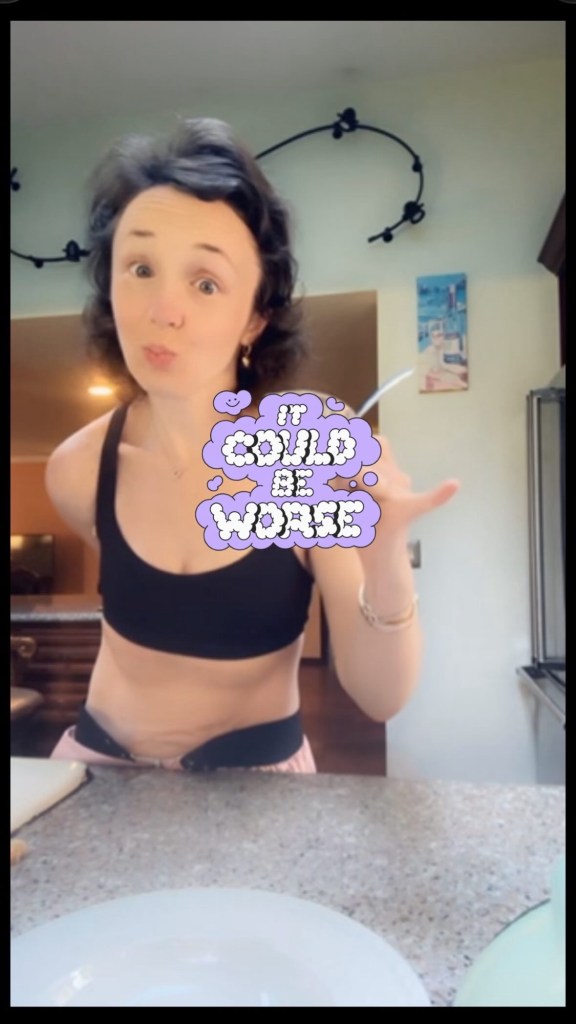
    Currently. Wifely duties from afar.

    Because more than anything, I long to be his perfect little housewife. I can already manage it beautifully with one hand, but two steady hands would let me pour even more love into our home. And yes — almost every girl dreams of the aisle. So I am committed to walking strong, not just so I can hold his hand while we stroll down the street or along the beach, but so I can walk down that damn aisle toward him, radiant and ready for forever.

    Two illuminated houses on mountain cliffs linked by a glowing light trail under starry sky
    Love from a Distance.
  • The Sun: Nature’s Medicine for Mood and Immunity

    The Sun: Nature’s Medicine for Mood and Immunity

    Modern day medicine turned the single most abundant, free, life-giving force on this planet—the magnificent sun—into Public Enemy Number One. Slather on the chemicals, hide indoors like a pasty little gremlin, and for the love of God, never let a single UV ray touch your precious skin. Meanwhile, humanity somehow survived ice ages, plagues, and zero SPF for hundreds of thousands of years without dropping dead from “sun exposure.” Funny how that works.

    Our ancestors were not cowering in caves with broad-spectrum lotion and a sun umbrella. They were out there hunting, farming, fucking, and fighting under the blazing sky every single day. Skin cancer? Melanoma? Those numbers stayed relatively quiet until the sunscreen industry exploded onto the scene in the mid-20th century. Suddenly we are all marinating in titanium dioxide smoothies and wondering why skin cancer rates keep climbing.

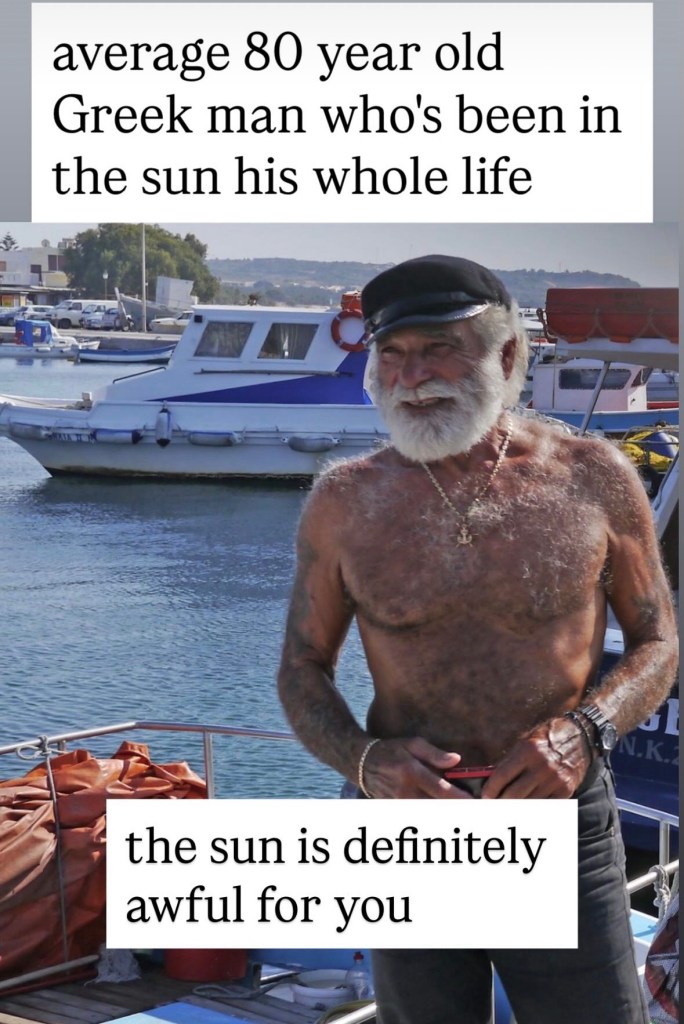
    He looks happy to me!

    Do not get me wrong—there are decent mineral-based sunscreens out there that actually reflect the rays instead of turning your skin into a chemical refinery. But the cheap shit most people glob on? That is basically endocrine-disrupting soup with a side of hormone messiness. The kind of goop that probably does more long-term damage than a mild burn ever could. Yet the “experts” keep pushing it like it is holy water while conveniently ignoring the data that does not fit their narrative.

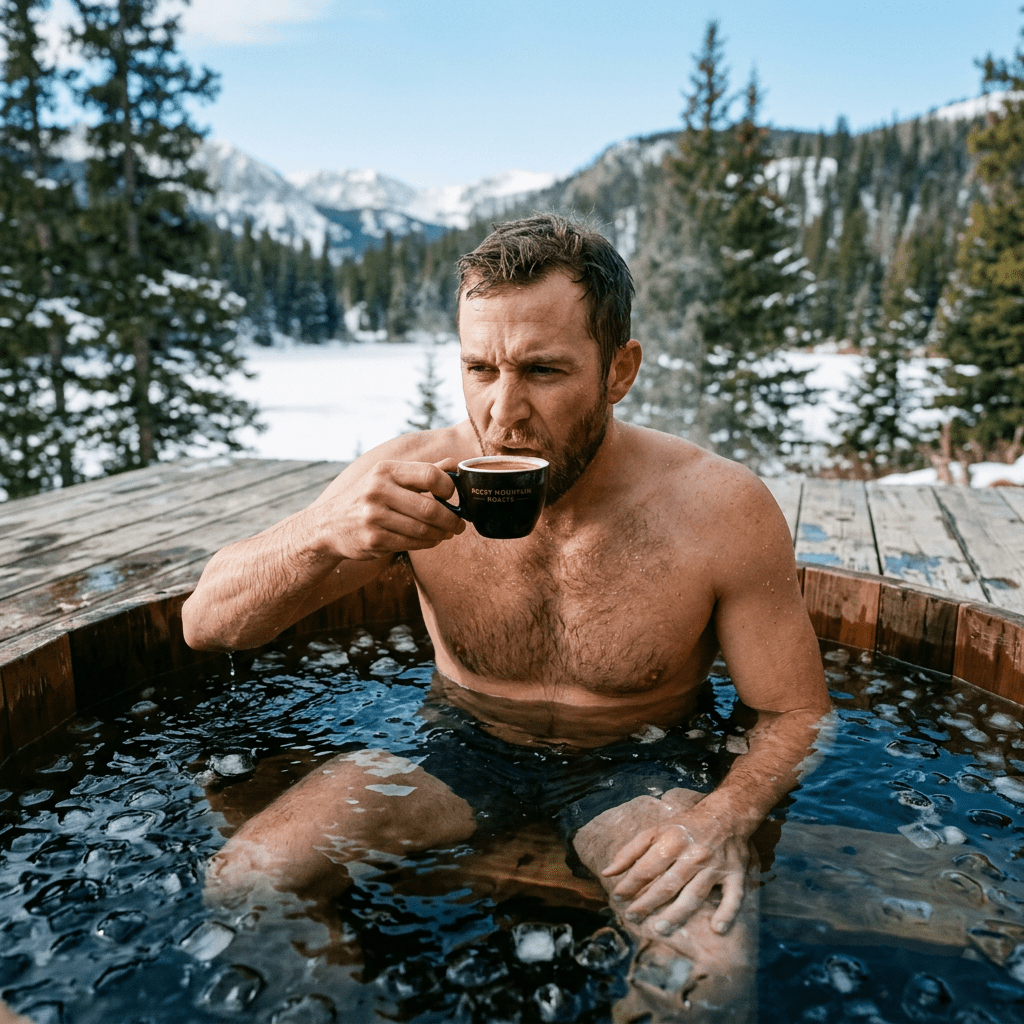
    If you really want to see the sun’s power, look at what happens when you actually use it like nature intended. Andrew Huberman (neuroscientist chad who actually talks sense) hammers this constantly: get outside within the first hour of waking and stare at that beautiful bastard in the sky. Not directly—peripheral view only, soak it in. That morning light slams the reset button on your circadian rhythm harder than a triple espresso and a cold plunge combined.

    Man sitting in an ice-filled wooden hot tub drinking coffee outdoors in a snowy mountain setting
    A man enjoys a cup of coffee while sitting in an ice-filled wooden hot tub outdoors.

    Your body clock starts firing on all cylinders. Cortisol wakes you up properly instead of that pathetic artificial spike from your phone screen. Melatonin production later at night becomes sharp and clean because you did not spend the whole day hiding from photons like some vitamin D-deficient basement dweller. Low levels of vitamin D is associated with many autoimmune issues and fatigue/ depression. Blue light from lamps and screens at night? That is the real villain, flooding your house- wrecking sleep, mood, and testosterone. But sure, let us keep blaming the sun.

    People who get consistent, smart sun exposure report better energy, clearer skin, stronger immune systems, and yes—often better moods. The sun triggers nitric oxide release, helps with blood pressure, boosts mood via serotonin pathways, and is literally the reason you can synthesize vitamin D, which controls everything from bone density to immune regulation to cancer protection. That is right—proper sun exposure is anti-cancer in the bigger picture.

    Modern medicine loves a good villain. Cholesterol was the bad guy until it was not . Fat was evil until keto took over. Now it is the sun’s turn to be demonized so they can sell you more pills, creams, and procedures. Meanwhile, populations living closer to the equator with higher natural sun exposure often show lower rates of certain internal cancers and autoimmune issues when their vitamin D levels are optimized. But do not expect that on the evening news.

    The real message is not “go get third-degree burns, bro.” It is use your brain. Build tolerance gradually. Get morning light. Get midday sun when your shadow is shorter than you. Cover up or use good mineral protection during peak hours if you are pale if you want . Eat foods that support skin health. Stop treating the sun like a toxic ex when it’s been keeping life on this rock going since day one.

    We have become a society of fluorescent-lit, screen-staring, sunscreen-caked weaklings who are shocked—shocked—that we feel like shit and need SSRIs and sleeping pills. Maybe, just maybe, the glowing ball in the sky that every ancient culture worshipped for a reason is not trying to murder you.

    Men used to fight wars, now “men” like Bryan Johnston are hiding from the sun

    Get outside. Touch grass. Stare at the sun (responsibly). Feel alive for once.

    Your ancestors are laughing at us, wondering what the hell happened to their descendants.

  • Farmers Markets: My Glorious, Pretentious, Overpriced Heaven on Earth

    Farmers Markets: My Glorious, Pretentious, Overpriced Heaven on Earth

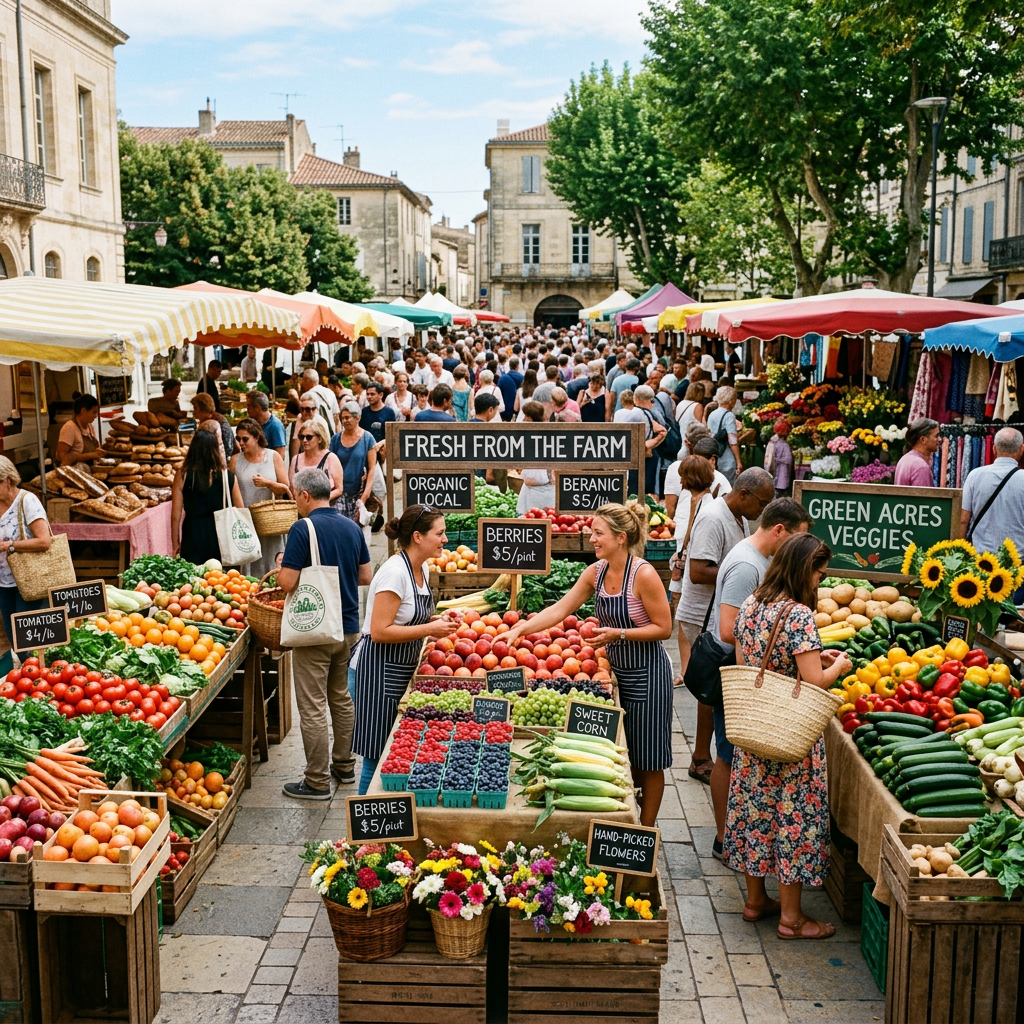
    Listen up, you cynical pricks hiding behind your Costco hauls—I adore farmers’ markets. Every time I am there like I am visiting a Holy Land, ready to worship at the church of rainbow chard and $12 avocados (you will never see me with one of those reusable tote bags though!). This is where the real ones gather. This is my happy place.

    Yeah, I am that girl. Like the ones in the thrifted overalls and clogs that cost more than your rent, filming a slow-living reel while their gas guzzling SUV gently idles (because parking here is a mess). I want to pay $9 for eggs laid by chickens that live better than most humans. I crave that smug little rush when he (or my mother) drops $17 on a sourdough loaf that tastes like it was kissed by actual angels and fermented in someone’s grandma’s basement. Keep your sad plastic-wrapped bread, normies. I will take the one with the charmingly inconsistent crumble.

    The smells? Intoxicating. Patchouli, dirt, overripe peaches, and that faint hint of unwashed authenticity—it is the scent of people who decided life is too short for deodorant politics (AKA cosplaying as hippies). I breathe it in deep while some trust-fund “farmer” with perfect teeth tells me about his heirloom tomatoes like he is reciting poetry. I eat that shit up. Literally. Those tomatoes probably cost more than therapy, but until I get my own garden, they will be worth every penny.

    I love the performers. The wellness girlies comparing fermentation jars. The melting pot of cuisines from different cultures. The dudes in linen who lecture you about soil health while smelling like they just rolled. But this is peak Americana. This is community, baby. Chaotic, expensive, beautiful community.

    Call me a mark. I wear that label with pride while sipping my $6 mason jar iced coffee and pretending that a single peach cannot bankrupt you . I know half this produce probably took a scenic route from the next town over, but I really could not care less about carbon emissions. I know I could get functionally the same shit cheaper at a local grocery store, but can that store guarantee health or allow every customer to be zany and beautifully weird? I do not want functional. I want vibes. I want to role play as a peasant who is gifted $300 linen and feels morally superior.

    This is peak modern romance: pretending we are connected to the land while dropping stupid money on vegetables. And I am here for every hypocritical, joyfully overpriced second of it. The grass-fed beef guy who eyes me like I am about to ask if it is grass-fed? Legend. The honey Chad with his ayahuasca stories? Pour it straight into my soul (and my latte).

    Clearly, I adore farmers’ markets. They are ridiculous. They are pretentious. They are everything I never knew I needed in a weekend morning ritual. Keep your conventional meat and your pesticides. I will be over here, grinning like an idiot, biting into a tomato that costs as much as a latte and tasting pure, unfiltered bliss.

    The Historical Timeline Of This Glorious Phenomenon:

    My history-buff-man has me looking up the why behind farmers’ markets and my sudden desire to be a whimsy, pretentious health nut. Ultimately, farmers’ markets are history. Farmers’ markets have ancient roots in Europe and have evolved as direct links between food producers and consumers for thousands of years.

    The earliest recorded open-air markets resembling farmers’ markets date back over 5,000 years to ancient Egypt along the Nile River (ala Aladdin). People bartered or sold staples like wheat, fruits, vegetables, and other goods. Similar marketplaces existed in many ancient civilizations, where farmers and producers gathered to trade directly with buyers. The introduction of currency helped formalize these exchanges into structures more like modern markets.

    European settlers brought the tradition to North America in the 1600s. Like everything else: we copied it from Europe!

    One of the first recorded European-style farmers’ markets in what is now the United States was established in Boston in 1634 (no wonder I love!). It started as an open-air market and later included a wooden building by 1662. Other early markets followed in places like Hartford (1643), New York City (by 1686), and Philadelphia (1693).

    These markets quickly became focal points of urban commerce and social life, where farmers sold fresh produce, meats, dairy, and other goods directly to consumers.

    Markets flourished through the 1800s and early 1900s as cities expanded and rail lines improved access. They were essential for fresh food distribution before widespread refrigeration and supermarkets.

    A resurgence began in the late 20th century, driven by interest in fresh, local, and sustainable food, support for small farms, environmental concerns, and community building. Plus it is simply a vibe. Way more character than a simp grocery store.

    This growth aligns with broader movements for healthier eating, preserving local varieties, and connecting urban and rural communities.

    Today, farmers’ markets vary widely—from small weekly gatherings to large established ones—and often include crafts, prepared foods, and entertainment alongside produce.

    The core purpose of a farmers’ market is linking producers and consumers. It has remained remarkably consistent across millennia, even as the context shifts with technology, economics, and culture.

    They continue to emphasize direct farm-to-consumer connections, though challenges like seasonality and competition with grocery stores persist. I personally think that we just like to pretend that we are all hipsters and that a grocery shop will never produce these feelings.