Tag: gardening

  • Why Flowers Transform Your Home into a Sanctuary

    Why Flowers Transform Your Home into a Sanctuary

    I have always believed that life is meant to be lived in soft focus—a perpetual golden-hour photograph. I love flowers. I love romance. And above all, I love love—the kind that makes ordinary Tuesdays feel like scenes from a French film. I romanticize everything: the way steam curls from my morning coffee, the particular slant of late-afternoon light across my bedroom floor, But nothing, absolutely nothing, captures my heart quite like flowers.
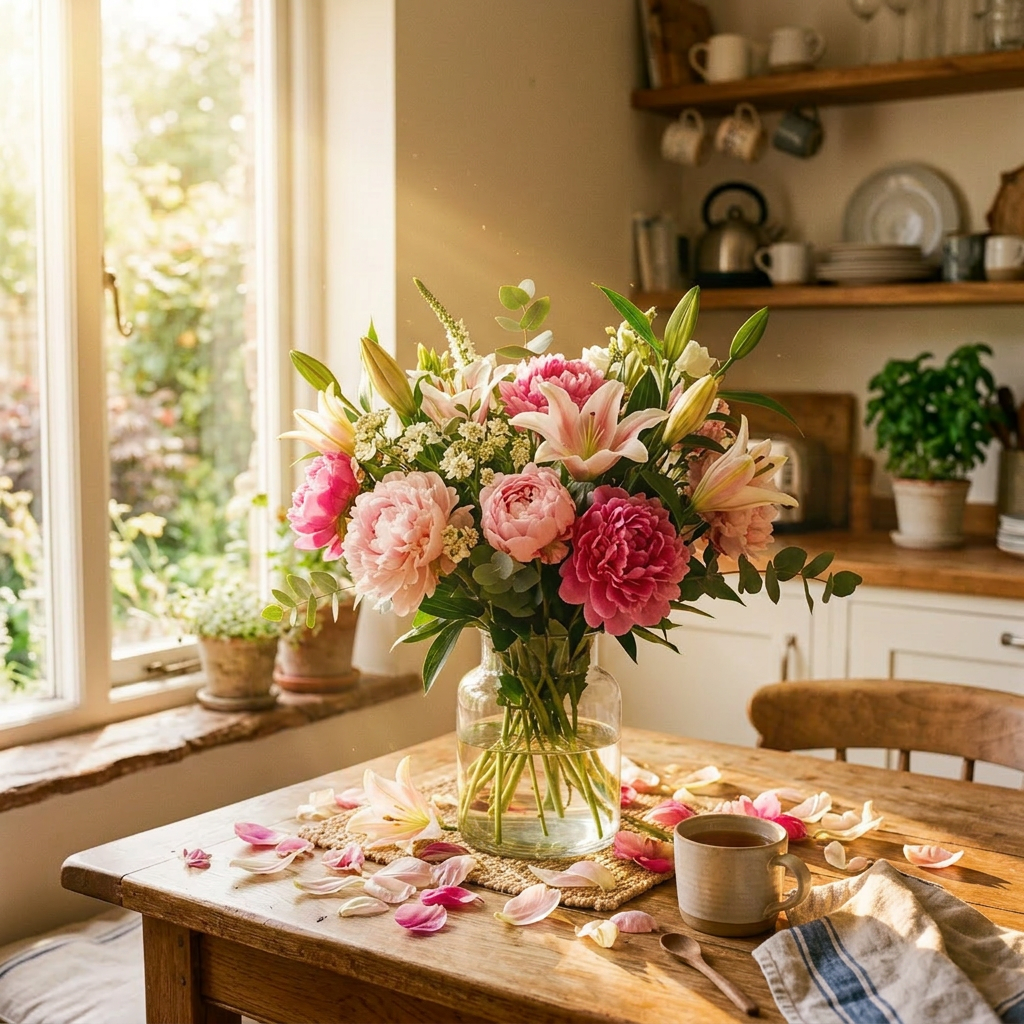
    Glass vase with pink and white flowers on wooden kitchen table with scattered petals and a mug
    A vibrant bouquet of pink and white flowers brightens a cozy sunlit kitchen table

    There is a special magic in receiving them from the man you adore. Not the obligatory dozen roses on Valentine’s Day (though those are lovely too), but the spontaneous kind. The ones he spots while you are wandering through a bustling farmer’s market on a lazy morning. He disappears for a moment while you are admiring heirloom tomatoes, then reappears with a loosely wrapped bouquet and that half-shy, half-proud smile that says, “I saw these and thought of you.” Those are the flowers that make your knees weak. They are not about obligation; they represent “I couldn’t walk past these without bringing a little beauty home to you.”

    Now that summer has officially arrived, my heart has been utterly stolen by hydrangeas. Those big, billowy, mophead blooms in shades of sky blue, lavender, blush pink, and creamy white feel like pure luxury. They remind me of elevated lifestyles—the kind where linen napkins are always pressed, where champagne is popped for no reason at all, and where weekends are spent in sun-drenched gardens. A single stem in a simple glass vase can transform an entire room into something serene and sophisticated. Their petals seem to hold the very essence of summer: warm breezes, long days, and the quiet confidence of knowing you deserve beauty all around you.

    I have had a lifelong love affair with peonies, too. There is something so delightfully decadent about them. Those fat, ruffled blooms look like little pink and white clouds that decided to take earthly form. When they first open, they are almost too lush to be real—layers upon layers of silky petals that release the sweetest, most intoxicating scent. I can spend minutes just burying my face in them, eyes closed, breathing in that fleeting summer perfume. They are feminine without being fragile, romantic without trying too hard. If a flower could embody a lingering kiss and a whispered secret, it would be a peony.
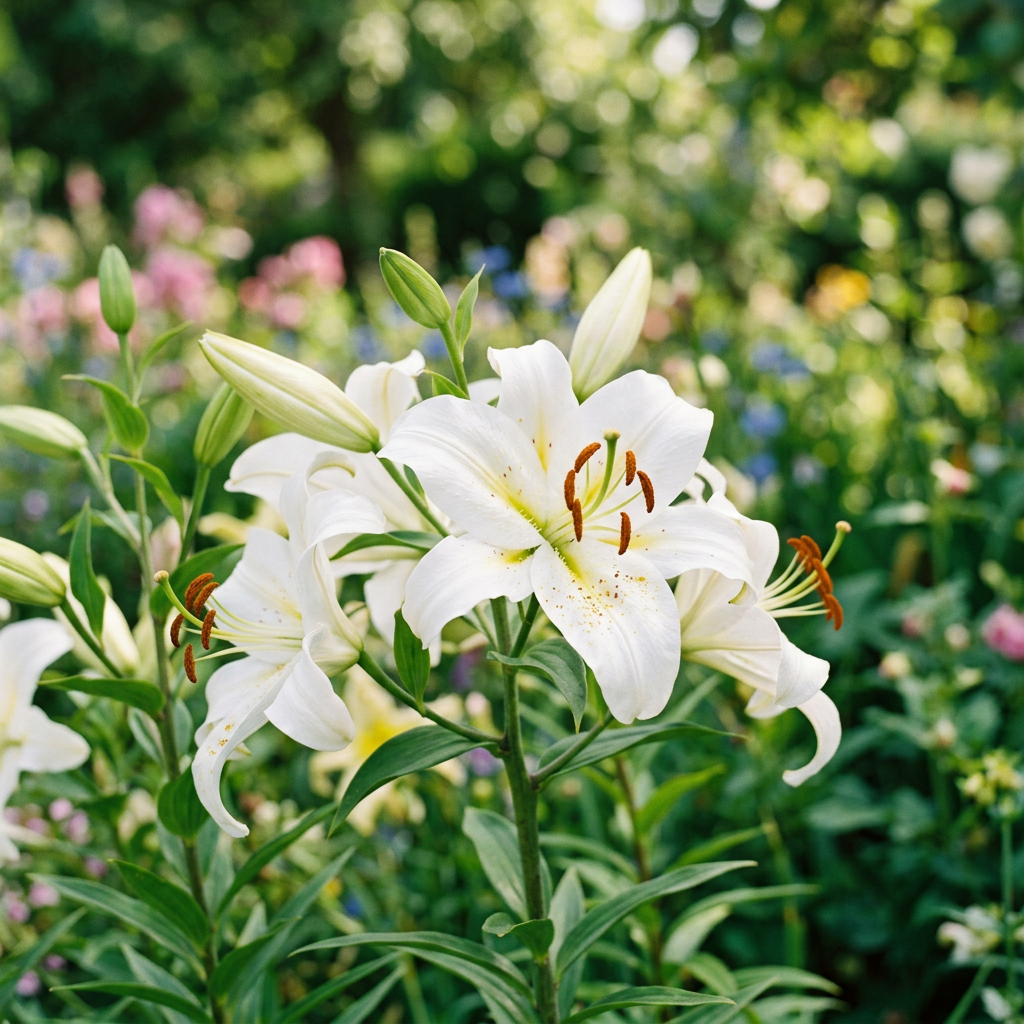
    Cluster of white lilies with orange stamens in a green garden
    Bright white lilies bloom beautifully in a vibrant garden setting

    Then there are the lilies—elegant, fragrant, almost architectural in their grace. And my beloved little tea roses, those dainty, perfectly formed gems with their old-world charm. Their scent is delicate yet persistent. Together, these flowers create symphonies of texture and aroma: the bold fullness of hydrangeas, the cloud-like softness of peonies, the star-like poise of lilies, and the intimate sweetness of tea roses.

    You will never find wildflowers in my vases, though. I have never understood the appeal of scattering daisies and Queen Anne’s lace as if I am hosting a meadow picnic. I do not want to adorn my home with something that looks like it was casually picked by the side of a country road. My space deserves intention. It deserves stems that were chosen, trimmed, and arranged with care—flowers that whisper of refinement rather than rusticity. I am not interested in bushes or garden borders either (beautiful in their place, of course). I want bouquets. Proper, generous, overflowing bouquets that command attention the moment you go through the door.
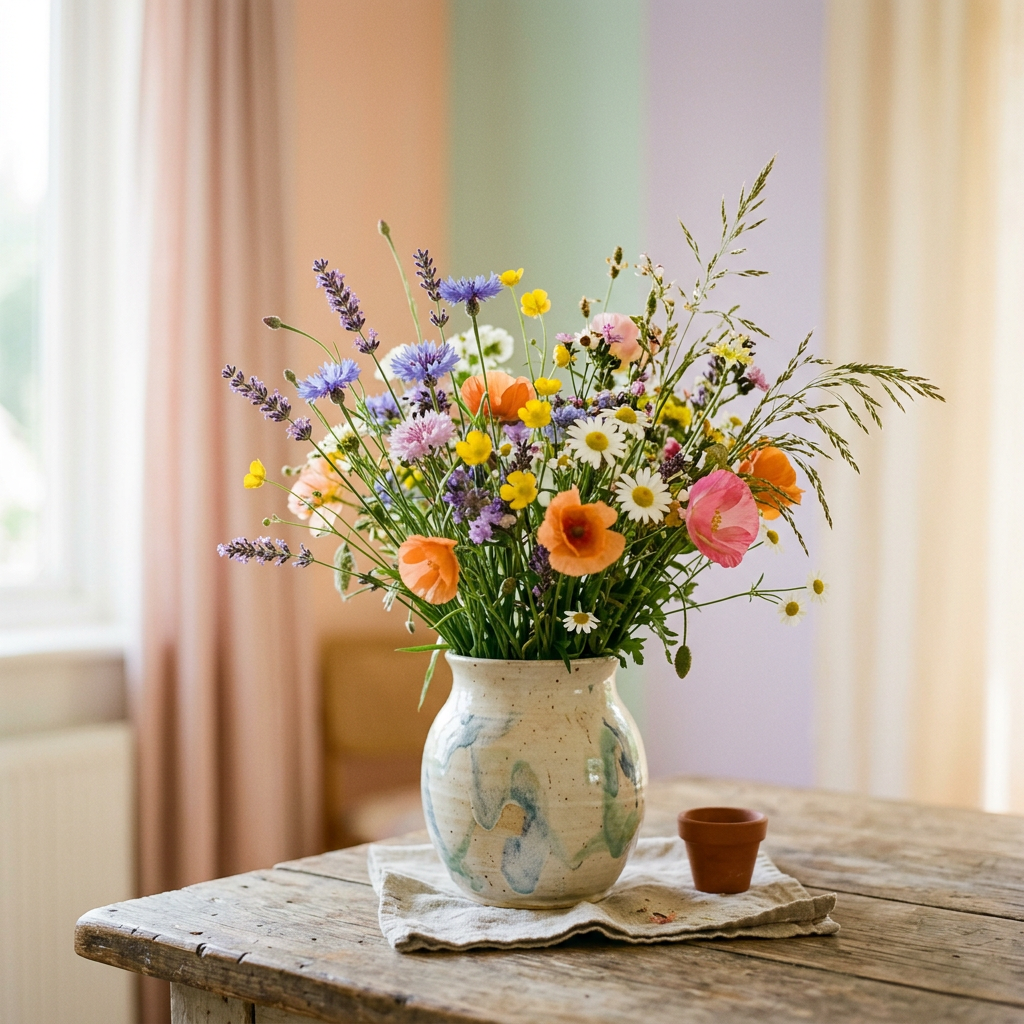
    Wildflower bouquet with orange, purple, yellow, and white flowers in a ceramic vase on a wooden table
    A vibrant bouquet of wildflowers arranged in a handmade ceramic vase brightens the rustic wooden table.

    There is nothing quite like waking up to them. The first gentle waft of fragrance that meets you—a soft, floral embrace that says the day has already begun beautifully. I hope to pad into the kitchen in my silk robe, coffee in hand, and pause just to admire how the morning light catches the dewy petals. By evening, the scent has deepened, wrapping the living room in warmth as candles flicker and music plays low. Flowers turn a house into a home, and a home into a sanctuary.

    In a world that often feels rushed and impersonal, I choose to surround myself with these small, exquisite reminders of romance. Because loving flowers is not just about aesthetics. It is about deciding that beauty matters. It is about inviting tenderness into everyday life. It is about believing that you are worthy of spontaneous gestures, of fragrant mornings, and of a life painted in the softest, most romantic hues.
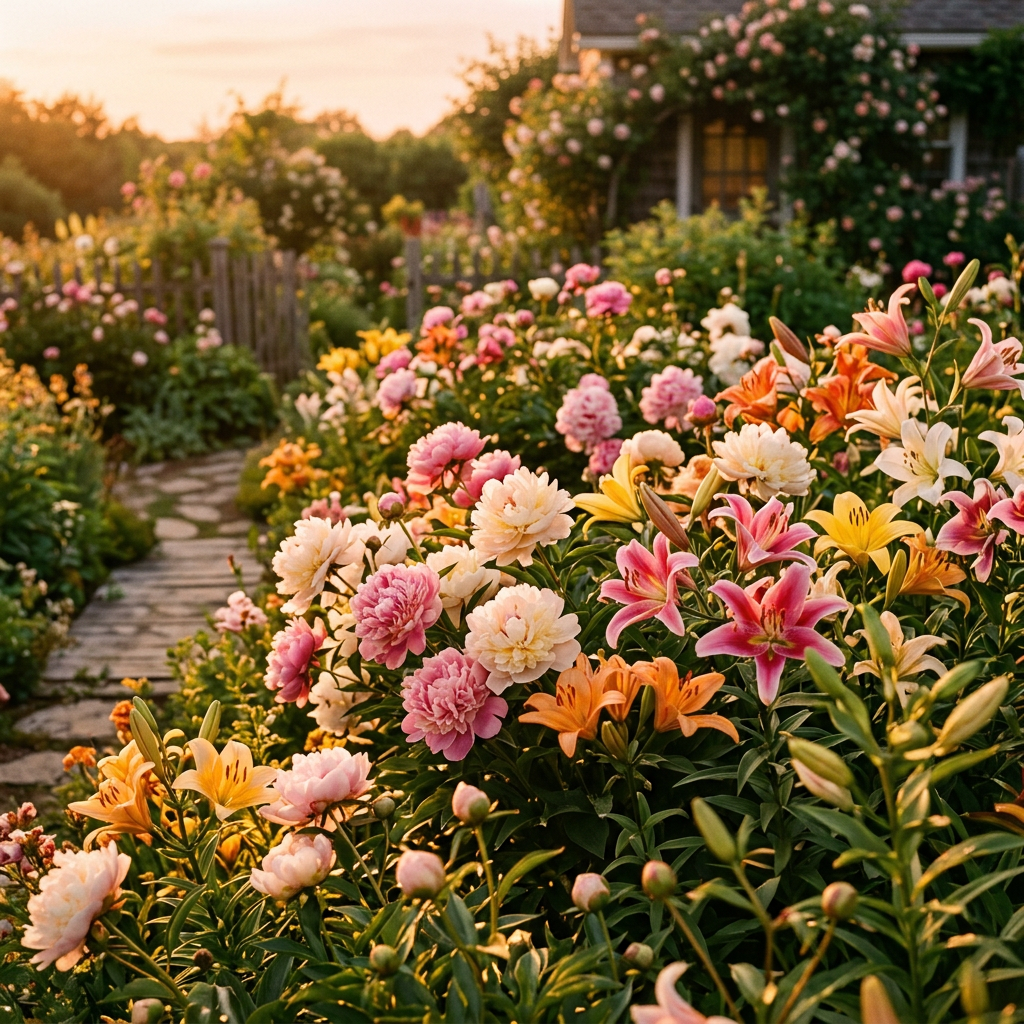
    A garden with pink, white, yellow, and orange flowers in front of a cottage
    A vibrant garden filled with colorful blooming flowers by a charming cottage

    So here is to summer bouquets, to men who notice flowers, and to all of us who refuse to settle for anything less than petals and poetry in our days.
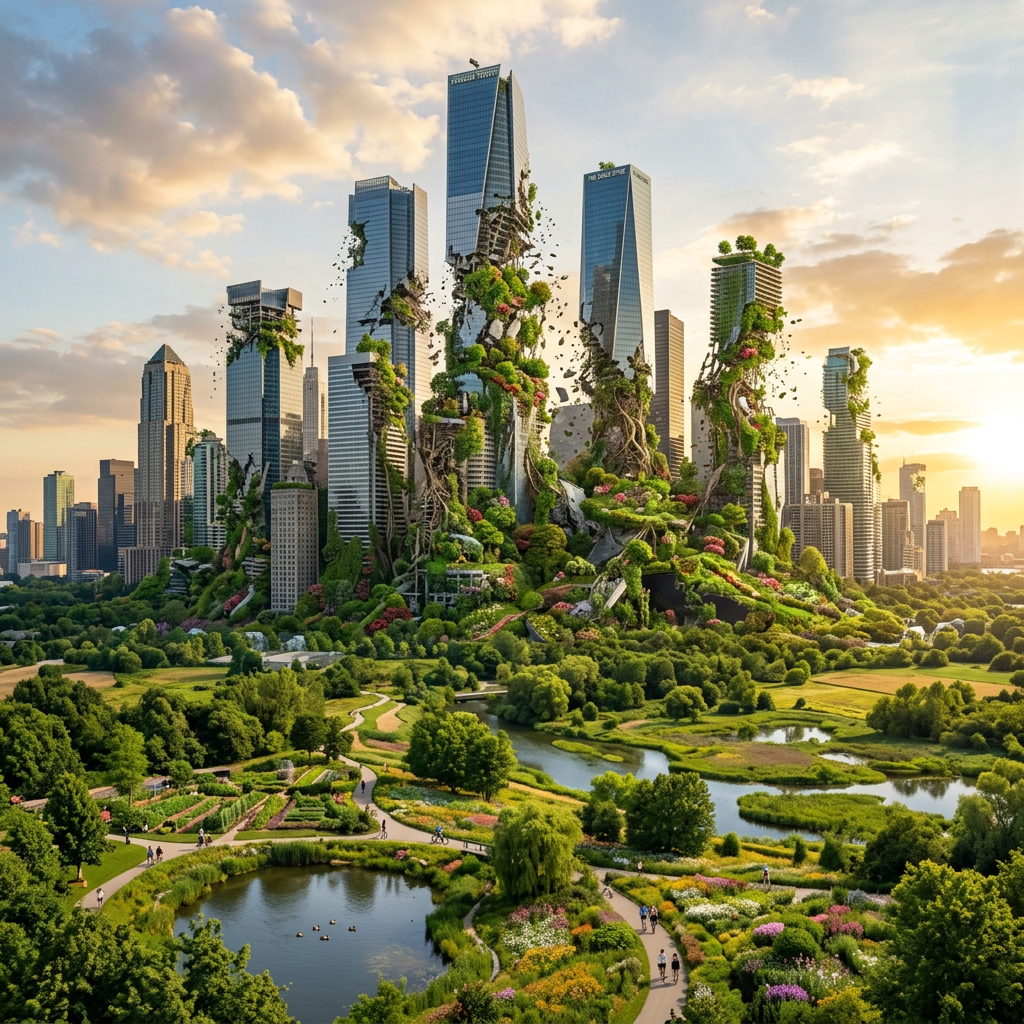
  • From Concrete Jungles to Barnyard Bliss

    From Concrete Jungles to Barnyard Bliss

    There was a time—not so long ago—when the ultimate female fantasy smelled like subway steam, expensive perfume, and the faint tang of a dirty martini. Picture it: a twentysomething woman in a crisp blazer and heels, striding through a sea of yellow taxis, her oversized handbag swinging (AKA the ultimate boss bitch!). The city was her playground and her reward for rejecting the picket-fence script her mothers and grandmothers had followed. Sex and the City was not just a TV show; it was a manifesto. It was my personal Bible. Carrie Bradshaw and her crew embodied the promise: live loud, love recklessly, shop unapologetically, and never, ever apologize for wanting more than a quiet life in the suburbs. The concrete jungle was not a cliché—it was the dream. Skyscrapers as catwalks. Roof parties as therapy. The allure of ambition drowning out any doubt that you may have had.

    Fast-forward to right now, and that dream has quietly packed its Louis Vuitton bags and moved to the country. Scroll through any social feed and you can see it: young women in linen dresses, hair in messy braids, grinning beside a Jersey cow or with dirt under their fingernails as they dig into a garden. Their feeds are a montage of raised garden beds bursting with heirloom tomatoes, mason jars of fermenting kombucha lined up like soldiers, and crusty sourdough loaves cooling on reclaimed-wood counters. The caption is always something like, “Trading spreadsheets for soil. Never been happier.”

    The shift is not subtle. It seismic. Girls, like me, who once pinned “NYC apartment goals” on their vision boards are now pinning “homestead layout diagrams” and “how to raise chickens for eggs” What happened? How did the concrete jungle lose its roar?

    The Glamour That Started to Feel Hollow

    The city life we were sold was always half marketing, half myth. Yes, there were the glittering nights—brunch that lasted until 4 p.m., spontaneous gallery openings, the electric thrill of possibility around every corner. And I still do want a lot of that. But there was also the other side: rent that devoured 60% of your paycheck, commutes that threatened murder, and a quiet anxiety that never quite switched off. The city demanded you be on all the time—networking, dating, curating the perfect Instagram life that proved you were thriving. Burnout was not a bug; it was the feature.

    Then came the shitshow of 2020. Lockdowns stripped the city bare. I used to think that I was craving the trad life, because I fell in love/ developed a new mindset. But, in reality, the vibrant energy looked a lot like empty sidewalks and $18 oat-milk lattes delivered by masked strangers. For the first time in decades, young professionals could actually feel the weight of urban living: polluted air, constant noise, zero connection to anything that grew or breathed without a price tag. Remote work cracked the door open. Suddenly you did not need to be in a cubicle in Midtown to pay the bills. The question everyone started asking—quietly at first, then louder—was: Why am I here?

    The answer, for a surprising number of women, was: “I don’t have to be.”

    For someone like me, the city life dream/ the Trump Tower penthouse Pinterest boards screeched to a halt.

    Enter the sourdough starter. Enter the garden. Enter the cow.

    There is something profoundly satisfying about watching yeast do its ancient magic in a jar on your counter. It is slow, it is patient, it is alive in a way that a $14 avocado toast never was. Pulling a carrot from the soil you planted and watered feels like a tiny victory. Gardening is not just growing food; it is growing agency. You become the leader of your little patch of earth. No middleman. No barcode. Just you, the sun, and the satisfaction of biting into a sun-warm tomato still warm from the vine.

    This is not nostalgia for a past that never existed. It is a rebellion against the disposability of modern life. And I absolutely love rebelling! Fast fashion, fast food, fast everything left us starved for something real. Sourdough takes days. Gardens take seasons. Cows demand you show up every single morning, rain or shine. That commitment feels like freedom in a world that sells us endless options but zero roots.

    Social media, for once, is not the villain here—it is the megaphone. Cottagecore aesthetics exploded during the pandemic for a reason. Those dreamy videos of women in linen dresses harvesting lavender are not just escapism; they are blueprints. Influencers with 200-acre homesteads show the beauty, but the comments sections reveal the deeper truth: “I’m so tired of pretending the city fulfills me.” Young women are realizing that the independence they were promised does not have to look like a corner office. It can look like a corner of a picket fence. 

    This is not just about aesthetics. It is about values doing a 180. The feminist script of the late ’90s and 2000s told us career + city + freedom = happiness. Many of us ran that experiment and discovered the equation was missing variables: community that is not transactional, food that does not come in plastic, children who run barefoot instead of dodging human feces on sidewalks.

    Of course, reality check: homesteading is hard. Cows do not care about your feelings when they are sick at 2 a.m. Gardens fail spectacularly in hailstorms. Sourdough can turn into a science experiment gone wrong. Social media does not show the back-breaking work, the isolation when the nearest store is 45 minutes away. The dream is romantic. The reality is often muddy boots and calloused hands.

    Yet the longing persists. Because even if you never fully move to a 10-acre plot, the idea of it heals something. It is permission to slow down. To value skill over status. To measure success by how many jars of preserves line your pantry instead of how many followers like your brunch pics.

    The New American Dream Is not Urban Anymore

    We are watching a quiet exodus. Not everyone is selling their apartment and buying a tractor (though plenty are). Many are doing the hybrid version: suburban plots with chickens in the backyard, balcony gardens that somehow produce enough basil to top your pizzas, weekend farmers market visits that feel like church. The point is not that every woman wants to become Elinore Pruitt Stewart. It is that the cultural current has shifted. The city no longer feels like the only place where life happens. The countryside—once dismissed as boring, backward, or basicnow feels like the final frontier of authenticity.

    So here we are. A generation that was raised on Sex and the City reruns is now trading stilettos for muck boots. We still want adventure, success, and connection. We just want it to smell like fresh hay and warm bread instead of exhaust and ambition.

    The concrete jungle had its moment. It taught us how to hustle, how to dream big, how to stand tall in heels. But now we are learning something gentler: sometimes the biggest flex is knowing how to keep a sourdough starter alive through a winter. Sometimes the most radical act is planting seeds and trusting they will grow.