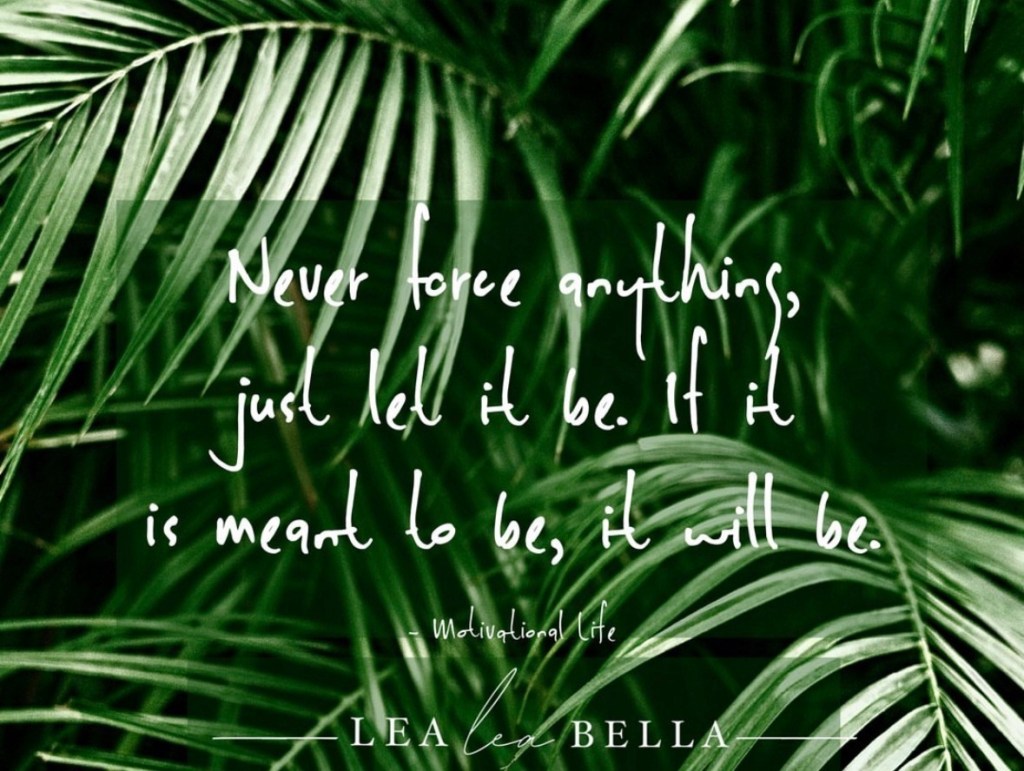
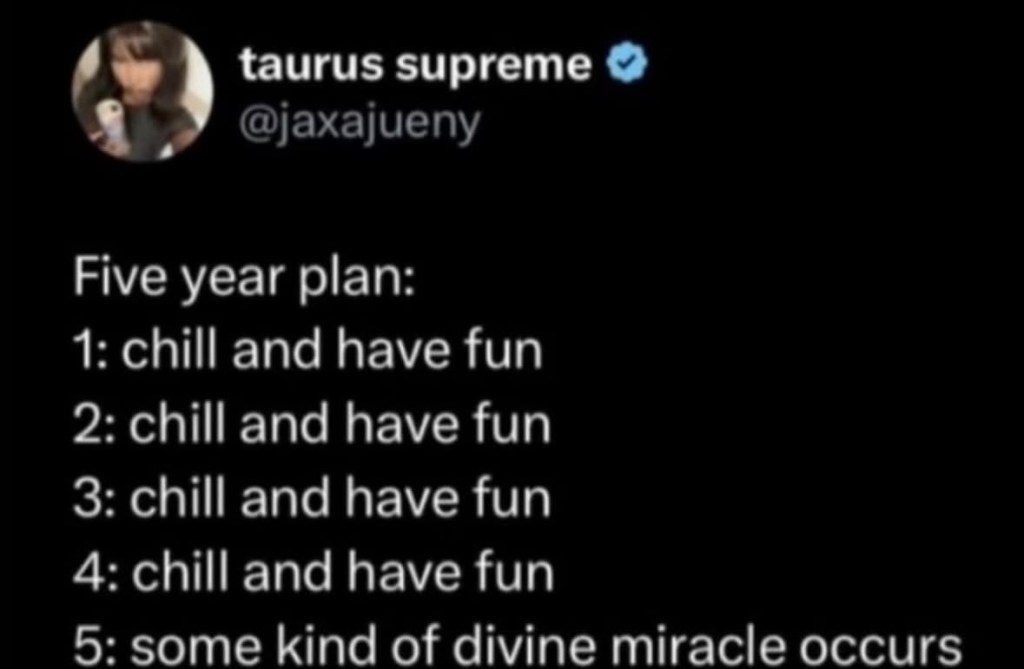
Sometimes I think it is my five-year plan to just chill and have fun while patiently waiting on a miracle to come in my life. Not in the dramatic, lottery-ticket sense of a miracle, though I would definitely not turn one down. More like the kind that arrives when the conditions have arranged themselves—when the right person, the right work, the right season finally shows up without having been dragged into existence by force of will. I do not work hard in the conventional sense. I do not believe in forcing anything. If it is meant to be, it will happen. So I sincerely believe that following my urges will bring me closer to my desired goals than any carefully reverse-engineered five-year strategy ever could.
This is not the same as saying I have no goals. It is closer to saying I have stopped treating goals as problems that can only be solved by sustained pressure. The culture around me still treats effort as a kind of moral currency: the more friction you generate, the more serious you must be about your life. I keep finding that the opposite is often true. The things that have mattered most have arrived when I was least clenched. A conversation that changed the shape of a year. A stretch of days that clarified what I actually wanted to make. An unexpected invitation that rearranged the calendar. None of these felt like rewards for grinding. They felt like the natural result of remaining available.
Following urges, then, is less about pure impulse and more about paying attention to the small, directional pulls that do not require me to override myself. The urge to walk farther than planned. The urge to stay longer at the table. The urge to open the notebook even though no one is waiting for the pages. The urge to say yes to the slightly inconvenient plan because something in it feels alive. These are not random. They are information. When I ignore them in favor of what I “should” be doing, I usually end up both less productive and more resentful. When I follow them, the work that does get done tends to have more coherence, even if it looks, from the outside, like dilly-dallying.
You have to be careful, though. Preferring to live in the whimsy is easy to misread as avoidance, and the line between the two is thinner than it looks. There is a version of this philosophy that is simply a sophisticated way of staying small: calling every difficult thing “not meant to be,” treating every urge to disappear as wisdom. That version numbs. It turns the day into a series of soft escapes and then wonders why nothing ever arrives. The version I am after is different. It still requires presence. It still asks me to notice when an urge is actually a retreat from something I have the capacity to meet.
Even though I prefer to dilly-dally and live in the whimsy, I still end the day completely tired and sore. The tiredness is the proof that the approach is not pure drift. When I follow what actually interests me, I tend to give it everything. A long walk becomes a longer one because the light keeps changing. A conversation keeps unfolding because neither person is watching the clock. Hours disappear into making something simply because the making feels like the point. The body registers the expenditure. Muscles are used. Attention is spent. There is no leftover energy for performing busyness on top of it.
This is the distinction I keep returning to: resting is not the same as numbing. Resting is what happens when you stop pushing against the grain of the day and instead occupy the activities that already have some charge in them. Numbing is what happens when you use distraction, substances, or endless low-grade scrolling to avoid both the difficulty and the aliveness. One leaves you tired in a clean way; the other leaves you depleted and still vaguely restless. I make sure, as best I can, that I am not numbing myself to life. The tiredness at the end of the day is usually the result of having been fully in whatever I chose to do, not the result of having forced myself through a list of obligations I never wanted.
None of this is a guarantee. Waiting on a miracle while following urges can look, for long stretches, like nothing is happening. There are seasons when the urges themselves feel thin and the waiting feels longer than it should. In those periods the temptation is to reintroduce force just to have something to show for the time. Sometimes that force is necessary—deadlines exist, bodies need care, relationships require maintenance. But I have noticed that the force works better when it is applied to the small, concrete next thing rather than to the entire shape of a life. The large shape still seems to prefer being discovered rather than designed.
So the plan, such as it is, remains deliberately underspecified. Chill. Have fun. Stay close enough to my own attention that I can tell the difference between an urge that wants to be followed and one that wants to be examined. Give full effort to the things that actually hold my interest. End the day tired from use rather than from self-override. And keep enough openness that a miracle, if it is coming, can find the door unlocked.
It is not an ambitious plan. It is not even especially practical on paper. But it has the advantage of being livable, and so far the living of it has produced more clarity, and more genuine tiredness, than the years I spent trying to force the future into arriving on schedule.