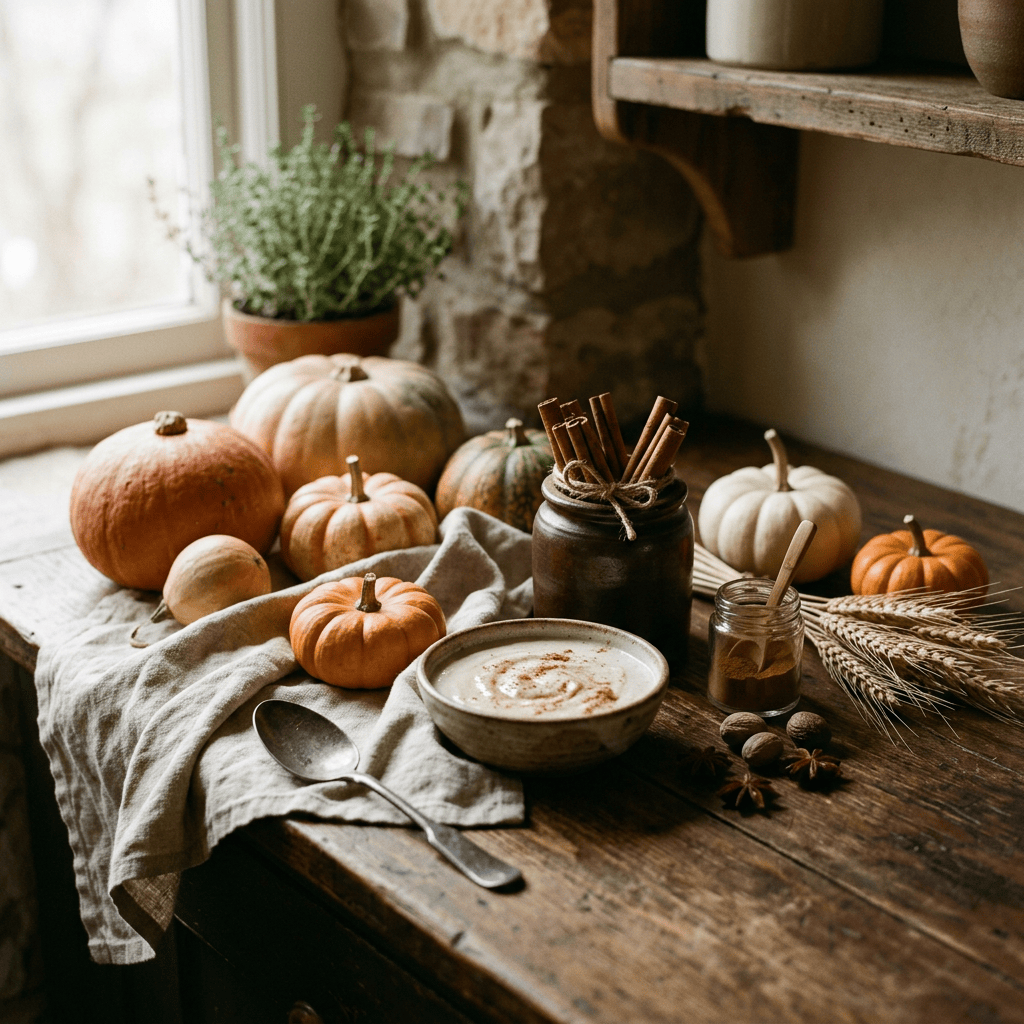
There is a particular stretch of early fall when the light gets thinner, the evenings cool off just enough to justify a sweater dress you do not actually need, and every coffee shop starts smelling like a candle that has opinions. I have, for longer than I usually admit out loud, been extremely susceptible to that smell.
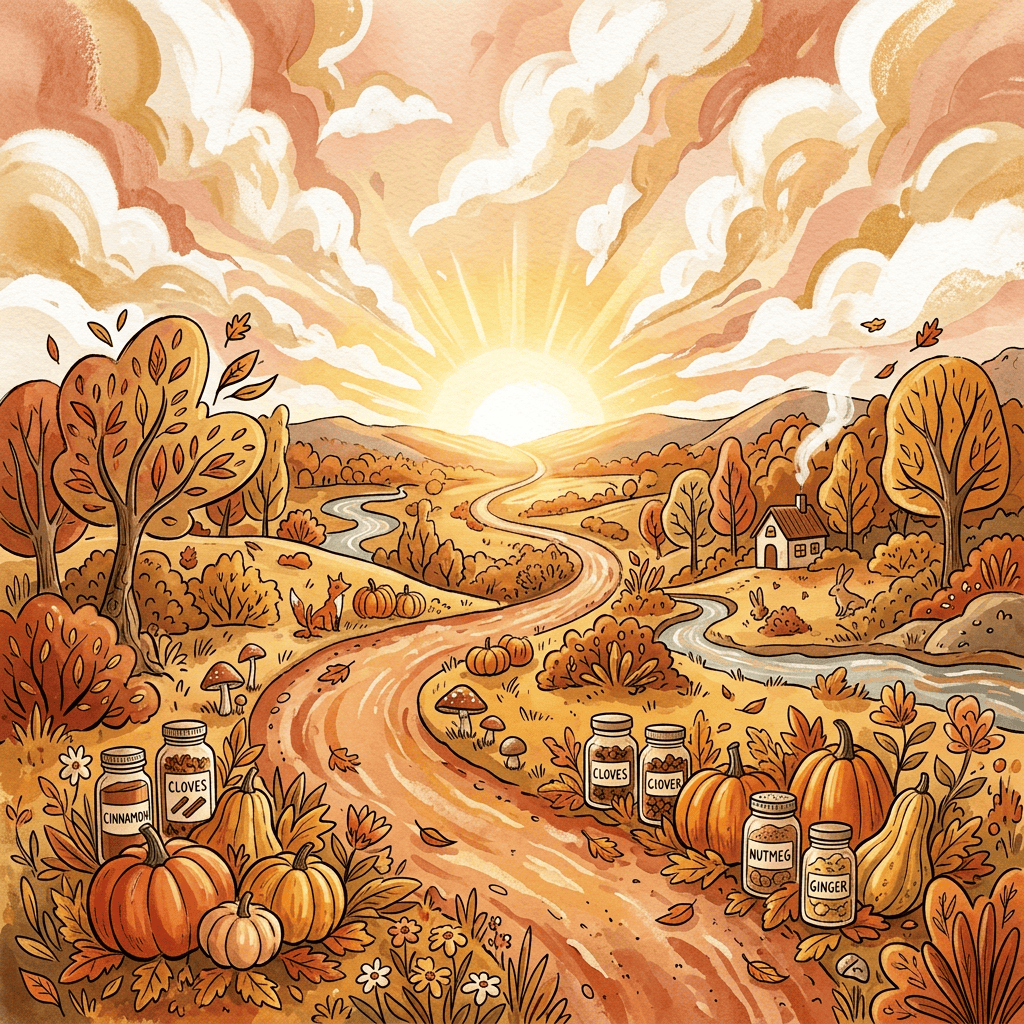
A warm autumn landscape brings together pumpkins, spices, winding paths, and a glowing sunrise.
Pumpkin spice and I have a long, mostly private relationship. I do not announce it, even though I crave pumpkin pie year round. I do not post the seasonal cup. I just quietly order it, or make it, or accept it when it appears, and feel briefly and uncomplicatedly pleased. My long-distance boyfriend, who has a talent for noticing the things I like and then arranging for them to show up at my door, once sent a small jar of pumpkin spice nut butter. It arrived on an afternoon when he was virtually unavailable to me. I opened it while watching Bridgerton, ate a spoonful with no particular plan, and then, somehow, the jar was empty. I am not proud of the speed. I am also not especially sorry.
So yes: a bit of a basic bitch, if we are using the technical term. I have made my peace with it. The problem is not the flavor. The problem is the vehicle.
My stomach and dairy have been on uneasy terms for years. I went years without it, which was fine until it was not. It is just consistent enough that I have stopped testing the boundary for fun. And yet the thing I want, specifically, is a pumpkin spice milk or creamer I can pour into coffee without thinking about it later. Hot girls contain multitudes, including, occasionally, a sensitive gut. This is not news.
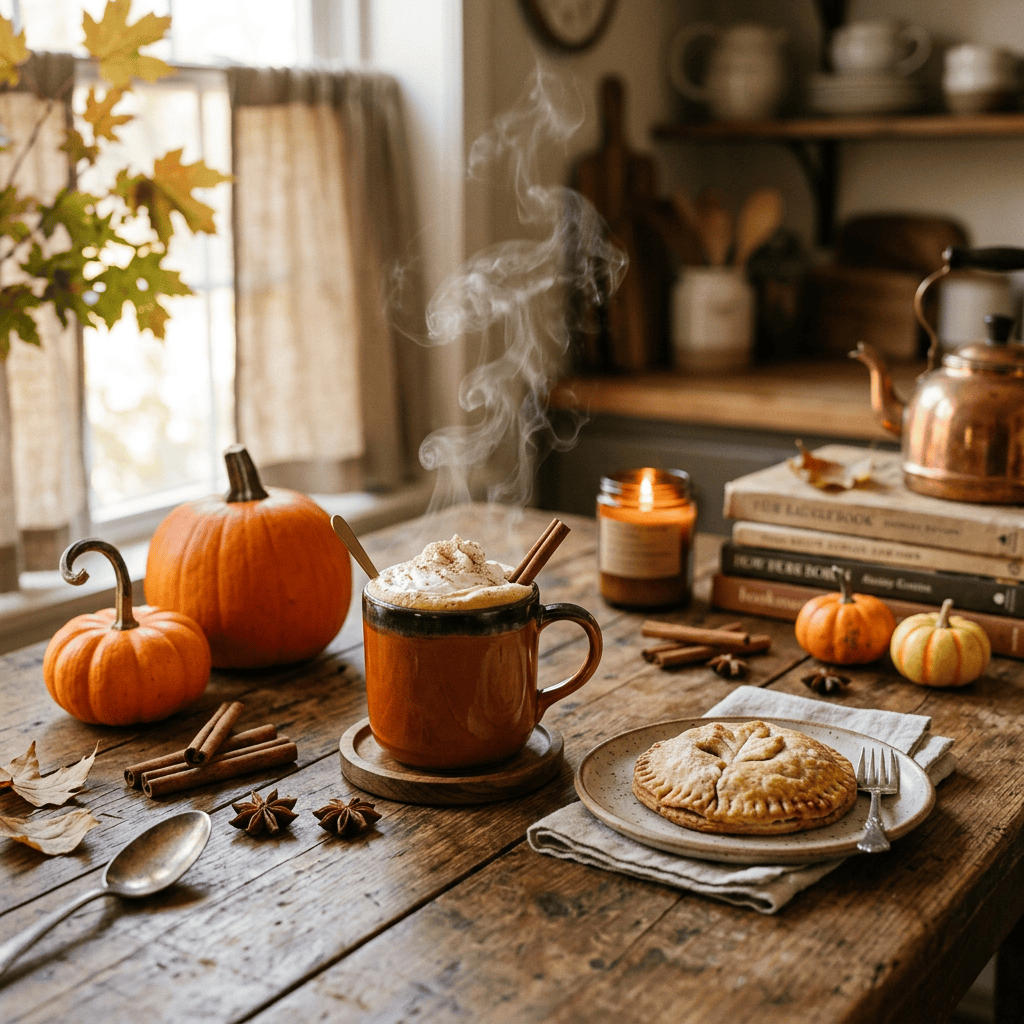
A steaming spiced coffee, pumpkins, and homemade pie create a warm autumn kitchen scene.
Which is how I ended up deep in the non-dairy aisle, and then deeper into the internet, looking for something that tastes like October and behaves like it has never met a cow. The one I had my eye on was the Malk pumpkin spice version. It kept appearing in recommendations, looking exactly like the thing I wanted: simple ingredients, the right seasonal notes, no dairy. Every time he went to actually buy it, it was gone. Sold out. Restock date vague. The digital equivalent of a shrug.
So I am still looking. Something creamy enough to cut coffee, spiced enough to feel intentional, and gentle enough that I do not spend the rest of the day bargaining with my own digestive system. If you have a non-dairy pumpkin spice milk or creamer that has actually earned a permanent spot in your fridge, I would genuinely like to know what it is. The nut butter jar is already a memory. The coffee, is every morning.
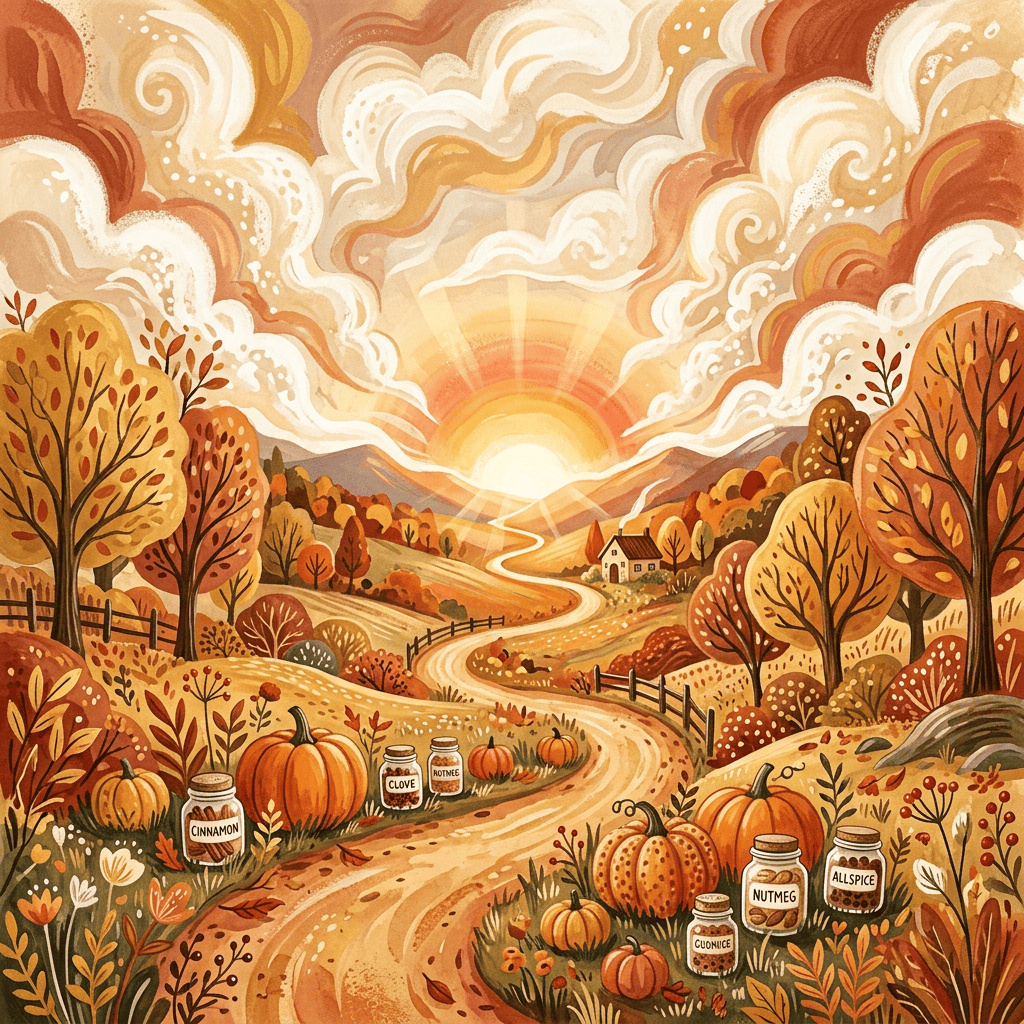
A winding autumn path leads through pumpkin fields beneath a glowing sunset, with jars of seasonal spices in the foreground.
I spent the entire weekend alone—rotting on my chair while my boyfriend was up in Maine. Laptop open, Bridgerton on, snacks within reach, and almost no intention of moving. It was the kind of low-effort weekend that feels indulgent precisely because nothing productive happens.
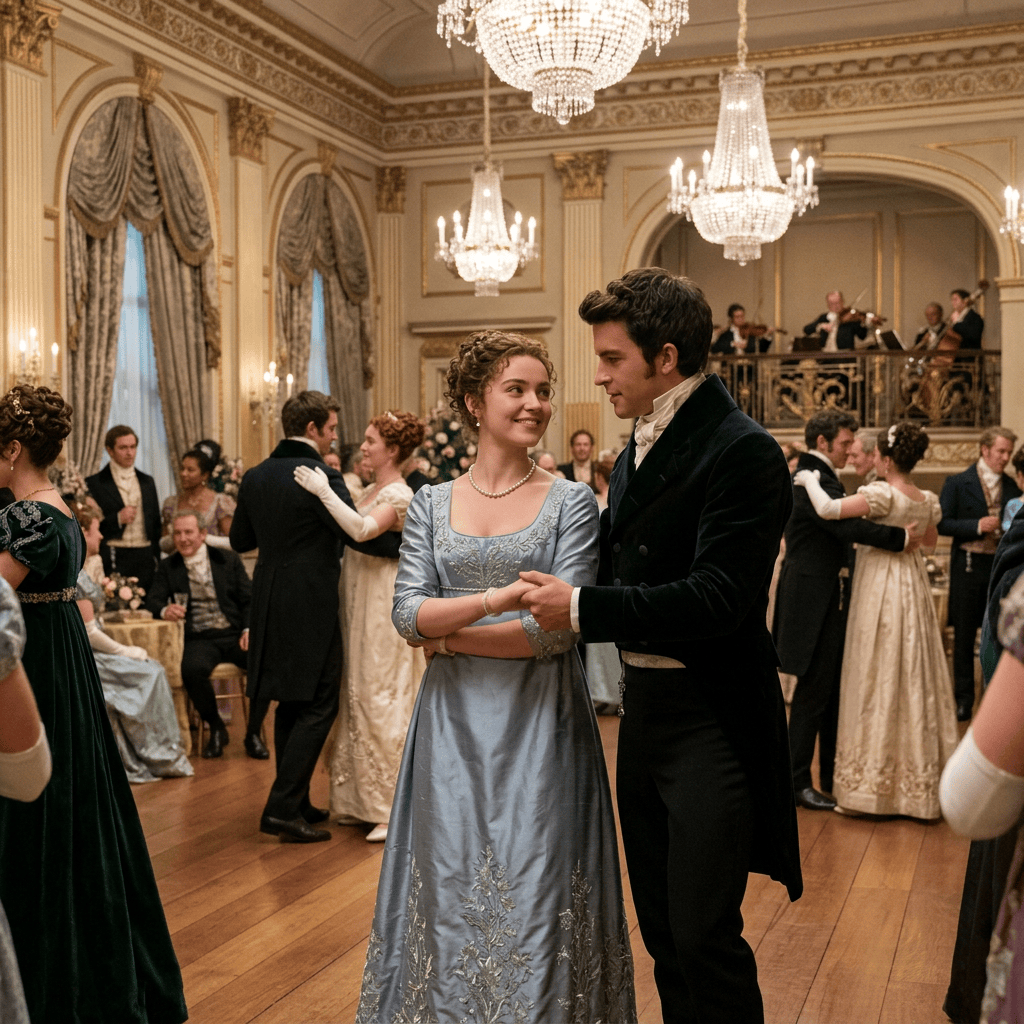
A young couple shares an elegant dance at a lavish Regency-era ballroom.
What pulled me in was the surface of the thing. The show sells an upscale world of ladies and gentlemen, drawing rooms, formal calls, gossip columns, and carefully managed reputations. I like that register. The costumes, the houses, the rules of the marriage market, the idea that desire has to move through manners—that is the lifestyle fantasy I actually wanted. Season 1, centered on Daphne Bridgerton and the Duke of Hastings, delivered the version of it I came for: a rake with a reputation, a debutante who is sharper than she looks, and a romance that spends a long time circling the tension before it pays off. That was the sexiest of the storylines to me, and the one I stayed for.
An open wooden door reveals a warmly lit sequence of rooms in an aged interior.
The rest of the framing was harder to ignore. The series is a Shonda Rhimes production, and it is very woke in the specific way her projects tend to be. The most obvious example is the decision to depict Black characters as royalty and members of the highest aristocracy in a Regency setting, without treating that as a departure from history or even as something the story needs to explain. The show wants the balls, the titles, the inheritance plots, and the social season, but it also wants a modern casting ideology laid over them. Even though the blacks were more likely slaves in the 1800s. Once you notice it, it sits on top of every scene. I was not looking for a lecture about representation inside a costume drama;I was looking for the rake and the love story.
That is also why I am not continuing. Each season shifts to a different Bridgerton sibling and a new central romance. The Duke’s arc was the one that held my attention, and once it resolved I had no particular reason to stay for the next set of characters. The aesthetic is still pretty, the snacks were still there, and the weekend still passed. Like in life,I do not need another season of the same world once the part I actually wanted is over.
I know some of my health beliefs sound unhinged to people raised on the standard public-health script. I am fine with that. I sincerely believe the mind and mindset are primary drivers—capable of causing, amplifying, or resolving far more of what ails us than most mainstream advice admits. Chronic stress, unresolved emotional patterns, expectation, and the stories we tell ourselves about our bodies shape immune function, inflammation, hormone balance, pain perception, and recovery far more powerfully than the average wellness checklist acknowledges. Placebo and nocebo effects are no-nonsense; they are measurable physiology. When someone is convinced they are broken, poisoned, or doomed, the body often cooperates. When someone refuses that story and orients toward agency and resilience, outcomes frequently improve—even in the face of imperfect “lifestyle hygiene.” This is not magical thinking. It is an insistence that the organism is not a passive machine waiting for external inputs to dictate its fate.
That same skepticism extends to several specific claims that get treated as gospel.
Cancer is largely a product of the modern chemical environment, not the sun.
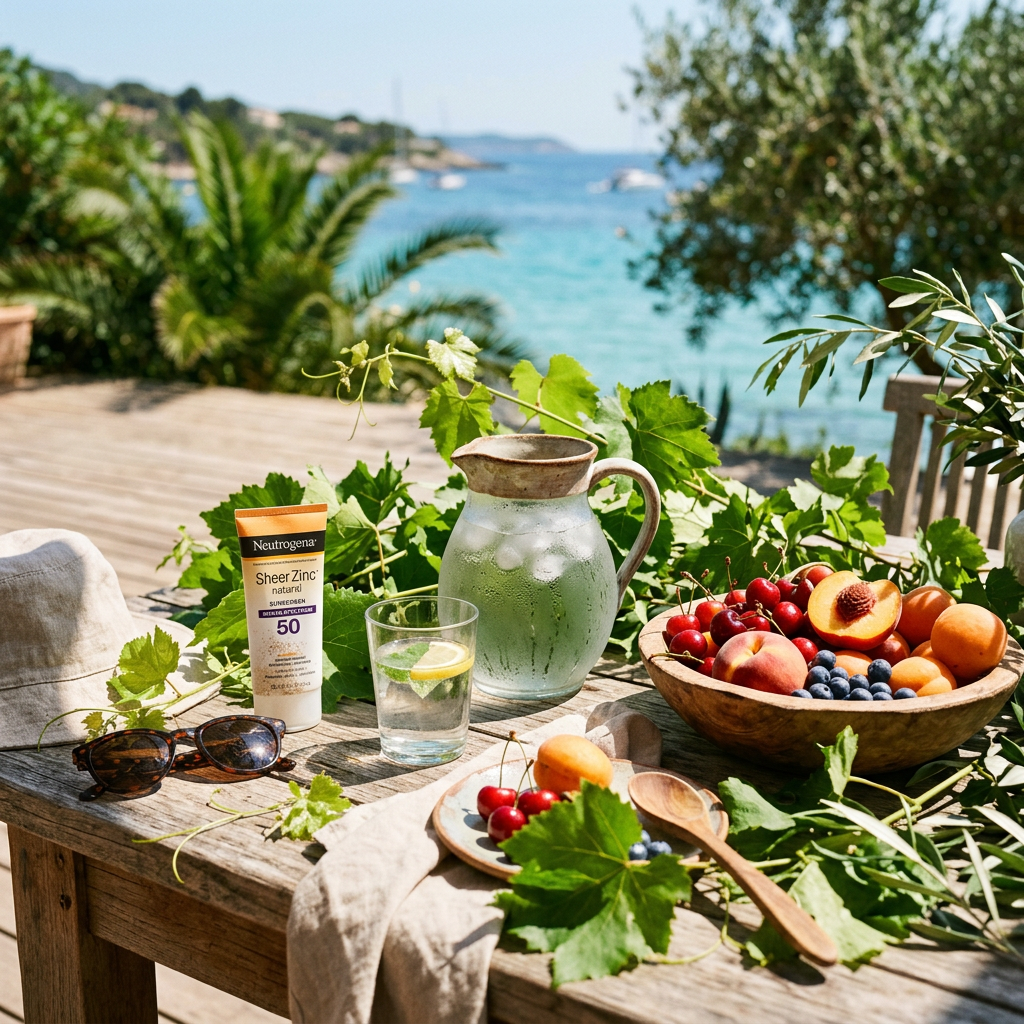
A sunlit seaside table pairs sunscreen with fresh fruit, chilled water, and summer accessories.
I do not accept that the sun—the same source of vitamin D, circadian signaling, and the light that has bathed life for billions of years—is the primary villain behind skin cancer. Melanoma and other skin cancers existed long before industrial chemistry, but the sharp rise in diagnoses tracks far more closely with the explosion of synthetic compounds, persistent organic pollutants, endocrine disruptors, processed foods, and novel exposures than with people suddenly spending more time outdoors. The idea that a “beautiful ball of fire in the sky” was waiting all this time to randomly attack us while we invent new solvents, plastics, and preservatives every decades seems suspicious.
Sunscreen deserves particular scrutiny. The dramatic increase in reported skin-cancer rates after the widespread adoption of chemical sunscreens is not a coincidence I am willing to ignore. Many conventional formulas rely on ingredients that themselves raise questions about systemic absorption, hormonal interference, and oxidative stress under UV exposure. Mineral-based options (non-nano zinc oxide and titanium dioxide without the aluminum or chemical filters) are a far less concerning compromise when protection is genuinely needed. The larger point remains: treating the sun as the enemy while treating the chemical soup of modern life as background noise is a category error. Focus onreducing the big toxins first.
The “eight glasses of water a day” rule is arbitrary dogma
Hydration matters. Obsessive water-chugging does not. The body is not a simple tank that requires a fixed volume of plain water regardless of climate, activity, diet, or individual physiology. Electrolyte balance—sodium, potassium, magnesium, and the rest—determines whether fluid actually stays where it is useful. People eating real food, salting to taste, and paying attention to thirst and urine color generally do better than those forcing down liters of plain water out of fear of “dehydration.” Overhydration is real; electrolyte dilution is real. The eight-glass mantra is a marketing-friendly oversimplification that ignores context.
Eight hours of sleep every night is not a universal law
Sleep is essential. The idea that every adult must hit exactly eight hours or face inevitable decline is not. Could I even sleep eight straight hours? Individual variation is large. Some people function optimally on less, others need more, and quality (continuity, depth, alignment with natural light cycles) often matters more than the raw number. Rigid enforcement of an eight-hour quota can itself become a source of anxiety that undermines the very rest it claims to protect. Track how you actually feel and perform rather than worshiping a round number. Or purchasing a tacky tracking device.
Wrinkles are not a disease
The cultural war on wrinkles treats a normal consequence of decades of facial expression, sun exposure, and collagen changes as a medical emergency requiring endless products, procedures, and self-surveillance. Aging skin is not a failure of willpower or product compliance. Accepting that some lines are inevitable—and that they often signal a life lived—is more coherent than the anti-aging industry’s promise of perpetual smoothness.
Sugar does not uniquely “feed” tumors in the way the slogan implies
Cancer cells are metabolically greedy and often rely heavily on glucose. That observation has been stretched into the claim that dietary sugar is the direct fuel that keeps tumors growing, so cutting sugar starves them. The reality is more complicated. The body tightly regulates blood glucose; restricting dietary sugar does not selectively deprive malignant cells while leaving healthy tissue untouched. Tumors can use other substrates, and the metabolic flexibility of both cancer and host is not reducible to “sugar feeds cancer.” Obsessing over every gram of carbohydrate while ignoring overall metabolic health, inflammation, and the rest of the diet is another example of a partial truth turned into a rigid rule.
Eat what makes you feel good—happiness is not optional
The final point is the practical corollary of the first. Chronic stress from rigid dietary rules, moralizing food choices, and constant self-monitoring is itself a health risk. People who eat in a way that supports stable energy, digestion, and genuine enjoyment—without the background noise of guilt or fear—tend to do better long-term than those locked in perpetual restriction or purity contests. This is not a license for chaos. It is a recognition that psychological well-being and physiological well-being are not separate ledgers. When the rules become the stressor, the rules have failed.
None of this requires rejecting every useful medical intervention or every piece of evidence-based guidance. It does require refusing to treat every official recommendation as sacred, every correlation as causation, and every commercial product as the solution to a problem the product may have helped create. The mind is not a side character in health. The modern chemical environment is not neutral. And many of the tidy rules we are handed—water quotas, sleep quotas, sunscreen as non-negotiable shield, sugar as tumor fertilizer—are simpler and less accurate than the marketing suggests.
I love me some avocado! So obviously I was ecstatic when foods were created using avocado oil instead of the disgusting seed oils (read more about my position on seed oils here!).
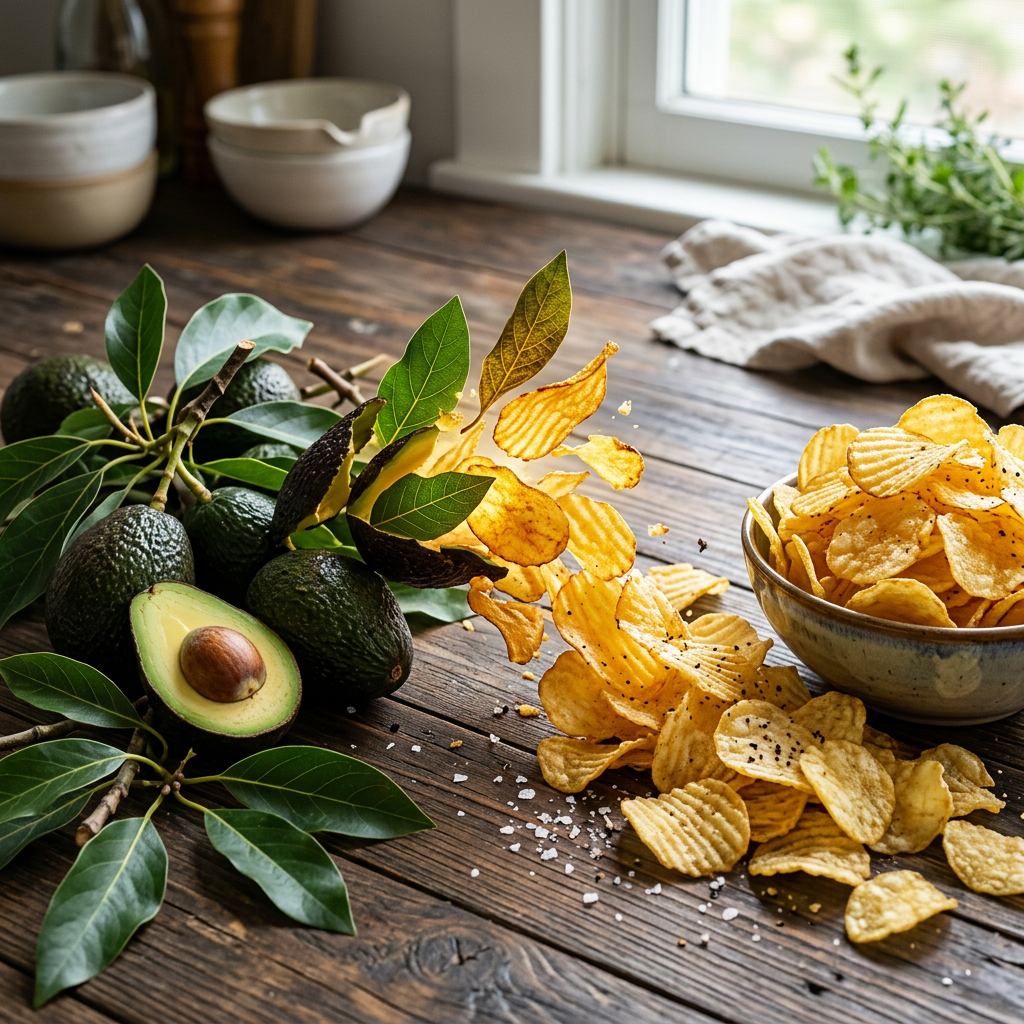
Potato chips suck up oil like a sponge. The final product is usually 30–40% fat by weight. That means 8–11 grams of pure frying fat per one-ounce serving, whether the bag screams “avocado oil” or just “vegetable oil (and/or whatever is cheapest this week).”
Boulder Canyon’s classic sea salt version clocks in at 9g fat (mostly monounsaturated on the label). Jackson’s, Kettle Brand avocado lines, the works—same ballpark. The number is not magic. It is just how much oil the potato decided to keep after the fryer.
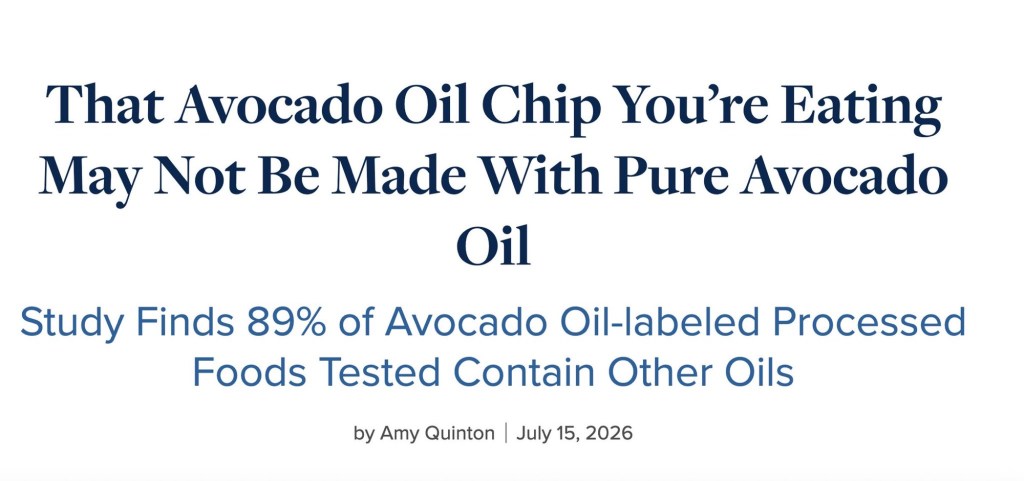
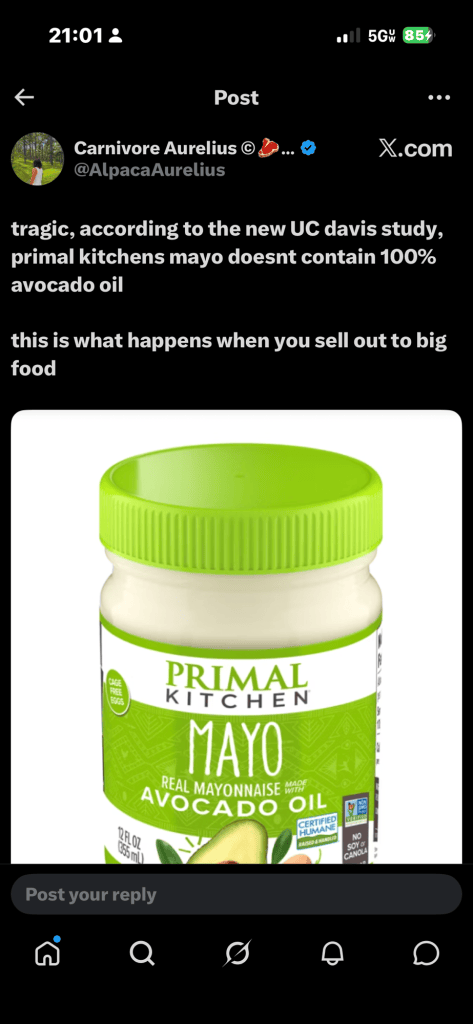
Avocado oil should be the upgrade: high smoke point, heavy on oleic acid, less of the inflammatory omega-6 circus that seed oils bring to the party. On paper it looks cleaner. In practice a July 2026 UC Davis study checked 54 products that listed avocado oil as the only oil. 89% were adulterated. Chips specifically 93% failed the chemical fingerprint test. Fatty acids and sterols did not match real avocado oil. Cheaper oils (soybean, canola, the usual suspects) were riding shotgun or driving the whole thing.
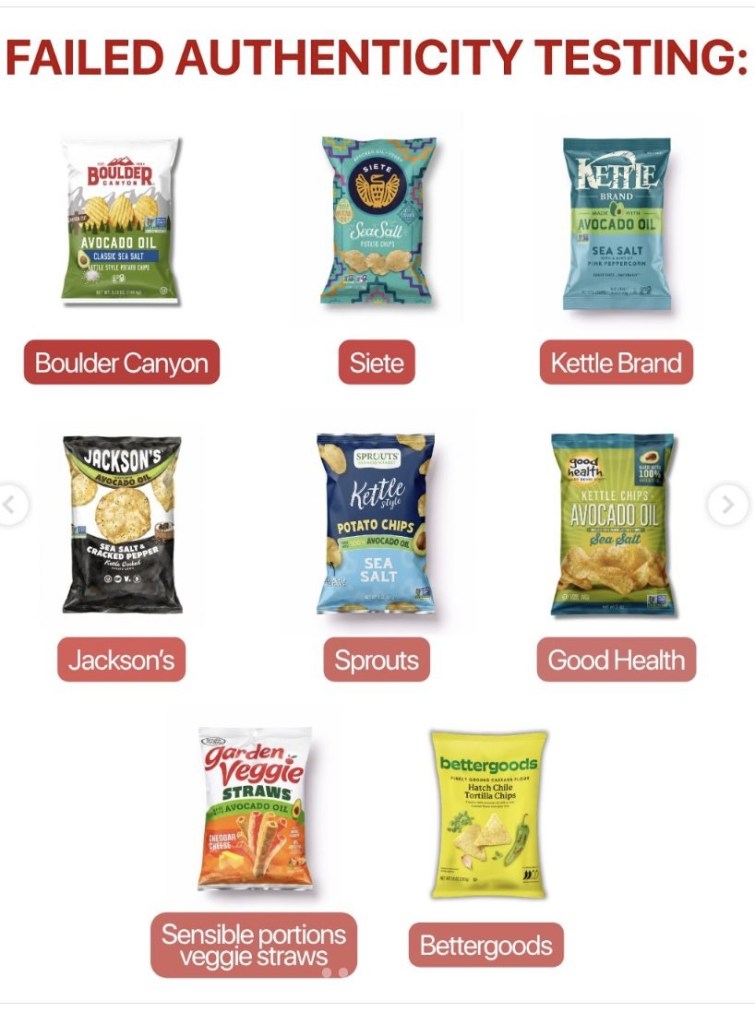
Boulder Canyon, Jackson’s, Siete, Kettle Brand avocado versions, Good Health, Sprouts—multiple brands flunked. A couple of samples from Lesser Evil and Simply Tostitos scraped by on one lot and failed the next. Nobody’s chip brand went two-for-two clean. Meanwhile, olive oil products mostly passed the same tests. Avocado oil is expensive. The incentive to dilute it is obvious. The supply chain apparently has no accountability.
So when the bag says “made with avocado oil” or “100% avocado oil,” treat it like a dating-app bio: optimistic at best, full of it at worst. You are still eating a calorie bomb of fried starch. The fat profile might be better if the oil is real. Most of the time it is not. You are paying the premium for the green-washed label while the actual oil composition is closer to the cheap stuff you were trying to avoid.
Want actual control? Make your own with a bottle of avocado oil that does not come from a random bulk supplier, or switch to brands frying in tallow, coconut, or verified olive oil. Or just accept that chips are a vice and stop pretending the oil type turns them into a wellness product. The study did not invent the problem—it just held up the receipt.
Even one of my favorite condiment brands has sold out to Big Food and found fraudulent
In a world obsessed with instant results, everyone seems addicted to the path of least resistance. We scroll for 30-second life hacks, pop Adderral pills for focus, and chase apps that promise transformation without sacrifice. Nowhere is this more glaring than in the realm of weight loss. The sudden explosion in popularity of GLP-1 agonists—those injectable drugs like semaglutide (Ozempic, Wegovy) and their cousins—perfectly encapsulates our collective allergy to hard work and extreme discipline. As someone who has fought my own battles with weight, food, and inertia, I am deeply opposed to this trend. It feels like giving up before the fight even begins.
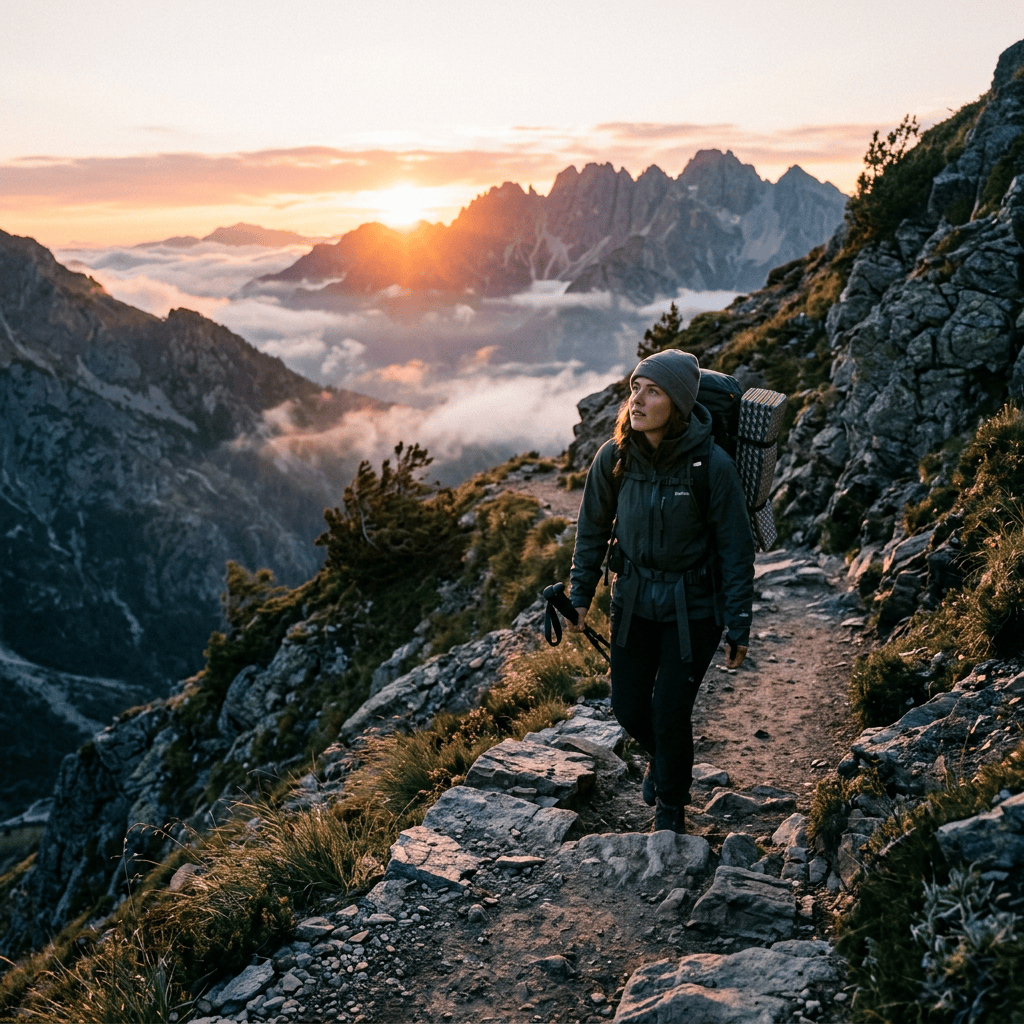
A hiker enjoying a scenic mountain trail at sunset with dramatic peaks and clouds below.
I know, I know: discipline is uncomfortable. It demands you sit with hunger, boredom, and the quiet voice that whispers “just one more.” Modern society has engineered that discomfort out of existence wherever possible. DoorDash at all hours, endless streaming, productivity tools that gamify focus— we have built an ecosystem that rewards avoidance. GLP-1s fit right into this. They suppress appetite so powerfully that many users report food simply stops calling their name. No more white-knuckling past the pantry. No more staring down cravings like an opponent in the ring. Just a weekly shot and the pounds melt away.
One of my all time favorite health bro Huberman
I get the temptation. The before-and-after photos flood social media. Celebrities and influencers rave about how they “finally feel normal.” So much for the “Fat is Beautiful” movement. Doctors prescribe them at record rates. Insurance even covers them. It is convenient, medically endorsed, and culturally celebrated. But that is exactly why it worries me. When did we decide that bypassing the mental and physical forging process was a win? These drugs do not teach you how to live in a world full of hyper-palatable food engineered to hijack your brain. They just mute the signal. Turn the volume down on biology until the drug wears off or you stop—then what?
I have lost significant weight while remaining permanently seated for large stretches of my life. Thanks to my elongated recovery periods. Whatever the reason, I was not out here running marathons or transforming into a gym rat. My transformation happened in the quiet moments of choice: feeling the gnawing hunger in my stomach and choosing not to raid the fridge anyway. Sitting with that discomfort until it passed. Learning that hunger is not an emergency—it is information.
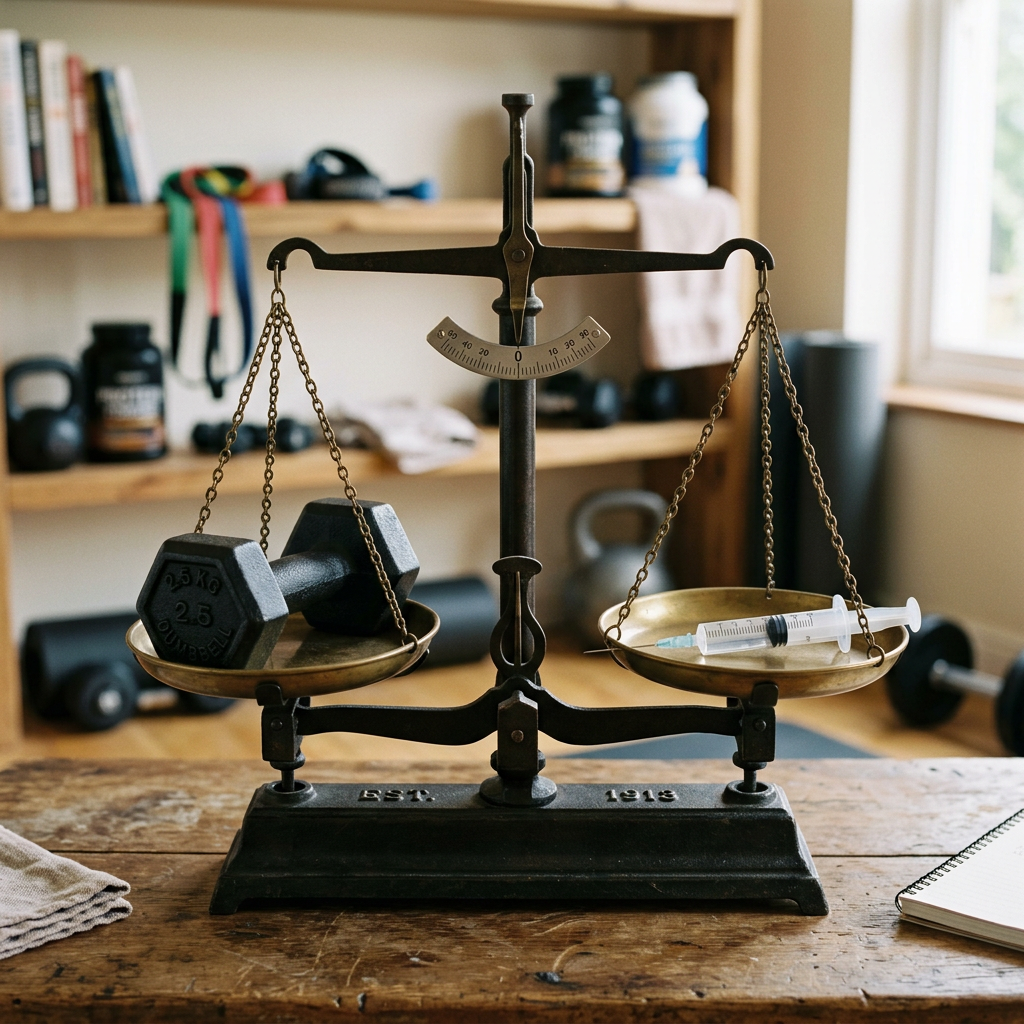
An old-fashioned balance scale comparing a dumbbell and a syringe
I am so proud of this. Not in a smug, performative way, but in the deep, private satisfaction of knowing I built the skill. I still allow myself “play” periods. My boyfriend can attest to the glorious chaos: pints of ice cream devoured in one sitting, tubes of cookie dough demolished, late-night deliveries of chocolate, chips, and jars of nut butter showing up on my doorstep. Those windows exist. Life is not about perfection or endless restriction. But the difference is what comes after.
After the play comes the recalibration. Pure discipline. Determination that borders on stubbornness. I lean into the hunger again, not as punishment but as a reset. I track, I adjust, I feel the signals my body sends without panic. I do not need a medication to make treats stop tasting good—I just need to remember who I am becoming. That muscle of restraint gets stronger every time I use it. It spills into other areas of life: focus, emotional regulation, delayed gratification. Shortcuts cannot give you that transferable strength.
A hiker pauses on a rocky trail during sunrise with dramatic mountain peaks in the background
People have called me lazy. Fair enough on some days—I am not pretending to be a productivity saint. I love plopping down in front of a good television show and I maintain my relationship through social media and FaceTime. I mean, I write a goddamn blog (and hopefully a book too). But injecting yourself with a powerful peptide that alters gut hormones, slows gastric emptying, and comes with a laundry list of side effects just so you can coexist with a bag of chips without losing control? That strikes me as the lazier move. And not just lazy—idiotic.
We are talking about a class of drugs originally developed for Type 2 diabetes, now being used as lifestyle aids. Muscle loss, nausea, “Ozempic face,” potential long-term unknowns about the brain-gut axis, and the very real risk of dependency on the suppression effect. Some users regain weight rapidly once they stop because they never rebuilt their internal compass around food. You are essentially outsourcing your willpower to a syringe. Where is the growth in that?
I am not anti-medicine. There are legitimate medical cases where these drugs save lives or restore health when nothing else worked. But the cultural frenzy—the trendy testimonials, the party-line prescriptions, the normalization of “I just do not want to crave treats anymore”—that is what feels idiotic to me. It is another layer of numbness in a society already drowning in distractions. We are medicating away the very friction that makes us resilient.
Real, sustainable change is not sexy. It is repetitive. It is logging another day where you ate enough but not too much. It is choosing water over soda for the hundredth time (fizzy water works wonders!). It is feeling the itch for something sweet at 9 p.m. and redirecting that energy into simply sitting with it. Over months and years, those small acts compound into a fundamentally different relationship with your body and your impulses.
I am not saying everyone must suffer. I am saying the suffering is part of the curriculum. Discipline is not punishment—it is the tuition you pay for freedom. Freedom from being controlled by every craving. Freedom from the cycle of shame and rebound. Freedom to enjoy treats without them owning you.
If GLP-1s are a tool for some in genuine need, fine. But let’s stop pretending the mass adoption is a triumph of progress. It is a symptom of a deeper cultural surrender. We have decided the hard way is too hard, so we will engineer the hardness out.
I know that I will keep doing it the old-fashioned way. Hopefully not seated. Hungry sometimes. Indulgent when I choose. Disciplined when it counts. And I will keep patting myself on the back for every single time I choose the discomfort that builds something real. Because in the end, the person who emerges from that process is not just lighter in body—they are stronger in spirit.
In a world overflowing with noise, division, and endless hot takes, I made a deliberate choice to shape my X (formerly Twitter) experience around what truly matters to me. My entire account is now intentionally curated to reflect my personal beliefs and, above all, to center positivity.
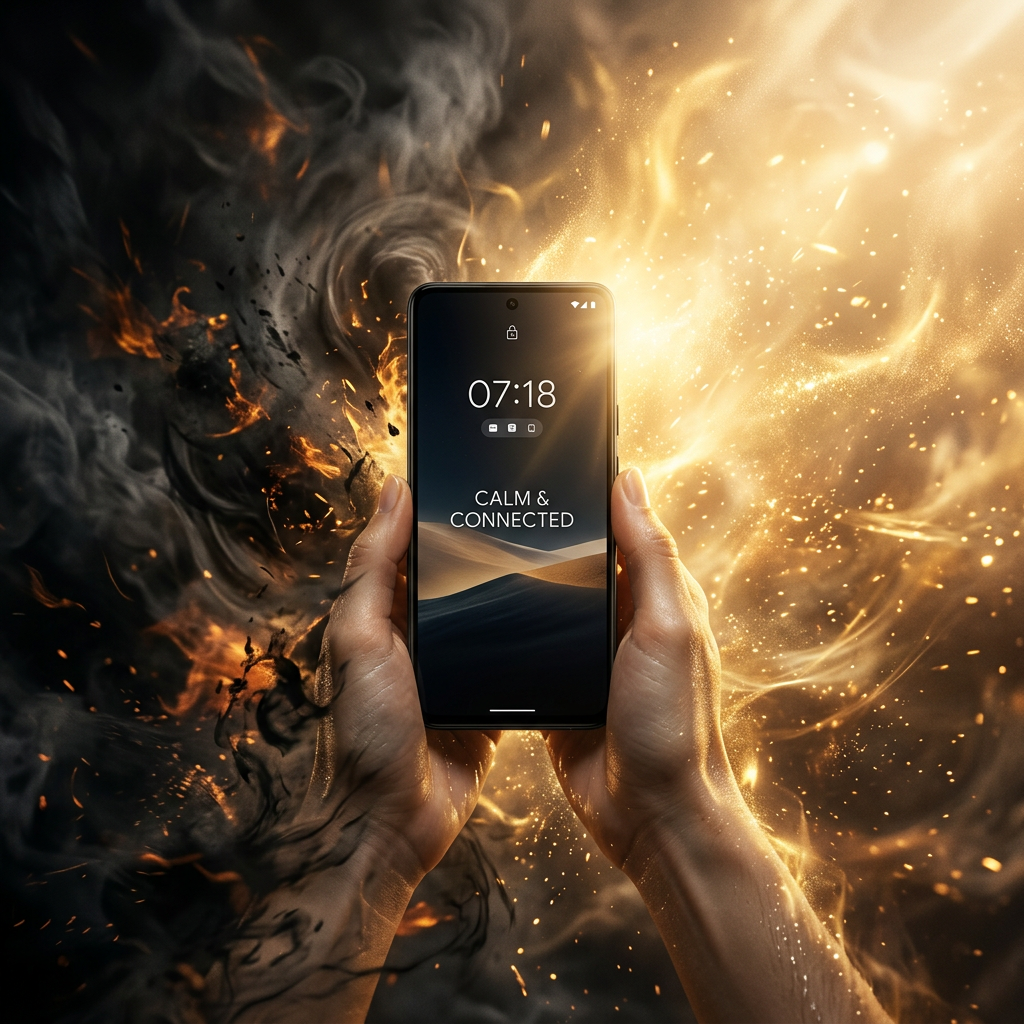
A smartphone displaying ‘Calm & Connected’ held amid swirling fire and smoke effects
I want my feed to uplift, inspire, and align with the kind of life I am actively building—one rooted in growth, joy, healing, and possibility. That does not mean I live in a bubble or ignore reality. It simply means I am protective of my mental and emotional space.
Yes, I do follow a handful of accounts that could be described as strong Trump supporters—people who sometimes come across as riding the “Trump can do no wrong” wave. I am fully aware of the echo-chamber risk there. I approach them with the same healthy skepticism I apply to sports accounts, news outlets, or any single-source content. I do not take everything at face value, and I cross-reference when something feels off.
I am not on X primarily for political analysis or to debate policy. I am there to be inundated with feel-good positivity and reminders of the lifestyle I crave—wellness, personal development, meaningful connections, beauty, humor, and inspiration. Those accounts, even with their strong biases, often deliver bursts of optimism, patriotism, or motivational energy that resonate with the uplifting vibe I want more of.
At the end of the day, social media should serve you—not drain you, enrage you, or pull you into endless negativity loops. I have unfollowed, muted, and blocked enough accounts to create a space that feels like a warm, intentional garden rather than a battlefield.
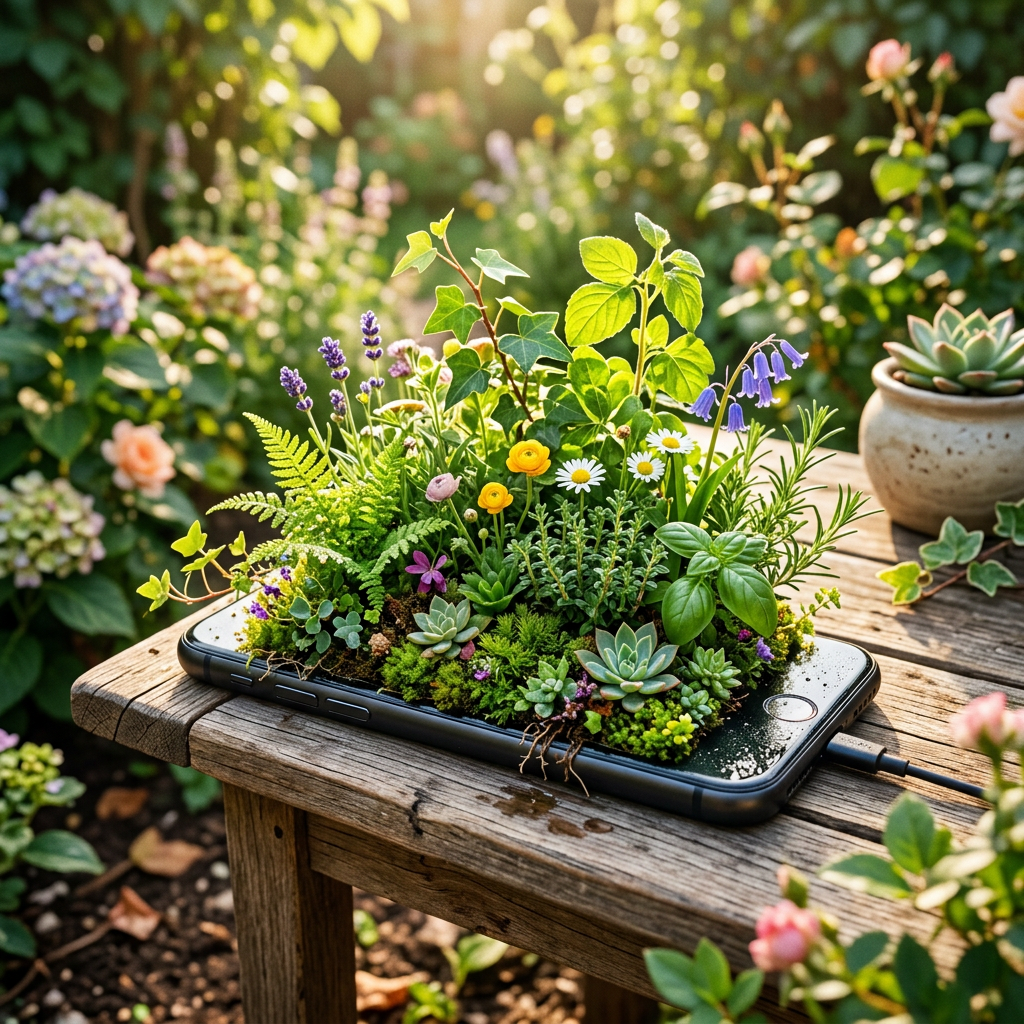
A smartphone displaying a vibrant mix of blooming garden plants and succulents
My feed is not perfect, and it is not meant to be a complete reflection of the world. It is a reflection of the world I am choosing to create for myself. One post, one follow, and one boundary at a time.
Some of my favorite social media follows are:
A hand holding a smartphone displaying an abstract swirling light pattern
@PeytonElroy : a wellness and spiritual healing-focused account with over 61,000 followers. Setting a consistent tone of optimism, empowerment, and alternative health perspectives, Peyton posts a mix of personal stories (especially her father’s recent stage 4 colon cancer “healing” journey). and practical health tips (e.g., hibiscus tea for inflammation, dates for heart rhythm stabilization via potassium, broccoli sprouts, blueberries, soursop). I particularly love the spiritual/energy concepts (auras, emotional states influencing physical health, colors affecting energy, the idea that everyone is inherently “spiritual”) and relationship/life advice (e.g., how to stand out when approaching beautiful women by complimenting non-physical traits).The tone is warm, encouraging, and emoji-heavy (lots of hearts, flowers, and green tones). Posts often include disclaimers like “I’m not claiming this cures cancer alone” while sharing strong opinions and anecdotes. Recent content has leaned heavily into cancer discussions—viewing it as inflammation, potentially linked to parasites or trauma, with emphasis on mindset, diet, and natural compounds rather than fear-based conventional narratives (my own personal belief).
@mtnhousewife (Mountain Housewife🏠) is a Christian homemaking and traditional marriage account run by a 41-year-old wife, mother, grandmother (“mimi”), and homemaker. Her posts promote biblical womanhood, wifely submission, contentment, and practical homemaking. Key themes include: Covenant marriage — Long-term harmony through scriptural roles (e.g., she highlights 42 years of marriage with “no conflict” due to submission as taught in scripture), Christian living — Bible study reflections (e.g., Philippians on contentment), faith encouragement, and church life, Homemaking — Simple recipes and tips (e.g., okra dishes, pimiento cheese). The tone is gentle, grateful, and encouraging, aimed at women seeking traditional roles. She emphasizes joy in submission, building a happy home, and living out a wife’s calling according to Christian principles. Content mixes personal testimony, scripture, practical advice, and light community interaction.
Maneesha (@ManeeshaSem) is a popular writer, content creator, and self-described “moonbathing apsarā” (celestial nymph) on X, with over 71,000 followers. @maneeshasem has built a significant following through poetic, feminine, and spiritually infused posts that emphasize beauty, serenity, nervous system regulation, self-love, and creating “paradise on Earth.” Her content blends mysticism, aesthetics, wellness, and gentle life philosophy, often evoking softness, harmony, and divine femininity. She frequently shares visions of serene villas, lush nature, silk robes, self-care rituals (e.g., affirmations, chocolate-covered strawberries, vanilla chai), intentional beauty, and protective auras created by harmonious environments. @maneeshasem posts focus on holding calm energy, avoiding urgency/dysregulation, beauty as spiritual protection, and aligning with cosmic/natural rhythms.
@wolffdew (The Cooking Lady) is a Danish 22-year-old homemaker and from-scratch cooking content creator on X.She shares homemade recipes, cooking videos/processes, meal ideas, and everyday kitchen content with a warm, enthusiastic style. Posts often feature scratch cooking, traditional or comforting dishes, and personal touches as a young married woman. She promotes her two digital cookbooks directly in her bio. The account appeals to fans of simple, authentic home cooking, Scandinavian influences, and lifestyle content from a Gen Z homemaker perspective. It’s positive, food-focused, and interactive, with frequent replies to followers.
@amandaperera (Cleopatra 🪷 ✞) is a faith-centered self-improvement and relationship advice account on X with a strong emphasis on personal growth, emotional intelligence, and Christian values. The account mixes inspirational quotes, relationship insights, personal reflections, and calls to subscribe to her newsletter or book 1:1 sessions. It appeals to audiences interested in faith-based personal development, neuroscience-informed emotional health, and mature views on love and identity. Content is positive, relational, and growth-oriented rather than purely dating-strategy focused.This account is warm, empowering, and reflective. Posts often explore:
Healthy relationships and love dynamics (e.g., references to Yellowstone’s Rip and Beth as an ideal of a strong man supporting a fiery, intelligent woman; the importance of entering relationships as a “whole” person rather than seeking fulfillment from a partner).
Self-acceptance, authenticity, and resilience (e.g., disagreement as a sign of staying true to yourself; embracing your “weird” side).
Faith-first mindset (“Jesus first always”), emotional wholeness, and devotional partnership.al advice, and light community interaction.
@TrinaNuance (Trina Nuance || The Fractional Muse 🌿🌞🌊) is slightly different than my other follows. She is thoughtful writer, coach, and strategist with a philosophical, introspective style focused on personal growth, mindset, entrepreneurship, and human behavior. Trina shares long-form reflections, threads, and insights on: Self-awareness & transformation — Dark night of the soul, breaking self-sabotaging cycles, shifting from external to internal locus of control, and authoring new self-fulfilling prophecies., Parasocial relationships, narrative-building, perception biases, and cultural shifts (e.g., craving analog experiences like handwritten letters). Her tone is wise, empathetic, and nuanced — often weaving personal experience, client stories, and cultural observations. She positions herself as a bridge between worlds (e.g., founders building in the dark, inner work vs. business goals) with a creative, almost poetic voice. Content resonates with introspective entrepreneurs, creators, and those on personal development journeys. It is more reflective/strategic than purely motivational or tactical.
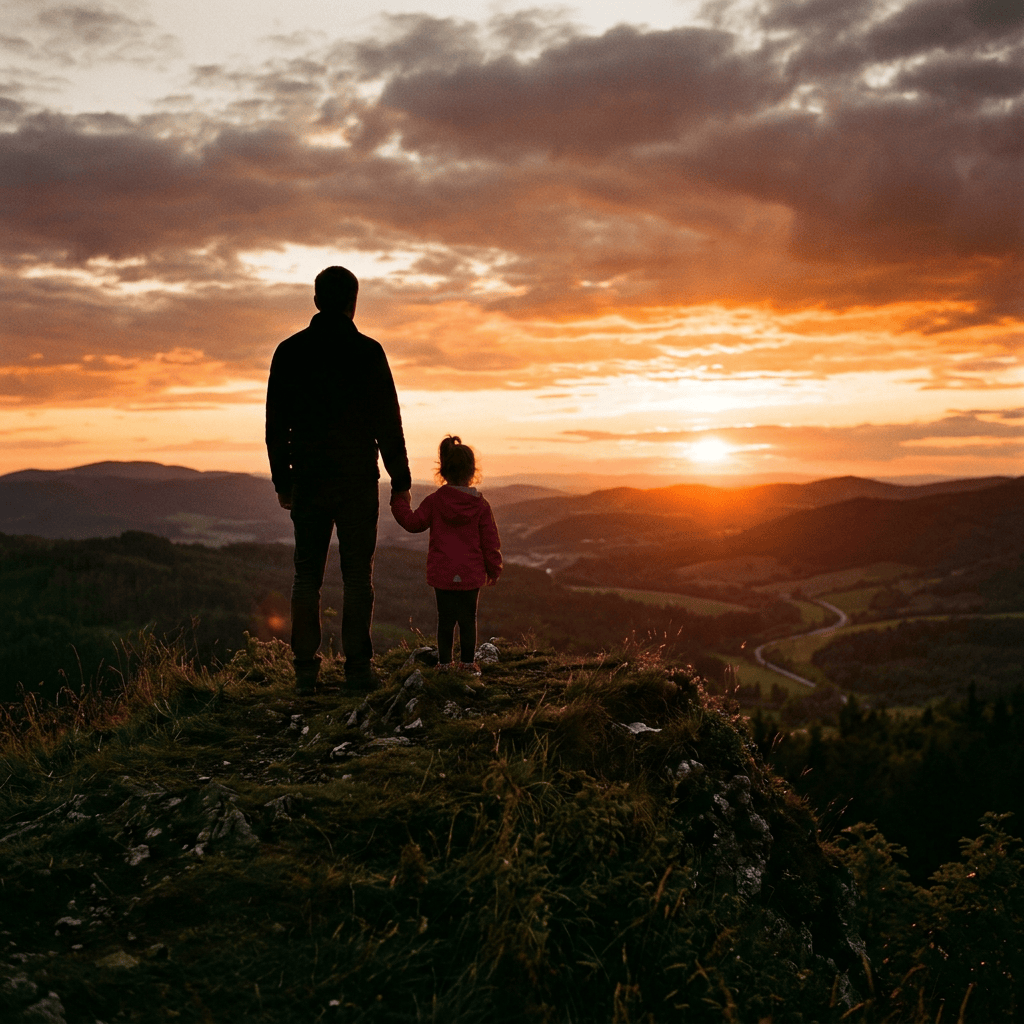
Today marks another trip around the sun for the man who has quietly shaped every corner of my life—the one who taught me what strength looks like when it is wrapped in laughter, what loyalty feels like when it is served with a side of sarcasm, and what unconditional love actually is. Happy Birthday, Dad.
A father and his young daughter hold hands while watching a vibrant sunset from a hilltop.
From the moment I entered this world, you have been my benchmark. You did not just raise me; you modeled the kind of man I should look for one day. Patient but firm. Protective but playful. Someone who shows up, every single time, even when life throws curveballs. You became more than a father—you became my friend. The kind of friend I can call with zero judgment,
Then there are the political debates. Oh lord, the debates. You with your Russian-state-media deep dives and me with my Fox News/ X.com rabbit holes. We yell, we gesture wildly, we both refuse to back down… and then we laugh about it over ice cream because at the end of the day, none of it matters as much as the fact that we can still sit across from each other. That is us—passionate, opinionated, and bonded by something far stronger than any headline.
You have always been an incredibly hardworking silly goose. I used to call you my little brother when I was small because you were more fun than any grown-up had a right to be. You built/drew my school projects like an architect, and you would turn grocery runs into adventures. Yet the moment life demanded it, that military toughness kicked in. Stoic. Disciplined. The man who could fix anything with the right tools and sheer willpower. You taught me resilience without ever making it feel like a lecture—just by living it.
And yes, the spoiling. You spoiled your baby girl rotten, and I have zero shame in admitting it. Whatever craving hit me, luxury trips, and endless courage to chase dreams that probably sounded delulu to you. You turned me into this proud delulu queen who believes anything is possible because you made me feel like the world was soft enough to catch me if I fell. Thank you for that safety net. Thank you for letting me stay your little girl even when I am all grown up and pretending to have it all together.
Father, you are my first love. The love that taught me how to love others. The steady heartbeat I measure my current relationship against. The voice that still calms me, the arms that still feel like the safest place on earth.
The steady heartbeat I measure my current relationship against
So on your birthday, I hope you feel every ounce of gratitude and love I carry for you. I hope the year ahead brings you desserts worth drooling over, jokes that make you snort-laugh, and maybe—just maybe—a story where we both pretend to agree.
Happy Birthday, my favorite silly goose, my hero, my friend. I love you more than all the words in every language combined.
The house is quiet once more. He left for Boston yesterday, and the silence settled in before the door even closed behind him. It will be another month before I feel his arms around me again, before I hear his laugh echoing through these rooms.
I hate sleeping alone. The bed feels too cringe, the pillows too cold. I hate watching television alone too—there is no one to nudge when something ridiculous happens, no one to pause the show so we can debate plot twists or quote our favorite lines back and forth. Most of all, I miss the little things: the easy banter that danced between bites of cookie dough or ice cream , the way we could turn an ordinary meal into something playful and intimate.
This visit was supposed to hold answers. I thought we would finally talk through the big questions about our future—what comes next, where we go from here. Those conversations hovered around us, but never quite landed. So—as per usual— I am still waiting, still hoping, still trusting that the path will reveal itself in its own time.
But even without those answers, this trip gave us so much.
We celebrated this incredible country together—its firework [sounds], its spirit, its messy, beautiful freedom. We soaked up quality family time, the kind that fills your heart and reminds you why roots matter. He even came with me to physical therapy, walking along patiently through the exercises and offering quiet encouragement that meant more than he could ever know. The kind of support I am not really used to.
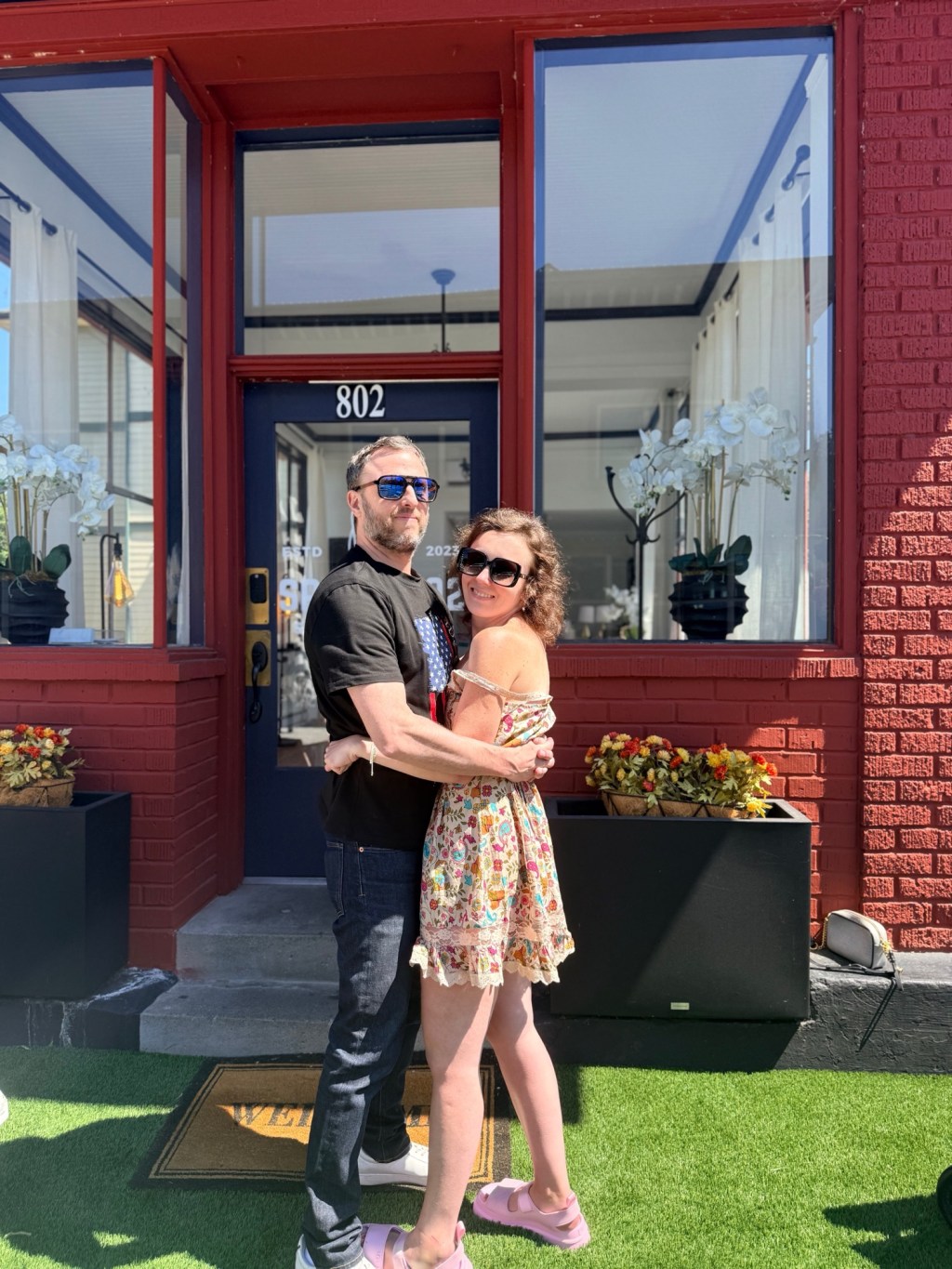
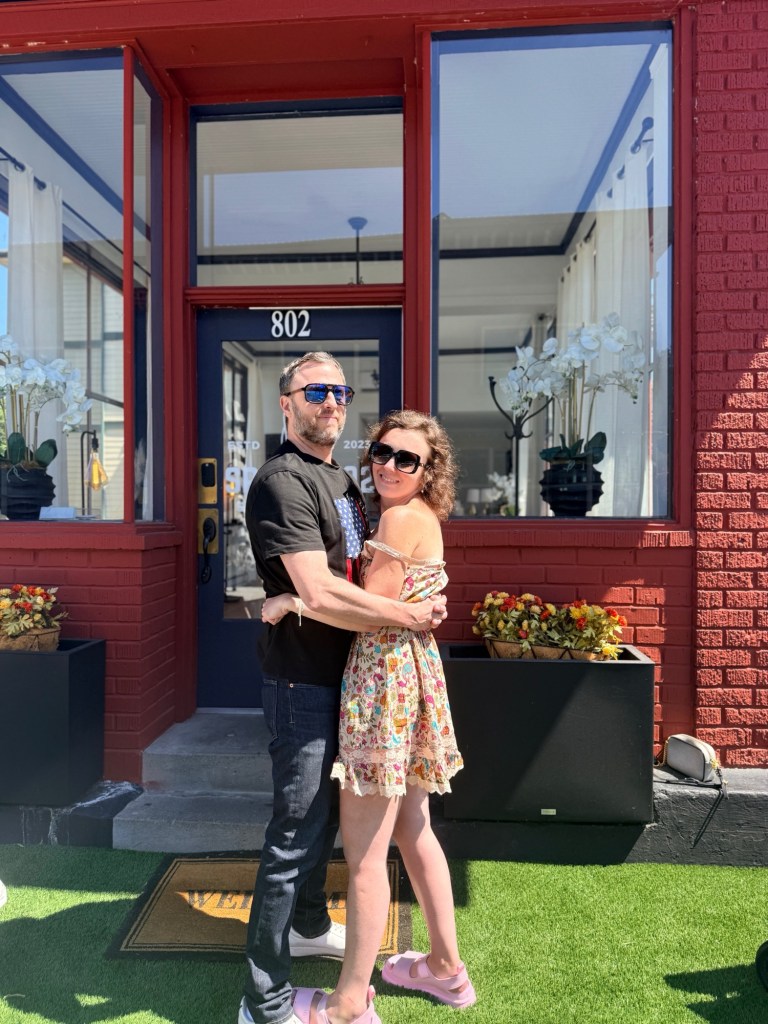
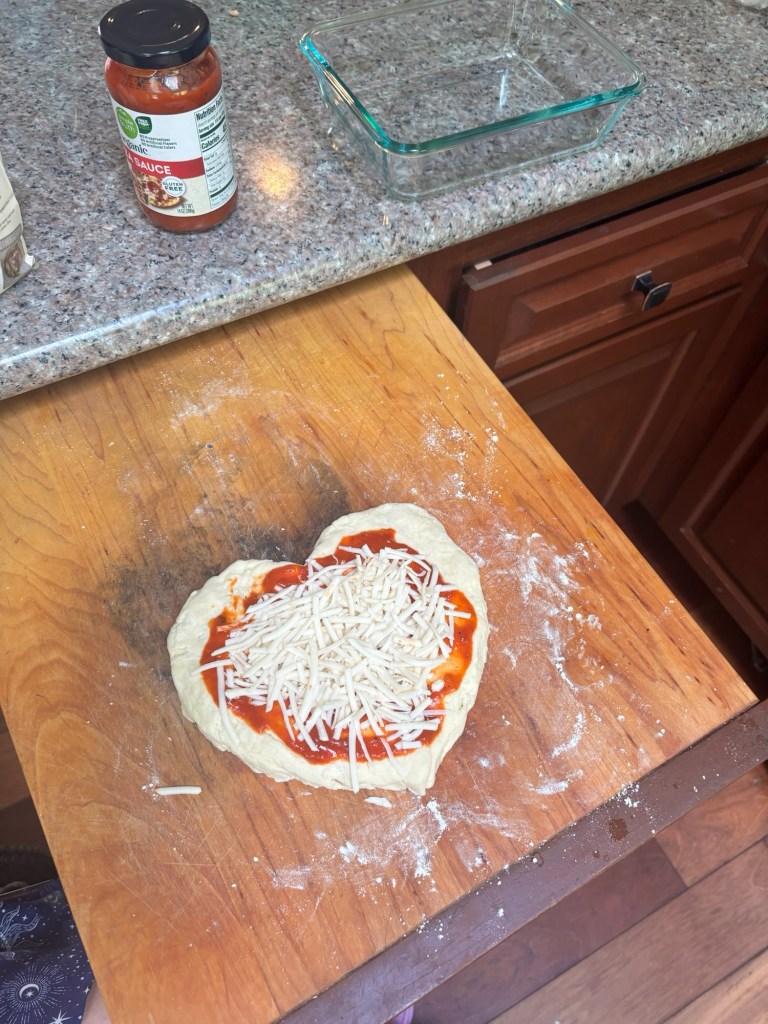
Then, when my parents headed out of town, we got to play house. Just the two of us. I cooked for him multiple times a day, pouring love into every dish, and he made most beautiful heart-shaped pizza —crispy, cheesy, and made with such care that I nearly melted right there in the kitchen. We wandered through Old Town, soaking in the charm of cobblestone streets and golden-hour light. We spent lazy hours cuddling on the couch, talking about everything and nothing, sharing those delicious conversations that make distance feel survivable.
For those precious days, we built a little world that felt like home. Even now, as I sit here missing him, I can still taste the pizza, hear his voice in the quiet, and feel the warmth of his hand in mine.
Long-distance love is hard. The goodbyes sting, the empty spaces ache, and the uncertainty can be heavy. But these visits are proof that what we have is real. They are fuel for the weeks apart. They remind me that even when I am sleeping alone and the house feels too quiet, I am not truly by myself.
I carry him with me—in the memories we made, in the future we are still writing, and in this stubborn, hopeful heart that believes it is all worth it.
Until next month, my love. Come back soon.
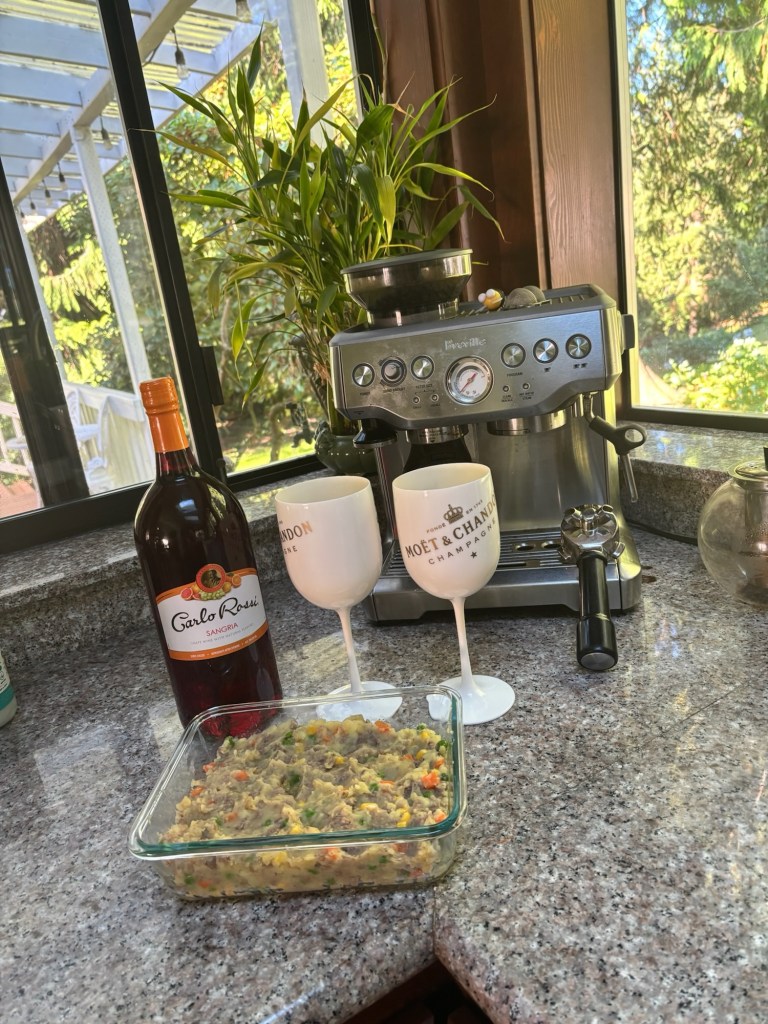
The beautiful heart shaped pizza he made for me My version of Shepherds Pie I made
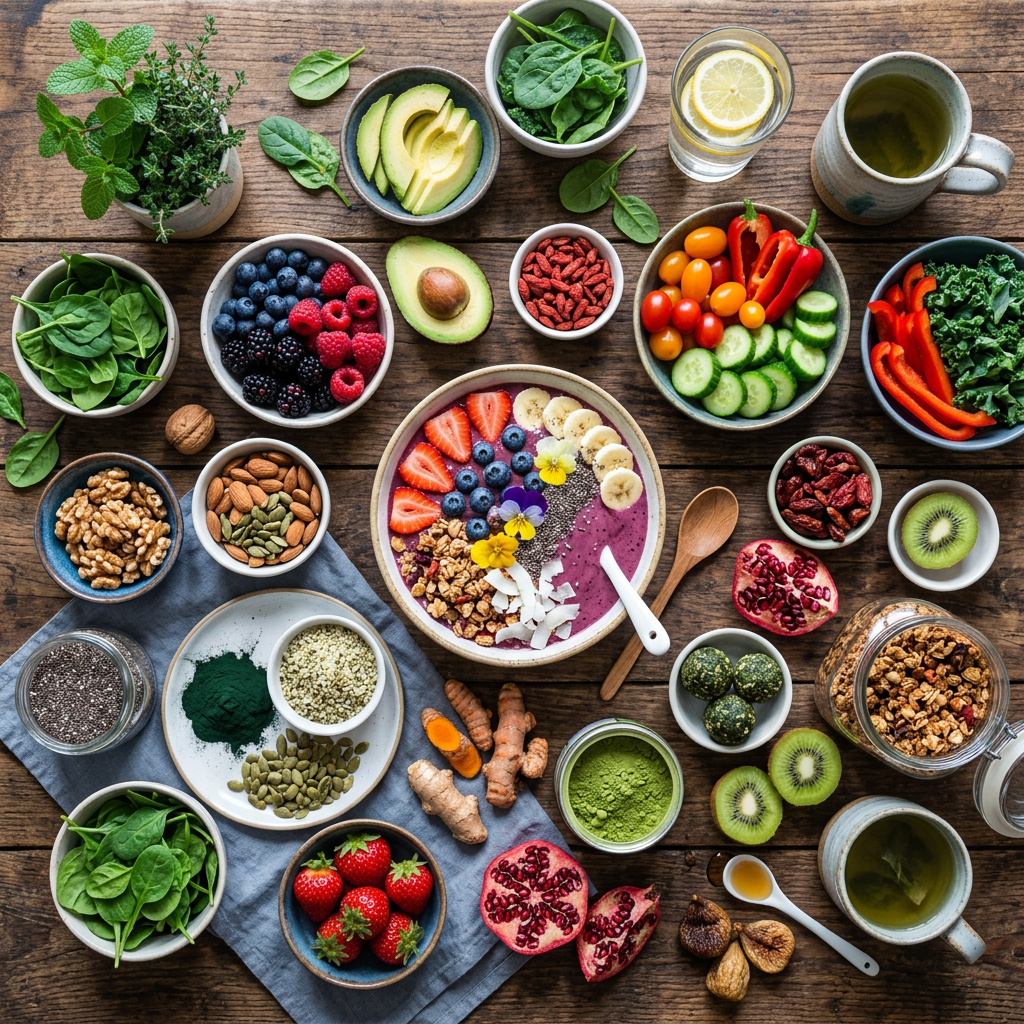
While I am an easy target for the mostly-marketing-products designed to sell “overpriced” kale chips and make influencers rich (Superfoods), a ton of them actually deliver when you stop messing around and build them into a real diet. These nutrient bombs are loaded with vitamins, minerals, antioxidants, fiber, healthy fats, and compounds that actually move the needle on inflammation, heart health, immunity, digestion, and not dying young from your own dumb choices. Individual results vary—your body is not my body, sweetie —but here is the rundown of the ones that earn their hype:
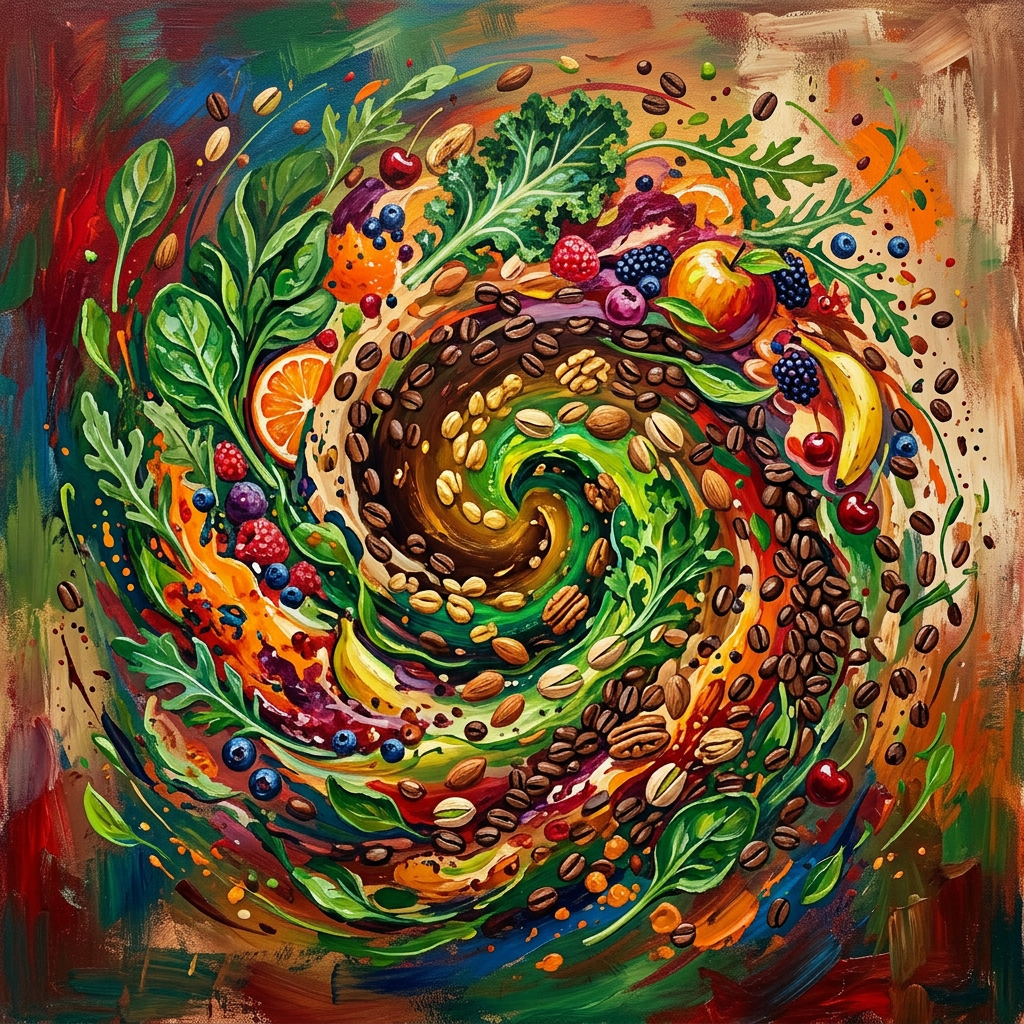
A colorful swirling arrangement of fresh fruits, nuts, coffee beans, and leafy greens
1. Berries (Blueberries, Strawberries, Raspberries) I left out the cranberry, because I am not a psychopath…Berries are antioxidant rockstars packed with anthocyanins, vitamin C, and fiber that your cells are begging for. They fight oxidative stress like tiny purple warriors, keep your brain sharp, reduce inflammation, prop up your heart, and keep your gut from turning into a clogged sewer. Dump them in smoothies, oatmeal, or yogurt. Or just fist them straight from the carton like a savage until you are staring into the empty plastic abyss wondering why life feels emptier now. Zero guilt, maximum dopamine.
2. Dark Leafy Greens (Kale, Spinach, Swiss Chard) Vitamins A, C, K, folate, iron, calcium, antioxidants—the whole pharmacy in leaf form. They build bones that do not snap like twigs, protect your eyes from screen-induced blindness, and help detox what you pour into yourself daily. Low-calorie, so you can annihilate a mountain of them without turning into a balloon. I live on giant one-meal-a-day salads loaded with these and protein—basically free volume eating that keeps me from devouring the entire fridge. Sauté, blend, or raw: does not really matter, just get them in before your body starts revolting.
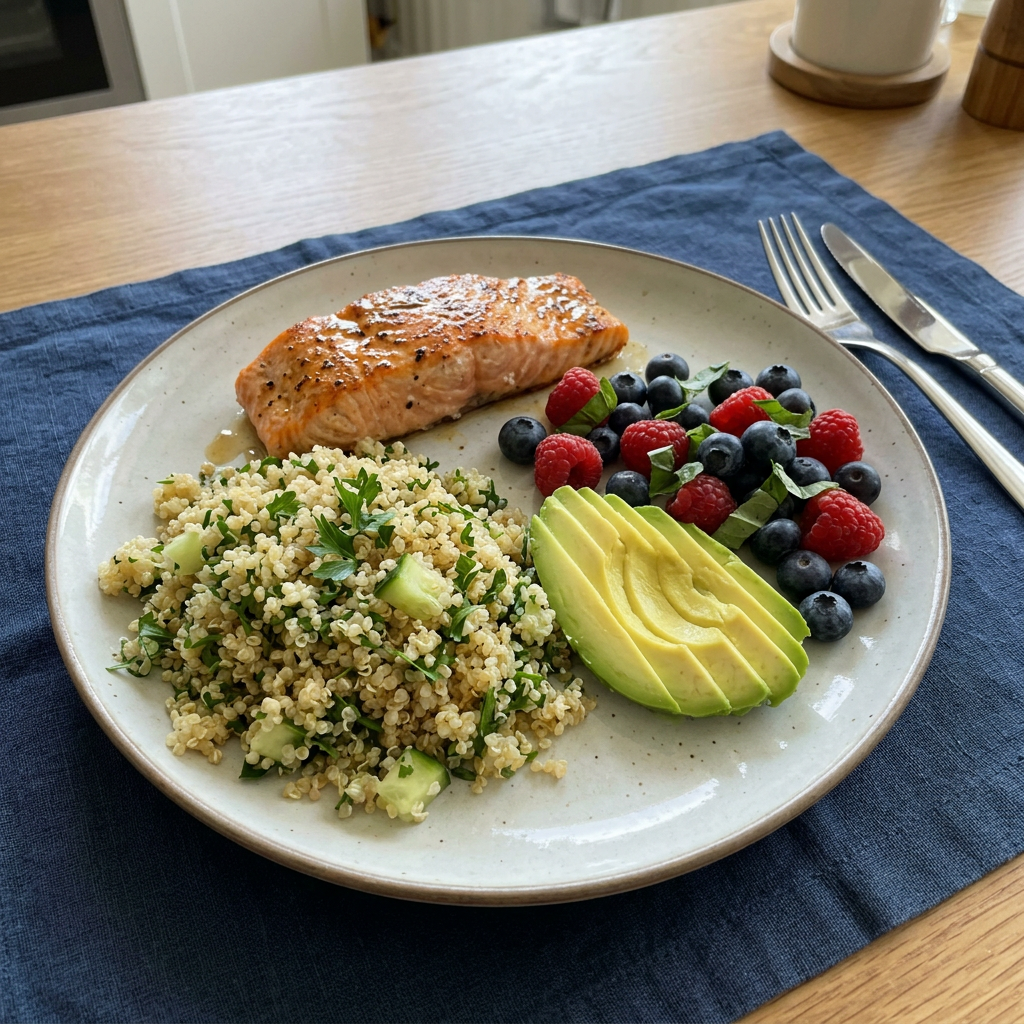
3. Fatty Fish (Salmon, Mackerel, Sardines) Omega-3 gods, premium protein, and vitamin D that most are severely deficient in. They repair your heart, shield your brain from melting down, crush inflammation, and might just keep the chronic disease at bay. Hit 2-3 servings a week or feel the consequences in your creaky joints and foggy head. Bonus points if you are the daughter of a fisherman—fresh catch straight off the boat hits different, like nature’s middle finger to processed trash.
4. Nuts and Seeds (Almonds, Walnuts, Chia, Hemp, Flax) My ride-or-die end-of-day snack, especially when I toss in juicy fruit so it feels like dessert instead of punishment. Healthy fats, plant protein, fiber, vitamin E, magnesium—you name the mineral, it is probably here. They steady blood sugar so you do not rage-crash, keep your heart from exploding, and make you feel full instead of hollow. Handful a day. Top salads, blend into a nut butter and eat straight up while binging (a show). Apparently you should not go overboard, but moderation is for quitters anyway.
5. Avocados I absolutely LOVE avocados. Monounsaturated fats, fiber, potassium, vitamins—the green gold that makes everything better. They protect your heart, wrangle cholesterol, and help you actually absorb the other nutrients you are eating instead of pissing them out. Smash into guac like a civilized animal or raw-dog that green berry with salt and a spoon. Classic when on toast. Elite in salads. And peak degeneracy when you just eat them straight from the skin.
6. Quinoa and Ancient Grains Complete plant proteins that do not make you feel like you are compromising. Fiber, magnesium, antioxidants—gluten-free for the sensitives. They rebuild muscle, keep digestion smooth, and give sustained energy instead of the sugar rollercoaster. Swap for rice in bowls or go full granola mode (Purely Elizabeth hits different). Your body thanks you, your blood sugar stays chill.
8. Garlic Allicin and sulfur compounds that act like natural antibiotics, anti-inflammatory, and heart protectors. Boosts immunity, drops blood pressure, makes food actually taste like something. Russians pound this so our breath is usually always weaponized—consider it chemical warfare. Fresh is best; do not be a coward with the powdered garlic.
9. Fermented Foods (Yogurt, Kefir, Sauerkraut, Kimchi) Probiotics that fix your wrecked gut microbiome so digestion does not feel like a war crime, immunity works, and your mood does not tank into the void. Pick low-sugar versions. I usually skip recommending gut stuff because bowels are gross, but every expert screams these are non-negotiable. Your microbiome runs the show—feed the good guys or suffer.
10. Black Coffee Most will recommend green tea, however this antioxidant rocket fuel that cranks metabolism, sharpens your brain so you can actually function, and supports your heart without the sugar crash. Caffeine delivers the kick your laziness needs. Black. No pumpkin spice abominations (Occasionally maybe). Just pure, beautiful bitterness.
Other heavy hitters: Eggs (protein + choline for brain gains), olive oil (actual healthy fat that embarrasses every seed oil on the planet), sweet potatoes (beta-carotene and fiber I devour– particularly in fry form…), turmeric (curcumin that tells inflammation off), and mushrooms (immune boosters that are admittedly a little slimy and icky but effective).
Bottom line: Build a colorful plate. Mix these, chase all-natural, minimally processed real food like your life depends on it—because it does. No boring beige. Less factory slop, more actual nourishment. Pair it with lifting, sleeping like you mean it, and hydration that is actually fun (electrolytes!). This beats the hell out of supplements (though I still pop those too because why not). Start small—add one or two new items a week before you overwhelm your weak willpower. Consistency over perfection, or you will quit and blame the “diet.” Now go eat something that does not come from a drive-thru window.
A nutritious plate featuring cooked salmon, quinoa salad, avocado slices, and mixed berries
I love the Summer time— and I really love celebrating. Summer solstice is my ideal. It is finally here — the longest day of the year, the sun’s victory lap, and the official middle finger to cold, dark, depressive days. My favorite goal for me and my man is to be out here treating it like the whimsical rave it was always meant to be.
In ancient history, midsummer (the celebration of the summer season) was dedicated to Pagan gods, fertility, crops etc. but I do not see why we should not be celebrating the solstice in the religious sense (thanking God’s/the Universe’s creation).
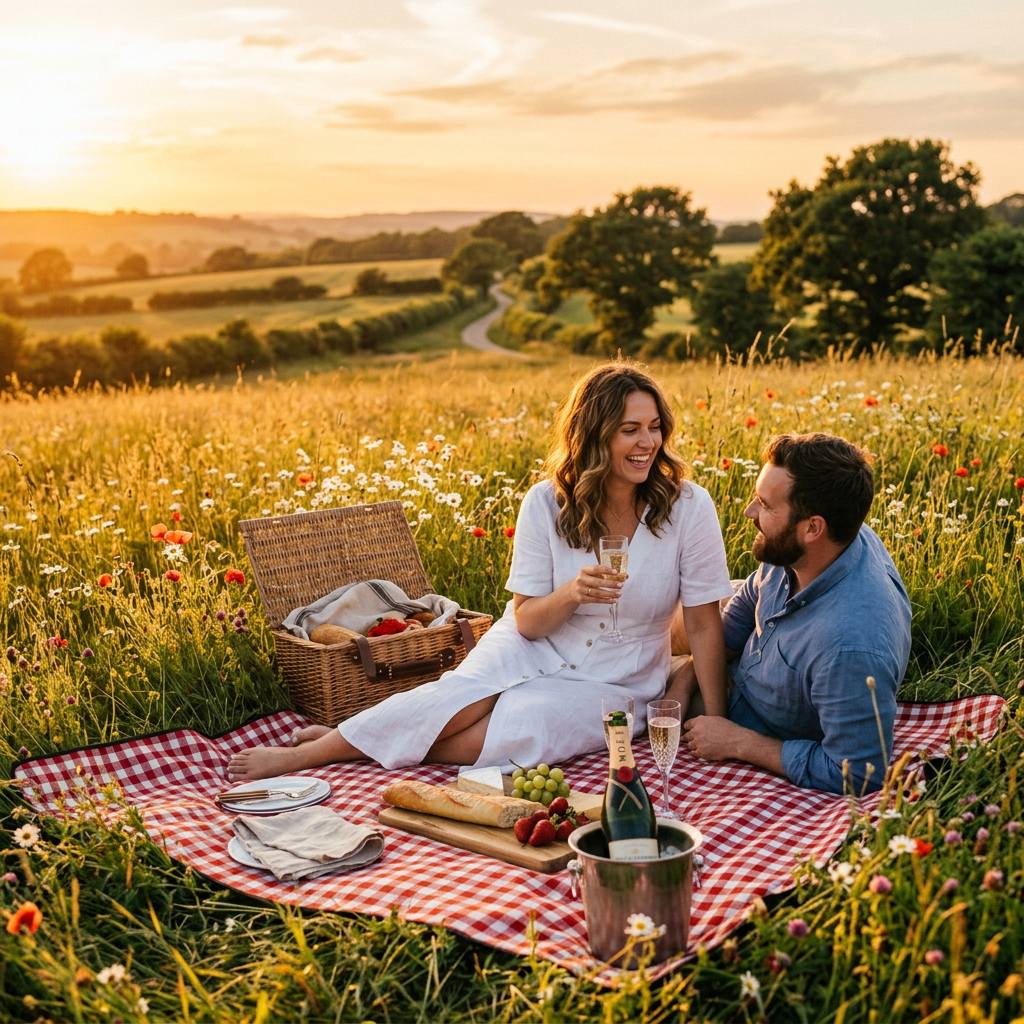
I am talking quiet little picnics with iced drinks and polite conversation. I also want bonfires that scare the neighbors. I want to stay up until the sky finally gives up and turns dark (which, thanks to the solstice, feels like never). I want to chase the last rays of sunlight. Because this is the one day the universe hands us maximum daylight and says, “Go be reckless, animals.”
A couple enjoys a sunset picnic in a vibrant wildflower meadow
Ancient cultures got it right. They lit massive fires, danced until they dropped, mated in the fields, and basically celebrated the sun. Modern life turned it into “wear white linen and drink rosé on a rooftop.” Cute. But weak. I am here for the chaos edition.
We start at sunrise like lunatics who respect the assignment. (Iced) coffee, loud music, minimal clothing. We drag ourselves outside because the sun is literally showing off and we are not wasting a single golden hour. Then it is beach, lake, rooftop, forest — anywhere the light hits hardest.
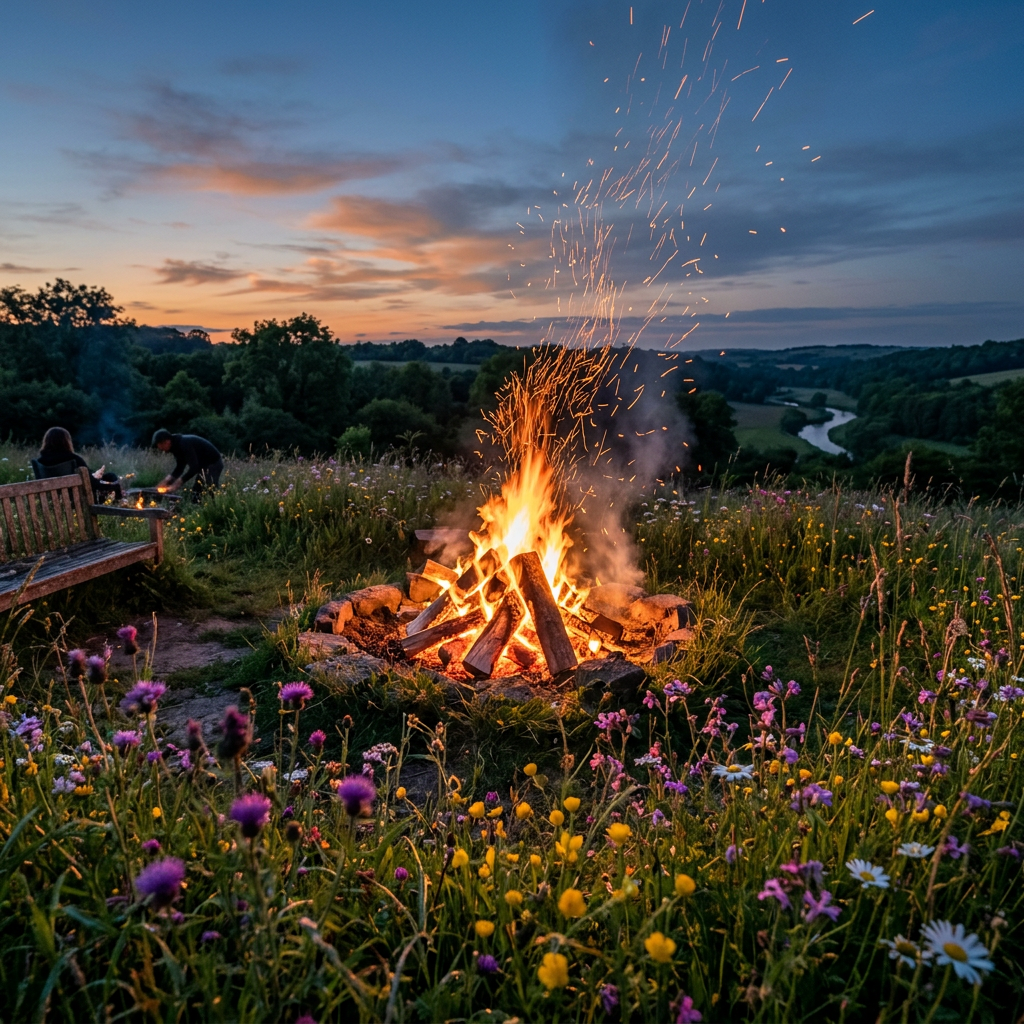
A glowing bonfire lights up a colorful meadow at dusk with people nearby
We eat: grilled everything, fresh fruit that drips down your arm, cold wine or champagne because yes, we are always on that bottle-a-night agenda.
At night? Bonfire mandatory. Even if it is a little fire pit in the backyard, I want my Americana s’more snack. Throw in some herbs, some music that makes your ancestors proud, and dance like the veil between worlds is thin (because on solstice it kinda is). Light sparklers. Howl at the sky. Jump over the flames if you are brave enough. Make out like teenagers because the sun blessed the whole day (and season).
Life is mostly gray office lighting and existential dread. The summer solstice is one of the few times the planet throws us a proper party. The sun is at its strongest, the earth is fertile, and everything feels electric. Do not spend it folding laundry or doing the mundane.
Get outside. Get loud. Get a little unhinged. Burn something. Fuck someone. Worship the light while it lasts because in six months we will be back in the void, writing about seasonal depression.
This is our peak. Our longest day. Our reminder that even in this clown timeline, the sun still shows up and cooks the planet just to watch us thrive.
So celebrate like you mean it.
Strip down. Heat up. Light it up.
Happy solstice (I am waiting to properly celebrate with him).
See you at the bonfire. Bring champagne.
A radiant sun surrounded by glowing floral motifs in a cosmic background