
There is an intensity in the words:
Everybody dies sooner or later. Don’t worry about your death. Worry about your life. Take charge of your life for as long as it lasts.
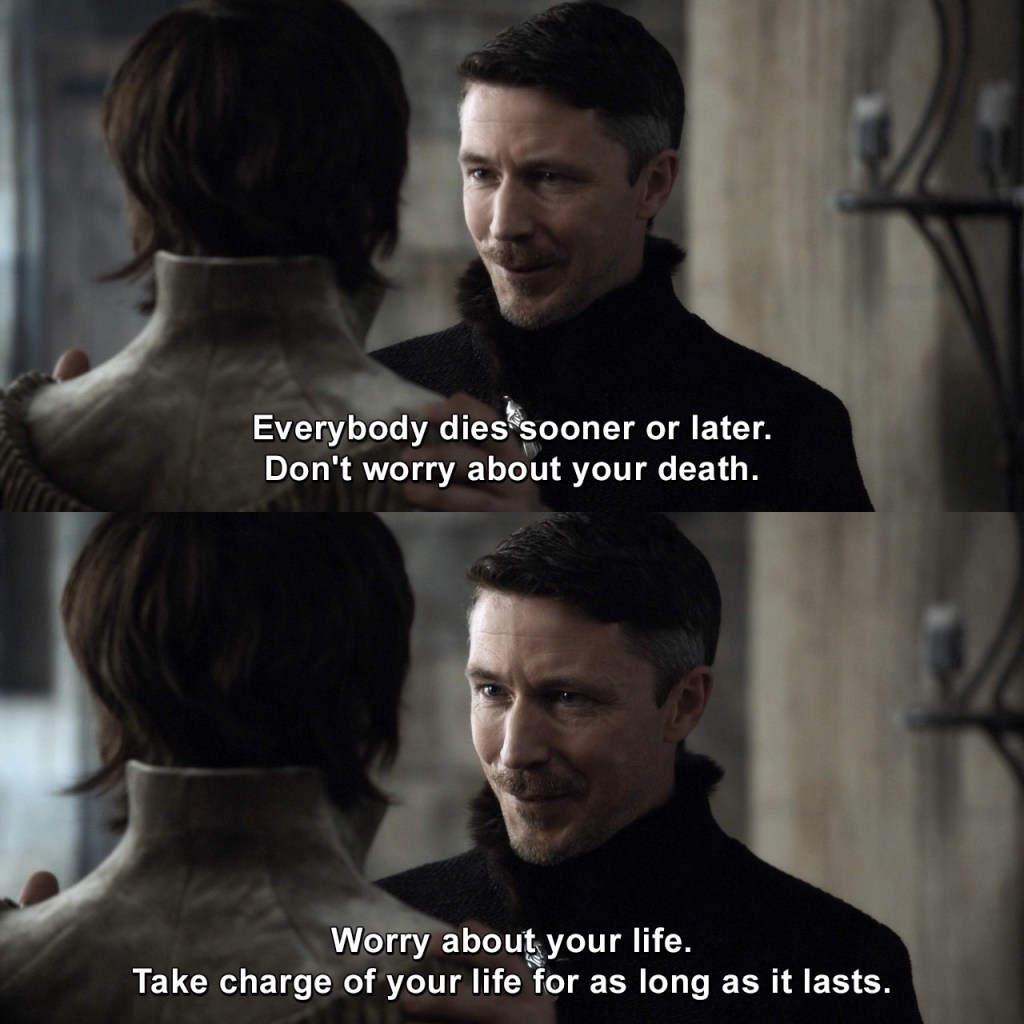
Spoken with calm certainty, these words cut through the usual noise of motivational platitudes. No soft promises of endless tomorrows. No denial of the inevitable. Just a clear, almost clinical redirection: stop fixating on the end and start owning the middle.
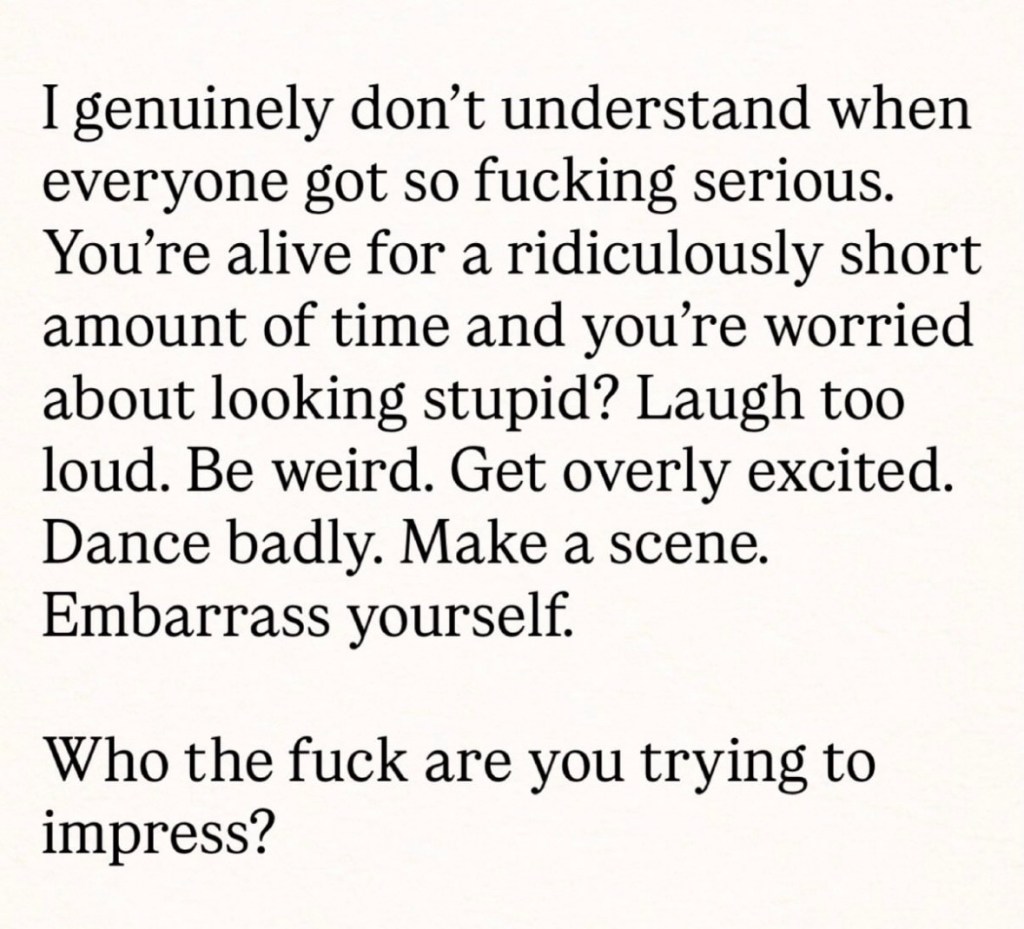
Most of us spend more mental energy on death than we admit. I simply do not understand this. Death, whilst inevitable, is kind of… depressing? We postpone conversations, delay risks, and treat time as if it were infinite. The result is a life lived in the shadow of an ending we cannot control. Fear of death becomes a quiet thief—it steals presence, courage, and the willingness to choose.
The quote refuses that bargain. Death is not a problem to be solved or delayed indefinitely. It is a fact. Once accepted, the real work begins: what will you do with the stretch of days you actually have?
“Take charge of your life for as long as it lasts” is both permission and demand. Permission to stop waiting for ideal conditions. Demand to stop outsourcing your agency to circumstances, other people’s expectations, or the vague hope that “someday” will arrive fully formed.

Taking charge looks different for everyone: Saying the hard thing in a relationship instead of letting in resentment or starting the project that feels too ambitious is a way of protecting your time and energy instead of giving them away by default.
All in all, it is all about choosing presence over distraction when the people who matter are in the room.
It is not about relentless productivity or grand gestures. It is about authorship. You are the primary writer of the remaining chapters, whether those chapters number in the dozens or the thousands.
When you stop treating death as a distant emergency and start treating life as the urgent project, priorities clarify. Small talk loses its grip. Status games look thinner. The ordinary moments—morning light, a shared meal, focused work—gain prominence because you know they are finite.
This is not morbidity. It is clarity. The people who live most fully are often those who have looked squarely at the end and decided the only sensible response is to inhabit the present with greater honesty and intensity.
Everyone should keep this quote (or at least the mindset) close. When anxiety about the future or regret about the past surfaces, return to the instruction: Worry about your life. Then ask one practical question: What is one concrete action I can take today that belongs fully to me?
Do that action. Repeat.

Everybody dies sooner or later. That part is already decided. It is written in our destiny the moment we are born. The part still open is whether, while the days last, you will treat them as someone else’s to manage.
Take charge. For as long as it lasts.

