What’s something you’ve done that you never thought you could?
When it comes to doing something I never imagined I would do, I could go on and on. I could talk about meeting and falling in love with someone I first encountered online—someone who, against every practical expectation, became the person I want to build a life with. I could talk about graduating from college with what often felt like only half of a functioning brain, or about writing for others when, before, there were days I could barely string a clear thought together for myself. But the one that still catches me off guard, even now, is this: after many years had passed, I was told I would never walk again. I never believed it.
I remember the way the words landed. They were not delivered with cruelty, just with the flat certainty of medical experience. The scans, the history, the pattern of recovery up to that point—all of it pointed to a permanent limit. Walking, the doctors said, was no longer a realistic goal. I nodded. I asked the necessary questions. And then, somewhere quieter, I set the prognosis down. I was not in denial in the dramatic sense, but something in me refused to treat their words as the final sentence of the story. I had already lived long enough inside my own brain to know it could surprise me.
What followed was not a sudden miracle. It was slow, uneven, and often discouraging work. There were stretches where progress looked like nothing more than better balance on a single step, or the ability to stand a few seconds longer without the room tilting. There were setbacks that made the original prognosis feel less like a prediction and more like a prophecy. Yet the recovery I have made since then keeps returning me to the same two forces: the adaptability of the brain, and the stubborn influence of what a person chooses to believe is still possible.
I had already been given reasons to trust both. Graduating required navigating coursework and deadlines while managing a brain that sometimes processed information in fragments, that tired faster, that forgot or scrambled details other people took for granted. I finished anyway—not because the deficits disappeared, but because I learned, slowly, how to work around and through them. Writing became another version of the same practice. Putting thoughts into sentences for other people forced clarity I did not always feel internally. Each piece was a small negotiation with a mind that did not always cooperate, and yet the act of writing itself seemed to strengthen the pathways I was trying to use.
The relationship that began online carried a similar quality of the unexpected. Distance and screens can flatten people into profiles; they can also, when the timing and the honesty align, let two people meet without some of the usual distractions. What grew from those early conversations was ordinary in the best way—shared days, disagreements, loyalty, the gradual decision to keep choosing each other. None of it required me to walk. All of it required me to keep showing up as I was, which turned out to be its own form of recovery.
None of this erases the hard facts. The body still has limits. Some days the brain still feels incomplete. Belief is not a substitute for rehabilitation, therapy, rest, or medical care. What it does, in my experience, is keep the door from slamming shut on the possibility that more is still available. Neuroplasticity is real; the brain can reorganize, compensate, and sometimes reclaim functions that once seemed lost. Mindset is not magic, but it shapes how consistently a person returns to the work, how they interpret setbacks, and whether they treat a prognosis as information or as a verdict.
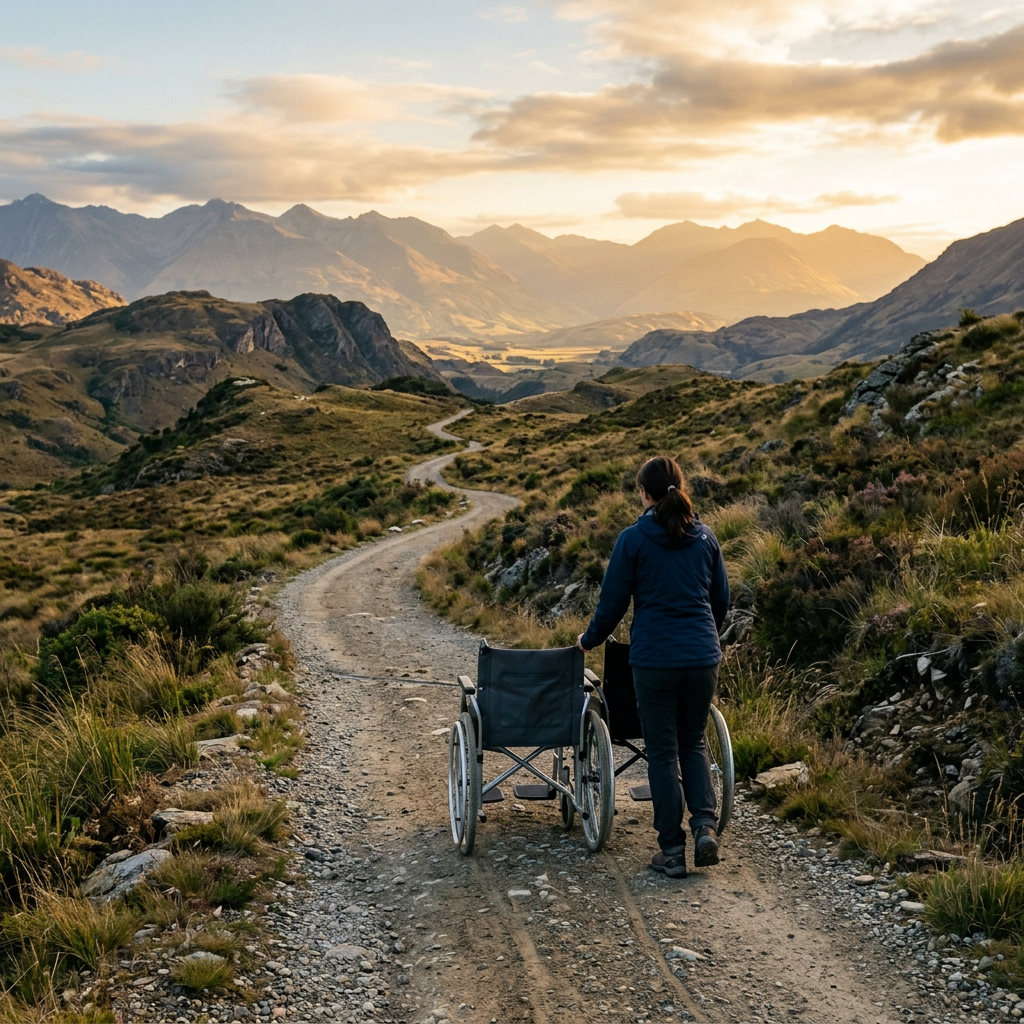
Years later, I still do not walk. But I walk better than before. Not perfectly, not always without thought or effort, but I walk. (With some help or assistance). That single fact still feels like proof of something larger than my own case. The brain is more resourceful than it is often given credit for. And what we decide to believe—repeatedly, even when the evidence is incomplete—can become part of the conditions that allow recovery to continue. I did not set out to prove anyone wrong. I simply refused to treat “never” as the end of the sentence. The rest has been a long, imperfect process of finding out what else might still be true.

