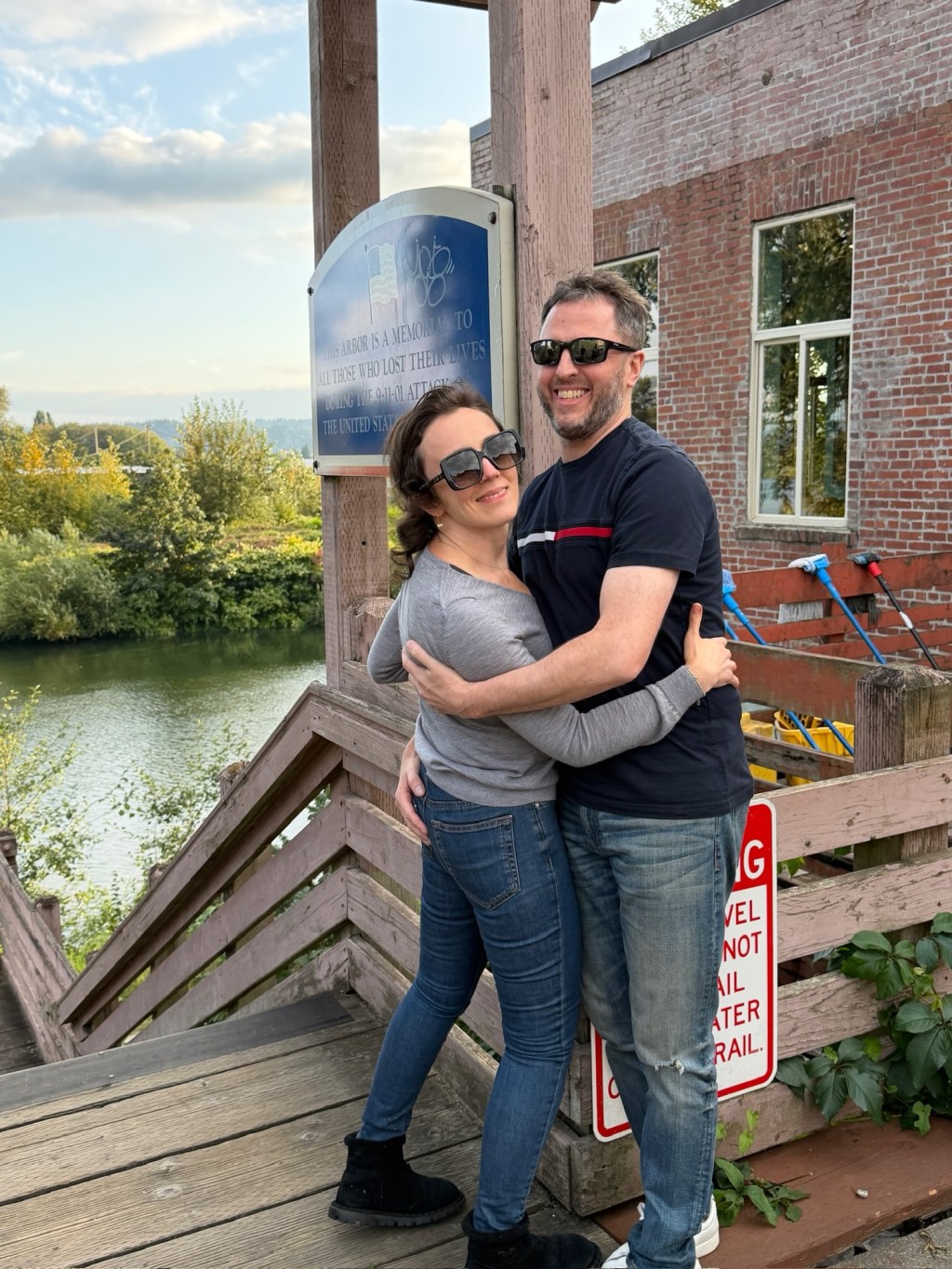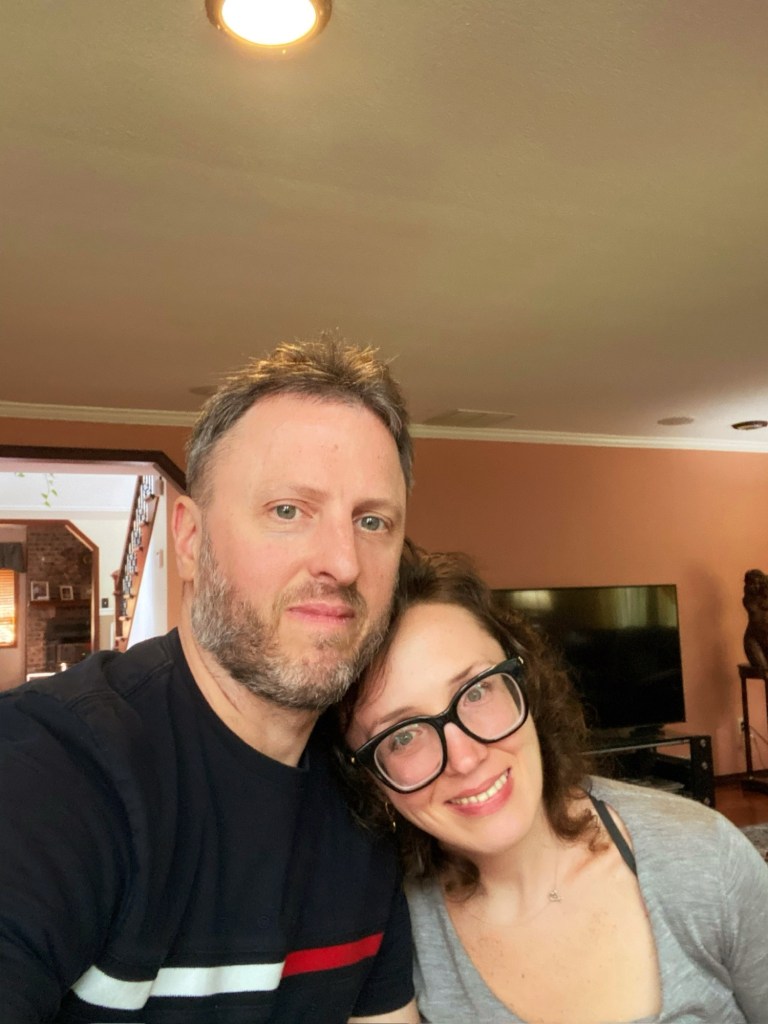
Tag: boyfriend

  • HAPPY BIRTHDAY DADDY

    Happy Birthday to the Man Who Taught Me How to Believe Again

    Happy birthday to my man.

    I met you in a season of my life when I no longer believed in love. Not the kind people write about. Not the kind that lasts. Not even the kind that felt safe enough to hope for. I had already decided that some parts of a person stay locked away forever, that certain armor is worn for a reason, and that loneliness, once it settles in, is simply the new normal.

    Then there was you.

    You did not arrive with grand speeches or instant certainty. You arrived with time. With persistence. With a patience so steady it felt almost unbelievable at first. Little by little, you taught me how to believe in love again. More than that, you taught me how to believe in myself. I am forever grateful for your pure heart and for the quiet, consistent way you made space for me to grow into someone I had only ever pretended to be.

    When we first met online, I did not know myself. Not really. I portrayed the version of me I wanted to become. Fake it till you make it, I told myself. I showed up as someone lighter, more open, more possible than I felt on the inside. Most people would have grown impatient with the gap between the performance and the person. You did not. You were kind enough, and patient enough, to wait while I slowly eased out of my shell. You let me become more feminine. You let me set down the armor I had been wearing for years. You never treated my caution like a flaw. You treated it like something that could, with enough safety, finally rest.

    By the time we met in person, I had already dedicated my life to you. That dedication did not happen in a single dramatic moment. It happened in the months and years of messages, of waiting, of watching each other become more ourselves. I had a front-row seat as you grew into the incredible man who stood in front of me in November 2022. I saw the becoming. I still see it.

    Our lives intertwined when we were in completely different places. Different cities. Different time zones. Different realities. Different versions of what we thought the future would look like. None of that mattered as much as the fact that we kept choosing each other. Now I am completely addicted. I only want more. Not more noise or more spectacle. A simple little life entirely dedicated to you. That is the life I want.

    Four-season woodland landscape with a cabin, stream, flowers, autumn trees, and snow

    There was a time I wanted life to end. After I became disabled, after the loneliness became so complete it felt like the air itself had thinned, I could not imagine excitement ever returning. Days ticked forward without purpose. Hope felt like a luxury I could no longer afford.

    And then you.

    You made me feel excited for life again. Not in a vague, inspirational way. In a specific, daily, breathtaking way. I wake up wanting the next day because you are in it. I look forward to ordinary hours because they belong to us. I cannot wait to start this new life with you. The one we have already been building in pieces, across distance and difficulty, until it finally becomes the only life I want.

    Happy birthday to the kindest, most loving man who has ever come into my life.

    Thank you for seeing me before I knew how to be seen. Thank you for staying. Thank you for making a future feel possible again.

    I love you. I am yours. And I cannot wait for everything that comes next.

  • September: A Month for Routines and New Beginnings

    September: A Month for Routines and New Beginnings

    September is here. The calendar has flipped, the light is shifting, and the year has entered its most transitional stretch: still warm in many places, already carrying the first hints of autumn in others.

    A new month is a clean page. It is also a reminder that most of what we actually do with time is continue the conversations we were already having. If we have been talking about routines, projects, travel, food, or how to start something again, September is a useful month to pick those threads back up instead of pretending we are starting from zero.

    Labor Day weekend in the United States and Canada marks the unofficial close of summer. Schools reopen. The autumnal equinox arrives around the 22nd or 23rd, when day and night briefly balance. Around the world there are observances for literacy, peace, the ozone layer, and tourism. None of these dates require you to reinvent yourself. They simply give the month a rhythm.

    Sunlit stone path winding through a lush garden with autumn foliage
    A sunlit stone path winds through lush grasses, flowers, and colorful autumn foliage.

    The useful move is usually modest. Finish the half-done thing you mentioned last time you asked how to get unstuck. Try the recipe or the itinerary you were weighing. Adjust the schedule you were already trying to make work. September rewards continuation more than spectacle.

    The days are still long enough to use. The evenings are starting to feel different as now when I get outside to write, my body covers itself in goose pimples. That is enough of a reason to treat the month as an invitation rather than a demand.

    Welcome to September. Let’s keep going with whatever we were already working on.

  • Coincidences: Are They Signs from the Universe?

    Coincidences: Are They Signs from the Universe?

    What’s the weirdest coincidence you’ve ever experienced?

    The Universe Doesn’t Whisper Twice

    I do not believe in coincidences. Not the small ones that make you smile and shrug, and not the large ones that rearrange your life. If something is meant to happen, it will happen. It will find the crack in the schedule, the delayed train, the wrong turn that somehow becomes the right street. It will arrive wearing the face of chance so that those who need to dismiss it can do so without discomfort. I have stopped dismissing it.

    Everything is a sign from the universe. Not in the loud, cinematic way people imagine when they talk about destiny. There is no booming voice, no sky writing, no sudden spotlight. It is quieter than that. A whisper. A particular song playing at a particular moment. A sentence overheard in a café that answers a question you have not yet asked out loud. A person appearing in your path with the exact piece of information, or the exact kindness, or the exact friction you needed. Most people walk past these things. They call them random. They keep their eyes on the ground and their minds on the next task. The whisper is easy to miss when you have already decided the world is only noise.

    I used to miss it too. I treated life like a series of isolated events that happened to me rather than through me. Something fell through and I called it bad luck. A conversation ended abruptly and I called it timing. Even my brain injury somehow managed to lead me to my twin flame. I could just shrug it off and say that my brain blew up because of a bad diet, stress, bad luck, a body that finally called in a debt I had been ignoring. That version of the story is tidy. It keeps the event inside the realm of cause and effect I can name. It lets me treat the injury as an accident that interrupted my life instead of a rupture that redirected it. But if I tell it that way, I erase the chain that followed. I would never have found myself scrolling my life away in the aftermath, half-present, half-searching, desperate for a face or a voice that felt like home. I would never have been cracked open enough to look that hard. I would never have been still enough, or raw enough, or lonely enough in the particular way that made recognition possible when it finally arrived.

    Dried leaves, dark berries, threads, and droplets arranged on a dark surface
    Dried leaves, dark berries, and fine threads create a moody autumn-inspired still life.

    The injury did not feel like a gift when it happened. It felt like theft. It took language, stamina, certainty, the old version of myself that knew how to move through a day without having to invent the day from scratch. And still, something in that wreckage made a path. Not because suffering is noble. Not because pain is always a teacher we should thank on the spot. Because the life I had been living was not going to bring me to that person. The uninjured version of me was too occupied, too armored, too convinced she already knew the shape of her story. The universe did not cause the injury so that a romance could bloom. I do not need the story to be that clean. What I know is simpler and stranger: the injury happened, the searching began, and the person who felt like a missing frequency appeared inside that searching. To call the whole sequence a coincidence would require me to pretend the seeking never mattered.

    The more I paid attention, the more the pattern revealed itself. Not a rigid script. Not a promise that every desire will be granted or every wound will be explained. Something subtler: a conversation between the inner life and the outer world. When I am restless, the universe sends restlessness back to me in the form of unexpected delays and unfinished conversations, as if to say, sit with this. When I am ready to move, doors that were locked for months swing open with almost embarrassing ease. People I needed to meet appear in places I had no logical reason to be. Opportunities arrive wearing the clothes of inconvenience. Losses arrive wearing the clothes of protection I only recognize later.

    Winding forest path lit by golden sunlight beneath storm clouds
    A winding woodland trail emerges from shadow as golden sunlight breaks through stormy clouds.

    It is easy to romanticize this and turn it into a slogan. “Trust the universe.” “Everything happens for a reason.” Those phrases can become another way to avoid looking closely. I am not interested in comfort slogans. I am interested in the texture of the moments themselves. The way a certain light falls across a room at the exact second a decision crystallizes. The way a stranger’s offhand comment lodges in the mind and will not leave until you act on it. The way the same number (17,27,37), the same image, the same phrase keeps appearing until you finally stop and ask what it is pointing toward.

    Many people fail to notice because noticing requires a kind of stillness that modern life does not reward. We are trained to explain things away. Coincidence is a tidy category. It lets us keep our sense of control. If the meeting was random, then we remain the authors of our story. If the meeting was a sign, then something larger is participating, and that is both comforting and unsettling. It means we are not as separate as we pretend. It means the world is speaking, and we have been talking over it.

    I have learned to treat the whisper with more respect. Not superstition. Not the desperate search for meaning in every fallen leaf. A quieter discipline: when something repeats, I listen. When an opportunity arrives wrapped in inconvenience, I consider whether the inconvenience is the point. When a person crosses my path more than once without an obvious reason, I stop assuming it is nothing. Sometimes it is nothing. Sometimes the universe is simply dense with possibility and not every thread is meant for me. Discernment still matters. But I no longer start from the assumption that the thread is accidental.

    If something is meant to happen, it will happen. That sentence used to sound passive to me, as if I could sit still and wait for life to deliver itself. I still kind of hate it when my boyfriend approaches our relationship path this way. But it is not an excuse for inaction. It is a recognition that timing has its own intelligence. Effort still matters. Showing up still matters. Doing the work still matters. But the work is not only the visible kind. There is also the work of becoming the kind of person who can recognize the sign when it arrives, and the kind of person who can act on it without needing the entire map first.

    Milky Way over a mountain trail with winding light trails
    The Milky Way glows above a mountain trail traced by flowing light trails.

    The universe does not shout. It does not compete with the noise we generate. It waits. It repeats itself politely. It leaves small, persistent traces for those willing to look up from their phones and their plans and their certainty that they already know how the story is supposed to go. Most people will keep walking. That is their right. I have decided I would rather not miss the whisper again.

    It has been speaking the whole time. I was simply too busy calling it coincidence.

  • From Complaint to Gratitude: A Life Transformation

    From Complaint to Gratitude: A Life Transformation

    I roll my eyes so hard it almost hurts, as I (not so secretly) loathe it when people complain. Not the occasional vent after a genuinely brutal day. The habit. The reflex. The way some people turn every inconvenience into a monologue, as if the universe personally owes them cheaper gas, a bigger kitchen, quieter neighbors, and a life that never pinches.

    To me it is one of the most unattractive things a person can do. Not morally unforgivable. Just ugly. It changes the face. It slumps the shoulders. It makes the voice thinner and more entitled at the same time. You can watch someone become less magnetic in real time the second they start listing everything that is “so unfair” and acting like a victim over something that you cannot even control.

    Gas prices too high? Oh no. Whatever are you going to do? Not drive? Walk a little? Combine errands? Sit with the fact that the world does not run on your preferred numbers? I am not saying prices cannot be painful.

    I am a millennial after all. I watched people lose houses, jobs, and the story they had been told about adulthood in 2008. I was handed student debt as if it were a rite of passage. I lived through the surreal, politicized, isolating stretch we still casually call “the pandemic.” I was even priced out of the little boondocks hometown I once assumed would always have a place for me. None of that made complaining noble. It made it tempting. Tempting is not the same as useful.

    Abstract dark storm clouds above a warmly lit house silhouette
    An abstract storm gathers above a warmly grounded home interior, suggesting emotional refuge and resilience.

    There is also the energetic piece people skip because it sounds soft until you watch it happen in real time. Complaining is not just words. It is a frequency. You glow differently when you live in grievance. The jaw tightens. The eyes scan for the next offense. The body rehearses scarcity.

    Appreciation does the opposite. It does not pretend the apartment is a penthouse. It notices that there is a roof and running water. It does not erase the bill. It refuses to let the bill become the whole identity.

    Yes, your place could be better. The kitchen is small. The landlord is slow. The neighborhood is louder than you wanted. And you still have shelter. Heat. A door that locks. A toilet that flushes. Those are not consolation prizes. For a lot of human history, and for a lot of people alive right now, they are the prize.

    Cozy armchair beside a table with coffee and potted plant
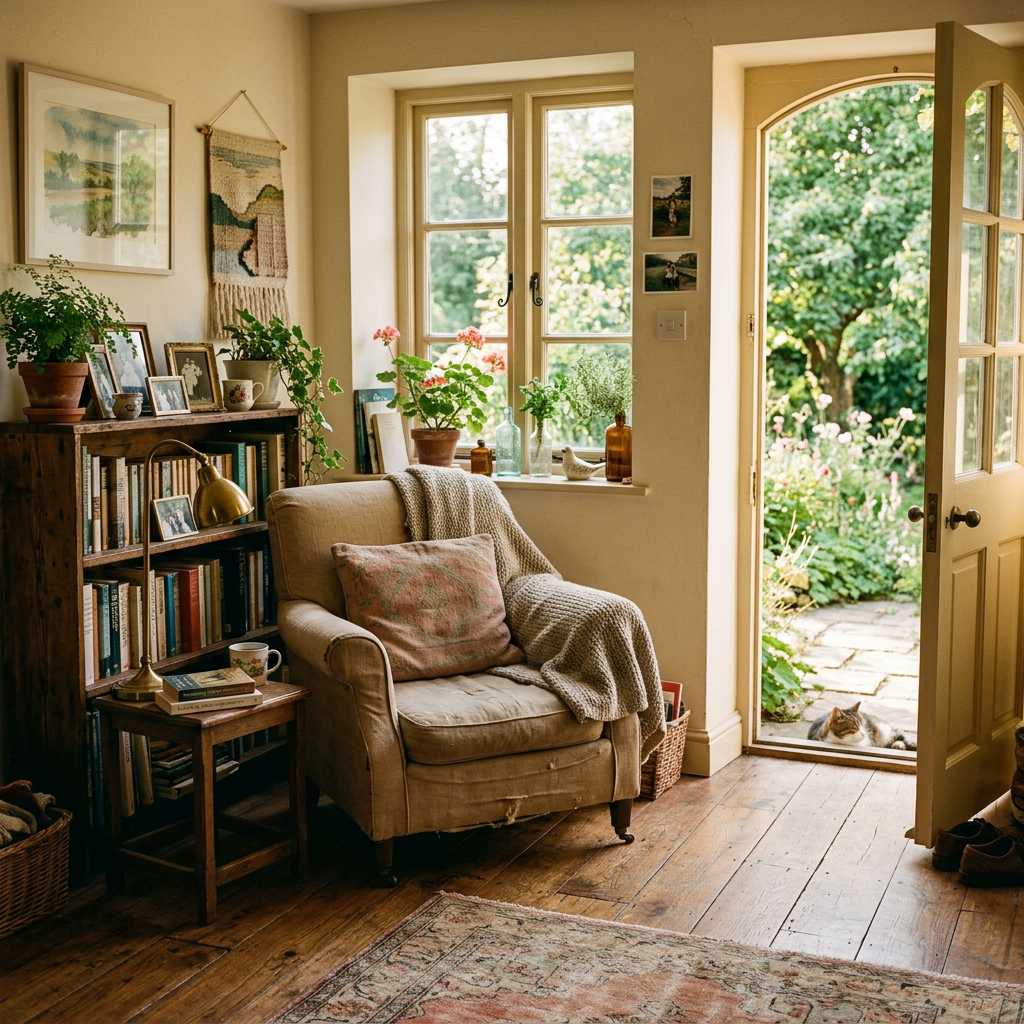
    A sunlit reading nook pairs a cozy armchair with coffee, books, and greenery.

    I say this from a body that does not let me pretend otherwise. I sit here in a wheelchair with one working hand and reteach myself how to use the restroom or reteach myself how to breathe/how to talk. The learning is not poetic— it is slow, humiliating, necessary, and occasionally holy. Occasionally it can feel terrifying. Some days the victory is simply that I did the thing without panicking. Some days the victory is that I did not scream.

    From that seat, a lot of the usual complaints sound like luxury noise. You still get to stand up and walk to the fridge. You still get to drive. You still get two hands that do what you ask. And—this is the part that lands hardest—you at least get to live with the person you love. Same rooms. Same ordinary evenings. The privilege of proximity that people treat as background furniture until it is threatened or gone.

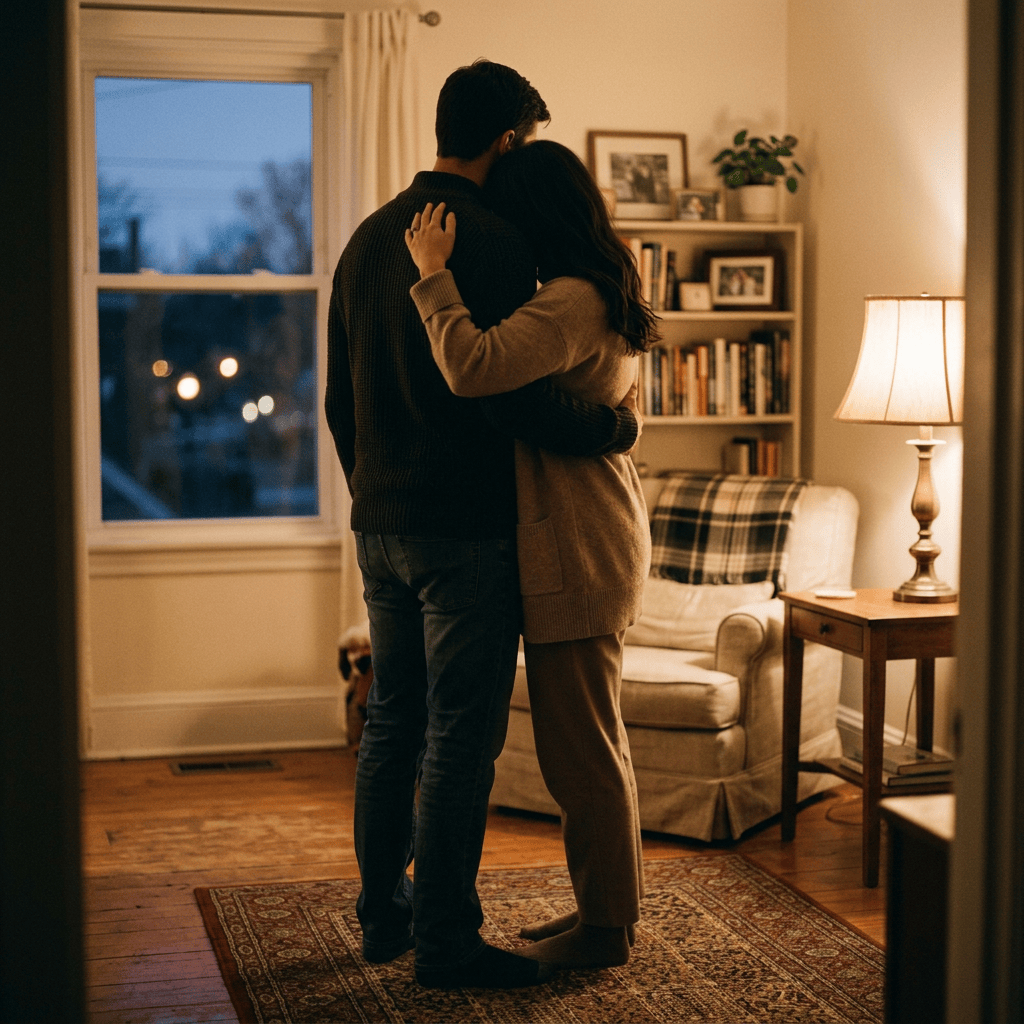
    Sunlit living room with bookshelves, plants, framed photos, and seating
    Sunlight fills this welcoming living room, centered around books, plants, and comfortable seating.

    You get to turn toward your person in the night without asking a body that no longer cooperates. You get to share a joke across a room without calculating air and effort. You get ordinary proximity. Do not waste that on a running commentary about what is missing.

    Gratitude is not denial. It is discipline. It is the decision to name what is still intact before you catalog what is broken. It will not lower gas prices. It will not erase student debt or bring a hometown back within reach. It will change the way you inhabit the life you actually have. And that life, even when it is smaller, stranger, or harder than the one you pictured, is still a life. Treat it like one.

    The performance of outrage has become a social default, and it is exhausting to witness. The same goes for the apartment that “could be better.” Of course it could. Almost everything could. And yet: roof. Walls. Running water. A door that locks. Heat or at least the possibility of it. That is not nothing.

    I am not asking anyone to perform fake cheer or pretend pain is not real. Pain is real. Limits are real. Money stress is real. I am asking for proportion. For a pause before the reflex. For the humility to notice what is already working before you catalog what is missing.

    Appreciation is not denial. It is orientation. It is choosing, again and again, to look at the roof before you curse the square footage. It is remembering that a working body, a shared home, a person who comes back to you at night—these are not small things. They are the whole plot for a lot of us.

    So yes. I will keep rolling my eyes at the soundtrack of complaint. And I will keep trying, from this smaller, harder life, to glow like someone who still knows how lucky some of the unglamorous parts actually are.

  • With Love, Meghan: The Quiet Beauty of a Housewifey, Devoted Life I Wish More People Could See

    With Love, Meghan: The Quiet Beauty of a Housewifey, Devoted Life I Wish More People Could See

    The Netflix series I had mentioned watching was With Love, Meghan—the show about Meghan Markle and her [failed] attempt at creating a new life for her family here—and I cannot stop thinking about it. Not in the way the headlines want me to. Not with the usual swirl of opinions and side-eyes. Just… watching a woman move through her own home with care, intention, and this soft, steady devotion that feels almost radical in how ordinary it is.

    Person pouring tea beside a framed vintage family photograph
    A soothing tea ritual unfolds beside a cherished family photograph on a rustic wooden table.

    From the first episode, what struck me hardest was how unapologetically housewifey Meghan is. My boyfriend says that I am similar to her. Someone who wants her man all to herself. So much so that she would take him away from his family. Meghan is not performing domesticity for the camera; she is living inside it. You see her in the kitchen of that Montecito house, sleeves rolled, hands in flour or carefully arranging herbs she grew herself. The way she talks about a simple roasted chicken or a lemon cake is not about showing off some glossy, unattainable lifestyle. It is about the quiet satisfaction of feeding people you love. She lingers over the details—the smell of citrus on her fingers, the way a perfectly set table can make an ordinary afternoon feel like a small celebration. There is something deeply grounding about watching someone treat the everyday acts of homemaking as worthy of attention and joy.

    Winding mountain trail leading to a lit cottage in misty hills
    A winding hillside trail leads toward a warmly lit cottage beneath misty mountains at dawn.

    That same devotion shows up in how she speaks about her family. The way her voice softens when she mentions “H” (Harry), the little private smiles when she talks about the children, the careful way she protects their privacy while still letting you feel the warmth of their life together. It is not grand declarations. It is smaller, truer things: the ritual of making breakfast, the shared garden, the decision to build a home that feels safe and soft after years of public pressure. You can sense the deliberate choice she has made—to pour herself into creating a peaceful domestic world. In a culture that often treats “housewife” like a diminishing word, Meghan wears it with quiet pride. She makes it look like strength.

    And yet so many people still seem determined to misunderstand her. I used to skim the surface-level takes myself—until I actually watched her move through these spaces The criticism often paints her as calculating or performative, but what I saw felt like the oppositeb(and do not tell me that it is all an act— I have seen Suits — she is not that good of an actress!): a woman who has been through intense public scrutiny choosing, again and again, to invest in the private, nurturing parts of life. The gardening, the thoughtful hosting, the careful attention to how a home can hold people. Those are not the actions of someone chasing relevance. They are the actions of someone who has decided that devotion—to partner, to children, to the small rituals that make a house a home—is worth more than the noise outside.

    There is a particular tenderness in the way she approaches hospitality on the show. Friends arrive, and you watch her light up at the chance to care for them—pouring drinks, arranging flowers she cut herself, making sure everyone feels seen. It is the classic housewifey impulse, elevated by genuine warmth rather than obligation. And when she talks about wanting to share these simple pleasures, it does not land as branding. It lands as someone who found peace in these acts and wants to offer a little of that peace outward.

    Abstract watercolor artwork displayed across a wooden-framed window
    An abstract watercolor panel transforms a window into a translucent, atmospheric artwork.

    I keep coming back to how misunderstood that whole picture feels. People reduce her to headlines, to old narratives, to whatever version of her fits the story they already decided on. But With Love, Meghan shows something softer and more consistent: a woman building a life around care. Around cooking for the people she loves. Around making a home that feels like a refuge. Around showing up, day after day, as a devoted partner and mother in the most unglamorous, beautiful ways.

    Watching it left me with this unexpected sense of calm. In a world that constantly pushes women to be more—more ambitious in public, more visible, more everything—there is something quietly powerful about choosing to be deeply present in the domestic sphere and finding real fulfillment there. Meghan does not apologize for it. She does not dress it up as something else. She just lives it, camera rolling or not, and that sincerity is what stayed with me long after the episodes ended.

    Maybe that is the real gift of the series. Not the recipes or the pretty gifts (though those are lovely), but the reminder that devotion looks different for everyone—and that for some of us, the most meaningful work is the work of making a house feel like home, of pouring love into the people who live there, of treating ordinary days as something worth tending with care. I am glad I watched. I am even more glad I let myself see her without the usual filters. Housewifey. Devoted. And, I truly believe, still so often misunderstood.

  • Being trad.

    Being trad.

    What’s a cultural tradition from your country that you love?

    Being Raised Russian Has Truly Taught Me How to Be a Traditional Woman/Wife

    Winding dirt path through an autumn birch forest with exposed roots
    A winding woodland path passes beneath golden birch trees and exposed twisting roots.

    There is something powerful about the way I was raised. Growing up Russian did not just give me a language, a cuisine, or a set of holidays—it shaped an entire understanding of womanhood and marriage that feels increasingly rare in this modern world. It taught me, without lectures or manifestos, how to be a traditional woman and wife: grounded, capable, devoted, and proud of the role rather than apologetic for it.

    In a Russian household, the home is not merely a place you sleep. It is the center of life, the domain where a woman’s care, order, and warmth determine the emotional climate for everyone else. From an early age, I watched my mother transform ordinary spaces into places of comfort and beauty. Floors were clean, tables were set properly, food was prepared with intention, and the atmosphere mattered. This was never framed as oppression. It was framed as competence and love. A well-kept home and a well-fed man was an expressions of strength, not subordination. I absorbed the lesson that domestic skill is not “less than” a career; it is a different, equally demanding form of mastery.

    Brass samovar and tea setting inside a rustic cabin beside snowy window
    A warmly lit cabin table features a brass samovar, tea, berries, and embroidered folk textiles.

    Traditional Russian upbringing also instills a clear-eyed view of complementarity between men and women. Men are expected to protect, provide, and lead with responsibility. Women are expected to nurture, support, and create the emotional and physical conditions in which that protection and provision can flourish. This is not a rigid hierarchy of worth; it is a practical division of labor rooted in observed differences and mutual dependence. I was never taught that needing a man’s strength made me weak, or that offering softness and loyalty made me less intelligent. On the contrary, the ability to soften a hard world for the people you love was presented as one of the highest forms of feminine power.

    Loyalty sits at the center of this model. Russian culture has long valued endurance—through winters, through history, through difficulty. That same endurance is expected in marriage. You do not discard a partnership at the first serious inconvenience. You work, you adapt, you protect the family unit. This does not mean tolerating abuse or remaining in a destructive situation. It means entering marriage with the seriousness of a lifelong covenant rather than a temporary lifestyle arrangement. Being raised with that expectation made me less interested in endless options and more interested in depth, continuity, and the quiet satisfaction of building something that lasts.

    There is also an unspoken standard of self-presentation. Russian women are often raised with an awareness that appearance is part of how you honor yourself and those around you. Looking put-together is not vanity for its own sake; it is a form of respect—for your husband, for guests, for the occasion, and for your own dignity. Combined with an expectation of competence in the kitchen and the home, it produces a woman who can be both soft and capable, elegant and practical.

    None of this requires rejecting education, ambition, or personal development. Many of the strongest traditional Russian wives I know are highly educated, multilingual, and sharp. The difference is priority. Career and self-expression are valuable, but they do not automatically outrank the creation of a stable, loving home and the support of a husband who carries heavy external burdens. The traditional model I absorbed does not demand that a woman disappears; it asks her to invest her gifts where they produce the deepest long-term fruit for the people she loves most.

    Of course, no culture is the same, and not every Russian family embodies these ideals perfectly. Yet the cultural inheritance is real. It prizes resilience over fragility, duty over pure self-expression, and the tangible results of care over abstract declarations of independence. In a time when many people feel adrift in relationships that prioritize individual fulfillment above all else, that inheritance feels like a quiet advantage.

    Being raised Russian did not only teach me to be smaller. It taught me how to be solid. It showed me that there is profound dignity in cooking a real meal, keeping a peaceful home, standing beside a man through difficulty, and having clear values. Traditional womanhood and wifehood, in this framing, are not relics. They are disciplines—demanding, beautiful, and deeply rewarding when practiced with eyes open and heart engaged.

    That is the gift the culture handed me. I am still learning how to live it fully, but I no longer question its worth.

  • I Cannot Erase Any Part of My Life

    I Cannot Erase Any Part of My Life

    If you could erase one event from your history, what would it be?

    There are days when the weight of everything I have lived through presses so heavily on my chest that the temptation to rewrite history feels almost unbearable. I catch myself wondering what it would be like to go back—to delete the chapters filled with pain, the choices I regret, the nights I barely survived. Yet every time that thought surfaces, I stop myself cold. I cannot erase any part of my life. Because if I did, I would not have met him. The love of my life.

    It is a strange and beautiful paradox, is it not? The very path that brought me to my lowest points is the same one that led me straight into his arms. Every wrong turn, every heartbreak, every season of darkness carved the version of me that was ready to recognize him when he appeared. Had I skipped the struggle, I might never have developed the depth, the resilience, or the quiet hunger for real connection that allowed me to see him—and to be seen by him in return.

    Winding path through woodland with autumn leaves, spring flowers, and distant green hills
    A winding woodland path leads through autumn leaves and spring wildflowers toward sunlit hills.

    I know I am not where I need to be in life. My recovery is still a work in progress, messy and nonlinear. Some mornings I wake up feeling strong, only to find myself slipping by afternoon. There are still triggers I have not fully disarmed, still patterns I catch myself repeating, still days when the old version of me tries to reclaim the driver’s seat. Progress is not a straight line; it is a spiral. I revisit the same lessons at higher altitudes, learning them more gently each time. And while I can acknowledge that I am not yet the healed, steady person I aspire to become, I also know this truth with absolute clarity: I would not trade a single moment of the journey that brought me here.

    Because “here” includes him. Even if he is not physically here.

    He did not arrive after I had everything figured out. He showed up in the middle of the unfinished story. He has seen the raw edges of my recovery—the days I struggle, the moments when old “wounds” reopen without warning, the quiet battles I still fight behind a brave face. And somehow, instead of turning away, he stays He stays even though no one wants this. To be a part of this.. Yet, he holds space for the parts of me that are still healing. In his presence I feel both completely known and completely safe, a rare combination I never believed I would find.

    Looking back, I can trace the invisible thread that connects every hardship to this love. The loneliness that came with my disability taught me how to cherish companionship. The heartbreak (that I received from my own family) taught me what I would never again settle for. The rock bottom taught me that I am worth fighting for—and that lesson made me capable of receiving the kind of love that does not demand perfection, only honesty. If I had erased the pain, I would have erased the soil in which this relationship took root.

    So I choose, again and again, to keep the whole story. The beautiful and the broken. The triumphs and the near-misses. The version of me who fell is the same version who eventually looked up and found him standing there. I may still be climbing toward the place I need to be in my recovery, but I carry no desire to rewrite the map that led me to this love.

    I cannot erase any part of my life.
    And more than that—I no longer want to, despite the fact that I still get frustrated and incredibly sad/ angry (I just do my best to be positive about it).

  • The 8/8 Portal is Open.

    The 8/8 Portal is Open.

    Today—Saturday, August 8, 2026—marks the peak of one of the most talked-about energetic windows of the year: the Lion’s Gate Portal, also known simply as the 8/8 portal. Whether you approach it as astrology, numerology, ancient star lore, or pure modern spirituality, this date carries a collective invitation to step into greater power, clarity, and manifestation.

    Every year during Leo season (roughly July 23–August 22), the Sun moves through the sign of the Lion. Around this time, the bright star Sirius—the brightest in our night sky and often called the “spiritual sun”—makes its heliacal rising, becoming visible again just before dawn after a period of being hidden by the Sun’s glare.

    Spiritual traditions describe this as an alignment of Earth, the Sun in Leo, Sirius, and sometimes Orion’s Belt, creating what many call a cosmic “portal” or gateway of heightened energy. The window typically stretches from about July 28 to August 12, with the strongest focus on August 8 (8/8).

    The name “Lion’s Gate” comes from Leo’s symbolism—courage, heart-centered leadership, authenticity, and radiant self-expression. Ancient Egyptians watched Sirius closely because its rising coincided with the annual flooding of the Nile, a time of renewal, abundance, and new beginnings. While the specific term “Lion’s Gate Portal” is a modern spiritual concept rather than an ancient ritual, the star’s historical importance is real.

    The Power of the Number 8

    Why August 8 specifically? Numerology plays a starring role. The number 8 is associated with infinity (turn it on its side and you see the ∞ symbol), abundance, material achievement, personal power, discipline, and the bridge between the spiritual and physical worlds.

    On 8/8 the energy doubles. In 2026 it triples: add the digits of 8 + 8 + 2 + 0 + 2 + 6 = 26, then 2 + 6 = 8. Many are calling this a powerful 8/8/8 manifestation day.

    This year’s portal arrives with extra cosmic support. Jupiter, the planet of expansion, luck, and abundance, is currently in Leo—amplifying the bold, creative, heart-led energy of the season. The portal also sits just before a total solar eclipse in Leo on August 12, adding a layer of transformation and fresh starts.

    Many spiritual practitioners describe the Lion’s Gate as a time when the veil between the physical and higher realms feels thinner, intuition sharpens, and intentions set with clear focus can gain extra momentum.

    You do not need elaborate rituals to engage with this portal. The most effective practices are simple, intentional, and heartfelt

    Some people incorporate crystals (citrine, sunstone, or clear quartz), light a candle, or simply sit under the open sky and connect with Sirius if visible. The key is sincerity over complexity.6

    It is worth noting that mainstream science does not recognize a literal energetic “portal.” So obviously I am all for it. The astronomy of Sirius’s heliacal rising is real and has been observed for millennia; the amplified spiritual significance is a matter of belief, symbolism, and personal experience.

    Many find value in the portal simply as a cultural and seasonal reminder: a built-in annual checkpoint to pause, realign with what matters, and deliberately create rather than drift.

    Whether you fully embrace the mysticism or simply appreciate the poetic timing of midsommer Leo energy meeting the brightest star, August 8 offers a potent symbolic moment. The Lion’s Gate invites you to roar a little louder, dream a little bigger, and trust the infinite loop of giving to the Universe and receiving what the number 8 represents.

    Stepping is key here

    The portal is open. What will you walk through it toward?

    May your intentions be clear, your heart open, and your path illuminated. Happy 8/8.

  • Cheers to Seven Years.

    Cheers to Seven Years.

    Seven Years: How Love Found Me When I Least Expected It

    Today is our anniversary. Seven years.

    Seven years ago, I was sitting on my ass, absolutely hating life. Recovery had stripped away so much of what I thought I needed, forcing me into a kind of isolation that felt heavy and permanent. The world kept moving, but I was stuck in a quiet, lonely version of myself—proud of the progress I made, yet aching for connection I did not know how to find. Loneliness had become the default setting. I had finally discovered my own voice after so much silence, and I was fiercely proud of it. I wanted the world to hear it. So I took to the internet and let that voice run wild. I acted out as much as possible—raw, unfiltered, sometimes chaotic—because for the first time in a long time, I felt like I existed out loud.

    And somehow, he noticed.

    FaceTime life (same outfit!)

    That single moment of being seen changed everything. My life did not just shift; it flipped completely. The sadness and the loneliness that had settled into my bones began to loosen their grip. This man walked into my digital world and rewrote the story I thought I was stuck in. Before I ever laid eyes on him in person, my soul recognized him. It fell in love first—quietly, completely, without needing permission from the rest of me. He showed me a love and kindness I had never even known existed. Not the loud, performative kind, but the steady, patient, everyday kind that makes you feel safe enough to keep becoming yourself.

    For four years we messaged back and forth, building something real across screens and time zones. Those three-hour FaceTime coffee dates every weekend became sacred. We talked about everything and nothing, shared the ordinary and the hard, laughed until our faces hurt, and somehow made the distance feel smaller than it was. When I finally met him in person after all that time, it did not feel like meeting someone new. It felt like arriving. Like my body finally caught up to what my heart had known for years. I stood there and thought, This is where I was meant to be.

    From day one—truly from the first messages—he understood me. Not the polished version, not the version I sometimes still try to present, but the full, complicated, recovering, loud-voiced me. He inspires me. He motivates me. And when we are together, the impossible starts to look doable. We can conquer and accomplish anything, not because life suddenly became easy, but because we face it side by side.

    We are truly best friends—as corny as that sounds. Best friends who chose each other long before the physical world caught up. Before he ever held me in his arms, he held me in his heart. That truth still takes my breath away.

    I love you always and forever. Thank you for giving me my life back. Not just the version I thought I wanted, but a fuller, warmer, more honest one than I ever imagined possible.

    Seven years in, and I am still grateful every single day that you noticed. Cheers to seven years— cheers to many more years.

    Couple standing on mountain overlook holding hands watching sunset
    A couple holding hands while watching a stunning sunset over the mountains
  • From Digital Misunderstandings to Real Connections

    From Digital Misunderstandings to Real Connections

    What’s the funniest misunderstanding you’ve ever been part of?

    My boyfriend and I did not start with butterflies and perfect timing. We started with my speech impediment, static, lag, and constant miscommunication. Long-distance relationships are not “character-building.” They are a masterclass in how technology can ruin the moment.

    Two smartphones standing on a wooden table showing messaging apps screens with text conversations, illuminated by warm fairy lights.
    Two smartphones displaying message screens side by side on a wooden surface with warm fairy lights in the background.

    Misunderstanding was not an occasional guest in our relationship. It was the roommate who never paid rent. Every FaceTime call was a game of emotional telephone. Every text was a potential landmine. The tone was lost, the context was murdered and the intent I completely reinvented by anxiety. You think constant communication builds connection? Try living on opposite schedules, different time zones, and the quiet terror that the person on the other end of the screen is slowly becoming a wishful thinking vision board instead of a real human. That is not intimacy. That is digital cosplay.

    And then there was my contribution to the chaos: the trust issues. The kind you build after years of people who treated affection and any sort of relationship like a limited-time offer they could revoke the second it stopped benefiting them. I did not just have walls. I had something much thicker— possibly pushing anyone else away. Every delayed reply felt like proof. Every slightly off message became evidence in the courtroom of my own head. Long-distance did not create those issues—it just fed them.

    Change silhouettes to man and woman

    We had our share of ridiculous misunderstandings over the years. The kind you look back on later and laugh about, but only after you survived them. The “why did you leave me on read for three hours” spiral. The “that emoji felt cold” debate. The classic “I said I was busy, not that I was ignoring you, Jesus Christ” arguments that somehow still managed to feel personal. None of it was cute in the moment. It was exhausting. And it made the gap between us feel wider than the actual miles.

    Then we met in person.

    And the entire script flipped.

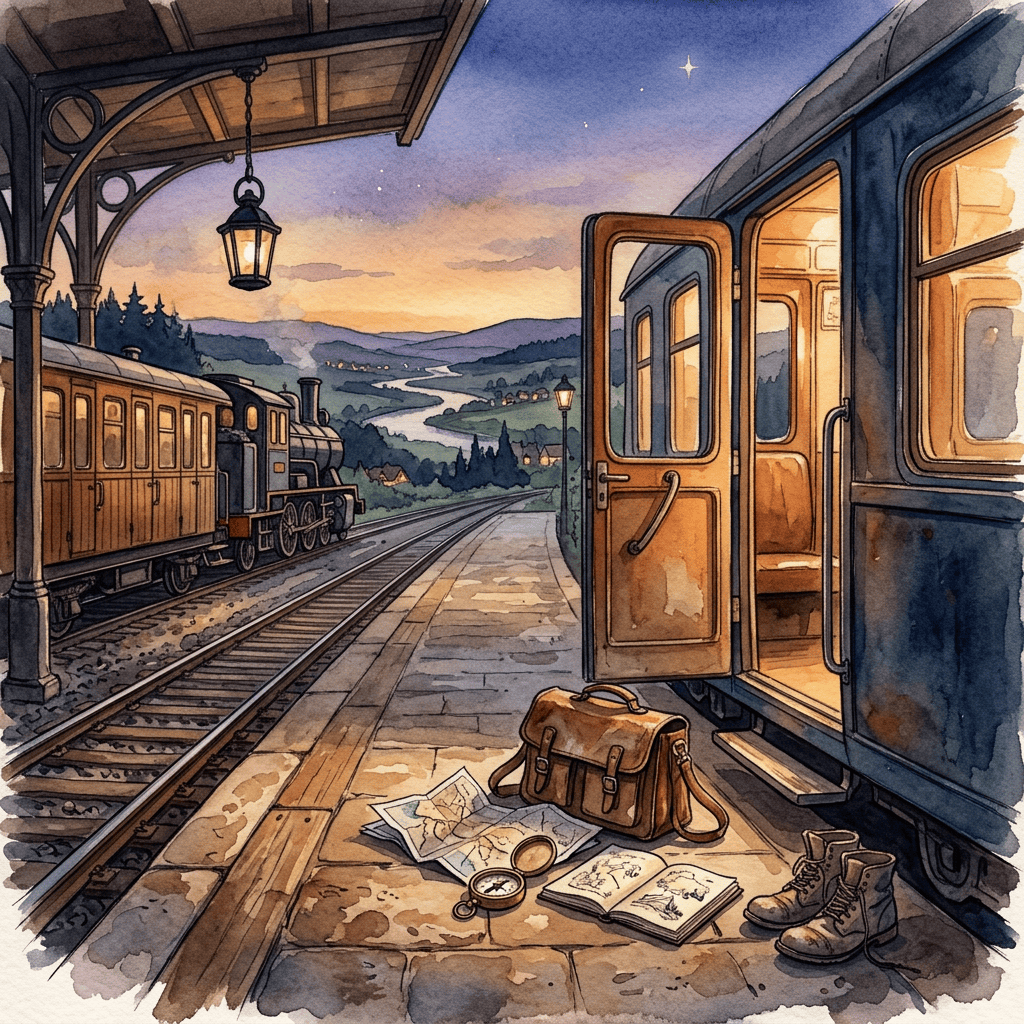
    Train arriving at platform 3 in the evening with travelers and luggage waiting
    Travelers wait on a platform as an evening train arrives

    The man who walked up to me was not the pixelated, slightly delayed version I had been talking with for years. He was solid. Present. The kind of present that does not just say the right things—he does them without keeping score. He put me first in ways that felt almost suspicious at first, because no one had ever done that without an agenda. No performance. No transactional energy. Just quiet, consistent care that made my carefully constructed defenses look suddenly childish.

    Train at platform 3 with suitcases on the station platform under evening sky
    Suitcases wait on an airport waiting area

    That was the part that broke me open. Not the grand gestures. The everyday ones. The way he noticed when I went quiet and did not punish me for it. The way he made space without making it a production. For the first time, someone was not treating my presence like a convenience. And that realization hit hard.

    The wall existed because every previous person had given me a reason to build it. Selfishness dressed up as “independence.” Emotional unavailability rebranded as “mystery.” People who loved the idea of being loved more than the actual work of loving someone. So yes, I entered every interaction half-armored. Of course I did. That is what survival looks like when you have been treated like an option one too many times.

    Silhouettes of a man and woman separated by shattered glass at a bus shelter at night
    A man and woman face each other at a broken glass emotional barrier

    But meeting him in the flesh did not just melt the trust issues. It exposed how much of the distance had been amplifying my worst assumptions. Suddenly the man who used to feel like a question mark became the answer. And the communication that once felt like walking through a minefield became something we could actually fix—because now there was a real person in front of me instead of a glowing rectangle.

    Communication is still key. It is the bare-minimum truth. Without it, you are not in a relationship—you are in a slow-motion misunderstanding with benefits. Trust is not something you demand after enough messages. It is something that either survives contact with reality or not. And when it finally does survive—when the person in front of you is better than the version you were terrified of losing—that is when the real relationship starts. (This is why we celebrate two anniversaries— the online one and the in-person one).

    I still hate that I go into things guarded. I hate that my default setting is skepticism instead of openness. But I am learning that the right person does not need you to dismantle the wall overnight. They just keep showing up on the other side of it until you finally decide it’s safe to let him in.

    Long distance could have broke us with noise and silence. Meeting him in person fixed what years of calls never could.