The normies salivate over the fact that artificial intelligence is going to take over our jobs. They think that the economy will tank because we only employ robots to do every job. News flash: the robots are not taking over any time soon (maybe thirty years?). Yes, we have gotten to the point where we all are consistently asking computers to assist with any questions (Grok!) that we have and any mathematical or numerical problems. In essence, I can see how AI can tackle desk work jobs, but do you really think robots are about to running around building and fixing something? They will need human assistance and supervision for the near future.
You have seen this in headlines. You probably have scrolled past the doomsday posts and cable segments. “Artificial Intelligence is coming for your job!” scream the commentators. Normies everywhere are practically salivating at the thought—some with an evil smile, imagining a world of universal basic income (UBI) and endless leisure (Netflix all day!); others hoarding canned goods with dread, picturing bread lines filled with former office workers and factory hands. The narrative is everywhere: robots will replace us all, the economy will collapse under the weight of mass unemployment, and humanity will be left twiddling its thumbs while silicon overlords run the show.
News flash: the robots are not taking over anytime soon. Not next year. Not in five years. Maybe—not even—in thirty.
Let’s be real about where we actually stand.
Yes, we have reached a point where asking an AI for help has become as natural as googling something in the early 2000s. Need to draft an email, analyze a spreadsheet, brainstorm marketing ideas, debug code, or solve a complex math problem? AI handles it with faster than the average midwit. Tools like my all time favorite Grok, or even Claude, GPT models, and other rapidly improving ones are already reshaping desk-based, cognitive, and creative work.
White-collar jobs are watching their skillset get dominated by AI. Jobs that once required hours of research, writing, or number-crunching are getting automated. A junior analyst who used to spend days building financial models can now get a strong first draft in minutes. A copywriter can generate ten headline variations instantly. Lawyers can summarize case law faster than ever. This is real, measurable productivity gain.
But here is the crucial distinction most fear-mongering articles miss: there is a massive gap between digital intelligence and physical dexterity (being good at life itself).
Do you honestly believe we are on the verge of humanoid robots scurrying around construction sites, plumbing bathrooms, fixing electrical systems, or performing delicate surgeries at scale? Not even close, all they really do is dance and only perform in controlled settings.
Current robotics still struggles with the messy, unpredictable nature of the physical world. A robot might nail a repetitive task in a perfectly controlled factory environment (think automotive assembly lines that have used automation for decades), but throw in a surprise—like a slightly misaligned beam, a puddle on the floor, or a non-standard part—and things fall apart quickly. They require improvisation, tactile feedback, spatial reasoning in unstructured spaces, and the kind of monkey-brain common sense that humans develop from childhood.
Even the most advanced robots today, like those from Boston Dynamics or Figure AI, are impressive in demos but remain expensive, power-hungry, and limited in practical deployment. They need constant human supervision, specialized environments, and frequent maintenance. Scaling that to replace millions of tradespeople, warehouse workers, mechanics, or caregivers? That is not a software update away. It is an engineering, materials science, energy, and cost problem that will take decades to solve.
“AI does not replace humans. It replaces the boring, repetitive, low-judgment parts of what humans do.”
Do we really envision the cheapskates of our society to spend billions of their hard-earned money on fleets of finicky machines?
And, while robots might handle 80% of a task, that final 20% often requires human judgment, creativity, or physical adaptability.
The smarter take is not “AI replaces humans.” It is “AI augments humans.”
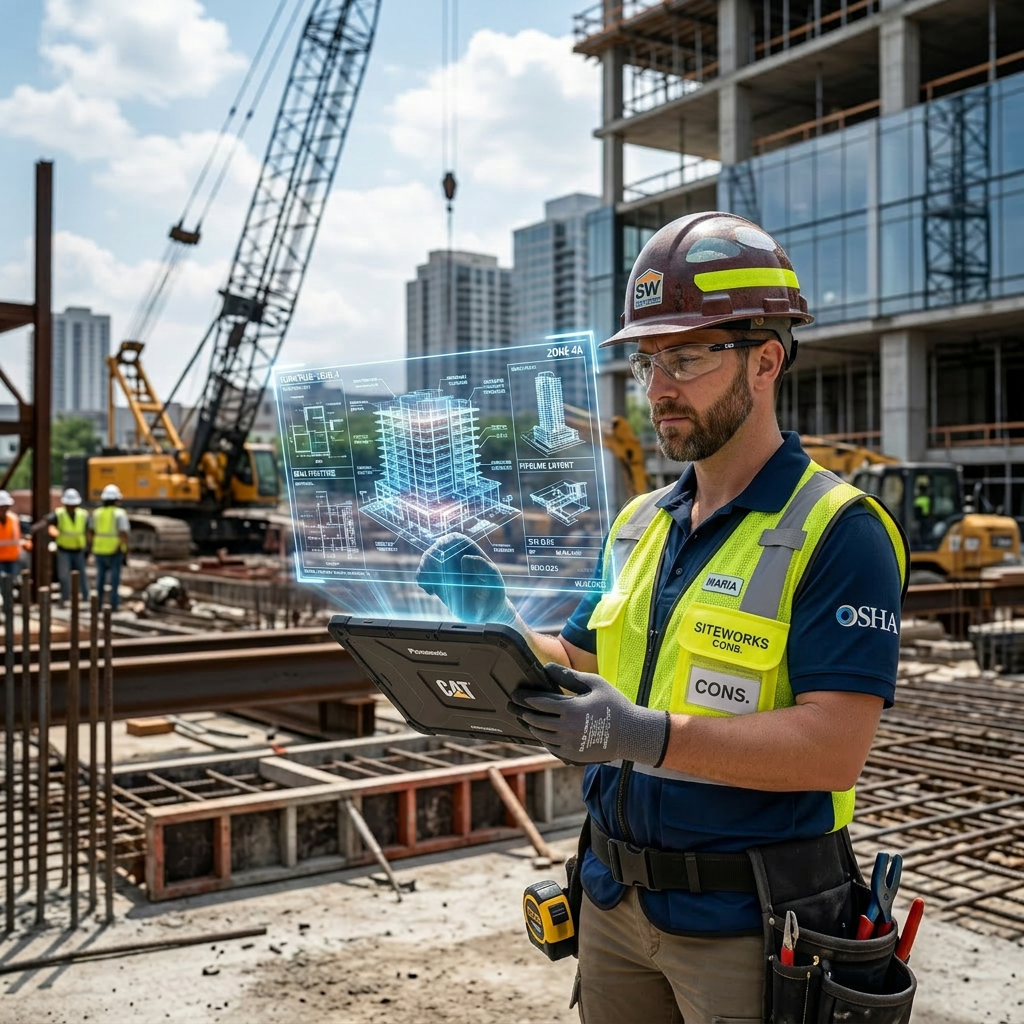
Construction workers using AI-powered design tools and augmented reality glasses. Plumbers with diagnostic AIs that pinpoint leaks before they dig. Mechanics with predictive maintenance systems that tell them exactly what is failing. Healthcare workers supported by AI that handles paperwork and initial diagnostics, freeing them up for actual patient care. But, again, I have an extremely hard time believing that regular businesses (not giant global interprises) will be paying big bucks for even these AI tools.
This is not a zero-sum game. Historically, technological revolutions do not just destroy jobs—they create entirely new ones we could not have imagined before. The automobile did not just kill buggy-whip makers; it birthed entire industries: mechanics, road builders, logistics networks, suburban development(the drive-thru), and car culture itself.
AI will do the same. Cry about it, or adapt. We will need people to train models, maintain robots, design ethical frameworks, manage human-AI teams, create new forms of art and entertainment, and solve problems we have not even identified yet. The economy does not “tank” when productivity rises—it grows, often dramatically.
In the next 5–10 years, yes, we can definitely expect significant disruption in purely cognitive fields: data entry, basic customer service, routine legal work, simple coding, content generation. Some of these roles will shrink. But others will evolve into higher-value versions.
Physical trades will be safe for everyone. We will still need firefighters to fight fires, surgeons to perform operations (I definitely do not foresee a machine maneuvering the human brain, etc), etc. They will face pressure at the margins, but widespread replacement is still science fiction. We are more likely to see hybrid systems where humans and machines collaborate than full robot takeovers.
Thirty years out? Who knows. By then, we might have more capable robots. But even then, human oversight, creativity, and social intelligence will remain premium skills. AI is just a ridiculously powerful new tool that kills soul-crushing tedium and hands ambitious people rocket fuel.
The world will still need builders, fixers, caregivers, teachers, strategists, and visionaries.
Bottom Line
The sky is not falling. The AI revolution is coming, but it is not the Terminator-style many are hyping. It is a powerful new tool—one that will eliminate dullness, boost productivity, and open doors to abundance if we approach it wisely.
Instead of panicking or salivating over collapse narratives, let us focus on adaptation. Learn to work with AI. Develop skills that complement it: physical trades, emotional intelligence, complex problem-solving, and hands-on expertise. The future belongs to those who see AI as a collaborator, not a competitor.
The robots are not coming for your job tomorrow. But they might just make your job—and your life—better. The real question is whether we are ready to seize that opportunity.

