Tag: art

  • Dinner with F. Scott Fitzgerald: The Allure of Literary Luxury

    Dinner with F. Scott Fitzgerald: The Allure of Literary Luxury

    Which author would you love to have dinner with?

    If I were to have dinner with an author, it would be F. Scott Fitzgerald. Not because of the obvious masterpiece everyone names first—The Great Gatsby—but because he understood luxury as a temperature, a texture, a way of moving through a room. He did not merely describe wealth. He lived inside its shimmer and its hangover, and he wrote as if both were equally sacred.

    Ornate wood-paneled library with bookshelves, seating, chandelier, and city views
    A richly appointed library lounge invites quiet reading beneath a glowing chandelier and tall arched windows.

    I have never been especially moved by stories that ask me to stay where I already am. Many people prefer fantasy worlds they can visit and leave, or novels that feel “relatable,” which often means ordinary kitchens, ordinary disappointments, ordinary weather. I have always been drawn the other way: toward silk, late hours, expensive mistakes, and the particular loneliness that arrives when the party is still going and you realize you are the only one who notices the light has changed. Fitzgerald paints that picture better than almost anyone. He makes luxury look not like a shopping list but like a climate.

    The Great Gatsby is the public cathedral. It is the book of the green light, the orchestra, the rumor. It is magnificent. But The Beautiful and Damned is the private room. Anthony Patch and Gloria Gilbert are not striving toward a dream so much as they are already inside one and slowly ruining the furniture. They are beautiful, idle, certain the future will keep paying their bills because it always has. They drink, they quarrel, they buy a second house they cannot afford because the idea of a gray country house is prettier than the math. They treat inheritance like weather: something that will arrive if you wait long enough in the right clothes. I recognize that hunger. Not the poverty of wanting more, but the more dangerous appetite of people who already have enough to be ruined by taste.

    Dried roses and scattered letters covered in golden dust on dark fabric
    Dried roses, scattered letters, and golden dust create a hauntingly romantic still life.

    Fitzgerald and his wife Zelda lived the same plot in public. Newly famous, they took over hotel lobbies as if the city were a set built for them. They spun in revolving doors, slid down banisters, jumped into fountains, arrived at parties on all fours, locked a jazz band in a bedroom and made it play until morning. They crossed the Atlantic with too much luggage and rented villas above the Mediterranean because New York had become too loud and too expensive for the kind of living they refused to scale back. He wrote about living on practically nothing a year while still ordering champagne. The contradiction is the point. Luxury, in Fitzgerald, is never only possession. It is performance, mood, and the brief conviction that beauty can postpone consequence.

    Elegant dinner table beside a roaring fireplace with champagne and flowers
    A warmly lit fireside table is prepared with champagne, flowers, and handwritten invitations.

    That is why I want dinner with him rather than a seminar on his most famous novel. I do not want the monument. I want the man who knew that parties are intimate precisely because they are large, that the very rich are different because they possess early and grow soft and cynical in places the rest of us stay hard, that “eat, drink, and be merry” is both a philosophy and a slow form of suicide. I want the writer who could make a cloth-of-gold dress and a platinum ring feel like plot. Zelda once advertised The Beautiful and Damned by listing the clothes she could buy if enough people purchased the book. That is not a joke to me. That is the aesthetic I live toward: art that funds the next beautiful object, beauty that funds the next sentence.

    Dinner would not be modest. I imagine a table that looks casually expensive and is, in fact, carefully so: low light, heavy silver, something cold and gold in the glass, a room that smells of perfume, cigarette smoke, and citrus from a bowl no one will eat. He would talk too much and then go quiet in a way that makes you lean in. He would notice the cut of a jacket before the content of a confession. He would be funny about money and then suddenly exact about it. He would understand, without needing it explained, why some of us do not want stories that return us to the life we already know how to survive. We want stories we can project onto the life we are trying to inhabit: the late dinner, the borrowed glamour, the risk that beauty is both the prize and the damage.

    The Beautiful and Damned is that projection. It is not a cautionary tale I read in order to become more responsible. It is a mirror I hold up when I want to see the version of myself that still believes atmosphere is a moral category. Anthony and Gloria fail, of course. They waste time, money, youth, and each other. Fitzgerald knew the bill always comes. He just refused to pretend the evening was not worth it while the candles were still lit.

    More stories about that, please. Not more worlds of dragons or more kitchens of quiet endurance. More rooms where the lighting is unforgivable, the clothes are too fine for the bank balance, the conversation is half seduction and half autopsy, and someone at the table still believes that if you live beautifully enough, the universe might keep the lights on a little longer. Fitzgerald made that belief look like literature. I would like to sit across from him and see whether, for one night, it still looks like a plan.

  • The Allure of TV’s Most Powerful Men

    The Allure of TV’s Most Powerful Men

    Television (and me humbly) has always had a soft spot for powerful men. Not the polite, boardroom variety who smile for cameras and donate to the right charities—the ones who bend the world to their will through force, cunning, money, charisma, or sheer force of personality. And, yes, my boyfriend does know about my affinity with these men. These characters dominate screens because power, when portrayed honestly, is magnetic, messy, and often corrosive. Here are some of the most compelling examples of powerful men in TV history, and what makes their authority so gripping. (I am the one person who has never seen Breaking Bad so I have not included those simpletons).

    Tony Soprano – The Sopranos

    Tony Soprano remains the gold standard. A New Jersey mob boss who juggles therapy sessions, family dinners, and brutal enforcement of his criminal empire, Tony wields power that is both institutional and deeply personal. His authority comes from fear, loyalty, and an almost animalistic ability to read the room. What makes him unforgettable is the contradiction: the same man who orders hits also frets about his kids’ futures and panics over ducks in his pool. Power, The Sopranos argues, does not erase vulnerability—it amplifies it.

    Don Draper – Mad Men

    Don Draper’s power is quieter, more seductive, and rooted in the art of persuasion. As the creative director of a top Madison Avenue advertising agency, he does not rule through violence or political office—he shapes desire itself. In the smoke-filled offices of the 1960s, Don’s authority comes from his unmatched ability to sell not just products, but identities and dreams. His charisma is effortless, his insights razor-sharp, and his personal mythology carefully constructed. Yet beneath the tailored suits and cool detachment lies a man permanently on the run from his own past. Mad Men shows that cultural power—the ability to define what people want—can be just as absolute, and just as isolating, as any other form of dominance.

    Harvey Specter – Suits

    Harvey Specter walks into a room and owns it. As the best closer in New York, the sharp-dressed senior partner at Pearson Hardman (and its later iterations) wields power through unmatched legal brilliance, psychological warfare, and an unshakable confidence that borders on arrogance. Harvey does not just win cases—he dismantles opponents, negotiates impossible deals, and operates by a personal code that prioritizes loyalty and results above all else. His authority is performative and intellectual: the perfect suit, the perfect line, the perfect read of every angle. Yet Suits continually reveals the cost of that invincibility, showing a man whose greatest battles are often with his own need for control and the vulnerabilities he works so hard to conceal.

    Bobby Axelrod – Billions

    Bobby “Axe” Axelrod is the embodiment of modern financial power—raw, street-smart, and relentlessly competitive. A self-made billionaire hedge-fund titan, he built his empire from nothing and defends it with a mix of genius strategy, loyalty to his people, and a willingness to play dirtier than anyone else in the room. Axe’s power is both economic and personal: he moves markets, outmaneuvers regulators and rivals, and treats every confrontation like a high-stakes game he intends to win. What makes him compelling is the contradiction at his core—a blue-collar kid who never forgot where he came from, even as he lives in a world of private jets and political influence. Billions thrives on watching Axe turn every threat into an opportunity for greater dominance.

    Logan Roy – Succession

    Logan Roy does not need guns or superpowers. He has money, media empires, and an unparalleled talent for psychological warfare. The aging media titan in Succession treats his children like pieces on a chessboard and the world like a family business he refuses to relinquish. His power is cold, transactional, and absolute within his domain. Every boardroom confrontation and holiday dinner becomes a demonstration of dominance. Logan proves that the most terrifying power is often the quietest—and the one that never needs to raise its voice.

    Frank Underwood – House of Cards

    Frank Underwood operates in the highest corridors of American politics with the precision of a surgeon and the morality of a snake. His power is procedural and performative: he masters the rules of the game so thoroughly that he can rewrite them. The direct-to-camera asides make the audience complicit in his rise. Underwood’s authority rests on information, timing, and an absolute willingness to sacrifice anyone—including those closest to him. He is the purest expression of political power as performance art.

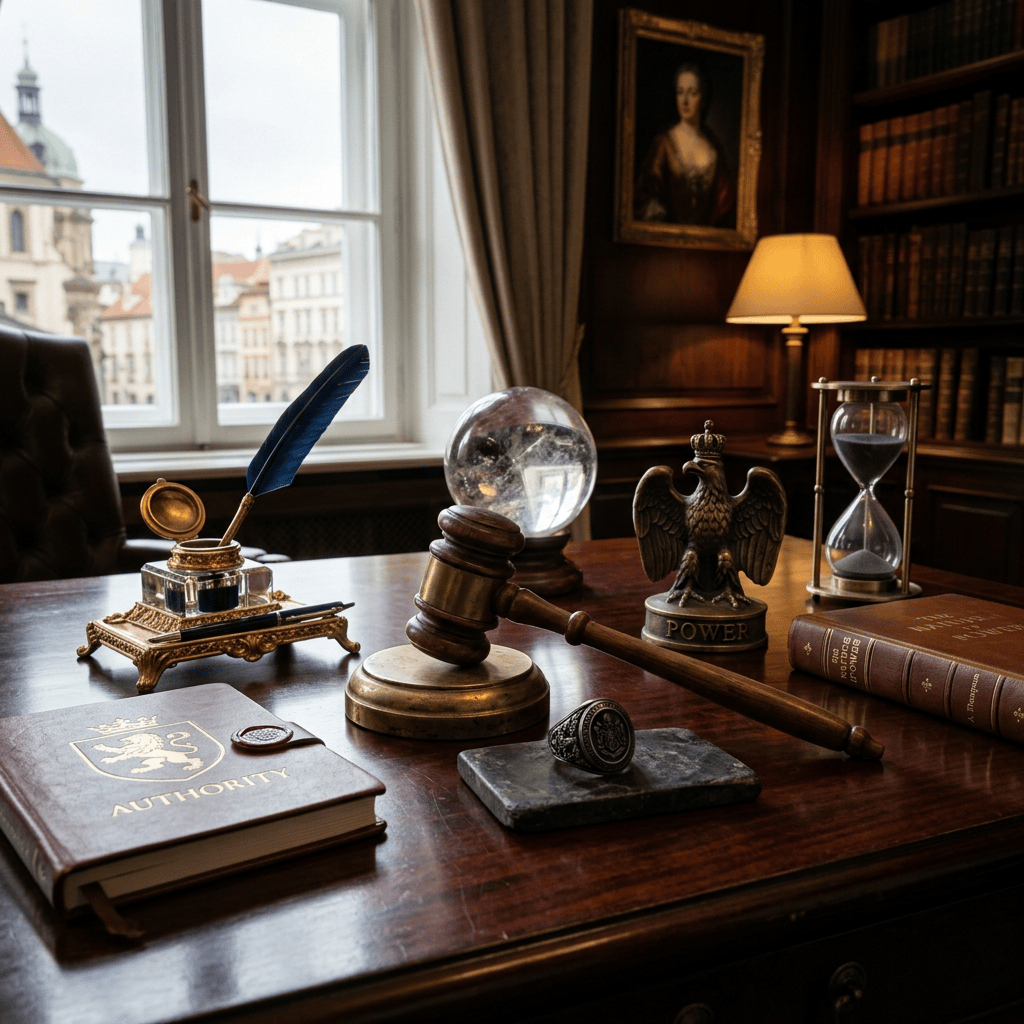
    Desk with gavel, quill, books labeled AUTHORITY, eagle marked POWER, and hourglass
    A richly styled study desk brings together objects symbolizing law, power, and authority.

    Across these characters, certain patterns emerge. Power on television is rarely clean. It is usually bought with compromise, isolation, or violence. The most interesting portrayals show men who are simultaneously architects and prisoners of their own authority. Tony’s panic attacks,

    , Don’s carefully guarded emptiness, Harvey’s carefully maintained invincibility, Axe’s relentless competitiveness, Logan’s loneliness and Frank’s emptiness all suggest the same uncomfortable truth: absolute power rarely delivers the satisfaction its seekers expect.

    Television keeps returning to these figures because audiences recognize something true in them. We are drawn to competence, to dominance, to the fantasy of control in an unpredictable world. At the same time, the best shows refuse to let us enjoy that fantasy uncritically. They force us to sit with the human cost.

    The powerful men of television do not just rule their fictional worlds. They hold up a mirror to our own complicated relationship with power—its allure, its price, and the quiet ways it can hollow a person out from the inside. And as long as that tension remains unresolved in real life, these characters will keep commanding our attention.

  • Your Aura Is Nowhere in That Photo—And That’s Exactly How It Should Be

    Your Aura Is Nowhere in That Photo—And That’s Exactly How It Should Be

    An aura is not some pastel Instagram filter floating around your head. In the spiritual sense, an aura is often described as a subtle energy field or luminous glow surrounding a living being (especially a person), object, or place. Believers claim it reflects a person’s emotional, mental, physical, or spiritual state and can appear in different colors, each supposedly carrying symbolic meaning.  Thus, it is a shifting energy field that announces whether you are dangerous, magnetic, exhausted, or about to lose it. Sensitive people feel it. Animals react to it. Most humans just call it a “vibe” and move on.

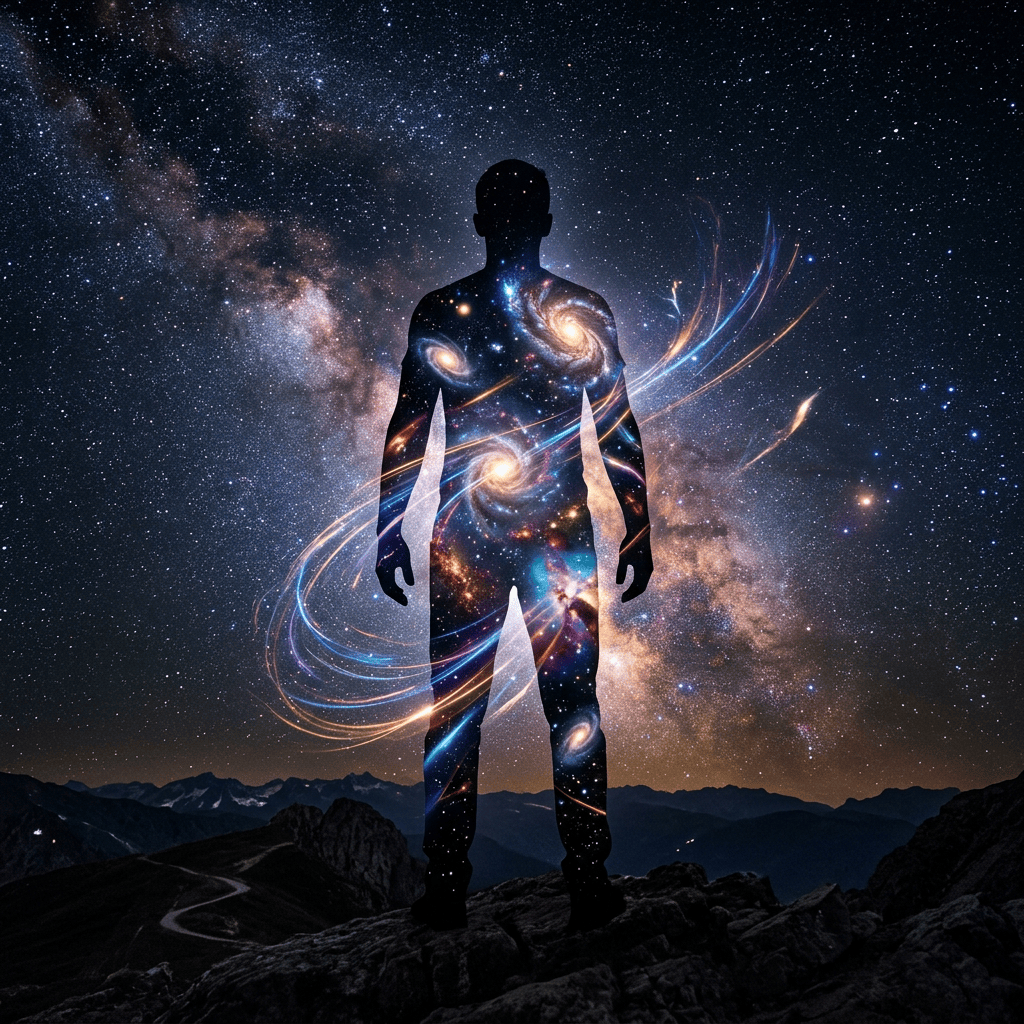
    Silhouette of a person filled with colorful galaxies and cosmic swirls against a star-filled sky
    A silhouette filled with swirling galaxies stands against a starry night sky.

    A camera does not effectively convey that vibe. It is a light-hungry machine hardwired for the visible spectrum and nothing else. Photons in, pixels out. Your biofield, electromagnetic signature, soul-static—whatever you want to call the invisible electricity that makes you you—doesn’t register. The lens is not broken. It is just not built for the real data.  Only experiencing someone in the real world captures the aura and vibe. 

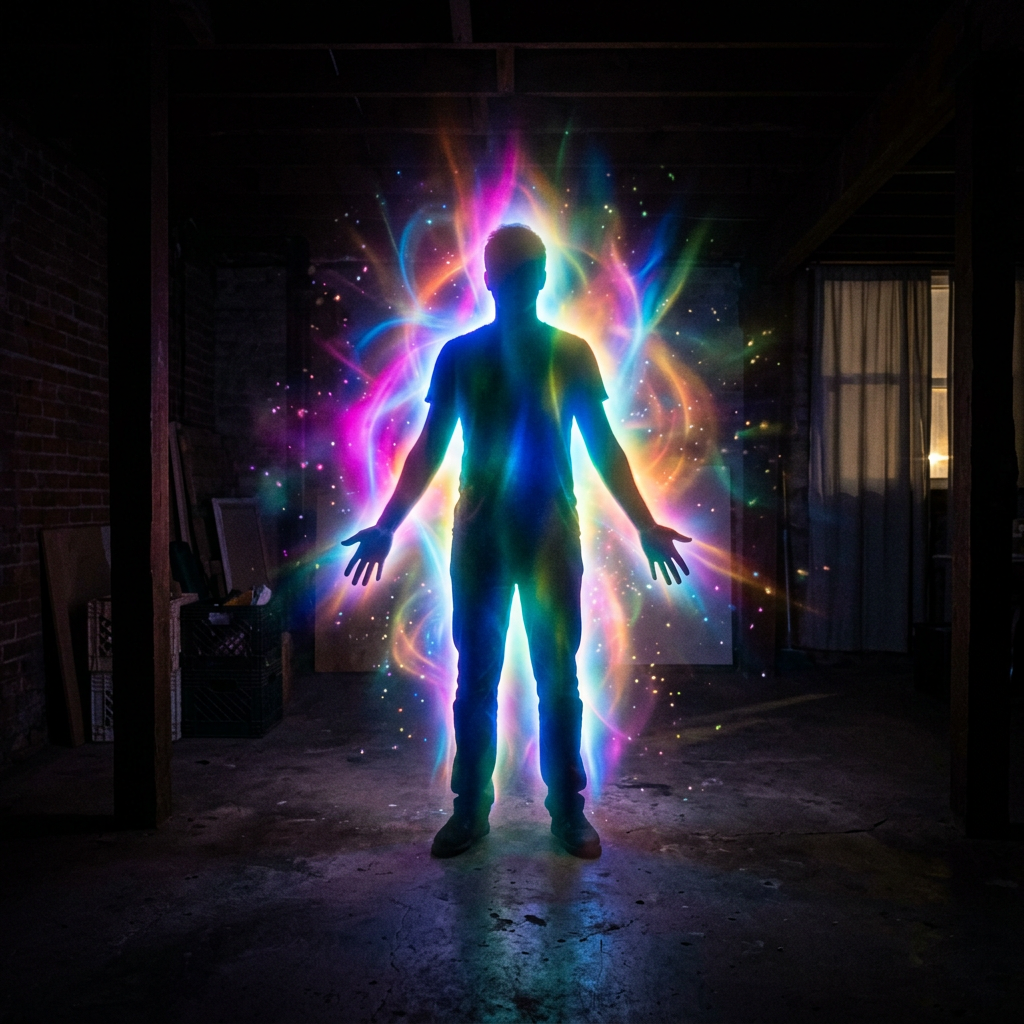
    Silhouetted person emitting glowing multicolored energy aura in dark room
    A silhouetted figure stands surrounded by vibrant, colorful energy waves in a dimly lit room.

    In real life, you are a full-spectrum event: micro-expressions, temperature shifts, the subtle pressure of your presence expanding or collapsing the room. Your nervous system is constantly broadcasting and receiving. A photograph freezes one thin, dead slice of reflected light and throws the rest in the trash.

    That is why you hate most pictures of yourself. It is not insecurity. It is pattern recognition. The image captured the meat puppet and left the operator out of frame. You are looking at evidence of your own absence.

    Every once in a while a shot hits different—golden hour, pure chaos, someone laughing hysterically. The candid moments are usually the best photographs, since they actually show your “essence.”Those images carry residual charge because the moment was so loud the camera could not completely murder it. Some photographers try to “charge” their work with intention or ritual. Adorable. But this still does not put your actual aura on the sensor. It just makes your corpse look slightly warmer.

    The gap between you and your photograph is not a technical failure. It is a brutal reminder: the most interesting parts of being human refuse to be archived. Your aura is a living current. A photo is a freeze-dried souvenir. One is dangerous and alive. The other is safe enough to post.

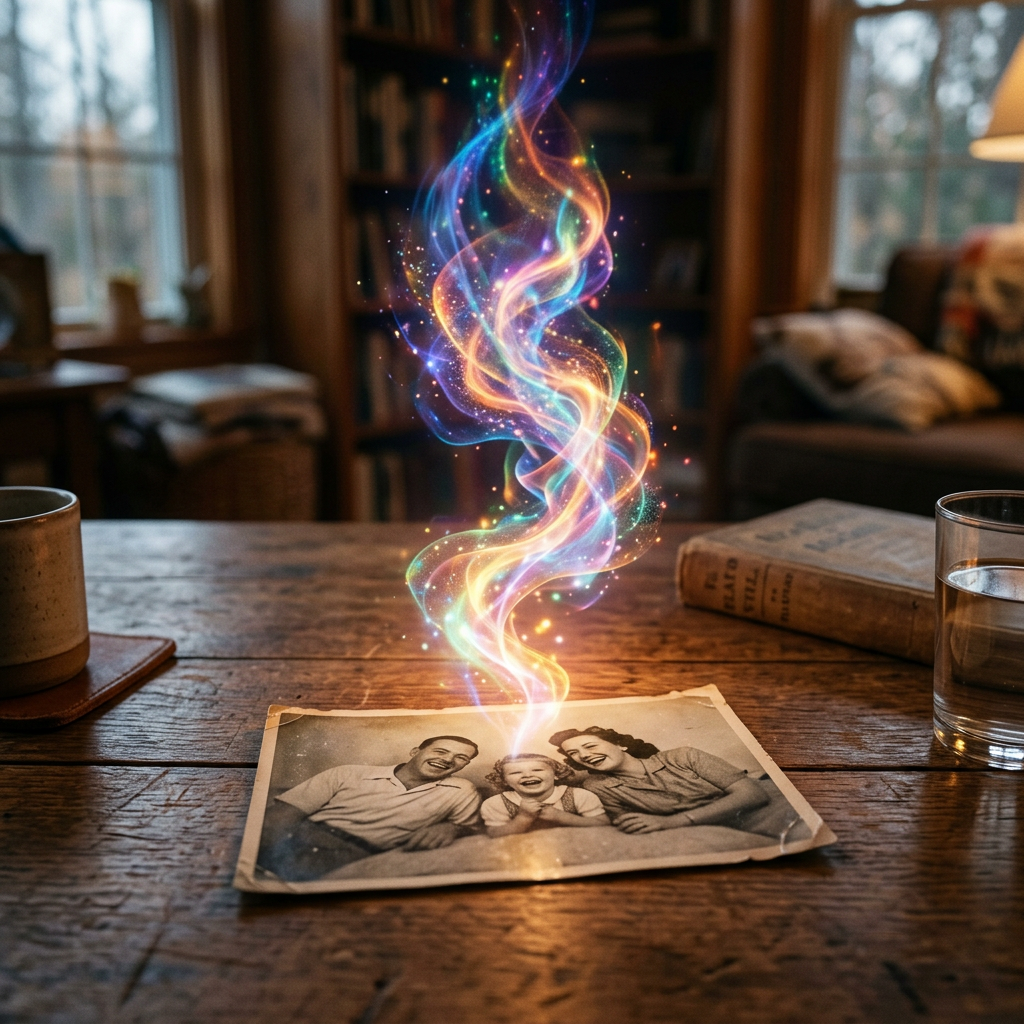
    Black and white vintage family photo with colorful magical aura rising
    A vintage family photo radiates colorful magical energy on a wooden table

    So next time a picture of you feels like a stranger wearing your face, do not delete it in shame. Look at it, smirk, and remember—the real version of you was never dumb enough to get trapped inside a lens in the first place.

    You are still out here, uncaptured, and probably judging the photos that tried to pass off as you.

  • Instant Gratification: The Sweet Poison We All Keep Sucking On

    Instant Gratification: The Sweet Poison We All Keep Sucking On

    We live in the age of now. Not tomorrow. Not next week. Now. Your ancestors waited months for a single letter, starved through brutal winters, and jerked off to cave drawings if they were lucky.

    You open an app and flood your brain with validation, food, outrage, or orgasms in under three seconds. Welcome to the golden age of instant gratification—the ultimate cheat code that quietly turning your brain into wet mush and your soul into a pit of greed.

    You know the drill. That little red notification bubble hits and your brain lights up like a slot machine. (I turned off my notifications for my own personal sanity). Social media is not a platform anymore—it is a premium-grade dopamine.dealer pushing TikTok, Instagram, X, whatever the flavor of the month is. Every scroll is a casino lever pull. Every like is a payout. We all check our phones at 3 AM, eyes bloodshot…

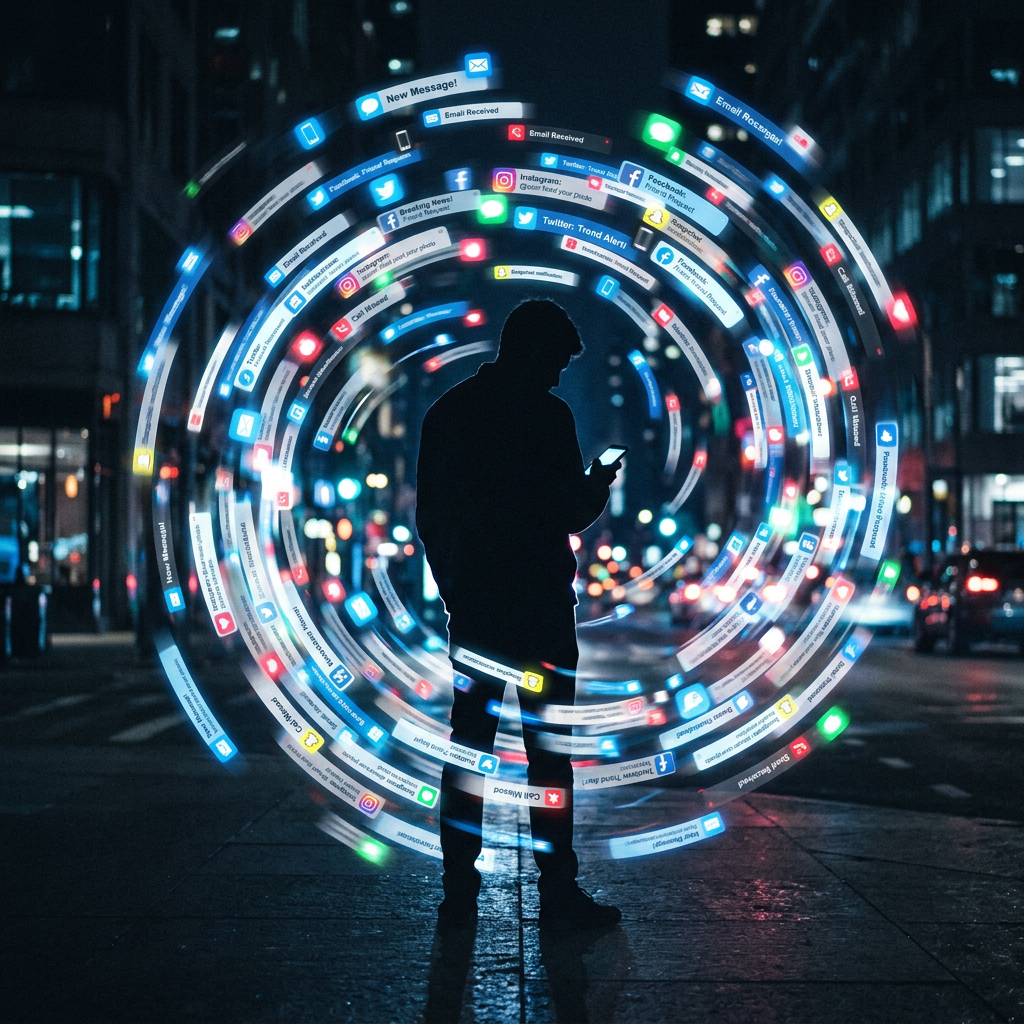
    Silhouette of person looking at phone surrounded by swirling digital notifications icons and messages
    A person stands surrounded by swirling social media and message notifications at night

    Dating apps turned romance into a vending machine: swipe, match, “u up?”—transaction complete. No slow burn. No tension. Just meat meeting meat with the emotional depth of a McDonald’s drive-thru. That is not how I met my forever. I do not do that empty soulless dopamine transaction.

    Vending machine with pink neon lights and heart decorations dispensing snacks and drinks
    A brightly lit vending machine named Heart & Glow dispenses snacks and drinks with a glowing pink heart theme.

    Want to “learn”? Why read a full book when some caricature on YouTube (or even AI) condenses it into a 45-second reel that makes you feel enlightened without any of that annoying retention or effort?

    Want to get rich? Crypto bros and OnlyFans “models” exist for this reason alone. Thus you have a lighter wallet and heavier self-loathing.

    And entertainment? Christ. We have all become allergic to waiting.

    Even my boyfriend refuses to start a new show until there are a fat stack of episodes ready to binge. He will wait weeks, sometimes months, just so we can tear through it together over a few nights. It is hilarious when you think about it—this is exactly how society used to watch television back in the day. You would tune in once a week, maybe catch the occasional rerun, and actually anticipate the next episode like a normal human with functioning patience.

    I personally do not mind the wait at all. Because that delay means something better: his arms wrapped around me on the couch, my head on his chest, sharing laughs and gasps in real time. No more staring at my laptop screen alone in my little corner of the dining table, eating my sad little snack while doomscrolling between scenes. The wait forces connection. It builds something warmer than the instant hit ever could.

    Your brain is still that of a caveman but now it is running on outdated hardware. It sees sugar, sex, status, or stimulation and screams “MINE like a toddler on Red Bull. Evolution never prepared us for infinite, on-demand pleasure at our fingertips 24/7.

    So we chase the hit. The hit gets weaker. Tolerance skyrockets. Vanilla porn stops cutting it. We want something harder. Freakier. Regular food tastes like regret. Your attention span disappears somewhere between the 50th reel and your 15th rage-tweet of the day. You become an unsatisfied junkie constantly upping the dose just to feel anything.

    Meanwhile, everything that actually builds a meaningful life requires the opposite: delayed gratification. That boring, unsexy grind.

    Yet we have been sold the lie that happiness equals constant pleasure with zero discomfort. Real satisfaction comes from the burn after a workout. The pride of work you actually bled for. The quiet warmth of waiting for something good with someone you love.

    Instant gratification is not pure evil. Life is too short to be like a disciplined monk. Eat the cake. Send the risky 2 AM text. Watch the porn. Chase that rush and feel alive for a minute.

    The danger is when it becomes your entire personality. When every evening is another solo scroll session. When you cannot sit with your own thoughts for five minutes without grabbing your phone like an addict.

    My boyfriend’s little TV rule is a small rebellion against all that. It is not revolutionary. It is just… human. It turns passive consumption into shared ritual. It trades the lonely instant dopamine dump for something that actually fills the tank longer.

    Society used to run on delayed rewards. Season finales meant something. Relationships took time to unfold. Success required seasons of invisible work. Now we want the finale tonight, the soulmate by morning, and six figures by next quarter.