I spent the entire weekend alone—rotting on my chair while my boyfriend was up in Maine. Laptop open, Bridgerton on, snacks within reach, and almost no intention of moving. It was the kind of low-effort weekend that feels indulgent precisely because nothing productive happens.
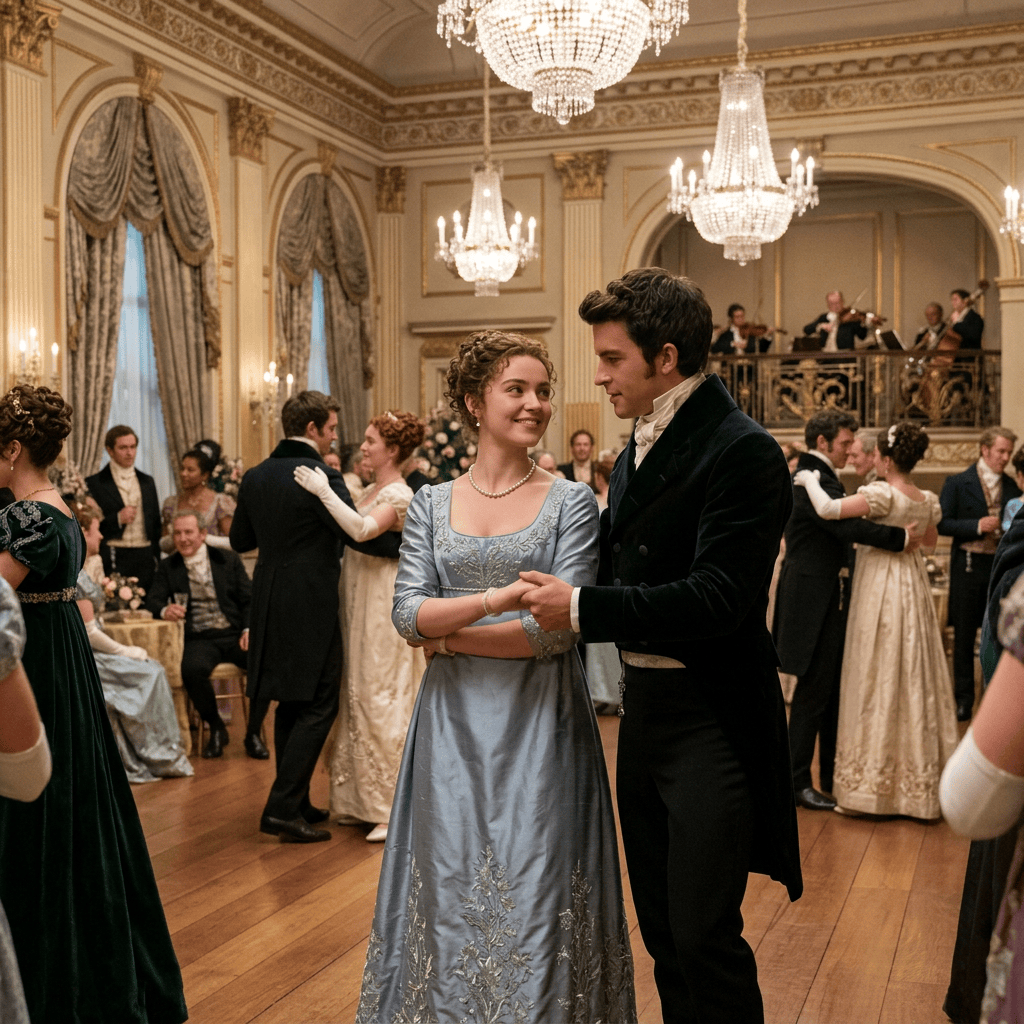
A young couple shares an elegant dance at a lavish Regency-era ballroom.
What pulled me in was the surface of the thing. The show sells an upscale world of ladies and gentlemen, drawing rooms, formal calls, gossip columns, and carefully managed reputations. I like that register. The costumes, the houses, the rules of the marriage market, the idea that desire has to move through manners—that is the lifestyle fantasy I actually wanted. Season 1, centered on Daphne Bridgerton and the Duke of Hastings, delivered the version of it I came for: a rake with a reputation, a debutante who is sharper than she looks, and a romance that spends a long time circling the tension before it pays off. That was the sexiest of the storylines to me, and the one I stayed for.
An open wooden door reveals a warmly lit sequence of rooms in an aged interior.
The rest of the framing was harder to ignore. The series is a Shonda Rhimes production, and it is very woke in the specific way her projects tend to be. The most obvious example is the decision to depict Black characters as royalty and members of the highest aristocracy in a Regency setting, without treating that as a departure from history or even as something the story needs to explain. The show wants the balls, the titles, the inheritance plots, and the social season, but it also wants a modern casting ideology laid over them. Even though the blacks were more likely slaves in the 1800s. Once you notice it, it sits on top of every scene. I was not looking for a lecture about representation inside a costume drama;I was looking for the rake and the love story.
That is also why I am not continuing. Each season shifts to a different Bridgerton sibling and a new central romance. The Duke’s arc was the one that held my attention, and once it resolved I had no particular reason to stay for the next set of characters. The aesthetic is still pretty, the snacks were still there, and the weekend still passed. Like in life,I do not need another season of the same world once the part I actually wanted is over.
If you could relive one year of your life, which one would it be?
The year I would relive has not happened yet.
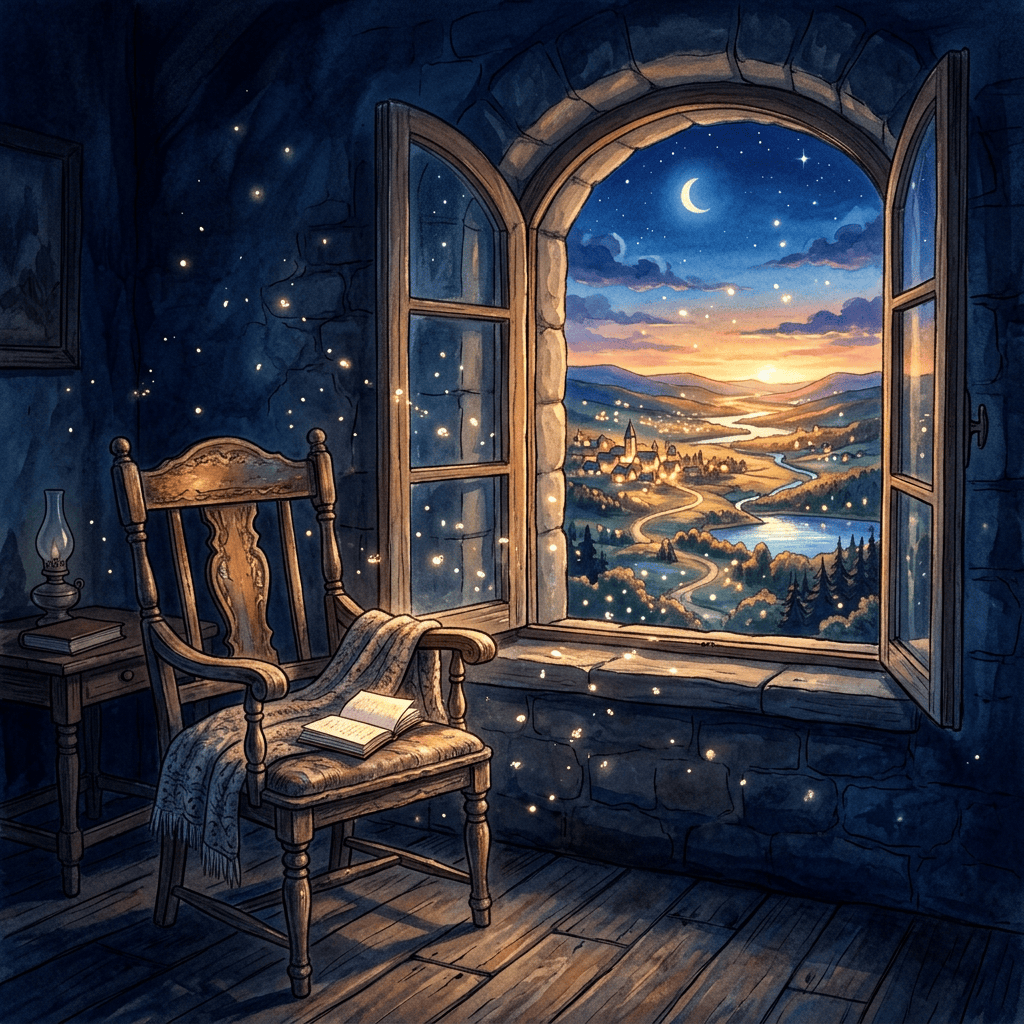
An open window reveals a moonlit valley while a cozy chair invites quiet reading.
I keep turning that sentence over in my hand like a stone I found on the beach. Smooth. Heavy. A little warm from being held too long. Most people, when asked which year they would live again, reach backward. The summer they were twenty-two. The winter everything still felt possible. The year before the diagnosis, or the accident, or the slow unfolding of whatever it was that rearranged their life. I understand the impulse. I have my own catalog of almosts and if-onlys. There always seems to be something I would like to change.
I would never do it though.
Glowing coral and gold lines converge across a moody blue textured background, evoking movement and inspiration.
I say that with the same half-superstitious firmness I use when I knock on wood. Everything happens for a reason. I have repeated the phrase so many times it has worn a groove in me. Some days it feels like wisdom. Other days it feels like a lullaby I repeat so I will not scream. Both can be true at once. The body learns to live with contradictions the way it learns to live with weather.
Still, I froth at the mouth when I envision my future.
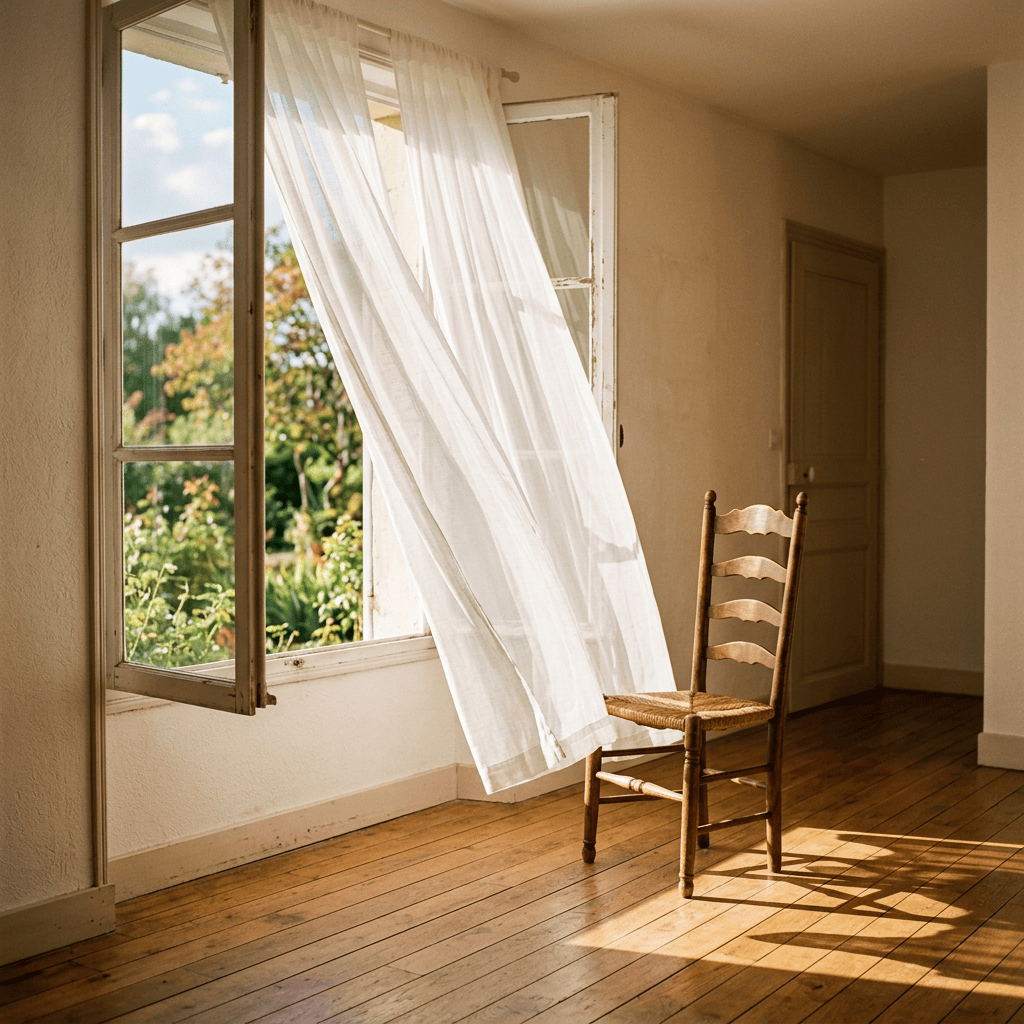
A vintage chair rests beside an open window as sheer curtains drift in the sunlight.
Not the glittering, cinematic future. Not the one with applause or sudden wealth or a body that has never known limitation. Just a simple little life. Ordinary in the way sunlight on a kitchen table is ordinary, which is to say: almost unbearable in its tenderness if you look at it long enough.
With him.
The sentence does not need embroidery. With him. The two words sit in the center of the picture like a house with the lights already on. I see the unremarkable days first: grocery lists, the sound of an espresso machine, the particular way someone who loves you says your name when they are only half awake. I see the quieter victories. Getting through a morning without bargaining with pain. Walking a little farther than last month. Laughing at something stupid and not having to pay for it later with exhaustion. A life that does not constantly announce itself as a project of endurance.
And without disability.
A luminous winding path flows through a dreamlike blue landscape toward the rising sun.
I write that last part carefully, because I know how it can sound. I mean the specific, private longing for a version of days that do not require so much translation. Days in which my body is not a burden Days in which the body is not the first negotiation. Days in which “simple” is actually simple.
I froth at the mouth thinking about it. The phrase is ugly and exact. Anticipation that is almost feral. Hope that has teeth. I am not serene about the future. I am hungry for it.
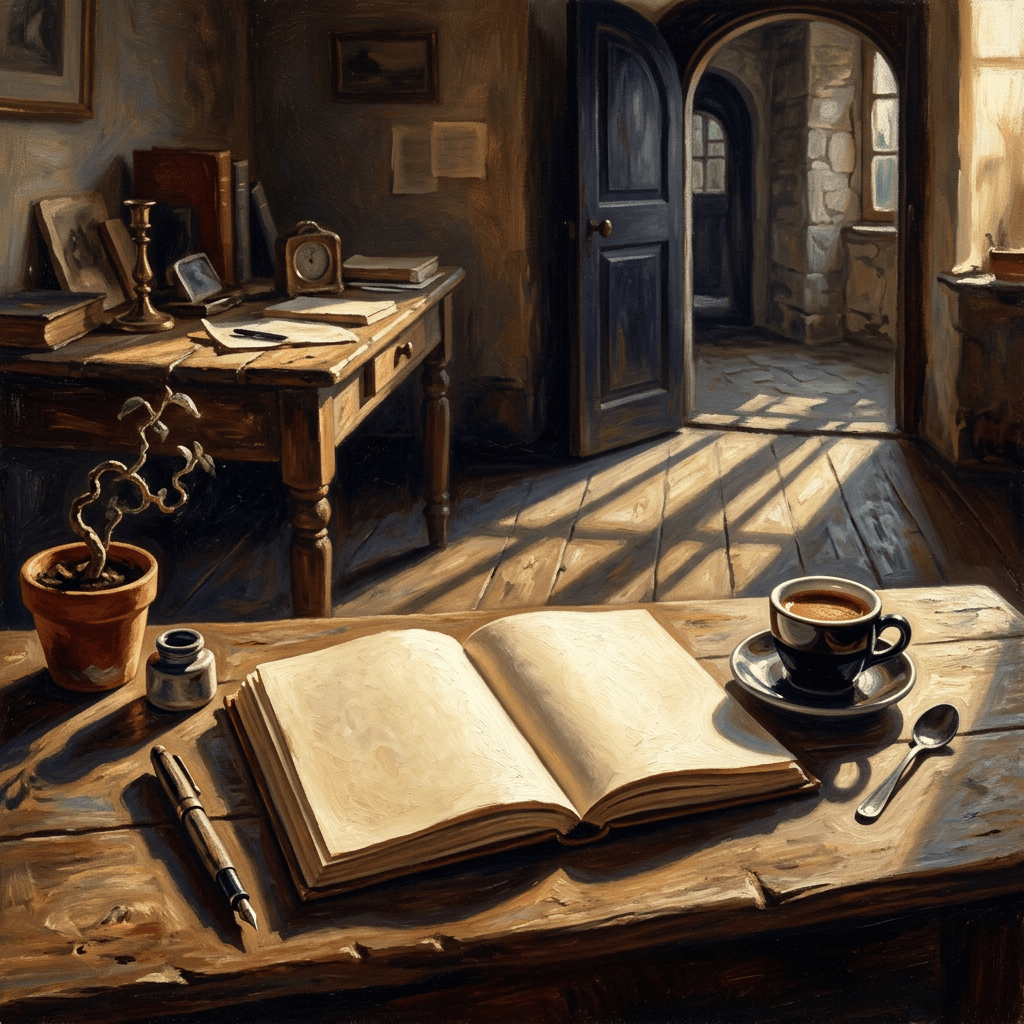
An open journal and fresh coffee create a peaceful, sunlit writing retreat.
The paradox is that I would not go back and unscrew the past to get there. I would not trade the particular chain of hours that led me to this exact now, even the hours that hurt. Everything happens for a reason is, in my mouth, less a philosophy than a truce. I will not pretend the suffering was decorative. I will also not pretend it was meaningless. Meaning is something we make afterward, with whatever materials we have left.
So the year I would relive is still ahead of me. It has no date yet. It might look, from the outside, almost dull. A rented apartment or a small house. A person I already know how to love. Mornings that do not begin with inventory. Evenings that end without calculation. The ordinary miracle of a body that cooperates more often than it argues.
I want that year so badly I can taste metal.
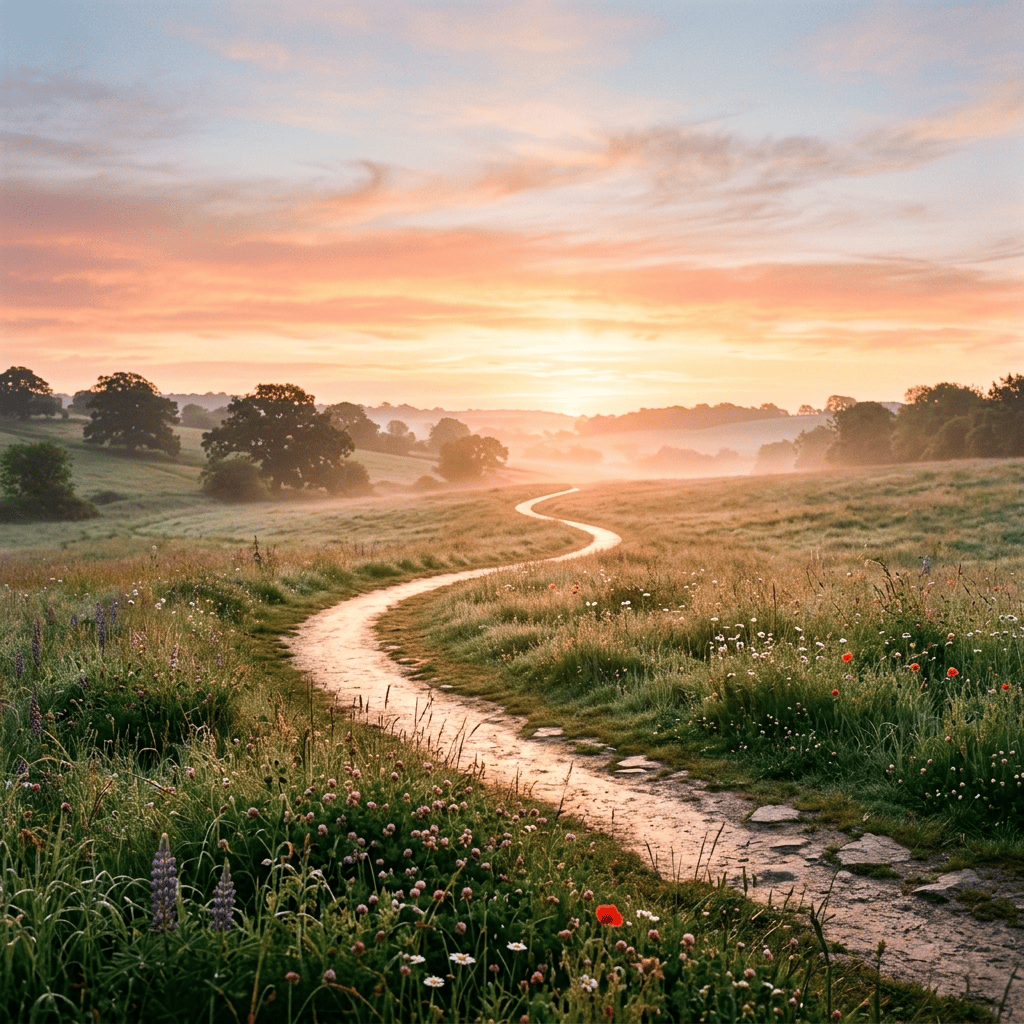
A winding path leads through a flower-filled meadow toward a glowing sunrise.
And if it arrives, I will not spend it wishing I were somewhere else. I will try to live it the first time the way people live the years they later want back: imperfectly, gratefully, with both hands.
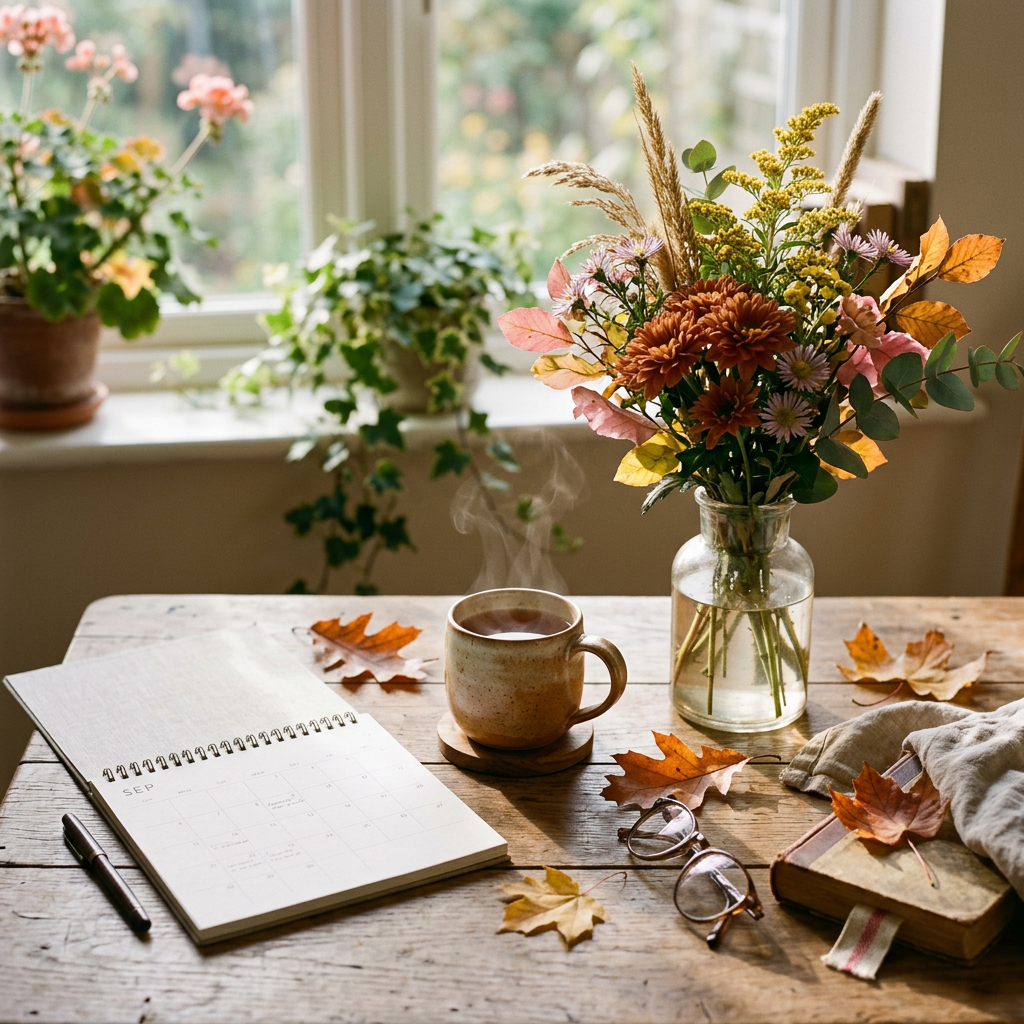
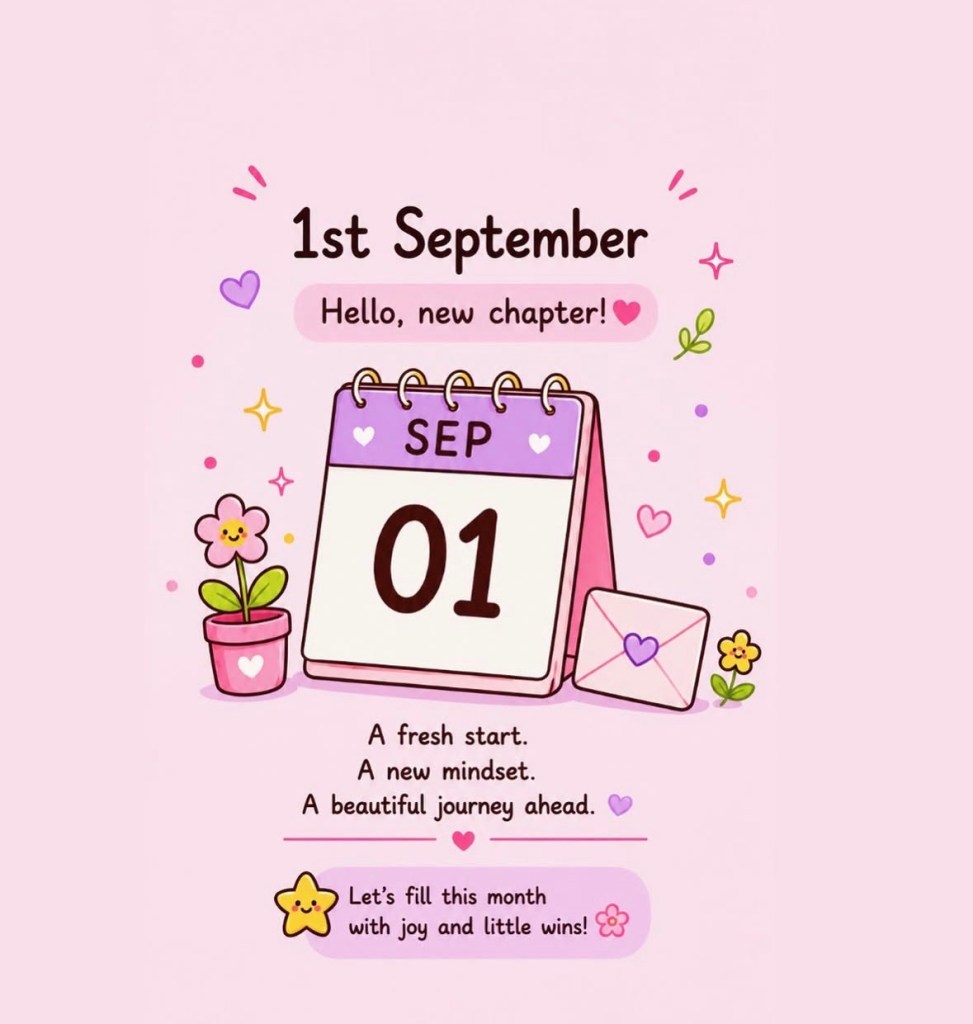
September is here. The calendar has flipped, the light is shifting, and the year has entered its most transitional stretch: still warm in many places, already carrying the first hints of autumn in others.
A new month is a clean page. It is also a reminder that most of what we actually do with time is continue the conversations we were already having. If we have been talking about routines, projects, travel, food, or how to start something again, September is a useful month to pick those threads back up instead of pretending we are starting from zero.
Labor Day weekend in the United States and Canada marks the unofficial close of summer. Schools reopen. The autumnal equinox arrives around the 22nd or 23rd, when day and night briefly balance. Around the world there are observances for literacy, peace, the ozone layer, and tourism. None of these dates require you to reinvent yourself. They simply give the month a rhythm.
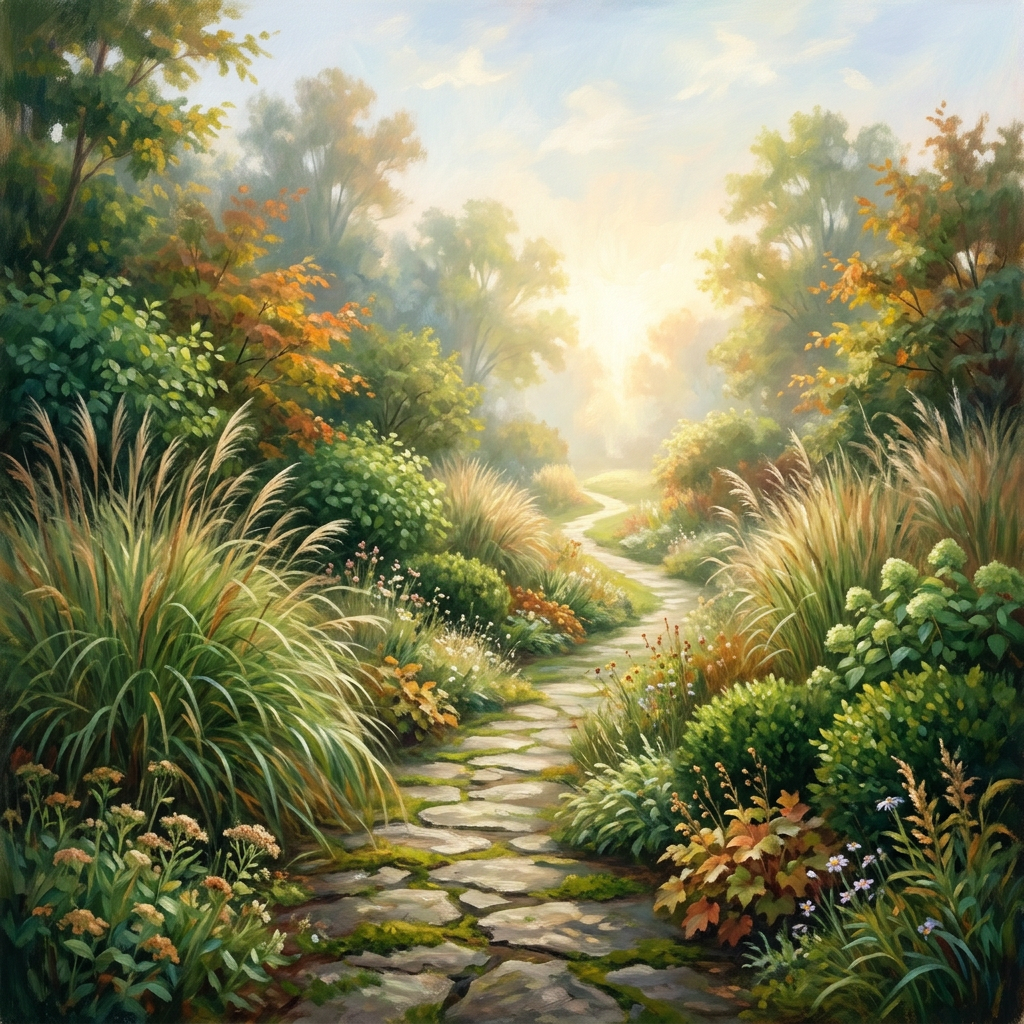
A sunlit stone path winds through lush grasses, flowers, and colorful autumn foliage.
The useful move is usually modest. Finish the half-done thing you mentioned last time you asked how to get unstuck. Try the recipe or the itinerary you were weighing. Adjust the schedule you were already trying to make work. September rewards continuation more than spectacle.
The days are still long enough to use. The evenings are starting to feel different as now when I get outside to write, my body covers itself in goose pimples. That is enough of a reason to treat the month as an invitation rather than a demand.
Welcome to September. Let’s keep going with whatever we were already working on.
If I were to have dinner with an author, it would be F. Scott Fitzgerald. Not because of the obvious masterpiece everyone names first—The Great Gatsby—but because he understood luxury as a temperature, a texture, a way of moving through a room. He did not merely describe wealth. He lived inside its shimmer and its hangover, and he wrote as if both were equally sacred.
A richly appointed library lounge invites quiet reading beneath a glowing chandelier and tall arched windows.
I have never been especially moved by stories that ask me to stay where I already am. Many people prefer fantasy worlds they can visit and leave, or novels that feel “relatable,” which often means ordinary kitchens, ordinary disappointments, ordinary weather. I have always been drawn the other way: toward silk, late hours, expensive mistakes, and the particular loneliness that arrives when the party is still going and you realize you are the only one who notices the light has changed. Fitzgerald paints that picture better than almost anyone. He makes luxury look not like a shopping list but like a climate.
The Great Gatsby is the public cathedral. It is the book of the green light, the orchestra, the rumor. It is magnificent. But The Beautiful and Damned is the private room. Anthony Patch and Gloria Gilbert are not striving toward a dream so much as they are already inside one and slowly ruining the furniture. They are beautiful, idle, certain the future will keep paying their bills because it always has. They drink, they quarrel, they buy a second house they cannot afford because the idea of a gray country house is prettier than the math. They treat inheritance like weather: something that will arrive if you wait long enough in the right clothes. I recognize that hunger. Not the poverty of wanting more, but the more dangerous appetite of people who already have enough to be ruined by taste.
Dried roses, scattered letters, and golden dust create a hauntingly romantic still life.
Fitzgerald and his wife Zelda lived the same plot in public. Newly famous, they took over hotel lobbies as if the city were a set built for them. They spun in revolving doors, slid down banisters, jumped into fountains, arrived at parties on all fours, locked a jazz band in a bedroom and made it play until morning. They crossed the Atlantic with too much luggage and rented villas above the Mediterranean because New York had become too loud and too expensive for the kind of living they refused to scale back. He wrote about living on practically nothing a year while still ordering champagne. The contradiction is the point. Luxury, in Fitzgerald, is never only possession. It is performance, mood, and the brief conviction that beauty can postpone consequence.
A warmly lit fireside table is prepared with champagne, flowers, and handwritten invitations.
That is why I want dinner with him rather than a seminar on his most famous novel. I do not want the monument. I want the man who knew that parties are intimate precisely because they are large, that the very rich are different because they possess early and grow soft and cynical in places the rest of us stay hard, that “eat, drink, and be merry” is both a philosophy and a slow form of suicide. I want the writer who could make a cloth-of-gold dress and a platinum ring feel like plot. Zelda once advertised The Beautiful and Damned by listing the clothes she could buy if enough people purchased the book. That is not a joke to me. That is the aesthetic I live toward: art that funds the next beautiful object, beauty that funds the next sentence.
Dinner would not be modest. I imagine a table that looks casually expensive and is, in fact, carefully so: low light, heavy silver, something cold and gold in the glass, a room that smells of perfume, cigarette smoke, and citrus from a bowl no one will eat. He would talk too much and then go quiet in a way that makes you lean in. He would notice the cut of a jacket before the content of a confession. He would be funny about money and then suddenly exact about it. He would understand, without needing it explained, why some of us do not want stories that return us to the life we already know how to survive. We want stories we can project onto the life we are trying to inhabit: the late dinner, the borrowed glamour, the risk that beauty is both the prize and the damage.
The Beautiful and Damned is that projection. It is not a cautionary tale I read in order to become more responsible. It is a mirror I hold up when I want to see the version of myself that still believes atmosphere is a moral category. Anthony and Gloria fail, of course. They waste time, money, youth, and each other. Fitzgerald knew the bill always comes. He just refused to pretend the evening was not worth it while the candles were still lit.
More stories about that, please. Not more worlds of dragons or more kitchens of quiet endurance. More rooms where the lighting is unforgivable, the clothes are too fine for the bank balance, the conversation is half seduction and half autopsy, and someone at the table still believes that if you live beautifully enough, the universe might keep the lights on a little longer. Fitzgerald made that belief look like literature. I would like to sit across from him and see whether, for one night, it still looks like a plan.
In a world overflowing with noise, division, and endless hot takes, I made a deliberate choice to shape my X (formerly Twitter) experience around what truly matters to me. My entire account is now intentionally curated to reflect my personal beliefs and, above all, to center positivity.
A smartphone displaying ‘Calm & Connected’ held amid swirling fire and smoke effects
I want my feed to uplift, inspire, and align with the kind of life I am actively building—one rooted in growth, joy, healing, and possibility. That does not mean I live in a bubble or ignore reality. It simply means I am protective of my mental and emotional space.
Yes, I do follow a handful of accounts that could be described as strong Trump supporters—people who sometimes come across as riding the “Trump can do no wrong” wave. I am fully aware of the echo-chamber risk there. I approach them with the same healthy skepticism I apply to sports accounts, news outlets, or any single-source content. I do not take everything at face value, and I cross-reference when something feels off.
I am not on X primarily for political analysis or to debate policy. I am there to be inundated with feel-good positivity and reminders of the lifestyle I crave—wellness, personal development, meaningful connections, beauty, humor, and inspiration. Those accounts, even with their strong biases, often deliver bursts of optimism, patriotism, or motivational energy that resonate with the uplifting vibe I want more of.
At the end of the day, social media should serve you—not drain you, enrage you, or pull you into endless negativity loops. I have unfollowed, muted, and blocked enough accounts to create a space that feels like a warm, intentional garden rather than a battlefield.
A smartphone displaying a vibrant mix of blooming garden plants and succulents
My feed is not perfect, and it is not meant to be a complete reflection of the world. It is a reflection of the world I am choosing to create for myself. One post, one follow, and one boundary at a time.
Some of my favorite social media follows are:
A hand holding a smartphone displaying an abstract swirling light pattern
@PeytonElroy : a wellness and spiritual healing-focused account with over 61,000 followers. Setting a consistent tone of optimism, empowerment, and alternative health perspectives, Peyton posts a mix of personal stories (especially her father’s recent stage 4 colon cancer “healing” journey). and practical health tips (e.g., hibiscus tea for inflammation, dates for heart rhythm stabilization via potassium, broccoli sprouts, blueberries, soursop). I particularly love the spiritual/energy concepts (auras, emotional states influencing physical health, colors affecting energy, the idea that everyone is inherently “spiritual”) and relationship/life advice (e.g., how to stand out when approaching beautiful women by complimenting non-physical traits).The tone is warm, encouraging, and emoji-heavy (lots of hearts, flowers, and green tones). Posts often include disclaimers like “I’m not claiming this cures cancer alone” while sharing strong opinions and anecdotes. Recent content has leaned heavily into cancer discussions—viewing it as inflammation, potentially linked to parasites or trauma, with emphasis on mindset, diet, and natural compounds rather than fear-based conventional narratives (my own personal belief).
@mtnhousewife (Mountain Housewife🏠) is a Christian homemaking and traditional marriage account run by a 41-year-old wife, mother, grandmother (“mimi”), and homemaker. Her posts promote biblical womanhood, wifely submission, contentment, and practical homemaking. Key themes include: Covenant marriage — Long-term harmony through scriptural roles (e.g., she highlights 42 years of marriage with “no conflict” due to submission as taught in scripture), Christian living — Bible study reflections (e.g., Philippians on contentment), faith encouragement, and church life, Homemaking — Simple recipes and tips (e.g., okra dishes, pimiento cheese). The tone is gentle, grateful, and encouraging, aimed at women seeking traditional roles. She emphasizes joy in submission, building a happy home, and living out a wife’s calling according to Christian principles. Content mixes personal testimony, scripture, practical advice, and light community interaction.
Maneesha (@ManeeshaSem) is a popular writer, content creator, and self-described “moonbathing apsarā” (celestial nymph) on X, with over 71,000 followers. @maneeshasem has built a significant following through poetic, feminine, and spiritually infused posts that emphasize beauty, serenity, nervous system regulation, self-love, and creating “paradise on Earth.” Her content blends mysticism, aesthetics, wellness, and gentle life philosophy, often evoking softness, harmony, and divine femininity. She frequently shares visions of serene villas, lush nature, silk robes, self-care rituals (e.g., affirmations, chocolate-covered strawberries, vanilla chai), intentional beauty, and protective auras created by harmonious environments. @maneeshasem posts focus on holding calm energy, avoiding urgency/dysregulation, beauty as spiritual protection, and aligning with cosmic/natural rhythms.
@wolffdew (The Cooking Lady) is a Danish 22-year-old homemaker and from-scratch cooking content creator on X.She shares homemade recipes, cooking videos/processes, meal ideas, and everyday kitchen content with a warm, enthusiastic style. Posts often feature scratch cooking, traditional or comforting dishes, and personal touches as a young married woman. She promotes her two digital cookbooks directly in her bio. The account appeals to fans of simple, authentic home cooking, Scandinavian influences, and lifestyle content from a Gen Z homemaker perspective. It’s positive, food-focused, and interactive, with frequent replies to followers.
@amandaperera (Cleopatra 🪷 ✞) is a faith-centered self-improvement and relationship advice account on X with a strong emphasis on personal growth, emotional intelligence, and Christian values. The account mixes inspirational quotes, relationship insights, personal reflections, and calls to subscribe to her newsletter or book 1:1 sessions. It appeals to audiences interested in faith-based personal development, neuroscience-informed emotional health, and mature views on love and identity. Content is positive, relational, and growth-oriented rather than purely dating-strategy focused.This account is warm, empowering, and reflective. Posts often explore:
Healthy relationships and love dynamics (e.g., references to Yellowstone’s Rip and Beth as an ideal of a strong man supporting a fiery, intelligent woman; the importance of entering relationships as a “whole” person rather than seeking fulfillment from a partner).
Self-acceptance, authenticity, and resilience (e.g., disagreement as a sign of staying true to yourself; embracing your “weird” side).
Faith-first mindset (“Jesus first always”), emotional wholeness, and devotional partnership.al advice, and light community interaction.
@TrinaNuance (Trina Nuance || The Fractional Muse 🌿🌞🌊) is slightly different than my other follows. She is thoughtful writer, coach, and strategist with a philosophical, introspective style focused on personal growth, mindset, entrepreneurship, and human behavior. Trina shares long-form reflections, threads, and insights on: Self-awareness & transformation — Dark night of the soul, breaking self-sabotaging cycles, shifting from external to internal locus of control, and authoring new self-fulfilling prophecies., Parasocial relationships, narrative-building, perception biases, and cultural shifts (e.g., craving analog experiences like handwritten letters). Her tone is wise, empathetic, and nuanced — often weaving personal experience, client stories, and cultural observations. She positions herself as a bridge between worlds (e.g., founders building in the dark, inner work vs. business goals) with a creative, almost poetic voice. Content resonates with introspective entrepreneurs, creators, and those on personal development journeys. It is more reflective/strategic than purely motivational or tactical.
Today marks another trip around the sun for the man who has quietly shaped every corner of my life—the one who taught me what strength looks like when it is wrapped in laughter, what loyalty feels like when it is served with a side of sarcasm, and what unconditional love actually is. Happy Birthday, Dad.
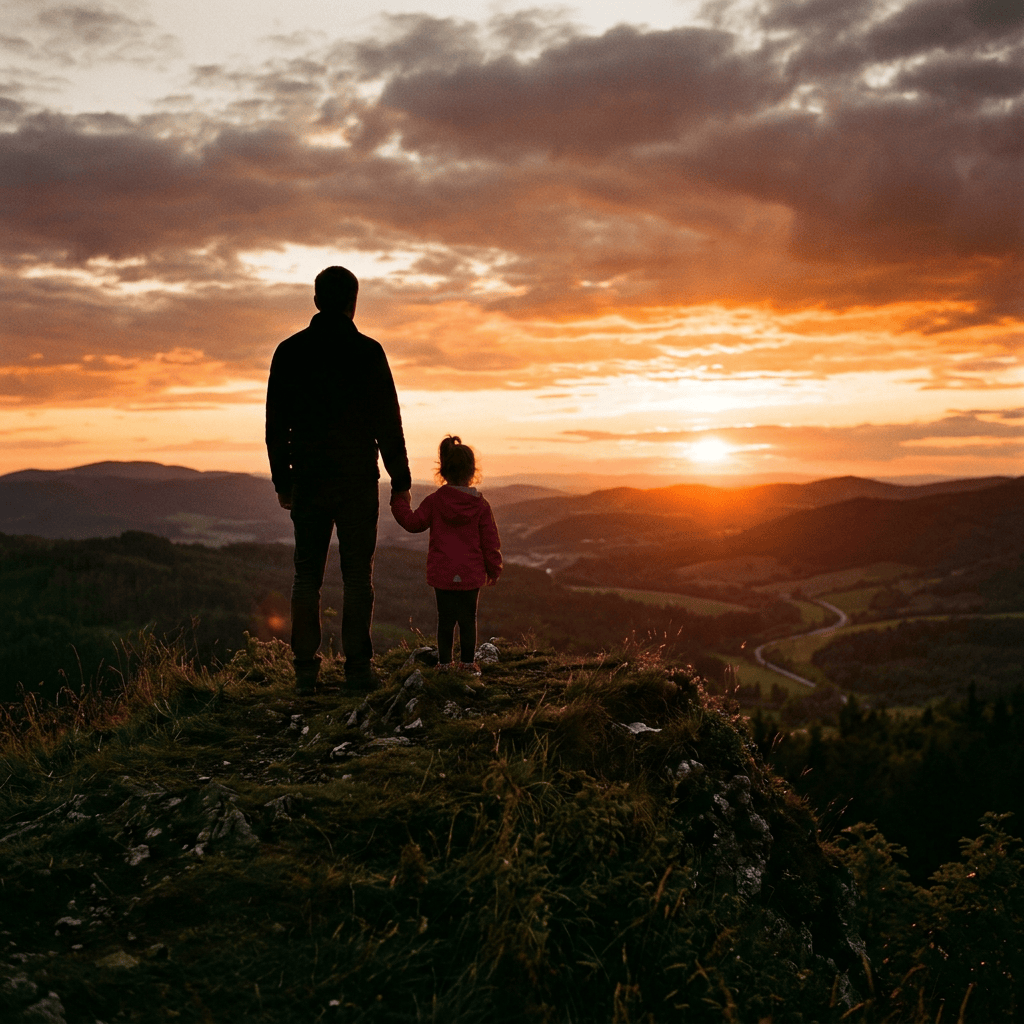
A father and his young daughter hold hands while watching a vibrant sunset from a hilltop.
From the moment I entered this world, you have been my benchmark. You did not just raise me; you modeled the kind of man I should look for one day. Patient but firm. Protective but playful. Someone who shows up, every single time, even when life throws curveballs. You became more than a father—you became my friend. The kind of friend I can call with zero judgment,
Then there are the political debates. Oh lord, the debates. You with your Russian-state-media deep dives and me with my Fox News/ X.com rabbit holes. We yell, we gesture wildly, we both refuse to back down… and then we laugh about it over ice cream because at the end of the day, none of it matters as much as the fact that we can still sit across from each other. That is us—passionate, opinionated, and bonded by something far stronger than any headline.
You have always been an incredibly hardworking silly goose. I used to call you my little brother when I was small because you were more fun than any grown-up had a right to be. You built/drew my school projects like an architect, and you would turn grocery runs into adventures. Yet the moment life demanded it, that military toughness kicked in. Stoic. Disciplined. The man who could fix anything with the right tools and sheer willpower. You taught me resilience without ever making it feel like a lecture—just by living it.
And yes, the spoiling. You spoiled your baby girl rotten, and I have zero shame in admitting it. Whatever craving hit me, luxury trips, and endless courage to chase dreams that probably sounded delulu to you. You turned me into this proud delulu queen who believes anything is possible because you made me feel like the world was soft enough to catch me if I fell. Thank you for that safety net. Thank you for letting me stay your little girl even when I am all grown up and pretending to have it all together.
Father, you are my first love. The love that taught me how to love others. The steady heartbeat I measure my current relationship against. The voice that still calms me, the arms that still feel like the safest place on earth.
The steady heartbeat I measure my current relationship against
So on your birthday, I hope you feel every ounce of gratitude and love I carry for you. I hope the year ahead brings you desserts worth drooling over, jokes that make you snort-laugh, and maybe—just maybe—a story where we both pretend to agree.
Happy Birthday, my favorite silly goose, my hero, my friend. I love you more than all the words in every language combined.
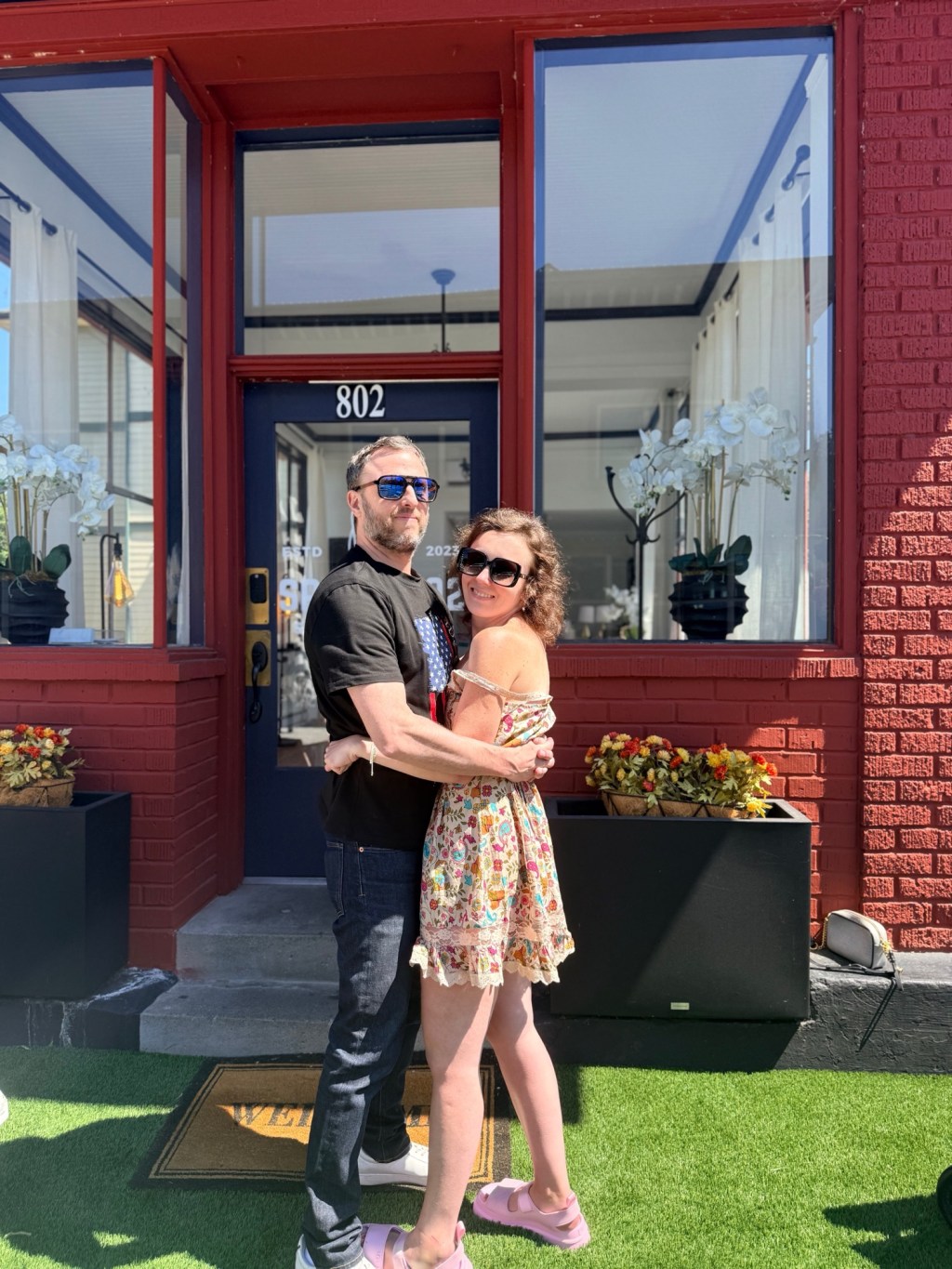
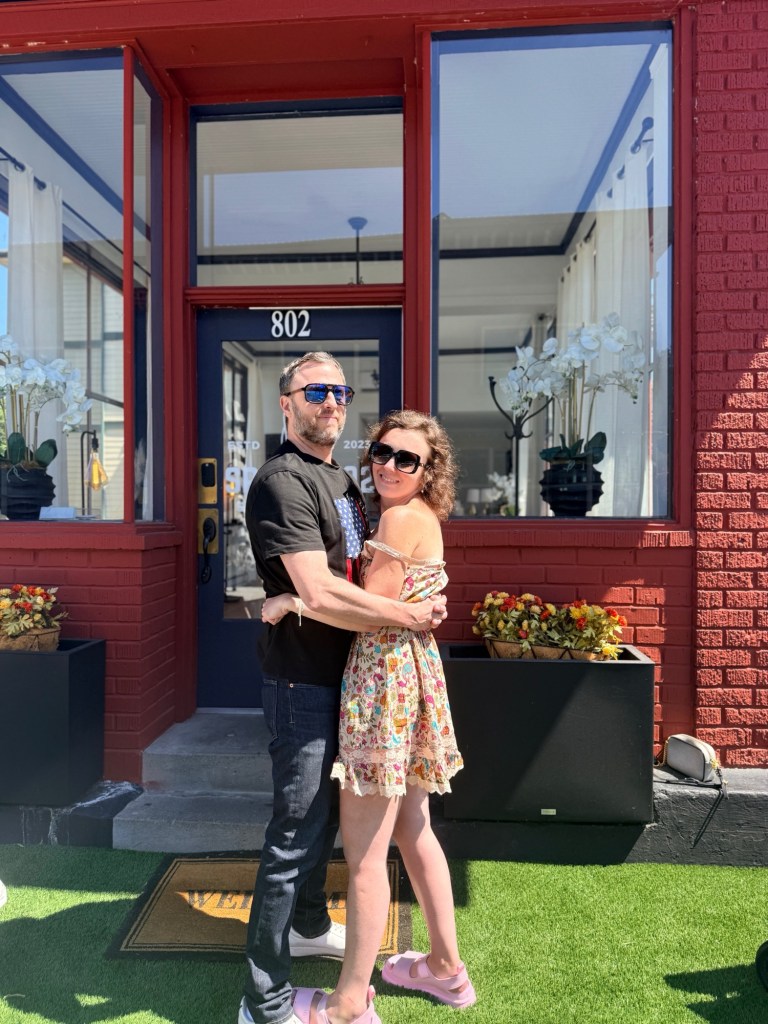
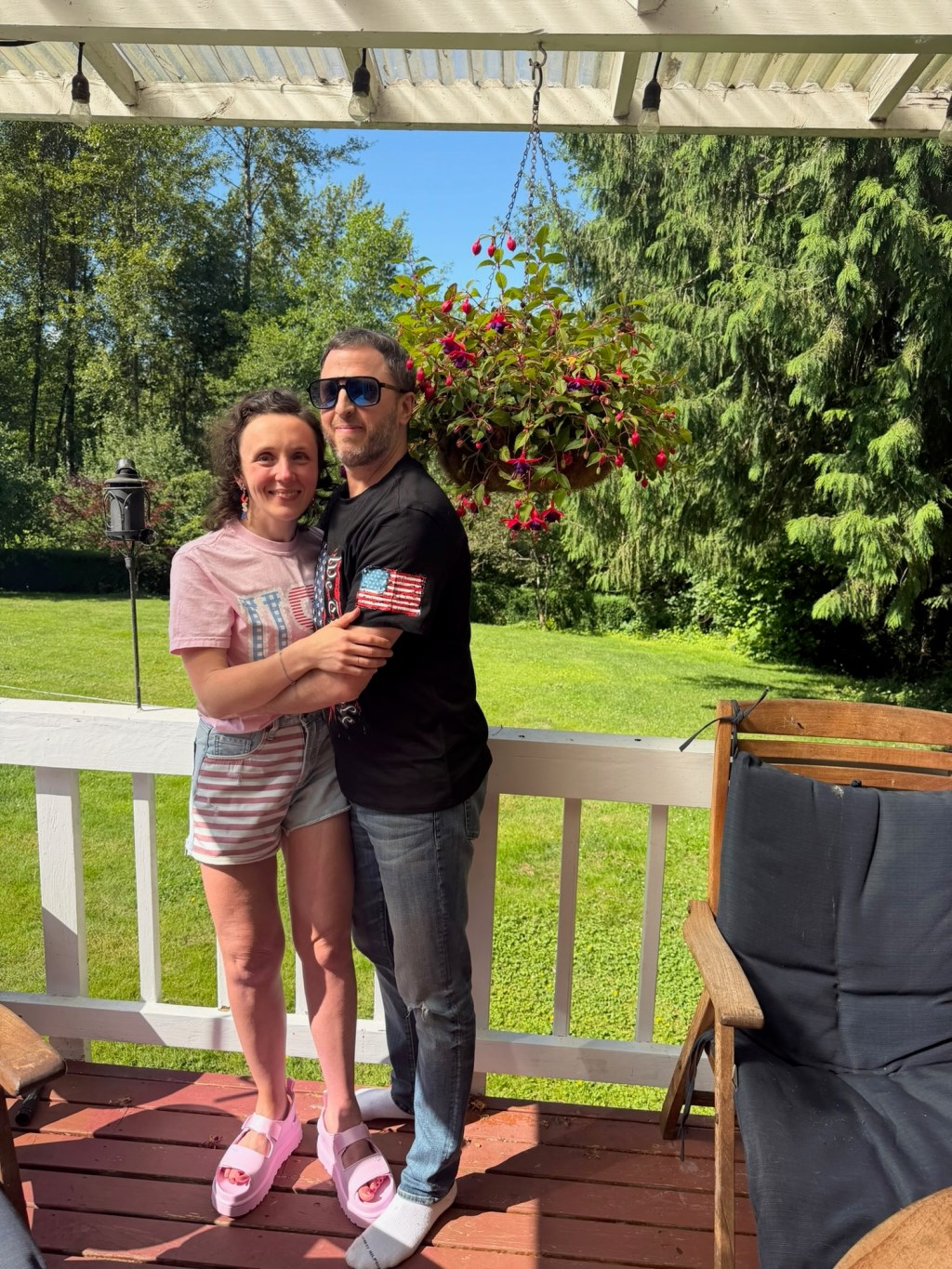
The house is quiet once more. He left for Boston yesterday, and the silence settled in before the door even closed behind him. It will be another month before I feel his arms around me again, before I hear his laugh echoing through these rooms.
I hate sleeping alone. The bed feels too cringe, the pillows too cold. I hate watching television alone too—there is no one to nudge when something ridiculous happens, no one to pause the show so we can debate plot twists or quote our favorite lines back and forth. Most of all, I miss the little things: the easy banter that danced between bites of cookie dough or ice cream , the way we could turn an ordinary meal into something playful and intimate.
This visit was supposed to hold answers. I thought we would finally talk through the big questions about our future—what comes next, where we go from here. Those conversations hovered around us, but never quite landed. So—as per usual— I am still waiting, still hoping, still trusting that the path will reveal itself in its own time.
But even without those answers, this trip gave us so much.
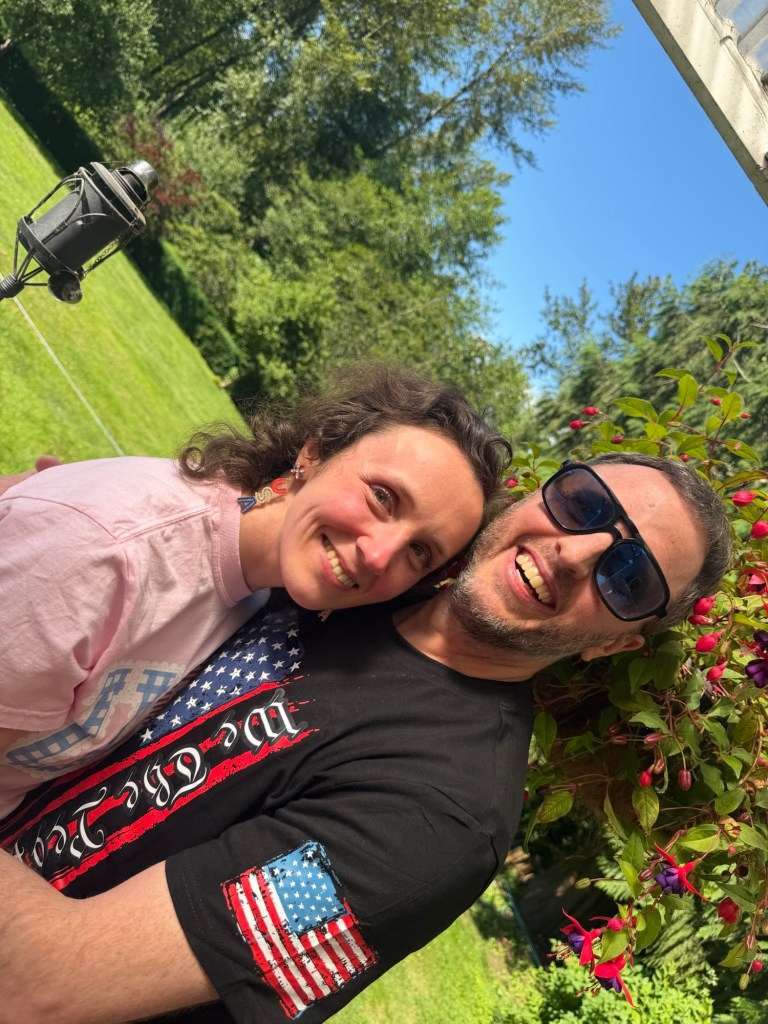
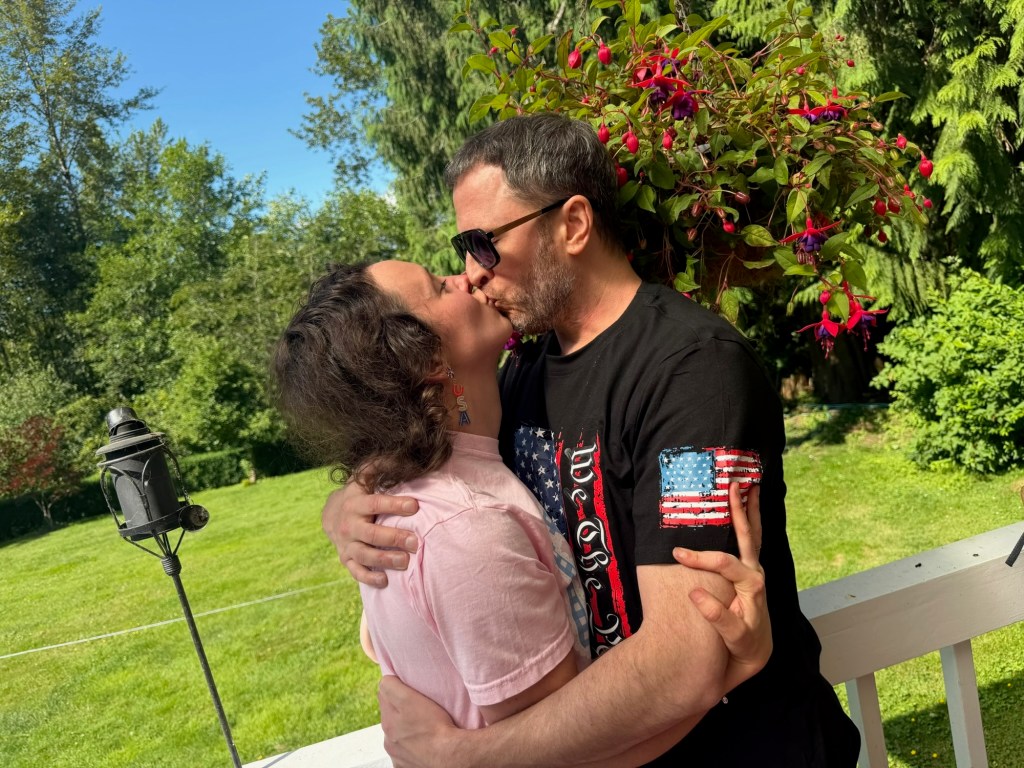
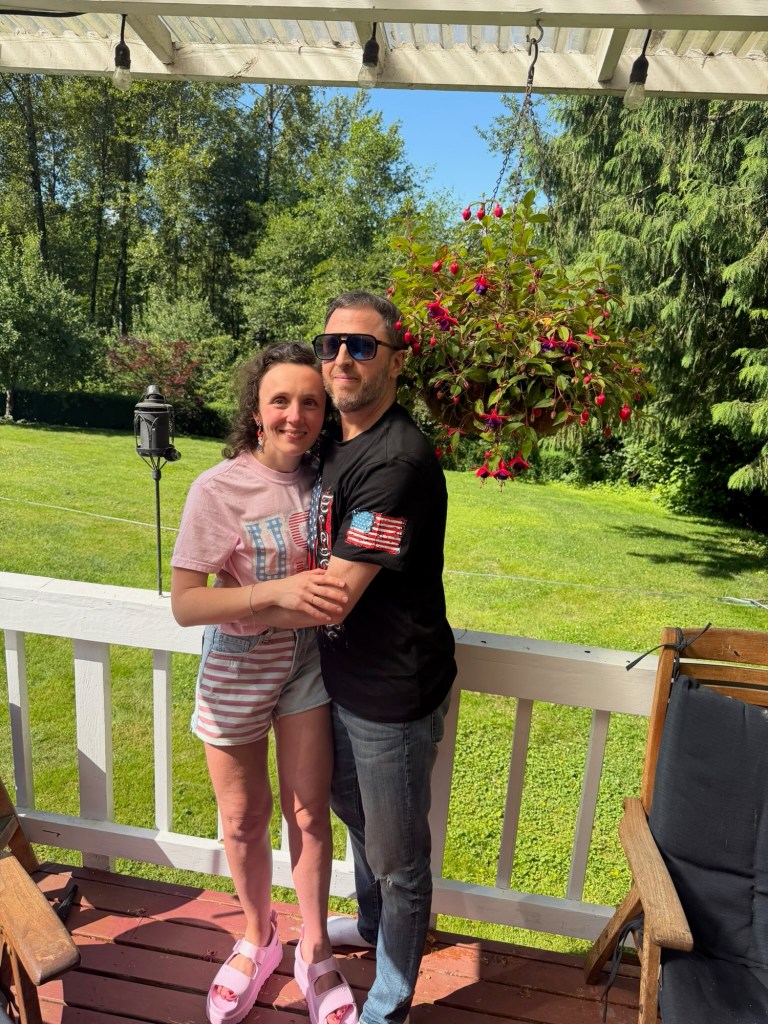
We celebrated this incredible country together—its firework [sounds], its spirit, its messy, beautiful freedom. We soaked up quality family time, the kind that fills your heart and reminds you why roots matter. He even came with me to physical therapy, walking along patiently through the exercises and offering quiet encouragement that meant more than he could ever know. The kind of support I am not really used to.
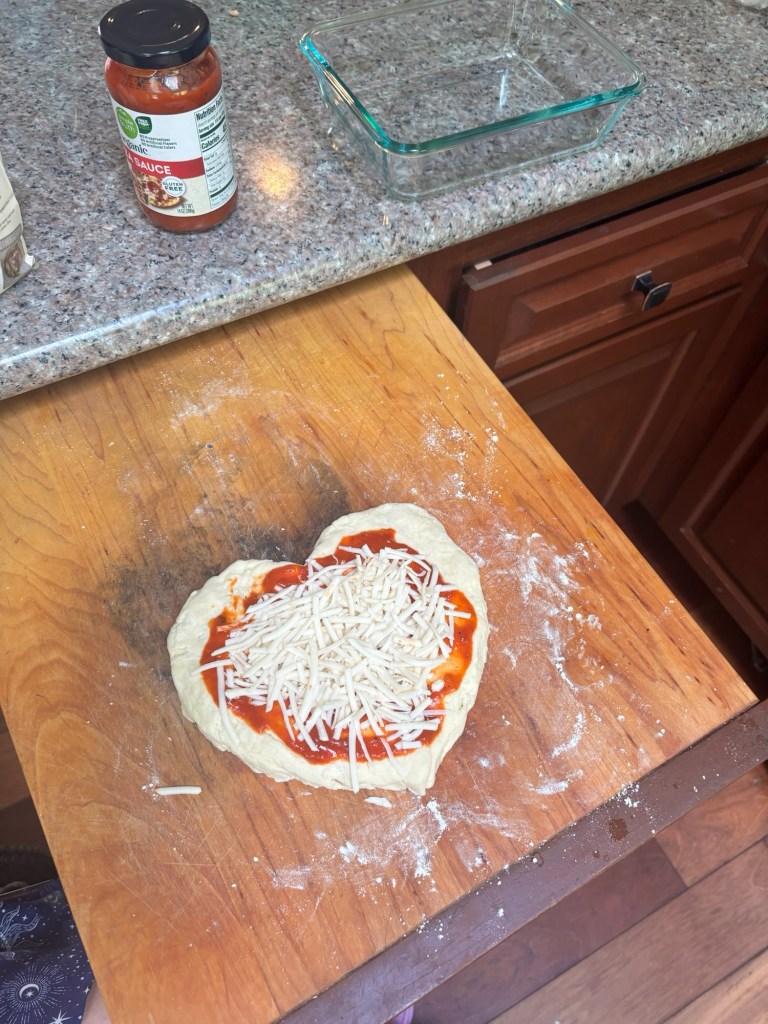
Then, when my parents headed out of town, we got to play house. Just the two of us. I cooked for him multiple times a day, pouring love into every dish, and he made most beautiful heart-shaped pizza —crispy, cheesy, and made with such care that I nearly melted right there in the kitchen. We wandered through Old Town, soaking in the charm of cobblestone streets and golden-hour light. We spent lazy hours cuddling on the couch, talking about everything and nothing, sharing those delicious conversations that make distance feel survivable.
For those precious days, we built a little world that felt like home. Even now, as I sit here missing him, I can still taste the pizza, hear his voice in the quiet, and feel the warmth of his hand in mine.
Long-distance love is hard. The goodbyes sting, the empty spaces ache, and the uncertainty can be heavy. But these visits are proof that what we have is real. They are fuel for the weeks apart. They remind me that even when I am sleeping alone and the house feels too quiet, I am not truly by myself.
I carry him with me—in the memories we made, in the future we are still writing, and in this stubborn, hopeful heart that believes it is all worth it.
Until next month, my love. Come back soon.
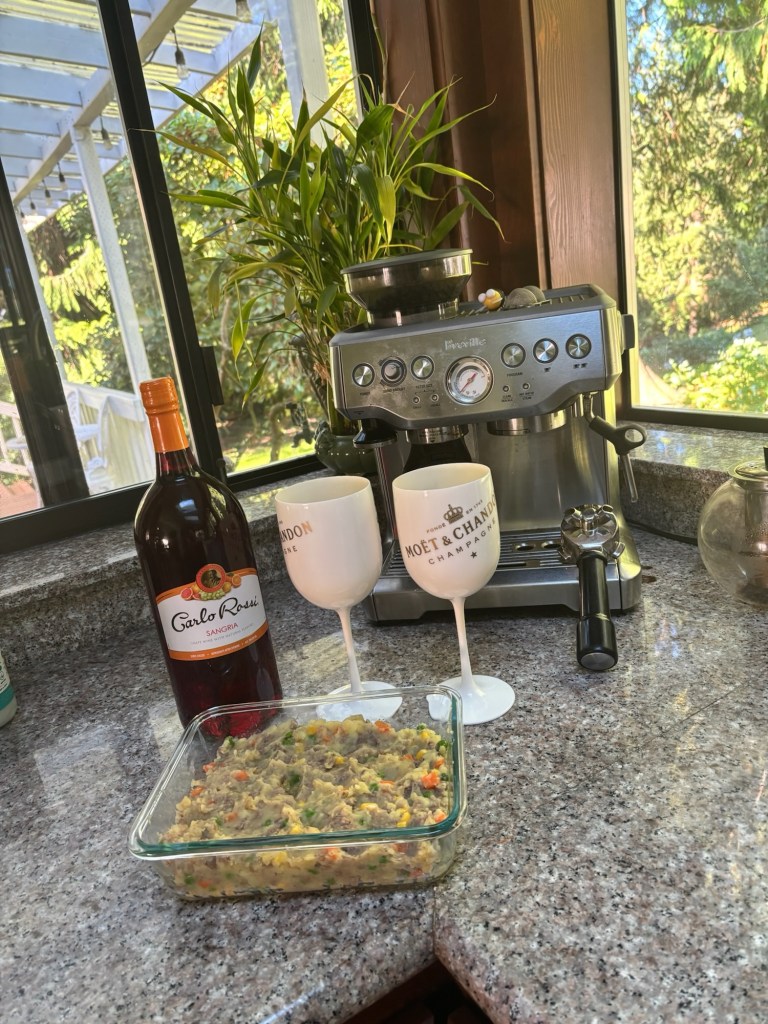
The beautiful heart shaped pizza he made for me My version of Shepherds Pie I made
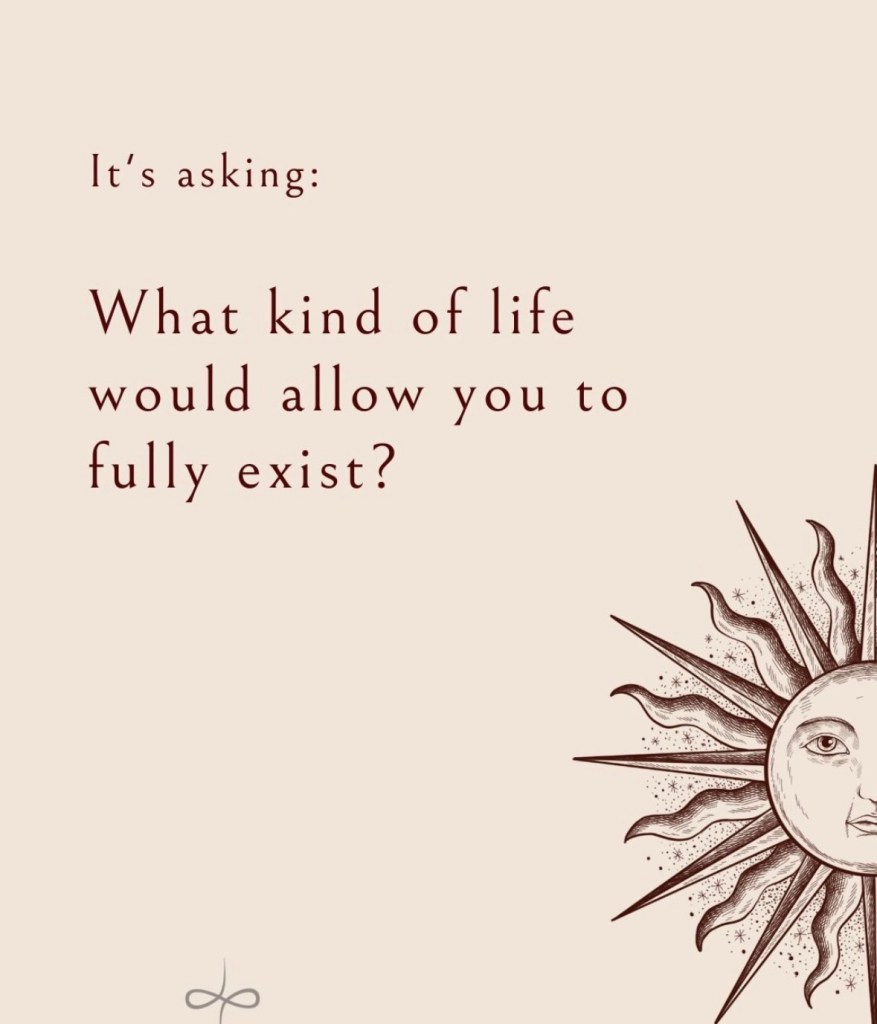
The kind of life that would finally allow me to fully exist is:
• A life with him: there is no such thing as “focus on yourself first” as I have found that being dedicated to the love of my life does so much for me. My soul recognizing its favorite home. Everything I thought I needed to “work on” in isolation suddenly becomes irrelevant because the thing that was actually starving me was the absence of him. This life brings me much more joy and happiness than getting whatever I want delivered to my doorstep etc. Being together physically makes my entire soul let out a giant sigh of relief.
I do not want to be a self-sufficient island. I want to be his. Fully, stupidly, unapologetically his. I want the version of me that only exists when I am pouring into someone who pours back. That version feels more alive than any solo “healed” version I have ever performed.
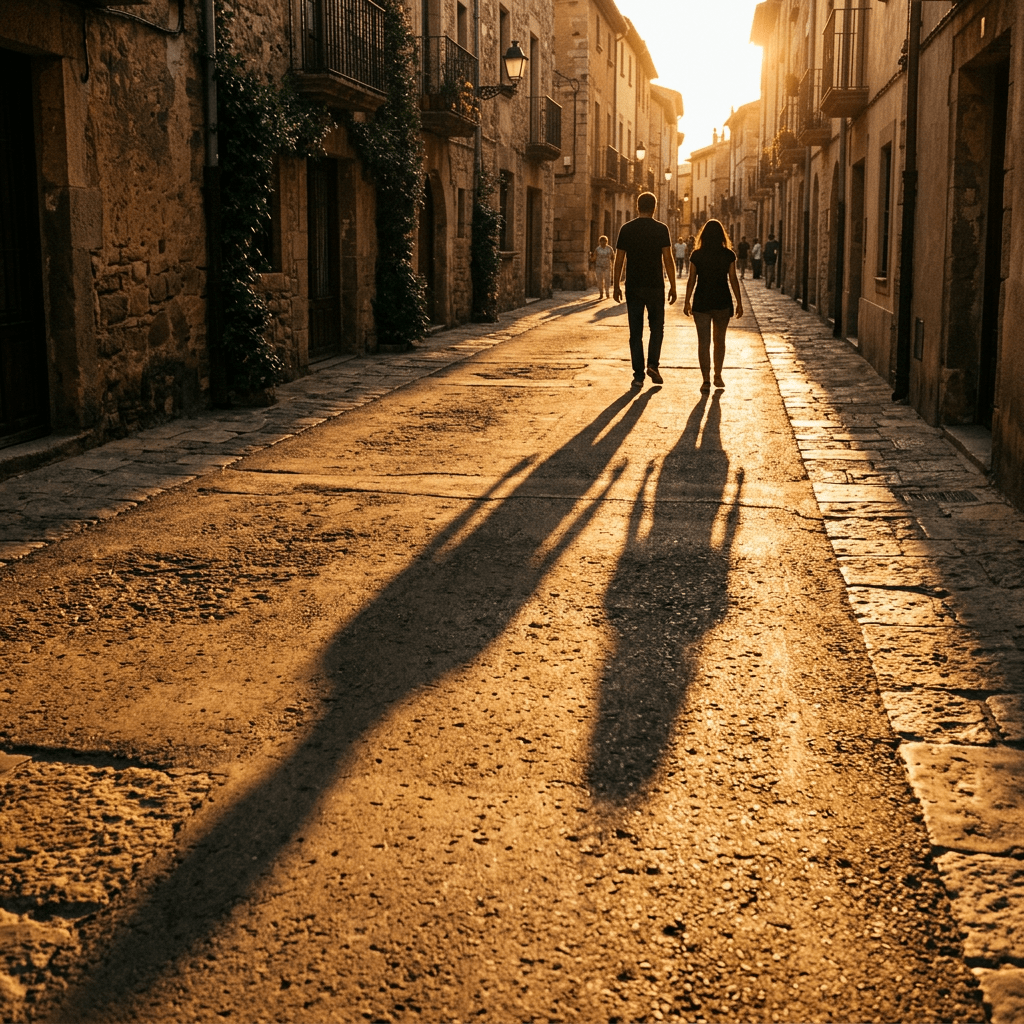
Two people walk down a sunlit old stone street casting long shadows.
• Able- bodied life: And yes, I want the body that can actually meet that life.
All in all, I am not interested in the gentle, realistic, disability-acceptance script everyone tries to hand me like a participation trophy. I do not want to “redefine beauty” or “find new ways to move through the world.” I want my left side to cooperate again. I want to walk for miles without calculating how much pain I am willing to trade for the view. I want to put on a pair of stilettos and feel my hips sway instead of my balance negotiate with gravity. I want to hold his hand on a long hike and not have to pretend the cane is some cute accessory.
Doctors and well-meaning realists can keep their timelines and their “you’ll probably always need…” speeches. The universe is not running a charity. It is not on a budget. If I can imagine my fingers threading through his while we walk through tall grass at golden hour, if I can see myself in the kitchen moving freely, cooking for the man I chose, then that version is already on its way. I am not manifesting from a place of lack. I am remembering forward. My arms will work. My balance will hold. I will be the woman who can be a proper wife to him without negotiating with my own nervous system every time I stand up.
• Warm and sunny life: There is something about the amount of dopamine and serotonin I get from the sunshine. Plus I am forever freezing so I would rather survive somewhere naturally warm than have my man pump in synthetic heat for the majority of the year. I want mornings where the light pours through the windows onto our bed and neither of us has to reach for a sweater.
• Unemployed life:while I do love writing ; let it be my own little hobby. I refuse to let my words turn into another job that pulls me away from him. In order to fully dedicate myself to my man, I will not to answer to anyone else/ have any stress or anxiety running through my veins. Girls are meant to live easy and whimsy little lives. I want to be the woman who makes his house feel like home instead of the woman who comes home exhausted and has nothing left to give.
• Childless life: I am an incredibly selfish person and I know that I will always put me and my man first. Unfortunately I know what it is like to be completely ignored/ neglected by a parent and I will never wish that kind of pain and suffering upon a child, but I know that my personality is to do just that.
So no kids. Not as some enlightened childfree flex. Just as the only honest choice I can make. Better an empty house than a child who grows up feeling like an afterthought.
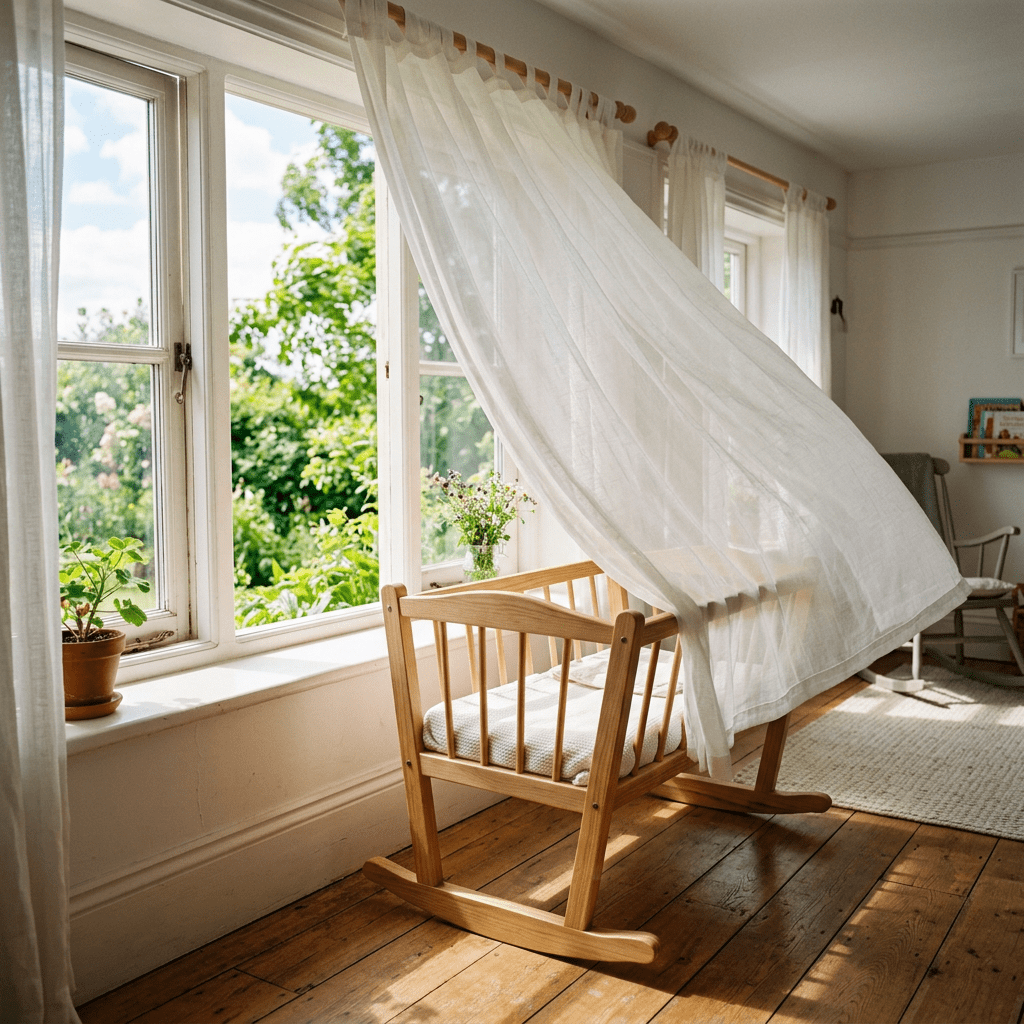
A cozy wooden rocking cradle sits by a bright window with sheer curtains flowing in the breeze. Empty cradle= freedom (for me personally)
This is the life that would finally let me exist instead of survive.
Him. Walks. Sunshine that actually warms me. No boss, no inbox, no tiny humans I would inevitably fail. Just the two of us in a warm house where my body works, my soul is quiet, and I get to pour every single drop of myself into the only thing that has ever made the noise stop.
Call it codependent. Call it regressive. Call it whatever makes you feel better about the life you settled for.
I am not settling anymore. I am asking for the whole thing. And I am not ashamed of how badly I want it.
I love the Summer time— and I really love celebrating. Summer solstice is my ideal. It is finally here — the longest day of the year, the sun’s victory lap, and the official middle finger to cold, dark, depressive days. My favorite goal for me and my man is to be out here treating it like the whimsical rave it was always meant to be.
In ancient history, midsummer (the celebration of the summer season) was dedicated to Pagan gods, fertility, crops etc. but I do not see why we should not be celebrating the solstice in the religious sense (thanking God’s/the Universe’s creation).
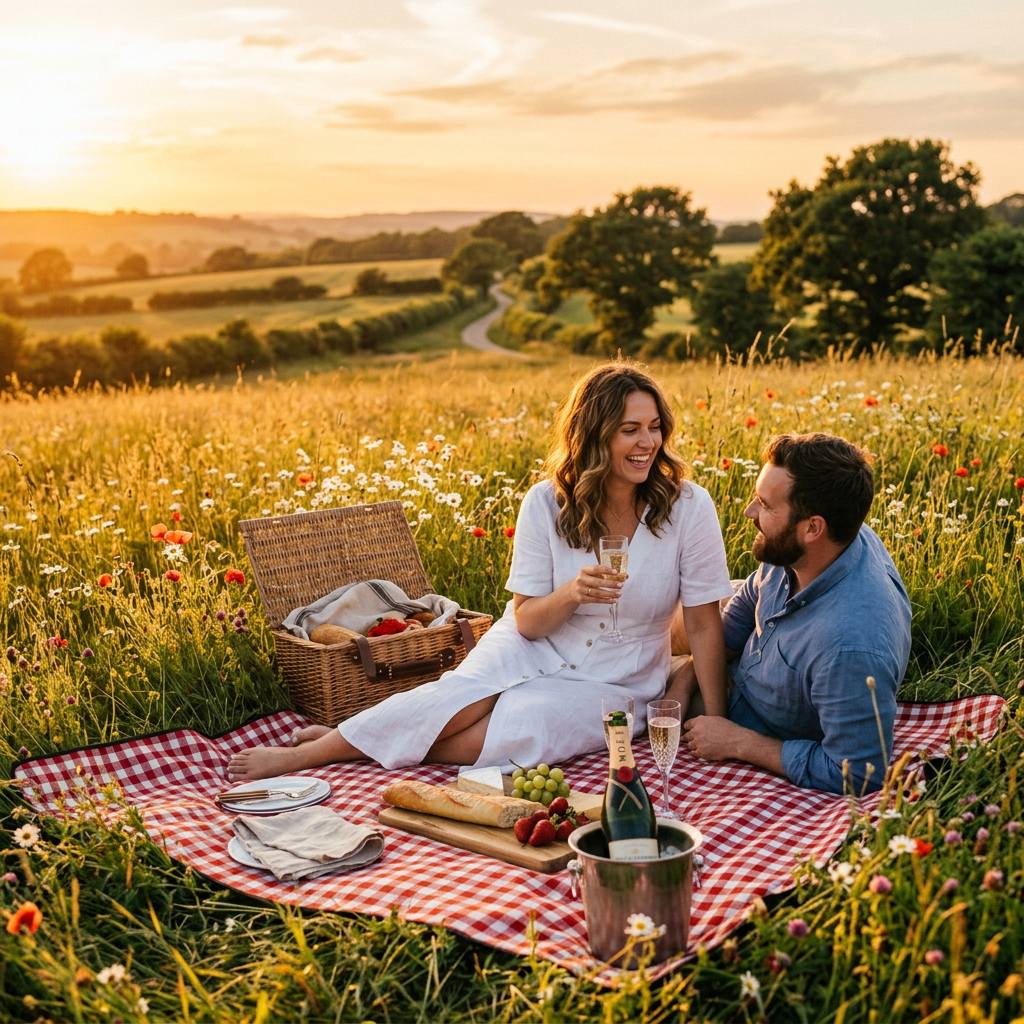
I am talking quiet little picnics with iced drinks and polite conversation. I also want bonfires that scare the neighbors. I want to stay up until the sky finally gives up and turns dark (which, thanks to the solstice, feels like never). I want to chase the last rays of sunlight. Because this is the one day the universe hands us maximum daylight and says, “Go be reckless, animals.”
A couple enjoys a sunset picnic in a vibrant wildflower meadow
Ancient cultures got it right. They lit massive fires, danced until they dropped, mated in the fields, and basically celebrated the sun. Modern life turned it into “wear white linen and drink rosé on a rooftop.” Cute. But weak. I am here for the chaos edition.
We start at sunrise like lunatics who respect the assignment. (Iced) coffee, loud music, minimal clothing. We drag ourselves outside because the sun is literally showing off and we are not wasting a single golden hour. Then it is beach, lake, rooftop, forest — anywhere the light hits hardest.
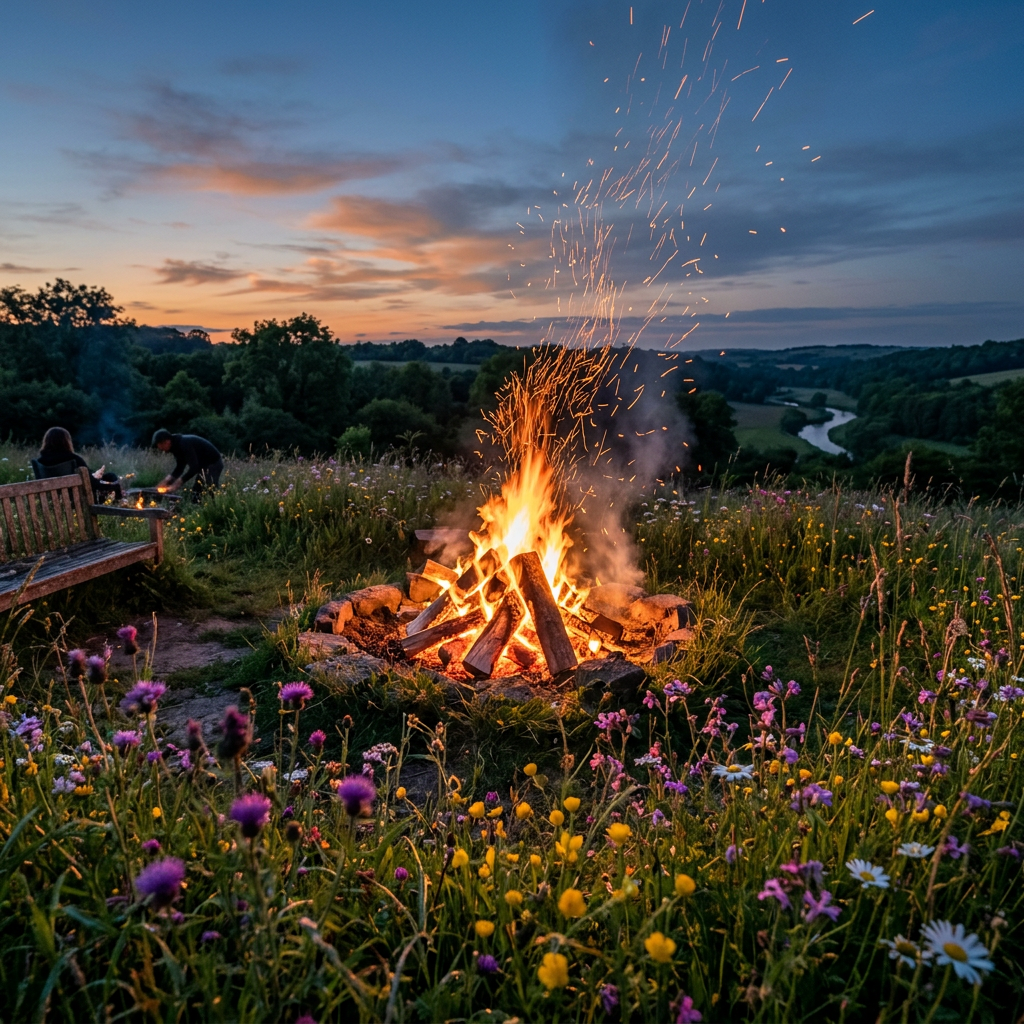
A glowing bonfire lights up a colorful meadow at dusk with people nearby
We eat: grilled everything, fresh fruit that drips down your arm, cold wine or champagne because yes, we are always on that bottle-a-night agenda.
At night? Bonfire mandatory. Even if it is a little fire pit in the backyard, I want my Americana s’more snack. Throw in some herbs, some music that makes your ancestors proud, and dance like the veil between worlds is thin (because on solstice it kinda is). Light sparklers. Howl at the sky. Jump over the flames if you are brave enough. Make out like teenagers because the sun blessed the whole day (and season).
Life is mostly gray office lighting and existential dread. The summer solstice is one of the few times the planet throws us a proper party. The sun is at its strongest, the earth is fertile, and everything feels electric. Do not spend it folding laundry or doing the mundane.
Get outside. Get loud. Get a little unhinged. Burn something. Fuck someone. Worship the light while it lasts because in six months we will be back in the void, writing about seasonal depression.
This is our peak. Our longest day. Our reminder that even in this clown timeline, the sun still shows up and cooks the planet just to watch us thrive.
So celebrate like you mean it.
Strip down. Heat up. Light it up.
Happy solstice (I am waiting to properly celebrate with him).
See you at the bonfire. Bring champagne.
A radiant sun surrounded by glowing floral motifs in a cosmic background