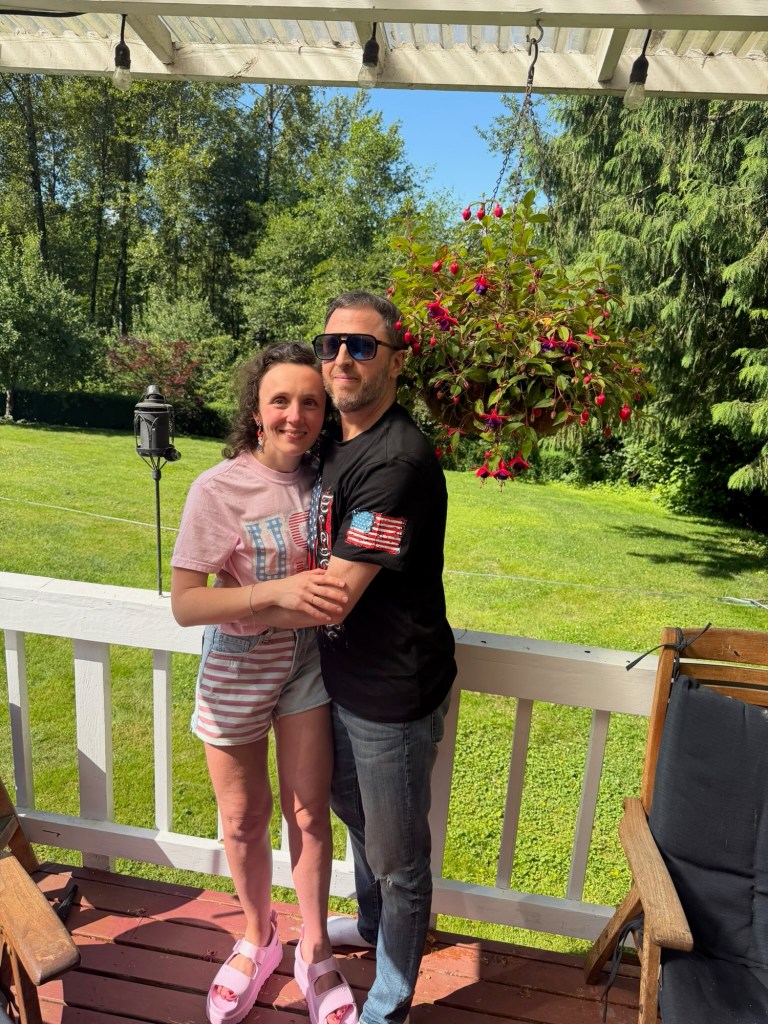
I spent the entire weekend alone—rotting on my chair while my boyfriend was up in Maine. Laptop open, Bridgerton on, snacks within reach, and almost no intention of moving. It was the kind of low-effort weekend that feels indulgent precisely because nothing productive happens.
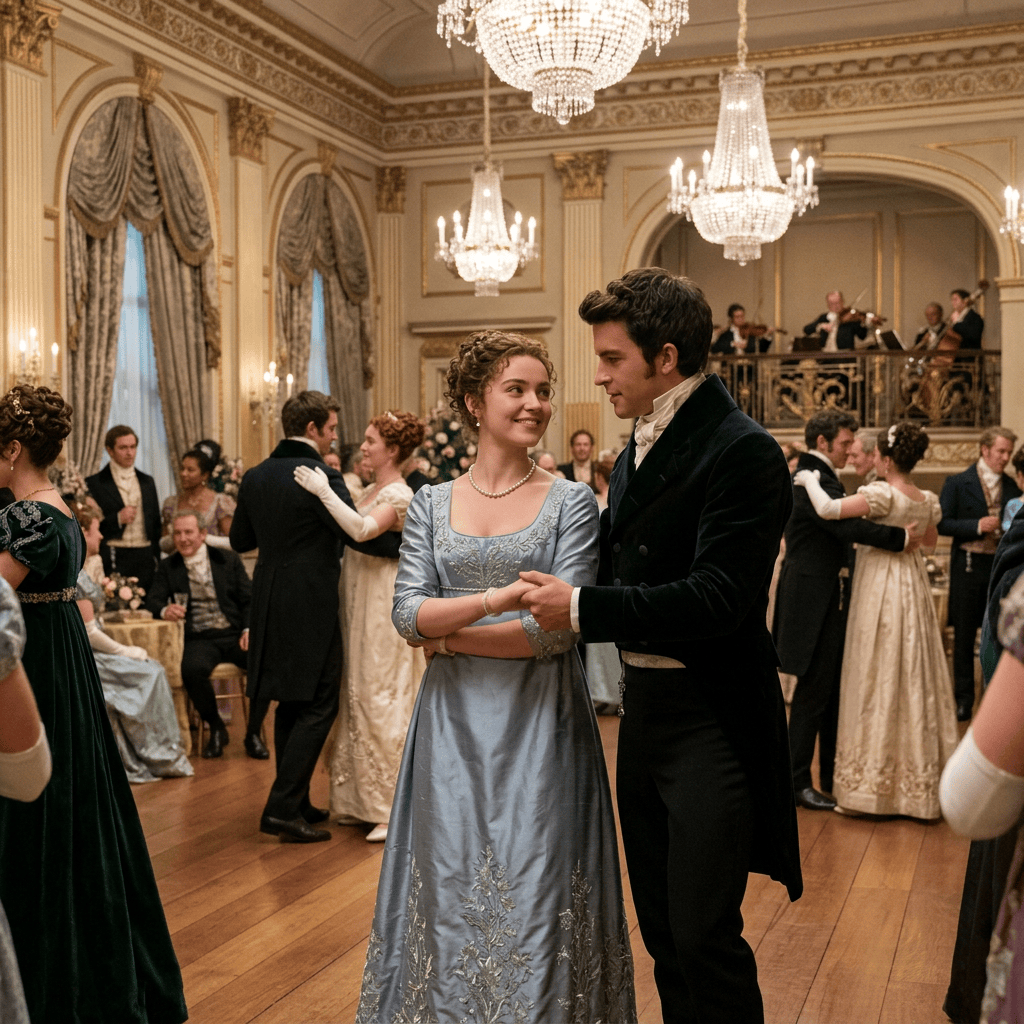
A young couple shares an elegant dance at a lavish Regency-era ballroom.
What pulled me in was the surface of the thing. The show sells an upscale world of ladies and gentlemen, drawing rooms, formal calls, gossip columns, and carefully managed reputations. I like that register. The costumes, the houses, the rules of the marriage market, the idea that desire has to move through manners—that is the lifestyle fantasy I actually wanted. Season 1, centered on Daphne Bridgerton and the Duke of Hastings, delivered the version of it I came for: a rake with a reputation, a debutante who is sharper than she looks, and a romance that spends a long time circling the tension before it pays off. That was the sexiest of the storylines to me, and the one I stayed for.
An open wooden door reveals a warmly lit sequence of rooms in an aged interior.
The rest of the framing was harder to ignore. The series is a Shonda Rhimes production, and it is very woke in the specific way her projects tend to be. The most obvious example is the decision to depict Black characters as royalty and members of the highest aristocracy in a Regency setting, without treating that as a departure from history or even as something the story needs to explain. The show wants the balls, the titles, the inheritance plots, and the social season, but it also wants a modern casting ideology laid over them. Even though the blacks were more likely slaves in the 1800s. Once you notice it, it sits on top of every scene. I was not looking for a lecture about representation inside a costume drama;I was looking for the rake and the love story.
That is also why I am not continuing. Each season shifts to a different Bridgerton sibling and a new central romance. The Duke’s arc was the one that held my attention, and once it resolved I had no particular reason to stay for the next set of characters. The aesthetic is still pretty, the snacks were still there, and the weekend still passed. Like in life,I do not need another season of the same world once the part I actually wanted is over.
If you could relive one year of your life, which one would it be?
The year I would relive has not happened yet.
An open window reveals a moonlit valley while a cozy chair invites quiet reading.
I keep turning that sentence over in my hand like a stone I found on the beach. Smooth. Heavy. A little warm from being held too long. Most people, when asked which year they would live again, reach backward. The summer they were twenty-two. The winter everything still felt possible. The year before the diagnosis, or the accident, or the slow unfolding of whatever it was that rearranged their life. I understand the impulse. I have my own catalog of almosts and if-onlys. There always seems to be something I would like to change.
I would never do it though.
Glowing coral and gold lines converge across a moody blue textured background, evoking movement and inspiration.
I say that with the same half-superstitious firmness I use when I knock on wood. Everything happens for a reason. I have repeated the phrase so many times it has worn a groove in me. Some days it feels like wisdom. Other days it feels like a lullaby I repeat so I will not scream. Both can be true at once. The body learns to live with contradictions the way it learns to live with weather.
Still, I froth at the mouth when I envision my future.
A vintage chair rests beside an open window as sheer curtains drift in the sunlight.
Not the glittering, cinematic future. Not the one with applause or sudden wealth or a body that has never known limitation. Just a simple little life. Ordinary in the way sunlight on a kitchen table is ordinary, which is to say: almost unbearable in its tenderness if you look at it long enough.
With him.
The sentence does not need embroidery. With him. The two words sit in the center of the picture like a house with the lights already on. I see the unremarkable days first: grocery lists, the sound of an espresso machine, the particular way someone who loves you says your name when they are only half awake. I see the quieter victories. Getting through a morning without bargaining with pain. Walking a little farther than last month. Laughing at something stupid and not having to pay for it later with exhaustion. A life that does not constantly announce itself as a project of endurance.
And without disability.
A luminous winding path flows through a dreamlike blue landscape toward the rising sun.
I write that last part carefully, because I know how it can sound. I mean the specific, private longing for a version of days that do not require so much translation. Days in which my body is not a burden Days in which the body is not the first negotiation. Days in which “simple” is actually simple.
I froth at the mouth thinking about it. The phrase is ugly and exact. Anticipation that is almost feral. Hope that has teeth. I am not serene about the future. I am hungry for it.
An open journal and fresh coffee create a peaceful, sunlit writing retreat.
The paradox is that I would not go back and unscrew the past to get there. I would not trade the particular chain of hours that led me to this exact now, even the hours that hurt. Everything happens for a reason is, in my mouth, less a philosophy than a truce. I will not pretend the suffering was decorative. I will also not pretend it was meaningless. Meaning is something we make afterward, with whatever materials we have left.
So the year I would relive is still ahead of me. It has no date yet. It might look, from the outside, almost dull. A rented apartment or a small house. A person I already know how to love. Mornings that do not begin with inventory. Evenings that end without calculation. The ordinary miracle of a body that cooperates more often than it argues.
I want that year so badly I can taste metal.
A winding path leads through a flower-filled meadow toward a glowing sunrise.
And if it arrives, I will not spend it wishing I were somewhere else. I will try to live it the first time the way people live the years they later want back: imperfectly, gratefully, with both hands.
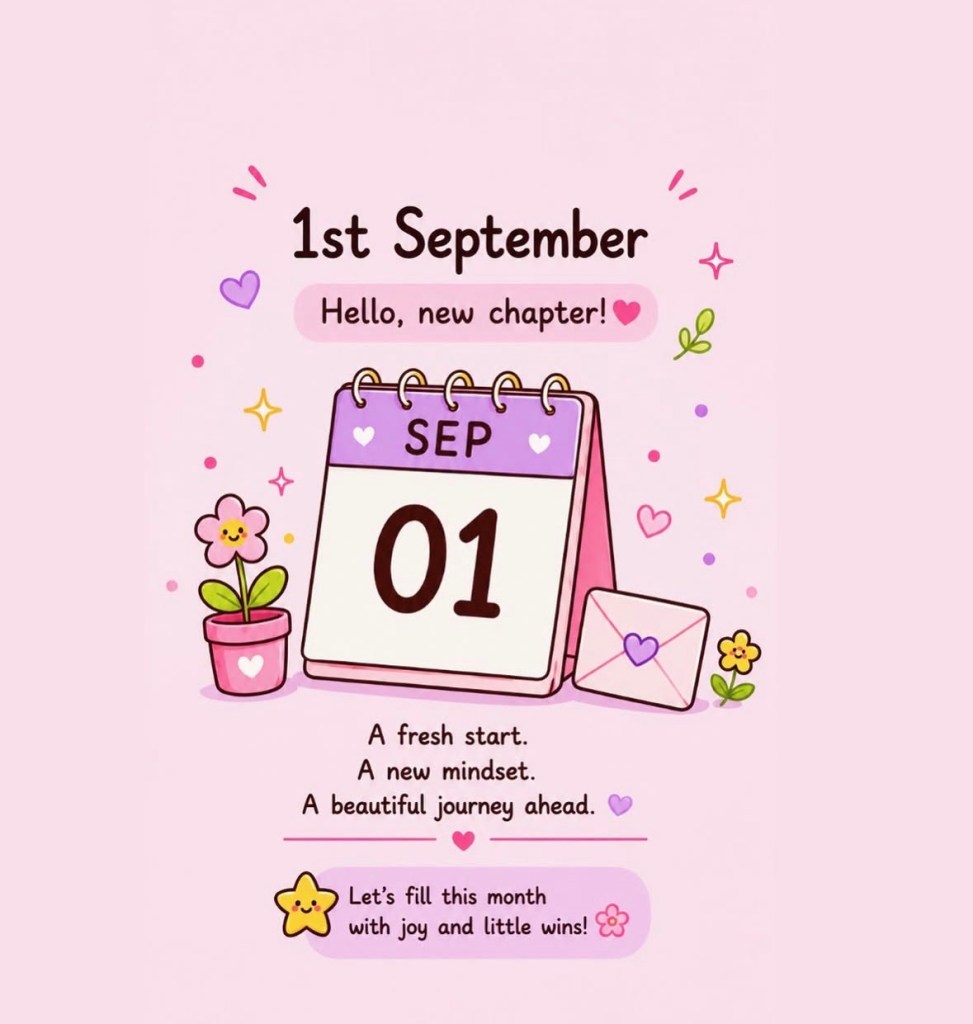
September is here. The calendar has flipped, the light is shifting, and the year has entered its most transitional stretch: still warm in many places, already carrying the first hints of autumn in others.
A new month is a clean page. It is also a reminder that most of what we actually do with time is continue the conversations we were already having. If we have been talking about routines, projects, travel, food, or how to start something again, September is a useful month to pick those threads back up instead of pretending we are starting from zero.
Labor Day weekend in the United States and Canada marks the unofficial close of summer. Schools reopen. The autumnal equinox arrives around the 22nd or 23rd, when day and night briefly balance. Around the world there are observances for literacy, peace, the ozone layer, and tourism. None of these dates require you to reinvent yourself. They simply give the month a rhythm.
A sunlit stone path winds through lush grasses, flowers, and colorful autumn foliage.
The useful move is usually modest. Finish the half-done thing you mentioned last time you asked how to get unstuck. Try the recipe or the itinerary you were weighing. Adjust the schedule you were already trying to make work. September rewards continuation more than spectacle.
The days are still long enough to use. The evenings are starting to feel different as now when I get outside to write, my body covers itself in goose pimples. That is enough of a reason to treat the month as an invitation rather than a demand.
Welcome to September. Let’s keep going with whatever we were already working on.
What’s the weirdest coincidence you’ve ever experienced?
The Universe Doesn’t Whisper Twice
I do not believe in coincidences. Not the small ones that make you smile and shrug, and not the large ones that rearrange your life. If something is meant to happen, it will happen. It will find the crack in the schedule, the delayed train, the wrong turn that somehow becomes the right street. It will arrive wearing the face of chance so that those who need to dismiss it can do so without discomfort. I have stopped dismissing it.
Everything is a sign from the universe. Not in the loud, cinematic way people imagine when they talk about destiny. There is no booming voice, no sky writing, no sudden spotlight. It is quieter than that. A whisper. A particular song playing at a particular moment. A sentence overheard in a café that answers a question you have not yet asked out loud. A person appearing in your path with the exact piece of information, or the exact kindness, or the exact friction you needed. Most people walk past these things. They call them random. They keep their eyes on the ground and their minds on the next task. The whisper is easy to miss when you have already decided the world is only noise.
I used to miss it too. I treated life like a series of isolated events that happened to me rather than through me. Something fell through and I called it bad luck. A conversation ended abruptly and I called it timing. Even my brain injury somehow managed to lead me to my twin flame. I could just shrug it off and say that my brain blew up because of a bad diet, stress, bad luck, a body that finally called in a debt I had been ignoring. That version of the story is tidy. It keeps the event inside the realm of cause and effect I can name. It lets me treat the injury as an accident that interrupted my life instead of a rupture that redirected it. But if I tell it that way, I erase the chain that followed. I would never have found myself scrolling my life away in the aftermath, half-present, half-searching, desperate for a face or a voice that felt like home. I would never have been cracked open enough to look that hard. I would never have been still enough, or raw enough, or lonely enough in the particular way that made recognition possible when it finally arrived.
Dried leaves, dark berries, and fine threads create a moody autumn-inspired still life.
The injury did not feel like a gift when it happened. It felt like theft. It took language, stamina, certainty, the old version of myself that knew how to move through a day without having to invent the day from scratch. And still, something in that wreckage made a path. Not because suffering is noble. Not because pain is always a teacher we should thank on the spot. Because the life I had been living was not going to bring me to that person. The uninjured version of me was too occupied, too armored, too convinced she already knew the shape of her story. The universe did not cause the injury so that a romance could bloom. I do not need the story to be that clean. What I know is simpler and stranger: the injury happened, the searching began, and the person who felt like a missing frequency appeared inside that searching. To call the whole sequence a coincidence would require me to pretend the seeking never mattered.
The more I paid attention, the more the pattern revealed itself. Not a rigid script. Not a promise that every desire will be granted or every wound will be explained. Something subtler: a conversation between the inner life and the outer world. When I am restless, the universe sends restlessness back to me in the form of unexpected delays and unfinished conversations, as if to say, sit with this. When I am ready to move, doors that were locked for months swing open with almost embarrassing ease. People I needed to meet appear in places I had no logical reason to be. Opportunities arrive wearing the clothes of inconvenience. Losses arrive wearing the clothes of protection I only recognize later.
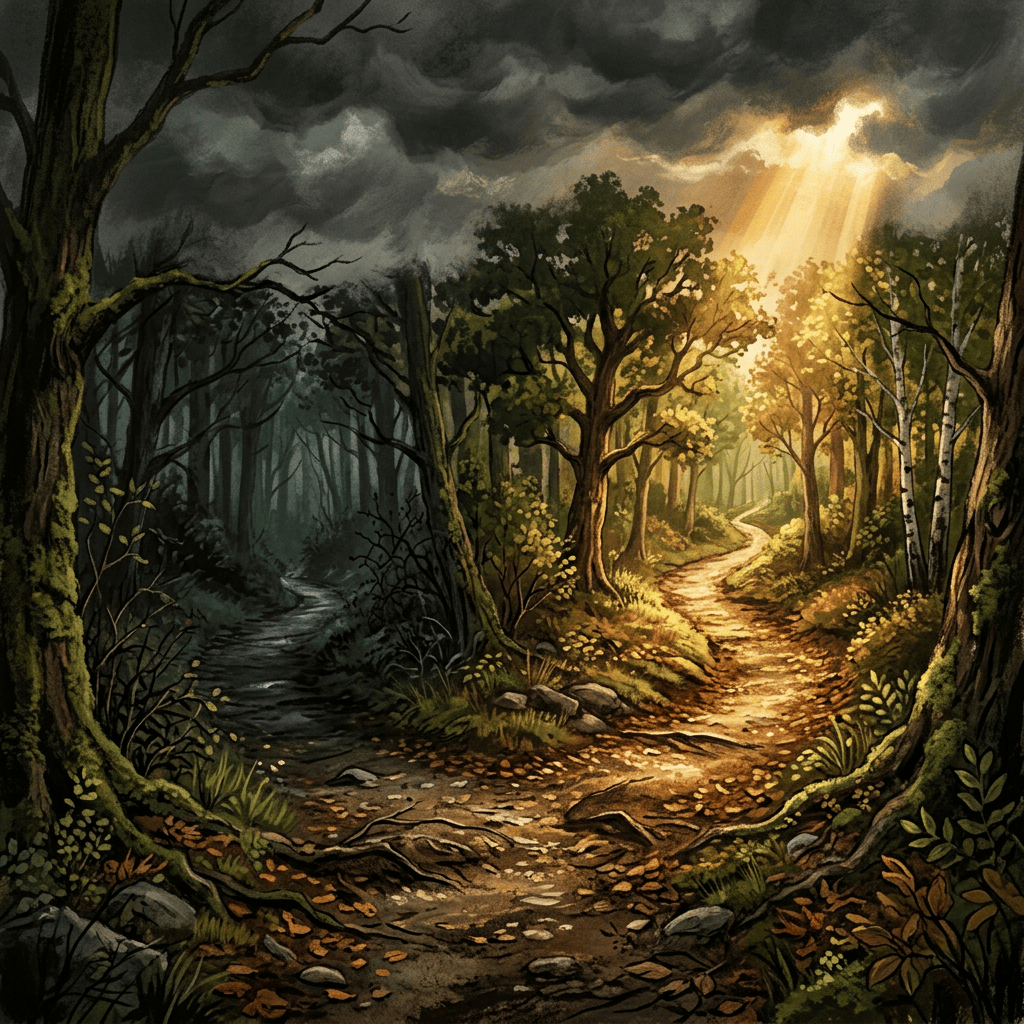
A winding woodland trail emerges from shadow as golden sunlight breaks through stormy clouds.
It is easy to romanticize this and turn it into a slogan. “Trust the universe.” “Everything happens for a reason.” Those phrases can become another way to avoid looking closely. I am not interested in comfort slogans. I am interested in the texture of the moments themselves. The way a certain light falls across a room at the exact second a decision crystallizes. The way a stranger’s offhand comment lodges in the mind and will not leave until you act on it. The way the same number (17,27,37), the same image, the same phrase keeps appearing until you finally stop and ask what it is pointing toward.
Many people fail to notice because noticing requires a kind of stillness that modern life does not reward. We are trained to explain things away. Coincidence is a tidy category. It lets us keep our sense of control. If the meeting was random, then we remain the authors of our story. If the meeting was a sign, then something larger is participating, and that is both comforting and unsettling. It means we are not as separate as we pretend. It means the world is speaking, and we have been talking over it.
I have learned to treat the whisper with more respect. Not superstition. Not the desperate search for meaning in every fallen leaf. A quieter discipline: when something repeats, I listen. When an opportunity arrives wrapped in inconvenience, I consider whether the inconvenience is the point. When a person crosses my path more than once without an obvious reason, I stop assuming it is nothing. Sometimes it is nothing. Sometimes the universe is simply dense with possibility and not every thread is meant for me. Discernment still matters. But I no longer start from the assumption that the thread is accidental.
If something is meant to happen, it will happen. That sentence used to sound passive to me, as if I could sit still and wait for life to deliver itself. I still kind of hate it when my boyfriend approaches our relationship path this way. But it is not an excuse for inaction. It is a recognition that timing has its own intelligence. Effort still matters. Showing up still matters. Doing the work still matters. But the work is not only the visible kind. There is also the work of becoming the kind of person who can recognize the sign when it arrives, and the kind of person who can act on it without needing the entire map first.
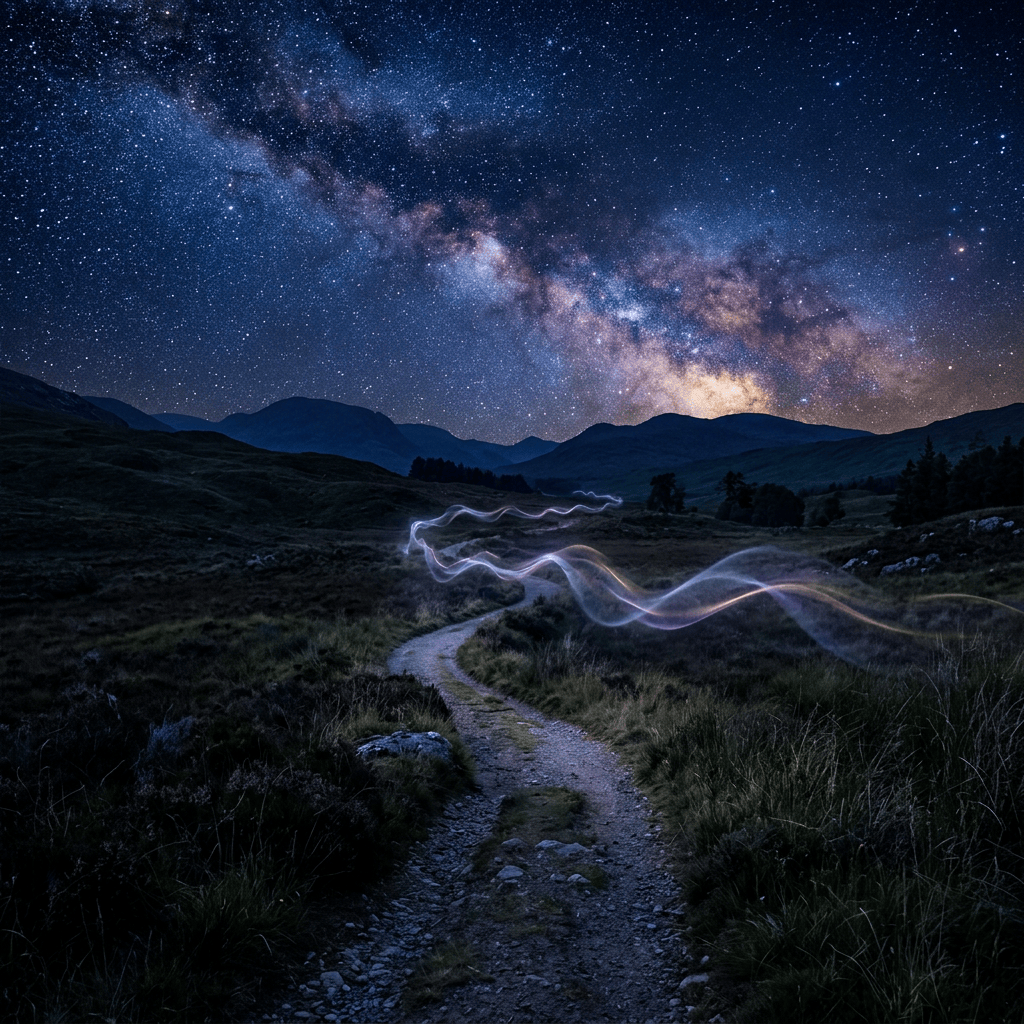
The Milky Way glows above a mountain trail traced by flowing light trails.
The universe does not shout. It does not compete with the noise we generate. It waits. It repeats itself politely. It leaves small, persistent traces for those willing to look up from their phones and their plans and their certainty that they already know how the story is supposed to go. Most people will keep walking. That is their right. I have decided I would rather not miss the whisper again.
It has been speaking the whole time. I was simply too busy calling it coincidence.
I have finally accepted the unsexy truth that every travel brochure, Instagram reel, and mid-century movie tried to hide: the place itself is mostly irrelevant. It can be a five-star suite overlooking the Mediterranean or a shitty hotel. What actually registers is whether the person you love is standing next to you when you go through the door.
A couple shares a warm embrace atop cliffs overlooking a glowing sunset over the ocean.
I love traveling with my man. Even just staying in hotels in our own hometowns. Not the soft, pastel version of “love” that sells couples’ retreats. The real kind—where any new experience becomes sharper because he is there. New food, new streets, new chaos. I watch his face light up when something unexpected hits, and that look alone makes the entire trip worth it. The destination can be mediocre; his excitement is not. It is the only metric that still works.
But safety has to sit at the table now. I want to show him pieces of France—the France that still lives in my head from old Audrey Hepburn films, all cigarette smoke, black dresses, and effortless glamour. That version is mostly gone. It is all homeless immigrants now. What is left is more complicated, more tense, and less willing to play along with the fantasy. The French Riviera still holds the top spot in my ranking, mostly out of stubborn nostalgia and residual beauty, (plus lounging pool/ beach side so that we can look sexy in our swimsuits trumps all), but even there the calculus has changed. You do not get to pretend the old postcard still exists without checking the fine print.
Cabo 2025
There is the part I hate admitting out loud: my own body and the limits it brings. Accessibility is not a buzzword when you are the one calculating elevators, distances, fatigue, and whether a charming cobblestone street or sandy beach is about to become a personal obstacle course. I refuse to turn into the logistical problem of the trip. I do not want him carrying extra weight—literal or emotional—because I insisted on a destination that looks better in photographs than it functions in real life. Being a burden is not romantic. It is just exhausting for everyone involved.
Coffee and travel essentials set on a rustic table overlooking alpine mountains
So the plan keeps getting rewritten. Fewer grand gestures, more honest ones. Fewer places chosen for their reputation, more chosen for the simple fact that we can actually move through them without one of us pretending everything is fine. The map still matters a little. The company matters a lot more. And the quiet calculation of “can we both enjoy this without someone suffering in silence” matters most of all.
I will still go almost anywhere with him. I just will not pretend the world is the same postcard it used to be, or that my body is an afterthought. The excitement in his eyes is still worth the ticket [that he buys]. Everything else has to earn its place.
Maybe we could travel by luxury cruise ship? The idea of experiencing the French Riviera, island-hopping in the Maldives, exploring Italy, and even discovering parts of our own country—Alaska, Hawaii, South Carolina, and Florida, where no cruise is needed—excites me more than anything.
The Ocean Embrace cruise ship sails near a scenic coastline during sunset.
My boyfriend brought it up one quiet evening, the way he sometimes floats wild ideas when the lights feel too bright and the notifications keep buzzing. “What if we just… disappeared for a year?” he said. “A real cabin. Middle of nowhere. No Wi-Fi. No neighbors. Just us and the trees.”
I laughed at first. Then I stopped.
Because the longer I sat with the thought, the more it stopped feeling like a fantasy and started feeling like an answer to questions I didn’t even know I was asking.
The best part? We would have each other — uninterrupted.
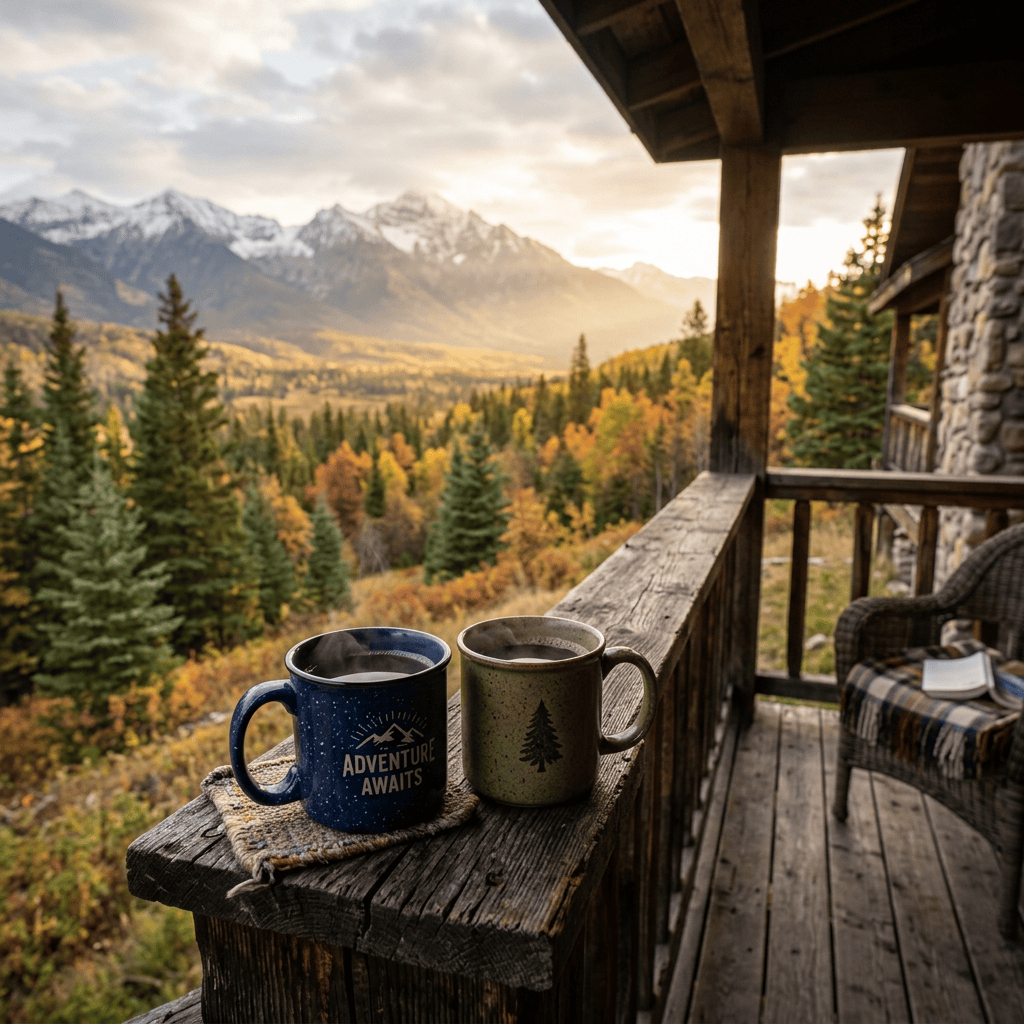
Two steaming mugs sit on a cabin railing overlooking autumn mountains
We are already a little obsessed with each other(in the healthiest, most affectionate way). We can spend entire weekends wrapped up in each other and still want more. A year in the woods would be quality time on steroids. Morning coffee on the porch, maybe even long hikes, and definitely nights by the fire reading aloud or playing cards. We could have the deep conversations we always say we will get to “when things slow down.”
But I am not naive. I worry about him.
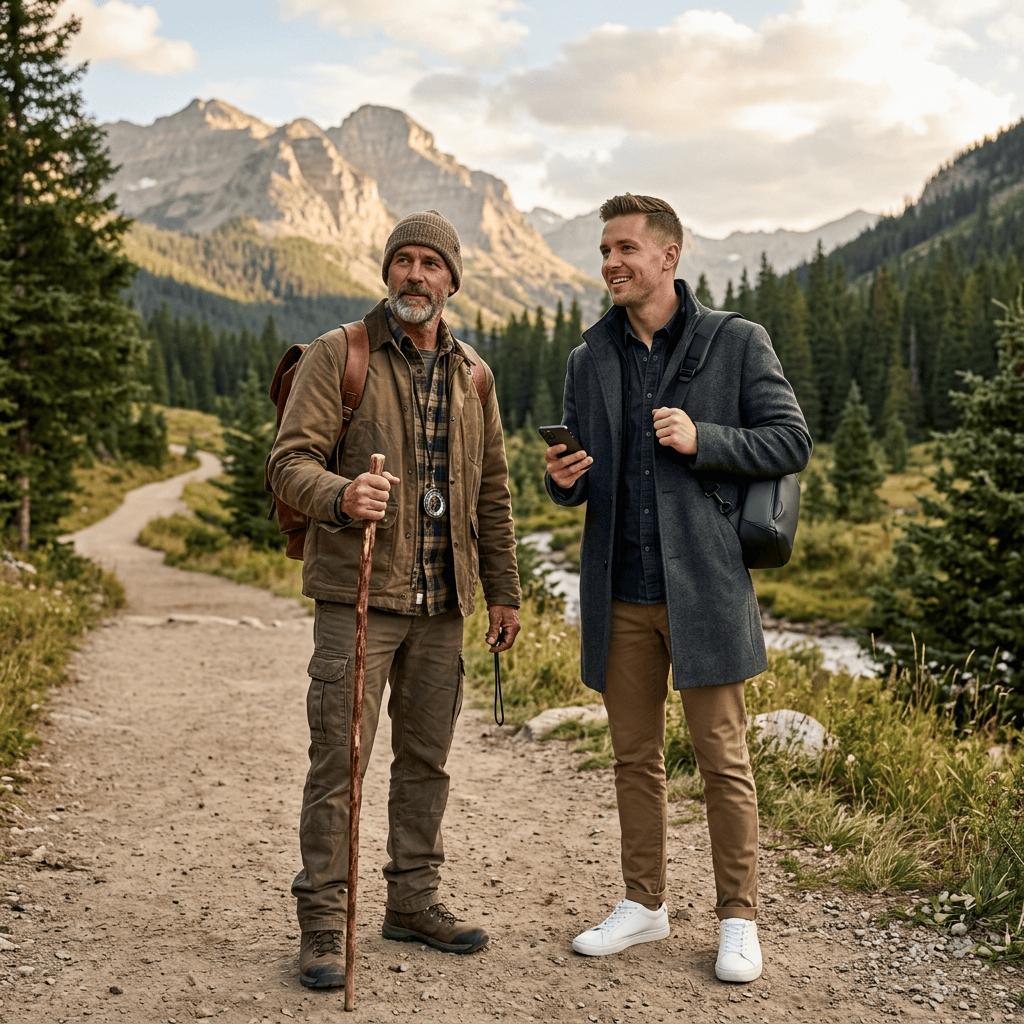
Two different types of men enjoy a hike together on a mountain trail surrounded by trees and rocky peaks.
My man loves his sports with a passion that rivals my own. He thrives on the instant gratification of modern life — one-click ordering whatever we need, same-day delivery, the dopamine hit of new gadgets or screens. Could he trade Sunday football for splitting logs and checking trap lines? Would the quiet eventually feel like peace… or punishment?
We would need to be honest with ourselves. He would have to become the hunter, the protector, the one who keeps our little haven safe and supplied. I would handle the hearth — cooking, preserving, nesting. Traditional roles. If we can align on that vision, I think we could thrive.
Imagine waking up and the only sound is wind moving through pine needles or the distant call of a bird you cannot name yet. No breaking news. No endless scroll of other people’s highlight reels. No pressure to know what everyone is mad about this week or who won last night’s game.
I have been a die-hard Boston sports fan for many years now. The kind who listens to sports radio before I even get out of bed. But that constant checking, that emotional investment in games I have zero control over, is just another form of distraction. A socially acceptable one, sure—but still a distraction from my actual life. I need to start walking. I need to learn how to take care of my man.
For one year, I would give it up. All of it. The news, the scores, the Instagram stories. I would let the world keep spinning without my commentary. And I have a feeling the world would be just fine.
The part that keeps pulling me back to this idea is what we would gain in exchange.
With nothing else competing for my attention, I could give my entire heart and soul to the person I love. Not the distracted, half-present version of me that exists between blog research and doom-scrolling. The real version.
I picture slow mornings making coffee on a wood stove. Long afternoons where “housewife duties” stop feeling like chores and start feeling like care—chopping vegetables we foraged or grew, mending clothes by hand (or learning how), keeping a fire going so the cabin stays warm when the snow comes. I want to learn how to do these things well. Not because I have to prove anything to anyone else, but because I want to become someone who can take care of our little world completely.
No grocery deliveries. No DoorDash. No running to the store because we forgot milk. We would have to plan, preserve, forage, hunt (or at least learn how). The learning curve would be steep. I know that. Right now I am not exactly the type to “prance through the woods” with confidence. I can barely stand. I get cold easily. I have never skinned anything in my life.
But here is what I keep coming back to: right now I have every possible distraction in the world, and I still feel scattered. What would happen if every single distraction was removed? What kind of person would I become with 365 days of focused, deliberate living?
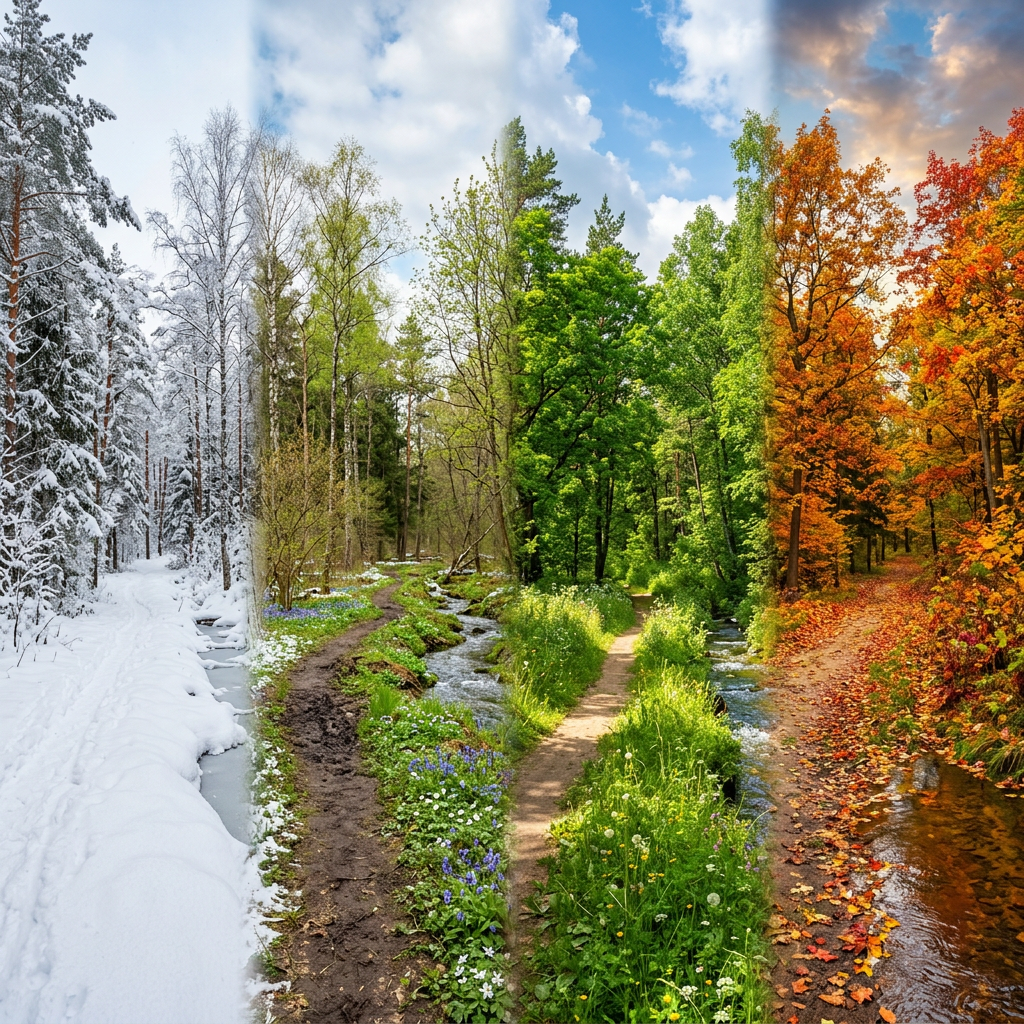
A year is not just one long summer afternoon. It is four seasons of learning.
A forest path showing winter, spring, summer, and autumn side by side.
Spring would be about rebirth—planting whatever we could, watching things grow, dealing with mud and rain and the first ticks of the season. Summer would be abundance and bugs and long days of work that leave your muscles sore in the best way. Fall would be preservation—canning, drying, stacking wood like our lives depend on it (because they would). Winter would be the real test: short days, long nights, the kind of quiet that makes you confront yourself.
I do not romanticize it. I know there will be days I miss hot showers that last longer than five minutes. Days I crave takeout or a movie or just the simple comfort of walking into a store and buying whatever I want. There will be moments of real frustration—when the roof leaks or the generator will not start or we argue because we are the only two people for miles and there is nowhere to storm off to.
But those are exactly the moments I think we need.
The version of me that exists right now is shaped by modern life. She is good at a lot of things that do not actually matter in the woods. She is also anxious, overstimulated, and constantly measuring herself against invisible standards.
The version of me that could survive a year in a cabin would have to be different. (Like Cara Dutton in the Yellowstone spinoff 1923).
More patient. More resourceful. More present. She would know how to start a fire in the rain, how to read animal tracks, how to sit with silence instead of reaching for her phone. She would know how to love someone without the constant noise of the outside world telling her what love is supposed to look like.
I do not know if that person already lives inside me or if she is someone I would have to become. Either way, I am curious enough to find out.
I am still thinking about it. Really thinking about it. Not as a cute Instagram story or a temporary “digital detox,” but as a serious, year-long commitment to a completely different way of living.
The things I am most afraid of losing—news, sports, convenience, constant connection—are also the things keeping me from becoming the person I say I want to be.
And the things I might gain—deep focus, real self-reliance, an unshakable partnership, and the kind of peace that only comes when there is nothing left to hide behind—feel worth the risk.
So I am sitting with the question.
Would you live in a cabin in the middle of the woods for an entire year?
Not as a vacation. Not as content. As your actual life.
I am closer to saying yes than I ever thought I would be.
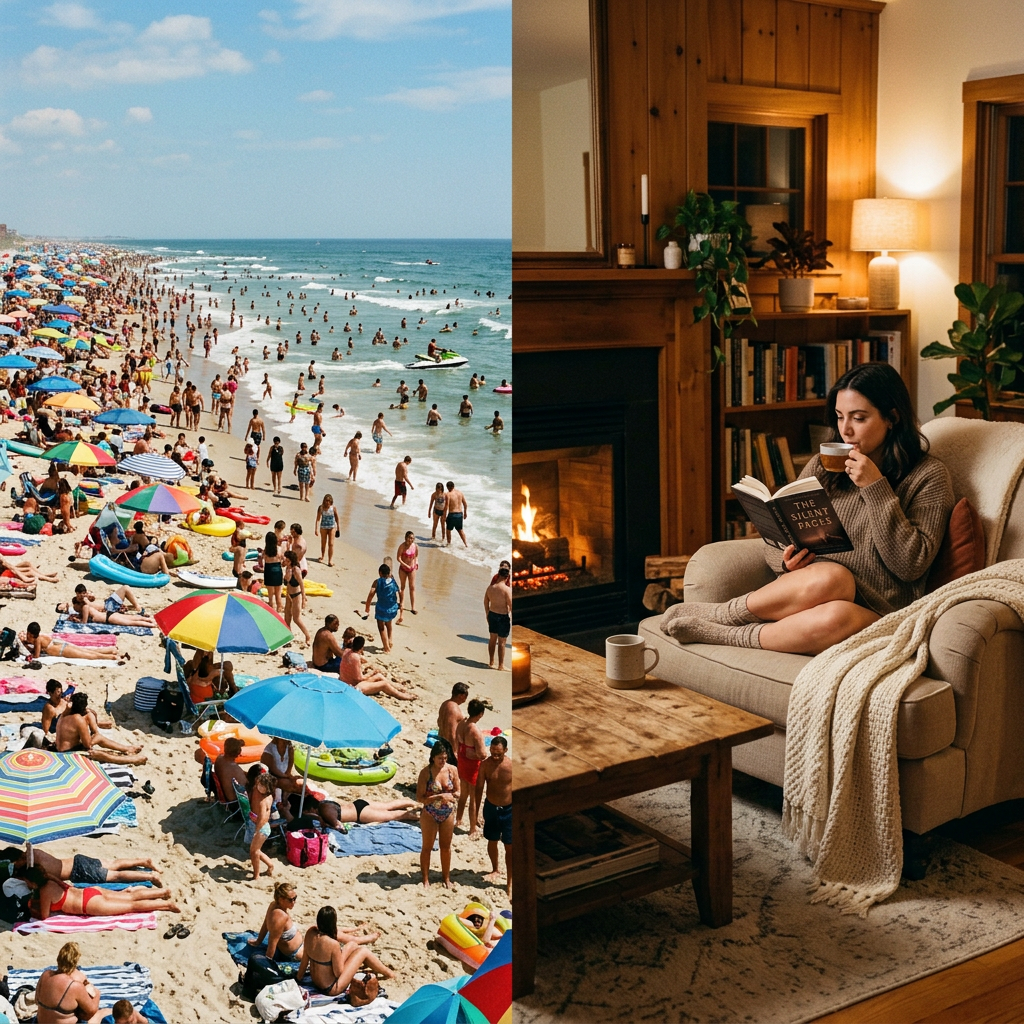
A bustling beach day contrasted with a quiet evening reading by the fire
My early years were pure, unfiltered chaos — the kind that would get a kid checked on today. My parents and I traveled the globe like it was our personal playground. No five-star resorts or curated “experiences.” Just raw movement. My father had this mountain bike with a little seat rigged to the back, and I would perch there like a tiny, curious creature , wind whipping my face while he pedaled through foreign cities. I could not even reach the pedals, but I was along for the ride anyway. That was me: five years old, zero fear, maximum adventure.
And yeah, I wasincredibly promiscuous. Do not clutch your pearls — I am not talking anything illegal or tragic, just the raw, unashamed chaos of a feral kid who had not yet internalized society’s shame software. I would flirt with strangers in markets, wrote love letters to my classmates, and I even had a little boyfriend who I was constantly kissing and laying naked with. I collected attention like currency. I especially did not believe in boundaries. I was a walking diplomatic incident in pigtails. From little boys, grown men and even a girl cousin. I was living proof that toddlers can be absolute heathens if you let them.
A hiker holds an illuminated compass while overlooking rugged mountains at sunset.
Fast-forward to now, and holy shit, the contrast is brutal. I still chase adventure, but it is domesticated. I demolish raw meat and fish, organs and I still fantasize about packing a bag and disappearing. The itch is there. But the execution is different now. I am a homebody now, and it feels almost traitorous to admit. The girl who once rode shotgun on a mountain bike across continents now dreams of becoming his housewife. Not in some tradwife cosplay way for clout, but genuinely. Apron on, dinner simmering, waiting for the door to open so I can hand him a drink and melt into that quiet, possessive domestic bliss. Something that I got a little taste of this last week.
Life happened I guess. Adulthood installs its updates whether you want them or not. Never mind the disability that has shackled me to the house. The same kid who thrived on constant motion discovered that true comfort can be found in one well-chosen address. The promiscuity died somewhere along the way — not with shame, exactly, but with the realization that cheap thrills and scattered attention leave you hollow. I traded the dopamine hits of “everyone likes me” for something deeper, rarer, and way more dangerous: wanting to belong to one person so completely it rewires your entire operating system.
A steaming cup of coffee and a journal sit on a wooden desk by a window overlooking a stormy ocean.
I still get the urge to book a one-way ticket and vanish. I used to scroll through flight deals like a junkie. But then I picture coming home to him — the house smelling like whatever chaotic fusion dish I attempted that day, laundry folded (badly), me barefoot in the kitchen wearing nothing but his oversized shirt. That fantasy hits harder than any passport stamp ever did. The bike seat on the back of father’s mountain bike taught me motion. Adulthood taught me anchorage. And weirdly, I am greedy for both.
Ultimately, I guess I am out here living this schizophrenic existence: still ordering the rarest thing on the menu, still plotting future escapes, but happiest when I am nesting. The former global toddler slut has been tamed — not by force, but by choice. And if that makes me basic or boring or a walking contradiction, fine. I will own it while I perfect his favorite recipe and secretly plan my next chaotic food order.
The adventure did not die. It just moved inside the house, put on an apron, and started calling one man “home.”
In a world overflowing with noise, division, and endless hot takes, I made a deliberate choice to shape my X (formerly Twitter) experience around what truly matters to me. My entire account is now intentionally curated to reflect my personal beliefs and, above all, to center positivity.
A smartphone displaying ‘Calm & Connected’ held amid swirling fire and smoke effects
I want my feed to uplift, inspire, and align with the kind of life I am actively building—one rooted in growth, joy, healing, and possibility. That does not mean I live in a bubble or ignore reality. It simply means I am protective of my mental and emotional space.
Yes, I do follow a handful of accounts that could be described as strong Trump supporters—people who sometimes come across as riding the “Trump can do no wrong” wave. I am fully aware of the echo-chamber risk there. I approach them with the same healthy skepticism I apply to sports accounts, news outlets, or any single-source content. I do not take everything at face value, and I cross-reference when something feels off.
I am not on X primarily for political analysis or to debate policy. I am there to be inundated with feel-good positivity and reminders of the lifestyle I crave—wellness, personal development, meaningful connections, beauty, humor, and inspiration. Those accounts, even with their strong biases, often deliver bursts of optimism, patriotism, or motivational energy that resonate with the uplifting vibe I want more of.
At the end of the day, social media should serve you—not drain you, enrage you, or pull you into endless negativity loops. I have unfollowed, muted, and blocked enough accounts to create a space that feels like a warm, intentional garden rather than a battlefield.
A smartphone displaying a vibrant mix of blooming garden plants and succulents
My feed is not perfect, and it is not meant to be a complete reflection of the world. It is a reflection of the world I am choosing to create for myself. One post, one follow, and one boundary at a time.
Some of my favorite social media follows are:
A hand holding a smartphone displaying an abstract swirling light pattern
@PeytonElroy : a wellness and spiritual healing-focused account with over 61,000 followers. Setting a consistent tone of optimism, empowerment, and alternative health perspectives, Peyton posts a mix of personal stories (especially her father’s recent stage 4 colon cancer “healing” journey). and practical health tips (e.g., hibiscus tea for inflammation, dates for heart rhythm stabilization via potassium, broccoli sprouts, blueberries, soursop). I particularly love the spiritual/energy concepts (auras, emotional states influencing physical health, colors affecting energy, the idea that everyone is inherently “spiritual”) and relationship/life advice (e.g., how to stand out when approaching beautiful women by complimenting non-physical traits).The tone is warm, encouraging, and emoji-heavy (lots of hearts, flowers, and green tones). Posts often include disclaimers like “I’m not claiming this cures cancer alone” while sharing strong opinions and anecdotes. Recent content has leaned heavily into cancer discussions—viewing it as inflammation, potentially linked to parasites or trauma, with emphasis on mindset, diet, and natural compounds rather than fear-based conventional narratives (my own personal belief).
@mtnhousewife (Mountain Housewife🏠) is a Christian homemaking and traditional marriage account run by a 41-year-old wife, mother, grandmother (“mimi”), and homemaker. Her posts promote biblical womanhood, wifely submission, contentment, and practical homemaking. Key themes include: Covenant marriage — Long-term harmony through scriptural roles (e.g., she highlights 42 years of marriage with “no conflict” due to submission as taught in scripture), Christian living — Bible study reflections (e.g., Philippians on contentment), faith encouragement, and church life, Homemaking — Simple recipes and tips (e.g., okra dishes, pimiento cheese). The tone is gentle, grateful, and encouraging, aimed at women seeking traditional roles. She emphasizes joy in submission, building a happy home, and living out a wife’s calling according to Christian principles. Content mixes personal testimony, scripture, practical advice, and light community interaction.
Maneesha (@ManeeshaSem) is a popular writer, content creator, and self-described “moonbathing apsarā” (celestial nymph) on X, with over 71,000 followers. @maneeshasem has built a significant following through poetic, feminine, and spiritually infused posts that emphasize beauty, serenity, nervous system regulation, self-love, and creating “paradise on Earth.” Her content blends mysticism, aesthetics, wellness, and gentle life philosophy, often evoking softness, harmony, and divine femininity. She frequently shares visions of serene villas, lush nature, silk robes, self-care rituals (e.g., affirmations, chocolate-covered strawberries, vanilla chai), intentional beauty, and protective auras created by harmonious environments. @maneeshasem posts focus on holding calm energy, avoiding urgency/dysregulation, beauty as spiritual protection, and aligning with cosmic/natural rhythms.
@wolffdew (The Cooking Lady) is a Danish 22-year-old homemaker and from-scratch cooking content creator on X.She shares homemade recipes, cooking videos/processes, meal ideas, and everyday kitchen content with a warm, enthusiastic style. Posts often feature scratch cooking, traditional or comforting dishes, and personal touches as a young married woman. She promotes her two digital cookbooks directly in her bio. The account appeals to fans of simple, authentic home cooking, Scandinavian influences, and lifestyle content from a Gen Z homemaker perspective. It’s positive, food-focused, and interactive, with frequent replies to followers.
@amandaperera (Cleopatra 🪷 ✞) is a faith-centered self-improvement and relationship advice account on X with a strong emphasis on personal growth, emotional intelligence, and Christian values. The account mixes inspirational quotes, relationship insights, personal reflections, and calls to subscribe to her newsletter or book 1:1 sessions. It appeals to audiences interested in faith-based personal development, neuroscience-informed emotional health, and mature views on love and identity. Content is positive, relational, and growth-oriented rather than purely dating-strategy focused.This account is warm, empowering, and reflective. Posts often explore:
Healthy relationships and love dynamics (e.g., references to Yellowstone’s Rip and Beth as an ideal of a strong man supporting a fiery, intelligent woman; the importance of entering relationships as a “whole” person rather than seeking fulfillment from a partner).
Self-acceptance, authenticity, and resilience (e.g., disagreement as a sign of staying true to yourself; embracing your “weird” side).
Faith-first mindset (“Jesus first always”), emotional wholeness, and devotional partnership.al advice, and light community interaction.
@TrinaNuance (Trina Nuance || The Fractional Muse 🌿🌞🌊) is slightly different than my other follows. She is thoughtful writer, coach, and strategist with a philosophical, introspective style focused on personal growth, mindset, entrepreneurship, and human behavior. Trina shares long-form reflections, threads, and insights on: Self-awareness & transformation — Dark night of the soul, breaking self-sabotaging cycles, shifting from external to internal locus of control, and authoring new self-fulfilling prophecies., Parasocial relationships, narrative-building, perception biases, and cultural shifts (e.g., craving analog experiences like handwritten letters). Her tone is wise, empathetic, and nuanced — often weaving personal experience, client stories, and cultural observations. She positions herself as a bridge between worlds (e.g., founders building in the dark, inner work vs. business goals) with a creative, almost poetic voice. Content resonates with introspective entrepreneurs, creators, and those on personal development journeys. It is more reflective/strategic than purely motivational or tactical.
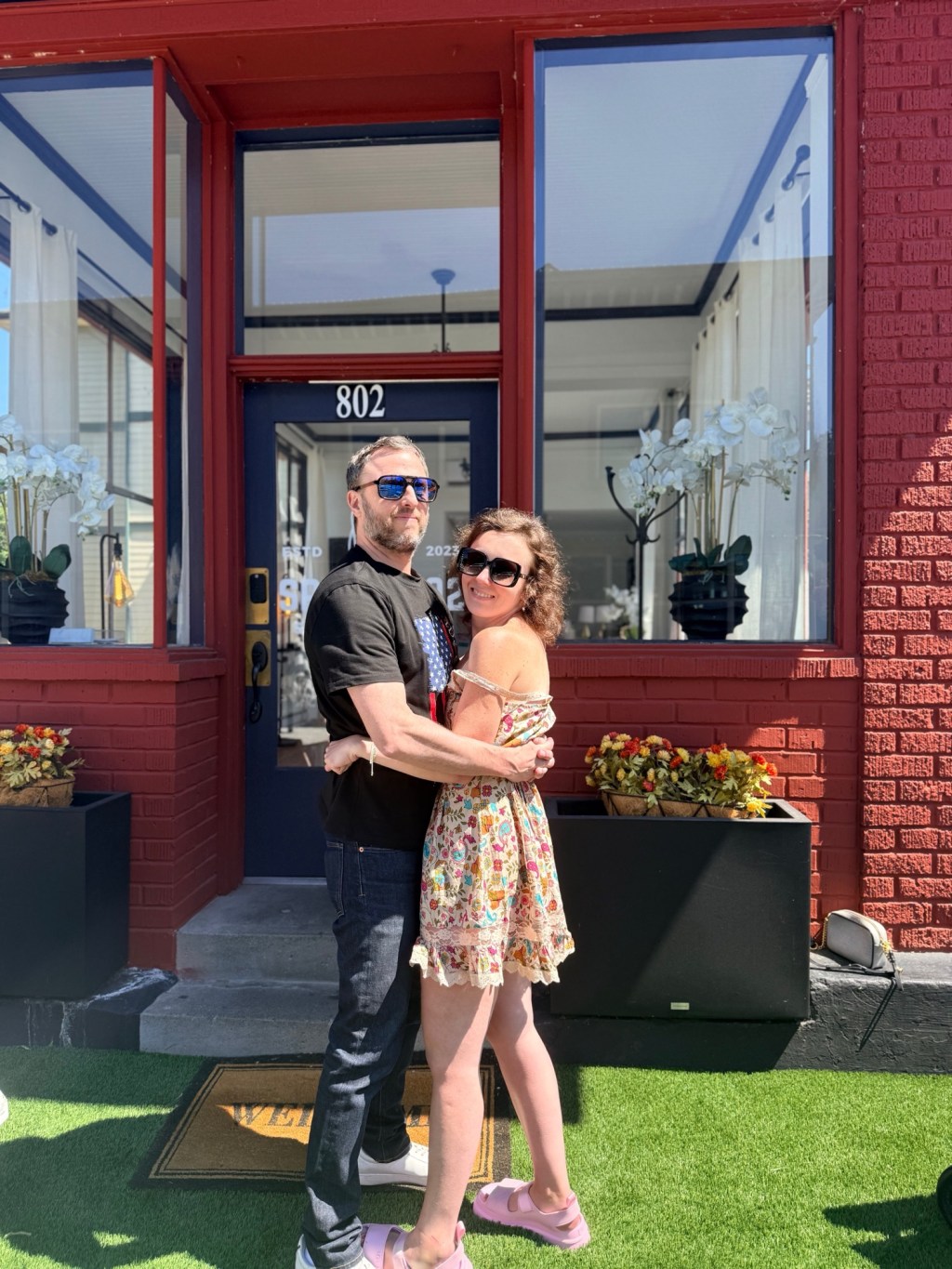
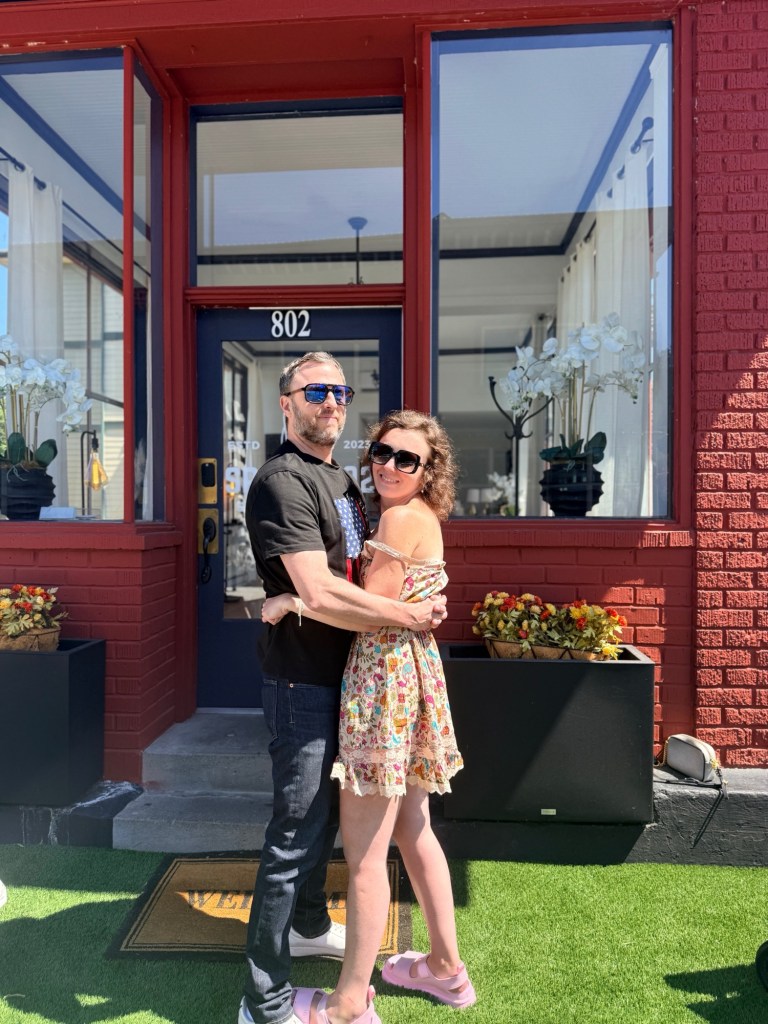
The house is quiet once more. He left for Boston yesterday, and the silence settled in before the door even closed behind him. It will be another month before I feel his arms around me again, before I hear his laugh echoing through these rooms.
I hate sleeping alone. The bed feels too cringe, the pillows too cold. I hate watching television alone too—there is no one to nudge when something ridiculous happens, no one to pause the show so we can debate plot twists or quote our favorite lines back and forth. Most of all, I miss the little things: the easy banter that danced between bites of cookie dough or ice cream , the way we could turn an ordinary meal into something playful and intimate.
This visit was supposed to hold answers. I thought we would finally talk through the big questions about our future—what comes next, where we go from here. Those conversations hovered around us, but never quite landed. So—as per usual— I am still waiting, still hoping, still trusting that the path will reveal itself in its own time.
But even without those answers, this trip gave us so much.
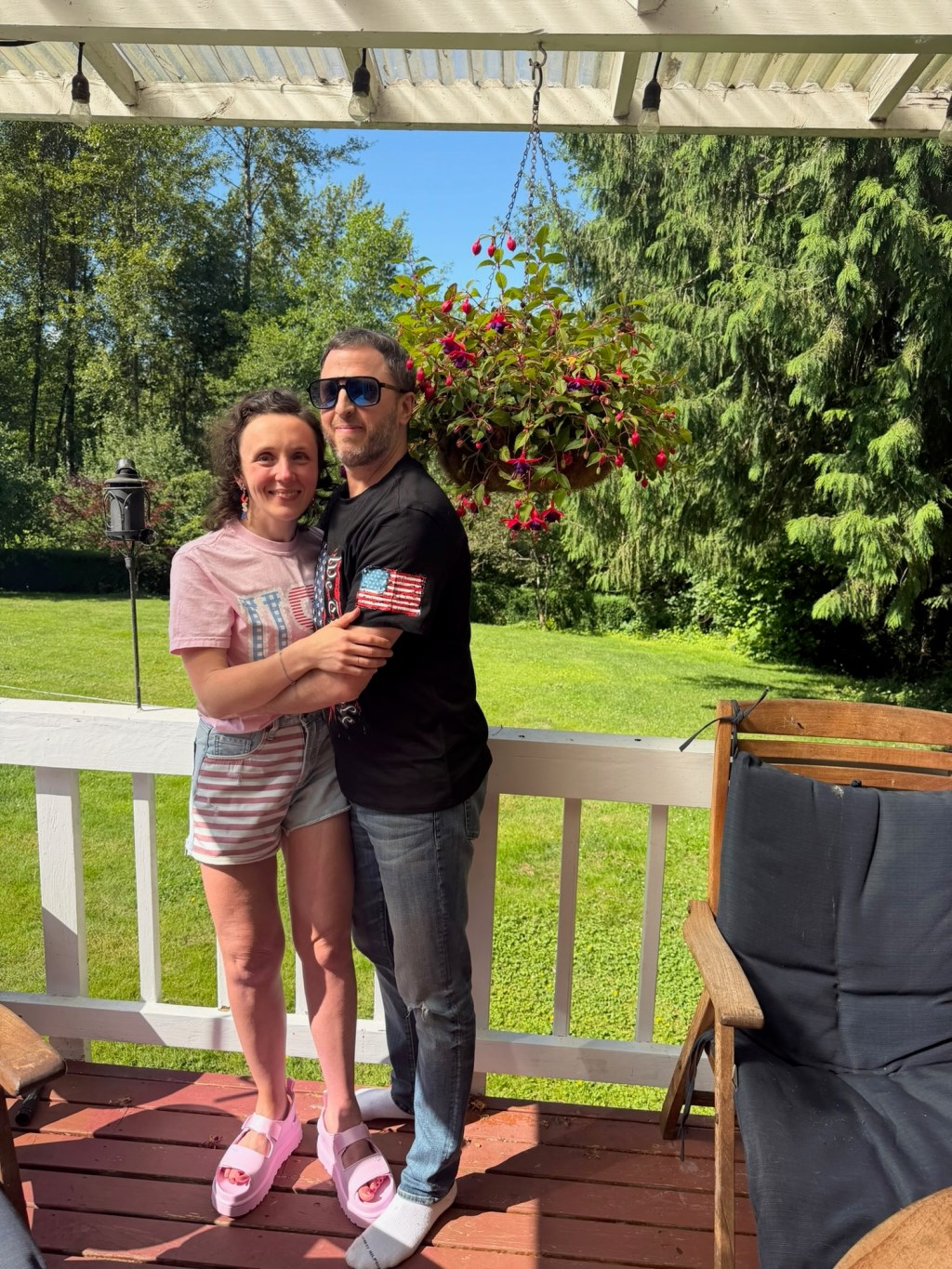
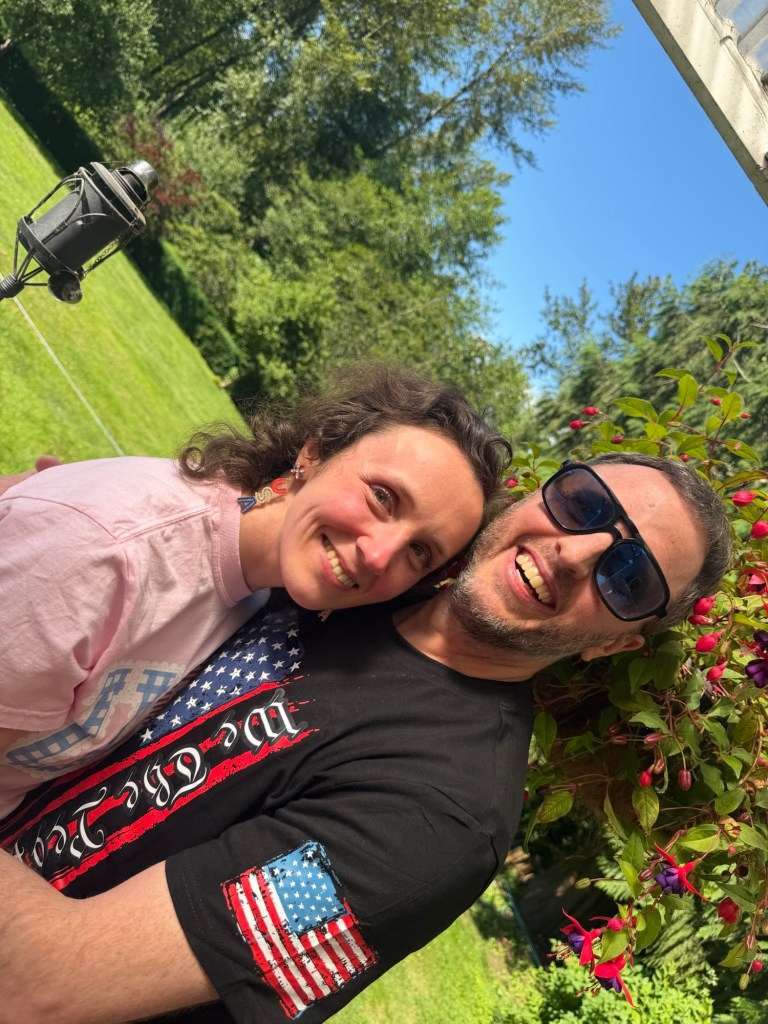
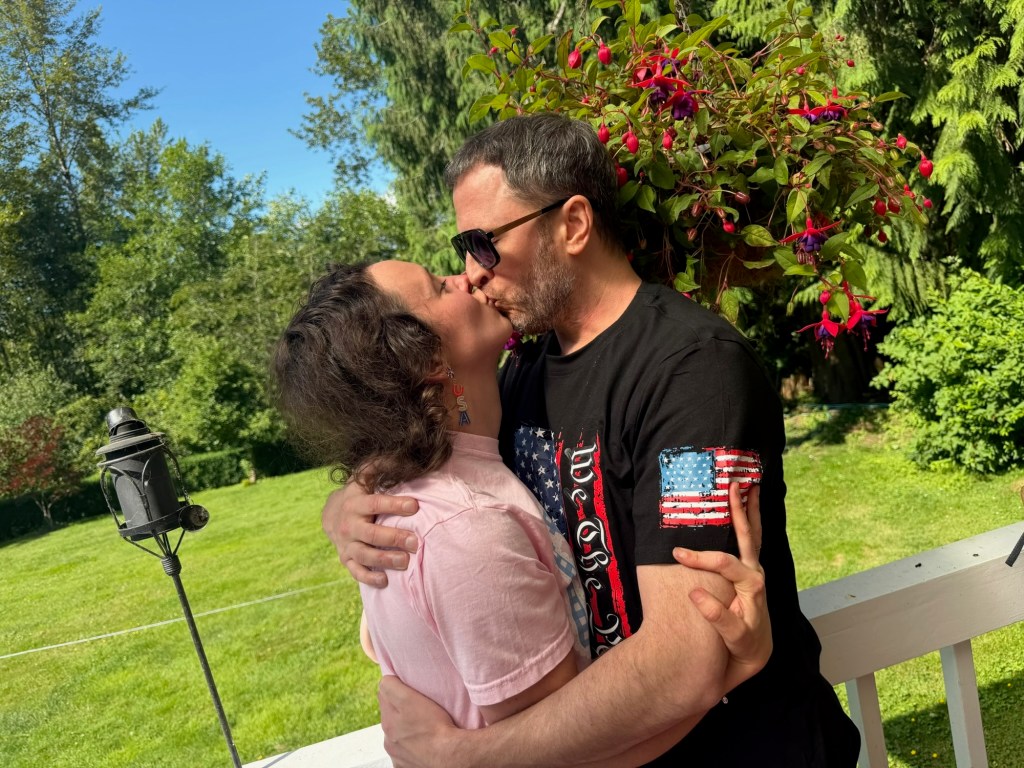
We celebrated this incredible country together—its firework [sounds], its spirit, its messy, beautiful freedom. We soaked up quality family time, the kind that fills your heart and reminds you why roots matter. He even came with me to physical therapy, walking along patiently through the exercises and offering quiet encouragement that meant more than he could ever know. The kind of support I am not really used to.
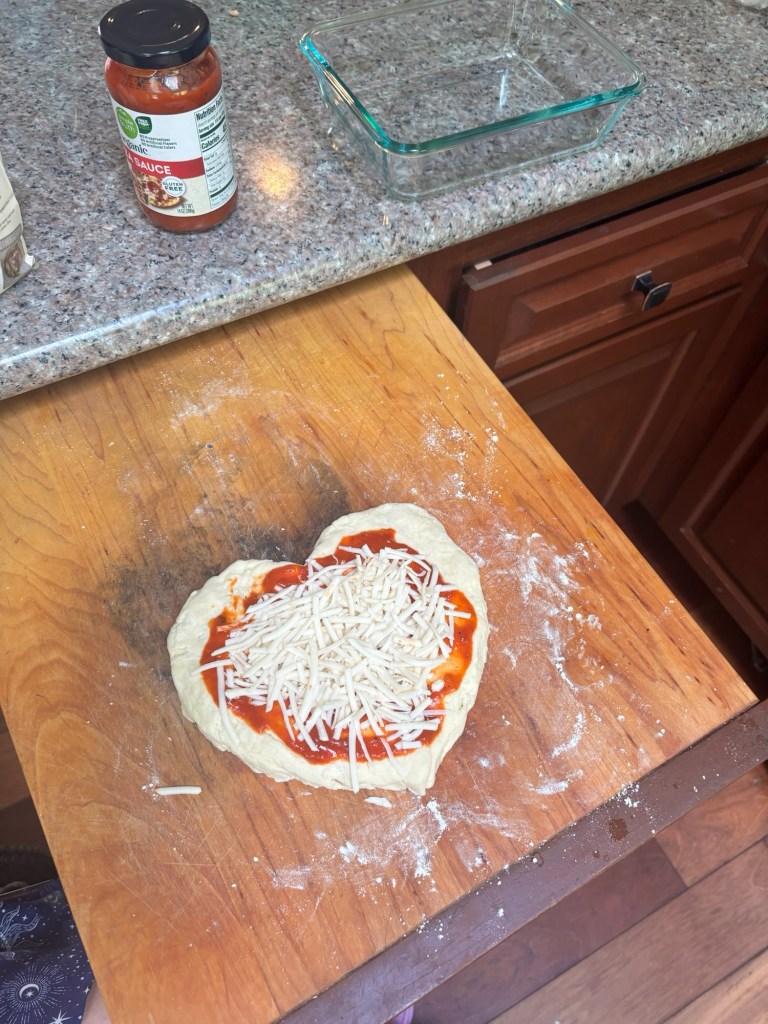
Then, when my parents headed out of town, we got to play house. Just the two of us. I cooked for him multiple times a day, pouring love into every dish, and he made most beautiful heart-shaped pizza —crispy, cheesy, and made with such care that I nearly melted right there in the kitchen. We wandered through Old Town, soaking in the charm of cobblestone streets and golden-hour light. We spent lazy hours cuddling on the couch, talking about everything and nothing, sharing those delicious conversations that make distance feel survivable.
For those precious days, we built a little world that felt like home. Even now, as I sit here missing him, I can still taste the pizza, hear his voice in the quiet, and feel the warmth of his hand in mine.
Long-distance love is hard. The goodbyes sting, the empty spaces ache, and the uncertainty can be heavy. But these visits are proof that what we have is real. They are fuel for the weeks apart. They remind me that even when I am sleeping alone and the house feels too quiet, I am not truly by myself.
I carry him with me—in the memories we made, in the future we are still writing, and in this stubborn, hopeful heart that believes it is all worth it.
Until next month, my love. Come back soon.
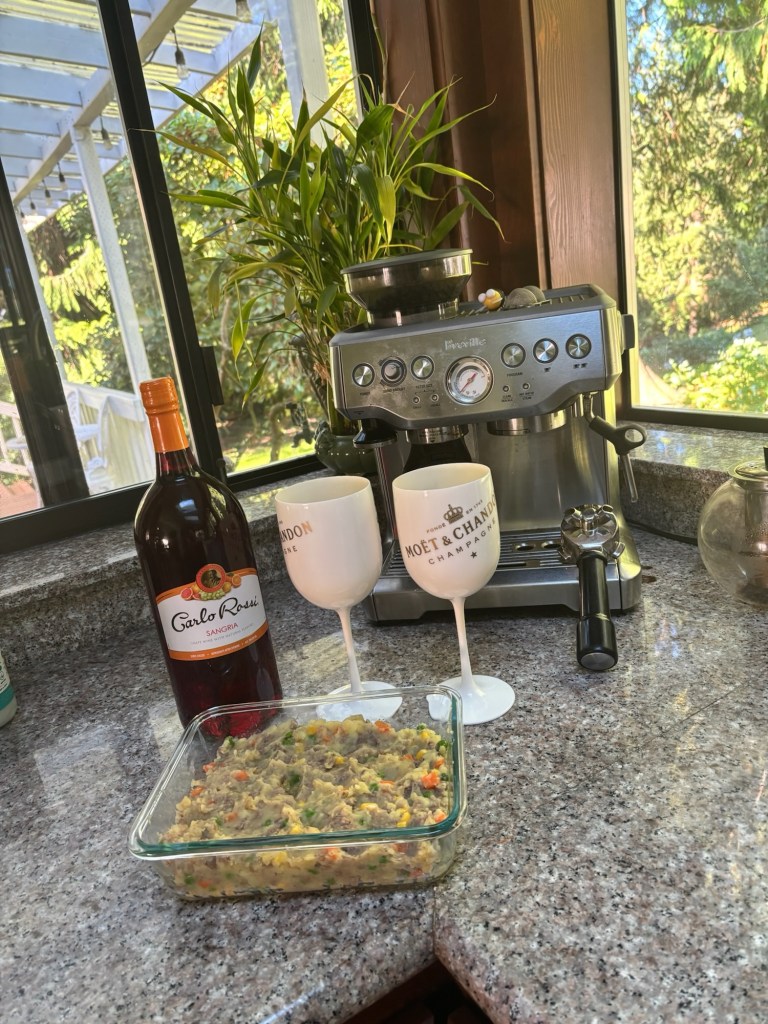
The beautiful heart shaped pizza he made for me My version of Shepherds Pie I made